Best Views in Oslo: Top Viewpoints & Panoramas
Oslo rewards those who look up, out, and across. From a marble rooftop you can walk into the fjord to a forested hilltop that inspired The Scream, the city offers an extraordinary range of panoramas. This guide covers the best viewpoints in Oslo, whether you want sweeping city skylines, fjord horizons, or intimate harbour scenes.
Tickets & tours
Live prices and dates from our booking partner. If you book, we may earn a commission at no extra cost to you.
Oslo is a city shaped by water and hills, and that geography pays off handsomely for anyone willing to seek out its best vantage points. Most of the top viewpoints are free and open year-round, from the sloping marble roof of the Opera House to the forested hilltop at Ekebergparken. If you are planning a longer stay, the 3-day Oslo itinerary works several of these viewpoints into a logical route. For a broader look at what makes this city worth exploring, the complete Oslo guide provides essential context. The views here span every season: summer brings long golden evenings over the fjord, autumn colours frame the forested hillsides, and winter snow turns the Holmenkollen ridge into something almost cinematic.
Iconic City & Waterfront Panoramas
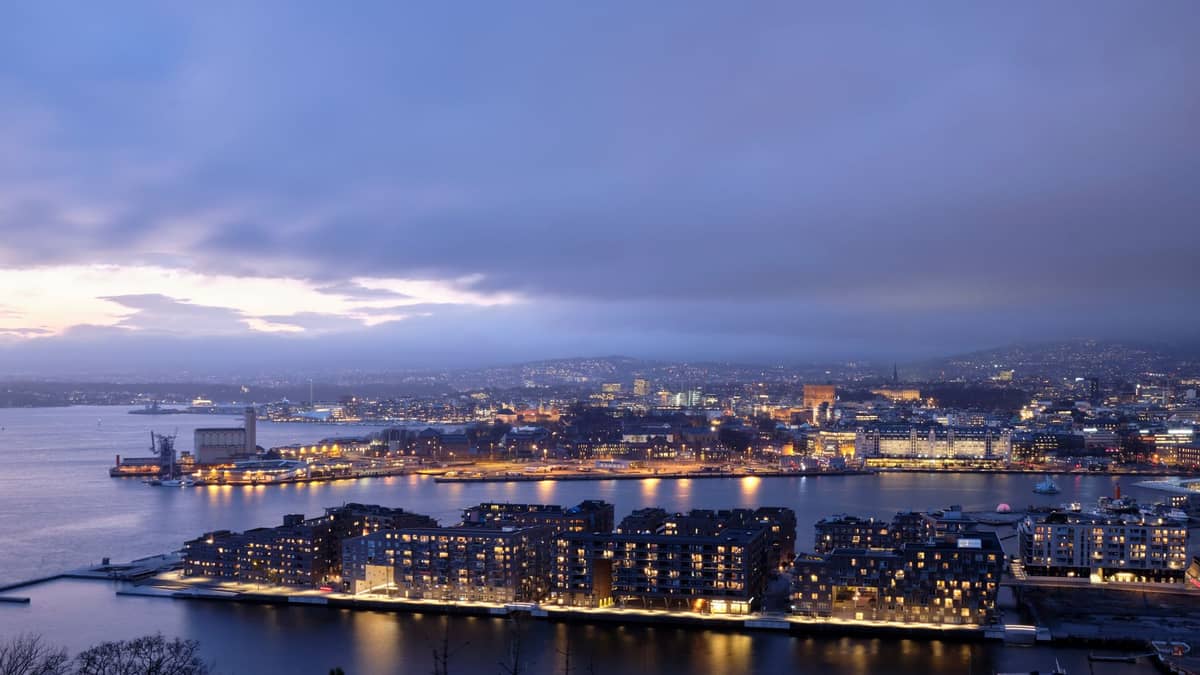
The Bjørvika waterfront district has transformed Oslo's skyline in the past two decades, and it is now the single best area for dramatic city views at water level. The Bjørvika neighbourhood combines architectural ambition with open public access, meaning you can move between rooftop, promenade, and plaza without buying a single ticket.
1. Walk the Roof of the Oslo Opera House for 360-Degree Views
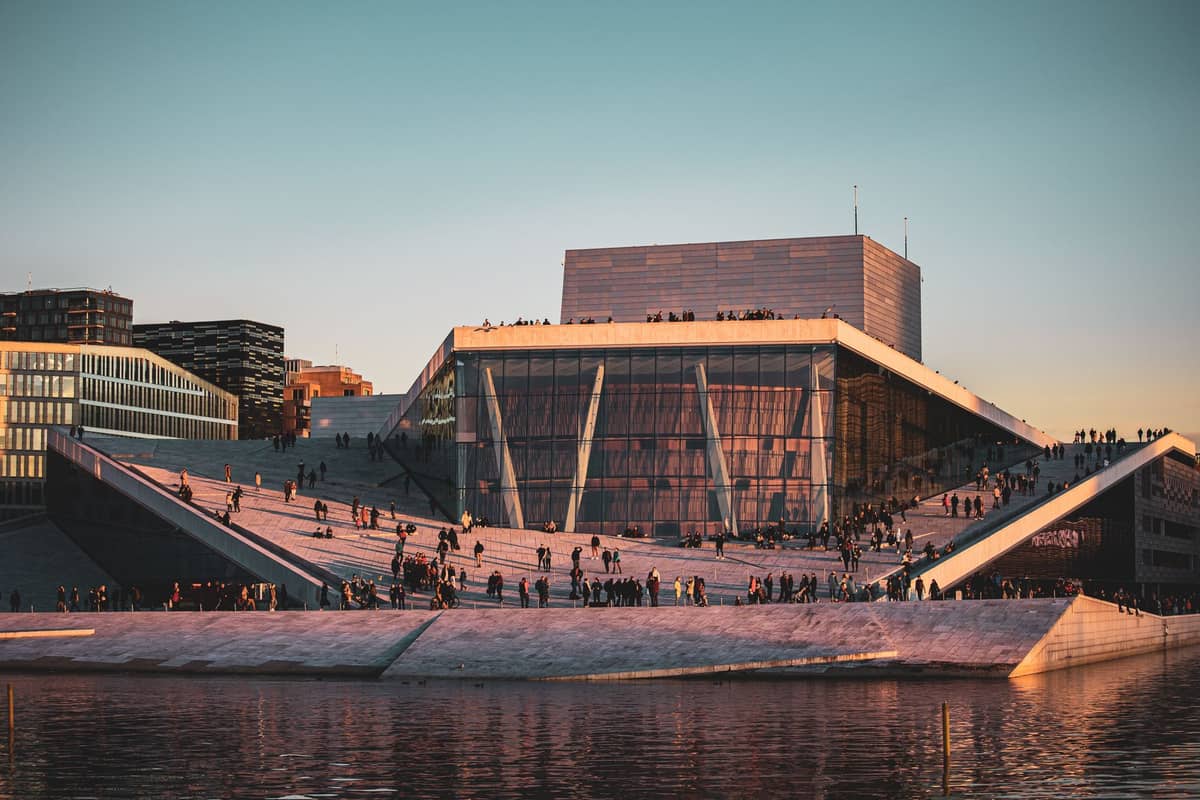
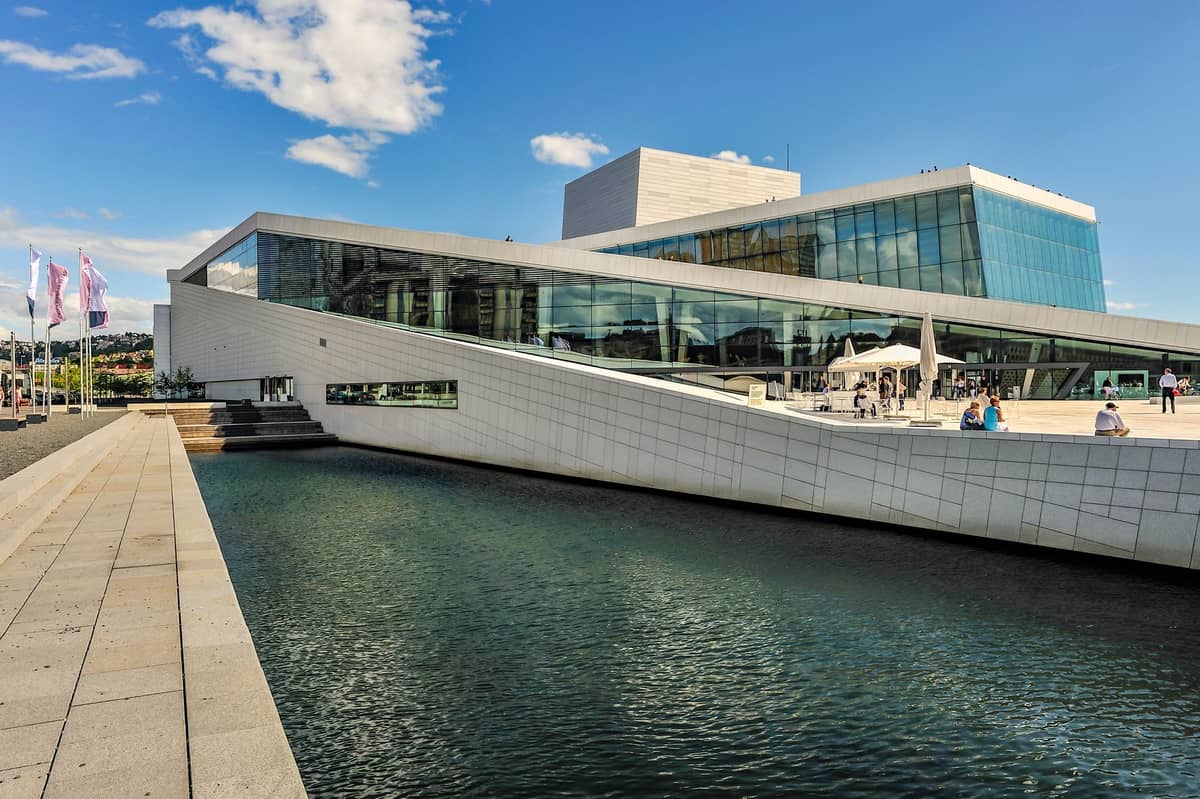
The sloping white marble and granite roof is entirely open to the public, free, at all hours. Walk from water level straight up to the ridge for views over the Oslofjord, Ekeberg hills, and the Barcode towers. Sunrise and late summer evenings are exceptional.
Explore1. Walk the Roof of the Oslo Opera House for 360-Degree Views
The sloping white marble and granite roof is entirely open to the public, free, at all hours. Walk from water level straight up to the ridge for views over the Oslofjord, Ekeberg hills, and the Barcode towers. Sunrise and late summer evenings are exceptional.
Explore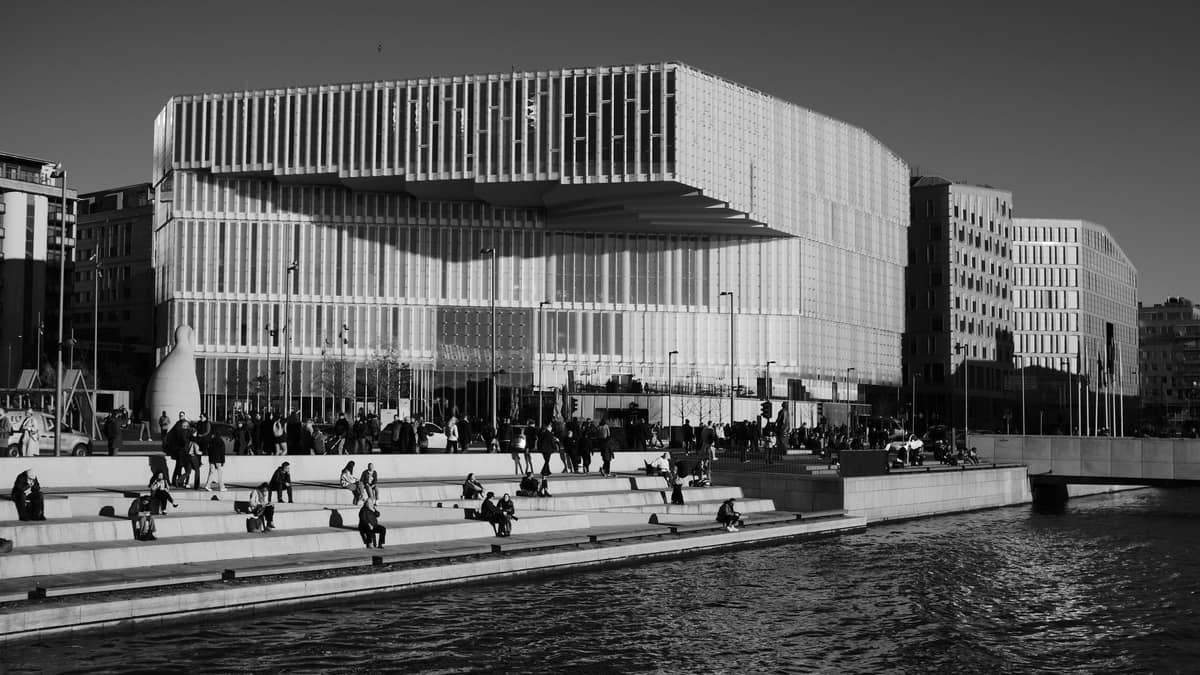
2. Climb Deichman Library's Rooftop Terrace for Fjord Views
Oslo's main public library, opened in 2020, has free rooftop terraces facing the fjord and Opera House. It's a quieter alternative to the Opera roof, with the added bonus of a café. Go on a weekday morning for unobstructed sightlines and no crowds.
Explore2. Climb Deichman Library's Rooftop Terrace for Fjord Views
Oslo's main public library, opened in 2020, has free rooftop terraces facing the fjord and Opera House. It's a quieter alternative to the Opera roof, with the added bonus of a café. Go on a weekday morning for unobstructed sightlines and no crowds.
Explore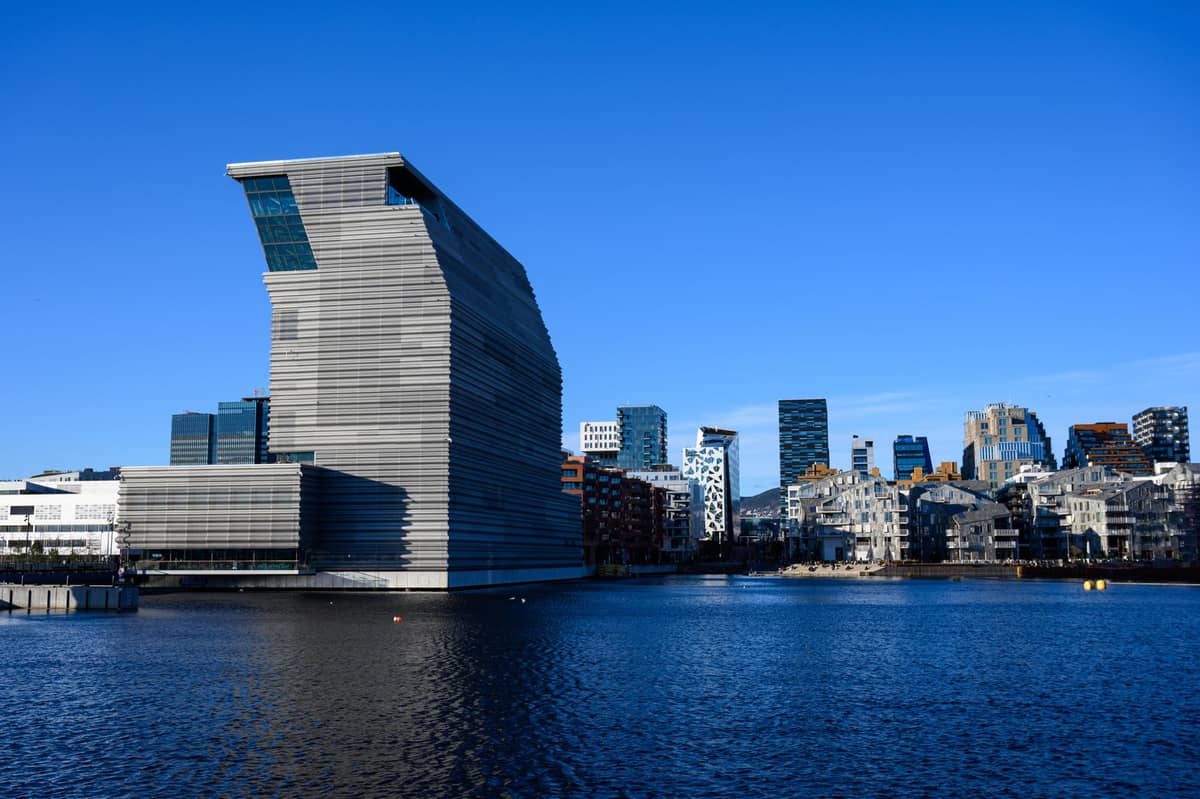
3. Look Out Over the Fjord from MUNCH's Upper Floors
The 13-storey MUNCH tower leans dramatically over the waterfront, and its upper gallery floors frame the fjord through floor-to-ceiling glass. The views intensify the experience of Munch's coastal paintings. Entry is paid, but the Oslo Pass covers admission.
Explore3. Look Out Over the Fjord from MUNCH's Upper Floors
The 13-storey MUNCH tower leans dramatically over the waterfront, and its upper gallery floors frame the fjord through floor-to-ceiling glass. The views intensify the experience of Munch's coastal paintings. Entry is paid, but the Oslo Pass covers admission.
Explore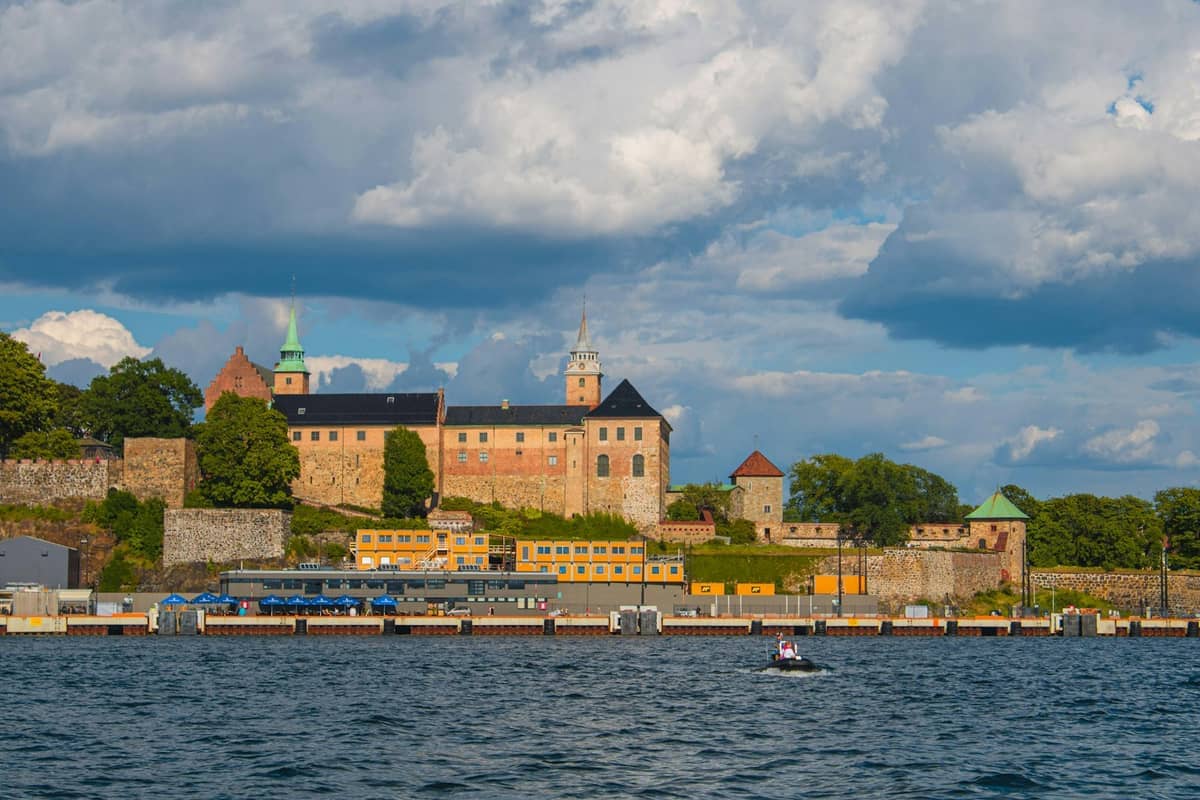
4. Survey the Oslo Harbour from Akershus Fortress Ramparts
The medieval fortress ramparts above the harbour offer one of the widest panoramas in central Oslo: ferries crossing the fjord, Bygdøy peninsula, and the modern waterfront all in one sweep. The grounds are free to enter and open daily, with no ticket required.
Explore4. Survey the Oslo Harbour from Akershus Fortress Ramparts
The medieval fortress ramparts above the harbour offer one of the widest panoramas in central Oslo: ferries crossing the fjord, Bygdøy peninsula, and the modern waterfront all in one sweep. The grounds are free to enter and open daily, with no ticket required.
Explore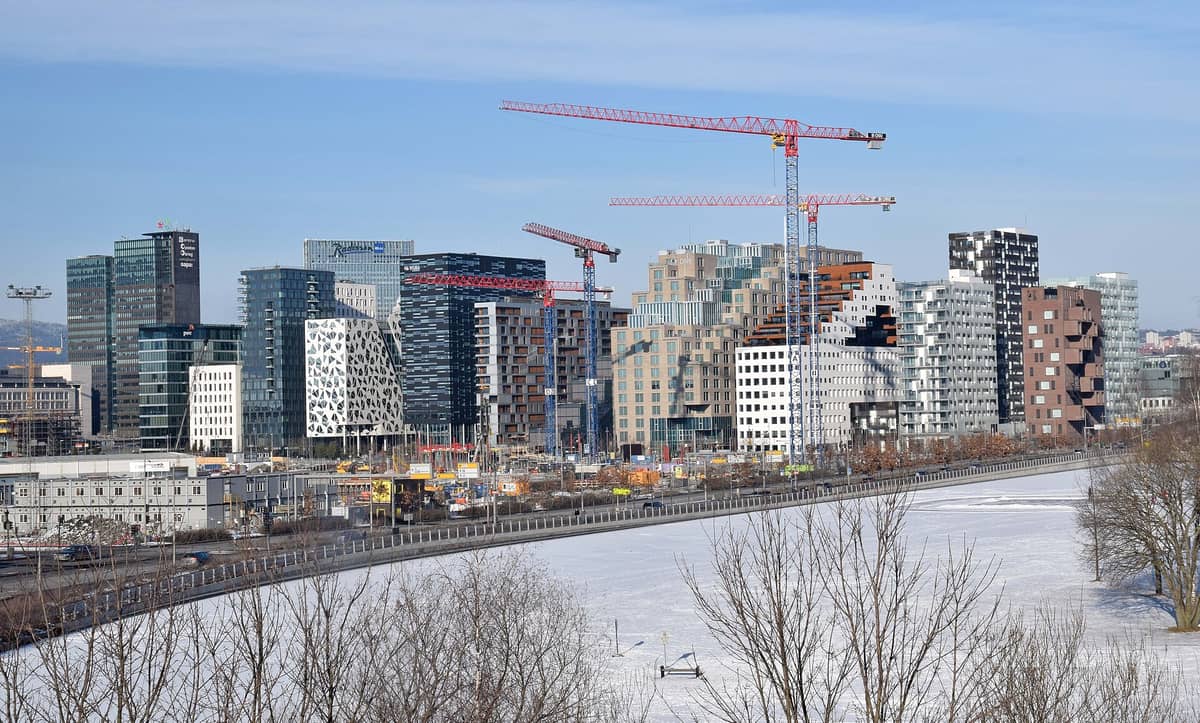
5. Appreciate the Barcode Skyline from the Sørenga Promenade
The Barcode's row of high-rises reads best from a distance, specifically from the Sørenga peninsula across the water. Walk out along the promenade in the evening when the towers are lit against the sky for the clearest sense of Oslo's 21st-century transformation.
Explore5. Appreciate the Barcode Skyline from the Sørenga Promenade
The Barcode's row of high-rises reads best from a distance, specifically from the Sørenga peninsula across the water. Walk out along the promenade in the evening when the towers are lit against the sky for the clearest sense of Oslo's 21st-century transformation.
Explore
6. Take in Harbour Views from Tjuvholmen's Waterfront Promenade
The Tjuvholmen sculpture park wraps around a small harbour island with open sightlines across the marina to the fjord. Combine it with a look at the Astrup Fearnley Museum's glass sail roof, itself a striking piece of architecture set directly against the water.
Explore6. Take in Harbour Views from Tjuvholmen's Waterfront Promenade
The Tjuvholmen sculpture park wraps around a small harbour island with open sightlines across the marina to the fjord. Combine it with a look at the Astrup Fearnley Museum's glass sail roof, itself a striking piece of architecture set directly against the water.
ExploreHilltop & Forest Viewpoints
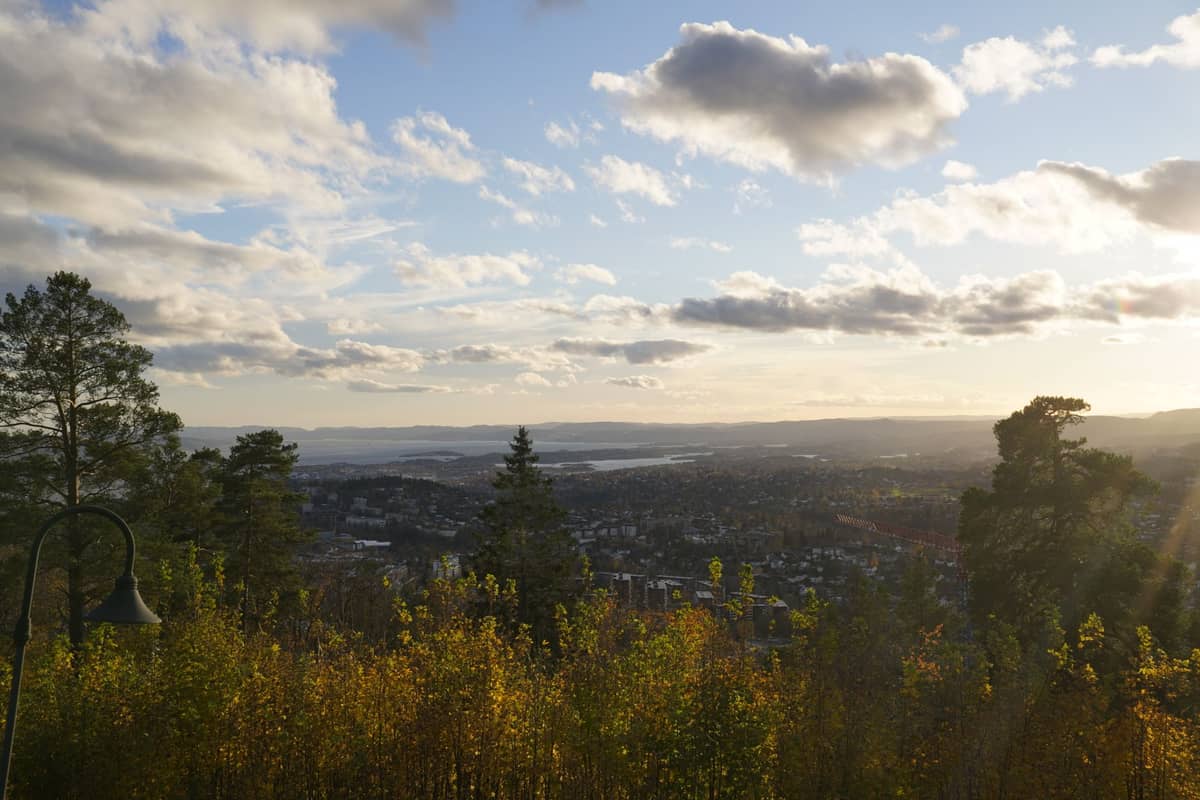
Oslo's surrounding hills offer the most dramatic long-range views of the city, the fjord, and the forests beyond. The Holmenkollen area is the most accessible of the high-elevation zones, reachable on T-bane line 1. For those who want to combine viewpoints with serious walking in the forest, the Oslo hiking guide maps out the best trails from Nordmarka down to the city.
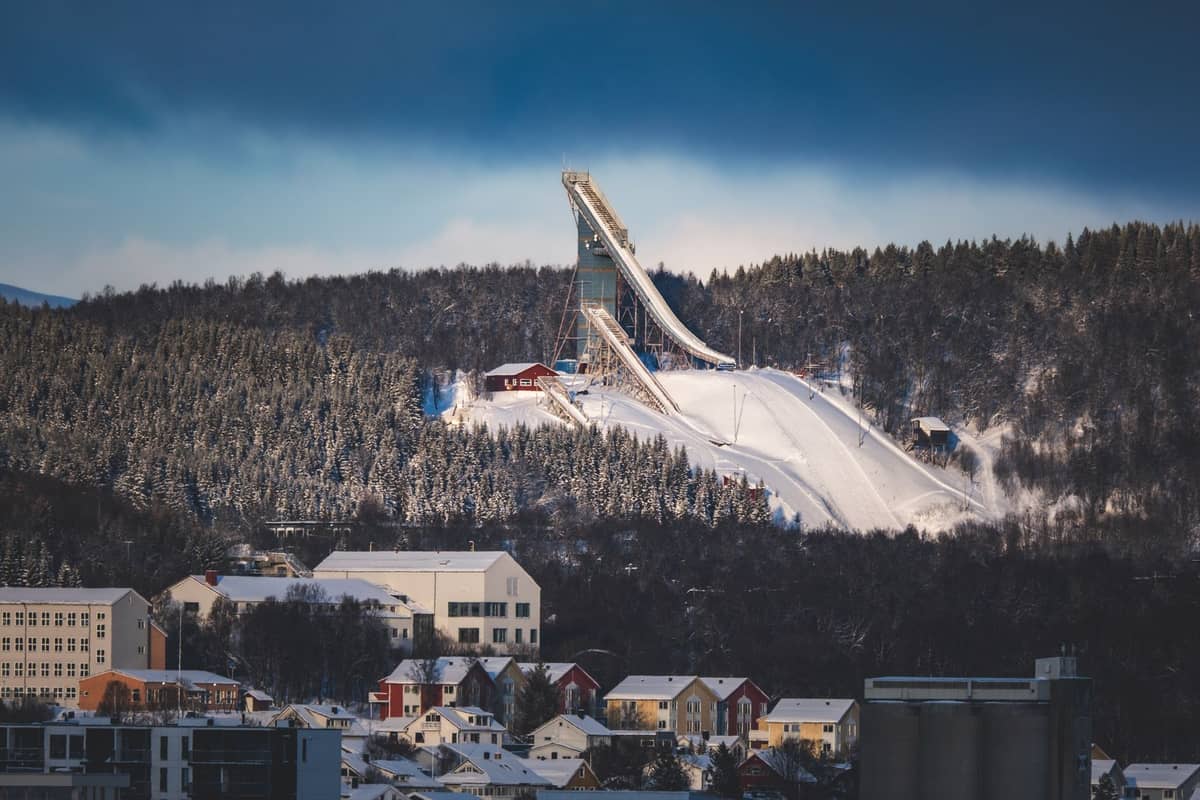
7. Reach the Observation Deck at Holmenkollen Ski Jump
The glass-floored observation deck at the top of the ski jump is Oslo's highest accessible urban viewpoint, with a panorama that takes in the city centre, fjord, and 40+ kilometres of surrounding countryside. Entry to the deck and museum costs around NOK 160-200; the Oslo Pass covers it.
Explore7. Reach the Observation Deck at Holmenkollen Ski Jump
The glass-floored observation deck at the top of the ski jump is Oslo's highest accessible urban viewpoint, with a panorama that takes in the city centre, fjord, and 40+ kilometres of surrounding countryside. Entry to the deck and museum costs around NOK 160-200; the Oslo Pass covers it.
Explore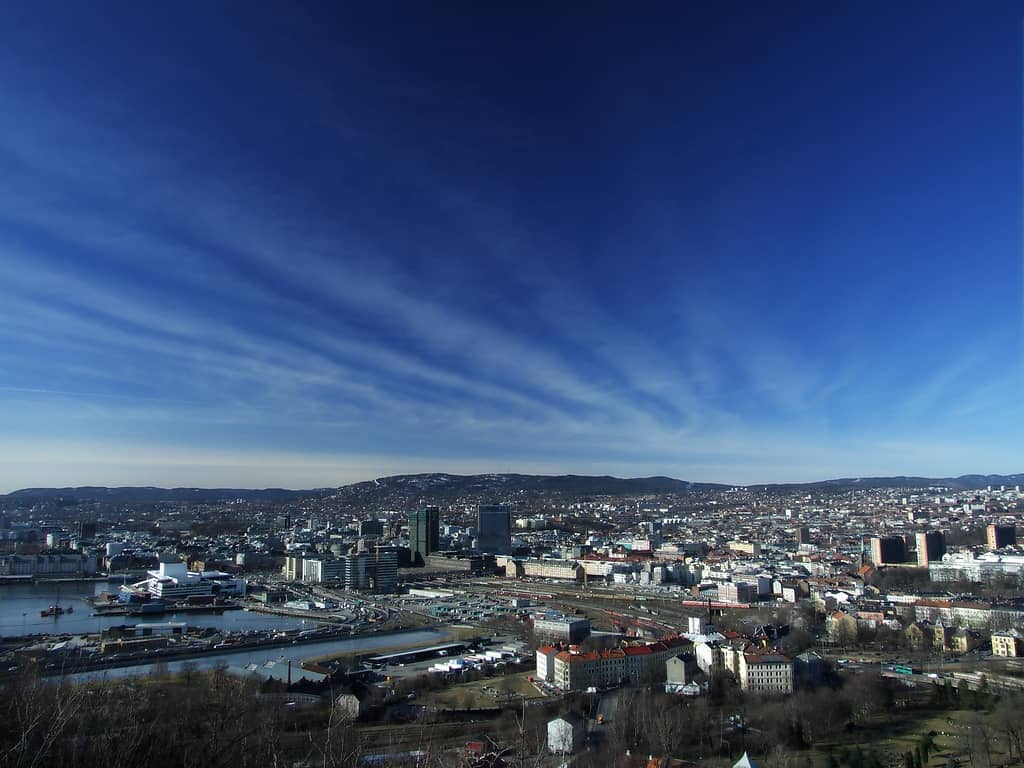
8. Stand at Ekeberg Viewpoint, Where Munch Painted The Scream
This hilltop terrace above the Ekeberg sculpture park offers one of Oslo's most historically loaded views: the exact panorama over the fjord and city that reportedly inspired Edvard Munch's The Scream. Reachable by tram 13 or 19 in about 15 minutes from the centre. Completely free.
Explore8. Stand at Ekeberg Viewpoint, Where Munch Painted The Scream
This hilltop terrace above the Ekeberg sculpture park offers one of Oslo's most historically loaded views: the exact panorama over the fjord and city that reportedly inspired Edvard Munch's The Scream. Reachable by tram 13 or 19 in about 15 minutes from the centre. Completely free.
Explore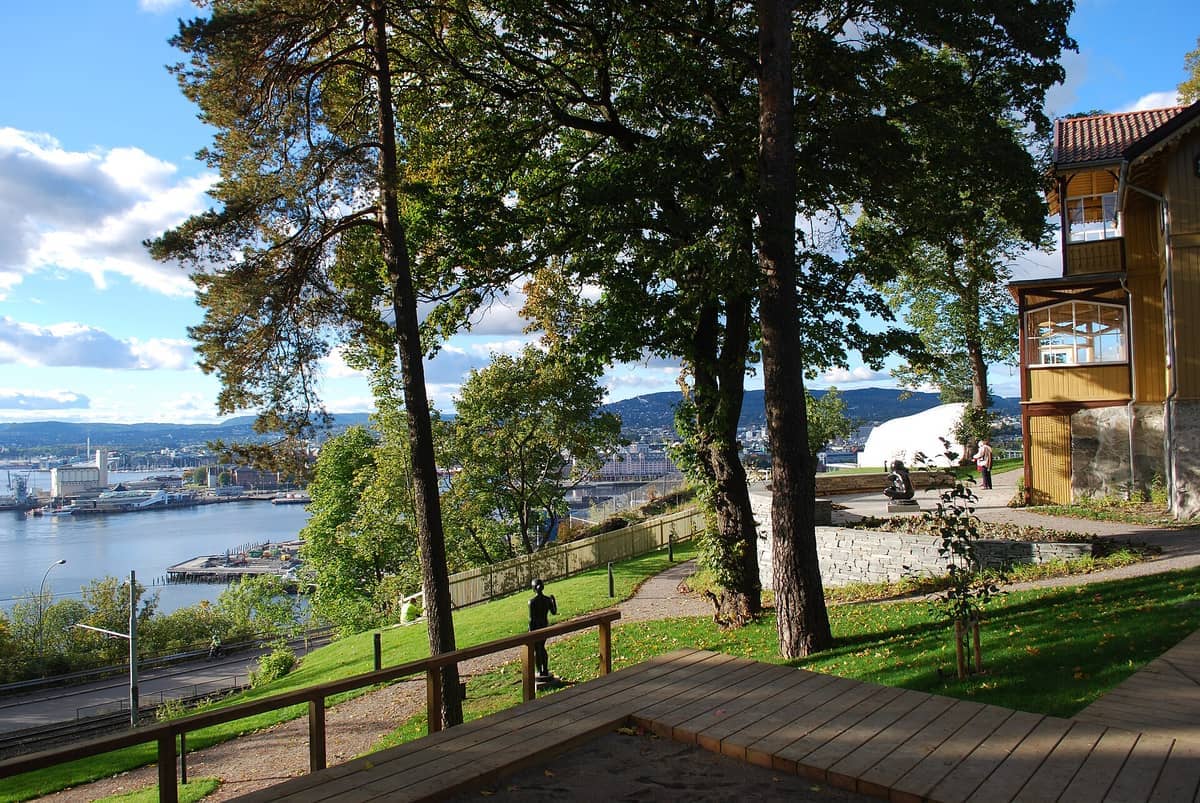
9. Explore Ekebergparken's Forest Trails for City and Fjord Views
The wooded hillside park combines 40+ international sculptures with open clearings that frame Oslo's skyline below. Multiple viewpoints appear along the trails, so the panoramas shift as you walk. Free year-round, best in autumn when the foliage adds colour to every sightline.
Explore9. Explore Ekebergparken's Forest Trails for City and Fjord Views
The wooded hillside park combines 40+ international sculptures with open clearings that frame Oslo's skyline below. Multiple viewpoints appear along the trails, so the panoramas shift as you walk. Free year-round, best in autumn when the foliage adds colour to every sightline.
Explore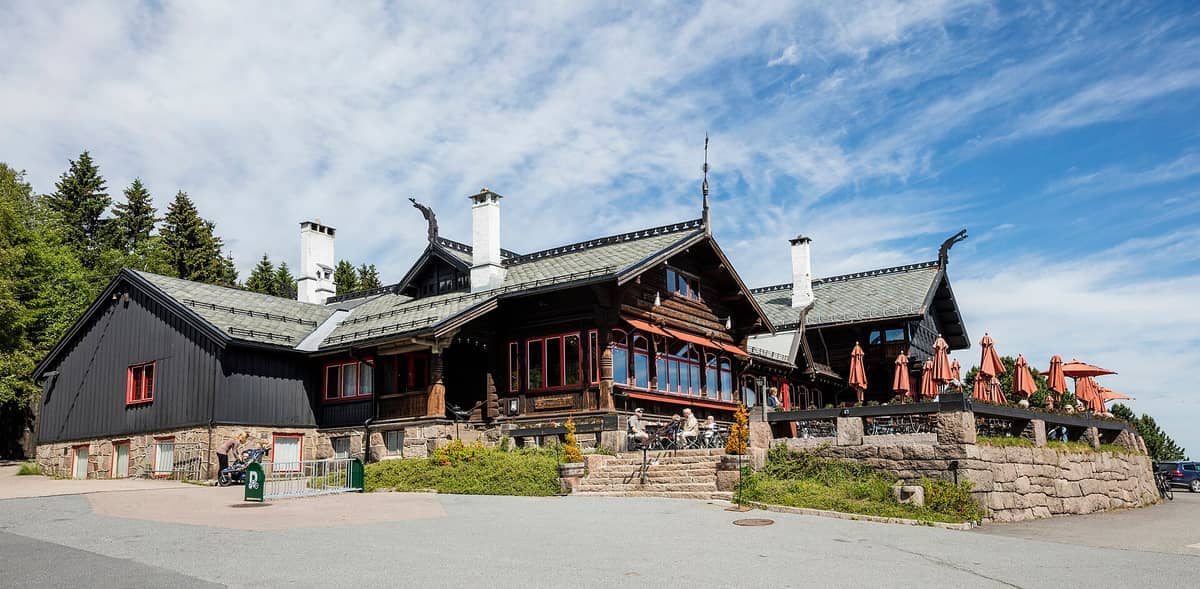
10. Eat Apple Cake with a View at Frognerseteren Lodge
The historic hilltop lodge at the top of the Holmenkollen T-bane line sits above the treeline with views over Oslo and the fjord to the south. The restaurant serves traditional Norwegian food; the apple cake is legendary. A perfect stop before or after a Nordmarka hike.
Explore10. Eat Apple Cake with a View at Frognerseteren Lodge
The historic hilltop lodge at the top of the Holmenkollen T-bane line sits above the treeline with views over Oslo and the fjord to the south. The restaurant serves traditional Norwegian food; the apple cake is legendary. A perfect stop before or after a Nordmarka hike.
Explore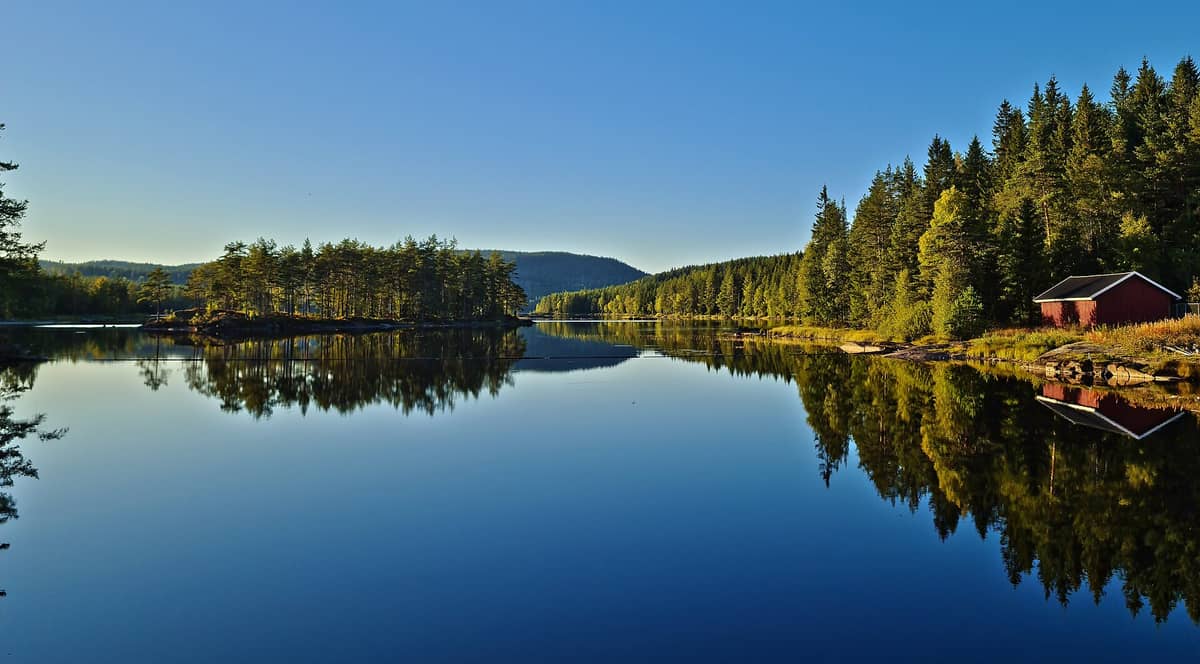
11. Discover Long-Range Fjord Views from Nordmarka's Ridge Trails
Hike above the Sognsvann trailhead into Nordmarka and the forest ridges open up periodic breaks with views south over Oslo and the fjord. The further you go, the wider the horizon. Take T-bane line 5 to Sognsvann; trails are marked and free to use year-round.
Explore11. Discover Long-Range Fjord Views from Nordmarka's Ridge Trails
Hike above the Sognsvann trailhead into Nordmarka and the forest ridges open up periodic breaks with views south over Oslo and the fjord. The further you go, the wider the horizon. Take T-bane line 5 to Sognsvann; trails are marked and free to use year-round.
ExploreWaterside & Peninsula Views
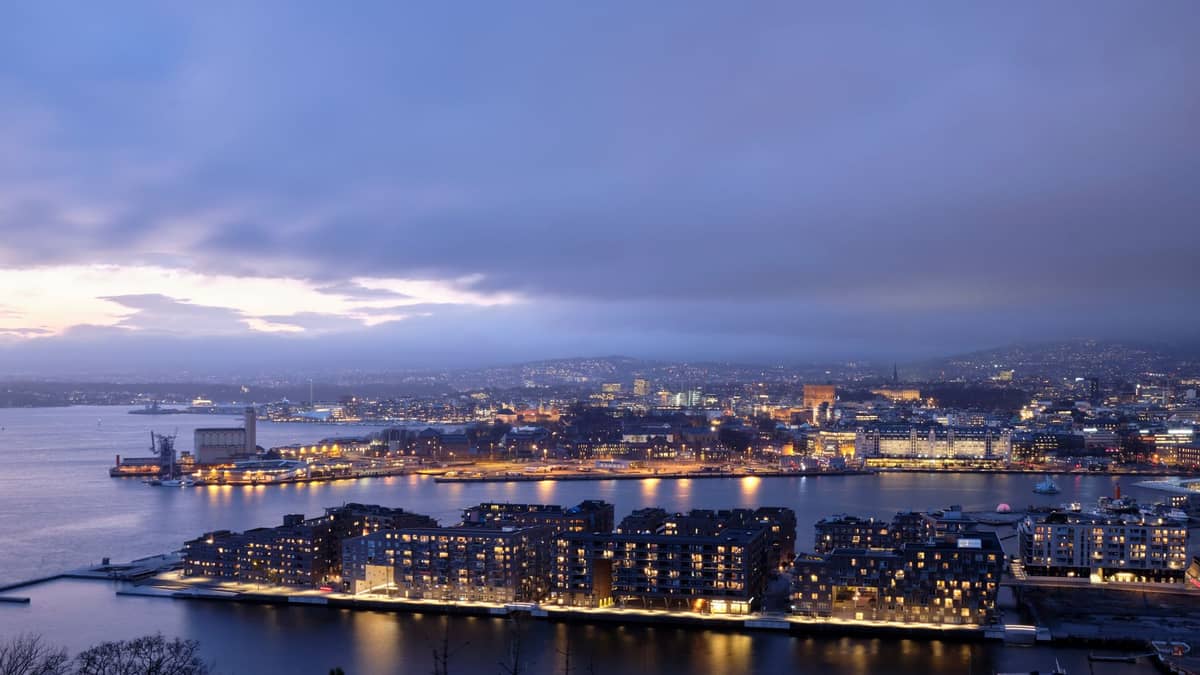
Some of Oslo's most rewarding vantage points are at water level, where the relationship between city and fjord becomes immediate. The Oslo Fjord guide covers both the islands and the peninsula walks in detail. The Bygdøy peninsula in particular rewards slow exploration on foot.
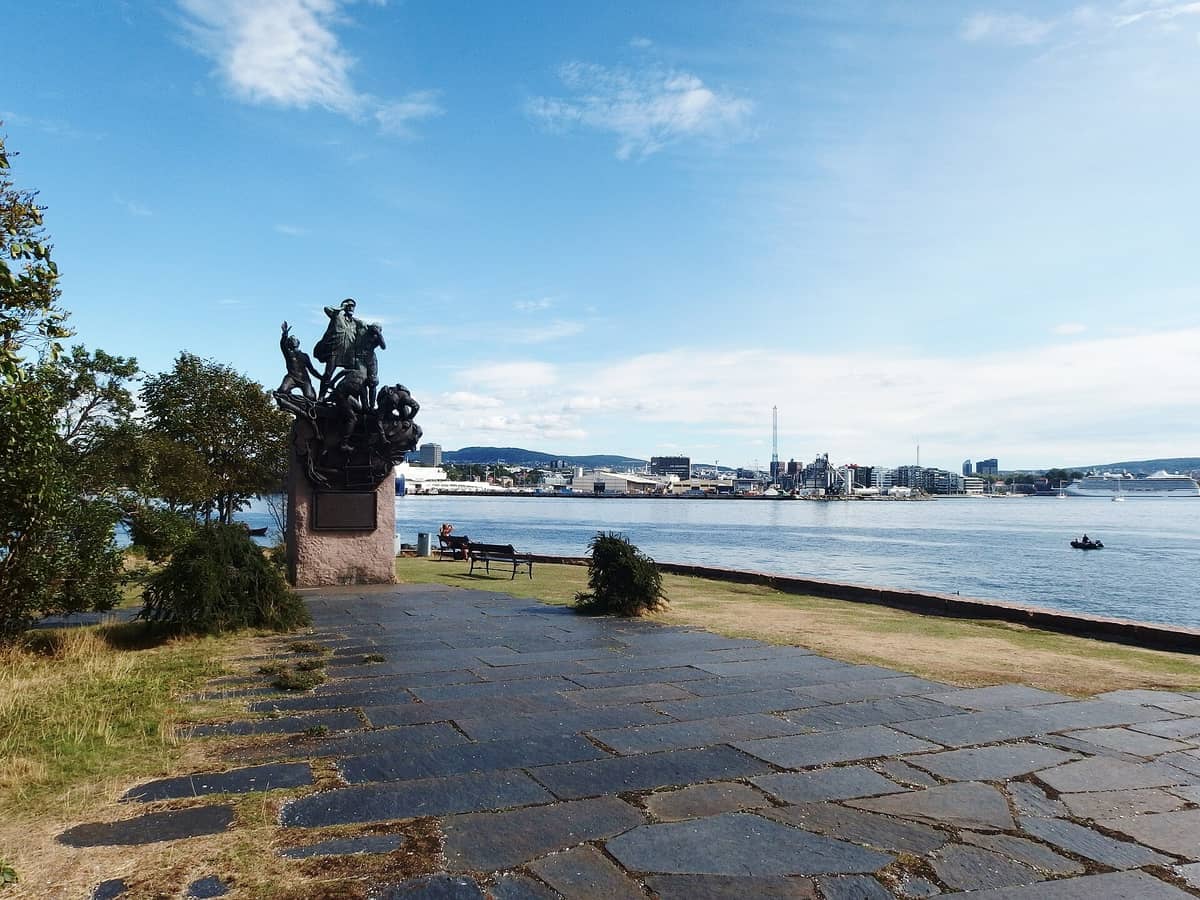
12. Walk the Bygdøy Coastal Path for Open Fjord Panoramas
The southern shore path along Bygdøy connects Huk beach to Paradisbukta through forest and rocky coastline, with wide views across the Oslofjord throughout. The walk takes about an hour at a relaxed pace and can be extended with museum stops or a swim at one of several coves.
Explore12. Walk the Bygdøy Coastal Path for Open Fjord Panoramas
The southern shore path along Bygdøy connects Huk beach to Paradisbukta through forest and rocky coastline, with wide views across the Oslofjord throughout. The walk takes about an hour at a relaxed pace and can be extended with museum stops or a swim at one of several coves.
Explore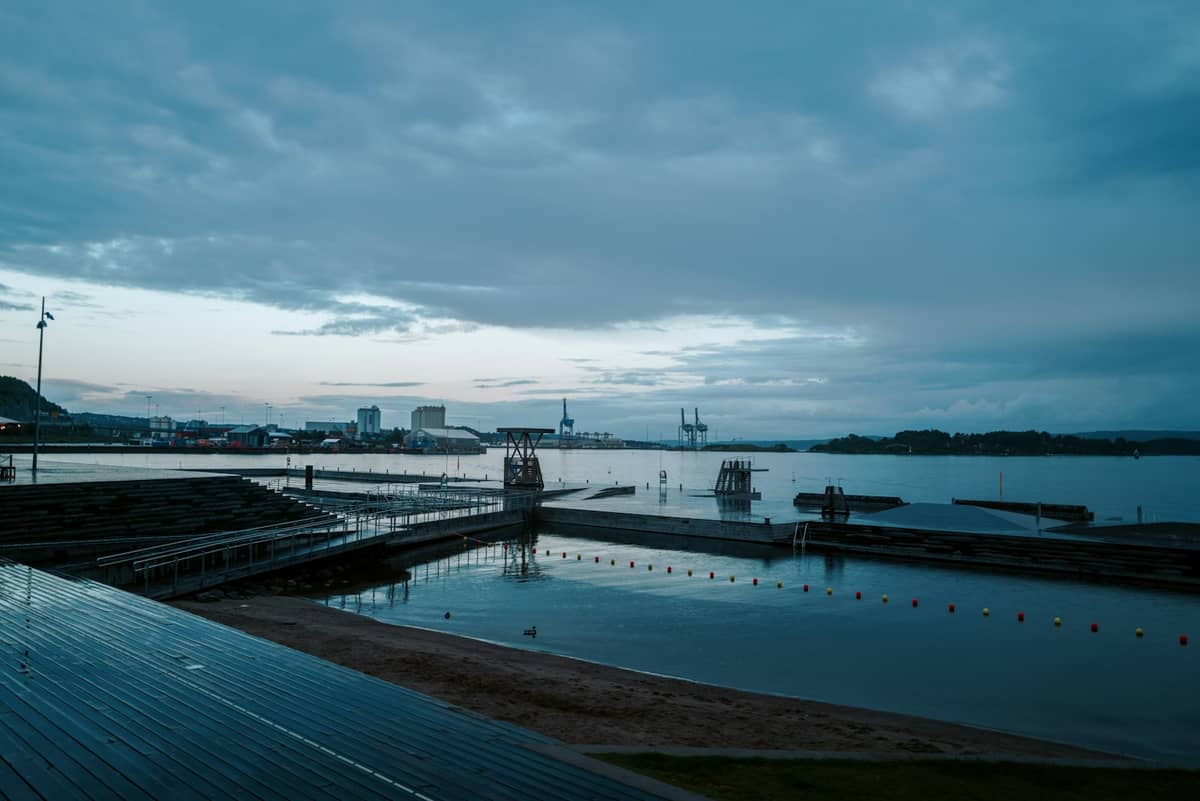
13. See the Opera House and Barcode from Sørenga Seawater Pool
The Sørenga swimming complex frames one of Oslo's best low-angle architectural views: the Opera House on one side, Barcode towers on the other, with the fjord in the foreground. Even if you don't swim, the promenade walk gives excellent views and is free to use anytime.
Explore13. See the Opera House and Barcode from Sørenga Seawater Pool
The Sørenga swimming complex frames one of Oslo's best low-angle architectural views: the Opera House on one side, Barcode towers on the other, with the fjord in the foreground. Even if you don't swim, the promenade walk gives excellent views and is free to use anytime.
Explore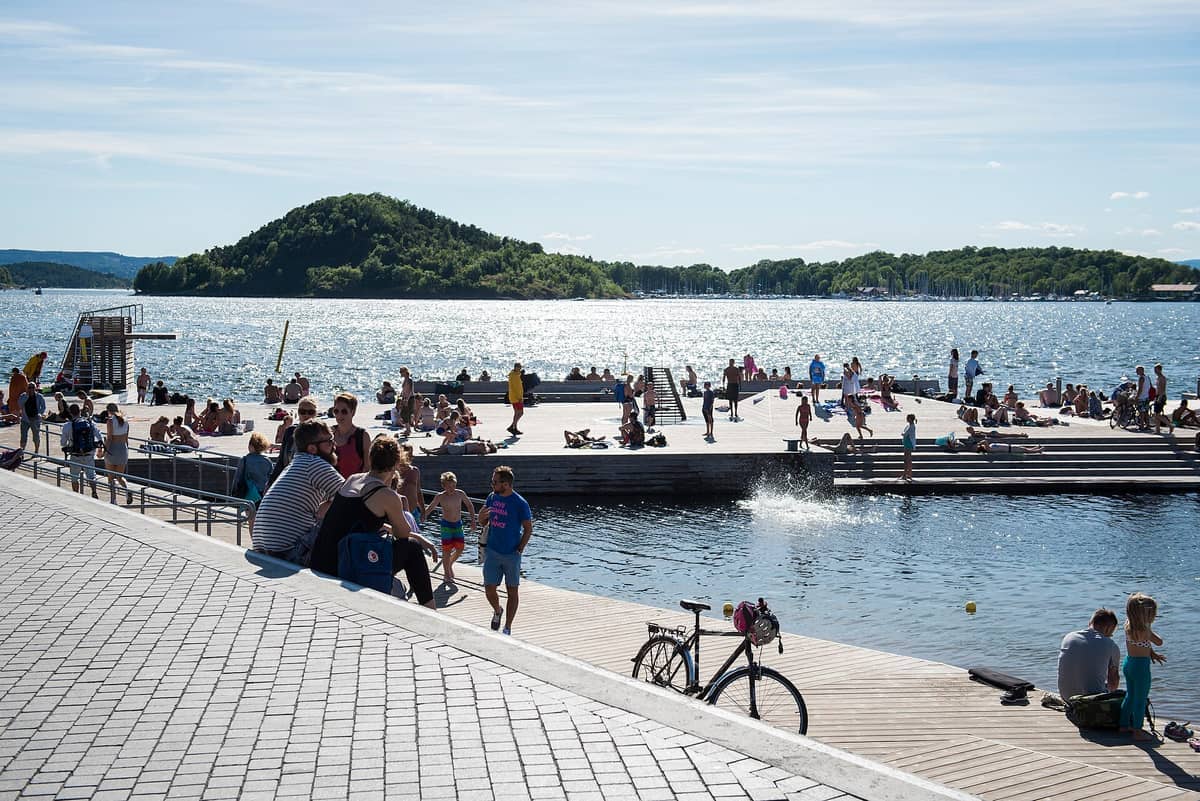
14. Look Back at Oslo's Skyline from the Oslofjord Islands
A public ferry from Aker Brygge takes 10-20 minutes to the inner fjord islands, and from Hovedøya or Gressholmen the view back to the city, with its towers and hills, is one you simply cannot get from land. The ferry runs all summer; combine with a swim or picnic.
Explore14. Look Back at Oslo's Skyline from the Oslofjord Islands
A public ferry from Aker Brygge takes 10-20 minutes to the inner fjord islands, and from Hovedøya or Gressholmen the view back to the city, with its towers and hills, is one you simply cannot get from land. The ferry runs all summer; combine with a swim or picnic.
Explore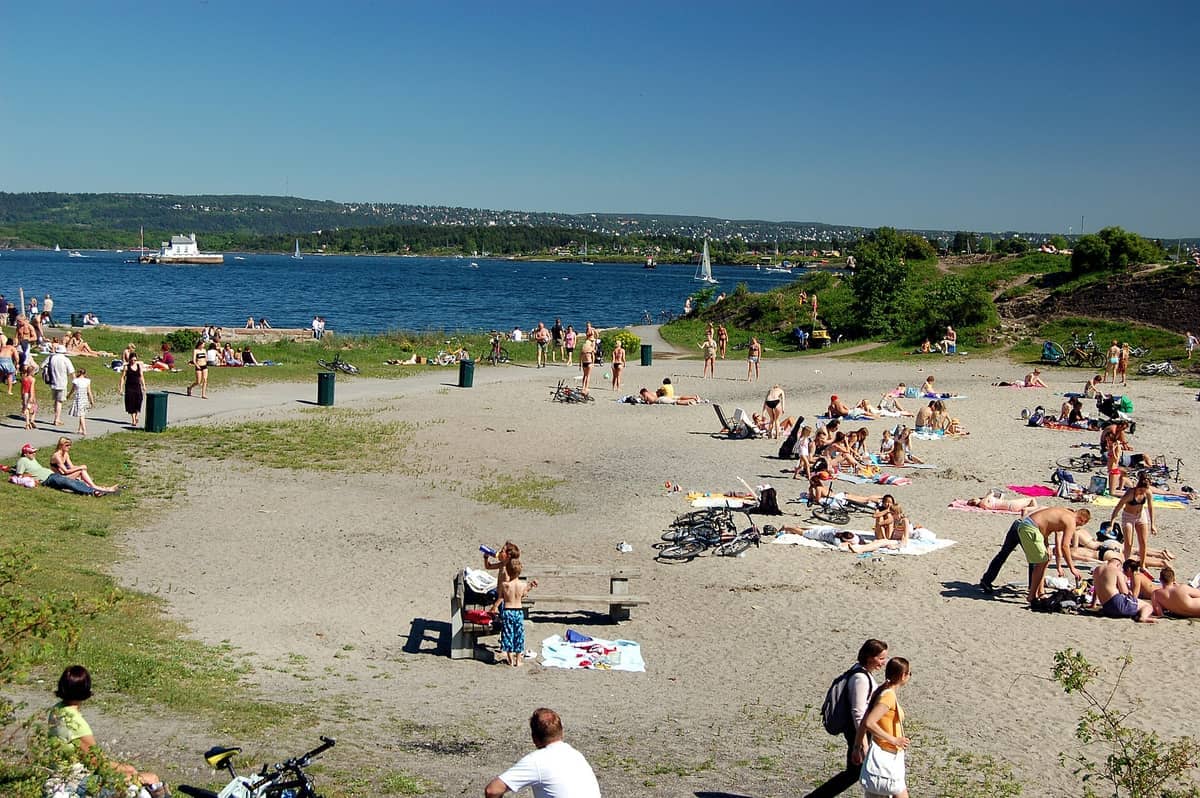
15. Catch Fjord Views from Huk Beach on the Bygdøy Peninsula
From the sandy shores at Huk, on the tip of Bygdøy, you look directly out over the open Oslofjord with no city infrastructure in the way. The perspective feels more expansive than anywhere in the city centre. Go in the evening when the light is low and the crowds thin.
Explore15. Catch Fjord Views from Huk Beach on the Bygdøy Peninsula
From the sandy shores at Huk, on the tip of Bygdøy, you look directly out over the open Oslofjord with no city infrastructure in the way. The perspective feels more expansive than anywhere in the city centre. Go in the evening when the light is low and the crowds thin.
ExploreViews from Parks & Elevated Green Spaces
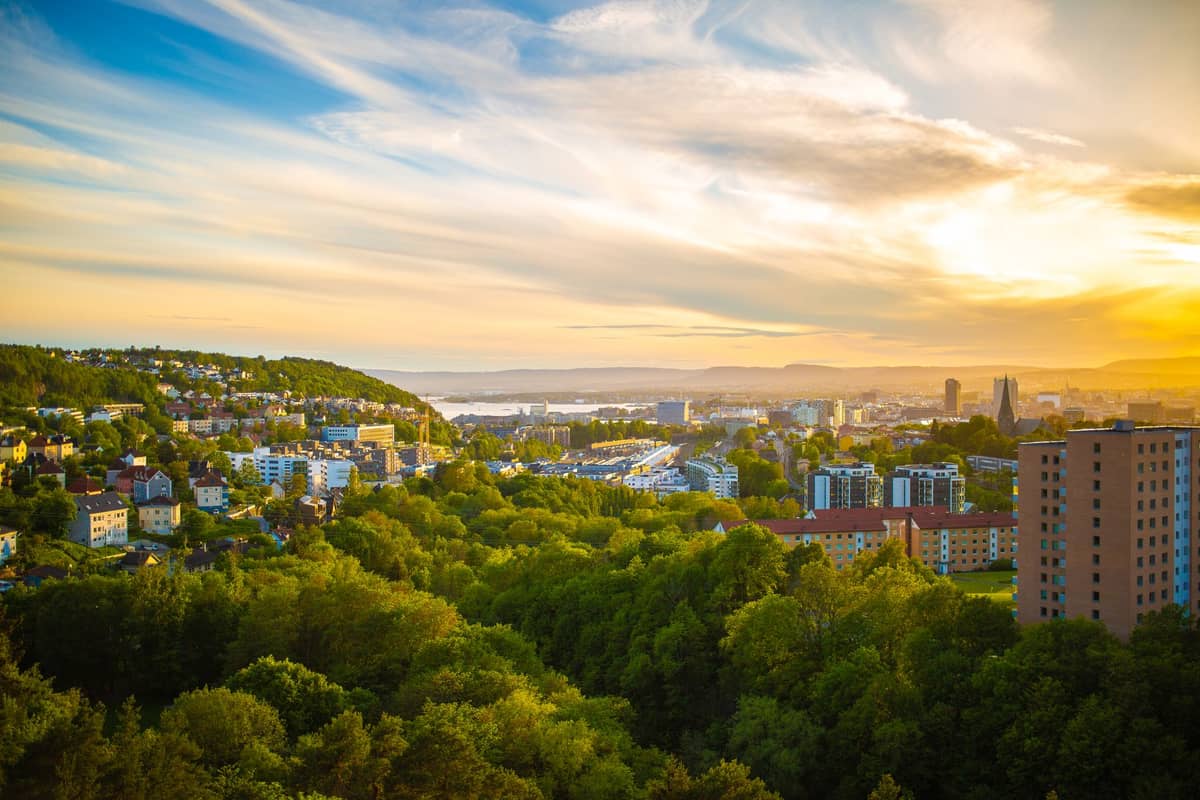
Several of Oslo's parks sit on elevated ground or offer long sightlines across the city that reward a slower approach. These are the views that locals return to for everyday pleasure rather than tourist spectacle.
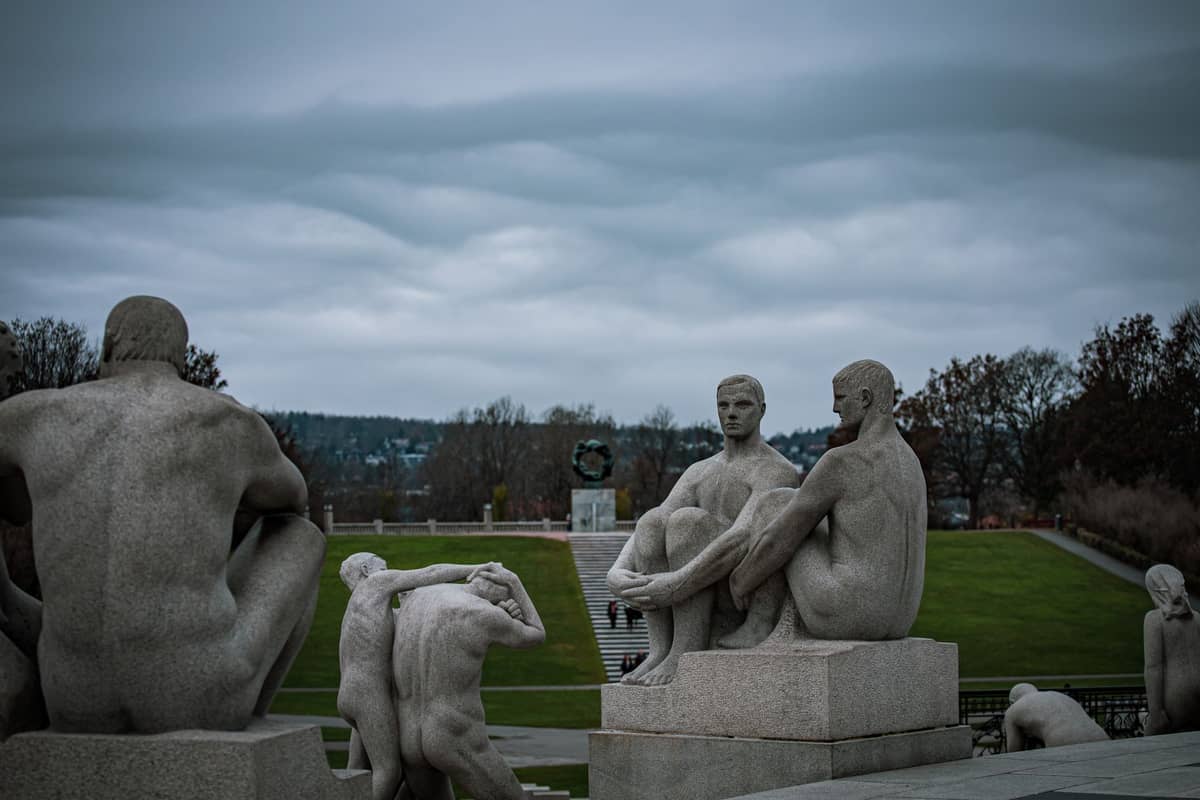
16. See the City Skyline Framed Beyond Vigeland's Monolith
The central axis of the sculpture park rises on a gentle hill, and from the Monolith plateau the city's western neighbourhoods spread below with the Holmenkollen ridge visible on the horizon. Best in early morning before crowds arrive, or in winter when snow covers the sculptures.
Explore16. See the City Skyline Framed Beyond Vigeland's Monolith
The central axis of the sculpture park rises on a gentle hill, and from the Monolith plateau the city's western neighbourhoods spread below with the Holmenkollen ridge visible on the horizon. Best in early morning before crowds arrive, or in winter when snow covers the sculptures.
Explore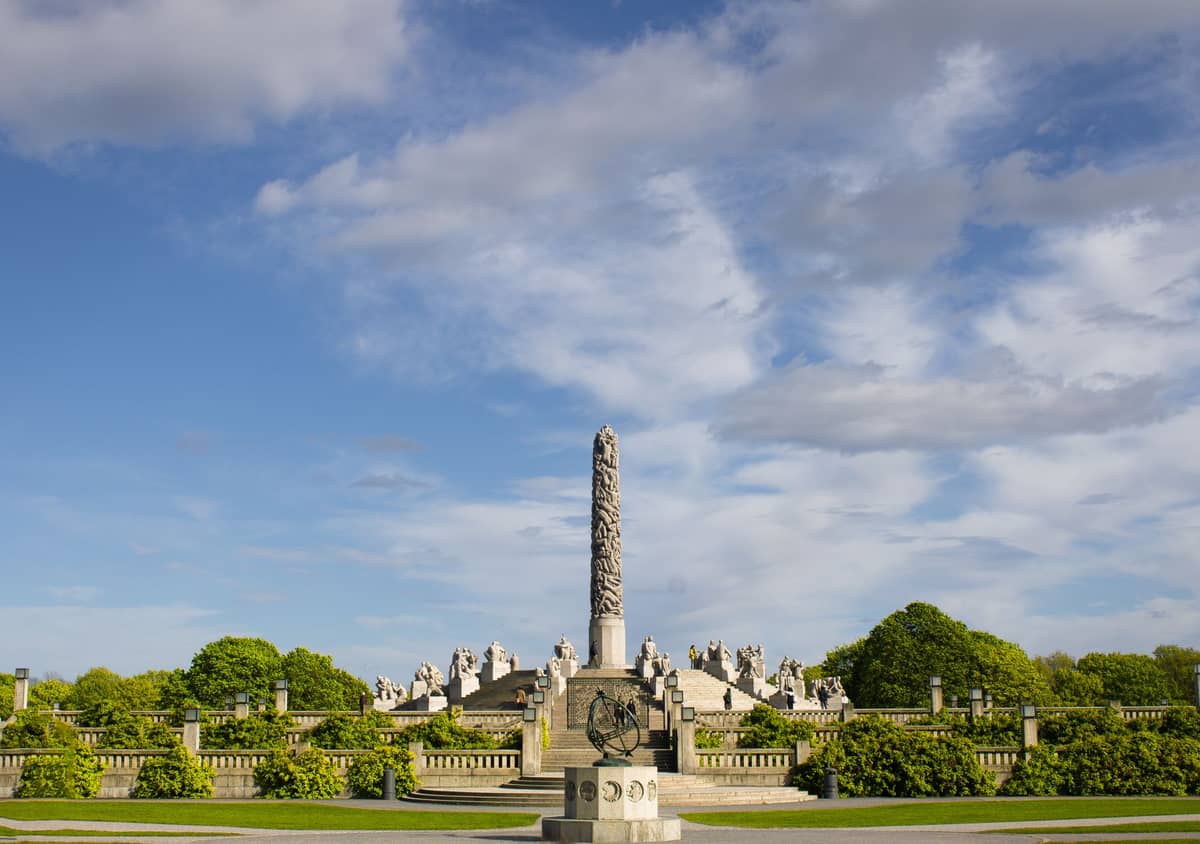
17. Find Quiet City Views from Frogner Park's Upper Pathways
The park's northern perimeter paths offer low-key elevated views over the park itself toward the city and hills beyond. Less dramatic than Ekeberg or Holmenkollen, but ideal for a morning walk that combines greenery, the sculpture park, and a sense of Oslo at a local pace.
Explore17. Find Quiet City Views from Frogner Park's Upper Pathways
The park's northern perimeter paths offer low-key elevated views over the park itself toward the city and hills beyond. Less dramatic than Ekeberg or Holmenkollen, but ideal for a morning walk that combines greenery, the sculpture park, and a sense of Oslo at a local pace.
Explore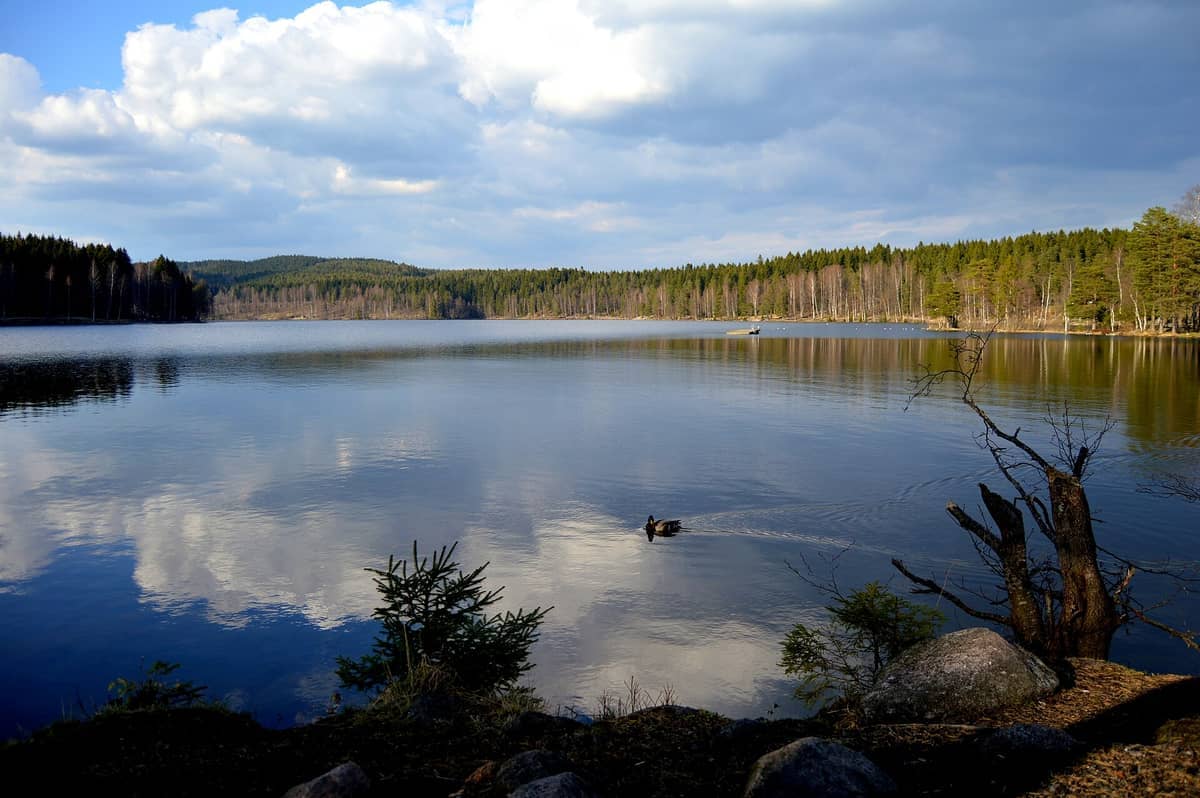
18. Enjoy Nordmarka's Lake Reflections and Hill Views at Sognsvann
The 3.4-kilometre trail around Sognsvann lake gives changing views of the forested hills surrounding this glacial lake, with the city invisible behind the treeline. It is one of the most calming escapes in Oslo; arrive by T-bane line 5 in 25 minutes from the centre.
Explore18. Enjoy Nordmarka's Lake Reflections and Hill Views at Sognsvann
The 3.4-kilometre trail around Sognsvann lake gives changing views of the forested hills surrounding this glacial lake, with the city invisible behind the treeline. It is one of the most calming escapes in Oslo; arrive by T-bane line 5 in 25 minutes from the centre.
Explore💡 Local tip
Most of Oslo's best viewpoints are free and accessible by public transport. The Oslo Opera House roof and Ekebergparken cost nothing to visit. Only Holmenkollen's observation deck and MUNCH charge entry fees, both covered by the Oslo Pass.
Architectural Vantage Points Worth Seeking Out
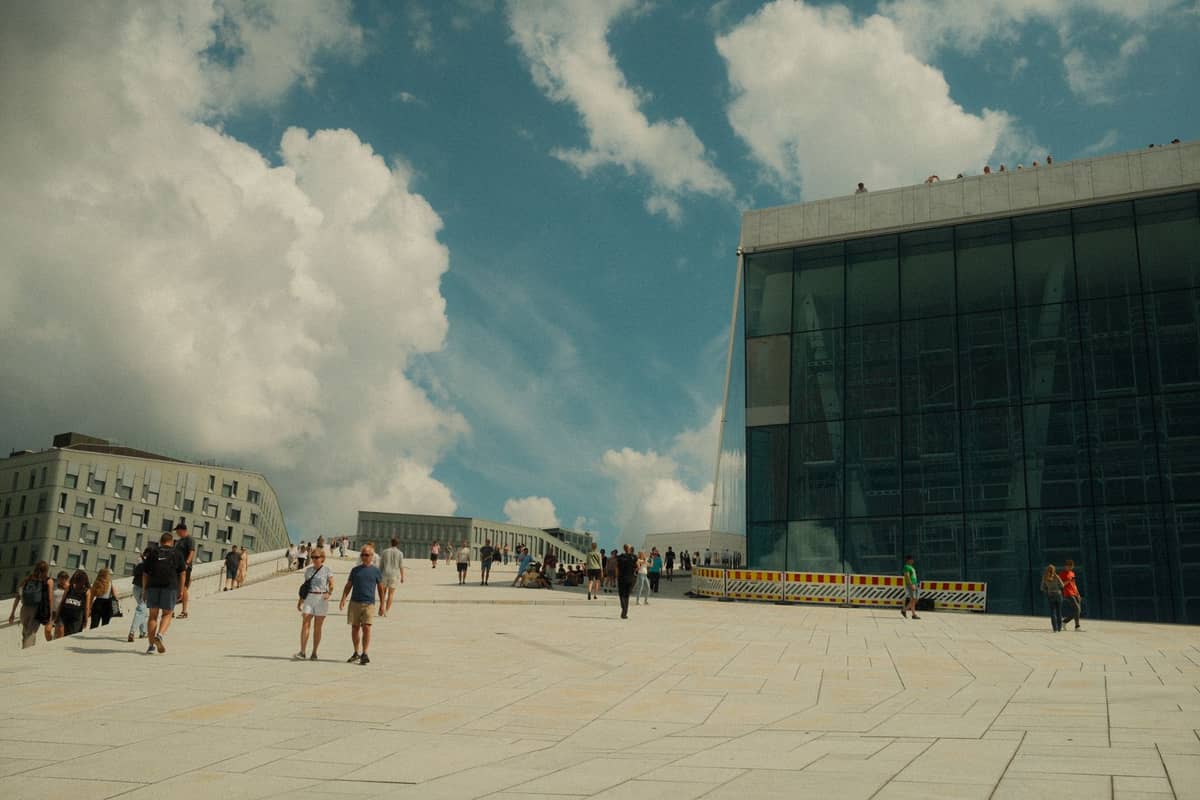
Some of Oslo's best views are a byproduct of its architecture rather than a designated panorama platform. These spots reward visitors who look at the city as a designed object, not just a backdrop.
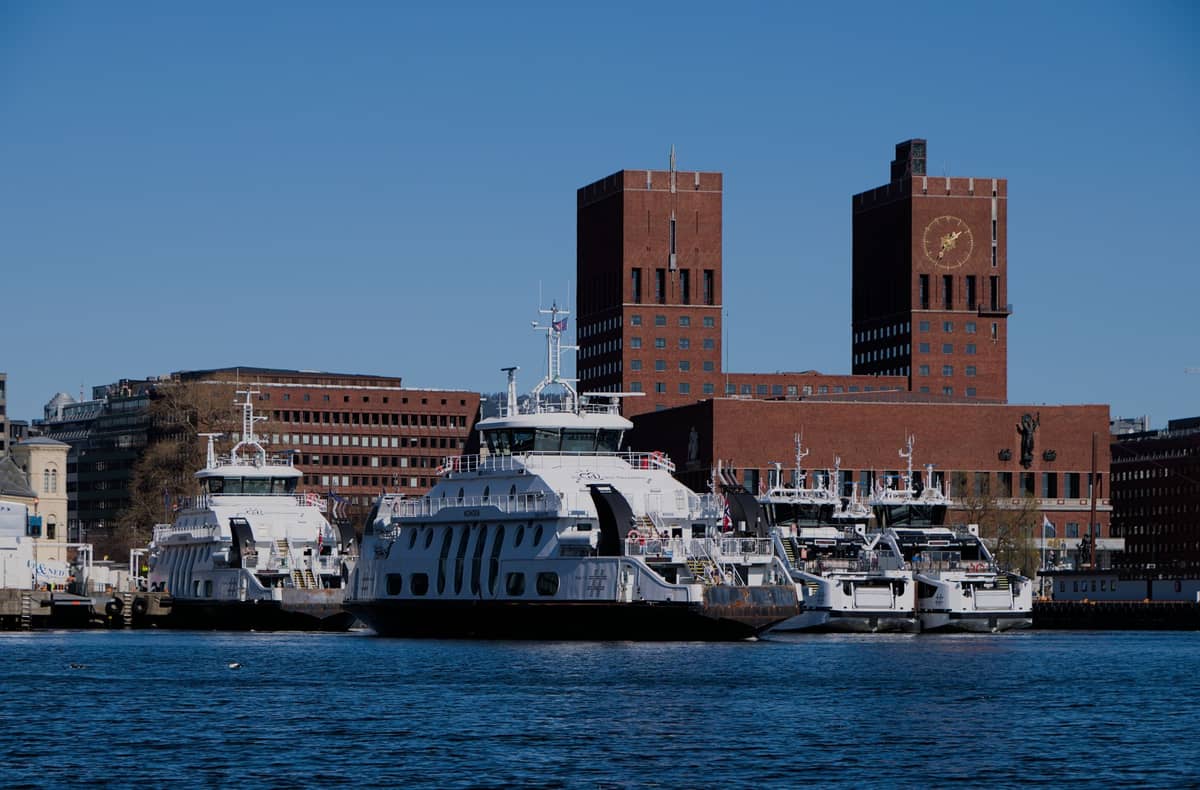
19. View the Harbour Through Oslo City Hall's Front Windows
From inside the City Hall, the enormous windows facing Pipervika frame the harbour, Akershus Fortress, and the fjord in a way that feels almost like a painting. Entry is free; the interior murals are a major attraction in themselves. The Nobel Peace Prize is awarded here each December.
Explore19. View the Harbour Through Oslo City Hall's Front Windows
From inside the City Hall, the enormous windows facing Pipervika frame the harbour, Akershus Fortress, and the fjord in a way that feels almost like a painting. Entry is free; the interior murals are a major attraction in themselves. The Nobel Peace Prize is awarded here each December.
Explore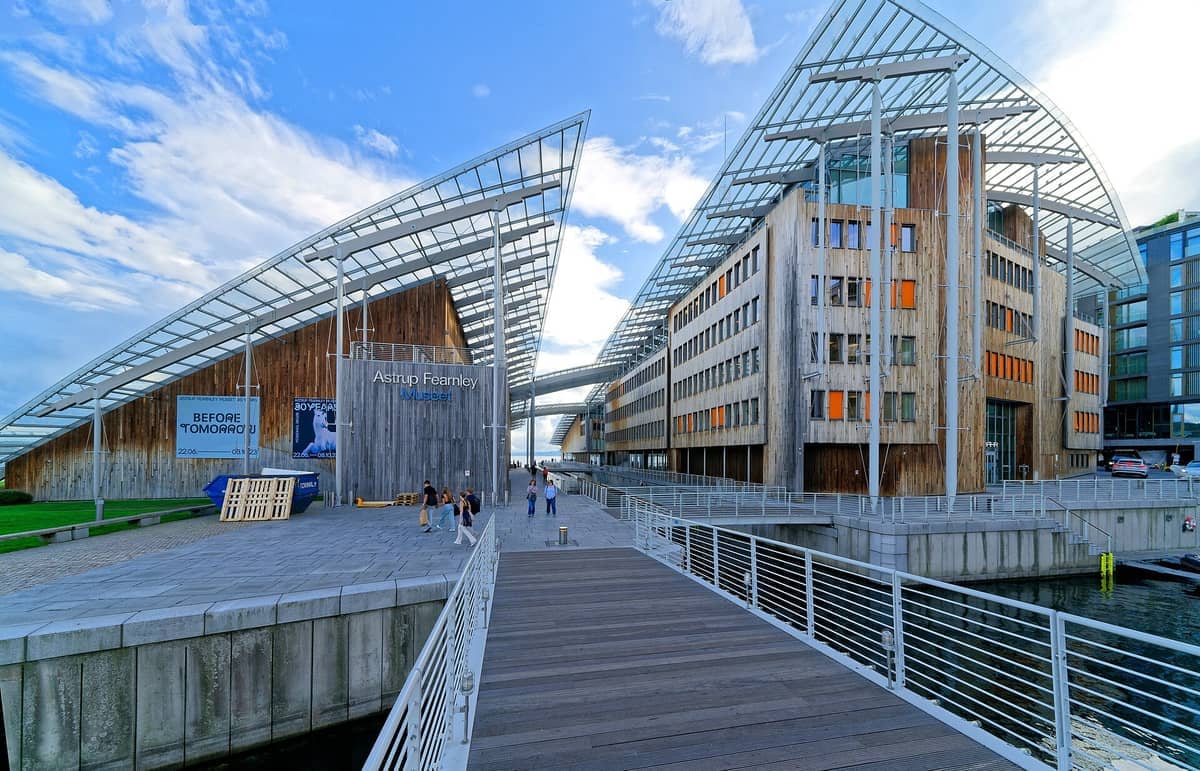
20. See the Tjuvholmen Harbour from the Astrup Fearnley's Waterfront
Renzo Piano's glass sail roof and the narrow canal that cuts through the building create a theatrical frame for the harbour beyond. Even without entering the museum, the exterior walkway and waterfront terrace give one of the most architecturally composed views on the Oslo waterfront.
Explore20. See the Tjuvholmen Harbour from the Astrup Fearnley's Waterfront
Renzo Piano's glass sail roof and the narrow canal that cuts through the building create a theatrical frame for the harbour beyond. Even without entering the museum, the exterior walkway and waterfront terrace give one of the most architecturally composed views on the Oslo waterfront.
ExploreFAQ
What is the best free viewpoint in Oslo?
The Oslo Opera House roof is the most accessible free viewpoint in the city, open at all hours with views over the fjord, Barcode towers, and central Oslo. Ekebergparken and the Ekeberg viewpoint are excellent free alternatives with more elevated, panoramic perspectives over the city and fjord.
How do I get to Holmenkollen for the views?
Take T-bane line 1 (the Frognerseteren line) from central Oslo to Holmenkollen station, a journey of around 25 minutes on a standard Ruter ticket. The ski jump observation deck is a short walk uphill from the station. The Oslo Pass covers entry to the museum and deck.
Which Oslo viewpoint inspired Edvard Munch's The Scream?
The Ekeberg viewpoint above the Ekebergparken sculpture park offers the panorama that is said to have inspired Munch when he saw the sky turn blood red over the Oslofjord. It is free to visit and reachable by tram 13 or 19 from central Oslo in about 15 minutes.
Are Oslo's viewpoints accessible in winter?
Yes. The Opera House roof, Ekebergparken, Akershus Fortress ramparts, and the Holmenkollen observation deck are all accessible year-round. Winter can bring snow and low cloud, but clear winter days produce exceptionally sharp views. Dress warmly and check conditions at Holmenkollen before visiting.
Can I see the fjord from central Oslo without hiking?
Easily. The Opera House roof, Deichman library terraces, Akershus Fortress ramparts, and the Sørenga promenade all give direct fjord views within walking distance of Oslo Central Station. For the widest fjord panorama at water level, take the short public ferry from Aker Brygge to the inner fjord islands.
Tickets & tours
Live prices and dates from our booking partner. If you book, we may earn a commission at no extra cost to you.
Planning a trip? Discover personalized activities with the Nomado app.