Huk Beach: Oslo's Favourite Fjord-Side Escape on Bygdøy
Huk Beach (Huk badeplass) sits at the southern tip of the Bygdøy peninsula, offering sandy coves, grassy sunbathing lawns, and direct access to the Oslofjord. It is free to visit, served by bus from central Oslo, and gets seriously busy on warm summer afternoons — so timing your visit matters.
Quick Facts
- Location
- Tip of the Bygdøy peninsula, Oslo
- Getting There
- Bus 30 from central Oslo to Huk stop
- Time Needed
- 2–4 hours
- Cost
- Free — no admission fee
- Best for
- Swimming, sunbathing, summer picnics, families
What Is Huk Beach?
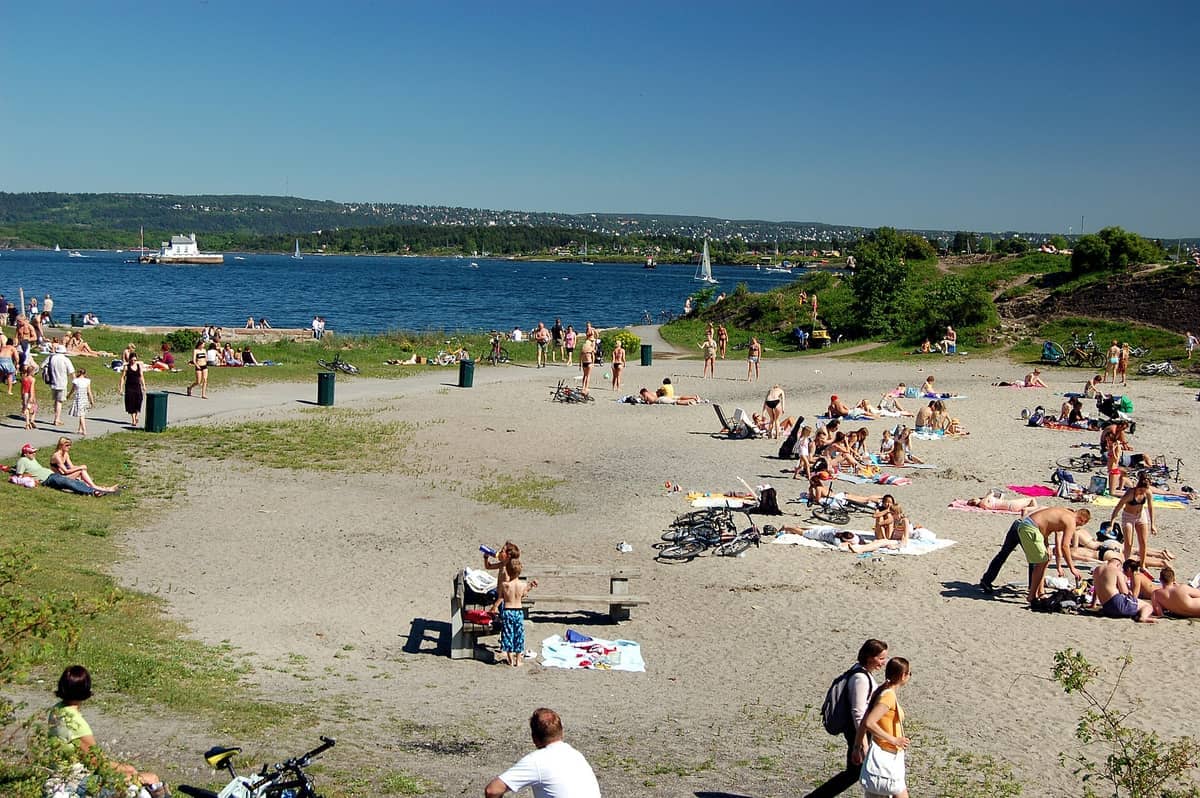
Huk Beach, known locally as Huk badeplass, is Oslo's most frequented public bathing area and arguably the best free swimming spot the Norwegian capital has to offer. It sits at the very southern tip of the Bygdøy peninsula, where the landmass narrows and opens onto the Oslofjord on two sides. That double exposure gives the area something rare for an urban beach: a sense of genuine openness, with long water views and breezes that cut the summer heat.
The beach is not one uniform strip of sand. It divides into two distinct sections facing different orientations, which means the quality of light and shelter shifts throughout the day. The western side tends to be more sheltered from the wind and catches afternoon sun, while the eastern shore faces inward toward the fjord and is often calmer in the morning. Between them, grassy banks provide room to spread out well away from the water's edge.
Huk sits within the broader Bygdøy peninsula, which is one of Oslo's quieter, greener districts. The same stretch of land holds several of Oslo's major museums, a coastal path, and some of the city's most pleasant walking terrain. Combining a beach visit with a museum stop makes for an easy, unhurried day.
The Experience: What You'll Actually Find Here
On a warm July morning, Huk is calm. Families arrive early with folding chairs and thermoses of coffee, staking out patches of grass while the water is still glassy. The air carries the slight salt-and-seaweed smell typical of the inner Oslofjord, and the only sounds are distant ferry engines and children wading in at the shallows. The water temperature in peak summer typically reaches the mid-to-upper teens Celsius — bracing but swimmable, and refreshing once you're in.
By early afternoon on any day above 22°C, the atmosphere shifts completely. Bus 30 delivers crowds from the city in waves. The grassy areas fill quickly, volleyball games start up, and the small food kiosk near the entrance draws a queue. It becomes social and animated rather than peaceful — which is its own appeal if you're in that mood. The late afternoon, roughly 16:00 to 18:00, is often the most energetic and photogenic window: the angle of the sun hits the water at a low golden pitch and the crowd has reached peak density.
💡 Local tip
Arrive before 10:00 on hot weekdays or before 09:30 on summer weekends to secure a good spot on the grass with some shade. By midday in July, both sections can be very crowded and the nearest shaded ground fills fast.
The separate naturist section of the beach northwest of the main bathing area is also known, informally, as a nudist-friendly area. This is an established Oslo tradition rather than anything surprising or marginal — it is accepted and clearly understood by locals. If you prefer a more conventional bathing area, the eastern side is straightforwardly family-oriented.
Tickets & tours
Live prices and dates from our booking partner. If you book, we may earn a commission at no extra cost to you.
Oslo Fjord sightseeing audio-guided electrical boat tour
From 35 €Instant confirmationFree cancellationFjord cruise with live jazz music
From 64 €Instant confirmationFree cancellationLuggage Storage in Oslo
From 6 €Instant confirmationFree cancellationPicturesque dinner cruise in Oslo
From 137 €Instant confirmationFree cancellation
Getting There: Bus 30 and the Bygdøy Approach
The easiest route from central Oslo is Bus 30, which runs from Jernbanetorget (outside Oslo Central Station) along the Bygdøy peninsula all the way to the Huk stop. The journey takes roughly 25–30 minutes depending on traffic, and the bus deposits you a short walk from the beach entrance. No transfers needed. Tickets are standard Ruter fare — verify current prices on the Ruter website or app before travel, as fares are updated periodically.
An alternative approach, and the better one if you have time to spare, is to take the bus only as far as one of the Bygdøy museums and walk the rest of the way along the Bygdøy coastal path. The path follows the shoreline south through light woodland, with filtered fjord views. It adds 20–30 minutes but earns the arrival at the beach more properly.
Cycling is also popular. Bygdøy is relatively flat and easily reached by bike from central Oslo, with cycle-friendly roads running the length of the peninsula. There is bike parking near the beach entrance. In summer, the ferry service from Aker Brygge to Bygdøy also operates — check current seasonal schedules, as it primarily serves the museum cluster rather than the beach itself, requiring a walk of around 20 minutes from the ferry dock.
When to Visit: Seasons and Weather
Huk is an outdoor bathing area with no covered facilities, which means it is almost entirely weather-dependent. The swim season runs roughly from late May through early September, with the peak being July and the first half of August. Oslo's summers are genuinely warm — average highs in July reach around 21–23°C — but they are also variable. A grey, windy day in June will leave Huk nearly deserted and not particularly pleasant. A clear day in late August, on the other hand, can be exceptional: warm air, calmer light, and noticeably thinner crowds as school terms resume.
Early morning visits in late May or June have their own quality. The light is cool and sharp, the air is fresh rather than hot, and you may have long stretches of the grass entirely to yourself. Bring layers — temperatures can still feel cool before 10:00 even on sunny early-summer mornings.
⚠️ What to skip
Oslo's weather can change quickly. Even in July, a warm morning can become overcast and cool by afternoon. Check the forecast on yr.no (Norway's official meteorological service) the night before, and bring a light jacket regardless.
For a broader picture of when Oslo delivers its best outdoor conditions, the best time to visit Oslo guide covers seasonal trade-offs across the whole city, including how shoulder months like May and September compare to peak summer.
Practical Details: What to Bring and What to Expect On-Site
Huk is a public outdoor space maintained by Oslo municipality. There are basic facilities on site, including toilets and typically a small kiosk selling drinks and snacks during summer months — but availability and hours can vary by season. Do not count on the kiosk being open or well-stocked, particularly early or late in the season. Bring your own water and food, especially if you are visiting with children.
- Towel and swimwear (bring an extra layer for the bus ride back)
- Sunscreen — the UV index climbs quickly on clear days near water
- Reusable water bottle — Oslo tap water is of high quality and the bus journey is short
- Picnic supplies — there is plenty of grassy space and no restrictions on food
- Sandals or water shoes — the shoreline has some rocky stretches alongside the sandy areas
- Cash or card for the kiosk, though facilities are limited
Shade is limited on the beach itself. The grassy areas closer to the tree line offer some natural cover, but the prime spots near the water are fully exposed. If you burn easily or are visiting with young children, positioning yourself at the edge of the grassy bank near the trees is worth the slightly longer walk to the water.
Accessibility infrastructure at Huk includes features like accessible toilets and an accessibility ramp, but the terrain around the water's edge is still uneven in places, with grass, sand, and rock all present, so visitors with mobility requirements should plan accordingly and consider contacting Oslo kommune directly for the most detailed, current information.
Photography and the Surrounding Area
The best photography at Huk happens at the edges of the day. Early morning light casts long shadows across the grass and the water has a mercury stillness before the first swimmers arrive. Late afternoon sun, particularly in July and August, produces warm backlighting when shooting toward the fjord from the eastern shore. Midday light is flat and harsh — functional for documentation but not the most rewarding for composition.
The wider Bygdøy area is worth exploring before or after the beach. The Norsk Folkemuseum and the Fram Museum are both within walking distance, and together they offer a solid three-to-four hour museum circuit that pairs well with a beach afternoon.
If you want more Oslo waterfront options beyond Bygdøy, the Oslo fjord guide covers the full range of swimming spots, island trips, and waterside activities across the city.
Who Should Skip Huk Beach
Huk is not for everyone. If you are visiting Oslo outside the May-to-September window, there is very little reason to come here — it is a summer bathing beach and nothing more in the colder months. Visitors seeking dramatic scenery or a polished, resort-style experience will find Huk underwhelming: the setting is pleasant but modest, and the facilities are basic. Travelers with limited time in Oslo who have not yet visited the city's museums, viewpoints, or the fjord islands may find better use of their hours elsewhere before making the trip to Huk.
For travelers who want a beach day but with more of an island atmosphere, the Oslofjord islands offer a more secluded alternative, accessible by ferry from Aker Brygge or Vippetangen.
Insider Tips
- The western section of Huk, known for clothing-optional bathing, tends to be slightly less crowded than the main eastern beach even on busy days — useful to know if you simply want more space and are unfazed by the informality.
- Bus 30 on summer weekends can arrive standing-room-only at peak hours. If you are heading to the beach after noon on a hot Saturday, check the real-time Ruter app for the next departure and consider waiting for a less-crowded bus rather than squeezing onto a full one.
- The path from the Bygdøy museum cluster to Huk along the coastal trail passes a small rocky outcrop with clear water that sees far fewer people than the main beach — bring a towel and you may find an almost private swim spot on quieter days.
- Bringing a frisbee or a small ball is not just for entertainment: it gives you a reason to stake out a larger patch of grass early, which you will be glad of once the main crowd arrives.
- Oslo's public tap water is excellent. The bus ride is short and there is no need to buy bottled water for the journey. Filling a bottle at home costs nothing and saves both money and plastic.
Who Is Huk Beach For?
- Oslo residents and visitors wanting a free, no-fuss summer swim within city limits
- Families with children who need open space, shallow entry points, and easy bus access
- Visitors combining a beach afternoon with a morning at Bygdøy's museums
- Travellers seeking a genuine slice of everyday Oslo summer life rather than tourist-circuit sights
- Cyclists looking for a scenic destination ride from the city center
Nearby Attractions
Other things to see while in Bygdøy Peninsula:
- Bygdøy Coastal Path
The Bygdøy Coastal Path traces roughly 10 kilometres of shoreline around one of Oslo's most storied peninsulas, connecting fjord beaches, royal farmland, and quiet coves. It is free to walk year-round, easily reached by bus or seasonal ferry, and one of the few places in Oslo where the city completely disappears behind the treeline.
- Fram Museum
The Fram Museum on Oslo's Bygdøy peninsula houses the actual polar exploration ship Fram, the vessel that carried Nansen, Sverdrup, and Amundsen on their most ambitious expeditions. This is not a replica. It is the real thing, and you can walk its decks.
- Holocaust Center (HL-senteret)
Housed in the former wartime residence of Nazi collaborator Vidkun Quisling, the Holocaust Center (HL-senteret) on Bygdøy is one of Oslo's most historically charged sites. The permanent exhibition confronts Norway's role in the Holocaust with clarity and care, making it essential for anyone serious about understanding 20th-century Norwegian history.
- Kon-Tiki Museum
The Kon-Tiki Museum on Oslo's Bygdøy peninsula houses the original balsa-wood raft that Thor Heyerdahl sailed 8,000 kilometres across the Pacific in 1947. Beyond the raft, the museum tells the full story of Heyerdahl's lifetime of expeditions through original vessels, artifacts, and film. It is compact, well-curated, and quietly gripping.
Planning a trip? Discover personalized activities with the Nomado app.