Holocaust Center Oslo (HL-senteret): What to Expect at Villa Grande
Housed in the former wartime residence of Nazi collaborator Vidkun Quisling, the Holocaust Center (HL-senteret) on Bygdøy is one of Oslo's most historically charged sites. The permanent exhibition confronts Norway's role in the Holocaust with clarity and care, making it essential for anyone serious about understanding 20th-century Norwegian history.
Quick Facts
- Location
- Villa Grande, Huk aveny 56, Bygdøy, Oslo
- Getting There
- Bus 30 to Bygdøyhus stop, then follow signs to Villa Grande
- Time Needed
- 1.5 to 2.5 hours
- Cost
- Adults 120 NOK, students/children 50 NOK, free with Oslo Pass
- Best for
- History travellers, educators, families with older children, solo visitors
- Official website
- www.hlsenteret.no/english
A Building That Carries Its Own History
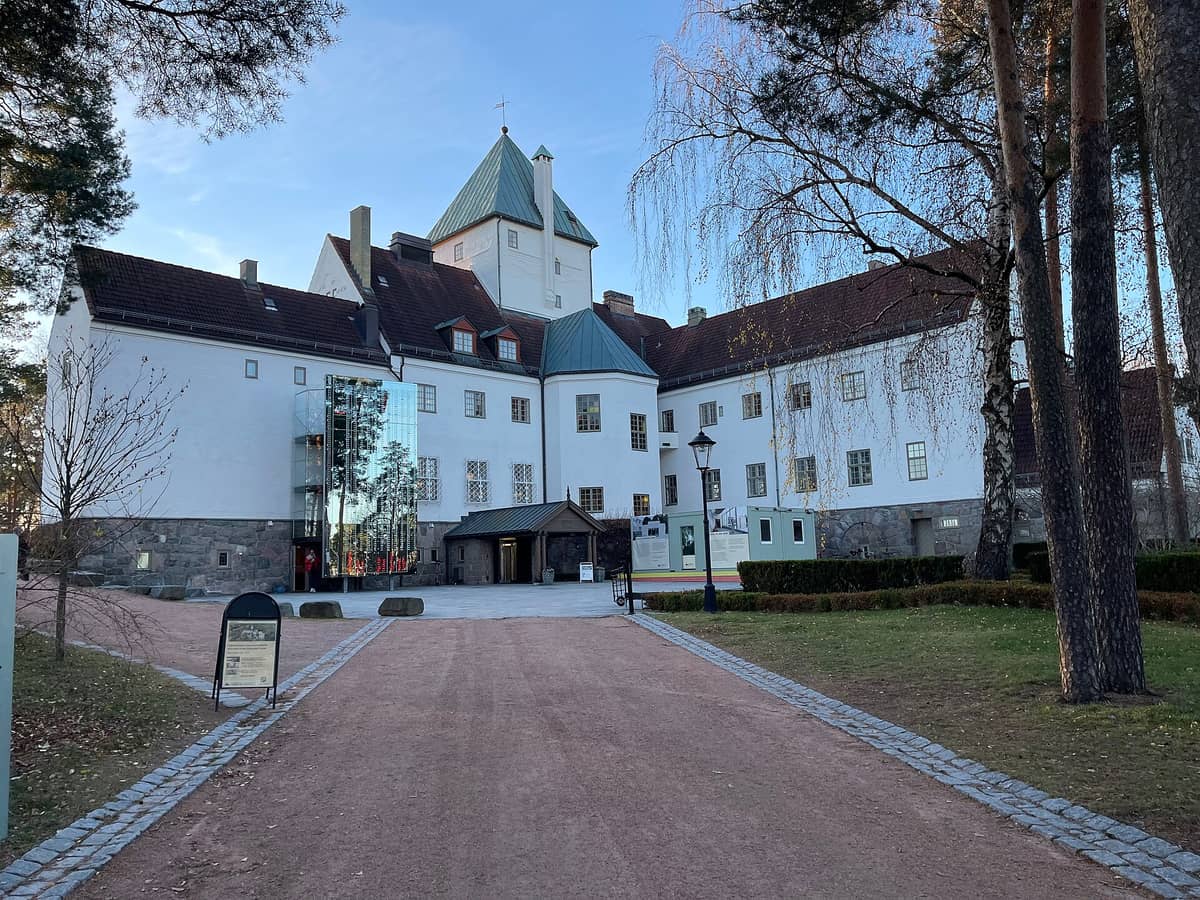
The Holocaust Center (HL-senteret), officially the Norwegian Center for Holocaust and Minority Studies, occupies Villa Grande, a grand early-20th-century mansion on the Bygdøy peninsula. The building itself is inseparable from the subject matter. During the German occupation of Norway in World War II, this was the private residence of Vidkun Quisling, the Norwegian politician who led the collaborationist government under Nazi rule and whose name became a synonym for traitor in several languages. Walking through its rooms, that context is never far away.
The center was established as a national institution for research and education on the Holocaust and the persecution of religious and ethnic minorities in Norway. The dual function, a working research center and a public museum, shapes the experience. The exhibition spaces feel carefully considered rather than sensationalist. There is no attempt to overwhelm with scale. The approach is analytical and evidence-based, which makes its conclusions more unsettling, not less.
ℹ️ Good to know
The museum is open every day 10:00–16:00. Admission is 120 NOK for adults, 50 NOK for students and children aged 6–17, 70 NOK for seniors, and free for children under 6. A family ticket (2 adults and up to 3 children aged 6–17) costs 180 NOK. Entry is free with the Oslo Pass.
The Permanent Exhibition: Norway and the Holocaust
The heart of HL-senteret is its permanent exhibition on Norway and the Holocaust. It covers the deportation of Norwegian Jews in 1942, a chapter of national history that was largely suppressed in public memory for decades. Norway was the only occupied Western European country where the local police actively participated in the arrests and deportations of Jewish citizens, a fact the exhibition addresses directly and without euphemism.
The exhibition moves through pre-war Jewish life in Norway, the occupation, the role of Norwegian authorities and ordinary citizens, the deportations to Auschwitz, and the post-war reckoning. Display design is restrained: text panels, archival photographs, documentary materials, and personal testimonies. There are no theatrical reconstructions. The tone is that of a serious research institution explaining what happened and why it matters, which is more effective than dramatization would be.
One section examines the property confiscation that preceded deportation, connecting abstract policies to individual families and homes. Another addresses postwar antisemitism and Norway's slow, uneven acknowledgment of its wartime conduct. By the time you reach the exit, the exhibition has made a coherent argument: complicity is structural, and silence is a choice.
Tickets & tours
Live prices and dates from our booking partner. If you book, we may earn a commission at no extra cost to you.
Nobel Peace Center Museum tickets
From 14 €Instant confirmationFree cancellationOslo Fjord sightseeing audio-guided electrical boat tour
From 35 €Instant confirmationFree cancellationFjord cruise with live jazz music
From 64 €Instant confirmationFree cancellationLuggage Storage in Oslo
From 6 €Instant confirmationFree cancellation
Villa Grande and the Bunker Below
The architecture of Villa Grande adds a layer to the visit that no exhibition text can fully replicate. The house was built in 1917 and is a substantial, well-appointed property by any measure. Quisling enlarged and renovated it during the occupation years. Moving through its interior, between formal exhibition rooms and connecting corridors, there is an uncomfortable elegance that reinforces rather than softens the subject matter.
Beneath the villa lies a wartime bunker constructed for Quisling's use. Guided tours of the bunker are available, and they are worth taking if you have the time. Access involves stairs, which makes this section less suitable for visitors with significant mobility limitations. The bunker is compact and utilitarian in contrast to the villa above, and the juxtaposition is striking. Check the official website or ask at reception about current tour schedules, as they may vary by season.
💡 Local tip
The bunker tour is not always prominently advertised at the entrance. Ask at reception when you arrive whether a guided tour is scheduled during your visit. It adds roughly 30 to 45 minutes and is the single most atmospheric part of the experience.
Visiting in Practice: Time of Day and Crowd Patterns
HL-senteret draws a noticeably different crowd than the maritime or folk museums nearby on Bygdøy. Visitors tend to move slowly and quietly through the galleries. Voices are kept low even in the absence of any instruction to do so. The atmosphere is contemplative, sometimes heavy, and that heaviness is appropriate to the material. It is not a place where children are unwelcome, but it works best for those old enough to engage with the subject, roughly secondary school age and up.
Midweek mornings are the quietest time to visit. Weekend afternoons, particularly in summer, bring larger groups including school parties and tour groups from cruise ships docked in Oslo. Even then, the museum rarely feels crowded in the way that larger Oslo attractions can. The building's size and the nature of the content naturally slow foot traffic.
If you are planning a full day on Bygdøy, HL-senteret pairs well with the Norsk Folkemuseum or the Norway Resistance Museum at Akershus Fortress, which addresses the occupation from a different angle. That said, combining HL-senteret with other heavy history content in a single day can be emotionally taxing. Give yourself permission to pace the visit.
Getting There: Bygdøy by Bus or Boat
Bus 30 is the most reliable year-round connection to Bygdøy. Board near the National Theatre or at Aker Brygge and ride to the Bygdøyhus stop. From there, signs direct visitors to Villa Grande, which is a short walk. The route takes roughly 15 to 20 minutes from central Oslo depending on traffic, and buses run frequently.
In summer, a seasonal ferry service operates between Aker Brygge and Bygdøy, which makes for a pleasant approach to the peninsula. The ferry does not run year-round, so check current timetables before planning around it. If you are using the Oslo Pass, both the bus and the ferry are included, as is admission to HL-senteret itself.
💡 Local tip
Villa Grande sits slightly inland from the main museum cluster on Bygdøy and is a few minutes' walk from the Fram and Kon-Tiki museums. If you are coming specifically for HL-senteret, follow the signs from Bygdøhus rather than walking from the main museum pier, which adds unnecessary distance.
Photography, Accessibility, and Practical Details
Photography is generally permitted in the permanent exhibition for personal use, but given the nature of the material, many visitors choose not to photograph extensively. The interior light is controlled and relatively low in certain sections, which suits quiet contemplation but makes for challenging photography without a good camera sensor.
The main exhibition spaces in Villa Grande are accessible for visitors with limited mobility. The bunker section involves stairs and is not fully accessible; contact the center in advance at +47 22 84 21 00 or post@hlsenteret.no if you have specific requirements. The reception staff are helpful and speak English fluently.
HL-senteret sits on Bygdøy, Oslo's museum peninsula, which also includes the Fram Museum and the Kon-Tiki Museum. The contrast between those adventure-focused institutions and HL-senteret is marked. Visitors combining them in one day should plan HL-senteret for the morning when focus is freshest, before the lighter-themed museums in the afternoon.
Is It Worth Your Time?
For visitors who want to understand Norway beyond its scenery and design culture, HL-senteret is one of the most important stops in Oslo. It fills a gap that other Oslo museums leave open. The occupation and its consequences are touched on at the Resistance Museum, but the specific history of Norwegian Jews and the mechanisms of collaboration receive their fullest, most honest treatment here.
The admission price is modest, the exhibition is well translated into English, and the setting inside Villa Grande is unlike anything else in the city. For context on Norway's 20th-century history, combine this with the Akershus Fortress and the adjacent Resistance Museum. Together, they give a layered picture of occupation, collaboration, and resistance that no single site can fully provide.
Who might skip it: visitors on a very short itinerary focused exclusively on outdoor Oslo, those travelling with very young children, or anyone who finds Holocaust-related material too emotionally difficult to process while travelling. The museum does not soften its subject. That is its strength, but it is worth knowing before you arrive.
Insider Tips
- Ask at reception when you arrive whether a bunker tour is scheduled. It is not always listed on the main board and fills up with small groups, so arriving early in the day improves your chances of joining one.
- The museum has a small but well-stocked reading room and research library accessible to visitors. If you want to go deeper into specific topics raised by the exhibition, staff can point you toward resources on site.
- The garden around Villa Grande is included in the visit and worth a few minutes. The grounds are quiet and offer a different perspective on the building's scale. In summer the trees are in full leaf and the contrast between the setting and the subject matter is worth sitting with.
- If you are visiting with teenagers, the exhibition text is written to be understood without prior knowledge of Norwegian history. It works well as a starting point rather than a supplement to prior reading.
- The Oslo Pass covers admission and is valid on Bus 30 to Bygdøy. If you are already planning to visit two or more Bygdøy museums on the same day, the pass typically pays for itself before you reach the afternoon.
Who Is Holocaust Center (HL-senteret) For?
- History-focused travellers who want to understand Norway beyond its outdoor attractions
- Educators and students visiting Oslo with an academic purpose
- Families with secondary school-age children ready to engage with 20th-century history
- Solo visitors who prefer a contemplative, unhurried museum experience
- Anyone combining a full day of Bygdøy museums and wanting meaningful contrast between sites
Nearby Attractions
Other things to see while in Bygdøy Peninsula:
- Bygdøy Coastal Path
The Bygdøy Coastal Path traces roughly 10 kilometres of shoreline around one of Oslo's most storied peninsulas, connecting fjord beaches, royal farmland, and quiet coves. It is free to walk year-round, easily reached by bus or seasonal ferry, and one of the few places in Oslo where the city completely disappears behind the treeline.
- Fram Museum
The Fram Museum on Oslo's Bygdøy peninsula houses the actual polar exploration ship Fram, the vessel that carried Nansen, Sverdrup, and Amundsen on their most ambitious expeditions. This is not a replica. It is the real thing, and you can walk its decks.
- Huk Beach
Huk Beach (Huk badeplass) sits at the southern tip of the Bygdøy peninsula, offering sandy coves, grassy sunbathing lawns, and direct access to the Oslofjord. It is free to visit, served by bus from central Oslo, and gets seriously busy on warm summer afternoons — so timing your visit matters.
- Kon-Tiki Museum
The Kon-Tiki Museum on Oslo's Bygdøy peninsula houses the original balsa-wood raft that Thor Heyerdahl sailed 8,000 kilometres across the Pacific in 1947. Beyond the raft, the museum tells the full story of Heyerdahl's lifetime of expeditions through original vessels, artifacts, and film. It is compact, well-curated, and quietly gripping.
Planning a trip? Discover personalized activities with the Nomado app.