Fram Museum: Aboard the Ship That Reached Both Poles
The Fram Museum on Oslo's Bygdøy peninsula houses the actual polar exploration ship Fram, the vessel that carried Nansen, Sverdrup, and Amundsen on their most ambitious expeditions. This is not a replica. It is the real thing, and you can walk its decks.
Quick Facts
- Location
- Bygdøynesveien 39, Bygdøy peninsula, Oslo
- Getting There
- Bus 30 from central Oslo; seasonal ferry from City Hall Pier 3
- Time Needed
- 1.5 to 2.5 hours
- Cost
- Adults 180 NOK, children under 16 70 NOK, family ticket (2 adults + up to 5 children) 400 NOK, students 50 NOK
- Best for
- History enthusiasts, families with children, anyone curious about polar exploration
- Official website
- frammuseum.no
What the Fram Museum Actually Is
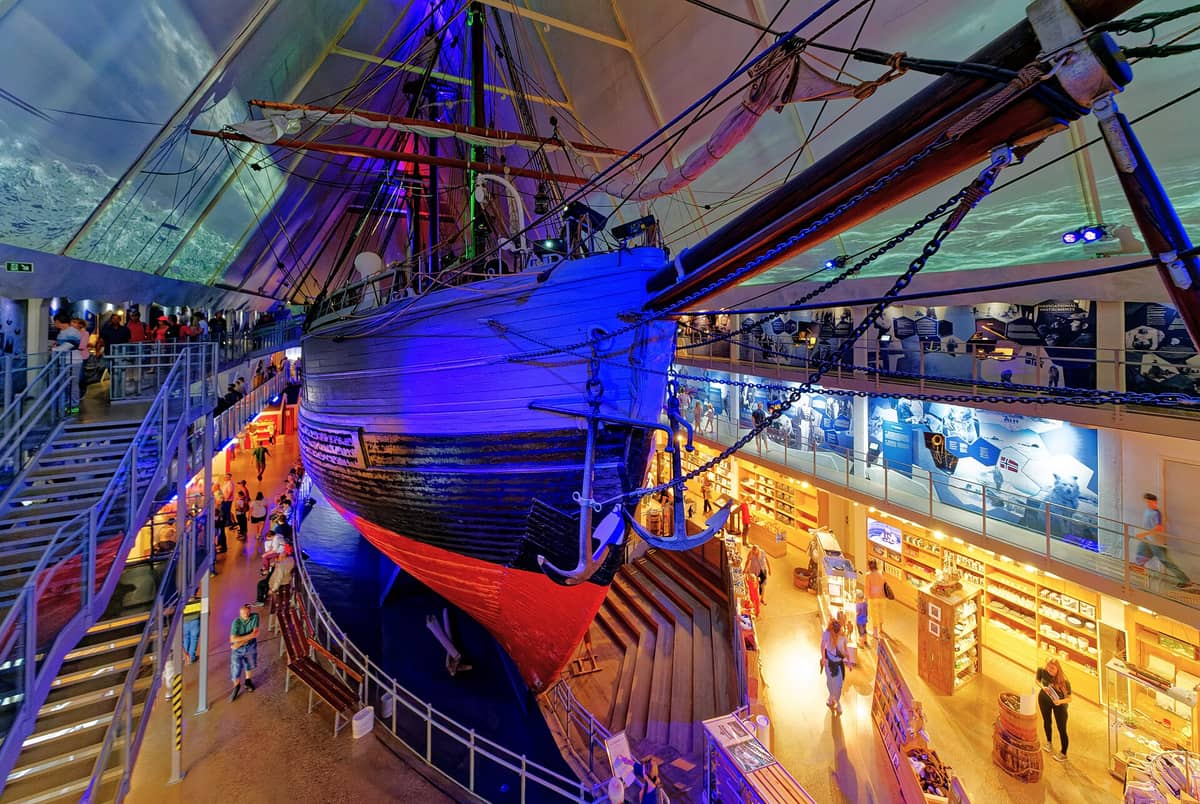
The Fram Museum, known in Norwegian as Frammuseet or FRAM – Polarekspedisjonenes museum, is not a conventional maritime museum with models behind glass. The entire building was constructed around a single object: the polar ship Fram itself, the world’s strongest wooden ship and the ship that sailed closer to both the North and South Poles than any other wooden vessel.
That context matters before you arrive. The ship is not floating. It sits in a purpose-built hangar of a building on the Bygdøy peninsula, elevated on a platform so visitors can walk beneath the hull, alongside it, and up onto the deck via a gangway. The museum is built around the Fram the way a cathedral might be built around a relic, except this relic is 39 metres long and built of wood designed to withstand crushing pack ice.
💡 Local tip
The Oslo Pass covers admission to the Fram Museum, which makes it worth calculating against the standalone ticket price if you plan to visit several Bygdøy museums in one day. Check the current pass terms before visiting.
The Ship: Three Expeditions, One Hull
Fram was built in 1892 and completed three major polar voyages across a 14-year operational span. Fridtjof Nansen used it for his 1893 to 1896 Arctic drift across the polar sea, a deliberate strategy of locking the ship in ice north of Siberia and allowing ocean currents to carry it toward Greenland. The expedition set a new record for the furthest north ever reached at the time. Otto Sverdrup then commanded the ship on a four-year expedition to the Canadian Arctic from 1898 to 1902, mapping vast territories of what are now Canada's High Arctic islands. Finally, Roald Amundsen used the Fram for his 1910 to 1912 South Pole expedition, the journey that culminated in his team becoming the first humans to reach 90 degrees south.
The ship's hull design is what makes it particularly remarkable. Its cross-section is almost rounded rather than V-shaped, so when pack ice presses in from the sides, the hull is pushed upward rather than crushed. This counter-intuitive engineering, developed by the Scottish-Norwegian shipwright Colin Archer, is what allowed Fram to survive conditions that had destroyed other vessels. Looking at it from below, the thickness of the hull layers and the angled bow bracing are visible and surprisingly impressive even to visitors with no interest in naval architecture.
Tickets & tours
Live prices and dates from our booking partner. If you book, we may earn a commission at no extra cost to you.
Explore the Fram Museum with private guide
From 71 €Instant confirmationFree cancellationOslo Fjord sightseeing audio-guided electrical boat tour
From 35 €Instant confirmationFree cancellationFjord cruise with live jazz music
From 64 €Instant confirmationFree cancellationLuggage Storage in Oslo
From 6 €Instant confirmationFree cancellation
Walking Through the Exhibition
The visit follows a rough loop. Ground-floor displays cover the three expeditions chronologically with photographs, original equipment, maps, and objects from the voyages, including clothing, scientific instruments, and provisions. The presentation style is traditional by modern museum standards but the material is strong enough that it does not need elaborate multimedia theatrics to hold attention.
A gangway leads up and onto the Fram's deck, where visitors can enter the ship's interior and walk through the cramped mess room, the captain's cabin, and the cramped sleeping quarters where men spent years in near-perpetual darkness during polar winter. The spaces are genuinely small. Adults need to duck through doorways. The sensation of standing in a room where Nansen or Amundsen actually lived is not something you can replicate from a display case, and this is where the museum earns its status.
There is also a simulation experience that recreates the feeling of an ice compression event, which families with children tend to find memorable. It is brief and not particularly sophisticated, but it communicates something real about the fear and noise of pack ice bearing down on a wooden hull.
The Fram Museum sits alongside several other maritime institutions on Bygdøy, and combining visits makes practical sense. The Kon-Tiki Museum is directly adjacent, and the Norwegian Maritime Museum is a short walk away. If you are spending a full day on the peninsula, see the Norsk Folkemuseum as well, though that requires considerably more time.
Timing Your Visit
The museum is open daily throughout the year. From 1 May to 30 September, hours are 09:30 to 18:00. From 1 October to 30 April, hours are 10:00 to 17:00. There are no days when it is closed, which makes it a reliable option even in midwinter Oslo when many outdoor attractions lose their appeal.
Crowds follow predictable patterns. Weekday mornings in summer, between opening and about 11:00, are the quietest periods. By mid-afternoon in July and August the ship deck queues can slow progress, and the narrow interior spaces feel genuinely congested. If you arrive with children, an early start is worth the effort. Weekend afternoons in peak season are the least comfortable time to visit, not because the museum is unpleasant, but because the ship's interior passages were built for perhaps a dozen crew members and not for simultaneous tourism.
Winter visits have a different quality. The light inside the building is unchanged, but the Bygdøy peninsula is quieter and the ferry from central Oslo does not run in winter. You take the bus instead, which takes around 15 to 20 minutes from the city centre. The walk from the bus stop to the museum is pleasant even in cold weather, passing the Norsk Folkemuseum grounds.
ℹ️ Good to know
The seasonal passenger ferry from City Hall Pier 3 to Bygdøy runs during summer months and takes roughly 10 minutes. It is a more pleasant approach than the bus if the weather is good, and doubles as an inexpensive introduction to the Oslofjord from water level. Check current Ruter schedules for exact dates and fares.
Getting There and Practical Details
Bus 30 from central Oslo runs to Bygdøy and stops within easy walking distance of the museum at Bygdøynesveien 36. The journey takes around 15 minutes from central Oslo. Standard Ruter fares apply. In summer, the passenger ferry from City Hall Pier 3 is the more scenic option and drops off close to the museum cluster.
The museum is wheelchair accessible, with adapted entrance and exhibition spaces. Companions accompanying visitors with a valid companion ID are admitted free of charge, one free ticket per companion ID. Staff are available to assist visitors who need support moving through the building.
Photography inside the ship is permitted and the low-lit interior actually photographs well with a phone if you allow the camera to adjust before shooting. The most striking images are taken looking up at the hull from the ground level beneath the ship, where the curve of the reinforced oak is visible against the overhead lighting.
If you want to understand the broader context of Norwegian exploration history before or after your visit, the Viking history guide for Oslo provides useful background on Norway's long relationship with seafaring. For a wider overview of what the Bygdøy peninsula offers, the Bygdøy neighborhood guide covers the full range of options including the coastal path and beaches.
Clear Assessment: Who Gets the Most From This Museum
The Fram Museum delivers most to visitors who arrive with some prior awareness of what Nansen and Amundsen actually did. The exhibitions give you the story in sufficient detail, but the emotional weight of being on the ship is amplified if you already understand the stakes of these expeditions. Reading a brief account of the Nansen Arctic drift before you go costs nothing and adds considerably to the experience of standing in the same mess room where the crew spent three winters.
Families with children between roughly ages 7 and 14 tend to respond very well to the museum. The ship is tactile and concrete in a way that many museums are not. The ice compression simulator adds something for younger visitors, and the cramped spaces of the ship interior are interesting to children in ways that adult-scaled exhibitions sometimes are not.
Travelers who have limited time in Oslo and need to choose between museums should know this: the Fram Museum does one thing and does it completely. It is not trying to cover Norwegian history broadly or provide multiple competing attractions. If polar exploration holds no interest for you, the museum will feel thin. If it does interest you, the actual presence of the original ship makes this one of the more legitimate museum experiences in Scandinavia.
⚠️ What to skip
Visitors with mobility limitations should note that while the museum entrance and ground-floor displays are wheelchair accessible, access onto the ship deck itself involves steps and narrow passages that may not be fully navigable. Contact the museum directly in advance if this is a concern.
Planning more than one day in Oslo? The 3-day Oslo itinerary places the Fram Museum within a logical sequence of the city's major attractions, grouped by neighborhood to reduce travel time.
Insider Tips
- Arrive within 30 minutes of opening on weekdays to have the ship deck largely to yourself. By 11:00 in summer, school groups and tour parties begin arriving in volume.
- Look at the hull from directly below before going up the gangway. The perspective from ground level, looking up at the rounded underside of the hull, communicates the ship's engineering logic in a way no photograph quite captures.
- The ship's captain's cabin is the smallest space on board. It is worth pausing here specifically because Amundsen commanded the South Pole expedition from this room, and the scale makes the ambition of the project feel almost absurd.
- The combination ticket with the Kon-Tiki Museum next door can be useful if you plan to visit both, which is easy to do in the same half-day. Check current combined ticket availability at the entrance.
- In summer, consider taking the ferry from City Hall Pier 3 to Bygdøy rather than the bus. The approach to the peninsula from the fjord takes about 10 minutes and gives you an early sense of Oslo's waterfront geography before you spend time indoors.
Who Is Fram Museum For?
- History and exploration enthusiasts who want to engage with an original artifact rather than a reconstruction
- Families with school-age children looking for a museum that is tangible and not purely display-based
- Travelers with a Scandinavian maritime interest who want context beyond the Viking era
- Visitors combining a full day of Bygdøy museums and want a flagship anchor attraction to structure the day around
- Winter visitors to Oslo looking for a high-quality indoor experience that runs year-round
Nearby Attractions
Other things to see while in Bygdøy Peninsula:
- Bygdøy Coastal Path
The Bygdøy Coastal Path traces roughly 10 kilometres of shoreline around one of Oslo's most storied peninsulas, connecting fjord beaches, royal farmland, and quiet coves. It is free to walk year-round, easily reached by bus or seasonal ferry, and one of the few places in Oslo where the city completely disappears behind the treeline.
- Holocaust Center (HL-senteret)
Housed in the former wartime residence of Nazi collaborator Vidkun Quisling, the Holocaust Center (HL-senteret) on Bygdøy is one of Oslo's most historically charged sites. The permanent exhibition confronts Norway's role in the Holocaust with clarity and care, making it essential for anyone serious about understanding 20th-century Norwegian history.
- Huk Beach
Huk Beach (Huk badeplass) sits at the southern tip of the Bygdøy peninsula, offering sandy coves, grassy sunbathing lawns, and direct access to the Oslofjord. It is free to visit, served by bus from central Oslo, and gets seriously busy on warm summer afternoons — so timing your visit matters.
- Kon-Tiki Museum
The Kon-Tiki Museum on Oslo's Bygdøy peninsula houses the original balsa-wood raft that Thor Heyerdahl sailed 8,000 kilometres across the Pacific in 1947. Beyond the raft, the museum tells the full story of Heyerdahl's lifetime of expeditions through original vessels, artifacts, and film. It is compact, well-curated, and quietly gripping.
Planning a trip? Discover personalized activities with the Nomado app.