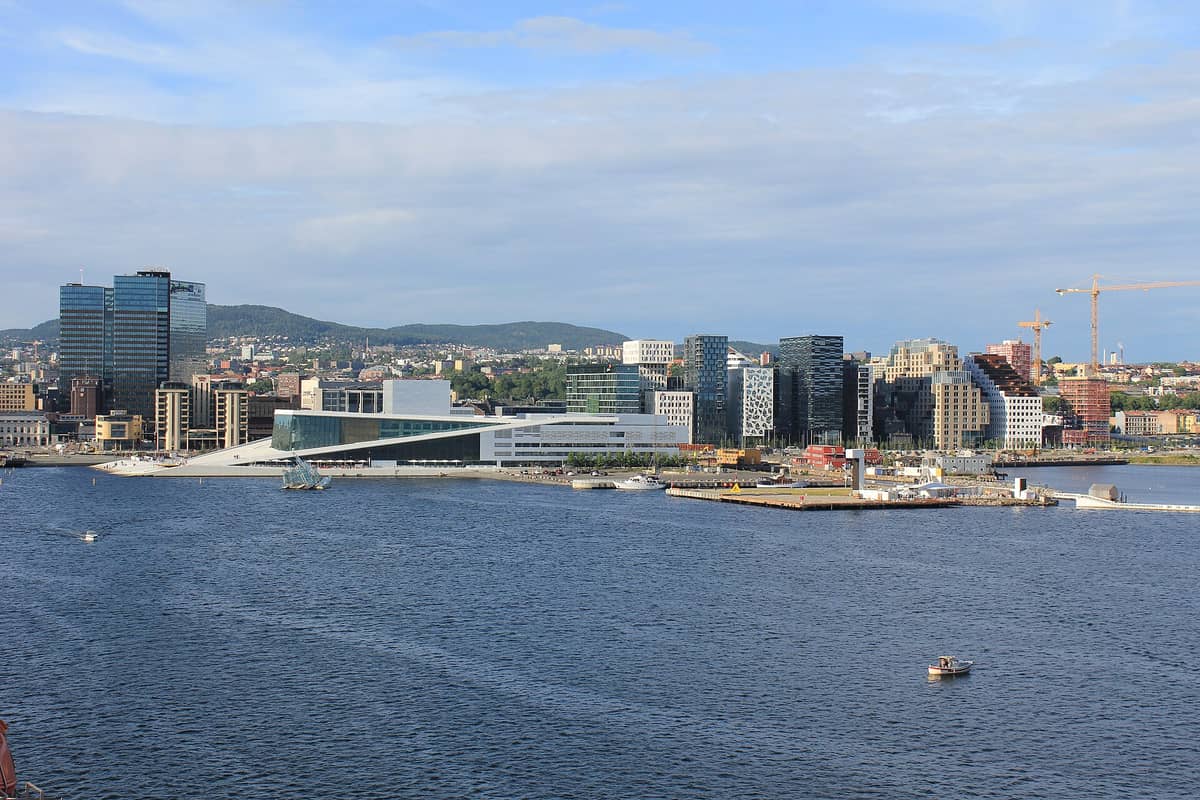
Bjørvika is Oslo's most dramatic urban reinvention, a former container port at the head of the Oslofjord turned into a cultural and architectural showcase. The Oslo Opera House, the Munch Museum, and the Deichman library anchor a waterfront that combines world-class architecture with a working harbor promenade. It sits minutes from Oslo Central Station, making it the easiest major neighborhood in the city to reach.
Bjørvika and the Opera Quarter occupy the southeast corner of Oslo's city center, where the Oslofjord meets the railway. In the space of two decades, this former industrial port has been rebuilt into the most architecturally ambitious neighborhood in Norway, a place where you walk across the roof of an opera house, browse a library that faces open water, and watch the city's new skyline take shape along Dronning Eufemias gate.
Orientation
Bjørvika sits at the innermost point of the Oslofjord, directly southeast of Oslo Central Station (Oslo S) and bounded by water on its southern and eastern edges. Its northern limit runs roughly along Grønlandsleiret, where the neighborhood transitions into Grønland. To the west, Dronningens gate marks the edge before the district blurs into Kvadraturen and the older parts of Sentrum. To the east, the area connects with Gamlebyen, Oslo's medieval quarter.
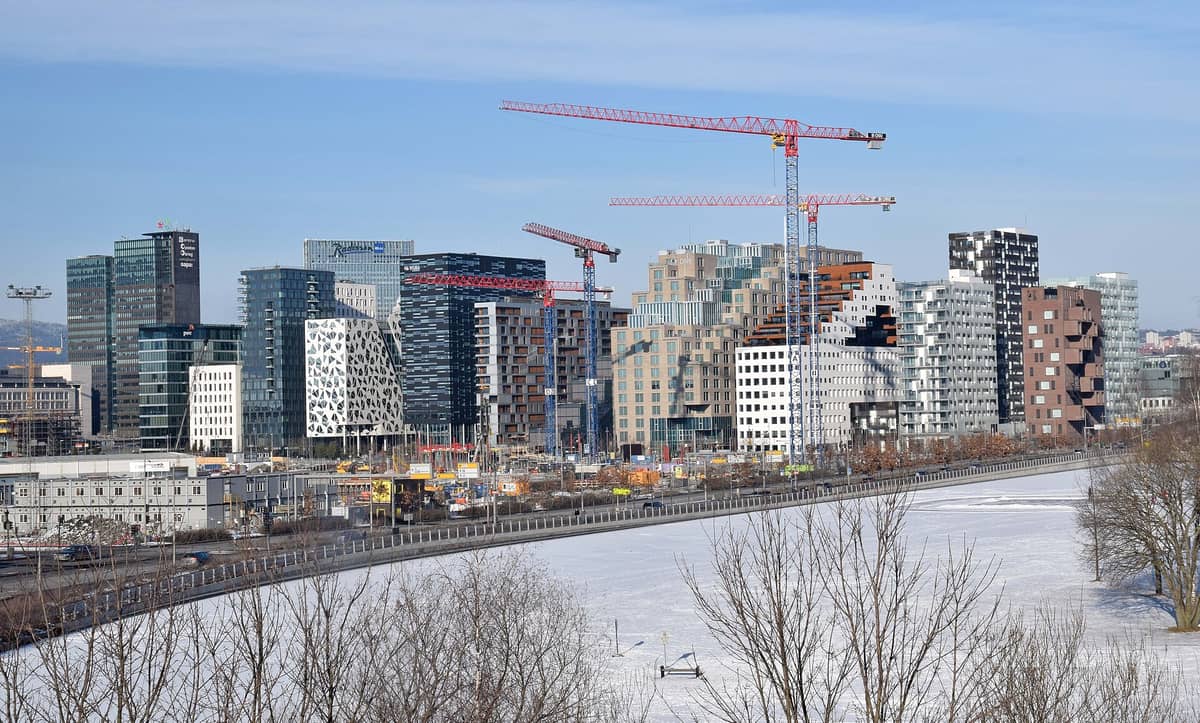
The neighborhood straddles two administrative units: the western portion falls within Sentrum, while the eastern side belongs to the borough of Gamle Oslo. In practical terms, this distinction is invisible on the ground. What you experience is a single, continuous waterfront development running from the Opera House in the west to the Munch Museum and the Sørenga peninsula in the east, with the Barcode tower ensemble lining the northern edge along Dronning Eufemias gate.
The relationship between Bjørvika and adjacent neighborhoods is straightforward to navigate. Walk northwest from the Opera House for ten minutes and you reach the historic Akershus Fortress. Head north along the waterfront and you pass through the city center toward Aker Brygge. Cross the Akrobaten pedestrian bridge east of the Munch Museum and you arrive at Sørenga, a residential peninsular extension of the same redevelopment zone. Grønland and its market streets are a short walk north, offering a sharp contrast in character to the polished architecture of the waterfront.
Character & Atmosphere
Bjørvika is planned, self-conscious, and unapologetically modern. Every major building here was designed by an internationally recognized architect, and the public spaces between them were carefully choreographed. That gives the area a coherence and visual drama you rarely find in cities, but it also means it lacks the organic, slightly unpredictable quality of neighborhoods that evolved over centuries. Whether that bothers you depends entirely on what you're looking for.
Early mornings are the best time to experience the waterfront. By 7am on a summer weekday, joggers are already circling the promenade along Oslobukta, and the light on the fjord is sharp and cold. The Opera House roof, made of Italian Carrara marble and Norwegian granite, is generally open to anyone at any hour, and there are often a handful of people up there before the tourists arrive, watching the ferries move across the water. The effect is genuinely serene in a way that the same spot at noon, when tour groups fan out across the tilted roof, is not.
By midday on weekends, particularly in summer, the area around the Opera House and the Munch Museum fills steadily. This is one of Oslo's most photographed stretches of city, and foot traffic reflects that. The Barcode towers to the north are largely offices, so on weekday mornings those streets have the purposeful rhythm of a business district, with coffee queues at the ground-floor cafés and suited workers crossing between buildings. On weekends that energy drops away and the towers feel slightly deserted at ground level.
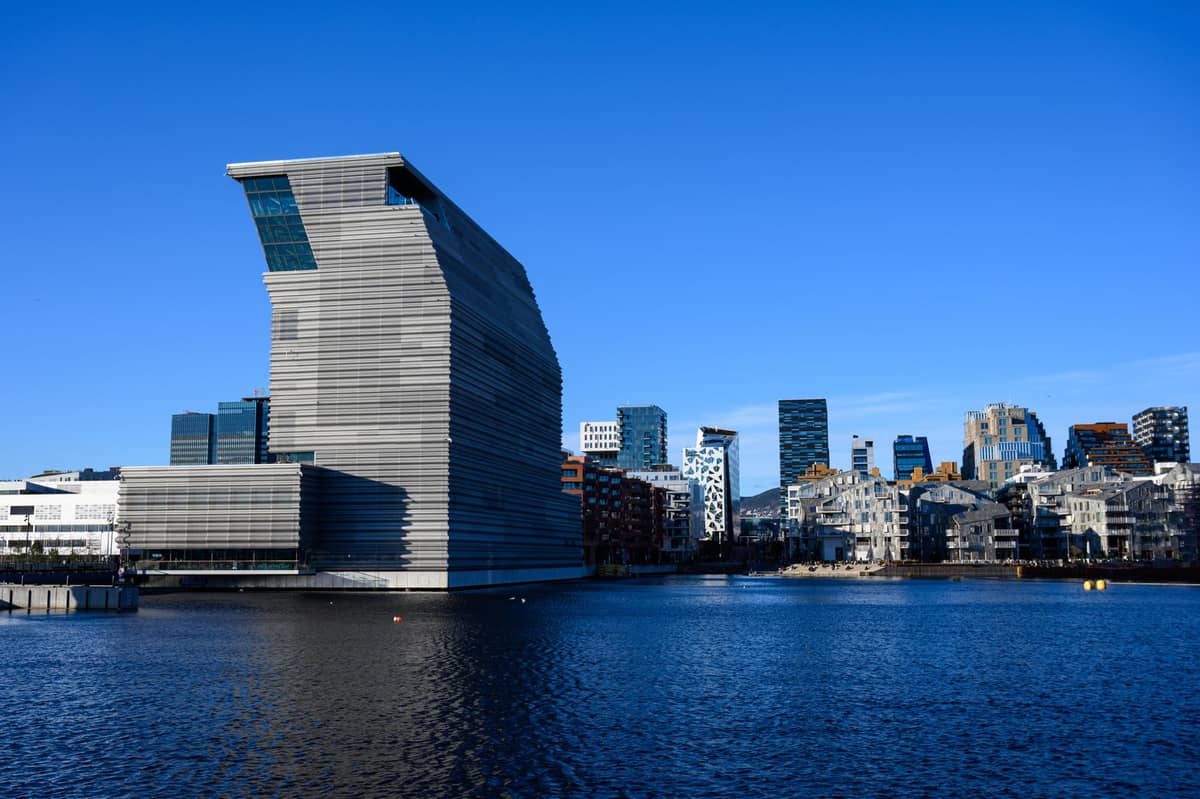
After dark, Bjørvika takes on a different quality. The Opera House is illuminated and reflected in the harbor basin. The Munch Museum's asymmetric tower glows from within. Restaurant and bar terraces along the waterfront stay busy until late in summer, when Oslo's long evenings mean daylight persisting past 10pm. In winter the promenade is quieter, occasionally icy, but the architecture reads even more dramatically against gray fjord skies, and the floating saunas moored nearby attract a year-round crowd.
💡 Local tip
The roof of the Oslo Opera House is accessible at all hours and costs nothing to walk. Arrive before 9am to have it largely to yourself. The views across the Oslofjord and back toward the Barcode towers reward the early start.
What to See & Do
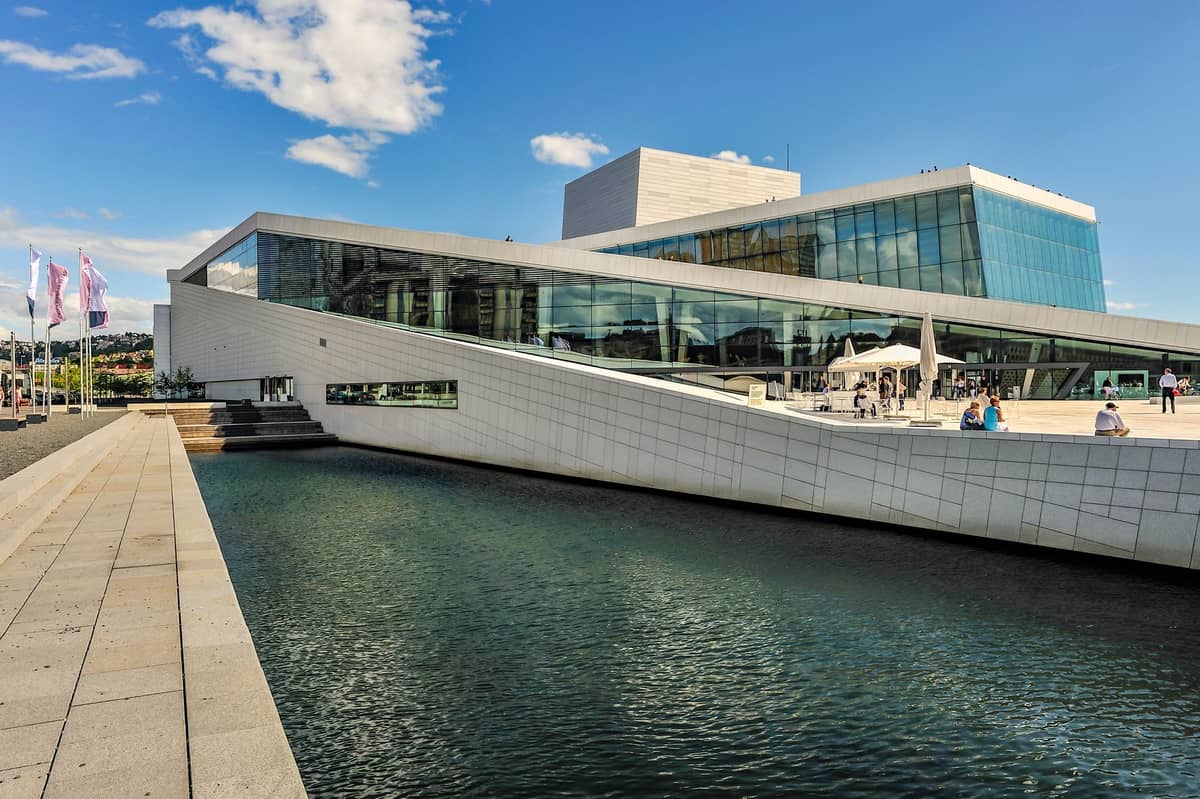
The Oslo Opera House is the architectural and cultural anchor of the entire district. Designed by the Norwegian firm Snøhetta and completed in 2008, the building appears to rise directly from the water, its sloping white roof forming a public plaza that you walk across like a hillside. Inside, it is home to the Norwegian National Opera and Ballet. Even if you have no interest in opera, the building itself justifies the visit. Its foyer is open to the public during regular opening hours and the interior spaces, clad in wood and glass, are worth exploring.
A short walk east along the waterfront stands the Munch Museum, which opened its current tower building in 2021 at Edvard Munchs plass 1. The museum holds the world's largest collection of works by Edvard Munch, including multiple versions of The Scream, and the building itself, a tilted thirteen-storey structure that leans toward the fjord, has become one of Oslo's most discussed pieces of recent architecture. The top-floor views over the harbor are included with admission. Budget at least two hours for a serious visit. For more context on Munch's work across the city, a dedicated guide to Munch in Oslo covers all the key sites.
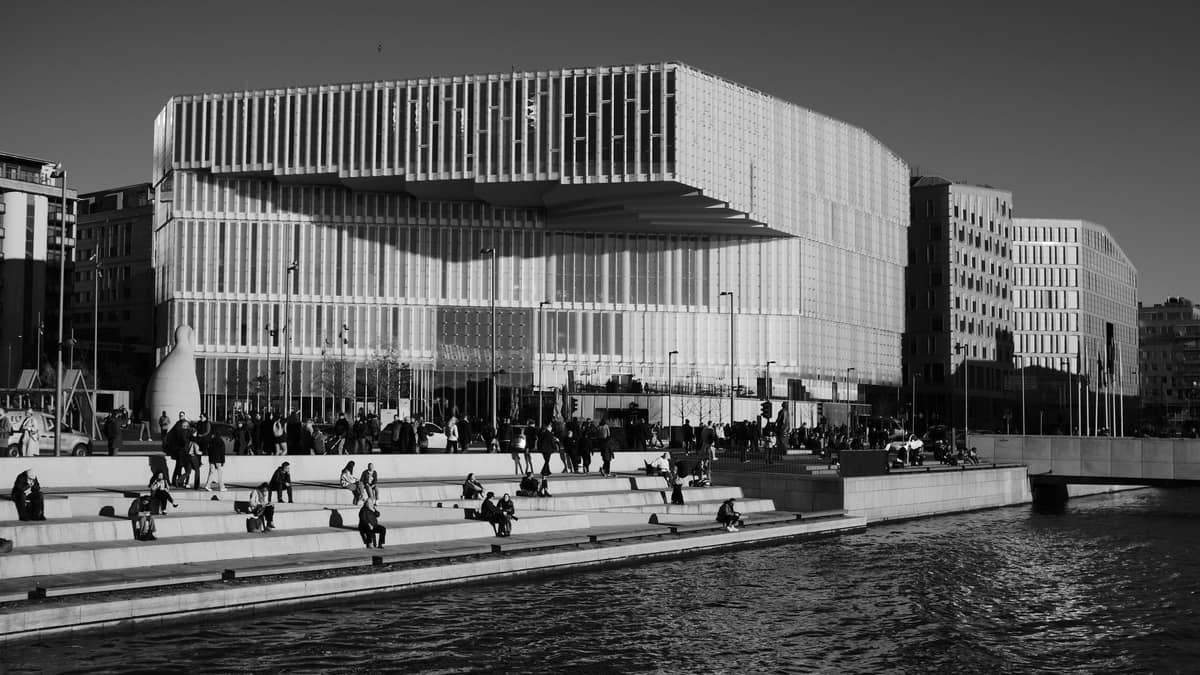
Between the Opera House and the Munch Museum sits Deichman Bjørvika, Oslo's flagship public library, which opened in 2020. The building is free to enter and does not require a local library membership to use most facilities. It contains a cinema, a recording studio, maker spaces, reading rooms, and a rooftop terrace. For visitors, it doubles as one of the best free indoor spaces in central Oslo, particularly useful on rainy days. The architecture is striking from the outside, clad in dark anodized aluminum that contrasts sharply with the white of the Opera House next door.
Along the northern edge of Bjørvika, the Barcode Project is a row of ten high-rise mixed-use towers built between 2008 and 2016 along Dronning Eufemias gate. The buildings vary in height, material, and design but share a compressed, narrow footprint that creates the striped profile visible from the fjord, hence the name. Reactions to the Barcode are divided, with some finding the towers a bold addition to Oslo's skyline and others mourning the loss of fjord views from the older city behind them. Either way, walking along Dronning Eufemias gate and looking back toward the water gives you a clear sense of how dramatically this part of Oslo has changed.
Oslo Opera House: free access to the roof plaza, ticketed performances in the main hall
Munch Museum: world's largest Munch collection, tower with fjord views, ticket required
Deichman Bjørvika public library: free entry, rooftop terrace, café inside
Barcode towers: walking the street-level arcade along Dronning Eufemias gate
Oslobukta harbor promenade: public waterfront path linking Opera House to Sørenga
Akrobaten pedestrian bridge: elevated crossing connecting Bjørvika to Sørenga
Floating saunas: seasonal outdoor saunas moored near the Opera House
ℹ️ Good to know
The Oslo Pass covers entry to the Munch Museum and many other city attractions. If you plan to visit multiple museums in a single trip, it typically pays for itself within a day. See the full breakdown in the Oslo Pass guide.
Eating & Drinking
The food scene in Bjørvika is oriented toward visitors, office workers, and people attending events at the Opera House or Munch Museum. That means good quality and reasonable variety, but not the kind of idiosyncratic neighborhood character you find in Grünerløkka or Grønland. Most restaurants and cafés are concentrated along the waterfront promenade, inside the cultural institutions themselves, or at ground level in the Barcode towers.
The Opera House has an in-house restaurant and café that serves food throughout the day and before performances. The quality is reliable and the setting is hard to fault, with views over the fjord from the glass-fronted foyer. Deichman Bjørvika has a café on its lower floors that is particularly good for breakfast or a mid-morning coffee, and the pricing is reasonable by Oslo standards. The library setting keeps it calmer than most waterfront options.
Along the Oslobukta promenade and near the Munch Museum, several restaurants offer outdoor terrace seating in summer, covering Nordic, Italian, and international menus. Prices are at the upper end of what you would expect in Oslo, which is itself an expensive city. For a broader sense of what to eat in the Norwegian capital, including where to find more affordable options nearby in Grønland, the guide to Oslo's food scene covers the full picture.
For a wider and more affordable eating experience, the neighborhood closest to Bjørvika is Grønland, a ten-minute walk north, where a dense concentration of Middle Eastern, South Asian, and African restaurants and bakeries offers some of the best-value food in the city. Many visitors based in Bjørvika use Grønland for dinner before returning to the waterfront bars in the evening.
⚠️ What to skip
Restaurants immediately adjacent to the Opera House and Munch Museum price for tourist footfall. A coffee on the main promenade on a summer afternoon will cost noticeably more than the same coffee a few blocks north toward Oslo S. Deichman's café is the exception, and one of the better deals in the area.
Getting There & Around
Bjørvika has better transit access than almost anywhere else in Oslo. Oslo Central Station (Oslo S), Norway's main rail hub, sits directly on the neighborhood's western edge. From Oslo S you can reach the Opera House in under two minutes on foot, walking south past the station's main entrance. All national rail services, including the Flytoget airport express from Oslo Airport Gardermoen (OSL), terminate at Oslo S, and the direct Flytoget journey from the airport takes approximately 19 to 22 minutes.
Multiple T-bane (metro) lines stop at Jernbanetorget station, which is directly adjacent to Oslo S and gives access to the full metro network across the city. Trams also serve the area, and the bus terminal adjacent to Oslo S connects to a wide network of local and regional routes. For a complete overview of moving around the city, the guide to getting around Oslo covers all modes in detail.
Within Bjørvika itself, walking is the only sensible way to move. The distances between the Opera House, Deichman, the Munch Museum, and the Akrobaten bridge are all under ten minutes on foot, and the promenade is designed specifically for pedestrians. Cyclists have dedicated lanes and can use the Sykkelbyen infrastructure that covers most of central Oslo. Avoid driving into the area if you can; parking is scarce, expensive, and unnecessary.
To reach other key neighborhoods from Bjørvika: Aker Brygge and Tjuvholmen are a fifteen-minute walk west along the waterfront. Grünerløkka is accessible via tram from Jernbanetorget in around ten minutes. Bygdøy requires a tram or ferry connection, typically around twenty to twenty-five minutes. The Oslofjord islands are served by public ferries departing from Aker Brygge, a short walk west.
Where to Stay
Bjørvika is one of the better-positioned bases in Oslo for visitors who plan to cover a lot of ground. The proximity to Oslo S means every corner of the city is reachable without a car, and the airport connection is as direct as it gets. Several hotels have opened within the Barcode towers and on streets adjacent to the Opera House, ranging from large business-oriented properties to design-forward smaller hotels. For a full comparison of where to stay across Oslo's neighborhoods, the Oslo accommodation guide breaks down each area by traveler type and budget.
The trade-off with staying in Bjørvika is atmosphere. The area is polished and convenient, but it does not have the residential warmth of Frogner or the creative energy of Grünerløkka. In the evenings, once office workers have gone and cultural institutions have closed, the streets around the Barcode towers can feel quiet to the point of emptiness. The waterfront promenade is more animated in summer, but even then the neighborhood lacks the organic late-night scene of areas further west or north.
Bjørvika suits business travelers, architecture enthusiasts, and anyone who prioritizes transport convenience and proximity to Oslo's major cultural institutions over neighborhood character. Families traveling with children will find the open waterfront spaces practical, and the Munch Museum and Deichman library both have well-designed facilities for younger visitors.
Is Bjørvika Worth Your Time?
For first-time visitors to Oslo, the answer is straightforwardly yes. The Opera House alone is worth the walk from Oslo S, and combining it with Deichman and the Munch Museum gives you a half-day that covers three of the most significant buildings in Norway. The waterfront promenade connecting them is one of the most pleasant walking routes in the city, particularly when the fjord light is good. For a structured first itinerary, a three-day Oslo itinerary places Bjørvika in context alongside the rest of the city's highlights.
For repeat visitors or travelers who prefer depth over spectacle, Bjørvika can feel thin after a few hours. There is no market, no particular street culture, and limited sense of daily neighborhood life. The adjacent areas of Grønland and Grünerløkka offer more texture for that kind of exploration. Bjørvika works best when treated as a destination within a broader city day rather than a neighborhood to linger in for its own sake.
TL;DR
Bjørvika is Oslo's premier architectural showcase: the Opera House, Munch Museum, Deichman library, and Barcode towers all within a fifteen-minute walk of each other.
It sits directly adjacent to Oslo Central Station, giving it the best transit connections of any neighborhood in the city, including a direct airport express link.
The atmosphere is polished and visitor-friendly but lacks the organic neighborhood character of Grünerløkka, Frogner, or Grønland.
Best suited to first-time visitors, architecture enthusiasts, business travelers, and anyone who wants maximum convenience as a base.
Pair a morning here with an afternoon in Grønland or a longer walk west to Aker Brygge to get a more rounded sense of the city.
Oslo's weather, daylight hours, and crowd levels shift dramatically across the year. This guide breaks down every season so you can pick the right time based on what you actually want to do, not just the warmest month.
Oslo sits at the centre of one of Europe's most rewarding day-trip networks. Within two hours you can reach a medieval fortified town, a world-class sculpture park in the forest, a 13th-century stave church, or an island fortress in the fjord. This guide covers the best day trips from Oslo, from quick ferry hops to full-day rail journeys.
Oslo has a reputation for being expensive, but the city's best experiences often cost nothing. From a marble opera house roof you can walk across to one of the world's great sculpture parks, here are 20 free things to do that locals actually love.
Oslo has one of the most integrated public transport networks in Scandinavia, but the ticket system trips up a surprising number of visitors. This guide covers everything from navigating the T-bane metro to getting from Oslo Airport (OSL) to the city center without overpaying — with real prices, journey times, and practical advice on what to skip.
Oslo is Norway's capital and one of Scandinavia's most complete city destinations, but it comes with a high price tag and sharp seasonal swings. This guide breaks down exactly what you get for your money, when to go, and whether the city lives up to its reputation.
Oslo holds the world's largest collection of Edvard Munch's work, split across two major institutions. This guide tells you exactly where The Scream is displayed, how to buy tickets, and what else to see beyond the famous painting.
Oslo's architectural story spans 800 years, from Akershus Fortress rising above the harbour to the tilted glass tower of the Munch Museum. This guide takes you through the city's most significant buildings, organised by era and theme, so you can trace how Norway's capital has reinvented itself across centuries.
Oslo transforms from late November through December into one of Scandinavia's most atmospheric winter cities. From the free central market at Spikersuppa to the traditional fair at Norsk Folkemuseum, this guide covers every Christmas experience worth your time, with practical advice on costs, crowds, and what to skip.
Norway's Constitution Day is the country's biggest national celebration, and Oslo is the place to be. This guide covers the parade route, crowd logistics, public transport disruptions, what stays open, and how to watch the Royal Palace balcony moment without getting trapped in the crowds.
The Oslofjord is Oslo's backyard playground: a 100-km stretch of water dotted with islands, beaches, and historic forts; the inner islands are all reachable in under 30 minutes from the city centre by public ferry. This guide covers public ferries, sightseeing cruises, the best swimming spots, and practical details on timing, pricing, and what to skip.
Oslo's floating saunas are one of Norway's most distinctive experiences, combining intense heat with cold fjord dips right in the heart of the city. This guide covers every major operator, realistic pricing, booking logistics, safety rules, and the best time to go.
Oslo rewards the curious traveler who ventures beyond the Opera House and Vigeland Park. From a barrel-vaulted mausoleum open only on Sundays to medieval ruins in a residential neighborhood, these are the experiences that most visitors completely miss.
Oslo is one of the few European capitals where you can step off a metro and be deep in forest within 30 minutes. This guide covers the best hiking trails in and around the city, from urban river walks to full-day routes in Nordmarka.
Summer transforms Oslo into one of Scandinavia's most enjoyable cities, with nearly 19 hours of daylight, warm fjord beaches, and a packed festival calendar. This guide covers what to expect from June through August, including the truth about the 'midnight sun', when each season peaks, and which events are worth planning around.
Oslo in winter is cold, short on daylight, and genuinely rewarding for travelers who come prepared. This guide covers the real temperatures, the best winter activities, how to get around, and what most visitors get wrong about visiting Norway's capital between December and February.
The Oslofjord islands are one of Oslo's best-kept open secrets: reachable on a standard public transport ticket, dotted with beaches, ruins, and free camping spots. This guide covers every ferry route, the best islands for each type of visit, and exactly how to plan a day on the water.
Three days is enough to cover Oslo's highlights without rushing. This itinerary covers the waterfront, Bygdøy peninsula, Vigeland sculpture park, and the city's best neighborhoods, with practical advice on transport passes, seasonal timing, and where to skip the tourist traps.
Oslo offers more than its size suggests when it comes to museums. Whether you're drawn to Edvard Munch's raw canvases, the story of Norway's WWII resistance, or the world's most ambitious open-air folk museum, this guide covers every essential collection in the city.
Oslo's nightlife scene is smaller than Berlin or London, but it's more focused and genuinely good. This guide covers the best bars, clubs, and live music venues by neighborhood, what drinks actually cost, when to go, and what first-timers consistently get wrong.
Oslo has a reputation as one of Europe's most expensive capitals, but that reputation is only half the story. With the right approach to transport, attractions, and timing, you can experience Norway's capital without the wallet damage most travelers fear.
The Oslo Pass bundles free museum entry and unlimited public transport into one time-based card. But at up to around 995 NOK for 72 hours, it only pays off under specific conditions. This guide breaks down exactly who should buy it, who should skip it, and how to calculate your own value.
Oslo's shopping scene rewards those who explore beyond the main drag. This guide covers the city's best streets, department stores, weekend markets, and where locals actually shop, with practical hours, neighborhood breakdowns, and practical advice on what to skip.
The Oslo to Bergen train is one of the great railway journeys in Europe, crossing high mountain plateaus and deep fjord valleys across 492 km of Norwegian landscape. This guide covers tickets, prices, timetables, seat choices, seasonal tips, and how to avoid the most common booking mistakes.
The journey from Oslo to Stockholm is one of Scandinavia's most popular intercity routes. This guide breaks down every transport option, from the direct SJ/Vy train to FlixBus, with practical advice on cost, comfort, and convenience.
The journey from Oslo to Tromsø covers roughly 1,700 km and takes under two hours by air, but knowing when to go and what to expect in Norway's Arctic capital makes all the difference. This guide covers every transport option, seasonal highlights, and key activities so you can plan confidently.
Oslo rewards those who look up, out, and across. From a marble rooftop you can walk into the fjord to a forested hilltop that inspired The Scream, the city offers an extraordinary range of panoramas. This guide covers the best viewpoints in Oslo, whether you want sweeping city skylines, fjord horizons, or intimate harbour scenes.
Oslo is one of Europe's most walkable capitals, and you don't need a guided group to explore it properly. This guide covers the best self-guided walking routes, top apps, free city maps, seasonal advice, and practical tips on what to skip.
Oslo offers more than its size suggests when it comes to family travel. From hands-on science museums and polar-exploration ships to free sculpture parks and island beaches, Norway's capital keeps children genuinely engaged. This guide covers the best family-friendly activities in Oslo, with real pricing, transport details, and practical advice on what's worth your time.
Oslo packs an extraordinary range of experiences into a compact, walkable city: world-class museums, a working fjord right at the city's edge, serious hiking terrain, and a food scene that has grown well beyond smørbrød. This guide covers the top things to do in Oslo, organized by category, with practical advice on what lives up to the hype and what you can skip.
Oslo sits at the heart of Viking history, but the famous ship museum is closed until 2027. This guide tells you exactly where to experience Viking Age Norway right now, from the Bygdøy peninsula to the city centre's best alternatives.
Oslo's food scene runs deeper than open-faced sandwiches and cinnamon rolls. This guide covers the essential Norwegian dishes to try, the best food halls and restaurants to find them, seasonal specialties, and honest price expectations for 2025.
Oslo's neighborhoods each offer a distinct experience, from the architectural showpiece of Bjørvika to the indie-café culture of Grünerløkka. This guide breaks down exactly where to stay in Oslo based on your travel style, budget, and priorities, with honest assessments of each district and what you'll actually pay.