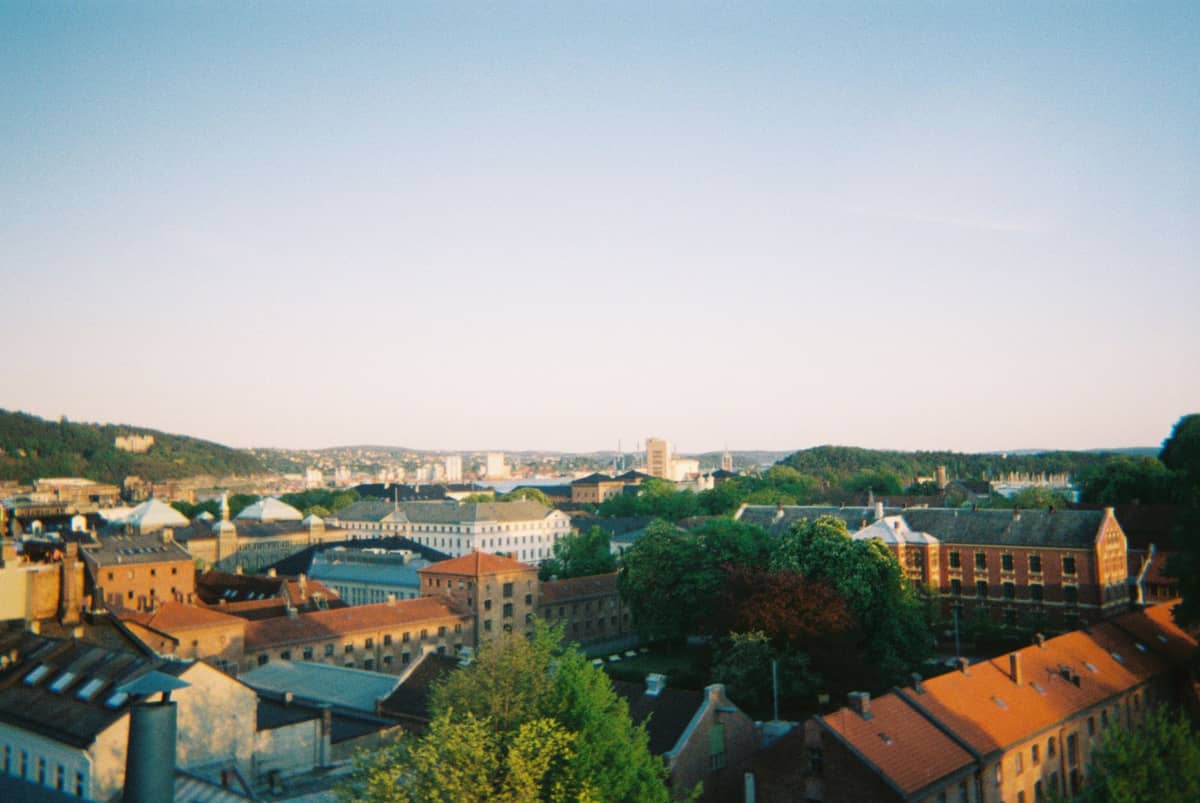
Grünerløkka is a dense, characterful neighborhood on the east bank of the Akerselva river, roughly 2 km northeast of Oslo city center. Once an industrial district of textile mills and working-class housing, it has evolved into one of Oslo's most interesting places to spend time, with a strong local identity built around independent shops, café culture, and weekend markets.
Grünerløkka sits on the east bank of the Akerselva river in inner Oslo, occupying a compact urban grid where former factory buildings now house cafés, vintage shops, and galleries. It is the kind of neighborhood that rewards slow walking: the main axis along Thorvald Meyers gate is lined with coffee bars and small restaurants, while the side streets open onto quiet parks and 19th-century brick tenements. This is where a lot of Oslo's younger residents actually live, which gives it an energy that feels less curated than the waterfront districts to the south.
Orientation
Grünerløkka occupies a roughly rectangular patch of Oslo's inner east side, bounded by Sannergata to the north, the Akerselva river to the west and south, and a line running along Toftes gate, Falsens gate, Herslebs gate, and Trondheimsveien to the east. The Akerselva is not just a geographic boundary — it functions as a green corridor, and the riverside path along its banks connects Grünerløkka northward to Torshov and Sagene, and southward toward Hausmannsområdet and eventually Oslo Sentrum.
The neighborhood sits about 2 km northeast of Oslo Central Station, which puts it close enough to the city center to feel accessible but far enough to have its own distinct identity. To the southeast lies Tøyen, a more ethnically diverse and historically working-class district. To the east, Sofienberg and Dælenenga merge into quieter residential streets. The most useful mental anchor for first-time visitors is Thorvald Meyers gate, the main commercial street that runs north-south through the neighborhood's core, passing the key squares of Schous plass in the south and Olaf Ryes plass in the middle, before reaching Birkelunden park further north. For a broader understanding of how Oslo's neighborhoods fit together, the where to stay in Oslo guide provides useful context.
Markveien runs roughly parallel to Thorvald Meyers gate one block west, and together these two streets form the neighborhood's commercial spine. The cross streets between them — Helgesens gate, Schous gate, Grüners gate — are where you find the quieter side of the neighborhood: smaller bakeries, a few bookshops, bike repair cafés, and the kind of corner store that sells Norwegian snacks alongside imported goods. The streets become noticeably quieter as you move north toward Sannergata, where the neighborhood transitions into the more residential feel of Torshov.
Character & Atmosphere
Grünerløkka was built out in the late 19th century to house the workers employed in the textile mills and metalworks that lined the Akerselva. The architecture reflects this: long rows of brick apartment buildings, four and five stories tall, with large internal courtyards and cast-iron details on the facades. Most of the factories are gone, converted into offices, studios, and cultural spaces, but the building stock has been preserved well enough that the neighborhood still reads as a coherent piece of 19th-century urban planning. Walking through it, you notice that the streets are narrow by modern standards, the blocks are tight, and the pavement is often cobblestone — details that slow you down in a useful way.
In the mornings, Thorvald Meyers gate belongs to locals. The cafés fill up early with residents who work from laptops or meet for coffee before heading into the city center. The light is soft and northern, coming in low through the east-facing windows of the café fronts. Birkelunden park, a small green square with old chestnut trees and a bandstand, draws dog walkers and parents with strollers throughout the morning. By midday on weekends, the energy shifts — visitors arrive from other parts of Oslo, the food market at Birkelunden fills up, and the tables on the narrow terraces outside the bars start to fill even in marginal weather.
After dark, Grünerløkka is one of the livelier parts of Oslo. The bars along Thorvald Meyers gate and around Olaf Ryes plass stay busy well into the night on weekends, and the area around Schous plass has a concentration of places that attract a younger crowd. The noise can be noticeable if you are staying nearby and keeping early hours. It is not the kind of place that goes quiet at midnight — which is either a feature or a flaw depending on what you are looking for.
💡 Local tip
Sunday mornings are the best time to experience Grünerløkka at its most local. The market at Birkelunden operates on Sundays, the cafés open early, and the foot traffic is lighter than on Saturday afternoons. The riverside path along Akerselva is particularly pleasant before noon.
What to See & Do
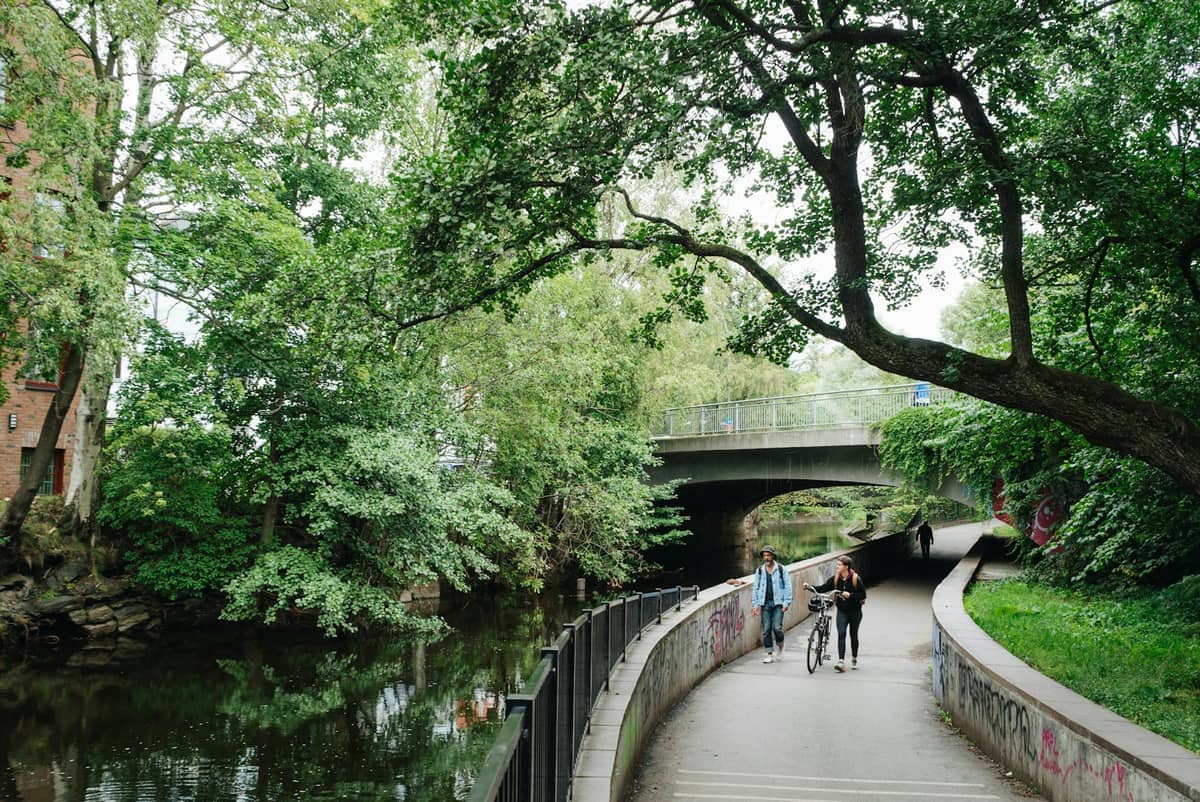
The most rewarding single activity in Grünerløkka is walking the Akerselva river walk along the western edge of the neighborhood. The river path runs through a narrow green strip between old brick factories and newer residential buildings, passing waterfalls, footbridges, and remnants of the industrial infrastructure that once powered Oslo's economy. Walking north from the city center, you enter Grünerløkka at roughly the point where the river curves west of Markveien. The walk can be extended south toward the Sentrum or north as far as Maridalsvannet lake, well into the city's forested fringe.
Within the neighborhood itself, the three main squares give the area its rhythm. Schous plass, at the southern end of Thorvald Meyers gate, is the most transit-oriented: trams arrive and depart here and several bus lines stop nearby. Olaf Ryes plass, a few blocks north, is a more relaxed park square bounded by Sofienberggata, Thorvald Meyers gate, Grüners gate, and Markveien — the surrounding terraces make it one of the better places in Oslo to sit outside on a warm afternoon. Birkelunden, further north, has the most traditional park feel, with its bandstand occasionally used for summer concerts and community events.
The independent shopping scene along Markveien and the side streets is worth time if you are interested in vintage clothing, design objects, or Norwegian-made goods. The area has a higher concentration of owner-operated shops than most of Oslo, and the turnover is lower than you might expect — many of the same stores have been trading here for years. Record shops, secondhand bookstores, ceramics studios selling directly to the public, and small galleries sit alongside the cafés.
Walk the Akerselva river path north from Hausmannsområdet through the neighborhood
Browse Markveien for vintage clothing and Norwegian design
Spend a Sunday morning at the Birkelunden market
Sit out at Olaf Ryes plass on a summer afternoon
Explore the converted factory buildings along the riverbank for galleries and studios
Cross into Sofienberg park (just east of the neighborhood) for a larger green space
ℹ️ Good to know
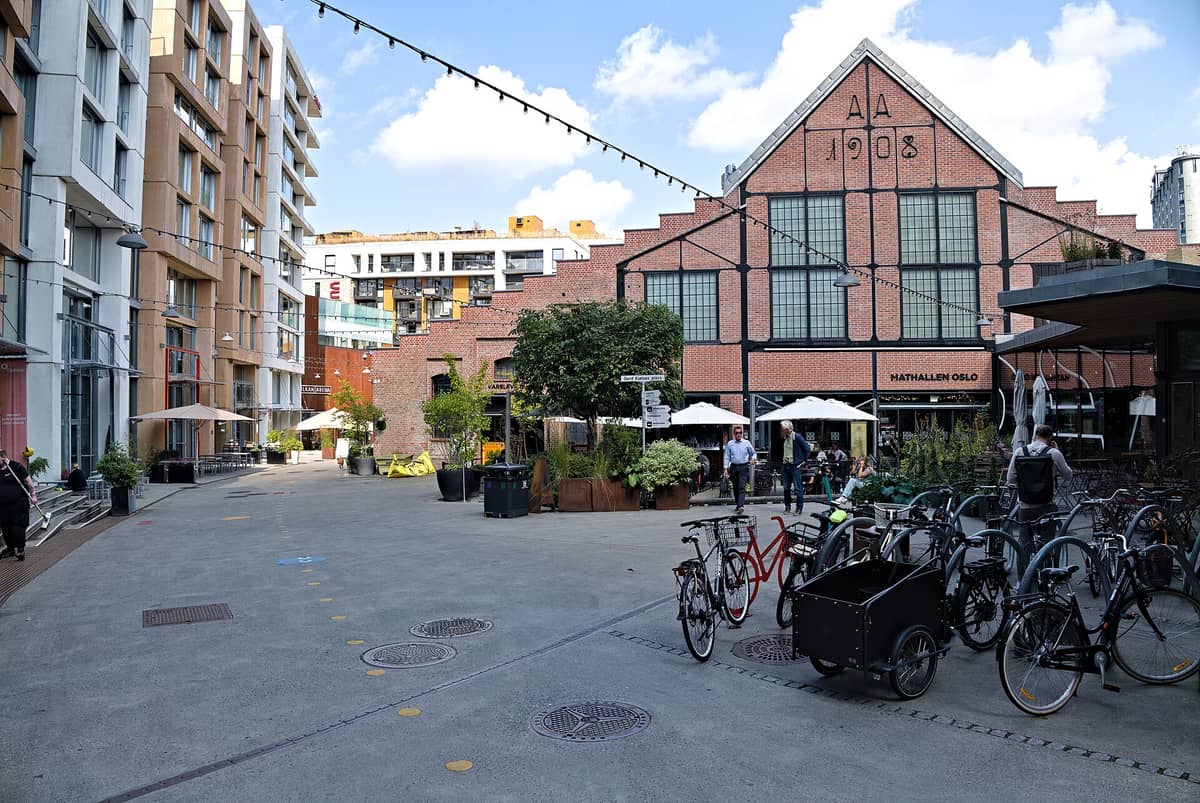
Grünerløkka is one of the best-positioned neighborhoods for reaching Oslo's wider attractions on foot or by tram. The Munch Museum and Botanical Garden are reachable via Tøyen, one stop south on the tram, and the Mathallen food hall is a short walk west across the Akerselva.
Eating & Drinking
The food scene in Grünerløkka is one of the most varied in Oslo for an inner-city neighborhood, and it covers the full range from cheap weekday lunches to proper evening meals. The concentration of cafés along Thorvald Meyers gate is the first thing most visitors notice: the coffee culture here is serious, with several roasters and specialty coffee bars that source and roast their own beans. Norwegian café culture tends toward long sessions rather than quick espresso stops, so expect to find tables occupied for hours at a time. For a deeper look at what Oslo's food culture offers, the guide to eating in Oslo covers local specialties and food traditions across the city.
Just west of Grünerløkka, across the Akerselva at Vulkan, Mathallen Oslo is a covered food market with around 30 vendors selling everything from Norwegian charcuterie and fresh fish to international street food. It functions as both a food hall for browsing and a place to sit down for lunch or early dinner, and it is within easy walking distance of the neighborhood's main tram stops. This is the most straightforward option if you want a broad introduction to Scandinavian ingredients and food producers in one place.
The bar scene concentrates around Schous plass and the southern stretch of Thorvald Meyers gate. Oslo is an expensive city for drinking, and Grünerløkka is no exception — a pint of local beer typically costs more here than in most other European capitals. That said, the range of venues is wider than in many other Oslo neighborhoods, running from craft beer bars and natural wine spots to late-night bars with DJ sets. The area around Olaf Ryes plass has a slightly more relaxed feel in the evenings, with terrace bars that are popular from late spring through early autumn.
For more budget-conscious eating, the area around Grønland — the next neighborhood east toward Tøyen — offers cheaper options including Middle Eastern, South Asian, and African restaurants, and is about a 10-15 minute walk from the southern end of Grünerløkka. The contrast between the two areas is sharp: Grünerløkka skews toward high-quality but expensive cafés and restaurants, while Grønland has Oslo's most affordable international food.
⚠️ What to skip
Eating and drinking in Grünerløkka is genuinely expensive by international standards. Budget travelers should look at lunch specials (dagensrett), which most restaurants offer on weekdays at significantly reduced prices compared to dinner menus. Grocery stores on Thorvald Meyers gate are a practical alternative for breakfast and snacks.
Getting There & Around
Grünerløkka does not have a T-bane (metro) station, which is worth knowing upfront if you are used to navigating Oslo by underground. The neighborhood is instead served primarily by trams, with lines 12, 15, and 18 running along Thorvald Meyers gate. The key stops are Schous plass at the southern end, Olaf Ryes plass in the middle, and Birkelunden in the north — these three stops put you within a few minutes walk of anywhere in the neighborhood's core. Journey time from Oslo Central Station (Oslo S) to Schous plass is around 10 minutes.
Several bus lines also serve the surrounding streets: lines 21, 30, 31, and 390 stop at Birkelunden, Sofienberg, and Sars' gate. Carl Berners plass, a few minutes east by foot, is a major transit hub with T-bane access (lines 4 and 5) and multiple bus connections. If you are arriving from the airport at Gardermoen, the Flytoget or Vy regional trains take you to Oslo S, from where the tram to Grünerløkka runs frequently. For full details on navigating Oslo's public transport network, the guide to getting around Oslo covers fares, zones, and route planning.
Walking is the most practical way to get around Grünerløkka itself — the neighborhood is compact and flat enough that you can cover the main streets comfortably in under 20 minutes end to end. Walking from Oslo S to the southern edge of Grünerløkka takes around 20-25 minutes on foot via Hausmannsområdet. The Akerselva river path provides a car-free route that connects the neighborhood to the city center and to the northern green areas, and is a more pleasant alternative to walking along the main roads.
Cycling is also common and practical here. Oslo's city bike scheme (Bysykkel) has docking stations in and around Grünerløkka, and the riverside path along Akerselva is a designated cycling route. The neighborhood's grid of narrow streets is generally low-traffic, making it easy to navigate by bike.
Where to Stay
Grünerløkka has a limited but growing number of hotels and aparthotels, supplemented by a significant supply of short-term rental apartments. Staying here puts you in a genuinely residential neighborhood rather than a tourist district, which affects the daily experience considerably: your breakfast options will be local cafés rather than hotel buffets, and the evening atmosphere reflects where Oslo's residents go out rather than where visitors congregate. For a broader comparison of Oslo's neighborhoods as bases, the Oslo accommodation guide maps out the trade-offs clearly.
The most convenient location within the neighborhood is the stretch between Schous plass and Olaf Ryes plass, which keeps you close to the tram stops, the main commercial street, and the Akerselva riverside path. The area immediately around Birkelunden is slightly quieter in the evenings and better for light sleepers. The southern edge of the neighborhood, toward Schous plass, is most convenient for transit connections to the rest of Oslo, but this is also where the nightlife noise is most noticeable on weekend nights.
Grünerløkka suits travelers who want to experience Oslo as a city of neighborhoods rather than as a collection of tourist sites. It is a good base for those planning to spend time in eastern Oslo — Tøyen, Grønland, the Munch Museum — as well as those who want easy access to the Akerselva walk and the northern green areas. It is probably not the best choice for travelers focused primarily on the waterfront attractions at Aker Brygge, Bygdøy, or the Opera House, all of which require more time to reach from here.
Practical Notes
All public transport in Grünerløkka operates under Ruter, Oslo's transport authority. Tickets cover trams, buses, and the T-bane within the city zone and can be purchased via the Ruter app or at ticket machines. The Oslo Pass includes unlimited public transport and free entry to many museums, which can represent good value if you are visiting several attractions. Grünerløkka itself has no major paid attractions, but it is a useful base for reaching those elsewhere in the city.
The neighborhood is generally considered safe for visitors, including at night, though the busy nightlife areas around Schous plass can attract the kind of rowdiness common to any urban entertainment district late on weekend evenings. Petty theft is a possibility in crowded areas, as in any city. For travelers interested in how Grünerløkka fits into Oslo's broader range of free and low-cost experiences, the guide to free things to do in Oslo is worth consulting — the Akerselva walk and many of the neighborhood's parks and markets cost nothing.
Oslo operates on Norwegian krone (NOK), and contactless card payment is accepted virtually everywhere in Grünerløkka, including at market stalls and small independent shops. Cash is rarely necessary. Tap water throughout Oslo is safe to drink, which helps manage costs given the high price of bottled water and café drinks.
TL;DR
Grünerløkka is a compact, walkable inner-city neighborhood built on a 19th-century industrial grid, with strong café culture, independent shops, and easy access to the Akerselva river walk.
Best suited to travelers who want to experience residential Oslo rather than a tourist-facing waterfront or museum district.
Served by trams 12, 15, and 18 along Thorvald Meyers gate — no T-bane stop, but Carl Berners plass with metro access is a short walk east.
Eating and drinking here is expensive by most international standards; weekday lunch specials and the nearby Mathallen food hall are the practical ways to manage costs.
Weekend nights around Schous plass are lively and noisy — light sleepers should choose accommodation toward the northern end of the neighborhood near Birkelunden.
Oslo's weather, daylight hours, and crowd levels shift dramatically across the year. This guide breaks down every season so you can pick the right time based on what you actually want to do, not just the warmest month.
Oslo sits at the centre of one of Europe's most rewarding day-trip networks. Within two hours you can reach a medieval fortified town, a world-class sculpture park in the forest, a 13th-century stave church, or an island fortress in the fjord. This guide covers the best day trips from Oslo, from quick ferry hops to full-day rail journeys.
Oslo has a reputation for being expensive, but the city's best experiences often cost nothing. From a marble opera house roof you can walk across to one of the world's great sculpture parks, here are 20 free things to do that locals actually love.
Oslo has one of the most integrated public transport networks in Scandinavia, but the ticket system trips up a surprising number of visitors. This guide covers everything from navigating the T-bane metro to getting from Oslo Airport (OSL) to the city center without overpaying — with real prices, journey times, and practical advice on what to skip.
Oslo is Norway's capital and one of Scandinavia's most complete city destinations, but it comes with a high price tag and sharp seasonal swings. This guide breaks down exactly what you get for your money, when to go, and whether the city lives up to its reputation.
Oslo holds the world's largest collection of Edvard Munch's work, split across two major institutions. This guide tells you exactly where The Scream is displayed, how to buy tickets, and what else to see beyond the famous painting.
Oslo's architectural story spans 800 years, from Akershus Fortress rising above the harbour to the tilted glass tower of the Munch Museum. This guide takes you through the city's most significant buildings, organised by era and theme, so you can trace how Norway's capital has reinvented itself across centuries.
Oslo transforms from late November through December into one of Scandinavia's most atmospheric winter cities. From the free central market at Spikersuppa to the traditional fair at Norsk Folkemuseum, this guide covers every Christmas experience worth your time, with practical advice on costs, crowds, and what to skip.
Norway's Constitution Day is the country's biggest national celebration, and Oslo is the place to be. This guide covers the parade route, crowd logistics, public transport disruptions, what stays open, and how to watch the Royal Palace balcony moment without getting trapped in the crowds.
The Oslofjord is Oslo's backyard playground: a 100-km stretch of water dotted with islands, beaches, and historic forts; the inner islands are all reachable in under 30 minutes from the city centre by public ferry. This guide covers public ferries, sightseeing cruises, the best swimming spots, and practical details on timing, pricing, and what to skip.
Oslo's floating saunas are one of Norway's most distinctive experiences, combining intense heat with cold fjord dips right in the heart of the city. This guide covers every major operator, realistic pricing, booking logistics, safety rules, and the best time to go.
Oslo rewards the curious traveler who ventures beyond the Opera House and Vigeland Park. From a barrel-vaulted mausoleum open only on Sundays to medieval ruins in a residential neighborhood, these are the experiences that most visitors completely miss.
Oslo is one of the few European capitals where you can step off a metro and be deep in forest within 30 minutes. This guide covers the best hiking trails in and around the city, from urban river walks to full-day routes in Nordmarka.
Summer transforms Oslo into one of Scandinavia's most enjoyable cities, with nearly 19 hours of daylight, warm fjord beaches, and a packed festival calendar. This guide covers what to expect from June through August, including the truth about the 'midnight sun', when each season peaks, and which events are worth planning around.
Oslo in winter is cold, short on daylight, and genuinely rewarding for travelers who come prepared. This guide covers the real temperatures, the best winter activities, how to get around, and what most visitors get wrong about visiting Norway's capital between December and February.
The Oslofjord islands are one of Oslo's best-kept open secrets: reachable on a standard public transport ticket, dotted with beaches, ruins, and free camping spots. This guide covers every ferry route, the best islands for each type of visit, and exactly how to plan a day on the water.
Three days is enough to cover Oslo's highlights without rushing. This itinerary covers the waterfront, Bygdøy peninsula, Vigeland sculpture park, and the city's best neighborhoods, with practical advice on transport passes, seasonal timing, and where to skip the tourist traps.
Oslo offers more than its size suggests when it comes to museums. Whether you're drawn to Edvard Munch's raw canvases, the story of Norway's WWII resistance, or the world's most ambitious open-air folk museum, this guide covers every essential collection in the city.
Oslo's nightlife scene is smaller than Berlin or London, but it's more focused and genuinely good. This guide covers the best bars, clubs, and live music venues by neighborhood, what drinks actually cost, when to go, and what first-timers consistently get wrong.
Oslo has a reputation as one of Europe's most expensive capitals, but that reputation is only half the story. With the right approach to transport, attractions, and timing, you can experience Norway's capital without the wallet damage most travelers fear.
The Oslo Pass bundles free museum entry and unlimited public transport into one time-based card. But at up to around 995 NOK for 72 hours, it only pays off under specific conditions. This guide breaks down exactly who should buy it, who should skip it, and how to calculate your own value.
Oslo's shopping scene rewards those who explore beyond the main drag. This guide covers the city's best streets, department stores, weekend markets, and where locals actually shop, with practical hours, neighborhood breakdowns, and practical advice on what to skip.
The Oslo to Bergen train is one of the great railway journeys in Europe, crossing high mountain plateaus and deep fjord valleys across 492 km of Norwegian landscape. This guide covers tickets, prices, timetables, seat choices, seasonal tips, and how to avoid the most common booking mistakes.
The journey from Oslo to Stockholm is one of Scandinavia's most popular intercity routes. This guide breaks down every transport option, from the direct SJ/Vy train to FlixBus, with practical advice on cost, comfort, and convenience.
The journey from Oslo to Tromsø covers roughly 1,700 km and takes under two hours by air, but knowing when to go and what to expect in Norway's Arctic capital makes all the difference. This guide covers every transport option, seasonal highlights, and key activities so you can plan confidently.
Oslo rewards those who look up, out, and across. From a marble rooftop you can walk into the fjord to a forested hilltop that inspired The Scream, the city offers an extraordinary range of panoramas. This guide covers the best viewpoints in Oslo, whether you want sweeping city skylines, fjord horizons, or intimate harbour scenes.
Oslo is one of Europe's most walkable capitals, and you don't need a guided group to explore it properly. This guide covers the best self-guided walking routes, top apps, free city maps, seasonal advice, and practical tips on what to skip.
Oslo offers more than its size suggests when it comes to family travel. From hands-on science museums and polar-exploration ships to free sculpture parks and island beaches, Norway's capital keeps children genuinely engaged. This guide covers the best family-friendly activities in Oslo, with real pricing, transport details, and practical advice on what's worth your time.
Oslo packs an extraordinary range of experiences into a compact, walkable city: world-class museums, a working fjord right at the city's edge, serious hiking terrain, and a food scene that has grown well beyond smørbrød. This guide covers the top things to do in Oslo, organized by category, with practical advice on what lives up to the hype and what you can skip.
Oslo sits at the heart of Viking history, but the famous ship museum is closed until 2027. This guide tells you exactly where to experience Viking Age Norway right now, from the Bygdøy peninsula to the city centre's best alternatives.
Oslo's food scene runs deeper than open-faced sandwiches and cinnamon rolls. This guide covers the essential Norwegian dishes to try, the best food halls and restaurants to find them, seasonal specialties, and honest price expectations for 2025.
Oslo's neighborhoods each offer a distinct experience, from the architectural showpiece of Bjørvika to the indie-café culture of Grünerløkka. This guide breaks down exactly where to stay in Oslo based on your travel style, budget, and priorities, with honest assessments of each district and what you'll actually pay.