Oslo to Bergen by Train: The Complete Guide to the Bergensbanen
The Oslo to Bergen train is one of the great railway journeys in Europe, crossing high mountain plateaus and deep fjord valleys across 492 km of Norwegian landscape. This guide covers tickets, prices, timetables, seat choices, seasonal tips, and how to avoid the most common booking mistakes.
Tickets & tours
Live prices and dates from our booking partner. If you book, we may earn a commission at no extra cost to you.
TL;DR
- The Oslo to Bergen train (Bergensbanen) takes roughly 6.5 to 7.5 hours and runs direct from Oslo S to Bergen Station, operated by Vy.
- Advance Lowpris tickets start around 299–499 NOK one-way; standard fares run 499–799 NOK. Book on vy.no as early as possible in summer.
- There are 4–7 departures daily, including an overnight option that departs Oslo around 23:05 and arrives Bergen around 06:47.
- Norway in a Nutshell packages cost significantly more than a direct Vy ticket. If the train alone is your goal, skip the package and book point-to-point. See also our guide to train travel from Oslo to Stockholm for cross-border comparison.
- Sit on the right side of the train (traveling Oslo to Bergen) for the best views of Hardangervidda and the mountain scenery around Finse and Myrdal.
What Is the Bergensbanen and Why It Matters
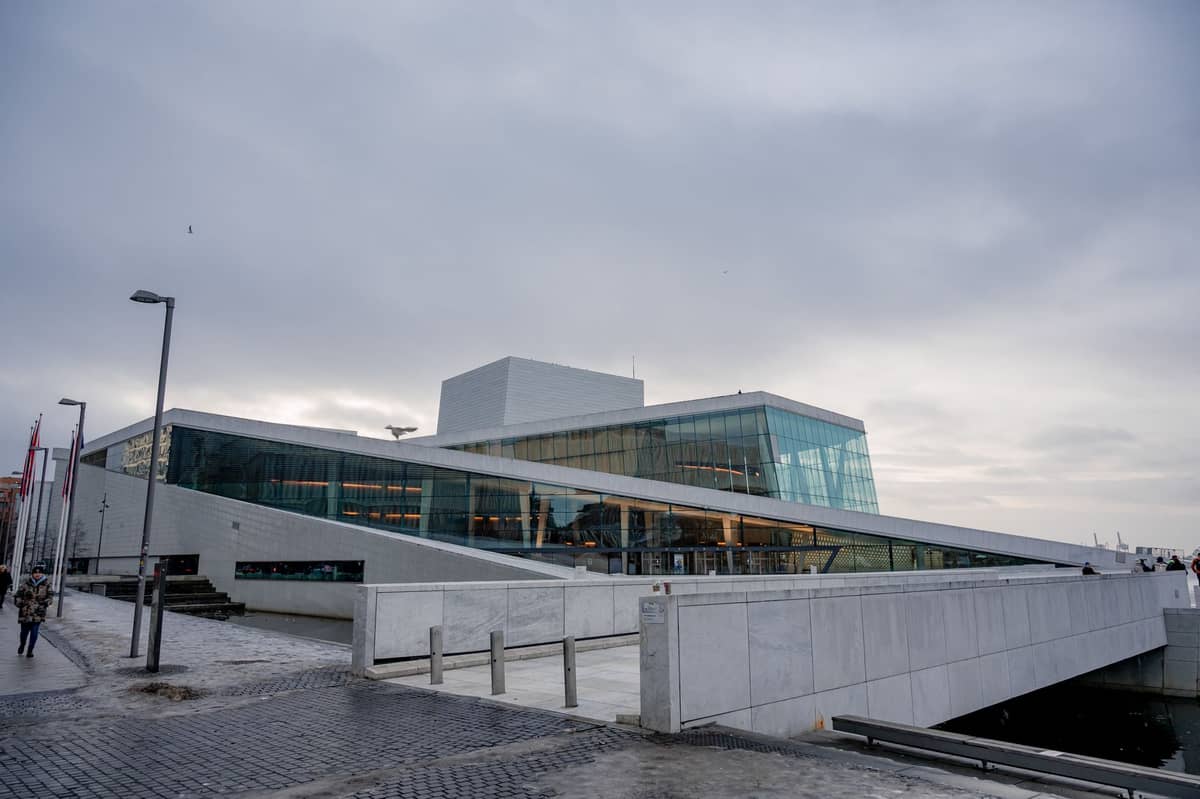
The Bergensbanen is the railway line connecting Oslo, Norway's capital, with Bergen, the country's second-largest city and its main gateway to the western fjords. At around 496–500 km, it is one of the longest and highest mountain railways in Northern Europe, reaching a maximum altitude of around 1,237 meters above sea level in the Finse Tunnel near Finse, the highest station on the Norwegian main railway network at roughly 1,222 meters. The line was completed in 1909 and remains a genuine feat of engineering: it crosses the Hardangervidda plateau, passes through over 180 tunnels, and traverses some of the most dramatic terrain on the continent.
This is not a high-speed rail line. Norway has not built the infrastructure for it, and given the mountain terrain, it is unlikely to change soon. What the Bergensbanen offers instead is a slow, immersive crossing of landscapes that most visitors never access by any other means. The stretch between Geilo and Myrdal, in particular, is the kind of scenery that makes passengers stop mid-conversation. Even in winter, when the plateau is buried under snow and visibility is reduced, the route has its own atmosphere.
ℹ️ Good to know
The Oslo to Bergen train is operated by Vy (formerly NSB), Norway's main rail operator. All schedules and tickets are booked through vy.no, which has a full English interface. Third-party booking sites are available but rarely cheaper for this domestic route.
Timetables, Journey Time, and Key Stops
Vy runs between 4 and 7 direct departures daily depending on the season, with more frequency during summer (June through August) and slightly fewer in winter. The typical journey time is 6 hours 30 minutes to 7 hours 30 minutes. Some services make additional stops and run slightly longer; the overnight train is the slowest option at around 7.5 hours, but you are sleeping through most of it.
- Oslo S (Oslo Central Station) Departure point. Well connected to the T-bane, trams, buses, and the Flytoget airport express from Gardermoen (OSL).
- Drammen First major stop, roughly 40 minutes from Oslo. The line begins climbing into the mountains from here.
- Geilo A ski resort town at around 800 meters. In winter, many Norwegians leave the train here for weekend skiing.
- Finse The highest point on the route at 1,237 meters. No road access; the only way in or out is by train or mountain bike on the Rallarvegen trail in summer.
- Myrdal Junction for the Flåmsbana, the spectacular branch line down to Flåm on the Sognefjord. If you are doing Norway in a Nutshell, you change here.
- Voss A popular outdoor adventure base. Good food options and a logical stop if you want to break the journey.
- Bergen Station Terminus, located in the city center. The fish market and Bryggen wharf are a short walk away.
The overnight departure leaves Oslo S at approximately 23:05 and arrives Bergen around 06:47. It is a practical choice if you want to save a night's accommodation, but you will miss virtually all of the scenery. For first-time travelers, the daytime service is the right call. If you are planning a broader itinerary around western Norway, our Oslo fjord guide covers what to do once you reach the water.
Tickets, Prices, and How to Book
Vy uses a tiered pricing system. The cheapest fares are sold as Lowpris (advance purchase) tickets, which are non-refundable and limited in quantity. Standard tickets are more flexible and cost more. Komfort (first class) seats add extra legroom, a wider seat, and a dedicated table, and are worth considering on a 7-hour journey if you plan to work or want more comfort.
- Lowpris (advance) 299–499 NOK one-way. Non-refundable. Limited availability, especially in summer. These sell out fast on popular morning departures.
- Standard 499–799 NOK one-way. More flexible, often changeable for a fee. The default option if you cannot commit far in advance.
- Komfort (first class) 699–999 NOK one-way. Larger seats, more legroom, and a quieter carriage. Worth it for a full-day journey.
- Norway in a Nutshell packages Around 1,700–2,500 NOK one-way, bundled with the Flåmsbana and a fjord cruise. Much more expensive than a direct Vy ticket, but includes additional segments.
Book directly on vy.no or via the Vy app. Tickets usually open a couple of months in advance. Eurail and Interrail pass holders can use their pass on this route, but a seat reservation is still required and costs extra. For the Bergen to Oslo direction, the same pricing tiers apply and the booking process is identical.
✨ Pro tip
If you want the cheapest Lowpris ticket for a summer departure, set a calendar reminder for exactly 3 months before your travel date and book the moment tickets open. The 07:30 and 08:00 departures from Oslo S in July and August sell out their cheapest tier within days of going on sale.
Scenic Highlights and Where to Sit
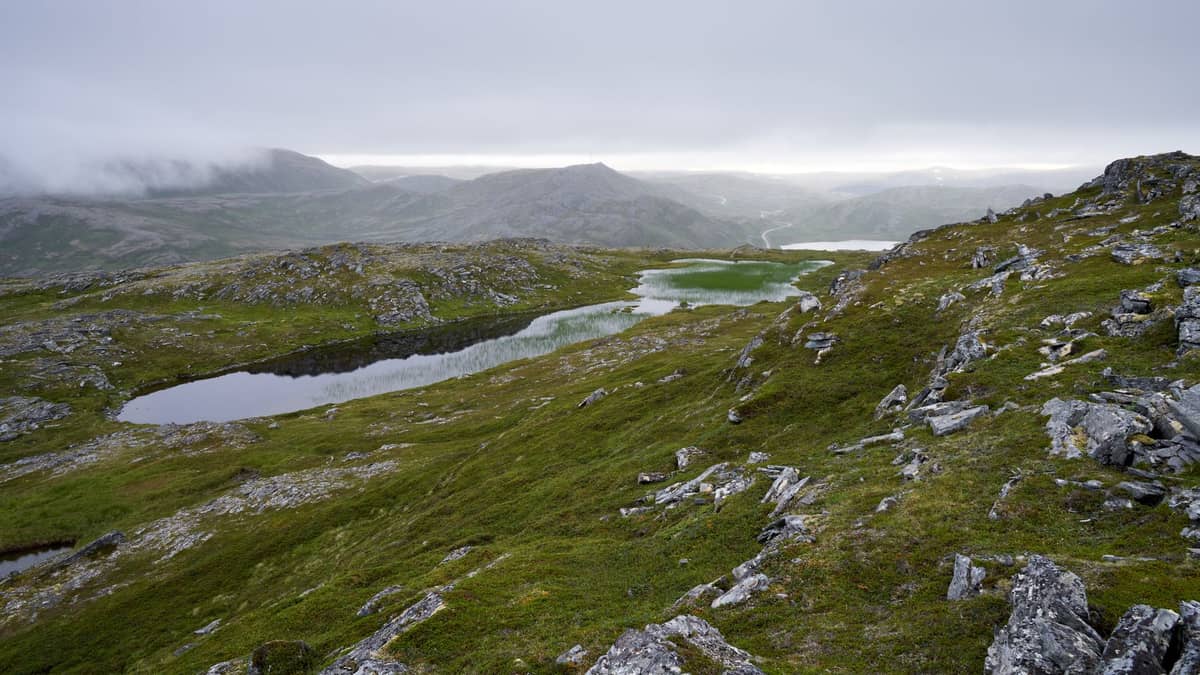
The most dramatic scenery on the Oslo to Bergen train route is concentrated between Geilo and Myrdal, roughly the middle third of the journey. This is the Hardangervidda crossing: a high mountain plateau that looks like the surface of another planet in winter, and turns into a mosaic of lakes, snow patches, and low tundra vegetation in July and August. Finse sits at the center of this stretch and is genuinely worth watching for, even if the train only stops for a few minutes.
For the Oslo to Bergen direction, sitting on the right side of the train gives slightly better views of the most scenic sections. Once you pass Myrdal and descend toward Voss, the valleys open up and both sides offer good scenery. The train has large windows throughout, and most carriages have seats that face the direction of travel, though configurations vary by rolling stock. There is a dining car or trolley service on most departures; the food is functional rather than exceptional, so bringing your own snacks for the high mountain section is a reasonable strategy.
💡 Local tip
The stretch around Finse is the highest and most exposed part of the route. Even in June, the plateau can have snow cover. If you are traveling in May or early June, bring a layer you can pull out while sitting by the window — the carriage temperature can vary significantly when the train is up at altitude.
If the Flåmsbana branch line appeals, you can build a stop at Myrdal or Flåm into your journey. The Flåmsbana is a separate ticket and one of the steepest railway lines in the world, dropping roughly 860–870 meters in 20 km. It connects at Myrdal and terminates at Flåm on the Aurlandsfjord. This is the core element of most Norway in a Nutshell itineraries. Our guide to island hopping around Oslo is a good starting point if you want to combine fjord experiences with your rail journey.
Seasonal Considerations and Crowd Patterns
Summer (June through August) is when the route is busiest. Families, international tourists, and Norwegians heading west for holidays all converge on the same trains. Morning departures from Oslo S on Friday mornings in July are particularly busy. Booking 6 to 8 weeks in advance during this period is not paranoid, it is necessary if you want a specific departure and a Lowpris fare.
Autumn (September and October) is an underrated time on this route. The crowds thin out considerably, the Hardangervidda turns copper and rust as the vegetation changes, and prices drop noticeably. The light in September is still good for photography. October can bring early snow to the high sections, which has its own appeal.
Winter travel on the Bergensbanen is entirely possible. The line is operational year-round and delays due to weather are uncommon, though they do occur during severe storms on the plateau. The landscape around Finse in January or February is stark and memorable. If you are combining the train with a winter trip to Oslo, our Oslo in winter guide covers what to expect in the city before you board.
Common Misconceptions and Practical Warnings
Several myths circulate about this route, and they are worth addressing directly before you book.
- You do NOT need to change trains on a standard Oslo to Bergen service. The main Bergensbanen trains run direct. Only travelers who choose to take the Flåmsbana branch line need to change at Myrdal.
- Norway in a Nutshell is not a train service, it is a package tour combining rail, bus, and boat segments. It costs significantly more than a direct Vy ticket and is designed for a multi-leg sightseeing day rather than efficient city-to-city travel.
- The overnight train saves on accommodation costs but eliminates the scenery entirely. Only consider it if you have already done the daytime route or genuinely need the bed.
- Buying tickets through third-party platforms rarely saves money on this domestic Norwegian route. Vy's own site or app will give you the same or better pricing without booking fees.
- The route is not connected to any high-speed network. There is no TGV or ICE equivalent. If speed is the priority, flying Oslo to Bergen takes around 50 minutes. The train is for the journey itself.
⚠️ What to skip
If you are comparing the Oslo to Bergen train with other Scandinavian rail routes such as the Oslo to Stockholm train or the Oslo to Copenhagen train, note that those routes involve border crossings, different operators, and significantly different booking logistics. The Bergensbanen is a purely domestic Norwegian route booked entirely through Vy.
For travelers continuing beyond Bergen to explore western Norway more broadly, or considering a longer Scandinavian rail itinerary, our guide on day trips from Oslo covers shorter rail options around the capital, while our getting around Oslo guide explains how to navigate the city before you catch your train at Oslo S.
Practical Logistics: Getting to Oslo S and Arriving in Bergen
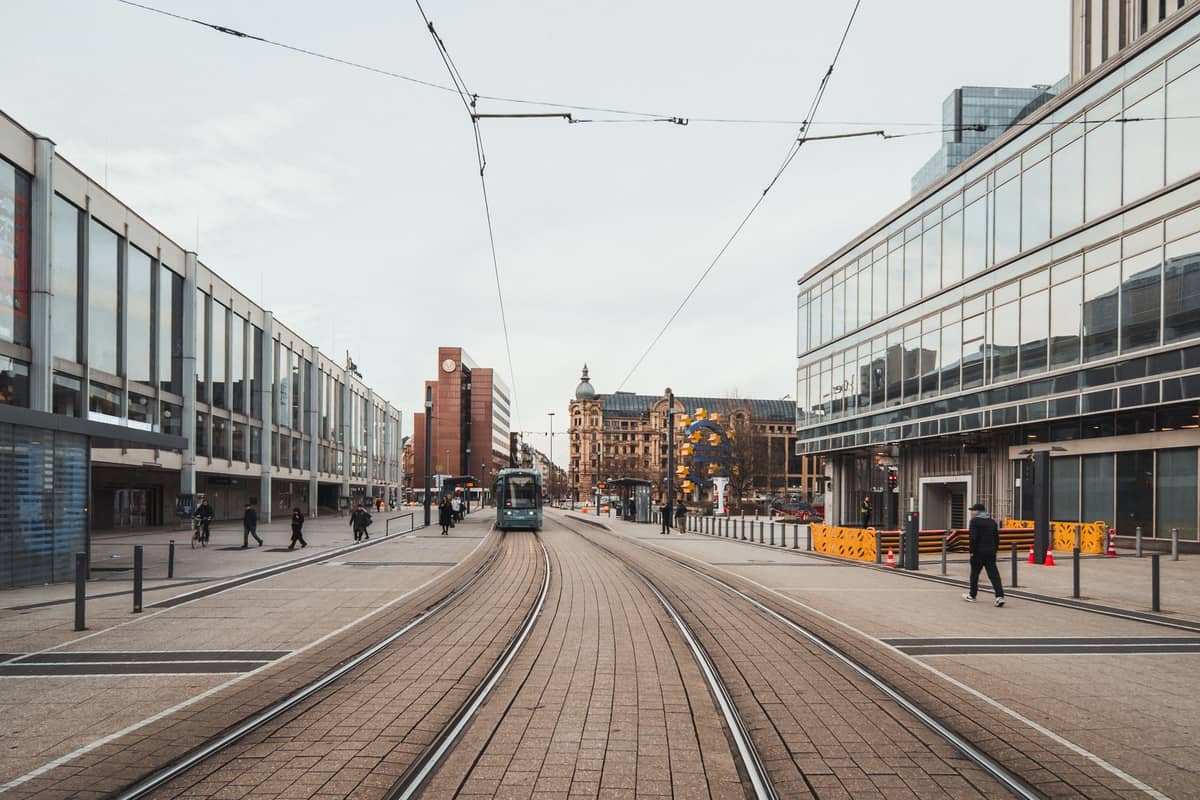
Oslo Central Station (Oslo S) is the departure point for all Bergensbanen services. It is the main rail hub for Norway's capital and is well connected to the rest of the city. The T-bane (metro), trams, and buses all stop adjacent to the station. If you are arriving from Oslo Airport, Gardermoen (OSL), the Flytoget express train takes approximately 19 minutes to Oslo S, while regular Vy regional trains take around 23 to 25 minutes at a lower fare. Allow at least 30 minutes between your airport arrival and your Bergen departure, and more if you are carrying luggage or arriving during peak hours.
Bergen Station sits in the city center, about a 10-minute walk from Bryggen and the harbor. The city is compact and walkable once you arrive. If you are using the Oslo Pass for your time in the capital before the journey, note that it covers Ruter public transport within Oslo's zones but does not extend to the intercity train. Check our Oslo Pass guide for a full breakdown of what is and is not included.
FAQ
How long does the Oslo to Bergen train take?
Most daytime services take between 6 hours 30 minutes and 7 hours 30 minutes depending on the specific departure and number of stops. The overnight train takes approximately 7.5 hours. There is no faster rail option; the mountain terrain prevents high-speed operation.
How much does the Oslo to Bergen train cost?
Advance Lowpris tickets often start around 299 NOK one-way. Standard tickets are higher, and Komfort (first class) seats cost more again due to a supplement. Prices are set by Vy and vary by departure, day, and how far in advance you book. Always check current pricing on vy.no before making plans.
Do I need to book in advance for the Bergen to Oslo or Oslo to Bergen train?
For summer travel (June to August), advance booking is strongly recommended, ideally 6 to 8 weeks ahead for the best Lowpris fares on popular morning departures. Outside peak season, you can often book a week or two in advance without issue, but even then, booking ahead avoids paying the higher walk-up fares.
Is Norway in a Nutshell the same as the Oslo to Bergen train?
No. Norway in a Nutshell is a packaged tour product combining the Bergen Line train, the Flåmsbana branch railway, a fjord cruise, and a bus segment. It is sold by Fjord Tours and similar operators and costs significantly more than a direct Vy ticket. The direct Oslo to Bergen train is simply a point-to-point rail service that you book on vy.no.
Can I take the Oslo to Flåm train directly?
There is no direct train from Oslo to Flåm. The route requires traveling on the Bergensbanen to Myrdal and then changing onto the Flåmsbana, a separate narrow-gauge railway that descends to Flåm on the Sognefjord. The Flåmsbana is a separate ticket and reservation. Total travel time from Oslo to Flåm via this route is roughly 5.5 to 6 hours.
Tickets & tours
Live prices and dates from our booking partner. If you book, we may earn a commission at no extra cost to you.
Planning a trip? Discover personalized activities with the Nomado app.