Oslo to Stockholm: Train, Bus & Flight Guide
The journey from Oslo to Stockholm is one of Scandinavia's most popular intercity routes. This guide breaks down every transport option, from the direct SJ/Vy train to FlixBus, with practical advice on cost, comfort, and convenience.

Tickets & tours
Live prices and dates from our booking partner. If you book, we may earn a commission at no extra cost to you.
TL;DR
- The Oslo to Stockholm train is the best all-round option: direct services run up to 5 times daily, with journey times from around 5h21.
- FlixBus connects the two capitals in roughly 7-8 hours and can be cheaper, especially with advance booking.
- Trains depart from Oslo Central Station (Oslo S); book via SJ or Vy. Advance fares can start as low as 99 NOK but average 49-65 EUR.
- Flights exist but rarely make sense once you factor in airport transfers, check-in time, and baggage fees.
- Before you go, check out getting around Oslo so you can reach Oslo S or the bus terminal without stress.
Route Overview: Oslo to Stockholm

Oslo and Stockholm are roughly 530 km apart by road, separated by the Norwegian-Swedish border in the forested Kongsvinger-Charlottenberg corridor. It is one of the most traveled international routes in Scandinavia, with year-round demand from tourists, business travelers, and Scandinavians visiting family. The good news: the infrastructure is solid, options are plentiful, and booking is straightforward.
Oslo is Norway's capital, sitting at the northern end of the Oslofjord. Stockholm sits on Sweden's east coast, roughly at the same latitude. Despite the distance, the journey is comfortable by train or bus, and the border crossing is seamless for EU, EEA, and most visa-free nationalities under the Schengen Agreement. If you are new to Oslo and planning onward travel, the 3-day Oslo itinerary is a good place to start before you head east.
Oslo to Stockholm by Train
The train is the most popular and practical way to make this journey. SJ and Vy together operate direct services between Oslo Central Station (Oslo S) and Stockholm Central Station (Stockholm C). On weekdays, you can expect up to 5 departures; weekends typically have slightly fewer. Journey times range from about 5 hours 21 minutes to 5 hours 54 minutes depending on the service.
The route runs via Kongsvinger and across the border at Charlottenberg into Sweden, continuing toward Karlstad before arriving in Stockholm. The landscape through this corridor is largely forest and lake country, and the ride is scenic without being spectacular. It is a comfortable, uncrowded train by European standards, with power outlets, a bistro car on most services, and reserved seating.
- Frequency Up to 5 direct trains per day on weekdays; fewer on weekends. Check SJ or Vy for the exact day-specific timetable.
- Journey time Approximately 5h21 to 5h54 depending on the service.
- Departure point Oslo Central Station (Oslo S), the city's main rail hub.
- Arrival point Stockholm Central Station (Stockholm C), centrally located in the city.
- Booking Book directly via sj.no or vy.no for best prices. Third-party platforms like Omio also work but may add fees.
- Prices Promotional fares start from around 99 NOK. Average one-way prices through aggregators run roughly 49-65 EUR. Prices rise sharply as the travel date approaches.
✨ Pro tip
Book SJ or Vy tickets as early as possible. The cheapest promotional fares (sometimes under 100 NOK) disappear weeks in advance. If you are flexible on departure time, mid-morning trains on weekdays tend to be less busy than early morning or Friday afternoon services.
One common misconception worth addressing directly: some travelers assume there are no direct trains between Oslo and Stockholm and look for connections. That is outdated information. Direct services have operated for years and continue to run reliably. You do not need to change trains.
Oslo to Stockholm by Bus
FlixBus is the dominant long-distance bus operator on this route, running approximately 4 departures per day. The journey covers around 530 km and takes about 7 hours 10 minutes, making it noticeably longer than the train. However, bus tickets are often cheaper, particularly for last-minute or flexible travelers who missed the early-bird train deals.
Buses depart from Oslo Bus Terminal, known as Busterminalen Galleriet, a short walk from Oslo S. In Stockholm, buses arrive at Cityterminalen (the main bus terminal adjacent to Stockholm Central Station). Tickets on FlixBus start from around 359 NOK, though prices fluctuate with demand.
ℹ️ Good to know
FlixBus coaches on this route typically have free Wi-Fi, power outlets, and reclining seats. Luggage allowance is generous: one carry-on and one piece of hold luggage are included, with extra bags available for a fee. Snacks and drinks are not provided, so bring your own for a 7-hour ride.
The bus is not dramatically slower than the train, and the comfort gap has narrowed considerably on modern FlixBus coaches. If the train price when you are booking is 60-70 EUR and the bus is 20 EUR, the extra 2 hours on the bus may be worth it depending on your priorities. Where the bus loses is on reliability in winter: road delays from snow and ice are more common than rail disruptions on this corridor.
Oslo to Stockholm by Plane
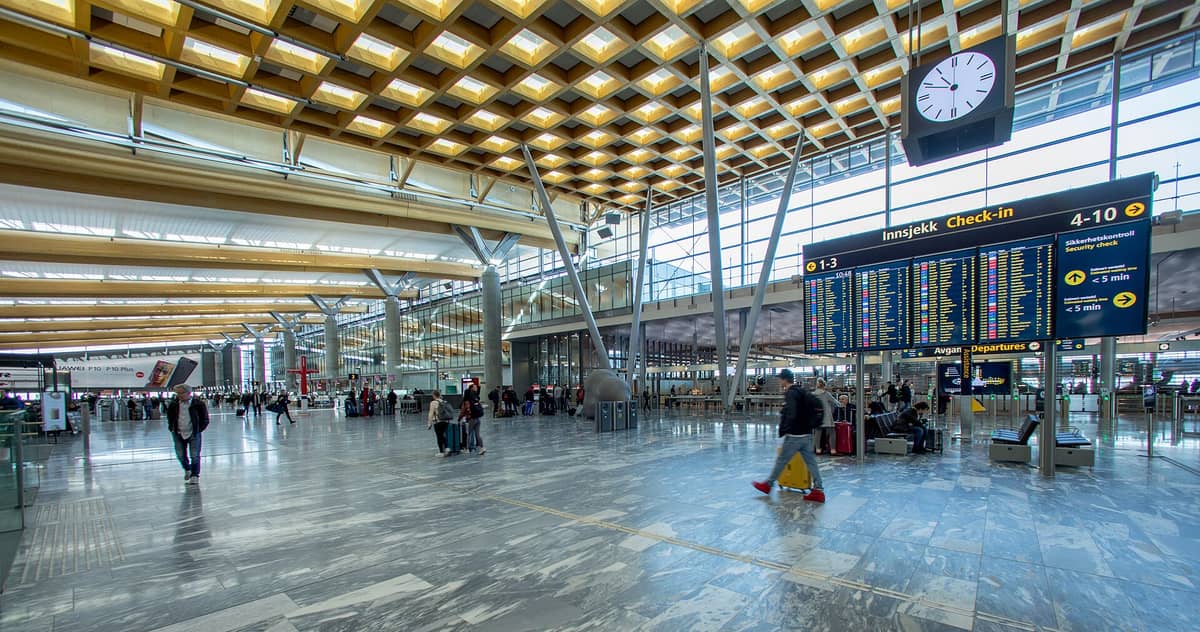
Flights between Oslo Airport Gardermoen (OSL) and Stockholm Arlanda (ARN) or Stockholm Bromma (BMA) exist and take about 1 hour in the air. On paper, that sounds appealing. In practice, it rarely is. By the time you factor in getting to Oslo Airport (19 minutes by Flytoget express train, plus standard airport check-in time), the flight itself, and then an Arlanda Express or bus transfer into central Stockholm, your door-to-door time is often 4-5 hours. That is not substantially faster than the train, which drops you directly in central Stockholm.
Add baggage fees, airport food prices, and the environmental cost, and the case for flying weakens further. The train is the greener, more central, and often comparably priced option for most travelers. That said, if you are already flying into Oslo on a tight itinerary and can get a connecting flight cheaply, it might make logistical sense. Oslo Airport Gardermoen is well-connected to the city center; see the Oslo transport guide for airport transfer details.
⚠️ What to skip
Watch out for 'Oslo area' airports used by some low-cost carriers. Sandefjord Airport Torp (TRF) is around 110-120 km from central Oslo and requires a separate bus transfer. If a budget flight departs from Torp rather than Gardermoen, factor in extra travel time each way.
Practical Tips for the Journey
Both Norway and Sweden are part of the Schengen Area, so there is no passport control at the land border for most travelers. EU, EEA, and Schengen visa holders can cross without showing documents, although it is always smart to carry your passport. Citizens of the US, Canada, Australia, Japan, and many other countries can also cross freely under the Schengen 90-day visa-free rule.
Currency changes at the border: Norway uses the Norwegian krone (NOK) and Sweden uses the Swedish krona (SEK). Both countries are largely cashless and card payments work seamlessly on trains, buses, and in shops. You do not need to exchange cash specifically for this journey.
- Book train tickets on sj.no or vy.no directly, not through hotel concierge desks that may add markups.
- For the bus, book FlixBus at least a few days in advance to access lower fares.
- The train is more punctual in winter; if traveling December through February, budget time for potential delays on the bus.
- Seat reservations are included in your ticket price on SJ services.
- Oslo S has luggage storage if you want to explore the city before an evening departure.
- The bistro car on SJ trains serves hot food, snacks, and drinks, but prices are high. Packing your own lunch is common practice.
If you are planning to explore more of Norway before making this journey, day trips from Oslo can fill the days before your departure efficiently. The Oslofjord area, in particular, is worth a half-day before an evening train.
Which Option Is Right for You
For most travelers, the Oslo to Stockholm train is the clear winner: competitive pricing when booked ahead, central-to-central routing, comfort, and reliability. The bus is a solid second option if budget is the priority or if train tickets are sold out on your date. Flying is rarely the best choice for this specific city pair, unless you have specific logistical reasons. For broader planning around your time in Norway, the guide to whether Oslo is worth visiting and the Oslo on a budget guide can help you get the most out of both ends of your trip.
If this is a one-way journey and you are deciding where to base yourself first, Oslo rewards slower exploration. From the Oslo Opera House in Bjørvika to the Vigeland Sculpture Park in Frogner, the city has enough to justify several days before you board your train east.
FAQ
Is there a direct train from Oslo to Stockholm?
Yes. SJ and Vy operate direct trains between Oslo Central Station (Oslo S) and Stockholm Central Station (Stockholm C) several times daily. No change of train is required. Journey times range from approximately 5 hours 21 minutes to 5 hours 54 minutes depending on the service.
How much does the Oslo to Stockholm train cost?
Prices are dynamic. Promotional advance fares can start as low as 99 NOK, but prices vary widely by booking date and operator. Booking directly on sj.no or vy.no as early as possible gives you the best chance of a low fare. Last-minute tickets are significantly more expensive.
How long does it take to get from Oslo to Stockholm by bus?
FlixBus services take approximately 7 hours 10 minutes. Buses depart from Oslo Bus Terminal (Busterminalen Galleriet) and arrive at Cityterminalen in central Stockholm.
Do I need a passport to travel from Oslo to Stockholm?
Norway and Sweden are both part of the Schengen Area, so there is no border passport control for Schengen travelers. However, carrying your passport is always advisable. Citizens of non-Schengen countries should ensure their visa or visa-free entitlement covers both Norway and Sweden.
Is it better to fly or take the train from Oslo to Stockholm?
For most travelers, the train is better. The flight takes about 1 hour in the air, but door-to-door including airport transfers and check-in, the total journey time is often 4-5 hours. The train drops you directly in central Stockholm, is usually similarly priced, and is significantly more comfortable and environmentally friendly.
Tickets & tours
Live prices and dates from our booking partner. If you book, we may earn a commission at no extra cost to you.
Planning a trip? Discover personalized activities with the Nomado app.