Vigeland Sculpture Park: Oslo's Open-Air Gallery That Never Closes
Vigeland Sculpture Park is the world's largest sculpture park created by a single artist, Vigeland Sculpture Park is the world’s largest sculpture park created by a single artist, with around 200 sculptures in granite, bronze, and wrought iron within the larger Frogner Park. Entry is free, the gates never close, and the experience shifts dramatically depending on when you visit.
Quick Facts
- Location
- Nobels gate 32, Frogner, Oslo
- Getting There
- Tram 12 to Vigelandsparken; T-bane to Majorstuen then 10-min walk; Bus 20 to Frogner plass
- Time Needed
- 1.5 to 3 hours
- Cost
- Free. Open 24 hours, all year
- Best for
- First-time visitors, photography, quiet morning walks, families
- Official website
- vigeland.museum.no/en
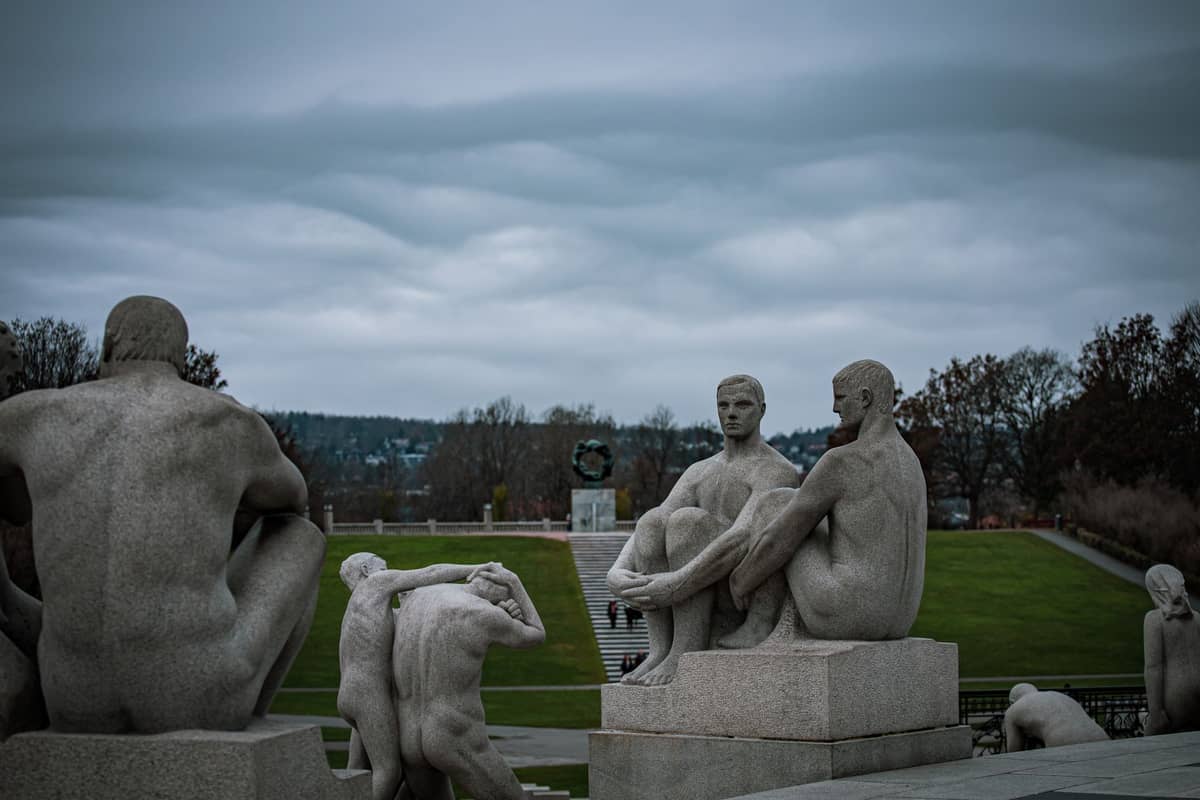
What the Park Actually Is
The Vigeland Sculpture Park, known in Norwegian as Vigelandsparken, occupies the southern portion of Frogner Park in western Oslo. It contains around 200 sculptures in granite, bronze, and wrought iron, all created by Norwegian sculptor Gustav Vigeland (1869–1943) across roughly four decades of work. No other sculpture park on earth is attributed entirely to a single artist at this scale.
Vigeland began the project around 1907 and continued until his death in 1943, essentially trading the rights to his life's work to the city of Oslo in exchange for a studio and living space. That studio, now the Vigeland Museum, sits just outside the park's main entrance. The arrangement was unusual, and the result is something that feels unlike any other public art installation: a coherent, obsessive, deeply personal vision played out at an almost overwhelming scale.
The sculptures are not decorative. They depict the full cycle of human life, from birth through childhood, desire, conflict, old age, and death, rendered with a raw physicality that some visitors find moving and others find unsettling. This is not the sanitized public art of corporate plazas. For context on how this fits within Oslo's broader cultural landscape, see the Oslo architecture guide, which covers how the city has historically commissioned monumental public works.
💡 Local tip
The park is free and open 24 hours a day, every day of the year. You do not need a ticket, reservation, or guided tour. Simply arrive and walk in.
The Layout: How to Walk the Park
The park has a clear central axis running roughly north to south. Most visitors enter through the main gate on Kirkeveien to the north and follow the main avenue toward the Monolith Plateau at the far end. Walking this axis takes about 20 minutes at a relaxed pace, though most visitors spend considerably longer.
The main entrance is flanked by eight towering bronze gates and leads onto a broad pedestrian bridge, the Vigeland Bridge, lined with 58 bronze sculptures. These are among the most immediately striking works in the park: figures wrestling, playing, embracing, and in a few cases hurling children through the air. The most photographed single piece in the park, the Sinnataggen or 'Angry Boy', a small bronze of a furious toddler stamping his foot, stands on the bridge's eastern balustrade.
Beyond the bridge, a circular fountain of bronze figures stands at the center of a geometric rose garden, followed by the Monolith Plateau, the park's focal point. The Monolith itself is a towering column of carved granite, containing 121 intertwined human figures spiraling upward and standing just over 17 meters tall. It took three stone carvers roughly 13–14 years to complete. The surrounding plateau holds 36 granite sculpture groups arranged in a ring around the column, and the elevated position gives clear sightlines across the park and toward the forested hills to the northwest.
The park rewards slow walking. There are gravel paths, lawns, and benches throughout, and the sculptures are installed at ground level without barriers, so you can walk directly up to them. This is one of the few major public art spaces in Norway where nothing is roped off. If you are combining the park with a broader day in the area, the wider Frogner Park surrounding it has sports facilities, a swimming pool (seasonal), and large open lawns popular with locals.
Tickets & tours
Live prices and dates from our booking partner. If you book, we may earn a commission at no extra cost to you.
Enjoy Vigeland Park in a private tour
From 46 €Instant confirmationFree cancellationDiscover photogenic spots in Oslo's Vigeland Park with a local
From 109 €Instant confirmationFree cancellationExplore the Instaworthy spots of Vigeland Park in Oslo with a local
From 81 €Instant confirmationFree cancellationOslo Fjord sightseeing audio-guided electrical boat tour
From 35 €Instant confirmationFree cancellation
How the Park Changes by Time of Day
Morning visits, particularly on weekdays before 9 a.m., offer the park in near-silence. The bronze figures catch low angled light, and the paths are mostly occupied by dog walkers and joggers from the Frogner neighborhood. The scale of the Monolith is easier to absorb when you are not navigating tour groups.
By mid-morning on weekends, and throughout summer afternoons, the park fills quickly. The bridge and Monolith Plateau attract the densest crowds. Photography becomes harder in these hours, not impossible, but expect people in every frame unless you compose carefully. Street vendors sometimes operate near the main gate during peak season.
Late afternoon in summer produces the most dramatic light, particularly on the granite plateau where the stone shifts from grey to warm amber. In winter, a light snowfall transforms the park entirely: the bronze figures accumulate snow on their shoulders and heads, the paths are quieter, and the overall atmosphere is markedly different from the summer version. If you are visiting Oslo in winter, the park in snow is worth the trip on its own terms.
ℹ️ Good to know
Winter sunrise in Oslo can fall well after 9 a.m. In December and January, arriving at 8 a.m. means walking in near-darkness. The park is lit along the main paths, but some areas are dim. Bring a torch if you plan to explore the outer sections in winter mornings.
For a broader guide to what Oslo looks and feels like across the seasons, the best time to visit Oslo guide covers seasonal trade-offs in detail.
Photography: What Works and What Doesn't
The Vigeland Sculpture Park is one of the most photogenic public spaces in Scandinavia, but the shots you have seen in travel brochures require planning. The Monolith photographs best in overcast light, which flattens shadows and brings out the texture of the granite. Harsh midday sun in summer creates heavy shadow on the carved faces and reduces detail.
For the bridge sculptures, a wide-angle lens or phone in portrait mode from below the bridge, shot from the park's lower paths, captures their scale effectively. The Sinnataggen draws a constant line of visitors wanting photos with the piece, so patience is required. Early mornings on weekdays are the most practical window for unobstructed shots.
Drone photography is not permitted without prior authorization from the municipality. Tripods are allowed in the park but may require you to step aside during busy periods. The park is open at night and is partially lit: long-exposure photography in winter evenings, when snow covers the grounds, produces results you will not find in any guidebook.
Practical Details for Your Visit
Getting here from central Oslo is straightforward. Tram Line 12 stops at Vigelandsparken, a short walk from the main north gate on Kirkeveien. The T-bane (metro) stops at Majorstuen on Lines 1, 2, 3, 4, and 5, from where the park entrance is about a 10-minute walk west. Bus 20 stops at Frogner plass, closer to the eastern entrance. Cycling is also practical: Oslo's city bike network has stations in the Frogner area, and the park has bike racks near the entrances.
Wear comfortable shoes. The main paths are broad and mostly flat, but the granite plateau involves a few low steps around the Monolith. The park is largely accessible for visitors with mobility limitations on the main axis, though some of the outer paths are gravel and less smooth. There are public toilets near the main entrance and the Monolith Plateau, and a small cafe operates seasonally inside the park.
The park sits in the Frogner neighborhood, one of Oslo's more affluent residential districts. The streets around the park have several cafes and restaurants suitable for a meal before or after your visit. Majorstuen, a 10-minute walk east, is a commercial hub with supermarkets, pharmacies, and more dining options.
⚠️ What to skip
There is no bag storage or cloakroom in the park. The nearest luggage storage is at Oslo Central Station (Oslo S). If you are arriving directly from your accommodation with bags, plan accordingly.
If you are planning to visit several of Oslo's major attractions, check whether the Oslo Pass makes financial sense for your itinerary. The pass covers public transit and entry to many paid museums, though the Vigeland Park itself is free regardless.
Who Should Consider Skipping This
The park's reputation means it draws very large crowds in peak summer, particularly on weekend afternoons between June and August. If you have limited time in Oslo and are visiting in high summer without an early morning slot available, the experience may feel crowded enough to blunt the impact of the sculptures.
The park is also an outdoor space with no shelter outside a small seasonal cafe. In heavy rain, the grounds can become muddy in the outer areas, and the experience is less comfortable without proper waterproofs. Oslo's autumn, particularly October, is the wettest month on average, so check the forecast before committing a major block of your day here.
Travelers primarily interested in Norwegian cultural history rather than fine art may find the nearby Bygdoy museum peninsula more compelling. The Fram Museum, the Norwegian Folk Museum, and others are concentrated on Bygdøy and cover ground the Vigeland Park does not. The Viking Ship Museum remains closed until the Museum of the Viking Age opens (target 2027). Both areas are worth a visit, but if you are prioritizing, consider what you came to Oslo to see.
For a broader overview of Oslo's museum offerings, the Oslo museums guide covers the major institutions with practical details on each.
Insider Tips
- The Sinnataggen ('Angry Boy') bronze on the bridge is so frequently touched by visitors that the surface is noticeably shinier than surrounding figures. Locals consider this a good-luck ritual, though the museum discourages touching the sculptures to preserve them.
- The Vigeland Museum, just outside the main north gate, is often overlooked. It contains Vigeland's original studio, models, drawings, and smaller works. Entry is paid but gives genuine insight into how the park was conceived. Check opening hours directly with the museum before visiting.
- The park's outer northern section, past the main gate on the left before the bridge, has several quieter sculptures and far fewer visitors. It is worth a 10-minute detour before joining the main axis.
- Oslo's Constitution Day on May 17th draws Norwegians in national costume to the city center, and the park sees families and children throughout the day. It is busy but colorful, and the festive atmosphere is unique to that date.
- If you are visiting in winter and want the park with snow but without darkness, the window is roughly 10 a.m. to 2 p.m. on clear days, when daylight is sufficient for photography and the snow on the sculptures is typically still undisturbed.
Who Is Vigeland Sculpture Park For?
- First-time Oslo visitors who want to understand what makes the city distinctive
- Photographers working in early mornings or winter conditions
- Families with children who need open space alongside cultural content
- Travelers on a budget who want a full half-day experience at no cost
- Anyone interested in monumental figurative sculpture outside a museum setting
Nearby Attractions
Other things to see while in Frogner & Majorstuen:
- Frogner Park (Frognerparken)
Frogner Park is Oslo's most visited green space, combining a peaceful urban park with the world's largest sculpture installation created by a single artist. Free to enter at any hour, it rewards visitors who arrive early, linger at dusk, or return in snow.
- Vigeland Museum
The Vigeland Museum in Oslo's Frogner district is the former studio and home of sculptor Gustav Vigeland, now housing thousands of his drawings, woodcuts, plaster casts, and finished works. It offers the definitive explanation for what you see across the road in Vigeland Park, and stands as one of the most coherent artist's museums in Scandinavia.
Planning a trip? Discover personalized activities with the Nomado app.