Vigeland Museum: Inside the Studio of Norway's Greatest Sculptor
The Vigeland Museum in Oslo's Frogner district is the former studio and home of sculptor Gustav Vigeland, now housing thousands of his drawings, woodcuts, plaster casts, and finished works. It offers the definitive explanation for what you see across the road in Vigeland Park, and stands as one of the most coherent artist's museums in Scandinavia.
Quick Facts
- Location
- Nobels gate 32, 0268 Oslo, Frogner district
- Getting There
- Tram 12, Bus 20 to Frogner Plass, then 3-minute walk
- Time Needed
- 1 to 1.5 hours
- Cost
- Adults 120 NOK, Seniors 100 NOK, Ages 18–25 70 NOK, Under 18 free. Free with Oslo Pass.
- Best for
- Art lovers, design enthusiasts, rainy-day culture seekers, Vigeland Park visitors wanting deeper context
- Official website
- vigeland.museum.no/en
What Is the Vigeland Museum?
The Vigeland Museum, known in Norwegian as Vigelandmuseet, is the former studio and apartment of Gustav Vigeland (1869–1943), the sculptor responsible for one of the world's largest sculpture parks made by a single artist. Oslo's city government built the studio complex between 1921 and 1930 specifically for Vigeland, in exchange for which he donated his entire life's output to the city. He lived and worked here until his death, and today the building preserves not just his finished pieces, but the full creative ecosystem behind them: thousands of drawings, woodcuts, plaster models at every scale, and the towering studio spaces where the original Monolith and Wheel of Life took shape.
Most visitors to Oslo spend time in Vigeland Sculpture Park without realizing the museum exists roughly 300 meters away. That's a missed opportunity. The park shows you what Vigeland made. The museum explains how, and why, and how obsessively he pursued a single unified vision across five decades of work.
💡 Local tip
Opening hours change by season. Summer (June–August): Tuesday–Sunday 10:00–17:00. The rest of the year: Tuesday–Sunday 12:00–16:00, last admission 15:45. Closed Mondays and on certain public holidays. Confirm via the official website before visiting.
The Building Itself: A Studio as Monument
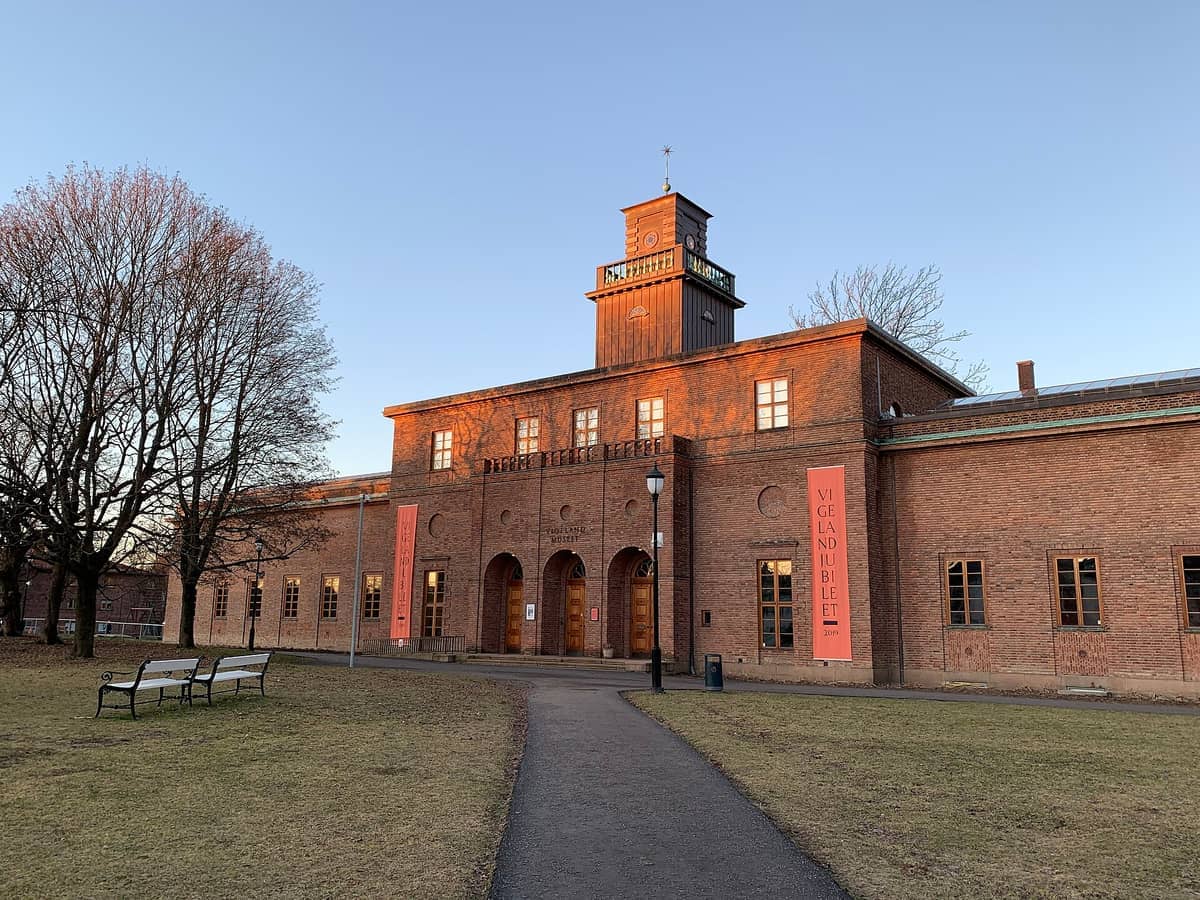
The museum complex is architecturally striking in a quiet, purposeful way. The city commissioned architect Lorentz Ree to design a structure that could function simultaneously as a working studio, a private residence, and eventually a public museum. The result is a red-brick building in a restrained Nordic classicist style, with a distinctive tower that rises over the Frogner rooftops. The scale of the interior rooms was deliberately generous: the main hall has ceiling height enough to accommodate large plaster casts, and natural light floods in through high windows calibrated for a sculptor's needs.
Vigeland moved in during 1924 and spent the final two decades of his life working here at an extraordinary pace. The building's proportions reflect his ambitions: he was not making decorative objects, but rather planning an entire symbolic landscape in three dimensions. Walking through the studios today, with half-finished plaster figures still crowding shelves and worktables preserved in something close to working order, you get a clear physical sense of what it means for one person to produce hundreds of sculptures, reliefs, and preparatory works across a single lifetime.
Tickets & tours
Live prices and dates from our booking partner. If you book, we may earn a commission at no extra cost to you.
Enjoy Vigeland Park in a private tour
From 46 €Instant confirmationFree cancellationDiscover photogenic spots in Oslo's Vigeland Park with a local
From 109 €Instant confirmationFree cancellationExplore the Instaworthy spots of Vigeland Park in Oslo with a local
From 81 €Instant confirmationFree cancellationOslo Fjord sightseeing audio-guided electrical boat tour
From 35 €Instant confirmationFree cancellation
What You Actually See Inside
The ground floor houses the main hall, where the largest plaster casts are on display. These include full-scale preparatory models for the Monolith, the 14-meter column in Vigeland Park covered with 121 intertwined human figures. Standing next to the plaster original inside the museum, you can read the surface detail in a way the outdoor granite version in the park doesn't allow. The textures, the expressions on individual faces, the musculature where bodies press against each other: all of this becomes legible up close and indoors.
Upper floors contain a sequence of rooms dedicated to works on paper. Vigeland produced roughly 12,000 drawings and around 420 woodcuts across his career, and a rotating selection is always on display. The drawings range from quick figure studies with a nervous, searching quality to highly finished compositions exploring his recurring themes: birth, death, the relationship between generations, the cycle of human experience. The woodcuts have a stark, graphic force that feels surprisingly contemporary, influenced partly by his time in Paris in the 1890s and his exposure to Auguste Rodin's working methods.
The apartment where Vigeland actually lived is also accessible during the visit. His private spaces were modest relative to the grandeur of the studios, which says something about his priorities. Personal objects, furniture, and photographs give a humanizing counterpoint to the monumental ambition on display everywhere else in the building.
ℹ️ Good to know
The museum has some accessibility provisions, and visitors who need facilitation are encouraged to contact the museum in advance. Check the latest accessibility information on the official site, especially if visiting with young children or those with mobility limitations.
How the Experience Changes by Time of Day
The museum receives far fewer visitors than Vigeland Park itself, which means the atmosphere inside stays calm even on busy Oslo summer days. Mornings in summer, shortly after the 10:00 opening, tend to be the quietest. The high windows in the main hall catch morning light from the east, which brings out the warm texture of the plaster surfaces in a way that flatter midday light does not replicate. If you are photographing the works, arrive early.
In the off-season, when the museum opens at noon, the shorter hours concentrate visitors into a tighter window. Midweek afternoons in autumn or winter are reliably uncrowded. The enclosed courtyard outside the entrance takes on a different character in each season: bare and contemplative in winter, leafy and softening the brick walls in summer. The contrast between the quiet museum interior and the relatively lively Frogner Plass tram stop a few minutes away is pronounced.
Visiting the Museum and the Park Together
The logical sequence is to visit the museum before the park, not after. Seeing the process behind the sculptures, the rejected versions, the scale models, the thousands of figure studies, recalibrates how you look at the finished bronze and granite works outdoors. Vigeland Sculpture Park is free to enter and open at all hours, so a combined visit works well: spend 90 minutes in the museum, then walk north to the park through Frogner Plass.
The Frogner district itself rewards some time. The streets around the museum are lined with early 20th-century apartment buildings representing some of Oslo's most coherent residential architecture from that period. If you have an interest in urban building fabric, the Oslo architecture guide covers the Frogner streetscape in context.
For a fuller day on the west side of Oslo, the Bygdøy peninsula is accessible by bus from Frogner and clusters several major museums within walking distance of each other. The combination of Vigeland Museum, Vigeland Park, and an afternoon on Bygdøy makes a well-structured full day without crossing the city center.
Practical Details: Getting There, Tickets, and What to Bring
The museum is at Nobels gate 32, in the Frogner district west of central Oslo. By public transport, take tram 12 or bus 20 to the stop Frogner Plass. From there it is roughly a three-minute walk south along Halvdan Svartes gate. The journey from central Oslo takes around 10 to 15 minutes.
Admission is 120 NOK for adults, 100 NOK for seniors, 70 NOK for ages 18 to 25, and free for anyone under 18. The Oslo Pass covers free entry and is worth considering if you are visiting multiple museums during your stay. Tickets are not bookable in advance; pay at the entrance.
There is no formal dress code and no compulsory guided tour. Audio guides and printed information are available in the museum. Photography is generally permitted inside the building for personal use, though you should confirm current rules at the desk, as policies around specific exhibitions can vary. If you plan to photograph the plaster casts in detail, a phone camera is sufficient; the interior lighting is soft and consistent.
⚠️ What to skip
The museum is closed on Mondays year-round, and also closes on certain Norwegian public holidays. If your Oslo visit falls over a public holiday period, check the official site before building your day around a visit.
Clear Assessment: Who This Is For, and Who Might Skip It
The Vigeland Museum is not a comprehensive survey of Norwegian art, and it makes no attempt to be. It is entirely dedicated to one artist, one body of work, one sustained obsession. If you find the sculpture park across the road fascinating rather than merely impressive, the museum will deepen that interest considerably. If you found the park bewildering, overly heavy, or simply not to your taste, the museum is unlikely to reverse that reaction.
Travelers on very tight schedules who are choosing between major Oslo attractions should note that the National Museum of Norway offers much broader coverage of Norwegian and international art for a similar ticket price. But for visitors with even a moderate interest in the creative process, monumental sculpture, or 20th-century Norwegian cultural history, the Vigeland Museum earns its 90 minutes.
Children who engage with the park's figures tend to find the museum interesting too, particularly the plaster casts they can observe from close range. The absence of an elevator does limit upper-floor access for visitors with mobility difficulties or those with larger pushchairs.
Insider Tips
- Visit the museum before the sculpture park, not after. Seeing the plaster originals and preparatory drawings first gives you a reading framework that transforms the outdoor experience.
- The main hall plaster casts can be photographed in fine detail with a phone camera. Morning light through the east-facing windows is particularly good for texture photography of the Monolith model.
- If you hold an Oslo Pass, use it here: the 120 NOK adult ticket is one of the more useful pass redemptions relative to the experience on offer, especially combined with other Frogner area visits in the same day.
- The courtyard outside the museum entrance is a good pause point between the museum and the park. It is small and rarely crowded, and gives a quiet moment before the more expansive park environment.
- Weekday mornings in summer are the calmest. On summer weekends, the park fills quickly after 11:00, but the museum stays comparatively quiet throughout the day, making it a useful retreat from park crowds.
Who Is Vigeland Museum For?
- Art and sculpture enthusiasts wanting to understand the creative process behind Vigeland Park
- Visitors seeking a calm, uncrowded museum experience on Oslo's west side
- Families with children who have already engaged with the park's figures
- Travelers on rainy days looking for covered cultural content near Frogner
- Architecture and design readers interested in purpose-built artist studios
Nearby Attractions
Other things to see while in Frogner & Majorstuen:
- Frogner Park (Frognerparken)
Frogner Park is Oslo's most visited green space, combining a peaceful urban park with the world's largest sculpture installation created by a single artist. Free to enter at any hour, it rewards visitors who arrive early, linger at dusk, or return in snow.
- Vigeland Sculpture Park
Vigeland Sculpture Park is the world's largest sculpture park created by a single artist, Vigeland Sculpture Park is the world’s largest sculpture park created by a single artist, with around 200 sculptures in granite, bronze, and wrought iron within the larger Frogner Park. Entry is free, the gates never close, and the experience shifts dramatically depending on when you visit.
Planning a trip? Discover personalized activities with the Nomado app.