Shopping in Oslo: Best Streets, Markets & Stores
Oslo's shopping scene rewards those who explore beyond the main drag. This guide covers the city's best streets, department stores, weekend markets, and where locals actually shop, with practical hours, neighborhood breakdowns, and practical advice on what to skip.
Tickets & tours
Live prices and dates from our booking partner. If you book, we may earn a commission at no extra cost to you.
TL;DR
- Karl Johans gate is Oslo's most famous shopping street, but locals prefer Bogstadveien and the side streets around Frogner for fashion and design.
- Grünerløkka, particularly Markveien and Thorvald Meyers gate, is the go-to neighborhood for vintage, secondhand, and independent boutiques. See our Grünerløkka neighborhood guide for the full picture.
- Most major malls and department stores are closed on Sundays. Plan accordingly.
- Birkelunden market runs most Sundays in Grünerløkka, making it the exception to the Sunday rule.
- Oslo is expensive. Budget shoppers should focus on markets, outlet sections, and tax-free refunds. Check how to visit Oslo on a budget for more strategies.
Karl Johans Gate: Oslo's Main Shopping Street
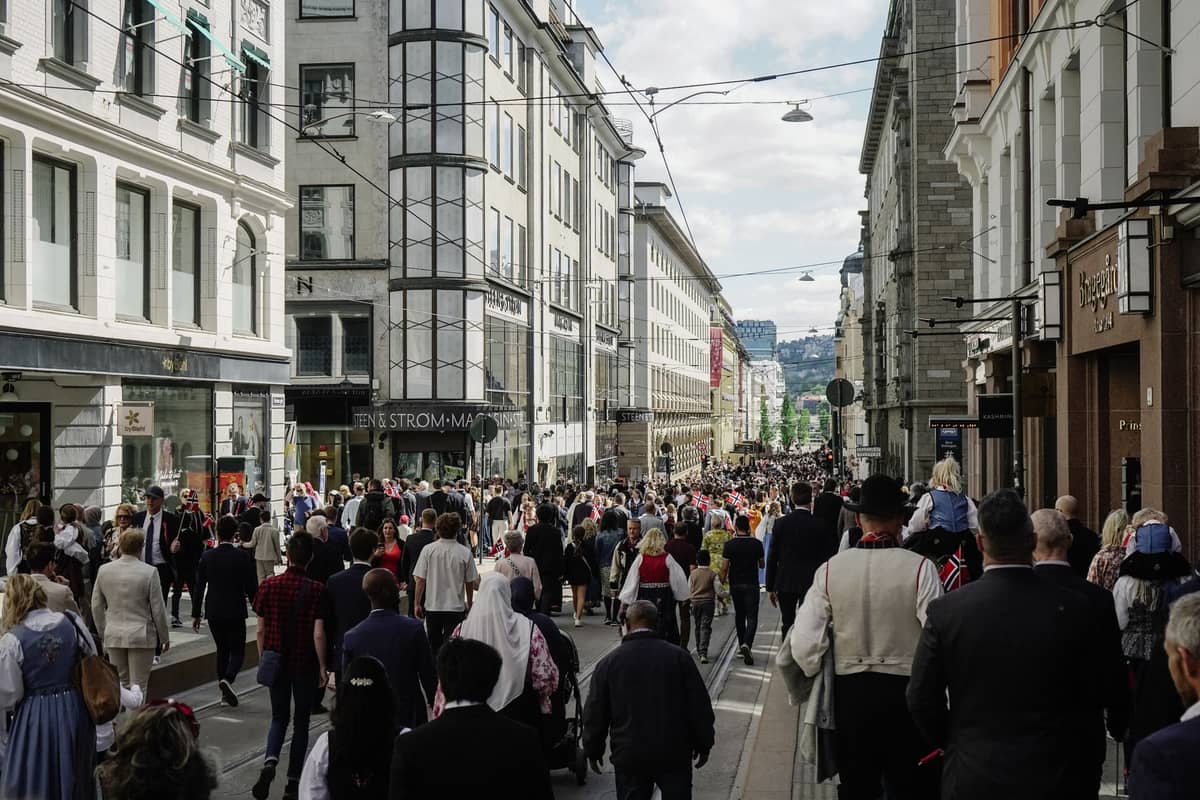
Karl Johans gate is the spine of central Oslo, stretching roughly 1 km from Oslo Central Station (Oslo S) west to the Royal Palace. It is the city's most trafficked shopping street and the first place most visitors end up. The lineup is predictably international: H&M, Zara, Mango, and a cluster of souvenir shops dominate the pedestrianized sections. For everyday retail therapy or picking up something branded before heading home, it works fine. But if you are looking for distinctly Norwegian design or anything outside the global high-street formula, Karl Johans gate will disappoint. The further west you walk toward the Royal Palace, the more the character shifts from retail to institutional, with parliament buildings, the National Theatre, and the Grand Hotel lining the route.
One practical note: the street is split between a fully pedestrianized section and sections where trams and cyclists share the road. The central stretch near Stortorvet (the main square) is the densest retail zone. Side streets branching off here, particularly Nedre Slottsgate and Kongens gate, offer a more interesting mix of boutiques, concept stores, and the Steen & Strøm department store.
⚠️ What to skip
Karl Johans gate is more tourist-oriented than locals let on. Most Oslo residents do the bulk of their shopping on Bogstadveien or in Grünerløkka. If your time is limited, skip Karl Johan for everyday browsing and head straight to those neighborhoods instead.
Bogstadveien and Hegdehaugsveien: Where Oslo Actually Shops
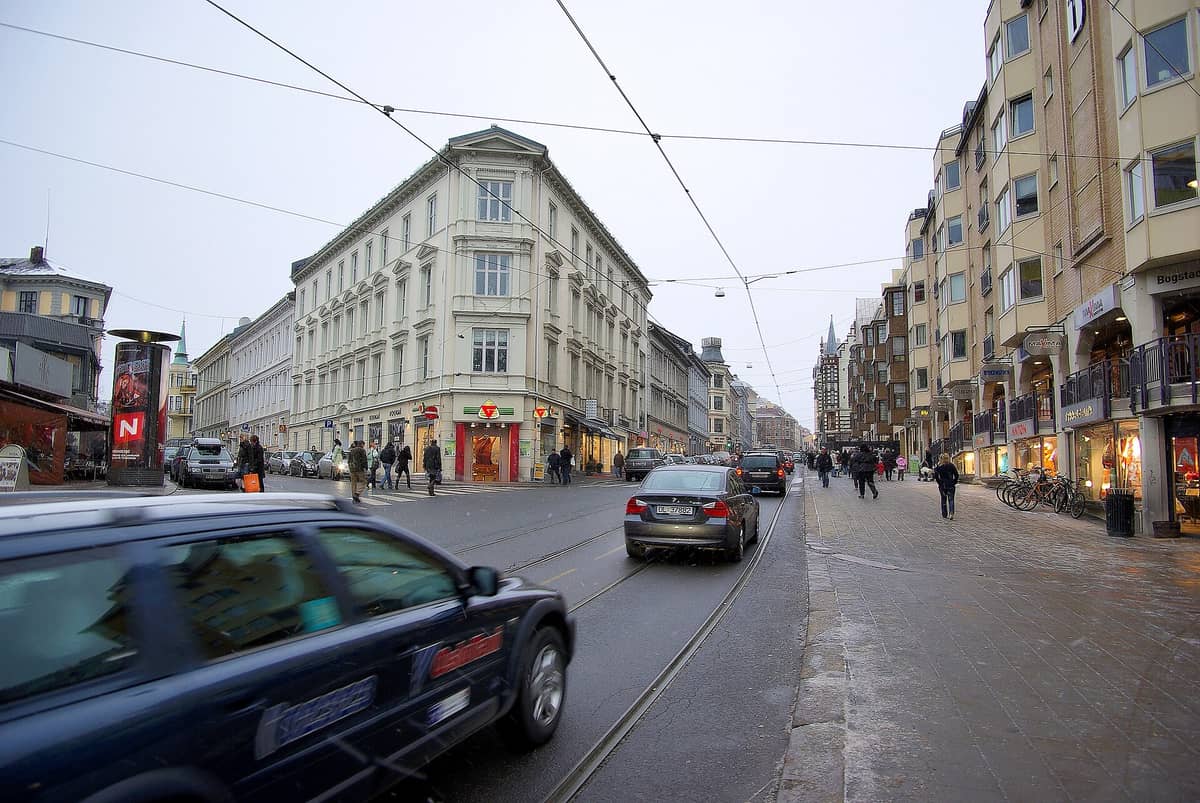
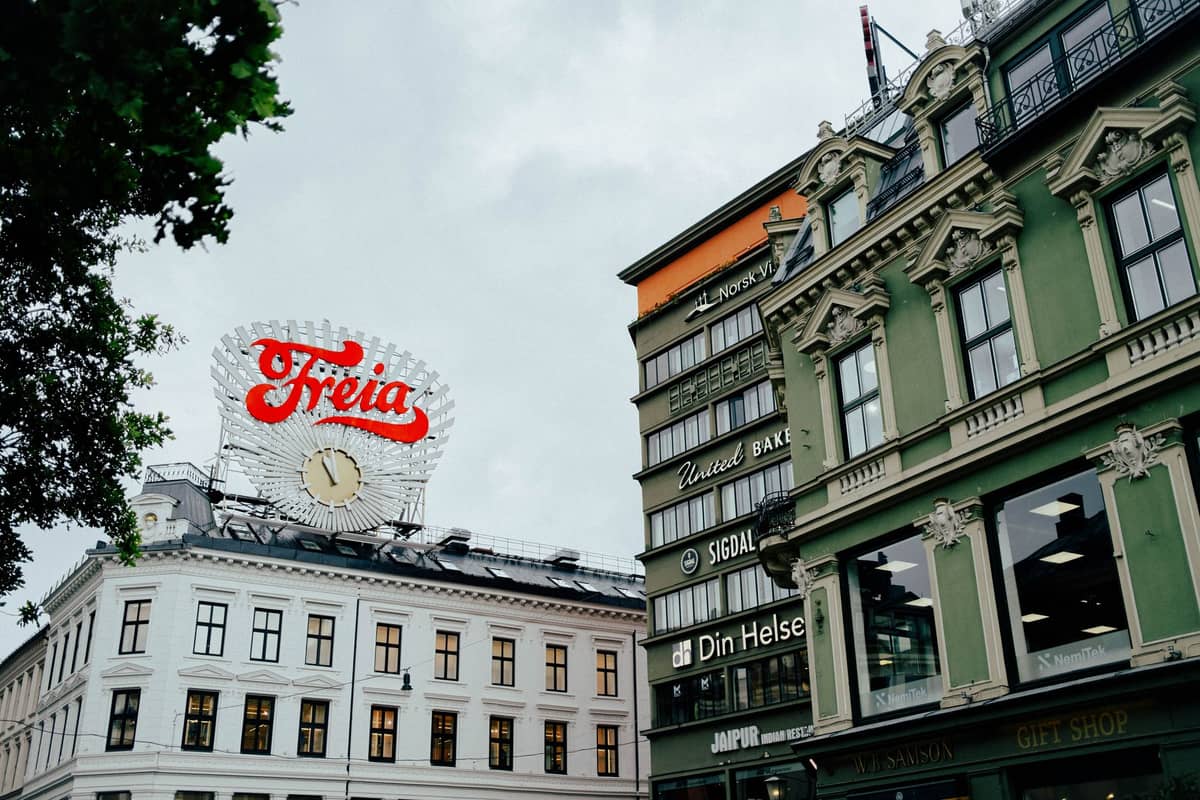
These two streets form one continuous shopping corridor stretching from Majorstuen in the west toward Uranienborg in the east, passing through the Frogner neighborhood. Together they represent Oslo's most popular local shopping street, combining international brands with Scandinavian designer boutiques, independent fashion stores, bookshops, and a strong run of cafés for the inevitable mid-shop break.
The Majorstuen end near the metro and tram junction is more commercial, with familiar international retailers. As you move east along Hegdehaugsveien toward Bislett, the stores become more independent and design-focused. This is where you will find Norwegian and Scandinavian fashion labels, interior design shops, and specialty food stores that do not appear on Karl Johans gate. The street is busiest on Saturdays, when it fills with a genuinely local crowd rather than tourists.
- Best for Scandinavian fashion, independent boutiques, homeware, and a mix of mid-range to high-end shopping
- Getting there Majorstuen station is served by T-bane lines 1, 2, and 3, as well as trams 12 and 19
- When to go Weekday mornings for the least crowds; Saturday is lively but busy
- Side streets worth exploring Josefines gate and Thomas Heftyes gate for smaller independent stores
Grünerløkka: Vintage, Independent, and Design Shopping
Grünerløkka has a reputation as Oslo's bar and café district, which is fair, but it is also the city's strongest area for vintage clothing, secondhand finds, and small-batch design. Markveien and Thorvald Meyers gate are the two main retail streets, running parallel through the neighborhood's core. On Markveien in particular, you will find a concentration of vintage and secondhand clothing shops, small concept stores, and locally made goods that have no equivalent elsewhere in Oslo.
The secondhand and vintage scene here ranges from curated boutiques with edited selections and boutique pricing, to no-frills thrift stores where patient browsing can turn up genuinely good finds for reasonable money. It is a useful counterpoint to Oslo's otherwise eye-watering retail prices. Norwegian and Scandinavian minimalist design is a recurring theme in the concept stores: clean lines, functional objects, quality materials.
💡 Local tip
Grünerløkka is best explored on foot over two to three hours. Start at Birkelunden park in the north, work down Markveien, then cross over to Thorvald Meyers gate heading back south. Most shops open around 11:00 and many close by 18:00 on weekdays.
Malls and Department Stores: Practical Details
Oslo has a handful of malls worth knowing about, particularly if the weather turns or you need everything in one place. The most centrally located is Oslo City, a mid-size mall directly adjacent to Oslo Central Station. It is convenient for a layover or a quick stop before catching a train, with a range of mid-market chains across multiple floors. Opening hours are typically Monday to Friday 10:00 to 22:00 and Saturday 10:00 to 20:00. It is closed on Sundays.
Steen & Strøm, located on Nedre Slottsgate 8 near Karl Johans gate, is Oslo's most established department store. It carries a wider range of quality brands across fashion, beauty, and homeware, and is closer in character to a traditional European department store than the mall format. Typical hours are Monday to Friday 10:00 to 19:00 and Saturday 10:00 to 18:00. Like most major retail here, it closes on Sundays. Both stores adjust hours around Norwegian public holidays, so always check the official website before a special trip.
For a more upscale retail and lifestyle experience, Aker Brygge and Tjuvholmen on the waterfront offer a mix of designer boutiques, gallery-adjacent concept stores, and restaurants. It is less a traditional shopping destination and more a place to browse while walking the harbor. The Astrup Fearnley Museum sits in the same area, so it pairs well with an afternoon visit.
ℹ️ Good to know
Sunday shopping in Oslo is significantly restricted. Most major malls and department stores are closed. Smaller independent shops, particularly in Grünerløkka, may open on Sundays, but hours are shorter. Outdoor markets like Birkelunden are your best bet for Sunday browsing.
Markets: The Best of Oslo's Street and Flea Markets
Oslo's market scene is modest in size but consistent in quality. The standout is Birkelunden market in Grünerløkka, a flea and craft market that runs most Sundays at Birkelunden park. In summer (roughly May through August), it operates from around 12:00 to 19:00. In winter, it runs from 12:00 until dark, which in January means wrapping up by mid-afternoon. The market closes on certain public holidays and civic event days in the district, so checking the organizer's calendar before making a special trip is worthwhile.
Birkelunden leans toward secondhand goods, vintage clothing, handmade crafts, and the occasional oddity. It is not a Christmas market or a food market, though food vendors sometimes appear. It draws a local crowd and has the feel of a genuine neighborhood market rather than a tourist event. For something more food-focused, Mathallen Oslo in Vulkan (a short walk from Grünerløkka) is a covered food hall open Tuesday through Sunday, with Norwegian artisan producers, delicatessens, and specialty food stalls.
For seasonal shopping, Oslo's Christmas markets run from late November into December, with the main one at Oslo City Hall square and additional markets at Norsk Folkemuseum on Bygdøy. The Oslo Christmas guide covers the full seasonal lineup in detail.
- Birkelunden market (Grünerløkka): Most Sundays, secondhand and craft focus
- Mathallen Oslo (Vulkan): Covered food hall, Tue–Sun, artisan Norwegian produce
- Oslo City Hall Christmas Market: Late November to December, traditional crafts and seasonal goods
- Norsk Folkemuseum Christmas Market (Bygdøy): One of Norway's best traditional Christmas markets, usually early December
Practical Tips: VAT Refunds, Prices, and What to Buy
Oslo is one of the most expensive cities in Europe for retail. Norwegian VAT (MVA) on most goods is 25%, which is built into the displayed price. Non-residents can claim a VAT refund on eligible purchases over a minimum threshold when leaving Norway through an international border. Look for the 'Tax Free' logo in store windows and ask for a refund form at the time of purchase. Refunds are processed at the airport or border crossing on departure. It is a legitimate saving on larger purchases like clothing or electronics.
The most compelling local buys are things Norway genuinely does well: wool knitwear (particularly traditional lusekofte patterns and merino base layers), outdoor and technical clothing from Norwegian brands like Helly Hansen, Bergans, and Norrøna, and Scandinavian design objects for the home. These are not cheap, but the quality justifies the price in most cases and they are more meaningful souvenirs than the troll figurines lining Karl Johans gate. For food gifts, look for brunost (brown cheese), dried fish, premium chocolate from Norwegian producers, and aquavit.
✨ Pro tip
If you are buying outdoor clothing or technical gear, Oslo is actually a competitive place to shop. Norwegian brands like Norrøna and Bergans are priced at local market rates here, often cheaper than buying the same items abroad where they are imported. The same logic applies to premium wool knitwear from brands like Dale of Norway.
- Best Norwegian souvenirs to buy Wool knitwear (Dale of Norway, Devold), brunost and local food products, Helly Hansen or Norrøna outdoor gear, Scandinavian ceramics and design objects
- What to avoid Generic troll figurines and Viking helmet souvenirs on Karl Johans gate are poor quality and overpriced. The same goes for 'Norwegian' items made outside Norway.
- Tax-free shopping Non-EU residents can reclaim 25% VAT on eligible purchases. Minimum spend thresholds apply. Process refunds at the airport before departure.
- Payment Norway is heavily cashless. Card payment, including contactless, is accepted almost everywhere. Carrying cash is rarely necessary.
FAQ
Is Oslo good for shopping?
Oslo has a solid shopping scene across several distinct neighborhoods, from mainstream retail on Karl Johans gate to independent boutiques in Grünerløkka and high-end design on Bogstadveien. The main caveat is cost: Oslo is among Europe's priciest cities, so budget shoppers should focus on markets and secondhand stores, or prioritize Norwegian-made goods where the quality justifies the price.
What are the best shopping streets in Oslo?
Bogstadveien and Hegdehaugsveien form Oslo's most popular local shopping corridor, mixing international brands with Scandinavian designers. Markveien and Thorvald Meyers gate in Grünerløkka are best for vintage and independent stores. Karl Johans gate is the most central but leans heavily toward tourist-facing international chains.
Are shops open on Sundays in Oslo?
Most major malls and department stores, including Oslo City and Steen & Strøm, are closed on Sundays. Smaller independent shops in Grünerløkka may open on Sundays with reduced hours. Birkelunden flea market runs most Sundays and is the best Sunday shopping option. Always check current hours before visiting.
Can tourists get VAT refunds when shopping in Oslo?
Yes. Non-residents can claim a refund of Norwegian VAT (25%) on eligible purchases above the minimum threshold. Look for 'Tax Free' signage in stores, request a refund form at point of purchase, and process the refund at Oslo Airport (OSL) or another international border crossing on departure.
What is the best area for vintage and secondhand shopping in Oslo?
Grünerløkka is Oslo's strongest area for vintage and secondhand shopping. Markveien in particular has a concentration of curated vintage boutiques and thrift stores. Birkelunden flea market, running most Sundays in the same neighborhood, adds to the secondhand options.
Tickets & tours
Live prices and dates from our booking partner. If you book, we may earn a commission at no extra cost to you.
Planning a trip? Discover personalized activities with the Nomado app.