Oslo to Tromsø: How to Get There and What to Do
The journey from Oslo to Tromsø covers roughly 1,700 km and takes under two hours by air, but knowing when to go and what to expect in Norway's Arctic capital makes all the difference. This guide covers every transport option, seasonal highlights, and key activities so you can plan confidently.
Tickets & tours
Live prices and dates from our booking partner. If you book, we may earn a commission at no extra cost to you.
TL;DR
- Flying is the only practical direct option: non-stop flights from Oslo Gardermoen (OSL) to Tromsø (TOS) take around 1h 55–2h 05, with fares varying by season and lead time.
- There is no direct train from Oslo to Tromsø — overland travel requires a combination of long-distance trains, buses, and overnight connections that takes two or more days each way.
- Go in November–February for the northern lights and polar night atmosphere; visit late May to late July for the midnight sun. For shoulder-season flexibility, check the best time to visit Oslo before planning your trip.
- Norwegian Air Shuttle (DY) and SAS (SK) operate multiple daily flights on this route — book directly with the airlines or compare on KAYAK and Omio.
- Tromsø is a full destination in its own right: dog sledding, fjord cruises, reindeer experiences, and the world's northernmost university city, all within easy reach of the airport.
Oslo to Tromsø by Air: The Only Realistic Direct Option
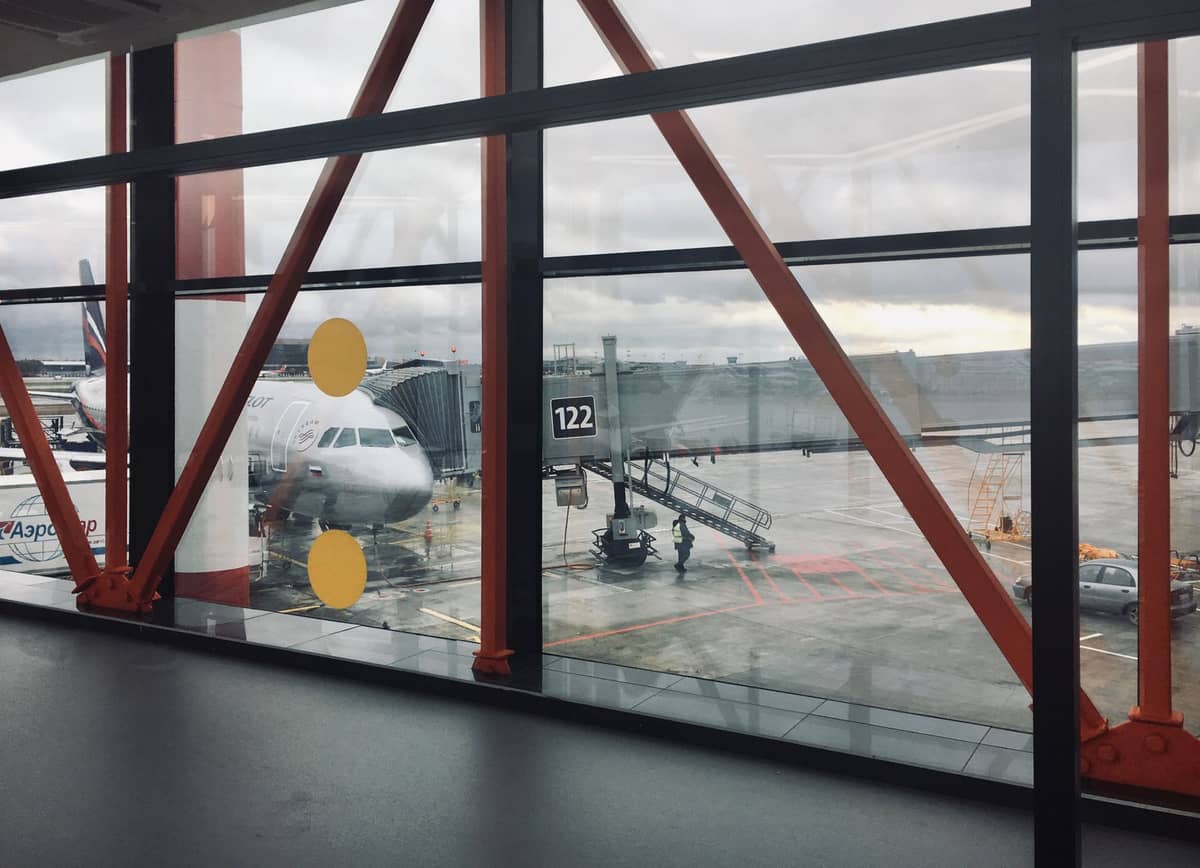
The Oslo to Tromsø route is one of Norway's busiest domestic air corridors, and for good reason. The two cities sit roughly 1,700 km apart, and the flight covers that distance in under two hours. Oslo Gardermoen (OSL), located about 47–50 km north of central Oslo, is the departure hub. Tromsø Airport Langnes (TOS) sits just 5 km from Tromsø city centre, making arrivals straightforward.
Norwegian Air Shuttle (DY) and Scandinavian Airlines (SK) both operate multiple non-stop departures daily. In peak periods you can find several scheduled flights per day, with early-morning slots and late departures. Published flight durations are consistently in the 1h 54–2h 05 range. Both carriers offer cabin bag-only fares that significantly undercut checked-luggage tickets — if you are travelling for a short winter weekend, packing light genuinely changes the economics. Published flight durations are consistently in the 1h 54–2h 05 range. Both carriers offer cabin bag-only fares that significantly undercut checked-luggage tickets — if you are travelling for a short winter weekend, packing light genuinely changes the economics.
- Lowest fares Book 6–10 weeks ahead for the best prices. Sample one-way fares start around USD 49–94, but last-minute bookings during peak aurora season (Dec–Feb) can run significantly higher.
- Where to book Compare across Norwegian.com, sas.no, KAYAK, Omio, and Trip.com. Booking direct with the airline avoids third-party change fees.
- Baggage note Both carriers charge for checked bags on basic fares. If you are bringing ski or hiking gear, factor in oversized luggage fees or consider renting equipment in Tromsø.
- Connections via Bergen or Trondheim If direct flights are sold out or overpriced, connecting via Bergen Airport (BGO) or Trondheim Værnes (TRD) adds roughly 2–3 hours but often opens cheaper combined fares.
⚠️ What to skip
Sandefjord Airport Torp (TRF) is sometimes marketed as an 'Oslo' airport by budget carriers — it sits about 110 km south of Oslo city centre. Always confirm you are departing from Oslo Gardermoen (OSL) when booking flights to Tromsø. The transfer time difference is significant. Always confirm you are departing from Oslo Gardermoen (OSL) when booking flights to Tromsø. The transfer time difference is significant.
Getting to Oslo Airport Before Your Flight
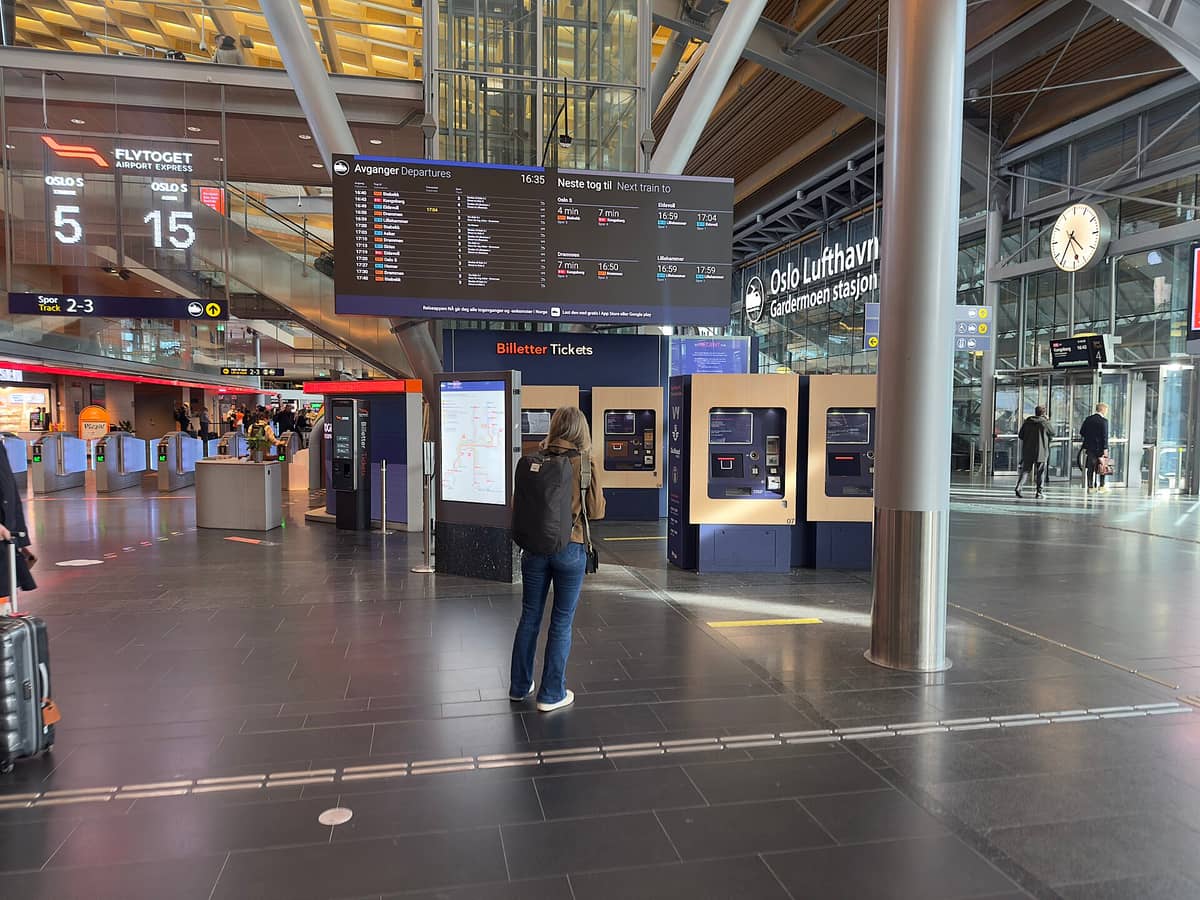
Before flying north, you need to reach Gardermoen from central Oslo. The fastest option is the Flytoget airport express train, which runs from Oslo Central Station (Oslo S) in roughly 19–22 minutes and departs every 10 minutes. Regular Vy regional trains also serve the same route at lower fares with slightly longer journey times of around 23–30 minutes.getting around Oslo guide covers the T-bane, tram, and bus network in full detail.
Taxis from central Oslo to Gardermoen take around 40–50 minutes depending on traffic and cost considerably more than the train. Allow extra time if travelling during weekday morning rush hours or after major events. The Ruter public transport authority manages urban Oslo services; fares and ticketing are covered under the city zone system, while Flytoget and Vy operate their own pricing structures for the airport leg.
Is There an Overland Route? The Train Question Answered
One of the most common questions travellers ask is whether there is a direct train from Oslo to Tromsø. There is not, and this point is worth stating clearly. Norway's northern rail network ends at Bodø, roughly 530 km south of Tromsø by road. Reaching Tromsø overland from Oslo requires a combination of long-distance Vy rail services to Fauske, then regional bus connections that add many more hours. The total travel time is typically two days or more each way.
This overland route has its devotees — the scenery through the Norwegian interior and along the Nordland line is genuinely spectacular — but it is a slow travel choice rather than a practical day-to-day option. Most travellers flying to Tromsø are there for 3–5 days, which makes the overland return journey impractical. If you want to experience Norwegian train travel, the Oslo to Bergen route is far more accessible and equally dramatic.
ℹ️ Good to know
The Nordland Line (Nordlandsbanen) from Trondheim to Bodø can be included as a stop on a longer Norway trip. But it should not be confused with a direct Oslo–Tromsø route. Bodø is still about 530 km from Tromsø by road.
When to Go: Northern Lights vs Midnight Sun
Timing your Oslo to Tromsø trip around Tromsø's two headline natural phenomena requires understanding what each season actually delivers — not just what the marketing suggests.
For the northern lights, the key requirement is darkness, not deep winter. The aurora can be visible in the Tromsø region from late August through early April, whenever skies are clear and dark enough. Peak aurora season runs from November through February. Tromsø is in total polar night from roughly 27 November to 15 January. Aurora activity is strongest between around 20:00 and 02:00 local time, and clear skies are essential. Winter cloud cover is common, so many dedicated northern lights tourists spend multiple nights to maximise their chances.
The midnight sun is the summer counterpart. In Tromsø, the sun remains above the horizon continuously from around 20 May to 22 July, creating round-the-clock daylight. This is the prime period for hiking, kayaking, fjord cruises, and outdoor dining at absurd hours. One important clarification: the midnight sun period does not cover all summer. By late July, nights are already darkening again in Tromsø, and by late August aurora conditions begin to return.
- November–February (polar night / aurora peak) Best chance of northern lights. Coldest temperatures, often well below freezing. Dog sledding, reindeer experiences, and snowmobile tours are all running. Book accommodation well ahead.
- Late May–Late July (midnight sun) 24-hour daylight, summer hiking, and fjord activities. Tromsø's city life is at its most active. Lighter packing possible but still bring a warm layer for evenings on the water.
- March–April (shoulder: snow + some aurora) Longer days than winter but aurora still possible early in the period. Good for skiing and snowshoeing, with slightly less crowded conditions than peak January.
- August–October (shoulder: transition season) Aurora returns as darkness increases. Hiking in full autumn colour is excellent. September and October are significantly quieter and cheaper than midwinter.
✨ Pro tip
A common misconception is that northern lights are only a midwinter phenomenon. In Tromsø, you can see aurora from late August — as soon as nights are dark enough. If you are visiting in September or October, you have a genuine chance of seeing the lights at a fraction of the high-season hotel prices.
What to Do in Tromsø: Key Activities by Season
Tromsø sits at 69°N, making it the largest city in the Norwegian Arctic and a natural base for Arctic experiences. It has a university, an active food and bar scene, and enough infrastructure to feel like a proper city rather than a remote outpost. Most activities cluster around the Tromsøya island where the city centre sits, and the surrounding fjords and mountains., making it the largest city in the Norwegian Arctic and a natural base for Arctic experiences. It has a university, an active food and bar scene, and enough infrastructure to feel like a proper city rather than a remote outpost. Most activities cluster around the Tromsøya island where the city centre sits, and the surrounding fjords and mountains.
In winter, the main draw beyond aurora watching is the array of guided Arctic experiences. Dog sledding trips run from the city into the mountains, typically lasting 2–4 hours. Reindeer sledding with Sámi guides is a culturally rich alternative. Snowmobile tours reach the fjord plateaus above the city. For those who want something calmer, a fjord cruise in the dark season offers a quieter way to experience the Arctic landscape and occasionally spot whales — orca and humpback whales follow the herring into the fjords from late October to late January. Before you leave Oslo, it is worth visiting the to compare the two very different fjord experiences Norway offers. Before you leave Oslo, it is worth visiting theOslo fjord guide to compare the two very different fjord experiences Norway offers.
In summer, Tromsø is a hiking city. The Sherpa Trail (Sherpatrappa) leads up from the city to Storsteinen at around 421 m, with panoramic views over the Tromsøysund strait and the surrounding peaks. The cable car (Fjellheisen) is a faster route to the same viewpoint. The Arctic Cathedral (Ishavskatedralen), with its distinctive triangular glass facade, is one of Norway's most photographed modern buildings and is worth a visit year-round. The Tromsø University Museum covers Sámi culture and Arctic natural history in depth. with panoramic views over the Tromsøysund strait and the surrounding peaks. The cable car (Fjellheisen) is a faster route to the same viewpoint. The Arctic Cathedral (Ishavskatedralen), with its distinctive triangular glass facade, is one of Norway's most photographed modern buildings and is worth a visit year-round. The Tromsø University Museum covers Sámi culture and Arctic natural history in depth.
The city centre is compact and walkable. The main shopping street, Storgata, has local shops and cafes alongside the usual chains. The harbour front is lively in summer evenings. If you are planning a multi-city Norway trip combining Oslo and Tromsø, the 3-day Oslo itinerary pairs well with a 3–4 day Tromsø extension, covering both the south and the far north.
Practical Planning: Costs, Accommodation, and Logistics
Tromsø is not a budget destination. Like Oslo, it operates at Norwegian price levels: restaurant meals for two with drinks typically run 600–900 NOK or more, and guided Arctic tours range from around 900–2,500 NOK per person depending on duration and type. Budget accommodation starts around 800–1,100 NOK per night for a private room in a guesthouse or compact hotel; mid-range hotels run 1,200–2,000 NOK. In peak northern lights season (December–January), prices at popular properties can double, and availability tightens significantly.
Oslo accommodation options range widely too. If you are spending a night or two in the capital before flying north, the where to stay in Oslo guide covers the best neighbourhoods by budget and travel style. For those watching costs, it is worth reading the Oslo on a budget guide to save money in the capital before spending on the Arctic experience.
Practically, Tromsø Airport is served by airport buses and taxis into the city centre (approximately 5 km, 10–15 minutes). There is no metro. Car hire is available at the airport if you plan to explore beyond the city, which can be worthwhile in summer for coastal road trips. In winter, driving on Arctic roads requires experience with icy conditions and winter tyres — guided tours from the city are often a safer option for most visitors.). There is no metro. Car hire is available at the airport if you plan to explore beyond the city, which can be worthwhile in summer for coastal road trips. In winter, driving on Arctic roads requires experience with icy conditions and winter tyres — guided tours from the city are often a safer option for most visitors.
💡 Local tip
Tromsø's weather changes fast. Pack waterproof outer layers regardless of season. In winter, base layers, insulating mid-layers, and a windproof outer shell are essential for any outdoor activity. Most guided tour operators provide overalls and boots for dog sledding and snowmobile tours, but confirm this when booking.
FAQ
How long is the flight from Oslo to Tromsø?
Non-stop flights from Oslo Gardermoen (OSL) to Tromsø Airport (TOS) take approximately 2 hours. Both Norwegian Air Shuttle and SAS operate multiple direct services daily. Both Norwegian Air Shuttle and SAS operate multiple direct services daily.
Is there a train from Oslo to Tromsø?
No. There is no direct train connection. Norway's northern rail network ends at Bodø, roughly 530 km south of Tromsø by road. Reaching Tromsø overland from Oslo requires a combination of trains and buses spanning two days or more. Flying is by far the most common and practical option.
What is the best time of year to travel from Oslo to Tromsø?
It depends on what you want to experience. For northern lights, visit between November and February, though aurora is possible from late August onward whenever skies are dark. Polar night itself runs from late November to mid-January. For the midnight sun, go between late May and late July. March–April and August–October are quieter shoulder seasons.
How much does a flight from Oslo to Tromsø cost?
One-way fares vary significantly by season and booking lead time. Budget fares can start around 500–1,000 NOK one way when booked in advance. Prices rise sharply during peak northern lights season (December–January) and summer holidays. Book directly with Norwegian or SAS, or compare on KAYAK and Omio for the best rates.
How far in advance should I book flights from Oslo to Tromsø?
For the best prices, aim to book 6–10 weeks ahead of your travel date. For peak periods like Christmas–New Year and the core northern lights season (late December to mid-January), booking 3–4 months ahead is advisable, especially if you also need to secure popular accommodation and guided tours in Tromsø.
Tickets & tours
Live prices and dates from our booking partner. If you book, we may earn a commission at no extra cost to you.
Planning a trip? Discover personalized activities with the Nomado app.