Oslo in Summer: Midnight Sun Myths, Beaches & the Best Festivals
Summer transforms Oslo into one of Scandinavia's most enjoyable cities, with nearly 19 hours of daylight, warm fjord beaches, and a packed festival calendar. This guide covers what to expect from June through August, including the truth about the 'midnight sun', when each season peaks, and which events are worth planning around.
Tickets & tours
Live prices and dates from our booking partner. If you book, we may earn a commission at no extra cost to you.
TL;DR
- Summer in Norway runs June through August; Oslo's warmest month is July, with average highs around 21–23°C.
- Oslo does not experience true midnight sun — the sun sets around 22:55 in late June, but the sky stays bright all night (civil twilight). For actual midnight sun, you need to travel north of the Arctic Circle.
- August is Oslo's peak festival month: Øyafestivalen, Oslo Jazzfestival, and Mela all cluster in the second half of the month. See the full best time to visit Oslo guide for a month-by-month breakdown.
- City beaches like Huk and Sørenga are free and reachable by public transport from central Oslo.
- Oslo is expensive — budget at least 500–800 NOK per person per day for food and transport alone, excluding accommodation.
When Is Summer in Norway (and What That Means for Oslo)
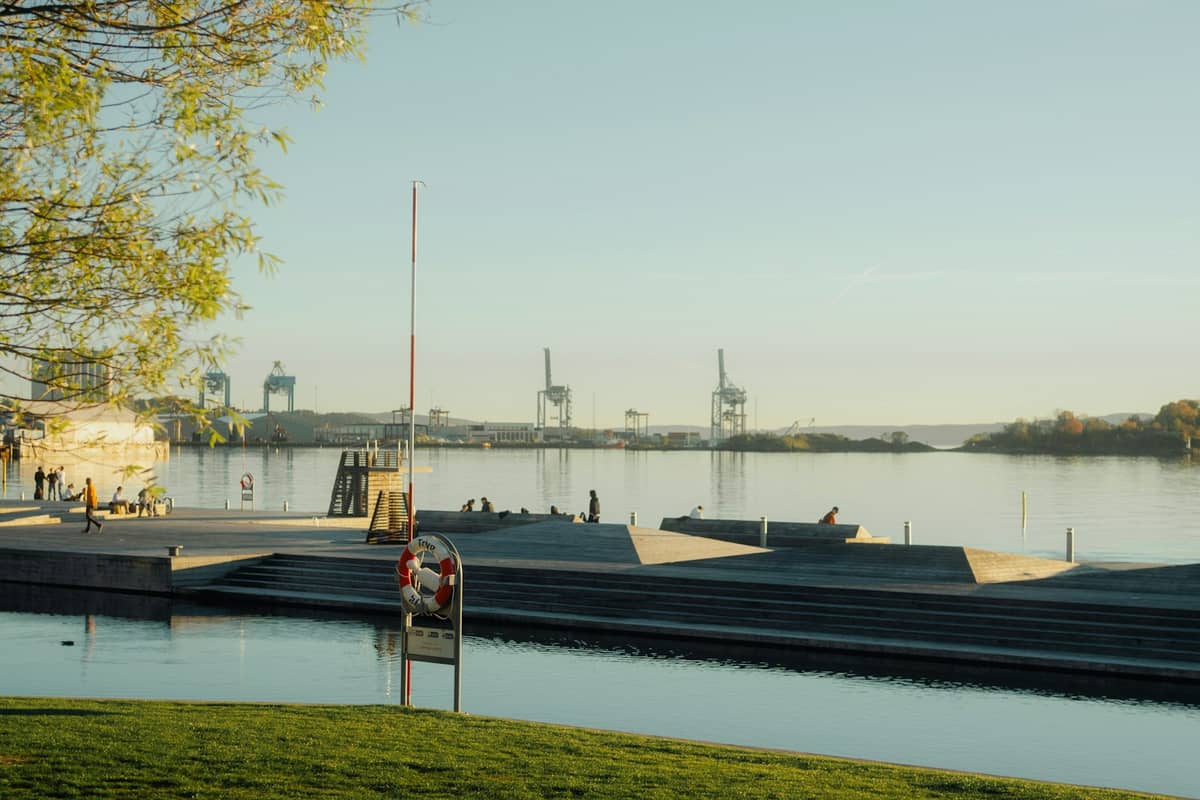
Summer in Norway officially spans June, July, and August, though Norwegians often start counting from late May when temperatures become reliably mild. In Oslo, June brings average temperatures of around 15–16°C, July peaks at 17–18°C with occasional highs up to 25°C, and August stays close to 16–17°C before autumn edges in during September. The warmest and sunniest stretch is typically the second half of July into early August.
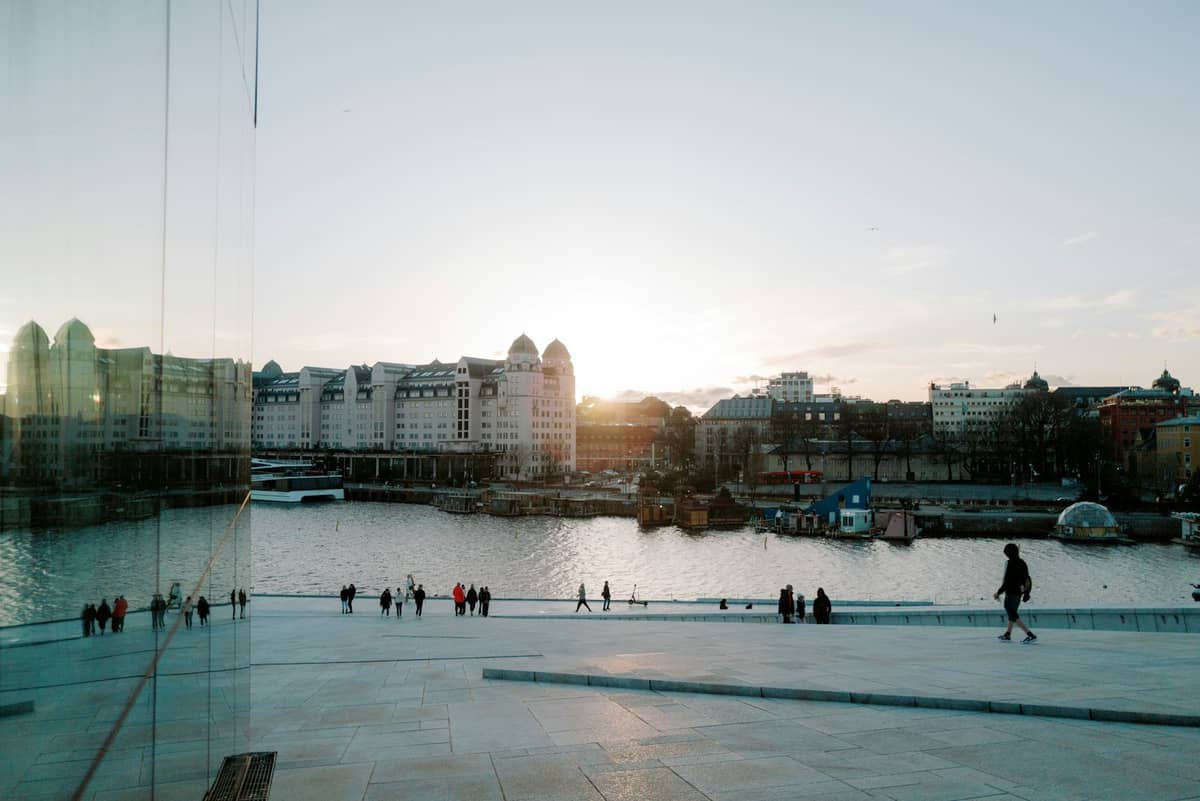
Oslo sits at roughly 59.9°N latitude, which means long summer days without the extremes of Norway's far north. June is the longest-daylight month: sunrise comes around 03:55 and sunset around 22:45, giving close to 18.8 hours of actual daylight. By July, you're still looking at around 18 hours. The sky during these 'white nights' never reaches full darkness — it transitions from dusk to a pale, diffuse glow and back to dawn within an hour or two. This is genuinely disorienting for first-time visitors and makes sleeping without blackout curtains difficult.
⚠️ What to skip
Oslo does NOT have midnight sun. The sun always dips below the horizon, even in June. What you experience is prolonged civil twilight — the sky stays bright, but the sun is not visible at midnight. To see the actual midnight sun, you need to travel to locations north of the Arctic Circle, such as Tromsø or Lofoten. Don't book an Oslo trip specifically for midnight sun without understanding this distinction.
If seeing the true midnight sun is a priority, Oslo works well as a base for planning a wider Norway itinerary. Consider the Oslo to Tromsø route for the far-north experience, or pair Oslo with a longer trip north in June when daylight is at its peak.
Oslo's Summer Climate: What to Actually Expect
Oslo has a Baltic semi-continental climate, which means winters are genuinely cold and summers are mild to warm rather than hot. Rain is possible at any point — Oslo receives around 800–900mm annually, spread fairly evenly through the year. Summer isn't the driest season; that distinction goes to late winter and early spring. In practical terms, expect a mix of warm sunny stretches and overcast, occasionally rainy days throughout June, July, and August. A light waterproof layer is always worth packing.
- June Average 15–16°C, long evenings, festival season warming up. Shoulder crowds before school holidays end.
- July Warmest month, average highs 21–23°C. Peak tourist season, prices highest, many Norwegians leave the city on holiday.
- August Still warm (16–17°C average highs), peak festival month, Norwegians return from summer cabins. Arguably the best combination of weather and events.
- Late May / Early September Shoulder season: fewer crowds, lower prices, temperatures still pleasant at 11–14°C. Good for sightseeing without the summer rush.
💡 Local tip
If you want good weather AND lower hotel prices, target the first two weeks of June or the first week of September. You'll get 17+ hours of daylight in early June, and accommodation costs are noticeably lower than peak July rates.
Beaches and Swimming in Oslo
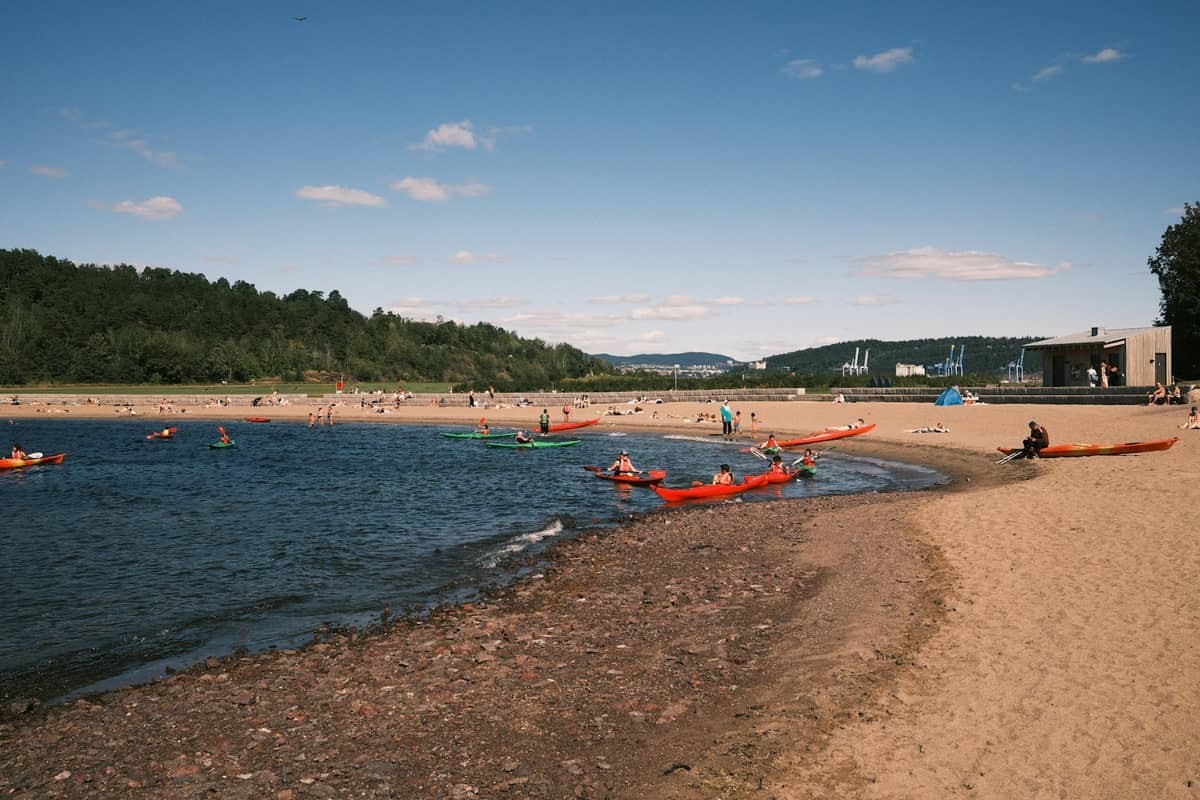
Oslo has a surprising number of accessible beaches given that it's a capital city. The Oslofjord and its islands provide sandy and rocky shores within easy reach of the city centre, most of them free and served by public transport. Water temperatures in the fjord reach around 18–20°C in a warm July or August, which is perfectly swimmable by Norwegian standards.
The most popular city beach is Huk on the Bygdøy peninsula, which has both family-friendly shores and a designated nudist section. It gets crowded on hot weekends — arrive before 11am to get a good spot. Sørenga Seawater Pool in the Bjørvika area offers a more urban swimming experience with a floating pool structure, great views of the Opera House, and easy access from the city centre.
For a more relaxed beach day away from the crowds, the Oslofjord islands are a short ferry ride from Aker Brygge. Islands like Hovedøya, Langøyene, and Gressholmen each have their own character — Langøyene allows camping and has an open nudist beach, while Hovedøya has monastery ruins and forest paths. Ferry tickets are covered by the standard Ruter public transport pass, which makes island hopping a genuinely affordable summer afternoon.
Summer Festivals in Oslo: The August Calendar
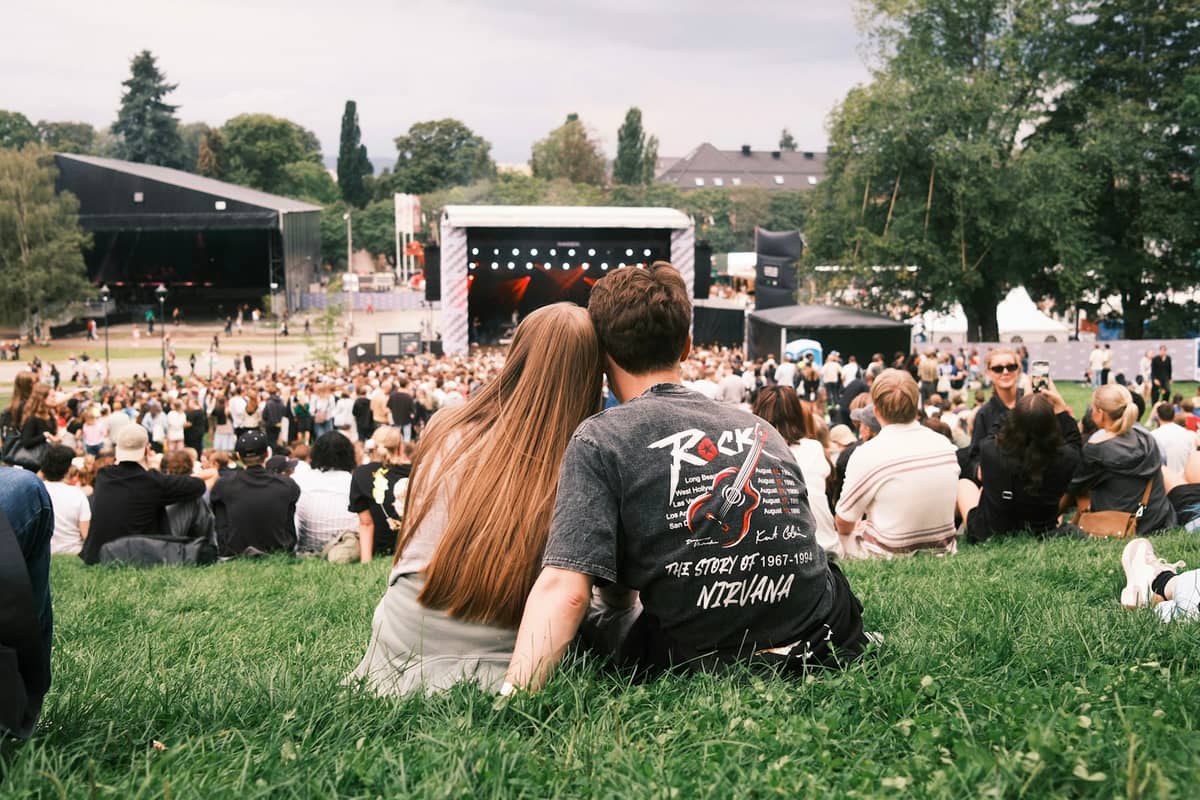
A common misconception is that Oslo's festival season peaks in July. In reality, August is the concentrated festival month, with multiple major events overlapping in the second and third weeks. If you're visiting specifically for live music or cultural events, the window from early to late August is when the city delivers most.
- Øyafestivalen (12–15 Aug 2026) Norway's most prominent rock and pop festival, held in Tøyenparken. Strong international lineup, four days, multiple stages. Tickets sell fast — book months in advance via oyafestivalen.no.
- Oslo Jazzfestival (9–15 Aug 2026) A week-long city-wide jazz celebration marking its 40th anniversary in 2026. Venues range from concert halls to outdoor stages. Mix of free and ticketed events across central Oslo.
- Mela-festivalen / Oslo Mela (14–16 Aug 2026) Free multicultural arts and music festival on Rådhusplassen (City Hall Square). One of Oslo's most accessible summer events — no ticket required.
- Oslo Chamber Music Festival (14–21 Aug 2026) A week of classical concerts across intimate city venues. High-quality programming in historically significant spaces.
- Oslo Swing Jazz Festival (21–23 Aug 2026) Smaller and more specialist than the main jazz festival, with a focus on swing music, live concerts, and social dancing.
- Oslo Pix Film Festival (24–30 Aug 2026) International film festival featuring open-air cinema screenings alongside indoor programmes. Good for an evening event at the tail end of a summer trip.
✨ Pro tip
If Øyafestivalen is on your list, book accommodation in central Oslo at least 3–4 months ahead. The festival draws large crowds and hotel availability in Grünerløkka and Sentrum drops sharply once the lineup is announced, usually in late winter.
Beyond the August cluster, Norway's national day on 17 May (Constitution Day) brings the country's most exuberant public celebration, with Oslo at the centre. The children's parade along Karl Johans gate and the crowds outside the Royal Palace are extraordinary — see the Oslo Constitution Day guide for what to expect. Late May also overlaps with some of the year's best weather for sightseeing.
What to Do in Oslo in Summer Beyond the Beaches
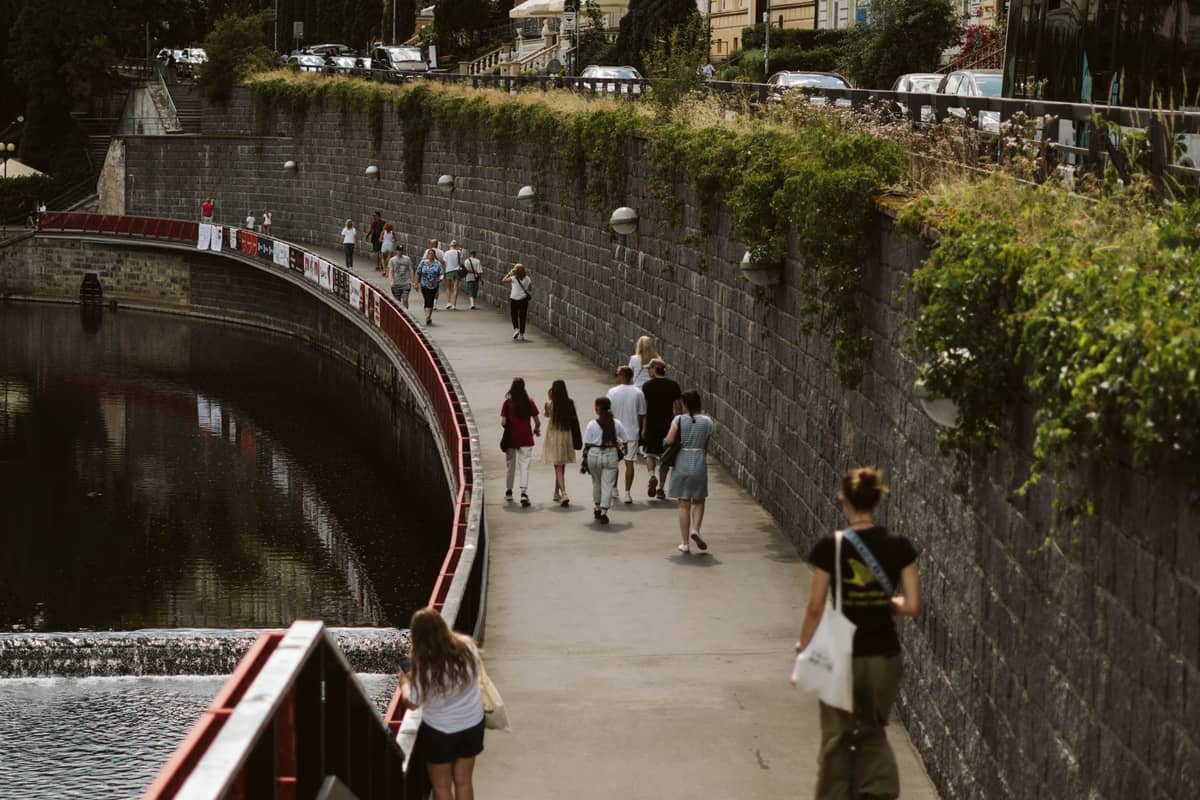
The long summer evenings make Oslo unusually good for walking. The Akerselva river walk runs from Maridalen through Grünerløkka down to the fjord — a genuine local favourite that covers parks, old factory buildings, and waterside cafes in a single route. It's free, flat in its lower sections, and at 10pm in July it's still fully light outside.
For views over the city, the Holmenkollen ski jump observation deck and the surrounding Nordmarka forest trails are excellent in summer when the ski slopes transform into hiking terrain. The T-bane line 1 takes you directly to Holmenkollen from the city centre in around 30 minutes. Further into the forest, Sognsvann lake is where Oslo locals swim and picnic — a more low-key alternative to the fjord beaches.
The Bygdøy peninsula concentrates several of Oslo's best museums within walking distance of each other. Summer is the practical time to visit the Fram Museum and the Kon-Tiki Museum, both of which see their highest visitor numbers between June and August. Go on a weekday morning to avoid peak queues. Check the Oslo Pass for combined museum access and public transport — it can save money if you plan to visit three or more paid attractions.
ℹ️ Good to know
Oslo's tap water is excellent — sourced from protected mountain reservoirs. Skip the bottled water and use a reusable bottle throughout your trip. It's both cheaper and better tasting than most alternatives.
Practical Tips for Visiting Oslo in Summer
Oslo is consistently ranked among Europe’s most expensive cities. Budget realistically: a sit-down lunch for two with drinks runs 400–600 NOK, a single beer at a bar is 90–120 NOK, and a metro single ticket is around 46 NOK. The saving grace is that many of the city's best summer activities — beaches, parks, the Akerselva walk, viewpoints, and several festivals — are free or low-cost.
Getting around Oslo in summer is straightforward using the Ruter network of metro (T-bane), trams, and buses. A single ticket covers all modes within zones. From Oslo Airport (Gardermoen, OSL, approximately 47–50km north of the centre), the Flytoget express train reaches Oslo Central Station in around 19–22 minutes, while the regular Vy regional train takes slightly longer but costs less. Check both operators for current fares before booking. Once in the city, the getting around Oslo guide covers zone logic, day pass options, and which neighbourhoods are walkable.
- Pack layers even in July: temperatures can drop 10°C after sunset, and evenings on the fjord feel cool even after a warm day.
- Blackout curtains or a sleep mask are worth bringing — hotel rooms without them make sleeping past 4am genuinely difficult in June and July.
- Book accommodation early for August festival weeks; Grünerløkka and Sentrum fill up fast when Øyafestivalen and Oslo Jazzfestival overlap.
- Norway uses Type C/F plugs at 230V — European adapters work, but travellers from the UK, US, or Australia will need an adapter.
- Tipping is not obligatory in Oslo; rounding up or adding 10% for good restaurant service is common but never expected.
- Emergency numbers: 112 (police), 113 (ambulance), 110 (fire). Country code: +47.
If your summer trip to Oslo leaves you wanting more of Norway, the city is an ideal starting point. The Oslo to Bergen train is one of Europe's most scenic rail journeys and runs year-round. For fjord day trips directly from the city, the Oslo fjord guide covers the best short excursions without needing to travel far.
FAQ
When is summer in Norway and Oslo?
Summer in Norway runs from June through August. In Oslo, June and July bring the longest days (up to 18–19 hours of daylight), while August is the peak festival month with slightly more reliable warm weather and the city at its most culturally active.
Does Oslo have midnight sun in summer?
No. Oslo is at roughly 60°N latitude, well south of the Arctic Circle (66.5°N). The sun sets every night even in late June — around 22:55 at the longest point. The sky never gets fully dark, giving you 'white nights' with extended twilight, but this is not the same as midnight sun. For true midnight sun, travel to Tromsø, Lofoten, or Nordkapp between late May and late July.
What are the best beaches near Oslo in summer?
The top options are Huk on the Bygdøy peninsula (sandy, popular, accessible by bus), Sørenga Seawater Pool in Bjørvika (urban floating pool, great views), and the Oslofjord islands reachable by ferry from Aker Brygge — particularly Langøyene and Hovedøya. All are free to access; ferry tickets to the islands are covered by the standard Ruter public transport pass.
What major festivals happen in Oslo in summer?
August is the peak festival month. Key events include Øyafestivalen (rock and pop, mid-August in Tøyenparken), Oslo Jazzfestival (week-long, early-to-mid August), Mela-festivalen (free multicultural festival on Rådhusplassen, mid-August), and Oslo Pix Film Festival (late August). Many smaller events run throughout June and July as well.
How hot does Oslo get in summer?
Oslo summers are mild rather than hot. Average daytime highs are around 21–23°C in July, occasionally pushing to 25°C during warm spells. Evenings cool down noticeably, often to 12–15°C even after a warm day. Rain is possible throughout the summer, so packing a light waterproof layer alongside summer clothing is always sensible.
Tickets & tours
Live prices and dates from our booking partner. If you book, we may earn a commission at no extra cost to you.
Planning a trip? Discover personalized activities with the Nomado app.