Sognsvann Lake: Oslo's Favourite Nature Escape, Reachable by Metro
Sognsvann Lake lies at the southern tip of the Nordmarka forest, just 18 minutes from central Oslo by metro. Free to enter year-round, it draws swimmers in summer, skiers in winter, and joggers on every calm weekday morning in between. The 3.3 km lakeside trail is one of the most accessible nature walks in the Norwegian capital.
Quick Facts
- Location
- 0890 Oslo, Norway
- Getting There
- Line 5 on the Sognsvann line to Sognsvann station — end of the line, approx. 18 min from Stortinget
- Time Needed
- 1–3 hours for the lake loop; half a day if you continue into Nordmarka
- Cost
- Free entry, 24 hours; standard Ruter metro fare applies
- Best for
- Walkers, runners, swimmers, families, winter skiers
- Official website
- www.visitnorway.com/listings/sognsvann-lake/2775
What Sognsvann Lake Actually Is
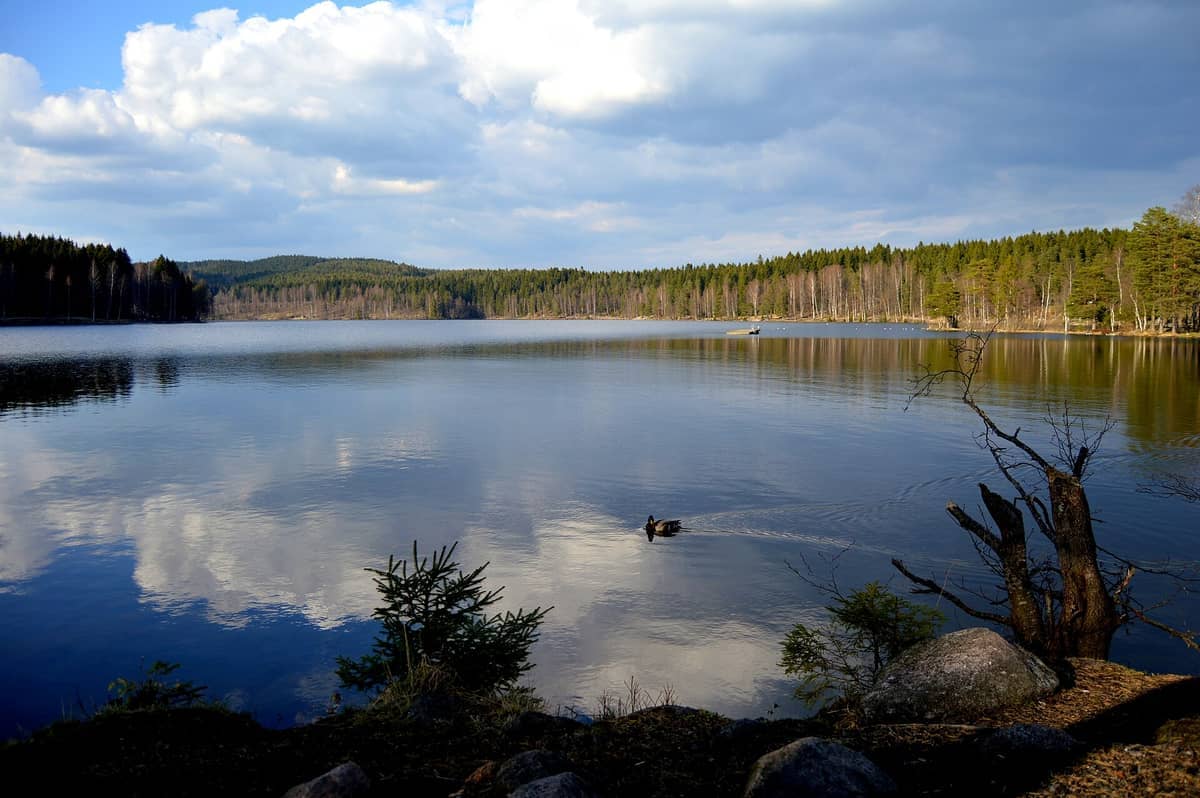
Sognsvann Lake is a freshwater lake sitting at the southern edge of Oslo’s vast Nordmarka forest, about 8 kilometres from the city centre. It has a circumference of roughly 3.3 km, and a well-maintained trail rings the entire shoreline. That trail is the reason most people come here: flat enough for families with prams, firm enough for wheelchairs, and long enough to feel like a real outing rather than a token stroll.
What makes Sognsvann unusual among city-fringe lakes is the metro connection. The Sognsvann line (Line 5) terminates directly at the lake, which means you can step off the train and be standing on a forested lakeshore just moments after leaving the platform. There are no ticket booths, no entry gates, and no admission fees. The lake belongs to Oslo's public outdoor commons, and Osloites treat it accordingly.
💡 Local tip
Arrive on a weekday rather than a summer Sunday if you want the lake to yourself. Weekend afternoons in July can draw large crowds to the bathing area, while weekday mornings stay genuinely quiet even in peak season.
How the Lake Changes by Season
Summer is the obvious draw. From late June through August, the grassy southern shore near the metro station fills with locals swimming and sunbathing. The water is cold by most standards — this is Norway, fed by forest snowmelt — but refreshing on warm days when Oslo can push toward 22 or 23°C. The smell of pine resin, warmed by afternoon sun, is the defining sensory note of Sognsvann in summer. Early mornings carry a different character entirely: mist sits low over the water, and joggers complete the 3.3 km loop in near-silence.
Autumn transforms the surrounding forest into deep copper and amber from late September through October. The crowds thin dramatically, the light turns golden, and the trail through the trees becomes one of the better easy forest walks in the city. Rain is more frequent in October, so waterproof footwear pays off.
Winter is where Sognsvann earns a different kind of loyalty. Once the lake freezes and snow settles on the forest, the area connects into Oslo's extensive groomed cross-country ski trail network. Skiers who arrive at Sognsvann station step directly onto prepared tracks leading deeper into Nordmarka. The lake surface itself sometimes freezes solid enough for skating, though visitors should check current ice conditions with Oslo municipality before venturing out. The experience of skiing out of a metro station in a capital city is one of those things that takes visitors from other countries entirely by surprise.
Spring arrives later here than in the city centre — the forest holds cold air, and patches of snow can linger into April on north-facing slopes. By May, the trail becomes popular with runners and families again, and the lake sheds ice to reveal remarkably clear water.
Tickets & tours
Live prices and dates from our booking partner. If you book, we may earn a commission at no extra cost to you.
Private walk and campfire at Sognsvann Lake
From 0 €Instant confirmationFree cancellationOslo Fjord sightseeing audio-guided electrical boat tour
From 35 €Instant confirmationFree cancellationFjord cruise with live jazz music
From 64 €Instant confirmationFree cancellationLuggage Storage in Oslo
From 6 €Instant confirmationFree cancellation
The Lakeside Trail: A Practical Walkthrough
The trail circling Sognsvann is approximately 3.3 km in total length. The surface is compacted gravel and earth, well-maintained and suitable for wheelchairs and pushchairs along most of its length. There are only minor elevation changes — the lake sits in a relatively flat forest basin — so the loop is genuinely accessible to most fitness levels.
Starting from the metro station, the western shore gives open views across the water with the forest rising behind. The eastern shore feels more enclosed by trees and is quieter underfoot. Benches appear at intervals, and several informal spots along the northern end of the lake are used for picnics. At the southern bathing area near the station, there are basic facilities including a small kiosk during the summer season.
The lake also serves as a starting point for longer forest routes into Nordmarka. Trails branch north from the lake loop into terrain that can take you several hours further into the wilderness. If you are considering a longer day hike, the Oslo hiking guide covers Nordmarka routes in detail, including options from Sognsvann to Frognerseteren and beyond.
ℹ️ Good to know
Fishing is permitted at Sognsvann with a valid fishing licence. Licences can be purchased through the Oslo municipality's recreational fishing system — check the current requirements before visiting, as rules are subject to update.
Getting There and Getting Around
The most direct route is Line 5 on the Sognsvann line, which runs from Stortinget (central Oslo) to Sognsvann station in roughly 18 minutes. The station is the line's terminus, and the lake is immediately visible as you exit. Standard Ruter fares apply; the Oslo Pass covers metro travel and is worth calculating if you plan several metro journeys on the same day.
For those staying in the Holmenkollen area or near Frognerseteren, Sognsvann is accessible by foot through the forest — a route that makes for a satisfying one-way walk with the metro providing the return leg. The guide to getting around Oslo has full details on Ruter ticketing and the T-bane network.
Parking exists near the lake for those arriving by car, though spaces fill quickly on summer weekends. The metro is genuinely the more reliable option for a weekend visit. Cyclists can bring bikes on the metro outside peak hours, subject to Ruter's standard bike carriage rules — check these before travel as they apply at the driver's discretion during busy periods.
Photography and the Best Light
Sognsvann rewards early risers in every season. In summer, sunrise mist over the water creates the kind of atmospheric lake shots that look effortless but require only an alarm clock and the first metro of the day. The eastern shore, shaded by trees, provides natural framing for wide shots across the water toward the open western bank.
Autumn colour peaks typically in late September and the first week of October. The reflection of birch and pine in still morning water is the image most associated with the lake in travel photography. A polarising filter cuts glare from the surface effectively if you shoot with a camera rather than a phone.
In winter, the blue-hour light at around 15:30 in December and January turns the snow-covered forest a deep cobalt. Skiing tracks through the trees catch low directional light in a way that is genuinely striking. There is enough ambient light for decent phone photography without a tripod during golden hour.
Clear Assessment: Who Will Love It and Who Might Not
Sognsvann is not a destination that demands superlatives. It is not a dramatic fjord viewpoint, it does not contain significant architecture, and there are no exhibits or guided tours. What it offers is straightforward: clean air, calm water, an easy forest trail, and a genuine sense of being outside the city within 20 minutes of a central metro station. For travellers who want to understand why Osloites claim their city has exceptional quality of life, an hour at Sognsvann explains it more clearly than any viewpoint or museum.
Travellers on a short city break with limited time and a long list of cultural sites may find the lake underwhelming compared to Oslo's museums and waterfront. It is particularly suited to those staying two or more days who want a contrast to the city's indoor attractions, and to anyone who appreciates outdoor recreation as an end in itself rather than a backdrop for a selfie.
Visitors specifically interested in Oslo's outdoor culture should note that Sognsvann pairs well with a stop at Frognerseteren, the historic restaurant and viewpoint accessible by T-bane from the same line, for a longer half-day in the Nordmarka hills.
⚠️ What to skip
Swimming is popular but the water temperature even in peak summer often stays below 18–20°C. Cold-water sensitivity is worth factoring in, particularly for children. Check Oslo municipality's current water quality reports before swimming — these are updated regularly during the bathing season.
Practical Details at a Glance
- Access: Free, 24 hours, year-round — no booking required
- Metro: Line 5 on the Sognsvann line to Sognsvann station, approx. 18 min from Stortinget
- Trail length: 3.3 km loop; flat, accessible surface suitable for wheelchairs and pushchairs
- Swimming: Permitted at the southern bathing area; no lifeguard on duty
- Winter activities: Cross-country ski trails connect from the lake into Nordmarka; ice skating when lake is frozen (verify conditions)
- Facilities: Seasonal kiosk near the station; benches along the trail; no permanent toilets confirmed at trail level — check Oslo municipality for current facilities
- What to bring: Layers in any season; waterproof shoes for autumn and spring; sunscreen and water in summer; ski or skate hire is not available at the lake itself — bring your own equipment or hire in the city
If you are planning a broader trip that combines outdoor and cultural Oslo, the 3-day Oslo itinerary has suggestions for fitting Sognsvann into a structured visit without sacrificing the city's main cultural sites.
Insider Tips
- The first T-bane departures in summer reach Sognsvann before 6 AM. Arriving at dawn means having the entire lake to yourself — the mist is at its thickest, the water is glassy, and the birch forest is completely still. By 9 AM on a clear summer weekend, that solitude disappears entirely.
- The northern end of the lake loop, furthest from the station, is where you will find the quietest picnic spots even on busy days. Most visitors turn back halfway or stay near the bathing area by the metro, so the far side of the lake stays relatively uncrowded.
- Cross-country ski trails from Sognsvann connect into the Nordmarka network, which extends for hundreds of kilometres north of Oslo. Even a short ski along the groomed tracks immediately beyond the lake — 20 or 30 minutes in and back — feels genuinely remote despite starting from a metro terminus.
- The kiosk near the bathing area closes in autumn and does not reopen until late spring. If you are visiting outside the June to August window, bring your own food and drinks. The nearest shops are back toward the city on the metro line.
- Fishing at Sognsvann requires a valid licence purchased in advance through the Oslo municipality system. Turning up with a rod without one is not advisable — enforcement does occur. The process is straightforward online and inexpensive.
Who Is Sognsvann Lake For?
- City-weary travellers who want forest air and open water within 20 minutes of central Oslo
- Families with young children looking for a safe, flat outdoor circuit with swimming options
- Runners and walkers seeking a measured 3.3 km loop with no traffic and minimal elevation
- Winter sports enthusiasts wanting direct metro access to cross-country ski trails
- Photographers chasing early-morning mist and autumn colour reflections
Nearby Attractions
Other things to see while in Holmenkollen & Nordmarka:
- Frognerseteren
Perched at the top of the Holmenkollen ridge, Frognerseteren is a landmark timber restaurant dating to 1891, combining traditional Norwegian dragon-style architecture with panoramic views over Oslo and the Oslofjord. It works equally well as a lunch destination, a post-hike reward, or a winter afternoon stop for hot apple cake.
- Holmenkollen Ski Jump
Holmenkollen Ski Jump rises 375 metres above Oslo on a forested hillside, combining one of the world's oldest ski jumping venues with a museum tracing 4,000 years of skiing history. The tower offers some of the most dramatic views in Norway's capital, looking out over the city, the Oslofjord, and the Nordmarka forest.
- Korketrekkeren Toboggan Run
Korketrekkeren is an approximately 2.5 km public toboggan run in the Holmenkollen hills, dropping 255 metres from Frognerseteren to Midtstuen. Free to use and accessible by metro, it's one of Oslo's most genuinely fun winter experiences, for locals and visitors alike.
- Nordmarka Forest
Nordmarka Forest is a vast, freely accessible woodland stretching north from Oslo's city limits — offering hiking, cross-country skiing, and lakeside walks within 25 minutes of the city center. No entrance fee, no ticket booth, just forest. Here is how to make the most of it.
Planning a trip? Discover personalized activities with the Nomado app.