Korketrekkeren Toboggan Run: Oslo's Most Thrilling Winter Afternoon
Korketrekkeren is an approximately 2.5 km public toboggan run in the Holmenkollen hills, dropping 255 metres from Frognerseteren to Midtstuen. Free to use and accessible by metro, it's one of Oslo's most genuinely fun winter experiences, for locals and visitors alike.
Quick Facts
- Location
- Holmenkollveien 201, 0791 Oslo (Holmenkollen area)
- Getting There
- T-bane Line 1 to Frognerseteren (start) and Midtstuen (end)
- Time Needed
- 2–3 hours for 3–4 runs; a full afternoon if you linger
- Cost
- Free to use; sled rental approx. 100–150 NOK/day; standard Ruter metro fare to ride back up
- Best for
- Families, winter adventurers, locals wanting a snow day without leaving the city
What Korketrekkeren Actually Is
Korketrekkeren is an approximately 2.5 km public toboggan run owned by Oslo municipality, carved into the forested hillside of Holmenkollen. The name translates roughly to 'the corkscrew', a reference to the winding, twisting descent that drops approximately 255 metres in elevation from its start near Frognerseteren down to Midtstuen. It is not a manicured ski resort attraction with paid lifts and ticketed gates. There are no turnstiles. The hill is free to use, and the metro doubles as your return ride back to the top.
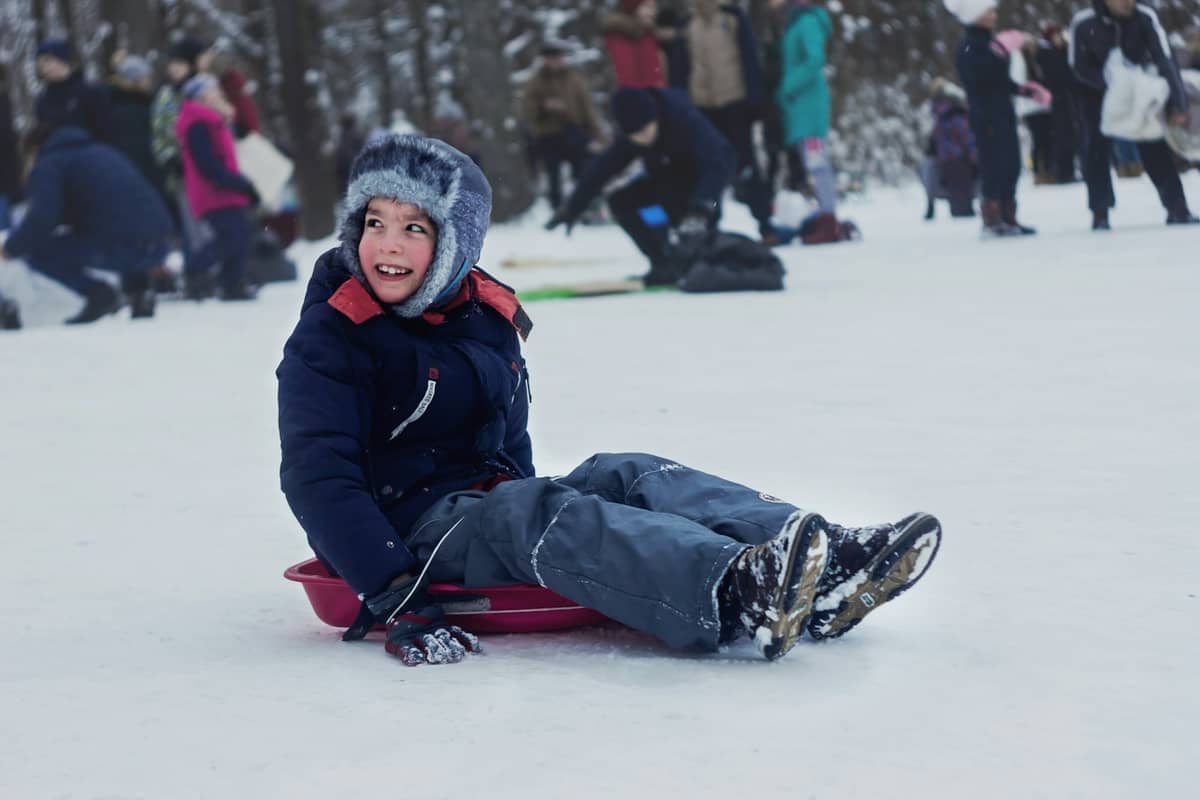
That combination of accessibility, genuine speed, and forest scenery is what makes Korketrekkeren stand apart from most winter activities in Norway's capital. It draws everyone from toddlers on plastic sleds guided by parents to teenagers racing in groups and adults rediscovering what snow is actually for. On a clear weekend afternoon in January, the atmosphere at the top resembles a festive, slightly chaotic village square: borrowed sleds, children in snowsuits, thermoses of hot chocolate, and a general sense that this is where Oslo actually comes to enjoy winter.
⚠️ What to skip
Korketrekkeren only opens when there is sufficient snow cover. There is no fixed opening date. Before making a special trip, check current conditions on the Oslo municipality facility page or the Akeforeningen i Oslo website.
The Run Itself: What to Expect on the Way Down
The descent begins just a short walk from Frognerseteren station, the final stop on T-bane Line 1. The track is groomed and maintained for sledding, but it is a real outdoor slope, not an enclosed ice chute. The surface underfoot is packed snow and ice, and the run follows the natural terrain of the hillside rather than a flattened artificial channel. This means the speed, texture, and experience vary noticeably depending on temperature and recent snowfall.
In colder, drier conditions, the track becomes faster and the curves feel sharper. After a fresh snowfall, the first hour or two before the track gets packed down is slower and more forgiving, which is when families with younger children tend to head out. By midday on a popular day, the surface is well-worn and significantly quicker. Experienced sliders tend to come earlier in the morning or later in the afternoon, once school groups and weekend crowds thin out.
The run passes through dense spruce and pine forest for most of its length. There are sections where the trees press close to the track on both sides, and the sound shifts noticeably: the scrape of sled runners on ice, the muffled quality of sound absorbed by snow-heavy branches, and the occasional sharp crack of a tree shedding its load overhead. The forest opening up briefly at certain bends gives glimpses across the Oslo hills before the track curves back into the trees. It takes roughly 10 to 15 minutes to complete a full descent, depending on speed and whether you brake.
Tickets & tours
Live prices and dates from our booking partner. If you book, we may earn a commission at no extra cost to you.
Oslo Fjord sightseeing audio-guided electrical boat tour
From 35 €Instant confirmationFree cancellationFjord cruise with live jazz music
From 64 €Instant confirmationFree cancellationLuggage Storage in Oslo
From 6 €Instant confirmationFree cancellationPicturesque dinner cruise in Oslo
From 137 €Instant confirmationFree cancellation
Getting There and Riding Back Up
The logistics are part of what makes this run appealing. Take T-bane Line 1 from central Oslo toward Frognerseteren. The journey from central stations takes around 30 minutes and the metro climbs steadily into the hills as it goes, giving you a sense of the elevation you are about to sled back down. The carriage fills with people carrying sleds on busy winter days, and the mood is noticeably different from a standard commute.
Once you reach the bottom at Midtstuen, you board a metro back to Frognerseteren to do it again. A standard Ruter public transport ticket covers this return trip, so there is no separate lift pass or queuing system to navigate. If you already have an Oslo travel card or the Oslo Pass, metro travel is included. Budget additional single-journey fares into your cost estimate if you plan multiple runs.
💡 Local tip
If you don't own a sled, rentals are available near the top of the run. Prices are typically around 100–150 NOK per day for a sled. Note that returning a rental at the bottom (Midtstuen) rather than the top usually incurs an additional fee of around 30 NOK. Confirm current rental details with Akeforeningen i Oslo before your visit, as providers and pricing can change.
Historical Context: A Century of Sliding
Korketrekkeren has roots in Oslo's early 20th-century winter sports culture. The Holmenkollen area has long been central to Norwegian winter sport, and the toboggan run was originally developed as part of the broader Holmenkollen sporting infrastructure at a time when sledding and bobsleigh were competitive disciplines with formal track standards. The run has evolved from that competitive context into a fully public recreational facility, but the basic geography, the long hillside descent through forested terrain, is unchanged.
This history gives the run a grounding that purpose-built tourist attractions rarely have. The Holmenkollen area is home to several of Oslo's most significant sporting and cultural sites, including the Holmenkollen Ski Jump, and the surrounding forest forms part of Nordmarka, the vast woodland that Oslo residents use year-round for hiking, skiing, and outdoor life. Korketrekkeren fits naturally into this tradition rather than sitting alongside it as a novelty.
When to Visit and How Weather Changes Everything
Oslo's winter typically runs from late November through March, but reliable snow at Holmenkollen elevation is most consistent in January and February. The hillside sits higher than the city center, meaning it holds snow longer and more reliably than lower Oslo neighborhoods, but this is not guaranteed. Some years produce excellent conditions from December; others see the run opening only briefly or not at all in mild winters.
The best light for the descent is on clear winter days when the low afternoon sun filters through the trees. Evenings can also be worthwhile: the run is lit and stays open until 21:00 during operating hours, and sledding by floodlight through a snow-covered forest is a different experience entirely, quieter and with a more local crowd once the day-trippers have left. Mornings on weekdays are the least crowded option, though the track may not yet be at its fastest.
For a broader view of how the Holmenkollen area fits into an Oslo winter trip, the Oslo in winter guide covers seasonal conditions, what else is open, and how to structure a cold-weather visit to the city.
ℹ️ Good to know
When conditions are good, the run is open approximately 09:00–21:00. These hours can vary. Always check the Oslo municipality page or Akeforeningen i Oslo for live status before traveling up from the city.
Practical Details: What to Wear and Bring
Dress for a prolonged outdoor activity in sub-zero or near-zero temperatures, not just for a quick outdoor photograph. Waterproof trousers or snow pants are worth wearing: the sled sits low and you will get wet from snow spray and contact with the track. Layering under a wind-resistant outer shell is standard. Gloves are essential, both for grip on the sled and for the cold air at speed. A helmet is not mandatory but is a sensible choice for children, particularly on faster days.
Sturdy waterproof boots with grip matter more than people expect. The area around the top and bottom stations is icy and sloped, and the walk from the metro to the track involves uneven snowy terrain. Bring a backpack rather than a handbag: you need your hands free during the descent. Hot drinks from Frognerseteren restaurant at the top are a reasonable investment on a cold afternoon.
Photography is straightforward along the upper section of the run, where light reaches through the trees. Video footage from a helmet-mounted camera or phone in a secure pocket captures the descent well. Trying to film while holding the sled is not advisable given the speeds involved on the lower, faster sections.
Who Will Love This, and Who Should Think Twice
Korketrekkeren works well for families with children old enough to ride a sled without constant intervention, roughly age four or five and up. Younger children can go with a parent on a two-person sled if the rental options allow. It also suits anyone who wants a genuine Oslo experience rather than a ticketed tourist attraction: this is what the city actually does in winter. For visitors looking to combine the run with other Holmenkollen activities, Frognerseteren is directly at the top, offering food and views, and the ski jump museum is a short distance away.
People who struggle with cold, who have knee or back injuries that make sitting low to the ground and absorbing bumps uncomfortable, or who are visiting outside the snow season will not get much from this particular spot. The site itself, a forested hillside with a metro stop, holds no interest without snow on the ground. It is also not a suitable destination for visitors with limited mobility: the run, the surrounding terrain, and the walk between the metro and track involve uneven snow-covered ground with no paved alternatives.
If you are planning a broader Oslo winter itinerary and want to understand how Korketrekkeren fits alongside other options, the Oslo with kids guide and the overview of free things to do in Oslo both include useful context for building a day around activities at this price point.
Insider Tips
- Weekday mornings between 10:00 and noon are the quietest window. Weekend afternoons see the heaviest crowds at the sled rental point and on the track itself, which can mean queuing at the bottom for the metro back up.
- If you ride back from Midtstuen to Frognerseteren on the metro, stay on the platform and watch the next carriage load: it is a useful way to gauge how busy conditions are before committing to another run.
- The Frognerseteren restaurant at the top of the run is a traditional Norwegian log-structure venue with good views over Oslo. It is a reasonable place to warm up between descents, but the cafe section is less expensive than the full restaurant and serves the same hot drinks.
- Track conditions change significantly across a single day. If you arrive after a fresh snowfall, the track will be slow and soft for the first couple of hours. Come back after midday once other sliders have packed it down and the speed increases noticeably.
- If you plan to return the rental sled at Midtstuen rather than carry it back on the metro, factor in the extra fee. Many visitors find it easier and cheaper to take the sled back up on the metro and return it at the top, which avoids the surcharge.
Who Is Korketrekkeren Toboggan Run For?
- Families with children aged 4 and up looking for an active, outdoors winter afternoon
- Budget-conscious travelers wanting a genuine Oslo experience rather than a ticketed attraction
- Winter visitors to Oslo who want to use the city's metro network as part of the adventure
- Anyone who has spent the morning at Holmenkollen's ski jump or museum and wants to extend the visit with something more physical
- Locals and repeat visitors who already know Oslo's museums and want something different
Nearby Attractions
Other things to see while in Holmenkollen & Nordmarka:
- Frognerseteren
Perched at the top of the Holmenkollen ridge, Frognerseteren is a landmark timber restaurant dating to 1891, combining traditional Norwegian dragon-style architecture with panoramic views over Oslo and the Oslofjord. It works equally well as a lunch destination, a post-hike reward, or a winter afternoon stop for hot apple cake.
- Holmenkollen Ski Jump
Holmenkollen Ski Jump rises 375 metres above Oslo on a forested hillside, combining one of the world's oldest ski jumping venues with a museum tracing 4,000 years of skiing history. The tower offers some of the most dramatic views in Norway's capital, looking out over the city, the Oslofjord, and the Nordmarka forest.
- Nordmarka Forest
Nordmarka Forest is a vast, freely accessible woodland stretching north from Oslo's city limits — offering hiking, cross-country skiing, and lakeside walks within 25 minutes of the city center. No entrance fee, no ticket booth, just forest. Here is how to make the most of it.
- Ski Museum (Skimuseet)
Tucked beneath the iconic Holmenkollen ski jump, the Ski Museum in Holmenkollen (Skimuseet i Holmenkollen) chronicles over 4,000 years of skiing history through equipment, art, and immersive exhibits. Combine it with the jump tower's panoramic platform for one of Oslo's most complete half-day experiences.
Planning a trip? Discover personalized activities with the Nomado app.