Ski Museum at Holmenkollen: Norway's Cathedral of Snow Sport
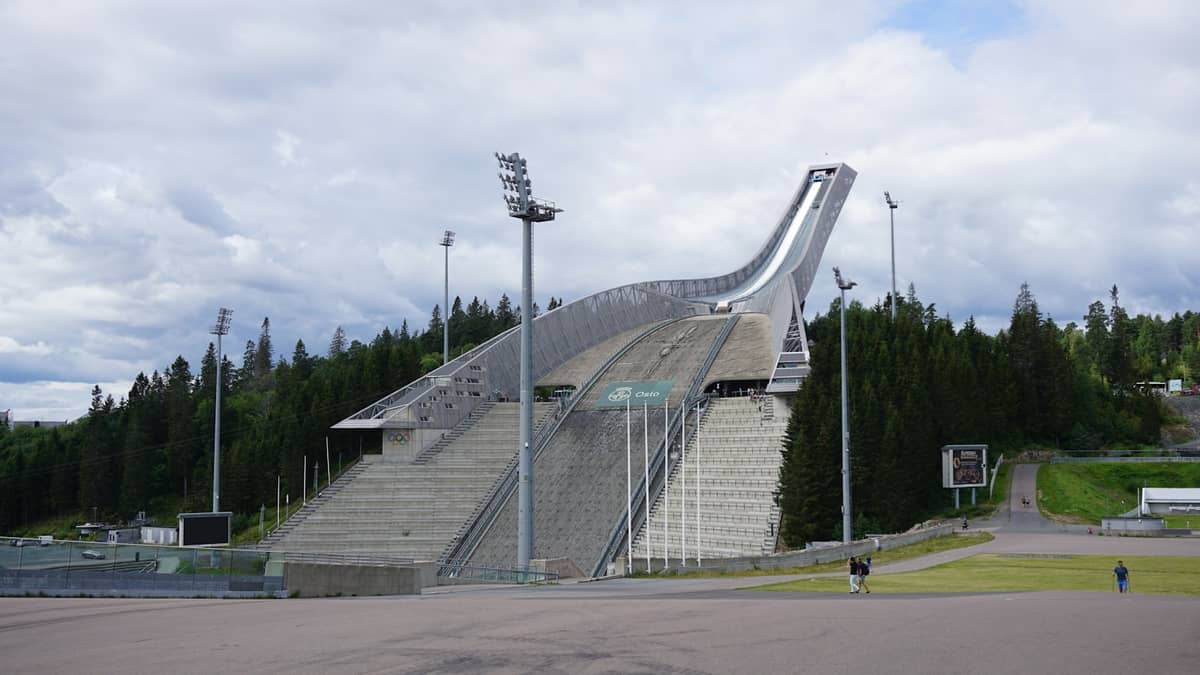
Tucked beneath the iconic Holmenkollen ski jump, the Ski Museum in Holmenkollen (Skimuseet i Holmenkollen) chronicles over 4,000 years of skiing history through equipment, art, and immersive exhibits. Combine it with the jump tower's panoramic platform for one of Oslo's most complete half-day experiences.
Quick Facts
- Location
- Kongeveien 40, Holmenkollen, Oslo — in the forested hills above the city centre
- Getting There
- T-bane Line 1 to Holmenkollen station, then a short uphill walk (approx. 10 min)
- Time Needed
- 1.5–3 hours, depending on whether you add the ski jump tower and ski simulator
- Cost
- Adults 200 NOK, children (6–17) 100 NOK, family (2+2) 500 NOK — ski simulator separate (2026 prices)
- Best for
- Winter sports fans, families with kids, history lovers, and anyone wanting a view over Oslo
- Official website
- holmenkollen.com/en
What Is the Ski Museum at Holmenkollen?
The Ski Museum in Holmenkollen, known in Norwegian as Skimuseet i Holmenkollen, claims the title of the world's oldest ski museum, with its origins reaching back to 1923. It sits directly beneath the Holmenkollen ski jump, one of Norway's most recognisable structures, at an address that feels almost theatrical: you arrive by metro, climb a forested hill, and find yourself standing at the base of a 60-metre steel arc that has launched athletes across the Oslo sky since the late 19th century.
The museum makes the case that skiing is not merely a sport in Norway — it is a foundational part of national identity. Exhibits trace skiing from prehistoric rock carvings and ancient wooden skis discovered in Norwegian bogs all the way to the equipment used in recent Winter Olympics. For visitors curious about the broader cultural context, the deep roots of Norse outdoor culture help explain why Norwegians treat the ski hill with the same reverence that other cultures reserve for cathedrals.
💡 Local tip
Museum admission includes access to the ski jump tower viewing platform (same ticket). Do not skip it — the view over Oslo and the Oslofjord from the top is worth the ticket price alone, and on clear days you can see for dozens of kilometres.
The Exhibits: What You Actually See Inside
The museum occupies the base of the ski jump structure, so the layout is compact and surprisingly atmospheric. Stone corridors and dark display cases give it a quality closer to an archaeological collection than a conventional sports museum. The lighting is intentionally low in several rooms, which draws attention to the objects themselves: wide-planked wooden skis with leather toe straps, hand-stitched boots that look impossibly heavy, and birch-pole ski bindings that pre-date any recognisable winter sport industry.
The chronological progression is clear. Early sections deal with skiing as a practical mode of transport and hunting tool in Scandinavia and Central Asia, supported by replicas of rock art showing ski-like figures estimated to be over 4,000 years old. Mid-sections shift to the 19th century, when Norwegian emigrants brought skiing to the Alps and the United States, and when Holmenkollen itself began hosting competitions in 1892. The final galleries cover the Olympic era with equipment used by Norwegian champions alongside national jerseys and medals.
The ski simulator on the premises adds a participatory dimension that works especially well for children and younger visitors. For an additional fee (130 NOK for adults, 75 NOK for children in 2026, for the ski simulator), you can strap into a simulator that replicates the feeling of a downhill run or a jump. It is not a theme-park ride, but the sensation is genuinely disorienting in a way that makes the athletes' actual feats feel more comprehensible.
Tickets & tours
Live prices and dates from our booking partner. If you book, we may earn a commission at no extra cost to you.
Daypass at SNO ski resort in Oslo
From 45 €Instant confirmationFree cancellationHolmenkollen private walking tour
From 0 €Instant confirmationFree cancellationOslo Fjord sightseeing audio-guided electrical boat tour
From 35 €Instant confirmationFree cancellationFjord cruise with live jazz music
From 64 €Instant confirmationFree cancellation
The Holmenkollen Ski Jump Tower: Above the Museum
The ski jump tower is structurally separate from the museum but included in the same admission ticket. An elevator carries visitors up to the top platform, which sits at roughly the same height as the jump's in-run. The view is the best thing about the visit: Oslo spreads out below in a panorama that takes in the fjord, the Bygdøy peninsula, the compact towers of the city centre, and the green hills of Nordmarka rolling away to the north. On overcast days the cloud line can sit just above the city, with Holmenkollen poking above it, which creates an unexpectedly dramatic atmosphere.
The jump itself — the current steel structure was completed in 2010 to designs by architects Julien De Smedt and JDS Architects — is one of the more striking pieces of contemporary architecture in Oslo. Its angular cantilever shape reads differently from ground level than from above. For more context on Oslo's architectural landscape, the Oslo architecture guide covers how this structure fits into a broader conversation about Norwegian design identity.
⚠️ What to skip
The top platform is exposed to wind and weather. Even in summer, temperatures at the top can be several degrees colder than at street level. Bring a layer regardless of season, and expect the platform to feel genuinely vertiginous if you are not comfortable with heights.
How the Experience Changes by Time of Day and Season
The museum opens at 10:00 daily across all seasons, closing at 17:00 from May through September and at 16:00 from October through April. Arriving at opening time on weekday mornings, particularly outside school holidays, gives you the corridors largely to yourself. The atmosphere in the lower museum galleries at that hour is genuinely quiet — the kind of quiet that makes the old equipment feel more significant, rather than competing with school groups pressing around display cases.
Midday on weekends and during summer brings the heaviest visitor numbers, largely because Holmenkollen attracts day-trippers from central Oslo who combine the museum with a walk in the surrounding forest. The queues for the elevator to the jump tower can stretch to 20 minutes at peak times in July and August. If you visit then, go to the museum first and queue for the tower on your way out, when the mid-afternoon crowd has partly thinned.
Winter visits carry a different character entirely. In January and February, Holmenkollen sits under snow, the surrounding pine trees are frosted white, and the walk from the metro station to the museum entrance takes on a stillness that feels removed from the city below. The museum is never more contextually appropriate than when there is actual snow on the ground. On competition weekends in late February and early March, when the Holmenkollen ski festival attracts large crowds for the annual World Cup events, the area transforms into something festive and loud — check competition dates before visiting if you prefer a quieter experience.
Getting There: Directions and Transit
The most straightforward route from central Oslo is T-bane Line 1, direction Frognerseteren. Board at any central station — Nationaltheatret, Stortinget, or Majorstuen — and ride to Holmenkollen station. The journey takes roughly 25 minutes from Nationaltheatret. From the station, a signposted uphill path leads to the museum entrance in about five minutes. The walk passes through residential streets and a section of forest, giving a first sense of why this neighbourhood has long been associated with outdoor recreation. For a broader overview of the area, the Holmenkollen neighbourhood guide covers the surrounding trails, viewpoints, and facilities.
Driving is possible — the address is Kongeveien 40 — but parking near the jump on busy days requires patience. Public transport is straightforwardly easier. Holders of the Oslo Pass travel free on all Ruter services including the T-bane, which makes the metro option even more economical if you are covering multiple attractions in a day.
ℹ️ Good to know
Note the reduced hours on public holidays: 17 May (Norwegian Constitution Day), 24 December, and 31 December the museum closes at 14:00 (10:00–14:00 opening hours) rather than the usual 16:00 or 17:00. Plan accordingly if your visit falls near these dates.
Practical Details: Accessibility, Photography, and What to Know Before You Go
The museum is wheelchair accessible with an elevator and accessible toilets available for paying visitors. The path from the T-bane station to the entrance involves a moderate incline that is manageable for most mobility aids in dry conditions but can be slippery when icy in winter. Toilets in the general Holmenkollen area are available to everyone during museum opening hours; the toilets inside the museum are reserved for paying guests.
Photography is generally permitted throughout the museum, and the combination of low ambient lighting in the exhibit halls and the dramatic steel geometry of the jump tower creates some genuinely interesting compositional opportunities. The view from the top platform at golden hour in summer — approximately 21:00 to 22:00 in June and July — is spectacular, but note that regular museum and tower access closes at 17:00 in summer, so this timing is only relevant for exterior views or special events outside normal hours. The exterior of the tower remains accessible after museum hours.
If skiing history connects to a broader interest in Norwegian outdoor culture, the Oslo hiking guide covers the trails that extend directly from Holmenkollen up into Nordmarka, Oslo's vast forest reserve, which can be accessed immediately after your museum visit for a half-day that combines cultural history with genuine wilderness walking.
Is the Ski Museum Worth Your Time?
Honestly assessed: the museum itself, taken alone, is compact. A focused visitor can move through the permanent collection in 45 to 60 minutes without feeling rushed. It is not a sprawling institution like the Norsk Folkemuseum on Bygdøy, and it does not have the emotional weight of Oslo's art museums. What it offers instead is precision: a single subject explored with genuine depth, in a location that makes the subject tangible. Standing inside the base of the jump tower while reading about the 1952 Oslo Winter Olympics is a qualitatively different experience from reading the same information in a city-centre building.
The combined ticket covering the museum, the tower, and optionally the ski simulator represents reasonable value at Oslo's museum price point, particularly if you have an Oslo Pass, which covers admission. Visitors who find the museum thin on content will find that the tower view justifies the journey regardless. Visitors who find the museum compelling will wish it were larger.
Those who are unlikely to enjoy this attraction: travellers with no interest in winter sports or Scandinavian cultural history who are primarily drawn to art, food, or urban architecture will find their time better spent at the National Museum, the Munch Museum, or along the waterfront. The Holmenkollen hill requires a deliberate journey and at least half a day to do properly — it is not efficiently combined with central Oslo attractions unless you are happy with a brisk transit-heavy itinerary.
Insider Tips
- Line 1 of the T-bane continues two stops beyond Holmenkollen to Frognerseteren, where you can access Nordmarka forest trails and the historic Frognerseteren restaurant. Combining the museum visit with an afternoon walk or the Korketrekkeren toboggan run (in winter) nearby makes the journey worthwhile as a full half-day rather than a quick stop.
- Competition weekends in late February and early March draw enormous crowds for the Holmenkollen ski festival. If you want the museum without noise and queues, check the FIS World Cup calendar before booking your visit. Conversely, if you want to experience the atmosphere of one of Norway's oldest sporting traditions, attending on a competition day is an event in itself.
- The ski simulator tickets are sold separately and are not included in the base museum admission. Buy them at the ticket desk inside rather than assuming they are included — the pricing is clearly itemised, but the desk attendants do not always volunteer the information proactively.
- For the best tower photography, aim for weekday mornings in May or September when the light is angled and soft and visitor numbers are low. Summer midday produces flat overhead light and crowded viewing platforms.
- The Holmenkollen area is one of Oslo's more affluent residential neighbourhoods, and the streets surrounding the museum have a calm, forest-edged character quite unlike central Oslo. Allow ten minutes to walk through the neighbourhood itself before or after your visit — the timber villas visible along Kongeveien give a sense of how Oslo's wealthier citizens have lived close to the forest for over a century.
Who Is Ski Museum (Skimuseet) For?
- Families with children aged 6 and up who want an educational visit with a physical, interactive element (ski simulator, tower views)
- Winter sports enthusiasts who want historical context for Norway's place in skiing and ski jumping
- Architecture and design followers interested in the 2010 ski jump structure by JDS Architects
- Oslo visitors on a multi-day itinerary who want to experience the forested hills above the city alongside a cultural attraction
- Oslo Pass holders looking to maximise value with an attraction that includes both a museum and a panoramic viewpoint
Nearby Attractions
Other things to see while in Holmenkollen & Nordmarka:
- Frognerseteren
Perched at the top of the Holmenkollen ridge, Frognerseteren is a landmark timber restaurant dating to 1891, combining traditional Norwegian dragon-style architecture with panoramic views over Oslo and the Oslofjord. It works equally well as a lunch destination, a post-hike reward, or a winter afternoon stop for hot apple cake.
- Holmenkollen Ski Jump
Holmenkollen Ski Jump rises 375 metres above Oslo on a forested hillside, combining one of the world's oldest ski jumping venues with a museum tracing 4,000 years of skiing history. The tower offers some of the most dramatic views in Norway's capital, looking out over the city, the Oslofjord, and the Nordmarka forest.
- Korketrekkeren Toboggan Run
Korketrekkeren is an approximately 2.5 km public toboggan run in the Holmenkollen hills, dropping 255 metres from Frognerseteren to Midtstuen. Free to use and accessible by metro, it's one of Oslo's most genuinely fun winter experiences, for locals and visitors alike.
- Nordmarka Forest
Nordmarka Forest is a vast, freely accessible woodland stretching north from Oslo's city limits — offering hiking, cross-country skiing, and lakeside walks within 25 minutes of the city center. No entrance fee, no ticket booth, just forest. Here is how to make the most of it.
Planning a trip? Discover personalized activities with the Nomado app.