Frognerseteren: The Hilltop Restaurant Above Oslo Worth the Climb
Perched at the top of the Holmenkollen ridge, Frognerseteren is a landmark timber restaurant dating to 1891, combining traditional Norwegian dragon-style architecture with panoramic views over Oslo and the Oslofjord. It works equally well as a lunch destination, a post-hike reward, or a winter afternoon stop for hot apple cake.
Quick Facts
- Location
- Holmenkollveien 200, 0791 Oslo (Holmenkollen neighborhood)
- Getting There
- T-bane Line 1 to Frognerseteren station, then a 2-3 minute walk
- Time Needed
- 1.5 to 3 hours, more if you walk trails nearby
- Cost
- No entrance fee; restaurant and cafe prices in NOK (verify current menu prices at frognerseteren.no)
- Best for
- Views, traditional Norwegian food, architecture, winter atmosphere, outdoor walks
- Official website
- www.frognerseteren.no
What Frognerseteren Actually Is
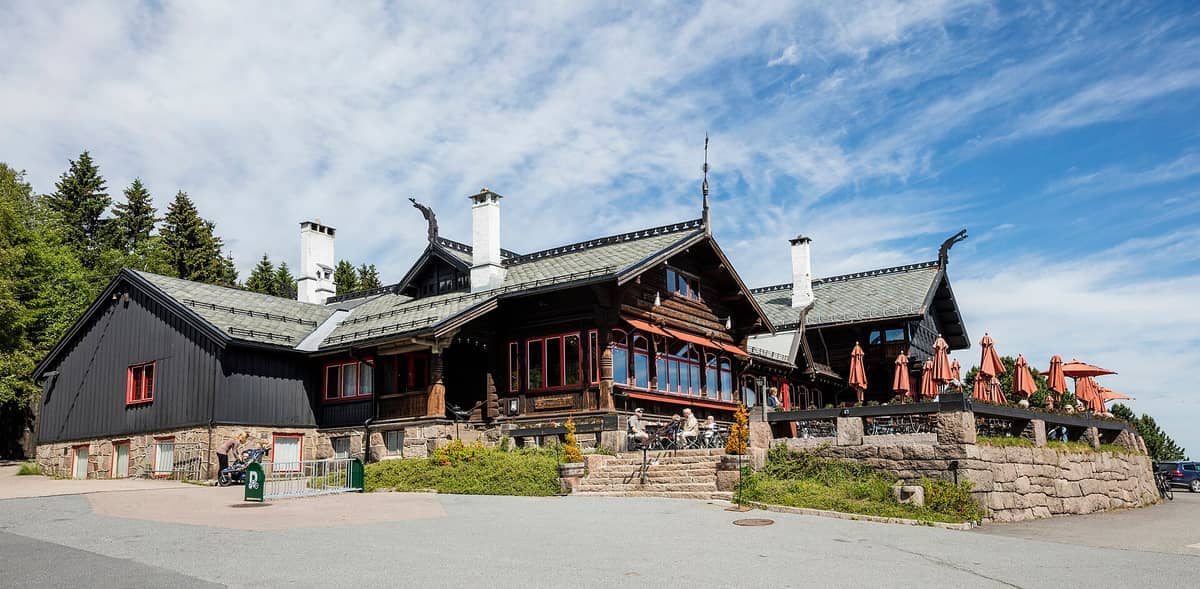
Frognerseteren is a restaurant and cafe situated at roughly 435–470 meters above sea level on the forested ridge above Oslo. Opened in 1891 as a public leisure destination for city residents escaping the heat of summer, the timber building is one of the finest examples of Norwegian dragon-style architecture still in active use. The carved rooflines, heavy wooden beams, and dark stained timber feel rooted in the landscape rather than imposed on it.
The views are the primary draw. On a clear day the panorama sweeps from the Holmenkollen ski jump to the rooftops of central Oslo, the inner Oslofjord, and the low hills of the western shore. In summer the view is green and expansive. In winter, when snow covers the plateau and the city below is grey and flat, it has a quality that photographs rarely capture properly.
Frognerseteren sits within the Holmenkollen area, a hillside district that also includes the Holmenkollen Ski Jump and the Ski Museum. Many visitors combine all three into a single half-day up on the ridge.
💡 Local tip
The T-bane Line 1 runs directly to Frognerseteren station, the last stop on the line. The ride from central Oslo takes roughly 20–25 minutes and costs a standard Ruter fare. No transfer needed from most central stations.
The Architecture: Why the Building Itself Matters
The dragon-style buildings of late 19th-century Norway drew on Viking Age woodcarving traditions and were consciously nationalist in intent. Frognerseteren, designed by architect Holm Hansen Munthe and completed in 1891, is among the most ambitious examples. The gabled roof ends are carved into serpent heads, the timber columns are decorated with interlace patterns, and the main hall feels like a much grander building than its footprint suggests.
Arriving from the metro station and approaching along the short path, the building announces itself gradually through the trees. The first view of the carved facade against the sky, especially in low winter light or during a clear summer evening, is genuinely striking. This is not background scenery; the building is part of the reason to come.
If you are interested in Oslo's architectural range, Frognerseteren makes a rewarding contrast with the modern buildings closer to the waterfront. The Oslo architecture guide covers the full spectrum from the 19th century to the present day.
Tickets & tours
Live prices and dates from our booking partner. If you book, we may earn a commission at no extra cost to you.
Frognerseteren and Tryvannsstua private tour from Oslo
From 0 €Instant confirmationFree cancellationOslo Fjord sightseeing audio-guided electrical boat tour
From 35 €Instant confirmationFree cancellationFjord cruise with live jazz music
From 64 €Instant confirmationFree cancellationLuggage Storage in Oslo
From 6 €Instant confirmationFree cancellation
The Experience by Time of Day and Season
On weekday mornings, Frognerseteren is quiet enough that you can sit at a window table overlooking the city with minimal competition. The light from the south and east in the morning hours is softer, and the city below is clear before any afternoon haze develops. Weekends change the dynamic considerably: families arrive after lunch, hikers return from the Nordmarka trails, and the terrace fills up. Arriving by 11:00 on a Saturday or Sunday is worth doing if you want a particular table or a calm atmosphere.
Winter is arguably the strongest season here. When snow is on the ground, the cross-country ski trails of Nordmarka begin just above the restaurant, and skiers stop in at the cafe for warmth. The smell of pine from the surrounding forest mixes with woodsmoke on cold days. The classic order in this setting is the Frognerseteren apple cake, a thick, cinnamon-scented slice served warm with cream that has been on the menu for decades. It is exactly what it should be after a cold walk.
Summer evenings reward visitors who stay late. The sun sets slowly over the western hills and the fjord below turns silver. The restaurant's terrace is at its best between 17:00 and 20:00 on clear July and August evenings. Note that Oslo's summer nights are long but the last T-bane back to the city departs later in the evening, so check timetables before you order a second round.
⚠️ What to skip
Published opening hours vary between sources. The restaurant lists hours on its official website, but seasonal adjustments are common. Always check frognerseteren.no before visiting, especially for lunch arrivals and off-season travel.
Food and Drink: What to Order and What to Expect
Frognerseteren operates two distinct spaces: the main restaurant (Restaurant Finstua), which serves a fuller menu in a wood-paneled dining room, and a more casual cafe area accessible without a reservation. The menu leans toward traditional Norwegian cooking: game dishes, salmon preparations, hearty soups, and open-faced sandwiches. Prices reflect the location and the setting, which is to say they are not cheap even by Oslo standards. This is a place for a considered lunch or dinner, not a quick snack.
The cafe counter is the more accessible option for visitors who want the view and the atmosphere without committing to a full meal. Coffee, pastries, and the apple cake are available without a reservation. In peak summer season and on winter weekends with good ski conditions, even the cafe can develop a queue, so patience helps.
Reservations for the restaurant are advisable for weekend dinners and during the main summer season in July. The official website handles bookings directly.
Getting There and Walking the Area
The T-bane Line 1 is the most practical way to reach Frognerseteren. From Majorstuen or Nationaltheatret, trains run at regular intervals up through Holmenkollen to the Frognerseteren terminal station. The journey is pleasant in itself: as the metro climbs through suburban Oslo and into the forested hills, the city falls away and the view starts to open. The station platform has a direct view down toward the city.
From the station it is a two to three minute walk to the restaurant entrance. The path is flat and well-maintained, suitable for most mobility levels in dry conditions. Winter brings ice, and the path can be slippery between snowfall and treatment, so footwear with grip is practical from November through March.
Frognerseteren is also the starting point for several trails into Nordmarka, Oslo's vast forested backcountry. In summer, the trails are used for hiking; in winter they become groomed cross-country ski routes. If you are planning a longer day in the hills, the Oslo hiking guide covers the main routes and what to expect at different times of year.
Driving is possible and parking is available on site for guests. The road up Holmenkollveien is straightforward from central Oslo. In winter during ski competitions at Holmenkollen, road access can be restricted and parking limited; check event schedules if visiting in late winter.
Clear Assessment: Who Will Love This and Who Might Not
Frognerseteren rewards visitors who understand what it is: a historic building in a beautiful setting that serves good traditional food at restaurant prices. It is not a quick tick-the-box attraction with a single photogenic moment and nothing else to offer. The experience builds slowly: the metro ride, the first view of the building, a coffee or meal, time on the terrace or near a window watching the city below. People who engage with that pace leave satisfied.
Visitors expecting a world-class fine dining experience or an internationally famous landmark may find the reality more modest. The food is solid rather than exceptional, and on overcast days the view is significantly reduced. If the forecast shows low cloud or rain, the visit still has value because of the building interior, but the views that define the reputation of the place will not be available.
If you are traveling with children, Frognerseteren works well. The surrounding forest and open space provide room to move, the cafe is family-friendly, and the metro ride is an easy adventure. More ideas for family-friendly Oslo visits are in the Oslo with kids guide.
ℹ️ Good to know
The Oslo Pass covers public transit including the T-bane Line 1 to Frognerseteren. If you are already planning to use the pass for museum access, the ride up the hill costs nothing extra beyond your food and drink.
Insider Tips
- Sit on the terrace side that faces southwest for the clearest view down toward central Oslo and the Oslofjord. The interior tables near the large windows are second best and are worth asking for specifically when you arrive.
- The apple cake (eplekake) is ordered at the counter and served warm. It is the single item most associated with the restaurant and has been for decades. Get it with the whipped cream, not ice cream, for the traditional version.
- Line 1 of the T-bane has two branches in the Holmenkollen area. Make sure you board the train headed for Frognerseteren specifically, not the branch that terminates at Holmenkollen station, which is one stop earlier.
- If you visit in winter and want to see the ski trails in use, aim for a Saturday or Sunday when conditions are good. The sight of dozens of skiers moving through the forest just above the building is something central Oslo does not prepare you for.
- The restaurant terrace faces west and southwest, which means afternoon and evening light is far better for photographs than morning light. Overcast conditions flatten the view but reduce harsh shadows on the building facade itself.
Who Is Frognerseteren For?
- Architecture enthusiasts interested in 19th-century Norwegian dragon-style timber buildings
- Visitors who want a panoramic view of Oslo with a proper meal rather than just a viewpoint
- Winter travelers combining cross-country skiing in Nordmarka with a warm indoor stop
- Families looking for a half-day outing that combines a metro ride, forest, and food
- Travelers spending more than two or three days in Oslo who want to move beyond the city center
Nearby Attractions
Other things to see while in Holmenkollen & Nordmarka:
- Holmenkollen Ski Jump
Holmenkollen Ski Jump rises 375 metres above Oslo on a forested hillside, combining one of the world's oldest ski jumping venues with a museum tracing 4,000 years of skiing history. The tower offers some of the most dramatic views in Norway's capital, looking out over the city, the Oslofjord, and the Nordmarka forest.
- Korketrekkeren Toboggan Run
Korketrekkeren is an approximately 2.5 km public toboggan run in the Holmenkollen hills, dropping 255 metres from Frognerseteren to Midtstuen. Free to use and accessible by metro, it's one of Oslo's most genuinely fun winter experiences, for locals and visitors alike.
- Nordmarka Forest
Nordmarka Forest is a vast, freely accessible woodland stretching north from Oslo's city limits — offering hiking, cross-country skiing, and lakeside walks within 25 minutes of the city center. No entrance fee, no ticket booth, just forest. Here is how to make the most of it.
- Ski Museum (Skimuseet)
Tucked beneath the iconic Holmenkollen ski jump, the Ski Museum in Holmenkollen (Skimuseet i Holmenkollen) chronicles over 4,000 years of skiing history through equipment, art, and immersive exhibits. Combine it with the jump tower's panoramic platform for one of Oslo's most complete half-day experiences.
Planning a trip? Discover personalized activities with the Nomado app.