Mathallen Oslo: The Complete Guide to Oslo's Premier Food Hall
Mathallen Oslo brings together dozens of specialty food vendors, restaurants, and cafés under one roof in the revitalized Vulkan district along the Akerselva river. Free to enter, it works equally well as a quick lunch stop or an unhurried afternoon of eating and browsing. This guide covers what to find inside, the best times to visit, and how to get there.
Quick Facts
- Location
- Vulkan 5, 0178 Oslo (Vulkan district, near Grünerløkka)
- Getting There
- Tram lines 11/12/13 to Schous plass or Olaf Ryes plass; 10–15 min walk from city centre
- Time Needed
- 1–3 hours depending on whether you eat in
- Cost
- Free entry; food and drink purchases in NOK
- Best for
- Food lovers, rainy-day itineraries, local produce, solo diners
- Official website
- mathallenoslo.no/en
What Mathallen Oslo Actually Is
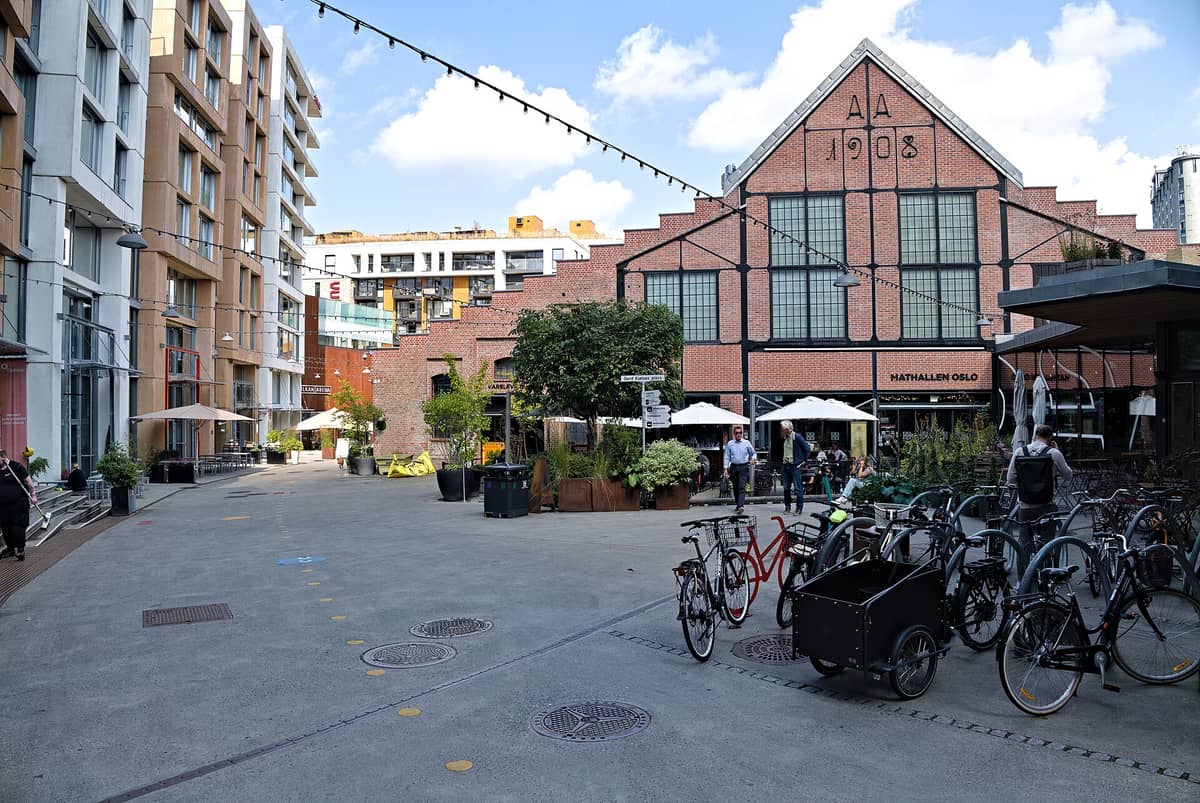
Mathallen Oslo is an indoor food hall occupying a converted industrial building in the Vulkan development area, right on the bank of the Akerselva river. It opened as part of a wider transformation of a former factory site into a mixed-use cultural and culinary quarter, and today it is one of the more credible food destinations in Scandinavia: not a tourist trap dressed up as a market, but a working hall where Oslo residents actually shop, eat lunch, and meet friends.
The hall brings together specialty food vendors under one roof: fishmongers, cheesemongers, butchers, bakers, spice traders, coffee roasters, wine merchants, and a rotating cast of sit-down restaurants and casual food counters. The quality benchmark is noticeably high. This is a place oriented around artisan producers and Norwegian food culture, not fast food or souvenir snacks.
ℹ️ Good to know
Opening hours: Tuesday–Saturday 10:00–20:00, Sunday 11:00–18:00. Closed on Mondays. Some restaurants stay open longer, and summer hours may differ, so always check the official website before visiting.
The Vulkan Setting: Industrial History, Riverside Location
The building sits within the Vulkan district, a name taken from the Vulkan ironworks that once occupied this stretch of the Akerselva. The river powered Oslo's early industrial economy, and the factories that lined its banks during the nineteenth and twentieth centuries have gradually been replaced by apartments, cultural venues, and spaces like Mathallen. Walking in from the riverside path, the scale of the old building is immediately apparent: high ceilings, exposed structural elements, and large windows that let in a significant amount of natural light.
The Vulkan quarter sits between Grünerløkka to the east, St. Hanshaugen to the west, and Alexander Kiellands plass to the north. If you are already exploring Grünerløkka, the food hall is a natural extension of the neighborhood rather than a detour. The Akerselva river walk passes directly alongside, making it easy to combine a riverside stroll with a stop for lunch or coffee.
Tickets & tours
Live prices and dates from our booking partner. If you book, we may earn a commission at no extra cost to you.
Oslo Fjord sightseeing audio-guided electrical boat tour
From 35 €Instant confirmationFree cancellationFjord cruise with live jazz music
From 64 €Instant confirmationFree cancellationLuggage Storage in Oslo
From 6 €Instant confirmationFree cancellationPicturesque dinner cruise in Oslo
From 137 €Instant confirmationFree cancellation
Inside the Hall: What You Will Find
Step inside and the smell hits you first: roasting coffee, aged cheese, fresh bread, and occasionally the brine of good fish. The layout is intuitive rather than labyrinthine. Permanent specialty vendors line the outer edges and fill central islands, while restaurant counters and sit-down spaces occupy the middle and upper sections. Seating is mixed: communal benches, bar stools at counters, and a few proper tables.
The vendor mix changes over time, but the permanent anchor stalls typically include a high-quality fishmonger offering Norwegian seafood, a dedicated cheese counter with both domestic and imported selections, a butcher with cured meats, a fresh pasta stall, and several bakeries. Coffee is serious here: you will find beans roasted locally and served with care, not as an afterthought.
On the restaurant side, the cuisines represented tend toward European and Nordic, with a few international counters mixed in. Quality varies slightly by vendor, but the overall standard is well above what you would find at a generic food court. Individual vendors set their own prices, and Mathallen sits firmly at the premium end of Oslo's food market. Budget roughly 150–300 NOK per person for a meal with a drink, depending on what you order.
💡 Local tip
If you want to graze rather than commit to one vendor, arrive slightly hungry and sample across multiple stalls. The cheese counter in particular often offers tastings, and the fishmonger frequently has smoked salmon or cured fish to try before you buy.
How the Atmosphere Changes Through the Day
Arrive on a weekday morning, shortly after opening, and Mathallen is calm. The vendors are arranging their displays, the coffee machines are warming up, and the low hum of conversation feels local and unhurried. This is the best time to browse the produce counters properly, ask vendors questions, and get a table at any of the restaurants without competition.
Midday on weekdays shifts the energy considerably. Lunch crowds arrive from nearby offices and the surrounding neighborhood, and the more popular counters develop short queues. The communal seating fills up, the noise level rises to a steady roar, and the smell of hot food becomes dominant. It is still enjoyable, but you should expect to wait or be flexible about where you sit.
Weekends, especially Saturday afternoons, are the most intense. Families, couples, and groups of friends treat Mathallen as a social destination rather than purely a lunch stop. The atmosphere is genuinely lively without tipping into chaotic. Sunday is calmer with reduced hours, starting at 11:00, and draws a more relaxed crowd suited to a slower pace.
⚠️ What to skip
Saturday between 12:00 and 15:00 is peak hour. If you have limited patience for crowds or need a specific table, come before 11:30 or after 16:00 on weekends.
Getting There: Transit and Walking Routes
Mathallen Oslo is reachable on foot from the city centre in roughly 15–20 minutes by crossing to the eastern side of town and following the Akerselva north. The walk itself is pleasant, particularly along the riverside path.
By public transport, tram lines 11, 12, and 13 stop at Schous plass or Olaf Ryes plass, both within comfortable walking distance of the Vulkan area. The Ruter network covers all trams and buses in Oslo; the getting around Oslo guide has full details on tickets and zones. If you are using the Oslo Pass, all public transport is included.
There is no metro station directly adjacent, but the area is easily walkable from several T-bane stops. Cycling is a practical option: the Vulkan district has good bike infrastructure, and the riverside path is a popular cycling route.
Food Culture and What Makes This Place Distinct
Norway's food culture has evolved significantly over the past two decades, and Mathallen is one expression of that shift. For years, Oslo was not known as a food destination, but the rise of New Nordic cuisine, strong local fishing and farming traditions, and a growing interest in artisan production has changed that. Mathallen reflects those trends in a format accessible to anyone, not just restaurant-goers with large budgets. For a broader view of what Oslo's food scene has to offer, the guide to eating in Oslo covers the wider context.
Norwegian ingredients feature prominently: gravlaks, brown cheese, cloudberry preserves, dried and cured meats, and a range of seafood that reflects the country's coastal geography. You will also find imported European goods with a clear curatorial eye behind their selection. The hall is not trying to be a supermarket; every vendor is there because they specialize in something.
The weekend market atmosphere also makes Mathallen a useful stop for picking up high-quality food gifts and provisions if you are self-catering. Vacuum-packed smoked fish, packaged cheeses, specialty jams, and good coffee beans all travel reasonably well.
Practical Details and Accessibility
Entry to the hall is free. There are no tickets, no timed entry slots, and no obligation to buy anything, though it would be unusual to leave empty-handed. For specific questions, the hall can be reached at +47 40 00 12 09.
Weather does not affect the visit in any direct way since the entire hall is indoors. That said, Mathallen is particularly useful on rainy or cold days in Oslo when outdoor sightseeing loses its appeal. If you are building a rainy-day itinerary, it pairs well with the Oslo museums guide for a full indoor day.
The vendors and restaurants accept card payments. Carrying cash is not necessary, though a few smaller stalls may prefer it. All prices are in Norwegian krone (NOK).
💡 Local tip
If you are visiting on a budget, Mathallen is not the cheapest place to eat in Oslo, but it is not unreasonable for a city where food costs run high across the board. Buying provisions at the produce stalls rather than eating at the restaurant counters stretches your NOK further.
Who Should Consider Skipping It
Mathallen is genuinely worth visiting for most travelers with any interest in food, but a few visitor types may find it less compelling. If you are already stretched thin on time and have not covered Oslo's major sights, a food hall may not rank high enough to justify the 15–20 minute detour from the centre. It is also not the right place if you are looking for cheap street food or traditional Norwegian home cooking at low prices: this is a premium, artisan-oriented market and the prices reflect that. Travelers with no interest in browsing food stalls or eating will find little reason to visit.
Insider Tips
- The Saturday morning window between 10:00 and 12:00 is the sweet spot: the weekend selection is at its fullest but the lunch crush has not yet arrived. Vendors are also more likely to offer samples and chat when it is quieter.
- Several vendors at Mathallen supply Oslo's better restaurants. If you ask directly at the cheese or fish counters, staff will often explain provenance and preparation in more detail than most restaurants ever share with diners.
- The Akerselva riverbank directly outside the hall has tables and benches used in warmer months. You can buy food inside and eat outside along the water, which is considerably more pleasant than eating in the crowded interior on a warm day.
- If you are visiting Oslo during the Christmas season, Mathallen ramps up its seasonal offerings considerably, including cured meats, Norwegian Christmas pastries, and holiday cheeses. It is worth combining with the broader Oslo Christmas experience during that period.
- Individual restaurant and bar vendors inside the hall sometimes keep different hours from the main hall, including evening openings. Check the Mathallen website for specific vendor schedules if you are planning a dinner visit rather than a daytime browse.
Who Is Mathallen Oslo For?
- Food enthusiasts wanting to explore Norwegian and Nordic specialty ingredients in one place
- Travelers looking for a high-quality indoor option on a cold or rainy Oslo day
- Self-caterers and anyone wanting to pick up quality provisions or food gifts to take home
- Solo diners who prefer casual counter seating over the formality of a sit-down restaurant
- Families with older children who can handle a busy market environment and make independent food choices
Nearby Attractions
Other things to see while in Grünerløkka:
- Akerselva River Walk
The Akerselva River Walk traces an 8-kilometre corridor from Maridalsvannet lake through Grünerløkka and into central Oslo, weaving past waterfalls, converted mill buildings, and riverside parks. It costs nothing, runs open all year, and gives a more honest picture of Oslo's character than almost any paid attraction in the city.
Planning a trip? Discover personalized activities with the Nomado app.