Barcode Project Oslo: The Architecture Walk Dividing a City
The Barcode Project is a row of 12 narrow high-rise buildings along Dronning Eufemias gate in Bjørvika, Oslo's former docklands. Free to walk through and steps from Oslo Central Station, it's one of Norway's most debated urban developments — and one of its most photographed.
Quick Facts
- Location
- Dronning Eufemias gate, Bjørvika, Oslo
- Getting There
- Oslo S (Oslo Central Station), 5-minute walk
- Time Needed
- 30–60 minutes for a walk-through; longer if dining
- Cost
- Free — public outdoor district, no admission fee
- Best for
- Architecture fans, urban photography, lunch stops
- Official website
- www.barcodeoslo.no
What the Barcode Project Actually Is
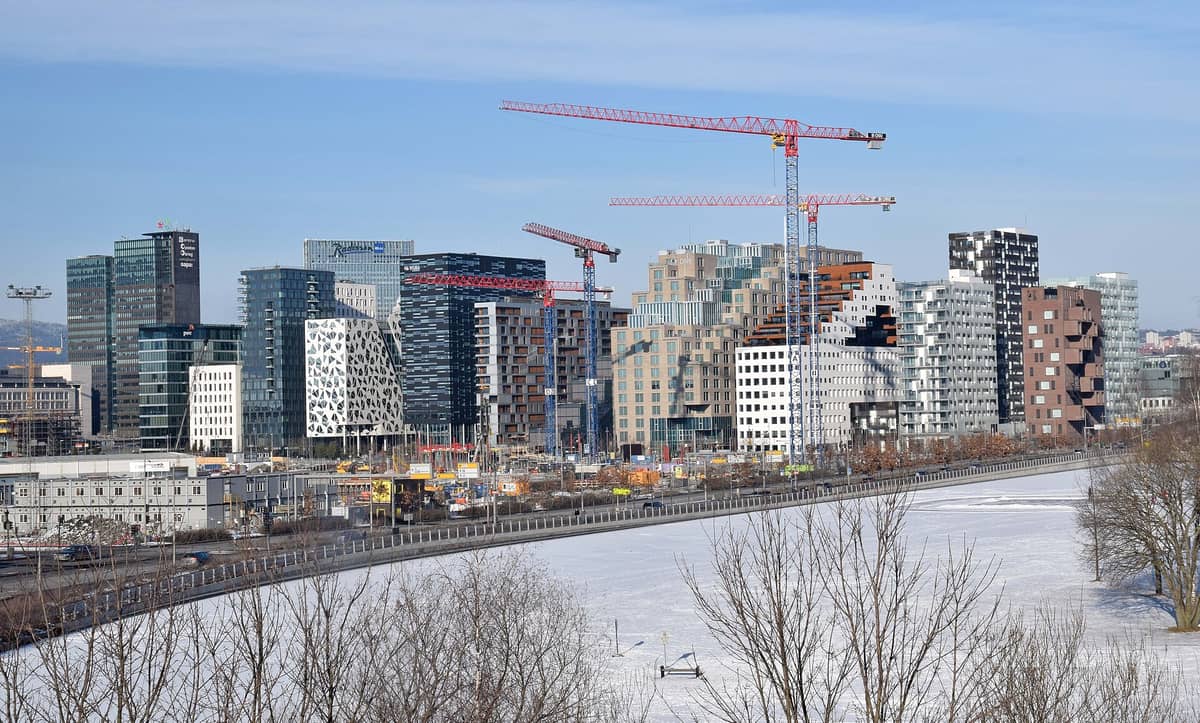
The Barcode Project is a series of 12 narrow, closely spaced high-rise buildings arranged in a tight row along Dronning Eufemias gate in Bjørvika, Oslo's redeveloped waterfront district. Seen from the fjord or from the hillsides above the city, the buildings read as a vertical striped pattern — hence the name. Up close, they are a lesson in how different architectural firms can work within a shared framework and still produce radically different results.
Each building was designed by a different architect, with firms including MVRDV, Dark Arkitekter, and Snøhetta contributing to different plots. The brief called for narrow towers with gaps between them, preserving sightlines from the city down to the fjord. Whether that goal succeeded is a matter of genuine debate among Oslo residents, but the intent is legible when you stand at ground level and look south through the gaps toward the water.
ℹ️ Good to know
The Barcode Project is part of Oslo's wider Bjørvika regeneration, the same scheme that produced the Oslo Opera House and the Munch Museum. Visiting all three in one morning is entirely practical from Oslo S.
A Walk Through the Buildings: What You Actually See
The walk along Dronning Eufemias gate from east to west takes under 15 minutes at a normal pace, but the architecture rewards slower attention. The facades vary considerably: some are clad in glass curtain walls that reflect the sky and shift colour through the day; others use darker steel, textured concrete, or terracotta panels. The gaps between buildings create brief, framed views toward the fjord, and on clear days those glimpses of blue water between grey towers are genuinely striking.
At street level, the ground floors of most buildings contain retail, restaurants, and cafes. The public realm here is well-designed by Scandinavian standards: wide pavements, granite paving, cycle lanes, and street furniture that doesn't feel like an afterthought. On weekday mornings, the area operates as a working business district — office workers moving quickly, coffee cups in hand, deliveries arriving. On weekend afternoons it quietens noticeably, and the restaurants take over the atmosphere.
If you plan to spend more than a quick walk, the Deichman Bjørvika public library — one of the most architecturally impressive buildings in contemporary Oslo — is a short walk away and makes a natural companion visit.
Tickets & tours
Live prices and dates from our booking partner. If you book, we may earn a commission at no extra cost to you.
Oslo Fjord sightseeing audio-guided electrical boat tour
From 35 €Instant confirmationFree cancellationFjord cruise with live jazz music
From 64 €Instant confirmationFree cancellationLuggage Storage in Oslo
From 6 €Instant confirmationFree cancellationPicturesque dinner cruise in Oslo
From 137 €Instant confirmationFree cancellation
The Architecture Debate: Context and Controversy
The Barcode Project has been polarising since its planning phase in the early 2000s. Critics argued that the buildings would block waterfront views for the broader city, creating a wall of glass and steel along what had been an open industrial shoreline. Supporters pointed to the density bonus: by concentrating development into a tight corridor of tall buildings, the scheme freed up significant public space elsewhere in Bjørvika for parks, promenades, and cultural facilities.
That trade-off is visible when you walk the area. To the east of the Barcode row, the Bjørvika waterfront opens up considerably, with low-rise development and public access to the water. The Opera House sits in full view, its sloping white roof accessible to pedestrians who walk directly onto it from the plaza. The spatial logic of the masterplan — high density in one strip, openness elsewhere — makes more sense when you experience the whole district rather than looking at the Barcode buildings in isolation.
The Barcode development sits within the broader Bjørvika neighbourhood, which has transformed from a freight rail yard and container port into Oslo's most architecturally ambitious district over roughly two decades. Understanding that context makes the Barcode buildings considerably more interesting than they appear in isolation.
For a broader perspective on how Oslo has shaped itself through architecture, the Oslo architecture guide covers the key buildings and urban projects across the city.
Best Times to Visit and How Light Changes the Experience
The buildings respond strongly to light conditions. On overcast days — common in Oslo from October through March — the glass facades turn a flat grey-blue and the overall impression can feel corporate and cold. In summer, when Oslo enjoys long daylight hours well into the evening, the late afternoon light hits the western facades at low angles and the reflections across the tower surfaces become genuinely photogenic. Golden hour here runs later than most of Europe; in June, useful photography light persists past 9pm.
Weekday lunchtimes between roughly 11:30am and 1:30pm are the busiest ground-floor periods, with the restaurants and cafes filling quickly. If you want to walk through without navigating crowds at pavement level, early morning or mid-afternoon on a weekday works well. Weekend mornings are quiet to the point of emptiness — the district is primarily commercial, and without office workers it feels underutilised on Saturdays before noon.
💡 Local tip
For photography, position yourself on the Akrobaten pedestrian bridge north of the buildings, or walk south to the waterfront promenade, to get the full striped silhouette of the Barcode row against the sky.
Getting There and Getting Around
Oslo Central Station (Oslo S) is the practical starting point for most visitors. The Barcode buildings begin around a 3–5 minute walk southeast of the main station entrance, following signs toward Bjørvika or Dronning Eufemias gate. The street itself runs parallel to the station's southern side, so orientation is straightforward even without a map.
The area is fully flat and entirely accessible on foot or by wheelchair. There are no steps or barriers at street level in the public realm between buildings. Individual restaurants and offices within the towers have their own accessibility provisions, which vary by venue.
If you are combining Barcode with other Bjørvika attractions, the Oslo Opera House is a 10-minute walk east, and the Munch Museum is directly adjacent. A full Bjørvika circuit covering all three takes two to three hours at a relaxed pace.
Clear Assessment: Is It Worth Your Time?
The Barcode Project is not a destination in itself for most travellers. If your interest is architecture, urban planning, or contemporary Scandinavian design, it earns a deliberate visit — ideally combined with the Opera House and the Munch Museum as part of a Bjørvika half-day. The combination of three very different architectural approaches within walking distance of each other makes for a genuinely instructive urban architecture walk.
If you are not particularly interested in architecture, the Barcode buildings are worth 20 minutes as you walk between Oslo S and the waterfront. The street-level restaurants are functional and reasonably priced by Oslo standards, making this a practical lunch stop. But it is not a place that rewards extended time without a specific reason to be there.
⚠️ What to skip
Travellers expecting a lively neighbourhood atmosphere comparable to Grünerløkka or Aker Brygge will be disappointed. Bjørvika's Barcode strip is a business district first. Outside of weekday lunch hours, it can feel quiet and slightly soulless at ground level.
For travellers interested in comparing Oslo's architectural range, the Astrup Fearnley Museum of Modern Art in Tjuvholmen offers another standout example of contemporary waterfront architecture in a more animated neighbourhood setting.
Insider Tips
- The Akrobaten pedestrian bridge, north of the Barcode row, gives the clearest overhead angle on the striped building pattern. It connects the Barcode district with the Grønland area and takes less than two minutes to cross.
- Several of the ground-floor restaurants serve lunch menus that are significantly cheaper than their dinner prices. If you are on a budget, the lunch window (roughly 11am–2pm) is the right time to eat here.
- The gaps between the towers are intentional design features preserving fjord sightlines. Standing in each gap and looking south gives a slightly different framing of the water — worth taking a moment at two or three of them rather than walking straight through.
- Late spring and early summer evenings, when the sun is low and the light is warm, transform the glass facades from flat grey to gold and orange. The 8–9pm window in June produces light conditions you will not see at any other time of year.
- The buildings on the western end of the row tend to be more architecturally interesting at the pedestrian level, with more varied cladding materials and slightly more generous ground-floor retail.
Who Is Barcode Project For?
- Architecture and urban design enthusiasts who want to see a major contemporary Scandinavian urban project up close
- Photographers looking for strong geometric compositions and interplay of glass, steel, and light
- Travellers doing a full Bjørvika circuit combining the Opera House and Munch Museum in a single half-day
- Anyone looking for a practical, well-located lunch stop between Oslo S and the waterfront
- Urban planners and students with an interest in high-density waterfront redevelopment
Nearby Attractions
Other things to see while in Bjørvika & the Opera Quarter:
- Deichman Bjørvika (Main Public Library)
Deichman Bjørvika is Oslo's main public library and one of the most striking modern buildings in the Norwegian capital. Located in the Bjørvika waterfront district steps from Oslo Central Station, it offers free entry, long opening hours, and a surprisingly rich experience for visitors who have never set foot in a library as a tourist before.
- MUNCH (Munch Museum)
The MUNCH museum in Oslo's Bjørvika district holds the world's largest collection of works by Edvard Munch, spanning 13 floors of a purpose-built waterfront tower. It's one of the most significant single-artist museums in Europe, and its fjord-facing top floor alone justifies the entry price.
- Oslo Opera House
The Oslo Opera House (Operahuset Oslo) is one of Scandinavia's most striking pieces of contemporary architecture, rising from the Bjørvika waterfront like a glacial slab meeting the fjord. Whether you come for a performance or simply to walk its sloping marble roof, it rewards visitors at every level of engagement.
- Sørenga Seawater Pool (Sørenga Sjøbad)
Sørenga Sjøbad is Oslo's most popular urban seawater pool, set on the Oslofjord waterfront at Sørengkaia. Free to enter, it offers a 50-metre pool, diving boards, a children's pool, and one of the city's best waterfront atmospheres.
Planning a trip? Discover personalized activities with the Nomado app.