Tjuvholmen Sculpture Park: Oslo's Open-Air Gallery on the Fjord
Tjuvholmen Sculpture Park sits at the tip of Oslo's most architecturally ambitious waterfront district, offering world-class contemporary sculpture for free, every day of the year. It pairs well with a visit to the Astrup Fearnley Museum next door and a walk along the fjord promenade.
Quick Facts
- Location
- Strandpromenaden 2, Tjuvholmen, Oslo
- Getting There
- Bus 21 or 42 to Tjuvholmen; or T-bane to Nationaltheatret + 10-min walk
- Time Needed
- 45 minutes to 1.5 hours
- Cost
- Free (outdoor park open 24/7)
- Best for
- Art lovers, architecture enthusiasts, waterfront walkers
- Official website
- www.tjuvholmenskulptur.no/en
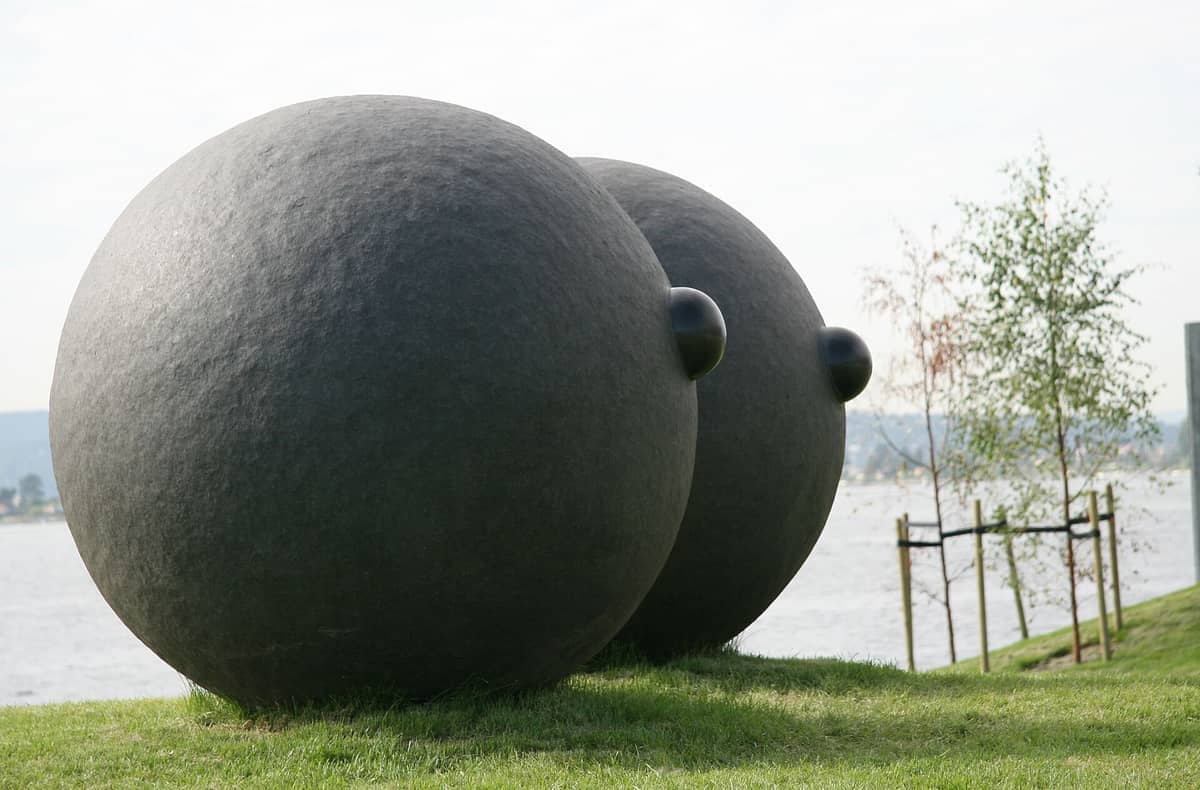
What Is Tjuvholmen Sculpture Park?
Tjuvholmen Sculpture Park is an outdoor contemporary art space woven into the waterfront fabric of Tjuvholmen, Oslo's most architecturally deliberate urban district. The park sits at Strandpromenaden 2, at the western tip of a peninsula that juts into the Oslofjord, flanked by Renzo Piano's Astrup Fearnley Museum on one side and open water on the other. Access is free, the gates never close, and the setting alone — fjord light shifting across dark stone and polished bronze — makes it worth the detour.
The park was developed with curatorial input from Poul Erik Tøjner, director of the Louisiana Museum of Modern Art in Denmark, which gives it a coherence unusual for publicly installed sculpture. This is not a scattered collection of donated bronzes. The works are selected to engage with the landscape and with each other, and the effect is closer to a curated museum experience than a typical city park.
💡 Local tip
The park is open around the clock and free every day of the year. Early morning visits — before the nearby restaurants and cafes open — offer the most uninterrupted experience of the sculptures and the fjord view.
The Tjuvholmen District: Context Matters
Understanding the sculpture park means understanding Tjuvholmen itself. The name translates roughly to 'Thief's Islet', a nod to the site's history as a place where criminals were once executed. For most of the 20th century, it was an industrial shipping and storage area. The redevelopment project, which began in the mid-2000s, transformed it into one of Scandinavia's most discussed examples of planned urban architecture, integrating housing, galleries, restaurants, and public space under a coherent design framework.
The district sits directly west of Aker Brygge, Oslo's older waterfront entertainment zone. Where Aker Brygge leans commercial and lively, Tjuvholmen has a quieter, more considered atmosphere. The architecture is striking without being showy: Renzo Piano's Astrup Fearnley Museum, with its swooping glass roof and canal access, anchors the district visually. The sculpture park occupies the open ground and promenade around and beyond it.
Tickets & tours
Live prices and dates from our booking partner. If you book, we may earn a commission at no extra cost to you.
Oslo Fjord sightseeing audio-guided electrical boat tour
From 35 €Instant confirmationFree cancellationFjord cruise with live jazz music
From 64 €Instant confirmationFree cancellationLuggage Storage in Oslo
From 6 €Instant confirmationFree cancellationPicturesque dinner cruise in Oslo
From 137 €Instant confirmationFree cancellation
Navigating the Park: What You'll Actually See
The park does not follow a traditional layout. Sculptures are distributed across the promenade, the small pier areas, and the landscaped spaces around the museum building. Some works sit on plinths; others rise directly from grass or stone. The scale varies significantly — from works you might almost walk past to large-scale pieces that stop you mid-stride.
The promenade along the water's edge is the spine of the experience. Walking it from the Aker Brygge boundary toward the southernmost tip of Tjuvholmen takes roughly 10 to 15 minutes at a browsing pace. The views across the Oslofjord open up as you move south, with Bygdøy peninsula visible to the west and the Oslo Opera House catching light to the east on clear days. The sculptural works punctuate this walk rather than demanding a formal itinerary.
If you want to extend the visit into indoor contemporary art, the Astrup Fearnley Museum is immediately adjacent and holds one of Norway's strongest collections of international contemporary art. The museum has its own admission fee and separate opening hours.
How the Experience Changes by Time of Day
Morning light, particularly in summer between 7 and 9 am, falls almost horizontally across the fjord and catches the surface textures of the sculptures with unusual clarity. The crowds at this hour are minimal: a few joggers, the occasional dog walker, residents of the surrounding apartments on their way to work. The water is often still enough to produce reflections in the small canals that cut through the development.
Midday and early afternoon bring more visitors, especially in the summer months of June through August when Oslo's long days fill the waterfront from mid-morning onward. The cafe terraces around the park fill up, and the atmosphere becomes distinctly social. The sculptures remain accessible but the sense of quiet contemplation gives way to something more festive and casual.
Evening visits in summer offer something different again. The Oslofjord's northern light lingers until 10 or 11 pm in June and July, and the low-angle sun turns the water a deep amber. This is genuinely the most photogenic window. In autumn and winter, dusk comes early and the park empties quickly, but the reflections of the district's architectural lighting on the water have their own quality.
ℹ️ Good to know
Oslo experiences a Baltic semi-continental climate. Summers are mild to warm (average July highs around 21-23°C) with very long daylight hours — ideal for evening walks. Winters are cold (average January temperatures near 0°C or below); the park is open year-round but paths can be icy, so wear appropriate footwear between November and March.
Getting There and Getting Around
Bus lines 21 and 42 stop directly at Tjuvholmen and are the most straightforward public transport options. The T-bane (metro) to Nationaltheatret station leaves a 10 to 12 minute walk along the waterfront, passing through Aker Brygge — which is a pleasant approach in its own right. The park is also within a 20 to 30 minute walk from central Oslo along the fjord promenade, making it a natural extension of any waterfront itinerary.
If you're planning a broader day along the water, combining Tjuvholmen with the nearby Nobel Peace Center and Oslo City Hall to the east makes for a coherent half-day route without retracing steps. Cyclists will find the district easily accessible via Oslo's dedicated cycle paths along the waterfront.
The entire park and promenade area is flat and paved, with wide pathways suitable for wheelchairs, strollers, and mobility aids. There are no steps required to access the main sculpture walk. Seating is available at intervals along the promenade, and the surrounding cafes provide restroom access for customers.
Photography: What Works and What Doesn't
The park rewards patient photographers. The combination of sculpture, water, and Renzo Piano's museum architecture creates layered compositions that change dramatically with light and season. Wide-angle lenses capture the relationship between works and the fjord backdrop; longer focal lengths isolate individual sculptures against sky or water.
The small canals that run through the Tjuvholmen development offer reflection shots that are genuinely useful on calm mornings. Overcast days, common in Oslo from September through March, diffuse the light evenly and remove harsh shadows from sculptural surfaces, which often makes for cleaner detail shots than bright sunshine. Avoid shooting at midday in summer if you want shadow detail on metallic works — the contrast is too harsh.
💡 Local tip
For fjord panoramas with sculptures in the foreground, position yourself at the southernmost tip of the promenade, facing northeast. On clear days you can include the Oslo Opera House in the far background — a useful compositional anchor.
Clear Assessment: Worth It or Overhyped?
Tjuvholmen Sculpture Park is not one of Oslo's headline attractions in the way that the Vigeland Sculpture Park or the National Museum commands full-day attention. It is a smaller, more contemplative space that rewards visitors who approach it without maximum expectations. The curatorial quality is high — this is not a place where the art was chosen for easy public appeal — and that means some visitors will find it less immediately accessible than they hoped.
For travelers with a genuine interest in contemporary art, urban design, or Scandinavian architecture, it sits comfortably alongside a visit to the Astrup Fearnley Museum as part of a coherent afternoon. For visitors primarily interested in Oslo's historical or natural attractions, it is an easy add-on during a waterfront walk rather than a standalone destination. Those visiting Oslo on a tight two- or three-day schedule may prefer to prioritize other sites, though the zero admission cost and short time commitment mean the opportunity cost is low.
Travelers who find contemporary sculpture unengaging or who are looking for traditional Norwegian cultural experiences will probably get more from the Vigeland Sculpture Park in Frogner, which offers monumental figurative work in a much larger park setting. The two parks represent genuinely different artistic sensibilities and visitor experiences.
Insider Tips
- Visit on a weekday morning in late May or early September — the light is excellent, the summer crowds haven't fully arrived or have just left, and the cafes nearby are less packed. You'll have the promenade largely to yourself.
- The Tjuvholmen canals reflect the museum's Renzo Piano roof structure particularly well on still mornings. Position yourself on one of the small pedestrian bridges for a composition that shows architecture and water together.
- If you're combining the sculpture park with the Astrup Fearnley Museum, check the museum's opening hours in advance — it is typically closed on Mondays. The park, by contrast, is always open.
- The southern tip of the Tjuvholmen promenade has a small public bathing area that is used in summer. In warm weather (June to August), locals swim here directly from the waterfront. It is a genuine slice of Oslo waterfront life that most tourists miss.
- Oslo's tram line 12 is one of the most scenic tram routes in the city, passing through the city centre before terminating at Aker Brygge. Riding it from Nationaltheatret is a pleasant approach that also gives you an orientation of the waterfront district; from Aker Brygge, it’s a short walk to Tjuvholmen.
Who Is Tjuvholmen Sculpture Park For?
- Contemporary art enthusiasts who want quality without queues or admission fees
- Architecture travelers interested in the Tjuvholmen development and Renzo Piano's Astrup Fearnley Museum
- Photographers working the Oslo waterfront, especially in early morning or summer evenings
- Families and stroller users — the flat, wide promenade is easy to navigate
- Visitors combining a waterfront walk from Aker Brygge toward Bygdøy or the city centre
Nearby Attractions
Other things to see while in Aker Brygge & Tjuvholmen:
- Astrup Fearnley Museum of Modern Art
The Astrup Fearnley Museum of Modern Art is Oslo's most architecturally striking contemporary art venue, housed in a Renzo Piano-designed building on the Tjuvholmen waterfront. With a world-class private collection and a sculpture-lined harborfront setting, it rewards visitors who care about both the art and the space it inhabits.
- Nobel Peace Center
The Nobel Peace Center (Nobels Fredssenter) is the official museum of the Nobel Peace Prize at Oslo's City Hall Square, presenting the history and laureates of the Nobel Peace Prize through immersive exhibitions., presenting the history and laureates of the Nobel Peace Prize through immersive exhibitions. It is one of the few museums in Oslo that genuinely rewards slow, attentive visitors.
Planning a trip? Discover personalized activities with the Nomado app.