Nobel Peace Center Oslo: What to Expect, Hours, and Tickets
The Nobel Peace Center (Nobels Fredssenter) is the official museum of the Nobel Peace Prize at Oslo's City Hall Square, presenting the history and laureates of the Nobel Peace Prize through immersive exhibitions., presenting the history and laureates of the Nobel Peace Prize through immersive exhibitions. It is one of the few museums in Oslo that genuinely rewards slow, attentive visitors.
Quick Facts
- Location
- Brynjulf Bulls plass 1, Rådhusplassen, Oslo
- Getting There
- Nationaltheatret station (T-bane, tram, regional train) – approx. 10 min walk
- Time Needed
- 1.5 to 2.5 hours
- Cost
- Adult 180 NOK, Student 100 NOK, under-18 free. Verify current prices at nobelpeacecenter.org
- Best for
- History lovers, travelers interested in politics and human rights, curious teenagers
- Official website
- www.nobelpeacecenter.org/en
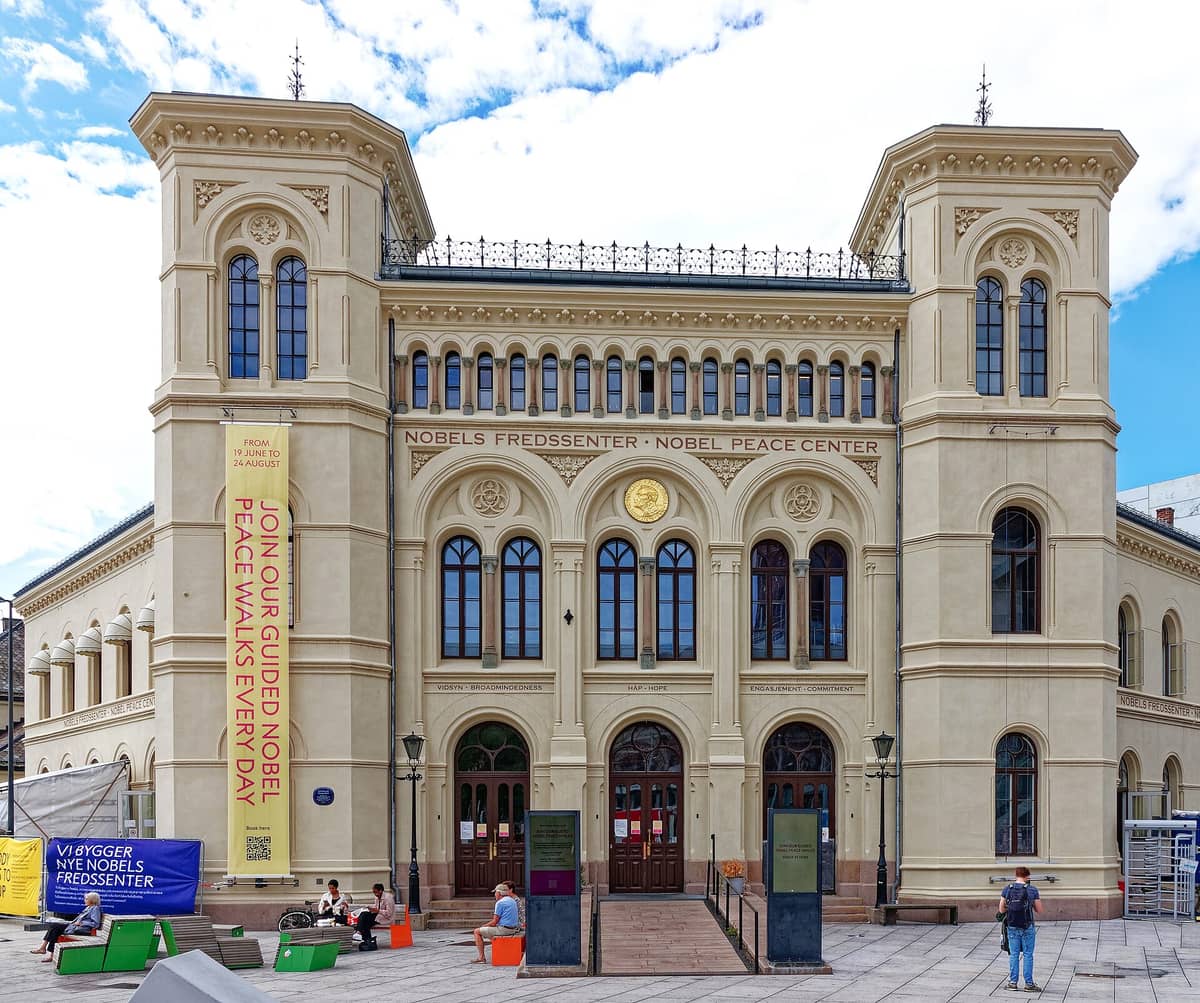
What the Nobel Peace Center Actually Is
The Nobel Peace Center, known in Norwegian as Nobels Fredssenter, is the official museum of the Nobel Peace Prize. It is located at Rådhusplassen, directly beside Oslo City Hall, and its role is straightforward: to present the history of the prize, the laureates who have received it, and the broader questions of peace and conflict that motivated Alfred Nobel's original bequest. and its role is straightforward: to present the history of the prize, the laureates who have received it, and the broader questions of peace and conflict that motivated Alfred Nobel's original bequest.
The building itself is part of the experience. The interior has been thoroughly modernized, with exhibition design that uses projections, interactive screens, and archival photographs to bring each laureate's story to life. It is not a dusty trophy cabinet; the approach is deliberately contemporary and, on the whole, it works. The interior has been thoroughly modernized, with exhibition design that uses projections, interactive screens, and archival photographs to bring each laureate's story to life. It is not a dusty trophy cabinet; the approach is deliberately contemporary and, on the whole, it works.
One thing worth knowing before you visit: this is not a general history-of-peace museum. It is specifically focused on the prize and its recipients, from Henri Dunant, the very first laureate in 1901, to the most recent winners. If you want broader context on Norwegian history or Oslo's role as a diplomatic city, combine your visit with a stop at the Norway Resistance Museum at Akershus Fortress, which covers the Second World War occupation with exceptional depth.
The Exhibitions: What You Will See Inside
The permanent exhibition introduces the Nobel Peace Prize chronologically and thematically, moving through more than a century of laureates. You will encounter individual installations for recipients ranging from Nelson Mandela and Malala Yousafzai to the International Campaign to Abolish Nuclear Weapons (ICAN) and Médecins Sans Frontières. Each installation combines photographs, archival footage, written testimony, and in some cases personal objects.
The exhibition hall on the upper floor typically hosts a dedicated temporary exhibition that goes deeper into a current laureate or a specific theme. These change annually and often open in December around the time of the award ceremony. They are usually the most visually striking part of the museum, and they are worth checking before you visit to understand what is on display during your trip.
The Alfred Nobel Room, a small but carefully curated space, traces the life of the prize's founder: the Swedish chemist and industrialist who made his fortune from dynamite and left instructions in his will for the creation of the prizes. The connection between weapons technology and a peace prize is not glossed over here, which gives the room an unexpected thoughtfulness.
💡 Local tip
Allow extra time for the upper floor temporary exhibition. Many visitors spend most of their time downstairs and rush through the upper level, but the temporary shows often contain the most emotionally powerful material in the entire building.
Tickets & tours
Live prices and dates from our booking partner. If you book, we may earn a commission at no extra cost to you.
Nobel Peace Center Museum tickets
From 14 €Instant confirmationFree cancellationOslo in war and peace
From 0 €Instant confirmationFree cancellationOslo Fjord sightseeing audio-guided electrical boat tour
From 35 €Instant confirmationFree cancellationFjord cruise with live jazz music
From 64 €Instant confirmationFree cancellation
Opening Hours, Tickets, and Getting There
During the regular season (roughly September to mid-June), the center is open Tuesday to Sunday from 11:00 to 17:00, with extended hours on Wednesday until 20:00. It is closed on Mondays. In summer (approximately 1 June to 31 August), it opens every day from 10:00 to 18:00. Hours can shift for public holidays and special events, so confirm the current schedule on the official website before you go. Hours can shift for public holidays and special events, so confirm the current schedule on the official website before you go.
Admission is 180 NOK for adults and 100 NOK for students as of mid-2026. Children under 18 enter free. The center is covered by the Oslo Pass, so if you are working your way through multiple paid attractions, that card can offer meaningful savings. The center is covered by the Oslo Pass, so if you are working your way through multiple paid attractions, that card can offer meaningful savings.
Getting here is straightforward. Getting here is straightforward. Nationaltheatret station is served by the T-bane (metro), regional trains, and several tram lines, and it sits about ten minutes on foot from the entrance. From Aker Brygge, the waterfront walkway leads directly to the front of the building in a short walk. If you are planning a day that combines this museum with the waterfront and harbor area, see our overview of for how to structure the day logically. If you are planning a day that combines this museum with the waterfront and harbor area, see our overview of Aker Brygge and Tjuvholmen for how to structure the day logically.
Visiting at Different Times of Day
Midday on weekends, especially in July and August, is when the museum fills up with organized tour groups and families with young children. The ground floor can become congested around the more interactive installations. If that is not how you want to experience a museum focused on human rights and conflict, arrive at opening time or plan your visit for a Tuesday or Thursday in the shoulder season.
Wednesday evenings, when the center stays open until 20:00, offer a noticeably quieter atmosphere. The low visitor numbers combined with the deliberately subdued interior lighting create a more contemplative mood, which suits the subject matter considerably better than a packed midday crowd. This is particularly true for the installations that use projection and sound, where overcrowding genuinely diminishes the experience.
In winter, the Nobel Peace Prize ceremony takes place in Oslo City Hall on 10 December each year. The museum and the surrounding Rådhusplassen become the focal point of the city's attention for a few days. If your trip coincides with the ceremony period, expect queues and pre-book tickets online. The museum and the surrounding Rådhusplassen become the focal point of the city's attention for a few days. If your trip coincides with the ceremony period, expect queues and pre-book tickets online.
ℹ️ Good to know
The Nobel Peace Prize ceremony is held in Oslo City Hall, directly adjacent to the center, every 10 December. The Nobel Peace Center typically opens special programming around this date.
Accessibility and Practical Logistics
The building is fully accessible for visitors with reduced mobility. There is an access ramp at the entrance and a lift connecting the two floors. Accessible toilets with changing tables are available inside. Service animals are permitted; other pets are not. The museum's Norwegian term for this is 'universelt utformet,' meaning it has been designed to universal design standards, and in practice the access provisions work well.
Photography for personal use is generally allowed in the permanent exhibition areas, but restrictions may apply in temporary shows. Check signage as you enter each space. The museum has a cafe and a well-stocked shop selling books, prints, and Nobel Prize-related items, ranging from serious academic texts on international law to more accessible gift items.
If you are traveling with children, the under-18 free admission makes this an easy addition to a day at the waterfront. Older children and teenagers tend to engage more readily with the material than very young ones, but the interactive elements give younger visitors something to do. For a broader family-friendly itinerary in Oslo, the Oslo with kids guide covers the most practical combinations of attractions across the city.
Is It Worth Your Time? A Clear Assessment
The Nobel Peace Center is a good museum for what it sets out to do, but it is worth being clear about its scope. If you are deeply interested in human rights, conflict resolution, international diplomacy, or the biographies of any of the prize's recipients, you will likely find it rewarding and leave knowing more than when you entered. The exhibition design is thoughtful and the archive material is genuinely interesting.
If your primary interest is Norwegian culture, Viking history, or fjord landscapes, this is less central to your experience of Oslo and you might reasonably skip it. Similarly, visitors looking for the kind of spectacle and physical grandeur they find at the Vigeland Sculpture Park or the Opera House may find the interior spaces modest by comparison. The center's value is intellectual rather than sensory.
It is also worth noting that Oslo has a strong cluster of competing museums, several of them free or cheaper. If you are managing a tight budget, the free things to do in Oslo guide and the Oslo Pass guide can help you decide whether 180 NOK fits into your priorities for the day.
The Surrounding Area: Before and After Your Visit
The Nobel Peace Center sits at one of Oslo's most concentrated tourist junctions. Oslo City Hall is immediately to one side, the waterfront promenade to another, and the Aker Brygge restaurants and bars within a short walk. On a clear day, the view across Oslofjord from Rådhusplassen toward Bygdøy is one of the better free views in the city.
A logical pairing is the Oslo City Hall next door, which is free to enter and contains large murals depicting Norwegian history and daily life. The building is also where the Nobel Peace Prize ceremony itself takes place each December, which gives it a direct connection to the center's subject matter.
From the waterfront, the Bygdøy ferry (operated by Ruter, covered by standard transit tickets) runs in summer and connects to the museum peninsula at Bygdøy, home to the Fram Museum, the Kon-Tiki Museum, and the Norwegian Folk Museum. That combination of a morning at the Nobel Peace Center followed by an afternoon on Bygdøy is one of Oslo's most coherent day structures. For a full itinerary, the Oslo 3-day itinerary shows how to fit the pieces together.
Insider Tips
- Book tickets online in advance around 10 December. The Nobel Peace Prize ceremony draws international press and dignitaries to the adjacent City Hall, and the museum sees its highest visitor numbers of the year during this week.
- The Wednesday late opening until 20:00 is significantly quieter than weekend afternoons. The projection-based installations, which use sound as well as image, are far more effective when you are not sharing the space with a large group.
- Children under 18 enter free, which makes this one of the better value family stops near the waterfront. The interactive installations on the ground floor hold younger visitors' attention reasonably well.
- The museum shop stocks a wider range of serious books on international law, peace-building, and human rights than most Oslo bookshops. If you are looking for substantive reading on any laureate or on the prize's history, this is a better-than-average place to find it.
- Combine the visit with Oslo City Hall (free entry, immediately adjacent) for the full context of where and how the prize ceremony actually takes place each year.
Who Is Nobel Peace Center For?
- Travelers with a genuine interest in international politics, diplomacy, or human rights
- Older teenagers studying history or current affairs
- Families with children over ten, thanks to free child admission and interactive exhibits
- Visitors timing a December trip around the Nobel Peace Prize ceremony
- Anyone building a waterfront day that also includes Aker Brygge, Oslo City Hall, and the Bygdøy ferry
Nearby Attractions
Other things to see while in Aker Brygge & Tjuvholmen:
- Astrup Fearnley Museum of Modern Art
The Astrup Fearnley Museum of Modern Art is Oslo's most architecturally striking contemporary art venue, housed in a Renzo Piano-designed building on the Tjuvholmen waterfront. With a world-class private collection and a sculpture-lined harborfront setting, it rewards visitors who care about both the art and the space it inhabits.
- Tjuvholmen Sculpture Park
Tjuvholmen Sculpture Park sits at the tip of Oslo's most architecturally ambitious waterfront district, offering world-class contemporary sculpture for free, every day of the year. It pairs well with a visit to the Astrup Fearnley Museum next door and a walk along the fjord promenade.
Planning a trip? Discover personalized activities with the Nomado app.