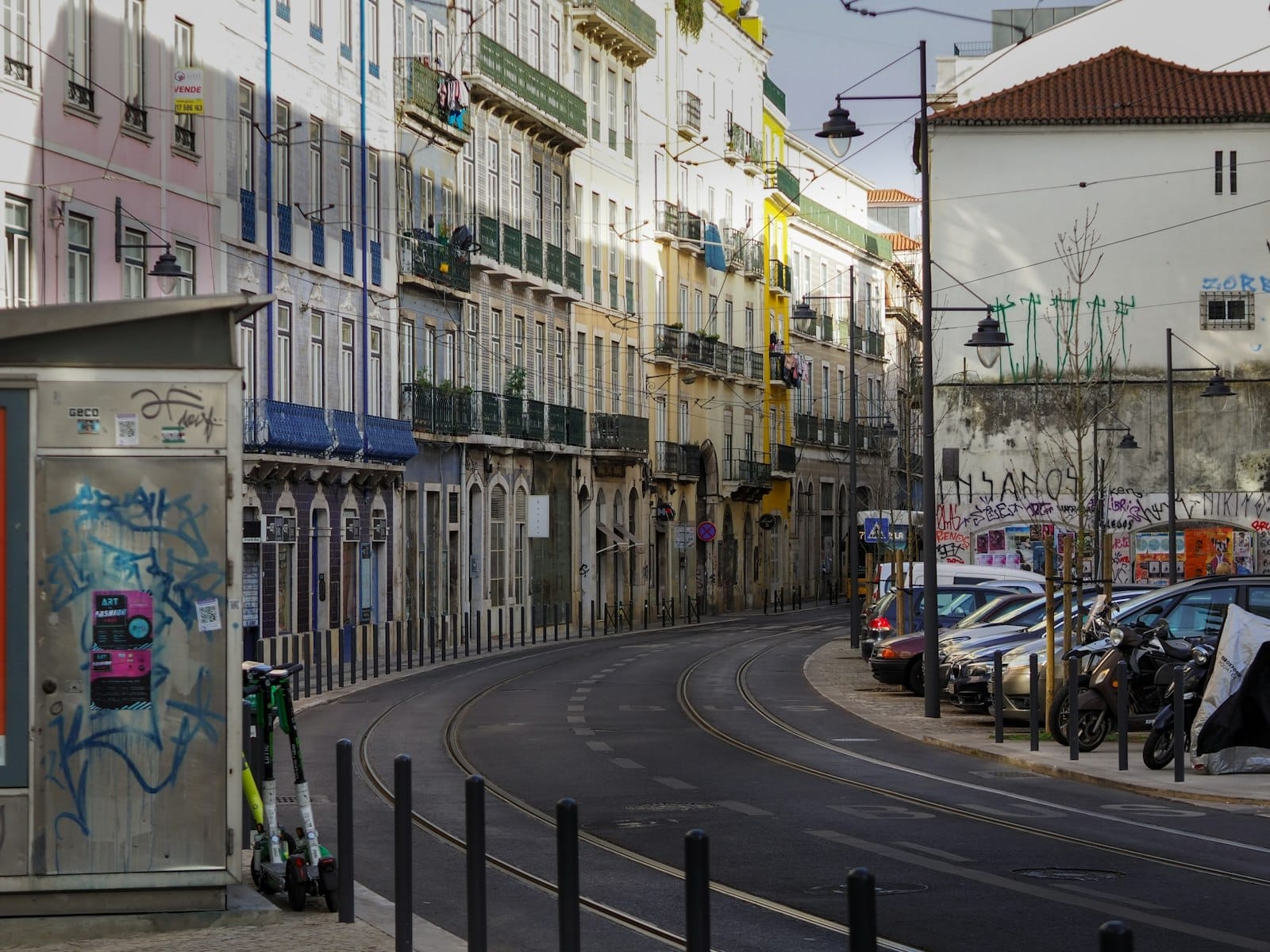
Santos and Cais do Sodré sit side by side along the northern bank of the Tagus, forming Lisbon's most kinetic stretch of riverside real estate. Once a working dock district with a rough reputation, the area has reinvented itself as the city's creative and nightlife epicentre, without losing its salt-and-soot character entirely.
Cais do Sodré is where Lisbon's past and present collide most visibly: a former sailors' quarter of warehouses and late-night bars that is now home to the Time Out Market, the luminous Pink Street, and the Ribeira das Naus waterfront promenade. Santos, stretching west alongside it, adds a quieter design-conscious layer to the mix, making the combined neighbourhood one of the most layered and liveable stretches of the city's riverfront.
Orientation
Santos and Cais do Sodré occupy a narrow band of low-lying land pressed between the Tagus River to the south and the escarpment of Bairro Alto to the north. Cais do Sodré proper is bounded on its eastern edge by Corpo Santo Square, on the north by Rua de Bernardino Costa and Rua de São Paulo, and on the west by São Paulo Square, where it blurs into Santos. The river forms its southern boundary, marked by the broad quay of Ribeira das Naus and the ferry terminal.
In practical terms, the two neighbourhoods form one continuous waterfront strip. Walking west from Praça do Comércio, you reach Cais do Sodré within about ten minutes on foot, passing the riverside promenade of Ribeira das Naus. Continue another ten minutes along the water and you are in Santos, which extends toward the neighbourhood of Madragoa and eventually Alcântara. The whole strip from Cais do Sodré station to the heart of Santos is comfortably walkable in under twenty minutes.
The neighbourhood connects upward to Bairro Alto via the Elevador da Bica, a funicular that climbs steeply from Rua de São Paulo to the top of the hill. To the east, the riverside path leads directly to Baixa and Chiado, and from Cais do Sodré station you can reach Cascais by suburban train in around 40 minutes. This transit hub status is central to the neighbourhood's identity: it is a place people pass through, depart from, and increasingly, choose to linger in.
Character & Atmosphere
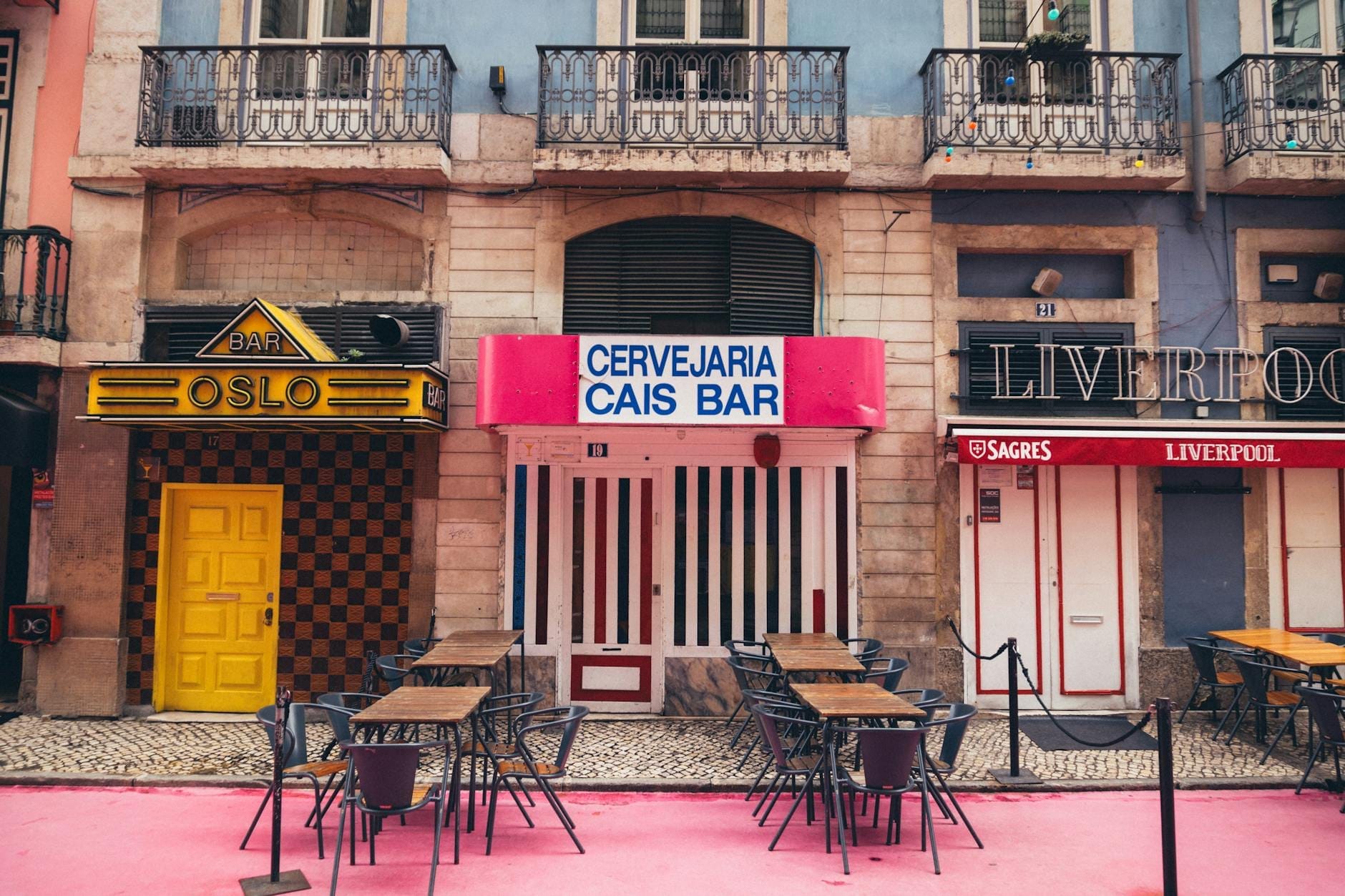
For most of the twentieth century, Cais do Sodré had a reputation that kept respectable Lisboetas away after dark. The dockside warehouses attracted sailors, sex workers, and the kind of bars that never quite closed. That history has not been erased so much as repurposed. Walk down Rua Nova do Carvalho today and you will find the same narrow street, the same low buildings, the same sense of a place operating at the edges of the city's polite self-image. The difference is that the bars now have neon signs, cocktail menus, and queues on weekend nights.
Mornings are the time to understand what the neighbourhood actually is when it is not performing. The Mercado da Ribeira opens early and fills with traders, office workers grabbing coffee, and tourists working through their first pastéis de nata of the day. The waterfront promenade catches the morning light off the Tagus at a low, golden angle that photographers seek out. By nine or ten in the morning, Rua Nova do Carvalho is quiet enough to hear your own footsteps on the cobblestones.
By midday the Time Out Market is running at full capacity, the outdoor terraces along Ribeira das Naus are filling with lunching workers from nearby offices, and the area takes on the feel of a modern European waterfront district: cosmopolitan, confident, a little performative. Afternoons in Santos have a different rhythm entirely. The design studios and small galleries that have set up along Rua do Instituto Industrial and the surrounding streets give this section of the district a working-week energy, less tourist-facing and more focused.
After dark, Cais do Sodré is one of Lisbon's loudest neighbourhoods, particularly on Friday and Saturday nights when Pink Street draws crowds from across the city and from hostels all over central Lisbon. The energy is young, the music spills into the street, and the area between São Paulo Square and the ferry terminal stays active until well past three in the morning. Santos after dark is comparatively subdued: a few good restaurants, some neighbourhood bars, and a noticeably more local crowd.
⚠️ What to skip
Noise on weekend nights is significant throughout Cais do Sodré. If you are a light sleeper or travelling with children, consider staying in Santos rather than the blocks immediately around Pink Street, or bring earplugs.
What to See & Do
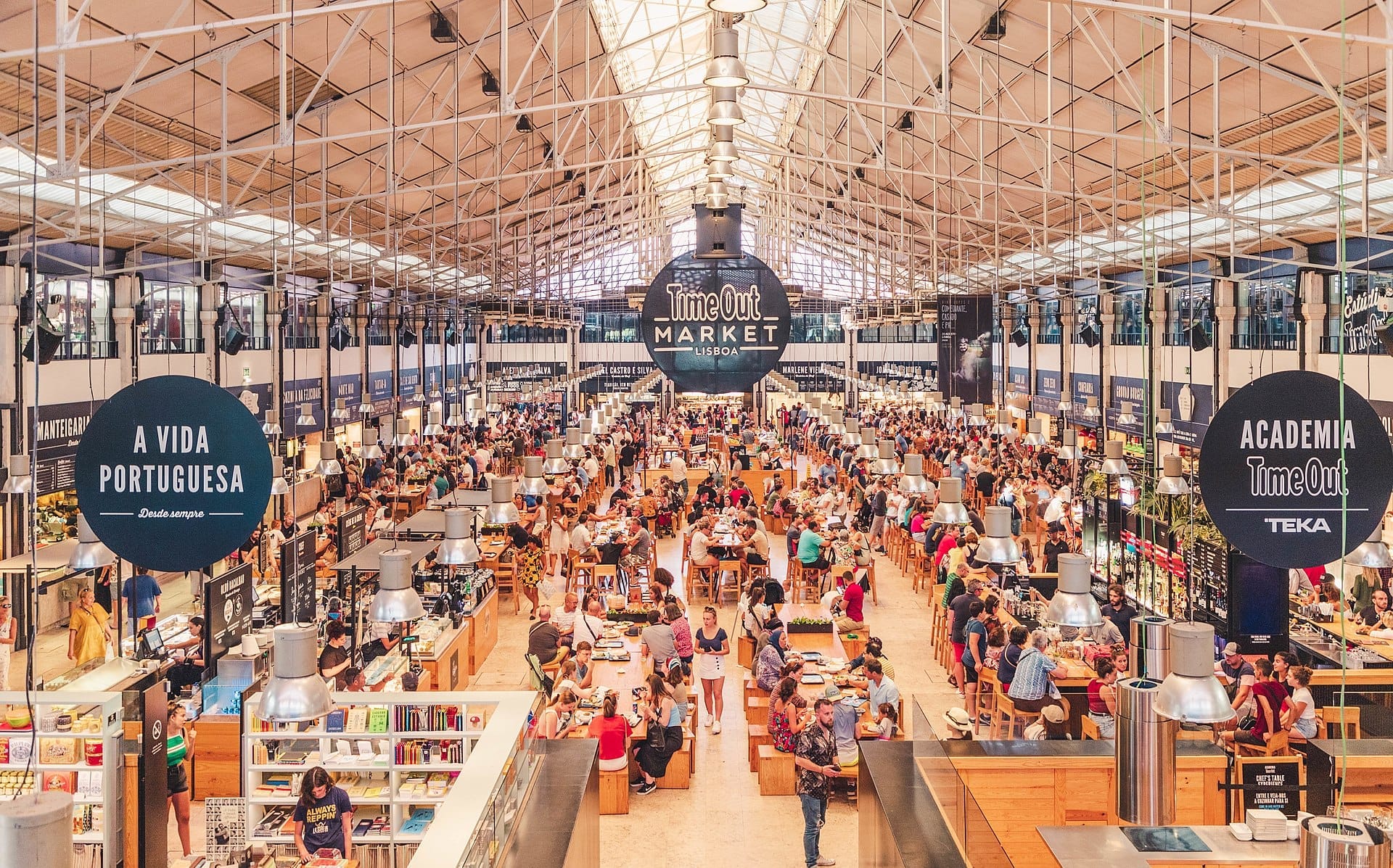
The Time Out Market is the neighbourhood's most visited attraction and genuinely worth your time, especially if you want an efficient introduction to the range of Lisbon's food culture under one roof. The Mercado da Ribeira building itself dates from 1892 and is worth a look even if you only pass through. The food market section, overhauled in 2014, houses counters from some of Lisbon's most respected chefs and producers alongside simpler stalls for wine, seafood, and pastries.
Rua Nova do Carvalho, universally called Pink Street after its painted pavement, is a short block that concentrates a dozen bars and clubs in a space that feels almost absurdly small at peak hours. It works best in the early evening, around six or seven, when the neon is on and the street is atmospheric without being overwhelmed. Come back after midnight if nightlife is your reason for being here.
The Ribeira das Naus waterfront is one of Lisbon's best free afternoon experiences. The broad esplanade runs along the riverfront between Praça do Comércio and Cais do Sodré, with wide stone steps descending to the water's edge. In summer, locals set up on the steps with beers from the kiosk. The view across to the southern bank of the Tagus, with the hills of Almada visible in the distance, is one of the better unscripted urban panoramas in the city.
The Elevador da Bica runs from Rua de São Paulo up to Rua Luísa Todi in Bairro Alto. It is a working funicular, not a tourist attraction in the conventional sense, though it is frequently photographed. The ride takes under two minutes and offers a compressed view of Lisbon's topographical drama: the city stacked on its own hillside, the river visible below, the sky above. Take it in the late afternoon for the best light.
Time Out Market (Mercado da Ribeira): food market, cultural events, live music
Pink Street (Rua Nova do Carvalho): bar strip, nightlife, street photography
Ribeira das Naus: riverside esplanade, free access, sunset views
Elevador da Bica: historic funicular connecting to Bairro Alto
Igreja de São Paulo: 18th-century church on Rua de São Paulo
Jardim Dom Luís: small riverside garden near the ferry terminal
Ferry crossings to Cacilhas: 10-minute crossing for views back toward Lisbon
💡 Local tip
The ferry to Cacilhas from Cais do Sodré costs around €1.60 each way and gives you one of the best perspectives on Lisbon's skyline, particularly in the late afternoon when the light hits the city from the west. It is far cheaper and more atmospheric than any organised river cruise.
Eating & Drinking
The Time Out Market functions as the neighbourhood's anchor for food. The range inside is genuinely broad: you can eat a serious plate of bacalhau à brás, a craft burger, freshly shucked oysters, or a tasting menu portion from a Michelin-starred chef's counter, often spending between €10 and €25 per person depending on what you order. It is crowded at peak hours and the communal seating can be chaotic, but the quality at the better counters is consistently high. Go at eleven in the morning or after two-thirty in the afternoon to avoid the worst of the lunch rush.
Outside the market, Rua de São Paulo and the streets running north from the waterfront have a range of restaurants that cater to a mix of neighbourhood regulars and the growing number of people staying in the area. Tasca-style restaurants serving petiscos, the Portuguese equivalent of tapas, are well represented. Prices in the neighbourhood proper, away from the obvious tourist strips, tend to be reasonable: a full lunch with wine at a neighbourhood tasca generally runs €15 to €25 per person.
The bar scene on and around Pink Street is focused almost entirely on cocktails and beer, with a soundtrack calibrated for volume rather than conversation. If that is not your preference, the Santos section of the neighbourhood has a quieter set of bars and wine-focused spots that draw a more local, slightly older crowd. The distinction between the two areas is sharper than the map distance would suggest.
For context on where this neighbourhood fits into Lisbon's wider food scene, the complete guide to eating in Lisbon covers the city's food landscape across all districts. If you are working to a budget, the Lisbon on a budget guide has specific advice on eating well without overspending in areas like this one.
Getting There & Around
Cais do Sodré station is one of Lisbon's most important transit hubs. The Metro Green Line stops here, connecting the neighbourhood to Chiado (one stop north) and ultimately to the airport interchange at Alameda. The suburban rail network departs from the same building, with trains running westward along the Tagus coast to Belém, Cascais, and the beaches in between. The ferry terminal is directly adjacent to the train station, with regular crossings to Cacilhas on the south bank.
Trams to Belém depart from the riverside near Cais do Sodré, following the waterfront west through Santos and Alcântara. This is a slower route than the train but gives a ground-level view of the riverfront neighbourhoods. The journey to Belém by tram takes around twenty minutes in normal traffic. The iconic Tram 28E does not serve this neighbourhood directly, but Chiado and Bairro Alto, both a short uphill walk away, are on its route.
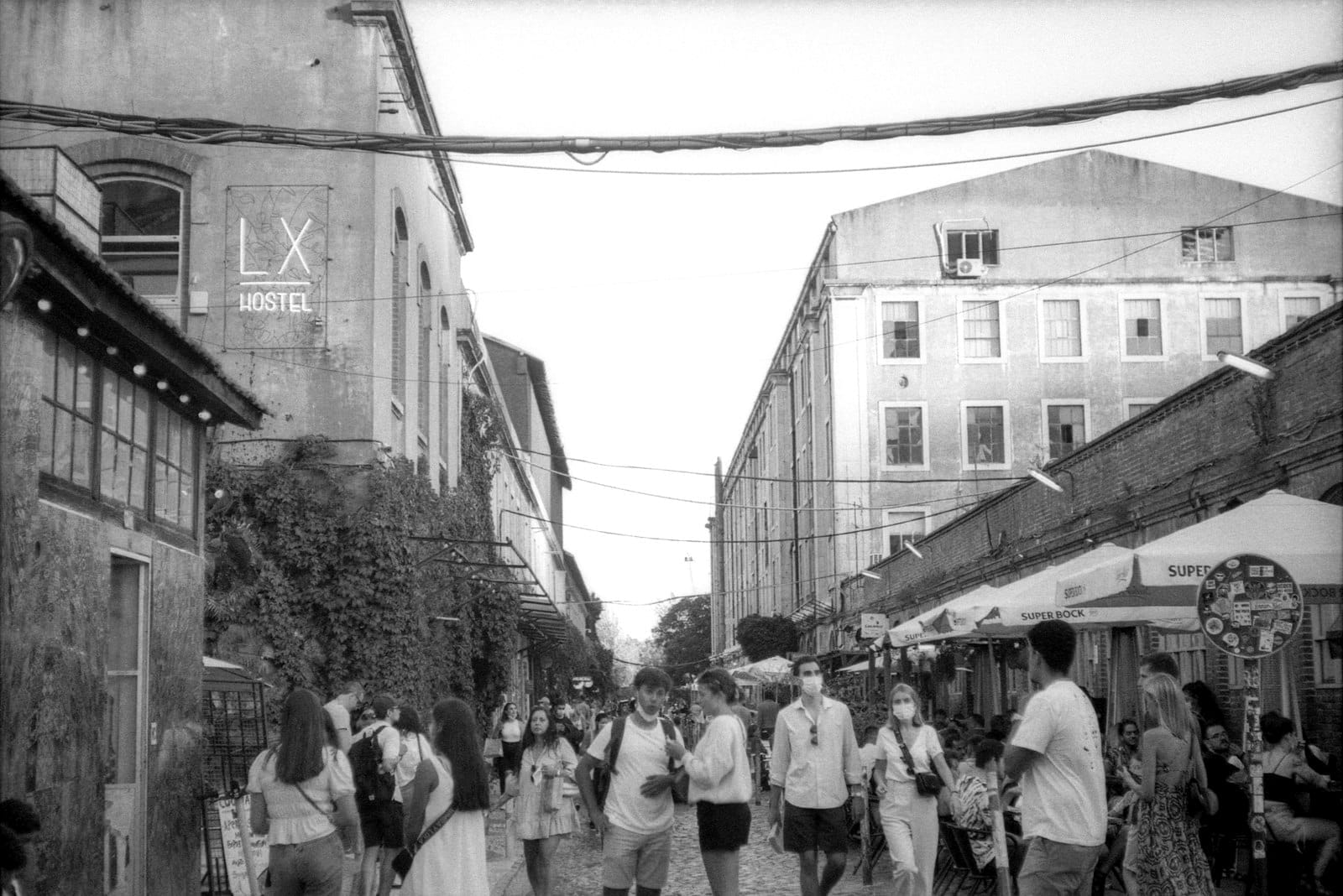
On foot, the neighbourhood is highly walkable. Praça do Comércio is about a ten-minute walk east along the riverside. Chiado is a ten-minute walk north, with a significant uphill section. The Elevador da Bica provides a mechanised shortcut up to Bairro Alto from Rua de São Paulo. Santos extends west from São Paulo Square along the riverfront, and walking its length to the LX Factory area takes around twenty to twenty-five minutes.
ℹ️ Good to know
The Viva Viagem card, Lisbon's rechargeable transit card, can be loaded at Cais do Sodré station and used across Metro, bus, tram, and ferry. It is the most cost-effective way to use public transport if you are staying more than a day or two.
For a full overview of how Lisbon's transport network connects to this neighbourhood and the rest of the city, the getting around Lisbon guide covers all modes in detail.
Where to Stay
The accommodation offer in Santos and Cais do Sodré has expanded considerably in recent years, ranging from boutique hotels in converted warehouse buildings to apartment rentals on the quieter residential streets of Santos. The neighbourhood suits travellers who want to be close to the waterfront and within easy reach of both Chiado and the train connections west to the beaches.
The best location within the district depends on your priorities. If nightlife access matters, staying within a few blocks of Cais do Sodré station puts you at the centre of things, though noise on weekend nights can be genuinely disruptive. For a quieter stay with the same general location advantages, Santos is a better base: calmer streets, a more residential feel, and still only a fifteen-minute walk from the Time Out Market and Pink Street.
This neighbourhood is particularly well-suited to couples and solo travellers in their twenties and thirties who prioritise nightlife, food, and transit access. Families and those who need consistent quiet sleep would likely be better placed in Chiado or further west toward Belém. The guide to where to stay in Lisbon compares all major neighbourhoods for accommodation.
Honest Assessment: Who This Neighbourhood Is For
Santos and Cais do Sodré reward travellers who are interested in the city as it actually operates today, rather than as a postcard version of itself. The neighbourhood does not have the medieval atmosphere of Alfama or the monumental grandeur of Belém. What it has is energy, variety, and one of the best transit positions in the city. The transformation from rough dockside district to creative and nightlife hub is recent enough that the edges have not been fully smoothed off, and that tension gives the area a character that more polished parts of the city lack.
It is worth noting that Cais do Sodré can feel tourist-heavy at peak hours, particularly around the Time Out Market and Pink Street. If you are looking for the Lisbon that functions beneath the tourism layer, Santos is closer to that experience. Alternatively, Graça or Alfama offer a different kind of immersion in older Lisbon. For those curious about what the city's nightlife actually looks like, the Lisbon nightlife guide puts Cais do Sodré in the context of the wider city after dark.
TL;DR
Cais do Sodré is Lisbon's primary nightlife and waterfront district, built on a former dockside quarter with a genuinely edgy past that still shows through.
The Time Out Market, Pink Street, and Ribeira das Naus promenade are the three main draws, each operating at a different pitch and time of day.
Transit access is exceptional: Metro, suburban trains to the coast, ferries to the south bank, and trams to Belém all depart from Cais do Sodré station.
Best suited to young adult travellers, couples, and anyone who wants food, nightlife, and waterfront access in one walkable package.
Light sleepers, families, and those seeking a quiet or historically rich atmosphere will likely find Santos more comfortable than Cais do Sodré itself, or should consider a neighbouring district.
Lisbon punches well above its weight as a museum city, offering everything from world-class art collections to archaeology, decorative arts, and cutting-edge contemporary exhibitions. This guide covers the 12 best museums in Lisbon, organized by neighborhood and theme, with practical tips on pricing, free entry days, and what makes each one worth your time.
Lisbon rewards visitors in every season, but timing your trip well makes a real difference. This guide breaks down what to expect each month — temperatures, crowd levels, prices, and key events — so you can decide when a visit to Lisbon suits you best.
Lisbon is one of Europe's most photogenic cities, and its seven hills mean spectacular views are everywhere. This guide covers the best traditional miradouros, architectural observation decks, and rooftop vantage points across the city.
Lisbon sits at the edge of a region packed with UNESCO palaces, dramatic Atlantic coastline, and historic towns all within an hour or two. These are the best day trips to make from the city, whether you have a car or just a train pass.
Fado is Lisbon's soul — a UNESCO-listed tradition of longing, heartbreak, and beauty. This guide cuts through the tourist-trap venues to show you exactly where to hear the real thing, what it costs, and how to book.
Lisbon rewards the budget-conscious traveler more than almost any other European capital. From hilltop viewpoints and azulejo-tiled churches to free museum Sundays and sprawling flea markets, here are 20 genuinely free experiences across the city.
Lisbon has one of Europe's most layered transport networks, mixing a modern metro with century-old trams and scenic ferries. This guide breaks down every option with real prices, route details, and honest advice on what actually works for visitors.
Lisbon is one of Europe's most photogenic capitals, with terracotta rooftops, hand-painted tile facades, Moorish hilltop castles, and a shimmering river at every turn. This guide covers the 20 most Instagrammable spots in Lisbon, with practical advice on the best times to shoot, what to frame, and how to beat the crowds.
Lisbon is one of Europe's most talked-about city breaks, but does it live up to the hype? This guide cuts through the noise with honest assessments of what the city does brilliantly, where it falls short, what things cost, and how to make the most of your time there.
Two days in Lisbon is enough to cover the essentials without rushing — if you plan smart. This itinerary breaks down exactly where to go, when to go, what to eat, and what to skip, district by district.
Humberto Delgado Airport is Portugal's busiest gateway and your first encounter with Lisbon. This guide covers both terminals, every transport option into the city, lounge access, seasonal crowd patterns, and the practical details that most airport guides skip.
Lisbon has no beaches of its own, but within 30 to 60 minutes you can reach some of the finest Atlantic coastline in Europe. This guide covers the best beaches near Lisbon, from the closest train-accessible options to the dramatic headlands beyond Cascais.
Lisbon has two remarkable bridges crossing the Tagus River, each with a distinct story. This guide covers the history, engineering, best viewpoints, visitor experiences, and practical tips for seeing both the 25 de Abril Bridge and the Vasco da Gama Bridge.
Lisbon's food scene runs deeper than custard tarts and salt cod. This guide covers the essential dishes, where to find the best versions, what to skip, and how to eat well across every budget in Portugal's capital.
Lisbon earns its romantic reputation through layers of atmosphere: tiled facades glowing at golden hour, melancholic Fado drifting from open doorways, and viewpoints that stretch over terracotta rooftops to the Tagus River. This guide covers the best experiences for couples, from classic landmarks to quieter moments that most visitors miss.
Lisbon rewards those who wander beyond the obvious. This guide uncovers the city's overlooked churches, quieter viewpoints, neighborhood markets, and architectural oddities that locals love and most visitors walk straight past.
Lisbon in summer means long sunny days, Atlantic breezes, packed beaches, and a city that truly comes alive after dark. This guide covers the real conditions in July and August: what the heat actually feels like, when to visit which attractions, and how to get the most out of peak season without the headaches.
Lisbon in winter is quieter, cheaper, and surprisingly sunny. This guide covers what to expect from December through February, including weather realities, the best seasonal experiences, and practical tips for getting the most out of a low-season trip.
Four days is enough time to move past the highlights and actually understand Lisbon: its layered history, neighbourhood contrasts, and the rhythm of daily life along the Tagus. This itinerary is built around logical geography, honest crowd realities, and the experiences that genuinely reward the effort.
Lisbon delivers genuine five-star luxury at prices that embarrass Paris, Barcelona, and London. This guide covers the best luxury hotels in Lisbon by neighborhood, honest price breakdowns, fine dining worth the splurge, and the exclusive experiences that set a premium trip apart.
Lisbon nightlife runs deep: fado singers in candlelit Alfama taverns, cocktail bars along the hilly streets of Bairro Alto, and electronic clubs that don't fill up until 2am. This guide breaks down every major scene by neighborhood, with specific venues, honest pricing, and the local knowledge to avoid tourist traps.
Lisbon is one of Western Europe's most affordable capitals, but costs vary significantly depending on how you travel. This guide breaks down exactly what you'll spend on accommodation, food, transport, and attractions, with specific prices and honest advice on where to save and where it's worth paying more.
Lisbon covers just 100.05 km² but packs in dramatically different neighborhoods, from medieval hilltop alleys to modern riverside parks. This guide breaks down the Lisbon map by district, explains how far apart things really are, and tells you the smartest ways to get between them.
A Lisbon river cruise on the Tagus puts the city's most iconic landmarks in front of you from the water. This guide breaks down every major operator, realistic prices, departure logistics, and which tours are actually worth booking in 2026.
Lisbon is one of Western Europe's safest capitals, but it has a handful of well-practiced scams that catch tourists off guard every year. This guide covers exactly what to watch for, where the real risks are, and how to move around the city with confidence.
Lisbon rewards shoppers at every budget level, from Saturday morning flea markets in Alfama to flagship luxury boutiques on Avenida da Liberdade. This guide covers the best markets, shopping streets, and stores in the city, with practical details on schedules, neighborhoods, and what to skip.
The distance from Lisbon to Barcelona is roughly 1,005 km. You have four realistic ways to cover it: a short flight, a multi-leg train journey, an overnight bus, or a self-drive road trip through Spain. This guide breaks down costs, journey times, and trade-offs so you can choose the right option for your trip.
Lagos sits about 300km south of Lisbon, deep in the western Algarve. Getting there is straightforward, but the right option depends on your budget, timeline, and plans once you arrive. This guide breaks down every route with honest comparisons.
The Lisbon to Seville journey is around 450 km across two countries, and the route you choose makes a significant difference. This guide breaks down every transport option with current prices, realistic journey times, and the stops worth making along the way.
Lisbon rewards walkers like few other European capitals. This guide covers the best walking tours across every budget and neighborhood, from tip-based free tours and small-group food walks to self-guided routes through Alfama's maze of cobblestones. Whether you have two hours or a full day, there's a walk that fits.
Lisbon enjoys a Mediterranean climate with over 280 sunny days a year, but the difference between January and July is enormous. This guide breaks down Lisbon weather by month, covers seasonal crowd patterns, and tells you exactly when to go based on what you want to do.
Lisbon is one of Europe's most rewarding cities to explore with children. This guide covers the top family-friendly activities, from world-class aquariums and hands-on science museums to historic tram rides and riverside parks, with honest advice on what's worth your time and what to skip.
Flying from London to Lisbon takes around 2.5 hours and costs as little as £50. But if you want to travel overland, the train journey is an epic 22+ hour adventure through Paris and Madrid. This guide breaks down every realistic option, with honest advice on cost, time, and comfort.
The Santo António Festival is Lisbon's largest and most beloved annual celebration, filling the streets of Alfama, Mouraria, and Bairro Alto every June with grilled sardines, bonfires, folk parades, and mass weddings. This guide covers the full schedule, key traditions, best neighborhoods to visit, and practical tips for navigating the festivities.
Sintra is the most popular day trip from Lisbon, and for good reason: royal palaces, Moorish ruins, and forested hilltops sit just 40 minutes by train from the city centre. This guide covers exactly how to get there, which sites to prioritize, how much to budget, and how to avoid the worst of the crowds.
Lisbon rewards curious travelers with centuries of history, world-class food, and some of Europe's most dramatic viewpoints. This guide covers the best things to do in Lisbon across every budget, neighborhood, and travel style, with honest takes on what's worth your time.
Lisbon's food scene runs deeper than pastéis de nata and bifanas. This guide covers the best restaurants in Lisbon by neighbourhood and budget — from two-Michelin-star dining rooms to the market stalls locals actually queue for.
Choosing where to stay in Lisbon shapes your entire trip. This guide breaks down every major neighborhood by atmosphere, price range, pros and cons, and the type of traveler each suits best — so you can book with confidence.