Lisbon to Seville: How to Get There & What to Expect
The Lisbon to Seville journey is around 450 km across two countries, and the route you choose makes a significant difference. This guide breaks down every transport option with current prices, realistic journey times, and the stops worth making along the way.

Tickets & tours
Live prices and dates from our booking partner. If you book, we may earn a commission at no extra cost to you.
TL;DR
- The distance from Lisbon to Seville is roughly 470 km; driving takes around 4.5 hours, flying takes 1 hour, and the bus takes 6-7 hours.
- There is no direct train between the two cities. Any rail journey requires 1-3 changes and can take 10-16 hours total.
- Flying is often the fastest and cheapest option, especially with budget carriers like Ryanair. The bus (from €19) is the best value for those who want to travel without renting a car.
- A road trip via the Algarve or the Alentejo is the most rewarding option if you have 2-3 days and flexibility.
- Before planning your trip, check the best time to visit Lisbon to align your departure with favorable weather and crowd levels.
The Lay of the Land: Lisbon to Seville at a Glance

Lisbon and Seville sit in the southwestern corner of the Iberian Peninsula, separated by the Portuguese-Spanish border and the Guadiana River. The straight-line distance is around 320 km, but road distances stretch to roughly 460-470 km depending on your route. Despite the proximity, the two capitals belong to different countries, different currencies historically (both now use the Euro), and different railway systems that, critically, do not connect directly.
This matters practically: travelers expecting a slick high-speed train link like Madrid-Barcelona will be disappointed. The cross-border rail infrastructure between Portugal and Spain in the south is outdated, which is why buses and flights have become the dominant choices for this corridor. A road trip, however, is genuinely excellent. The landscape between the two cities, whether through the Algarve coast or the rolling plains of the Alentejo, is some of the most underrated scenery on the peninsula.
Flying: The Fastest Option
A direct flight from Lisbon Humberto Delgado Airport (LIS) to Seville Airport (SVQ) takes around 1 hour in the air. Ryanair and TAP Air Portugal both operate this route, and fares can be surprisingly low, sometimes under €40 one-way when booked in advance. Factor in airport transfers on both ends, though: Lisbon Airport is about 10 km from the city centre (Metro Red Line, around 20 minutes, €1.60), and Seville Airport is 10 km from central Seville with a dedicated bus service.
The catch with flying is the full door-to-door time. Once you add check-in, security, boarding, and onward transfers, the total journey easily reaches 4-5 hours. For travelers already in central Lisbon with light luggage, the bus can actually be comparable in total time without the airport hassle. That said, if you find a sub-€50 fare and are departing from or arriving near the airports anyway, flying is hard to argue against.
💡 Local tip
Book flights at least 3-4 weeks ahead for the best fares on this route. Summer departures (July-August) sell out quickly. Check both LIS-SVQ and LIS-AGP (Málaga) if your Seville plans are flexible, as connecting onward by bus from Málaga is sometimes cheaper overall.
Bus: Best Value for Independent Travelers

The bus is the most popular choice for budget-conscious travelers and for good reason. Rede Expressos and Flixbus both operate daily departures from Lisbon's Sete Rios bus terminal, with journey times of around 6-7 hours depending on the service and border crossing conditions. One-way fares start from around €19, though prices rise significantly if you book last minute or travel in peak summer. Comfortable seats, air conditioning, and occasional Wi-Fi make the journey manageable.
The bus route typically crosses into Spain via the Algarve, passing through or near towns like Faro and Ayamonte before entering Huelva province and continuing northeast to Seville. It is a long ride, but the scenery through the Alentejo and upper Algarve is pleasant. Book directly through budget-friendly transport options well in advance during summer months, as seats fill fast.
- Rede Expressos The main Portuguese long-distance coach operator. Reliable, punctual, and often the cheapest for advance bookings. Departs from Sete Rios terminal.
- Flixbus Pan-European budget bus network. Fares from €19, occasionally cheaper than Rede Expressos on promotional dates. App booking is straightforward.
- Journey time Allow 6-7 hours. Border crossings rarely cause significant delays but can add 15-30 minutes during summer.
- Sete Rios terminal Directly connected to the Jardim Zoológico Metro station (Blue Line). Easy to reach from most of Lisbon without a taxi.
⚠️ What to skip
Do not confuse Sete Rios with Oriente bus station. International coaches to Seville typically depart from Sete Rios, though always confirm your specific ticket. Arriving at the wrong terminal will cost you your seat.
Train: Technically Possible, Rarely Practical
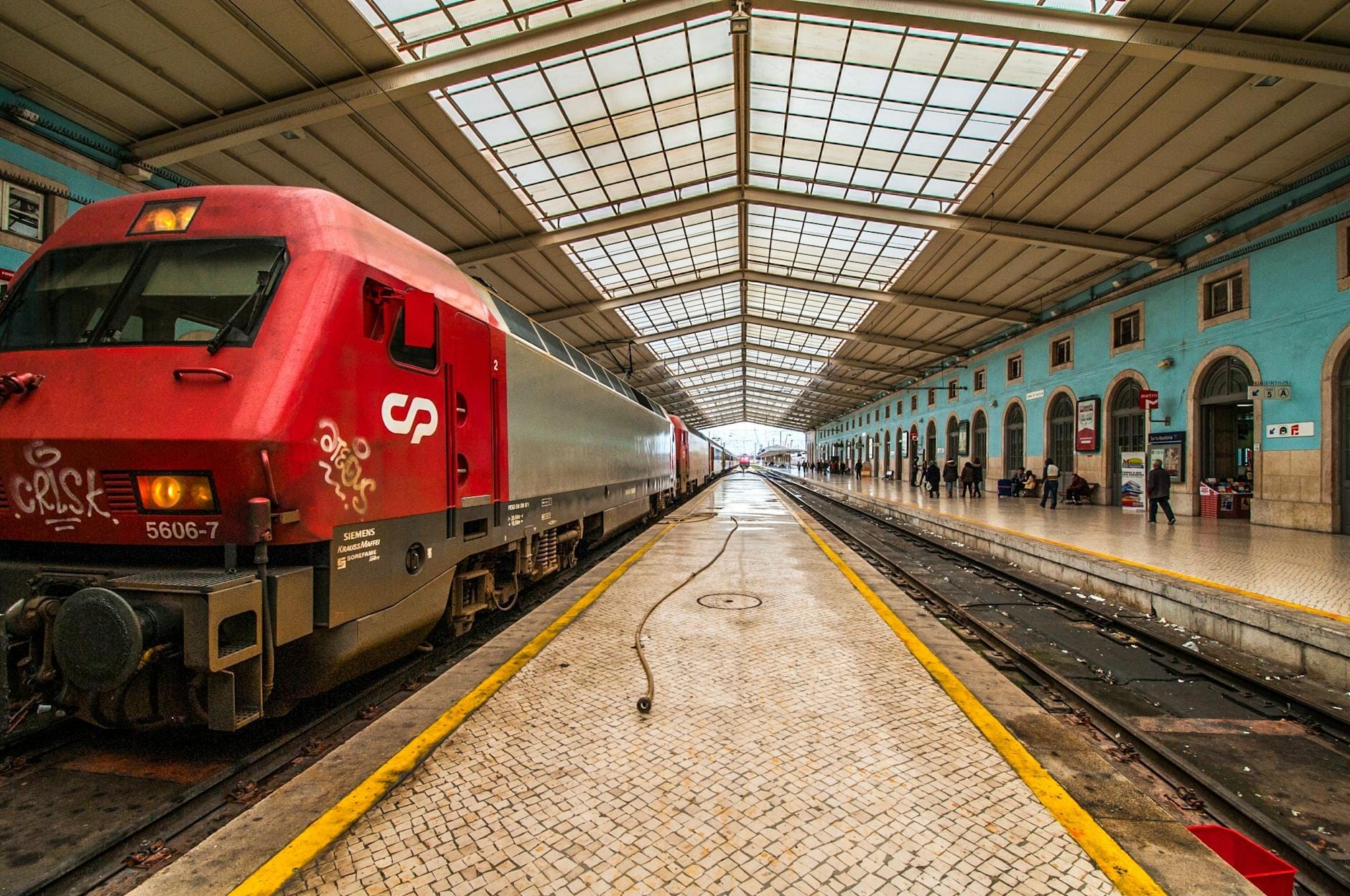
Let's be direct: the train from Lisbon to Seville is not a good option for most travelers. There is no direct service. The fastest multi-modal routes involve at least one transfer, often two or three, combining CP trains (Portuguese national rail) and RENFE services (Spanish rail). Total journey times range from around 10 hours on the better-connected routes to upward of 16 hours on slower combinations. The fastest routes take around 7 hours, but this requires a very specific combination of connections that does not operate as a regular daily service.
There are around 2 trains per day, typically departing in the early-to-mid afternoon from Lisbon Oriente or Santa Apolónia stations. The routing usually goes south to Faro or east toward Badajoz and into Spain. For rail enthusiasts or those without time pressure, it can be a scenic if exhausting experience. For everyone else, the bus or a flight is a better call. Book via Trainline or CP's website, and always double-check connection times at border stations.
ℹ️ Good to know
A planned high-speed rail link between Lisbon and Madrid (passing through Évora) has been in discussion for years and would eventually improve Lisbon-Seville connectivity via connecting services. As of 2026, this route is not operational. Do not plan around it.
Driving: The Best Way to See the Route

If you have flexibility, driving from Lisbon to Seville is genuinely the most rewarding option. There are two main routes, each with a distinct character, and both are excellent reasons to rent a car rather than flying.
The southern route runs through the Algarve via the A2 motorway and then east along the EN125 coastal road. It passes through the Alentejo's cork forests before dropping into the Algarve, where towns like Tavira make an ideal overnight stop. From Tavira, you cross into Spain at Vila Real de Santo António and follow the coast toward Huelva and then northeast to Seville. Total drive time without stops is around 4.5 hours. For more context on the landscapes you'll pass through, the Lisbon beaches guide covers the Atlantic coastline worth considering en route.
The inland route goes northeast through the Alentejo, passing Évora (a UNESCO World Heritage city and one of Portugal's most complete historic towns) before crossing into Spain via Badajoz. From Badajoz, the drive south to Seville takes roughly 90 minutes. This route adds about an hour to the total but rewards you with the Alentejo's rolling plains, white-walled villages, and the medieval walled town of Mértola. It's the better choice if you plan to spend a night in Portugal before crossing. Check our guide to day trips from Lisbon for more on Évora and Alentejo options that slot naturally into this route.
- Via Algarve (southern) A2 to Faro, then east to Tavira and the Spanish border at Vila Real de Santo António. Around 4.5 hours non-stop. Best if you want beaches along the way.
- Via Alentejo (inland) A6 east toward Évora, then north toward Elvas and Badajoz, south to Seville. Around 5-5.5 hours. Best for historic towns and rural landscapes.
- Toll costs Portuguese and Spanish motorways both charge tolls. Budget roughly €15-25 total in tolls depending on your route. Some Portuguese rental cars include Via Verde transponders; confirm before driving.
- Border crossing No passport control for EU/Schengen citizens. US, UK, and other nationalities should have passports accessible; spot checks do occur, particularly on the Badajoz crossing.
Organized Tours and Private Transfers

For travelers who want the door-to-door convenience of a car without the hassle of navigating alone, organized transfers and guided day trips are a viable option. Platforms like GetYourGuide list Lisbon-to-Seville one-way private transfers with optional stops in towns like Tavira or Huelva. These typically accommodate up to 6-8 passengers and cost significantly more than a bus (often €150-300+ per vehicle), but split among a group, the per-person cost can be competitive.
Guided road trip tours that treat the Lisbon-Seville corridor as a multi-day experience also exist, blending transport with curated stops. These are most popular in spring and autumn. If you are spending substantial time in Lisbon before departing, it is worth locking in your onward transport early. Our guide to a 4-day Lisbon itinerary can help you plan the Lisbon portion before you hit the road south.
✨ Pro tip
If you book a private transfer, always confirm whether the driver is licensed for international routes into Spain. Some local Lisbon transfer operators are not authorized to cross the border and will require a second vehicle on the Spanish side, adding cost and complexity.
Practical Considerations Before You Go
A few details that trip people up on this route: the time zone difference. Portugal observes Western European Time (UTC+0 in winter, UTC+1 in summer), while Spain is one hour ahead (Central European Time). When you cross from Portugal into Spain, your clock moves forward one hour. This matters if you have a tight connection or a hotel check-in to hit.
Both countries use the Euro, so no currency exchange is needed. The Spanish side of the Alentejo-Extremadura crossing is noticeably quieter in terms of services, so fill up on fuel and grab food on the Portuguese side if driving through rural areas. Seville itself is a large, walkable city with excellent public transport, so you do not need a car once you arrive. Factor in parking costs if driving into the city center, which can be significant. For broader context on getting around Lisbon before your trip, including how to reach the bus terminal or airport efficiently, see our dedicated transport guide.
- Book bus and flight tickets at least 2-3 weeks ahead in summer (June-August); prices jump sharply closer to departure.
- If driving, check whether your car rental allows cross-border travel into Spain. Some budget operators restrict this; confirm in writing.
- Seville in July and August is extremely hot (often 38-42°C). If you are making this trip in summer, early morning departures from Lisbon help you arrive before peak afternoon heat.
- Spanish SIM cards work in Portugal and vice versa within the EU roaming framework, so connectivity is not an issue.
- Keep your passport accessible at the border even if driving through, particularly on the Badajoz/Elvas crossing where checks are more frequent.
FAQ
Is there a direct train from Lisbon to Seville?
No. There is no direct train service between Lisbon and Seville. All rail journeys require at least one transfer, often two or three, and total journey times range from around 10 to 16 hours. The bus or a short flight are far more practical for this route.
How long does the bus from Lisbon to Seville take?
The bus typically takes 6-7 hours, operated by Rede Expressos and Flixbus. Fares start from around €19 one-way. Departures leave from Lisbon's Sete Rios bus terminal, which is connected to the Jardim Zoológico Metro station.
Is it worth driving from Lisbon to Seville?
Yes, especially if you have 2-3 days. The two main routes, via the Algarve coast (south) or through the Alentejo and Évora (inland), both offer excellent scenery and interesting stop-off towns. The drive itself takes around 4.5-5.5 hours non-stop. Just confirm your rental car is authorized for cross-border travel into Spain.
What is the cheapest way to get from Lisbon to Seville?
The bus is usually cheapest, with fares from around €19 on Flixbus or Rede Expressos when booked in advance. Budget flights on Ryanair can sometimes match or beat bus prices, especially outside peak season, but add airport transfer costs on both ends.
Do I need to change time zones when traveling from Lisbon to Seville?
Yes. Portugal is one hour behind Spain. When you cross the border, your clock moves forward one hour. Portugal observes Western European Time (UTC+0 in winter, UTC+1 in summer), while Spain operates on Central European Time, which is always one hour ahead of Portugal.
Tickets & tours
Live prices and dates from our booking partner. If you book, we may earn a commission at no extra cost to you.
Planning a trip? Discover personalized activities with the Nomado app.