4 Days in Lisbon: The Perfect Itinerary
Four days is enough time to move past the highlights and actually understand Lisbon: its layered history, neighbourhood contrasts, and the rhythm of daily life along the Tagus. This itinerary is built around logical geography, honest crowd realities, and the experiences that genuinely reward the effort.

Tickets & tours
Live prices and dates from our booking partner. If you book, we may earn a commission at no extra cost to you.
TL;DR
- Spend Days 1-2 in central Lisbon (Alfama, Baixa, Chiado, Bairro Alto) and Day 3 in Belém, saving Day 4 for a day trip to Sintra or Cascais.
- Spring (April-June) and early autumn (September-October) offer the best balance of weather and manageable crowds.
- Book São Jorge Castle and Jerónimos Monastery tickets online to skip queues, especially in summer.
- A 24-hour Carris/Metro pass (around €6.80) covers trams, buses, metro, and funiculars — far better value than paying per ride on Tram 28.
- The Gulbenkian Museum and several national museums are closed on Mondays — plan accordingly.
Before You Go: Logistics That Actually Matter
Lisbon (Lisboa in Portuguese) is a compact capital of 575,000 people spread across 85 km² of hills on the northern shore of the Tagus River. Most major sights are within 4-5 km of each other, which makes a 4-day Lisbon itinerary genuinely achievable without feeling rushed. That said, the hills are serious: cobblestone streets and steep gradients make sensible footwear non-negotiable.
From Lisbon Airport (LIS), the Metro Red Line runs directly to central stations like Alameda and Oriente in around 20 minutes, costing roughly €1.60 with a Viva Viagem card (€0.50 card fee extra). Taxis and Uber run €15-20 to the city centre, taking 15-25 minutes depending on traffic. The Aerobus is a middle-ground option at around €4, though it stops more frequently. Currency is the Euro, tap water is drinkable, and English is widely spoken in tourist areas.
💡 Local tip
Buy a rechargeable Viva Viagem card at any Metro station on arrival. Load a 24-hour zapping pass (around €6.80) to cover trams, funiculars, buses, and the Metro for the day. It is valid on Tram 28, the Gloria Funicular, and the Elevador de Santa Justa — saving you the individual ticket cost on each.
- Best months to visit April-June and September-October. Temperatures sit between 18-25°C, queues are shorter, and accommodation prices are lower than July-August.
- Avoid Mondays for museums The Gulbenkian Museum, National Tile Museum, and several others are closed on Mondays. Structure your itinerary around this.
- Book tickets in advance São Jorge Castle, Jerónimos Monastery, and the Belém Tower all sell out during summer. Book online at least 2-3 days ahead.
- Sintra train tickets The Sintra line runs from Roma-Areeiro or Rossio station, taking around 40 minutes and costing approximately €2.30 each way. No advance booking needed.
Day 1: Alfama, the Sé, and São Jorge Castle

Start in Lisbon's oldest and most atmospheric district, Alfama. This Moorish-era neighbourhood predates the catastrophic 1755 earthquake that flattened most of the city, which is why its narrow, winding streets feel so different from the rational grid of Baixa below. Walk uphill from the Sé Cathedral, which dates to 1136 and charges €4 for entry (€5 with the cloisters). It is not the most elaborate cathedral in Portugal, but it is the oldest in the country and worth 30-40 minutes.
From there, continue up to São Jorge Castle, the 11th-century Moorish fortress that crowns the hill. The castle itself is interesting, but the main draw is the view: on clear days you can see across the Tagus and over the terracotta rooftops all the way to the Cristo Rei statue. Budget 60-90 minutes. Pre-book tickets online (around €15 for adults) to avoid the queue, which can run 45 minutes in summer. Afterwards, descend toward the Miradouro das Portas do Sol and the Miradouro de Santa Luzia for two of the best river views in the city, both free.
For lunch, explore the small restaurants along Rua dos Bacalhoeiros or Rua de São João da Praça. These streets serve working locals alongside tourists and prices reflect it: a proper bacalhau (salt cod) dish with wine runs €12-18. Avoid the places with laminated photo menus facing the castle entrance — they are overpriced for what they deliver.
End the day with fado. Alfama is the spiritual home of Portugal's melancholic national music, and an evening performance here carries real weight. Genuine fado houses serve dinner while musicians perform — expect to spend €35-60 per person including food and a drink minimum. Read our guide to fado in Lisbon for venue recommendations and what to look for in an authentic performance.
Day 2: Baixa, Chiado, Bairro Alto, and the City's Creative Layer
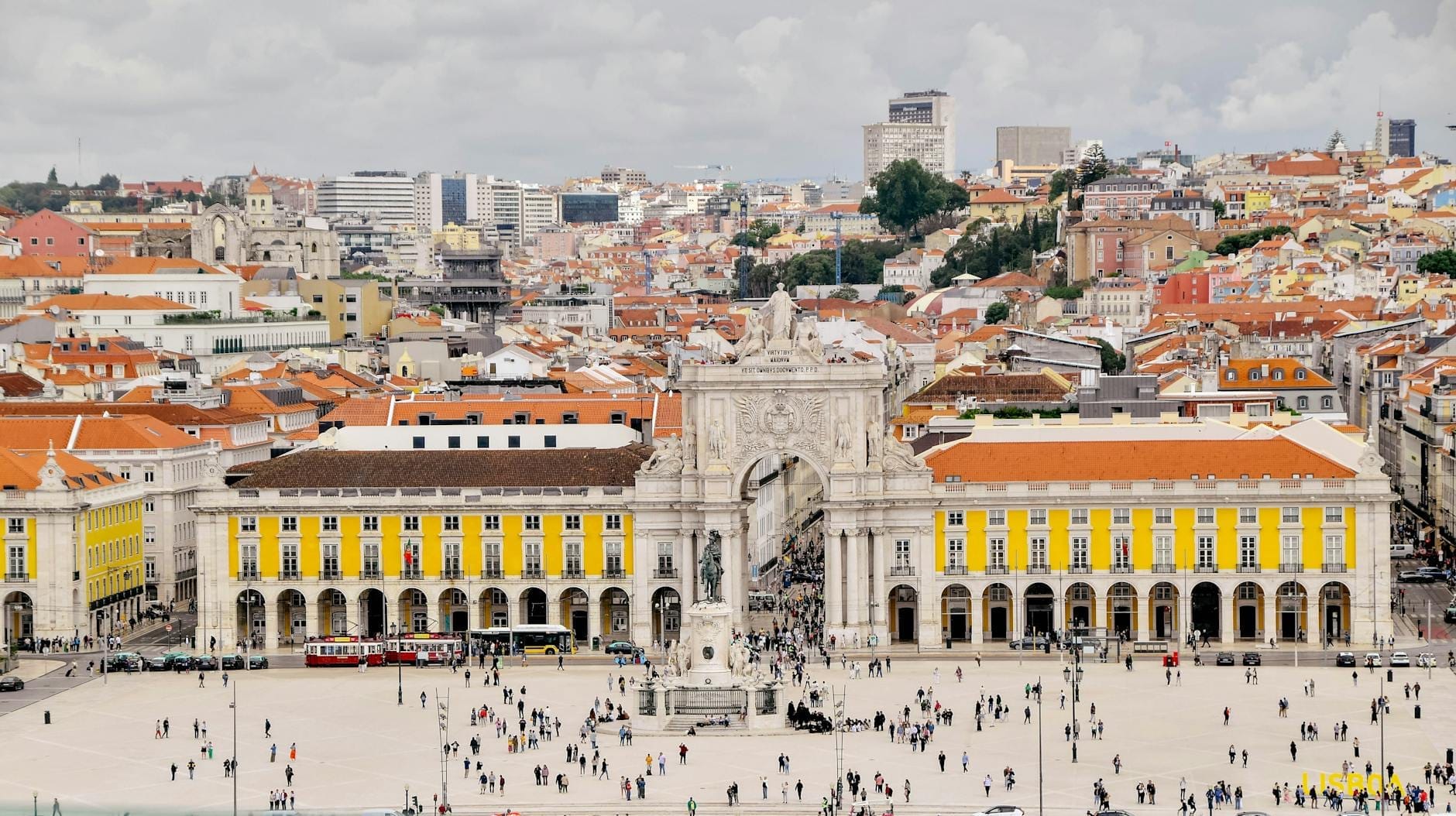
Day 2 moves through the city's lower and mid-level districts. Start at Rossio Square, Lisbon's main public square since the Middle Ages, then walk south to the Arco da Rua Augusta and down to Praça do Comércio on the waterfront. The arch's rooftop terrace costs around €3 and gives a decent elevated view down Rua Augusta without the castle's crowds.
The Elevador de Santa Justa is worth seeing but honestly not worth the queue for the ride itself. It is a 19th-century wrought-iron lift designed by a student of Gustave Eiffel, and it is beautiful to look at. The upper platform connects to a walkway near the ruined Carmo Convent, whose roofless Gothic nave was left deliberately ruined after the 1755 earthquake and now houses an archaeological museum. This is one of Lisbon's most quietly affecting spaces. Admission is around €5.
⚠️ What to skip
Tram 28 is genuinely packed between 9am and 6pm, especially in summer. Pickpockets operate on the route. Keep bags in front of you, avoid rear pockets, and consider walking the Alfama section of the route rather than riding — you will see more and stress less.
Spend the afternoon in Chiado, Lisbon's most elegant neighbourhood for browsing. The streets around Rua Garrett have independent bookshops, Portuguese ceramics stores, and design boutiques. For lunch or an early dinner, the Time Out Market in Cais do Sodré brings together around 40 of Lisbon's best chefs and restaurants under one roof. It is popular and can be loud, but the quality control is genuinely high and it is a good way to sample several Portuguese dishes without restaurant-hopping.
As evening arrives, walk uphill to Bairro Alto. This compact grid of streets transforms after 9pm into Lisbon's main nightlife area, with bars opening their doors onto narrow lanes. It is relaxed rather than intense — most places are small bars rather than clubs, and the mixing of locals and visitors is more balanced than in many European capitals. If you want to understand Lisbon's nightlife scene properly, this is where to start.
Day 3: Belém, UNESCO Heritage, and Portugal's Age of Discovery

Take Tram 15E or Bus 728 west from Praça do Comércio to Belém, about 6 km from the city centre. This riverfront district was the launching point for Portugal's Age of Discovery expeditions and its monuments reflect that ambition. Allow a full day here — there is more than most people expect.
The Jerónimos Monastery is the non-negotiable centrepiece. Built in the late 15th century in the Manueline style (a distinctly Portuguese form of late Gothic ornamentation), it is extraordinary up close — the south portal alone takes 20 minutes to absorb. Admission is around €10-15 for the cloisters, or free on Sunday mornings before 2pm. The Belém Tower (Torre de Belém) is a 10-minute walk west along the riverbank and costs around €6. It is smaller than most people expect from photographs, but the architecture is exceptional and the walkway around the base offers great river views.
Directly in front of the monastery, stop at Pastéis de Belém for pastel de nata. This is the original bakery that has been producing the custard tarts to a secret recipe since 1837. The queue moves fast and each tart costs around €1.20-1.50. Eat them warm, dusted with cinnamon and powdered sugar, at a table inside. Do not substitute with tarts from elsewhere in the neighbourhood — the difference is noticeable.
✨ Pro tip
The Museu Nacional de Arqueologia sits next door to the Jerónimos Monastery and shares the same building. If you have a strong interest in ancient Iberia — Bronze Age artefacts, Roman mosaics, Egyptian objects from Portugal's colonial collections — it is worth an hour and costs around €5. Most visitors walk past it entirely.
Round out the afternoon at the Padrão dos Descobrimentos (Monument to the Discoveries), a 1960s riverside monument featuring 33 figures from Portugal's maritime history. The lift to the top costs around €5 and offers a clean, unobstructed view of the Tagus and the Belém waterfront. Then head to LX Factory on your way back toward the centre — a repurposed 19th-century industrial complex with independent shops, restaurants, and a Sunday market that is one of Lisbon's most distinctive social spaces.
Day 4: Sintra, Cascais, or Going Deeper in Lisbon
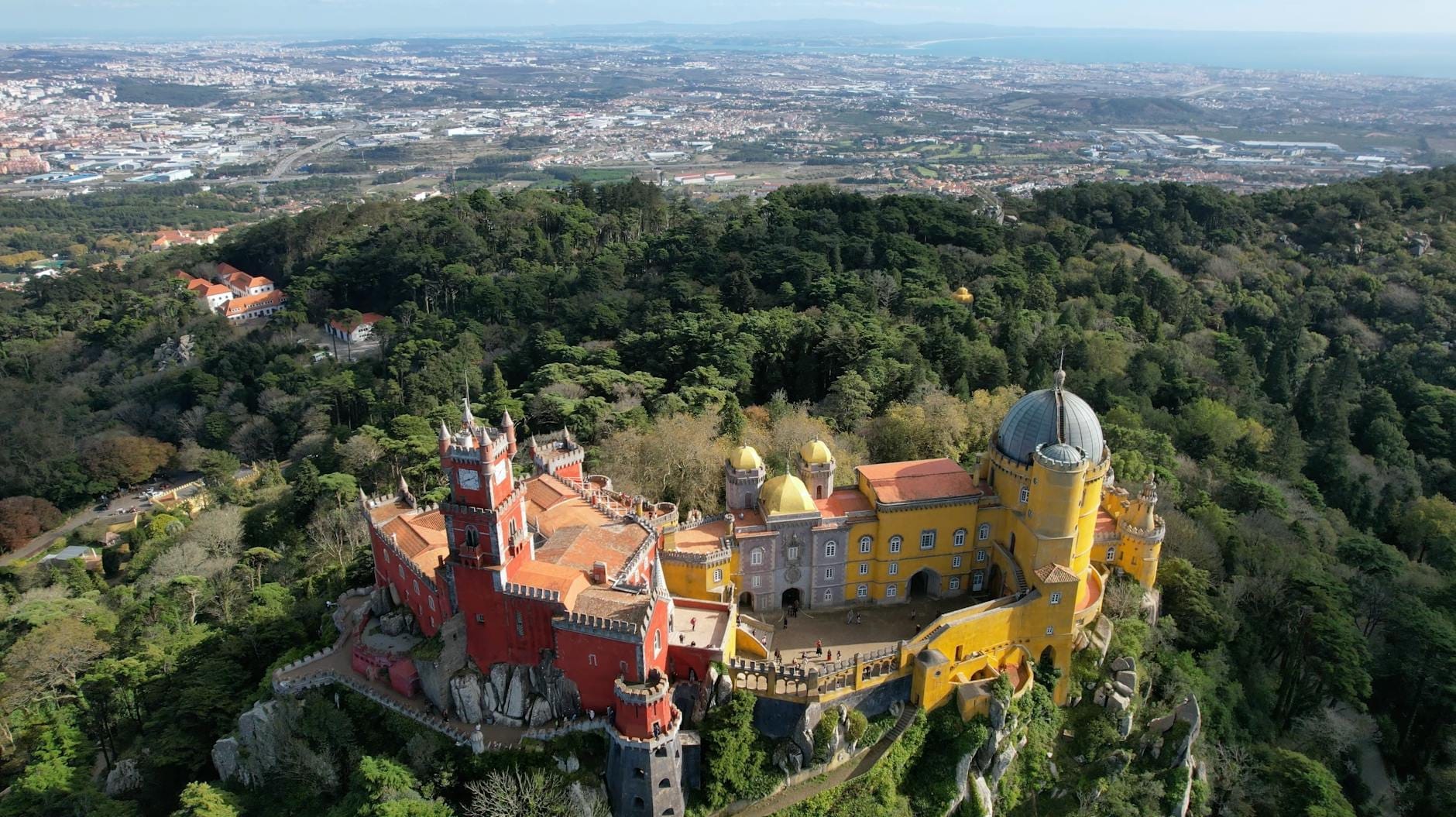
Your fourth day has three viable directions depending on your priorities. The most popular is a day trip to Sintra, a UNESCO World Heritage mountain village 30 km west of Lisbon. The train from Rossio Station takes around 40 minutes and costs approximately €2.30 each way. Sintra itself rewards an early start: the Quinta da Regaleira (a 19th-century estate with mystical architecture and underground tunnels) and the Palácio da Pena (a candy-coloured Romantic palace perched on a hilltop) both sell out by mid-morning in summer. Budget €8-15 per attraction.
Cascais is a calmer alternative — a coastal town 30 km west of Lisbon with a relaxed marina, good seafood restaurants, and easy beach access. The train from Cais do Sodré Station runs every 30 minutes and takes around 40 minutes (approximately €2.30 each way). This is a better choice if you want a slower pace or if the Sintra crowds feel unappealing. Neither option disappoints; the choice comes down to your energy level and what you have not yet covered.
If you would rather stay in Lisbon, Day 4 is the right time to visit the Gulbenkian Museum (closed Mondays), which holds one of Europe's most impressive private art collections: Egyptian antiquities, Islamic art, French decorative arts, and Impressionist paintings all in a well-designed garden complex in the north of the city. Alternatively, the National Tile Museum (Museu Nacional do Azulejo) gives essential context for the blue-and-white tilework you have been seeing all over the city since Day 1. Both charge around €5-10 and represent serious, unhurried museum experiences.
Eating, Drinking, and Spending: Honest Costs
Lisbon is no longer cheap by European standards, but it is still noticeably more affordable than Paris, Amsterdam, or Barcelona. A sit-down lunch at a proper local restaurant (not a tourist trap) runs €10-18 with wine. Dinner at a mid-range fado house costs €35-60 per person. The Lisbon food scene rewards people who wander away from the obvious streets — better restaurants tend to be one or two streets back from the main tourist flow.
- Coffee culture A bica (espresso) costs €0.70-1.20 at the bar, more if you sit down. Standing at the counter is the local way and significantly cheaper.
- Ginjinha Try a shot of ginjinha (cherry liqueur) at A Ginjinha on Largo de São Domingos — one of Lisbon's oldest bars, open since 1840, around €1.50 a shot.
- Wine House wine in local restaurants runs €2-5 a glass. Vinho verde (young white wine) is light, low-alcohol, and pairs well with seafood.
- Budget daily estimate €80-120 per person per day covers accommodation in a mid-range hotel, meals, transport, and one or two paid attractions.
ℹ️ Good to know
Tipping is not obligatory in Portugal but appreciated. Five to ten percent is standard in restaurants if no service charge is included. Check the bill: some tourist-facing restaurants add a couvert (bread, olives, butter) charge automatically — you can decline it or ask for it to be removed.
FAQ
Is 4 days enough for Lisbon?
Four days gives you solid coverage of the major neighbourhoods and sites without feeling like you are racing. You can do Alfama and the castle, Chiado and Bairro Alto, a full day in Belém, and still fit in a day trip to Sintra or Cascais. For most travellers, it is the ideal length — long enough to get a real feel for the city, short enough that you leave wanting to return.
What is the best area to stay in Lisbon for a 4-day trip?
Baixa-Chiado is the most central option and puts you within walking distance of both Alfama (east) and Bairro Alto (west). Alfama is atmospheric but hilly and less convenient for getting around. Príncipe Real, just north of Chiado, is a quieter residential area with good restaurants and easy access to everything. Avoid Parque das Nações unless you are attending an event — it is too far east for a compact city itinerary.
Should I book Lisbon attractions in advance?
For summer visits (June-August), yes — book São Jorge Castle, Jerónimos Monastery, Belém Tower, and Quinta da Regaleira at least 2-3 days ahead. In spring or autumn, you can often buy on the day, but morning visits to popular sites are always advisable. The Gulbenkian Museum rarely requires advance booking.
Is Lisbon walkable or do I need public transport?
Lisbon is walkable between many of its major sights, but the hills are significant. Trams, the Metro, buses, and funiculars all help. A 24-hour Carris/Metro pass (around €6.80) covers all public transport and is worth buying on days when you plan to move between multiple neighbourhoods. For Belém, take Tram 15E or Bus 728 rather than walking the 6 km from the centre.
What is the best day trip from Lisbon on a 4-day trip?
Sintra is the most rewarding day trip for first-time visitors — the palaces, gardens, and mountain setting are genuinely unlike anywhere else in Europe. Cascais suits people who want a slower coastal day. Both are reachable by train in under 45 minutes for about €2.30 each way. If you have already visited Sintra, Setúbal or Óbidos make excellent alternatives.
Tickets & tours
Live prices and dates from our booking partner. If you book, we may earn a commission at no extra cost to you.
Planning a trip? Discover personalized activities with the Nomado app.