Belém Tower (Torre de Belém): Lisbon's Most Iconic Riverside Monument
Rising from the northern bank of the Tagus River, the Torre de Belém is a 16th-century fortress that once guarded Lisbon's harbor and marked the departure point for Portugal's Age of Discovery voyages. A UNESCO World Heritage Site, it remains the most photographed monument in Portugal, combining Manueline architectural splendor with genuine historical weight.
Quick Facts
- Location
- Av. Brasília, 1400-038 Lisboa, Belém district
- Getting There
- Tram 15 to Belém, or train to Belém station, or bus 728/714/727
- Time Needed
- 1–2 hours including exterior and riverside walk
- Cost
- Temporarily closed; regular adult admission listed at €15 when open
- Best for
- History enthusiasts, architecture lovers, photography, Belém day trips
- Official website
- www.museusemonumentos.pt
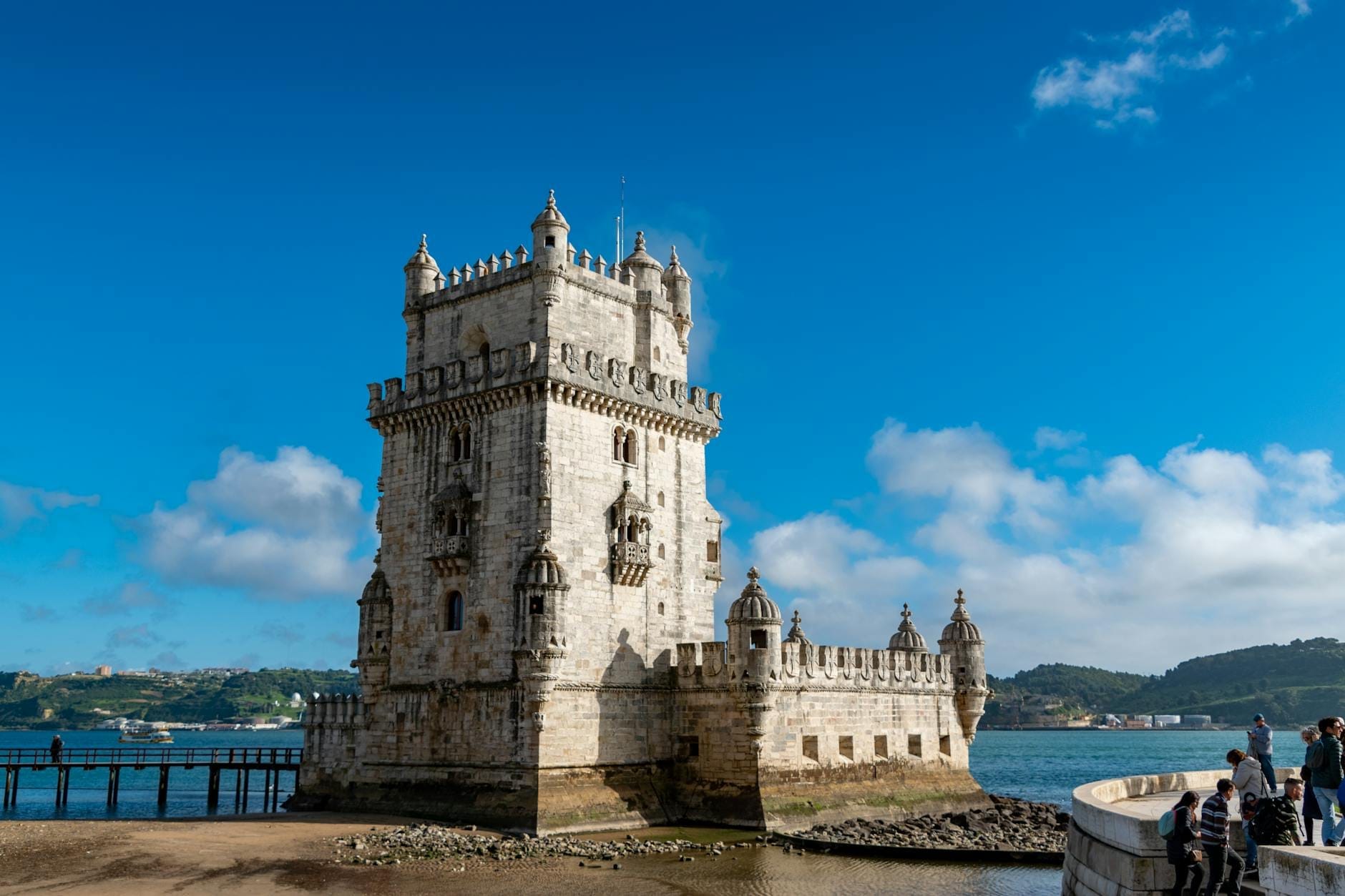
What Is the Torre de Belém?
The Torre de Belém, formally known as the Tower of Saint Vincent (Torre de São Vicente), is a fortified tower and UNESCO World Heritage Site built between 1514 and 1520 on the northern bank of the Tagus River (Rio Tejo) in the Belém district of Lisbon. Commissioned by King Manuel I and attributed to the military architect Francisco de Arruda, it was designed to protect the harbor entrance and ceremonially mark the gateway to Lisbon for ships returning from the Indies, Africa, and the Americas.
When construction was completed, the tower stood approximately 180 meters from the riverbank, surrounded by water on most sides. Centuries of river sedimentation have since attached it more firmly to the shore, which changes how visitors experience it today: you now approach via a short walkway rather than by boat. The original positioning, however, tells you everything about its purpose. This was a structure meant to be seen from the water, and it still reads best from that perspective.
⚠️ What to skip
The Torre de Belém is temporarily closed for conservation works. Before making it a centerpiece of your itinerary, confirm current status at museusemonumentos.pt or via Visit Lisboa.
The Architecture: Manueline Stone in Detail
The tower is considered one of the finest surviving examples of Manueline architecture, the distinctly Portuguese late-Gothic style that flourished during the reign of Manuel I (1495–1521). Manueline ornamentation draws heavily from maritime symbolism: twisted ropes carved in limestone, armillary spheres (the personal emblem of Manuel I), coral motifs, and crosses of the Order of Christ cover almost every surface. Running your eyes across the facade feels more like reading a stone inventory of the Age of Discovery than admiring conventional Gothic tracery.
The structure consists of two main elements: a lower polygonal bastion with a terrace and sixteen gun emplacements, and a five-story tower rising above it. The tower floors, from base to top, are traditionally named the Governor's Room, the King's Hall (or Audience Hall), a third hall, and the terrace level. Each floor narrows as you climb, connected by a tight spiral staircase that forces single-file movement and demands some agility. Loggia balconies with Venetian-style arched colonnettes project from three sides of the tower, a design element unusual for Portuguese military architecture and possibly influenced by Italian Renaissance contacts.
One detail most visitors miss: look for the stone rhinoceros head carved beneath the northwest turret of the bastion. It is believed to reference the famous Indian rhinoceros gifted to Manuel I in 1515, the same year construction began, which later inspired Albrecht Dürer's well-known woodcut. The carving is a small but concrete connection between the monument and the global trade networks Portugal was opening at the time.
Tickets & tours
Live prices and dates from our booking partner. If you book, we may earn a commission at no extra cost to you.
The History Behind the Stone
Belém in the early 16th century was not yet part of the city of Lisbon; it was a riverside parish several kilometers west of the urban center, chosen specifically because it sat at the mouth of the Tagus where the river meets the Atlantic. Ships leaving for Vasco da Gama's route to India, for Brazil, for West Africa, all passed this point. The tower functioned simultaneously as a fortress, a checkpoint, a lighthouse, and, less pleasantly, a political prison during the later centuries of its use.
UNESCO inscribed it as a World Heritage Site in 1983, jointly with the nearby Jerónimos Monastery, recognizing both as monuments to the Age of Discovery that permanently altered world history. The two sites sit roughly 500 meters apart along the Belém waterfront and are almost always visited together.
For context on Portugal's broader Age of Discovery legacy, the Padrão dos Descobrimentos monument stands nearby and commemorates the explorers themselves, offering a useful narrative companion to the tower's more military character.
What the Visit Actually Feels Like
Approaching from the riverside promenade, the tower first appears at a slight distance, framed by the wide Tagus and often backlit by morning light. The limestone exterior shifts color through the day: a pale cream in flat midday sun, warmer and more golden in late afternoon, sometimes almost orange at dusk. Photographically, the hour before sunset produces the most flattering light on the western and southern facades.
The exterior walkway and surrounding terrace are worth time even without entering the tower itself. From the bastion level, looking west toward the river mouth, you get a clear line of sight toward the Atlantic and a sense of why Manuel I positioned the tower exactly here. The sound environment on busy days is a combination of river wind, gull noise, and the general hum of tour groups; early mornings are considerably quieter, with the light gentler and the crowds thin enough to actually stop and look.
Inside, be prepared for the staircase. The spiral is genuinely narrow, worn smooth by centuries of use, and lit artificially for most of its length. People traveling with mobility difficulties, young children in carriers, or anyone uncomfortable with confined vertical spaces should be aware of this before committing to the full interior experience. The views from the upper terraces are real and worth it for those who can manage the climb, but the architectural details of the exterior are arguably the more impressive reward.
💡 Local tip
Arrive before 10am if possible. Queue times grow significantly from mid-morning onward, particularly between June and September. The Lisboa Card includes admission and can also spare you the ticket queue.
The Belém Waterfront: How the Tower Fits Into the Area
The Torre de Belém sits at the western end of a roughly 2-kilometer waterfront stretch that represents the most concentrated assembly of monumental architecture in Portugal. Walking east from the tower, you pass the Padrão dos Descobrimentos, then reach the Jerónimos Monastery, one of the largest Gothic churches on the Iberian Peninsula and built from the same Manueline tradition as the tower. This walk takes 20–30 minutes at a relaxed pace and covers essentially the full scope of Belém's UNESCO heritage zone.
The Pastéis de Belém bakery, the original source of Lisbon's signature custard tarts (pastéis de nata), is a few minutes' walk from the monastery and is worth the queue. Combining the tower, the monastery, the monuments, and a stop at the bakery constitutes a coherent half-day program without any need to rush.
If you want to understand the waterfront's wider context, the Belém neighborhood guide lays out the full area including the MAAT museum, the Berardo Collection, and the Coach Museum, all within walking distance.
Getting There and Practical Details
From central Lisbon, tram 15E runs from Praça da Figueira and Praça do Comércio directly to Belém and is the most straightforward option. The journey takes around 25–30 minutes. The suburban train from Cais do Sodré station also stops at Belém station in approximately 15 minutes and runs frequently throughout the day. Buses 728, 714, and 727 also serve the area. Driving is possible but parking near the waterfront fills quickly in summer and on weekends.
The tower sits right at the river's edge on Avenida Brasília. Once you reach Belém, it is visible from the waterfront promenade and there is no real risk of missing it. Allow roughly 1 to 2 hours for the full experience, including exterior photography and the interior climb, though the tower itself can be done in under an hour if the queue is short.
ℹ️ Good to know
The Lisboa Card covers admission to the Torre de Belém and is valid for 24, 48, or 72 hours. It also includes unlimited public transport, which makes the tram or train ride to Belém part of the same value. If you plan to visit multiple monuments, it is usually worth the cost.
Accessibility is limited. The spiral staircases inside the tower are narrow and steep, and there is no lift. The exterior terrace and surrounding riverside walkway are accessible at ground level, but the interior floors are not suitable for visitors with limited mobility. This is an inherent constraint of a 500-year-old fortified tower, not a recent oversight.
Weather, Seasons, and When to Visit
Lisbon's Mediterranean climate means the tower can be visited year-round, but the experience varies considerably. Summer (June to August) brings the largest crowds and queues, sometimes stretching 45 minutes or more to enter. The heat on the open bastion terrace can be intense by midday without shade. Autumn (September to October) offers reduced crowds, mild temperatures, and excellent light. Spring visits, especially May, combine pleasant weather with manageable queue lengths. Winter visits are rarely unpleasant given Lisbon's mild temperatures (12–16°C), but the river wind at the tower's edge can feel sharp on overcast days. For a broader picture of when to time your trip, the best time to visit Lisbon guide covers seasonal trade-offs in detail.
Insider Tips
- Look for the rhinoceros carving beneath the northwest turret of the bastion before entering. Most visitors walk straight past it, but it is one of the most historically specific details on the entire exterior.
- The best photography position is not immediately in front of the entrance but from the western end of the riverside promenade, where you get the full profile of the tower with river in the foreground. A wide-angle lens or smartphone panorama works well here.
- If the queue to enter is long and your priority is visual experience rather than interior access, consider spending your time walking the full exterior perimeter. The carved stone details are most concentrated on the tower's river-facing (south and west) facades.
- Combine the tower with the Jerónimos Monastery in the same morning: both involve queues but open at similar hours, and covering them consecutively in the cooler morning is more comfortable than returning in afternoon heat.
- The Lisboa Card can be purchased at the airport on arrival, at metro station machines, or at tourist information points. Buying it before reaching the tower saves time at the ticket window.
Who Is Belém Tower For?
- History enthusiasts interested in Portugal's Age of Discovery and 16th-century military architecture
- Architecture lovers who appreciate detailed stone carving and Manueline Gothic style
- Photographers seeking Lisbon's most iconic riverside shot, especially in early morning or late afternoon light
- First-time visitors to Lisbon doing the full Belém cultural circuit in a single half-day
- Travelers using the Lisboa Card who want to maximize monument visits across the city
Nearby Attractions
Other things to see while in Belém:
- Ajuda National Palace
The Palácio Nacional da Ajuda is Lisbon's only neoclassical royal palace, preserving the private apartments of Portugal's last monarchs almost exactly as they left them in 1910. Less visited than Belém's waterfront monuments, it rewards those who make the short uphill detour with room after room of gilded excess, personal royal objects, and the newly opened Royal Treasury Museum.
- National Coach Museum
The Museu Nacional dos Coches in Belém holds one of the world's greatest collections of royal coaches and carriages, spanning four centuries of craftsmanship. With over 70 vehicles displayed across two architecturally striking buildings, it rewards both history enthusiasts and casual visitors who simply want to see something extraordinary.
- Jerónimos Monastery
The Mosteiro dos Jerónimos in Belém is the most ambitious architectural achievement of Portugal's Age of Discovery. Built on royal orders in 1501 and carved from honey-colored limestone, its cloister and church represent the high point of Manueline style, blending Gothic structure with maritime imagery in stone. This is where Vasco da Gama is entombed, and where Portugal chose to bury its poets alongside its explorers.
- MAAT – Museum of Art, Architecture and Technology
MAAT brings together a century-old power station and a wave-shaped contemporary gallery on the banks of the Tagus. The building itself competes with the art inside, and the rooftop offers one of the better river panoramas in Belém without the usual queues.
Planning a trip? Discover personalized activities with the Nomado app.