Ajuda National Palace: Lisbon's Forgotten Royal Residence
The Palácio Nacional da Ajuda is Lisbon's only neoclassical royal palace, preserving the private apartments of Portugal's last monarchs almost exactly as they left them in 1910. Less visited than Belém's waterfront monuments, it rewards those who make the short uphill detour with room after room of gilded excess, personal royal objects, and the newly opened Royal Treasury Museum.
Quick Facts
- Location
- Largo da Ajuda, 1349-021 Lisbon (Ajuda/Belém hill)
- Getting There
- Bus 760 to Calçada da Ajuda; 15-min walk uphill from Belém tram stop
- Time Needed
- 1.5 to 2.5 hours
- Cost
- Check official website — admission applies; no general free entry (verify before visiting)
- Best for
- History lovers, architecture enthusiasts, royal interiors, photography
- Official website
- www.palacioajuda.gov.pt
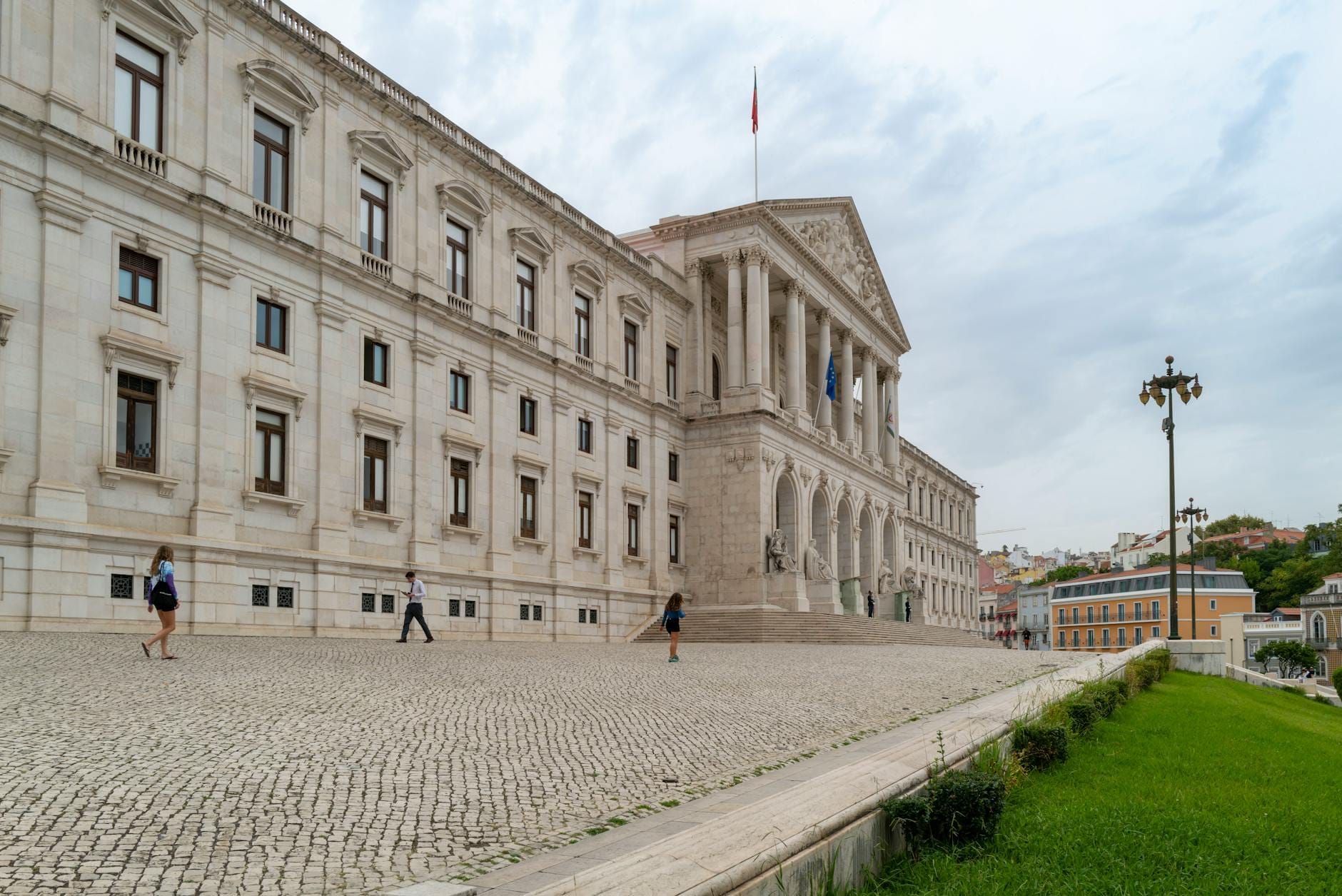
What Is the Ajuda National Palace?
The Palácio Nacional da Ajuda is a neoclassical palace built on the hills above Belém during the first half of the 19th century. It was conceived as a replacement for the wooden royal quarters that had stood on this ridge since the royal family fled the 1755 earthquake, but the project was never fully completed. The west wing remains unbuilt, which is why the building looks, from certain angles, strangely truncated: a palace that stopped mid-sentence. That incompleteness is part of its story.
From the reign of King Luís I in 1861 until the proclamation of the Portuguese Republic in 1910, Ajuda served as the official royal residence. The royal family left in a hurry, and their belongings largely stayed behind. The palace was closed for decades before reopening as a museum in 1968. Today it functions as one of the most intact 19th-century royal interiors in Europe, its state rooms frozen in a peculiar combination of deliberate preservation and interrupted ambition.
ℹ️ Good to know
The palace is open Tuesday–Sunday, 10am–6pm (closed Mondays). The Royal Treasury Museum in the completed west-wing spaces opened in 2022 and requires a separate visit plan — allow extra time if you want to cover both.
The Interior: Room by Room
Walking into Ajuda after the crowds of the waterfront monuments is a genuine shift in pace. The ceremonial rooms on the piano nobile unfold in a sequence of escalating grandeur: the Throne Room with its crimson canopy and mirrored walls, the Blue Room with its Sèvres porcelain pieces, the dining rooms set as if a formal banquet is expected tonight. The scale is regal without being overwhelming. Unlike Versailles or Sintra's Pena Palace, there are no rivers of tourists breaking the spell.
The private apartments of King Luís I and Queen Maria Pia di Savoia are among the most interesting spaces. These are not formal state rooms but lived-in spaces: the queen's bedroom retains its original Parisian furniture, personal writing desk, and devotional objects. You can read the taste of a specific person in this room, which is rarer than it sounds in royal palaces, where generic magnificence tends to erase individual character.
The Royal Treasury Museum, completed in 2022 and occupying newly restored spaces, presents objects from the Portuguese royal house's collections: silverware, jewels, decorative arts, and gifts received from other European courts. The curation is methodical rather than spectacular, but individual pieces reward close attention. A glass case of royal table silver, for example, reads like a map of 19th-century European diplomatic relationships.
Photography is permitted in most areas without flash, which makes Ajuda genuinely rewarding for interior photography. The light in late morning, when sun enters the east-facing rooms, is noticeably better than the flat afternoon light. For context on how this palace fits into Lisbon's larger royal and architectural heritage, the Jerónimos Monastery and the Coach Museum are both within easy walking distance downhill in Belém.
Tickets & tours
Live prices and dates from our booking partner. If you book, we may earn a commission at no extra cost to you.
How the Experience Changes by Time of Day
Arriving at opening time (10am) gives you the state rooms almost to yourself. The palace does not draw the same volume of visitors as Belém Tower or the Monastery, so even midday is rarely crowded, but the morning hours are noticeably quieter. The light in the throne room and the dining halls is strongest between 10am and noon, catching the gilt surfaces at an angle that afternoon light flattens.
Midday brings a modest increase in group tours, usually school or senior groups. By 3pm the palace quiets again. Late afternoon before closing is atmospheric but some rooms may feel underlit. On weekends, the entrance plaza sees more families, though Ajuda never reaches the pressure-cooker density of Belém's riverside monuments, even in peak summer.
💡 Local tip
Tuesday and Thursday mornings tend to be the quietest times. If you're visiting in summer and want to avoid heat, note that the palace interior stays cool: thick neoclassical stone walls and high ceilings make it one of the more comfortable places to spend a July afternoon in Lisbon.
Getting There: The Uphill Reality
This is where honesty is necessary. Ajuda sits on a ridge above Belém, and getting there from the waterfront involves a genuine uphill walk of around 15 minutes on Calçada da Ajuda, a steep cobbled street. For most visitors arriving from the Belém tram stop or the Jerónimos Monastery, this climb is manageable but worth knowing about in advance. Comfortable footwear is not optional.
The more practical option for those who prefer not to climb is Bus 732 or 760 from central Lisbon or from Belém itself, both of which stop close to the palace. Taxis and ride-hailing apps (Uber and Bolt both operate in Lisbon) will drop you at Largo da Ajuda directly. Parking is available nearby at Largo da Torre, a 2-minute walk from the entrance. If you are combining Ajuda with a full Belém day, plan to visit the palace first while your energy is high, then walk downhill to the waterfront attractions.
Belém is one of Lisbon's most rewarding half-day districts, and the Belém neighborhood guide covers how to sequence the area's main attractions efficiently.
Historical Context: The Palace That Was Never Finished
The site's royal history predates the current building by centuries. After the catastrophic 1755 earthquake destroyed much of Lisbon, King José I moved the royal court to the Ajuda hillside in wooden structures that became, over time, a permanent if improvised residence. The neoclassical stone palace now standing was begun in the early 19th century, intended to give the Braganza royal house a proper permanent home in the capital. The project dragged across decades, changing architects and patrons, and the planned west wing was never built.
The palace's most coherent period was the reign of Luís I (1861-1889) and his Italian-born queen, Maria Pia di Savoia. They decorated the interiors in the eclectic taste of the late 19th century: French furniture, German crystal, Portuguese tile work, and gifts from allied European royal houses. When the Republic was proclaimed in October 1910, the royal family departed for exile and the palace entered a long administrative limbo, eventually opening to the public as a museum in 1968.
The 2022 completion of the Royal Treasury Museum represented the most significant development at Ajuda in decades, finally activating spaces that had been closed or underused since the 19th century. The palace is now a functioning cultural institution managed under Portugal's national heritage authority, rather than simply a preserved period interior.
Is Ajuda Worth Your Time?
Straightforward answer: yes, for the right visitor. If you have already seen Belém's obvious highlights and want something with more depth and fewer crowds, Ajuda delivers. The interiors are genuinely impressive, the collections are significant, and the experience of walking through spaces that have not been aggressively modernized or over-narrated for mass tourism is increasingly rare.
If, on the other hand, you have limited time in Lisbon and are choosing between Ajuda and the Jerónimos Monastery or Sintra, the monastery wins on architectural spectacle and Sintra wins on overall experience. Ajuda occupies a different register: it is quieter, more personal, and more historically specific. It is not a building that overwhelms you immediately. It rewards attention.
Travelers short on time in Lisbon might also consult a 2-day Lisbon itinerary to judge how Ajuda fits their overall schedule. Those with more time will find it a natural addition to a 4-day Lisbon itinerary that already covers the waterfront monuments.
⚠️ What to skip
The palace is closed on Wednesdays. Double-check current opening hours and ticket prices at the official website before visiting, as these have changed in recent years and vary for specific collection areas including the Royal Treasury Museum.
Insider Tips
- Start in the private royal apartments rather than the ceremonial rooms. Most visitors do the reverse and end up rushing through the more intimate spaces when their attention is fading.
- The palace exterior, particularly the main facade facing Largo da Ajuda, reads best in morning light and makes for a cleaner photograph than most Lisbon palaces, which are hemmed in by streets. The open square gives you genuine distance.
- Combine the visit with the nearby Jardim Botânico da Ajuda, one of Lisbon's oldest botanical gardens, which is a 5-minute walk from the palace and charges a small separate admission. It is rarely mentioned in mainstream guides.
- If you are visiting in summer, the palace's thick stone walls keep the interior genuinely cool. This makes it one of the better midday options when exterior sightseeing becomes uncomfortable.
- Audio guides are available and worth taking at Ajuda, where explanatory text panels are sparser than at more heavily promoted museums. Without context, some rooms risk feeling like furniture warehouses.
Who Is Ajuda National Palace For?
- History and royal heritage enthusiasts who want depth over spectacle
- Architecture lovers interested in neoclassical design and 19th-century decorative arts
- Photographers seeking gilded interiors without crowds
- Return visitors to Lisbon who have already covered the main waterfront monuments
- Travelers seeking cooler, indoor options during Lisbon's hot summer afternoons
Nearby Attractions
Other things to see while in Belém:
- Belém Tower
Rising from the northern bank of the Tagus River, the Torre de Belém is a 16th-century fortress that once guarded Lisbon's harbor and marked the departure point for Portugal's Age of Discovery voyages. A UNESCO World Heritage Site, it remains the most photographed monument in Portugal, combining Manueline architectural splendor with genuine historical weight.
- National Coach Museum
The Museu Nacional dos Coches in Belém holds one of the world's greatest collections of royal coaches and carriages, spanning four centuries of craftsmanship. With over 70 vehicles displayed across two architecturally striking buildings, it rewards both history enthusiasts and casual visitors who simply want to see something extraordinary.
- Jerónimos Monastery
The Mosteiro dos Jerónimos in Belém is the most ambitious architectural achievement of Portugal's Age of Discovery. Built on royal orders in 1501 and carved from honey-colored limestone, its cloister and church represent the high point of Manueline style, blending Gothic structure with maritime imagery in stone. This is where Vasco da Gama is entombed, and where Portugal chose to bury its poets alongside its explorers.
- MAAT – Museum of Art, Architecture and Technology
MAAT brings together a century-old power station and a wave-shaped contemporary gallery on the banks of the Tagus. The building itself competes with the art inside, and the rooftop offers one of the better river panoramas in Belém without the usual queues.
Planning a trip? Discover personalized activities with the Nomado app.