Jerónimos Monastery: Lisbon's Greatest Stone Monument
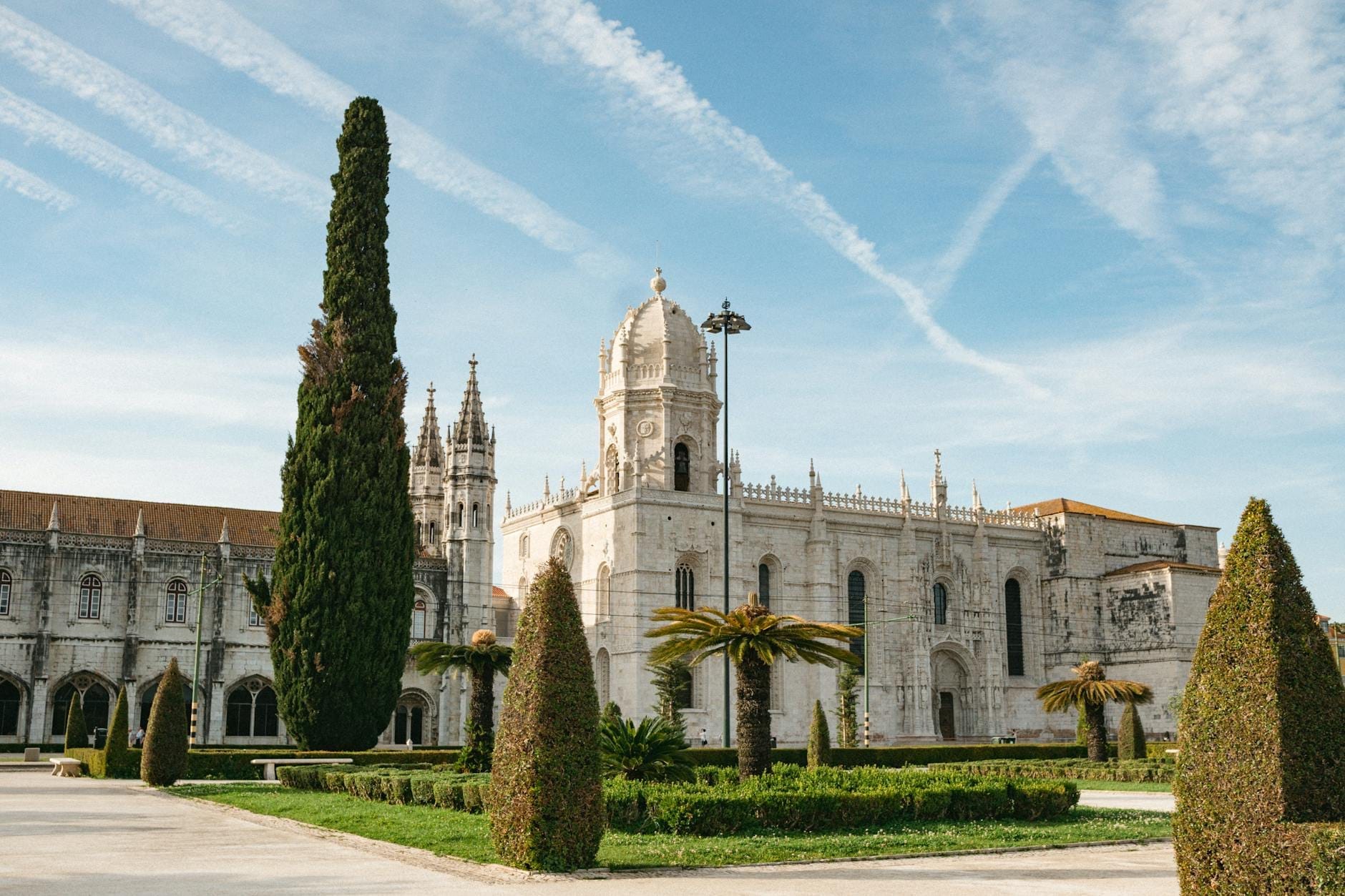
The Mosteiro dos Jerónimos in Belém is the most ambitious architectural achievement of Portugal's Age of Discovery. Built on royal orders in 1501 and carved from honey-colored limestone, its cloister and church represent the high point of Manueline style, blending Gothic structure with maritime imagery in stone. This is where Vasco da Gama is entombed, and where Portugal chose to bury its poets alongside its explorers.
Quick Facts
- Location
- Praça do Império, Belém, Lisbon
- Getting There
- Tram 15E from Cais do Sodré; Bus 728; Train to Belém station (15-min walk)
- Time Needed
- 1.5 to 2.5 hours
- Cost
- Church free; Cloister paid entry — check official site for current prices. Combination tickets available with Belém Tower.
- Best for
- History enthusiasts, architecture lovers, first-time Lisbon visitors
What Is the Jerónimos Monastery?
The Mosteiro dos Jerónimos is a 16th-century monastery complex on the northern bank of the Tagus River in Belém, approximately 6 kilometers west of Lisbon's historic center. Construction began in 1501 on the orders of King Manuel I, built on the site where Vasco da Gama and his crew reportedly spent their last night in prayer before departing for India in 1497. The monastery was funded by a 5% tax on the spice trade with Africa and Asia, which means the stone itself was paid for by the profits of exploration.
It took most of the 16th century to complete. The church of Santa Maria de Belém was finished around 1541, while the cloister evolved through multiple architects and phases. The result is one of the finest expressions of Manueline architecture in existence — Portugal's singular contribution to the vocabulary of European Gothic, defined by elaborate stone carvings of ropes, coral, armillary spheres, and maritime symbols that cover nearly every surface without ever becoming chaotic.
The monastery received UNESCO World Heritage status in 1983, jointly with the nearby Belém Tower. It was declared a National Monument in 1907. Today it houses two museums: the National Archaeology Museum and the Naval Museum occupy adjoining wings, though the monastery's primary draw remains the church and cloister themselves.
💡 Local tip
The church (Igreja de Santa Maria de Belém) is free to enter during visiting hours. Save your paid admission for the cloister, which is where the most spectacular architecture is concentrated. Arrive before 10am to walk the cloister corridors without shoulder-to-shoulder crowds.
The Architecture: What Manueline Actually Means
Manueline style is a term coined in the 19th century to describe the ornate Late Gothic architecture that flourished in Portugal between roughly 1490 and 1540, during the reign of Manuel I. It is not a separate structural system but rather an extreme decorative approach applied to Gothic forms. The distinguishing feature is the integration of maritime and natural motifs into stone — twisted ropes, coral branches, sea creatures, armillary spheres (the astronomical instrument that became Manuel I's personal emblem), and the Cross of the Order of Christ.
At Jerónimos, the south portal is the most photographed single element: a vertical cascade of carved figures, canopies, and decorative columns roughly 32 meters tall, created by sculptor João de Castilho in the 1510s. The figures include Henry the Navigator and Manuel I in positions of devotion. Up close, the detail is extraordinary — individual feathers on angels, faces in expressions of concentration, vine tendrils that seem to grow organically from the stone.
The interior of the church surprises visitors expecting the darkness of a Gothic cathedral. The nave is wide and luminous, supported by six slender octagonal columns that branch at the ceiling into intricate palm-like vaults. The stone is a warm cream-yellow limestone from the Sintra region, and in late afternoon light, it takes on an almost amber tone. The proportions feel generous rather than soaring — more human-scaled than the great French or German Gothic cathedrals, which suits the intimate weight of what the space contains.
Tickets & tours
Live prices and dates from our booking partner. If you book, we may earn a commission at no extra cost to you.
The Tombs: Who Is Buried Here
The church holds two tomb pairs that define the Portuguese historical imagination. At the entrance, flanking the nave, are the tombs of Vasco da Gama and Luís de Camões. Da Gama, who led the first European naval expedition to reach India in 1498, died in Cochin (present-day Kochi, India) in 1524. His remains were returned to Portugal and ultimately placed here in 1880. Camões, the 16th-century poet whose epic Os Lusíadas immortalized the Age of Discovery, is buried opposite him, his tomb carved with similar solemnity.
Near the main altar, in the chancel, rest the remains of King Manuel I and his family. The royal tombs sit on stone elephants, a nod to the Asian trade connections that financed the monastery's construction. These are among the most elaborately carved tombs in Portugal. The symbolism is deliberate and layered: the monastery that was built by the sea trade now serves as the final address of the men who made that trade possible.
ℹ️ Good to know
Camões's tomb is technically a cenotaph — his actual burial place is unknown. The date of his death is recorded as 1580, but no confirmed remains exist. The tomb was created in 1880 during a wave of national romanticism that used both da Gama and Camões as symbols of Portuguese greatness.
The Cloister: The Real Reason to Come
The two-story cloister is the single most rewarding space in the building. Built between approximately 1517 and 1544, it covers roughly 55 meters per side and is organized around a central garden of low hedges, gravel paths, and a central fountain. Walking the arcade, you pass through an almost continuous wall of ornamental tracery — each archway is subdivided by stone filigree into pointed arches, circles, and decorative panels filled with armillary spheres and cross motifs.
The upper gallery is quieter than the lower arcade and offers a different angle on both the stonework and the garden below. The shadows in the upper level change dramatically through the day. In morning, the eastern gallery is in deep shade while the western side glows; by midday, the central garden is in full sun and the arcades provide cool contrast. Late afternoon reverses the dynamic again. If you are serious about photography, the cloister rewards multiple visits at different times or a slow circuit that catches both sides.
The cloister is also where many visitors slow down enough to actually look. The pressure of the crowds at the south portal and the church interior means people tend to move quickly. Here, with slightly more space, the craftsmanship becomes apparent. The stone carvers worked without modern templates; slight asymmetries and individual variations in adjacent panels reward close examination.
Visiting in Practice: Timing, Crowds, and Getting There
Jerónimos is one of the most visited sites in Portugal, and the crowds are real. Tour groups typically arrive between 10am and noon and again between 2pm and 4pm. The queue for the cloister can stretch across the plaza on summer mornings. The practical solution is straightforward: arrive when the site opens, or visit in the final hour before closing when most tour buses have departed.
Getting to Belém from central Lisbon takes 20 to 30 minutes. Tram 15E runs from Praça da Figueira and from Cais do Sodré along the riverside to Belém, which is the most convenient option for most visitors. Bus 728 covers a similar route. The train from Cais do Sodré (Cascais line) stops at Belém station, from which the monastery is a 15-minute walk west. The getting around Lisbon guide covers transit options in more detail if you are planning multiple stops in a day.
Belém is worth a half-day rather than a quick stop. The Padrão dos Descobrimentos (Monument to the Discoveries) is five minutes' walk west along the river. The Belém Tower is another ten minutes further. The Pastéis de Belém bakery, which has been producing the original custard tarts to the same recipe since 1837, is directly across the street from the monastery's west facade — the queue moves quickly and the tarts, eaten warm with cinnamon at a marble counter inside, are not an optional addition.
⚠️ What to skip
Weather matters here. The exterior stonework reads very differently under overcast skies versus direct sun. Rain makes the cloister garden unusually beautiful but can create slippery surfaces on the limestone floors. In summer, the plaza in front of the monastery offers no shade and becomes extremely hot by midday — plan accordingly and bring water.
Who Should and Should Not Visit
This is genuinely one of the most architecturally significant buildings in Europe, and it rewards anyone with an interest in history, art, or the cultural legacy of the Age of Discovery. First-time visitors to Lisbon have little reason to skip it. Those interested in Portuguese literature or maritime history will find the tombs particularly affecting.
That said, travelers who have already visited extensively in Spain or the broader Iberian Peninsula may find the experience fits into a pattern they recognize. The Manueline style is specifically Portuguese and genuinely distinctive, but the scale of Jerónimos is more intimate than, for example, Seville Cathedral or the Escorial. If your time is limited and you are weighing Jerónimos against other Lisbon priorities, the cloister alone justifies the visit. Pair it with the National Coach Museum a short walk away — together they make a coherent half-day in Belém.
Visitors primarily interested in nightlife, beaches, or contemporary food culture will find Belém slightly removed from those priorities. The neighborhood is monument-heavy and best suited to daytime exploration. Families with young children can visit comfortably, but the church interior does not offer interactive elements and requires patience from small visitors. The cloister garden, however, tends to hold children's attention through its scale and the visual complexity of the stonework.
Insider Tips
- The south portal is best photographed in the morning when the light hits it from the east at a low angle. By noon it falls into flat overhead light and loses much of its dimensionality.
- Buy your cloister ticket online through the official Museus e Monumentos website before you arrive. The on-site queue for tickets moves slowly, and on summer mornings the wait alone can consume 30 minutes.
- The upper gallery of the cloister is consistently less crowded than the lower arcade. Take the stairs immediately after entering the cloister and do your full circuit above before coming back down.
- The church is free and has no timed entry. If your budget is tight, the nave, the columns, and the tombs of Vasco da Gama and Camões are all visible without a paid ticket — the cloister is the only element behind admission.
- On Sunday mornings, mass is held in the church. Attending is free and open to visitors, and the acoustic quality of the vaulted nave during choral music is exceptional. Check the official site for service times.
Who Is Jerónimos Monastery For?
- First-time visitors to Lisbon who want to understand the city's historical identity
- Architecture and design enthusiasts interested in Gothic and Renaissance stonework
- History travelers focused on the Age of Discovery and Portugal's maritime past
- Photography: stone detail, shadow patterns in the cloister, and warm limestone tones
- Those combining a full Belém day with the Tower, the river, and lunch nearby
Nearby Attractions
Other things to see while in Belém:
- Ajuda National Palace
The Palácio Nacional da Ajuda is Lisbon's only neoclassical royal palace, preserving the private apartments of Portugal's last monarchs almost exactly as they left them in 1910. Less visited than Belém's waterfront monuments, it rewards those who make the short uphill detour with room after room of gilded excess, personal royal objects, and the newly opened Royal Treasury Museum.
- Belém Tower
Rising from the northern bank of the Tagus River, the Torre de Belém is a 16th-century fortress that once guarded Lisbon's harbor and marked the departure point for Portugal's Age of Discovery voyages. A UNESCO World Heritage Site, it remains the most photographed monument in Portugal, combining Manueline architectural splendor with genuine historical weight.
- National Coach Museum
The Museu Nacional dos Coches in Belém holds one of the world's greatest collections of royal coaches and carriages, spanning four centuries of craftsmanship. With over 70 vehicles displayed across two architecturally striking buildings, it rewards both history enthusiasts and casual visitors who simply want to see something extraordinary.
- MAAT – Museum of Art, Architecture and Technology
MAAT brings together a century-old power station and a wave-shaped contemporary gallery on the banks of the Tagus. The building itself competes with the art inside, and the rooftop offers one of the better river panoramas in Belém without the usual queues.
Planning a trip? Discover personalized activities with the Nomado app.