Pastéis de Belém: The Bakery Behind Portugal's Most Famous Pastry
Founded in 1837 and still using a secret monastic recipe, Pastéis de Belém is the only place in the world that legally produces the original Pastel de Belém. Located steps from the Jerónimos Monastery in Belém, it draws visitors and locals alike for warm, custard-filled tarts dusted with cinnamon and powdered sugar.
Quick Facts
- Location
- Rua de Belém, 84-92, Belém, Lisbon
- Getting There
- Tram 15E or train to Belém station; 3-min walk to bakery
- Time Needed
- 20–45 minutes (longer if you sit down)
- Cost
- No entry fee; pay per pastry (takeaway or sit-in)
- Best for
- Food lovers, history buffs, families, first-time Lisbon visitors
- Official website
- pasteisdebelem.pt/en
What Pastéis de Belém Actually Is
Pastéis de Belém is not just a bakery. It is a functioning piece of Lisbon's culinary and monastic history, operating from the same address on Rua de Belém since 1837. The shop produces over 20,000 custard tarts every single day using a recipe developed by monks of the nearby Jerónimos Monastery in the beginning of the 18th century. That recipe has never been published, is known only to a small group of trained master bakers, and is prepared behind closed doors in what the bakery calls the 'secret room'.
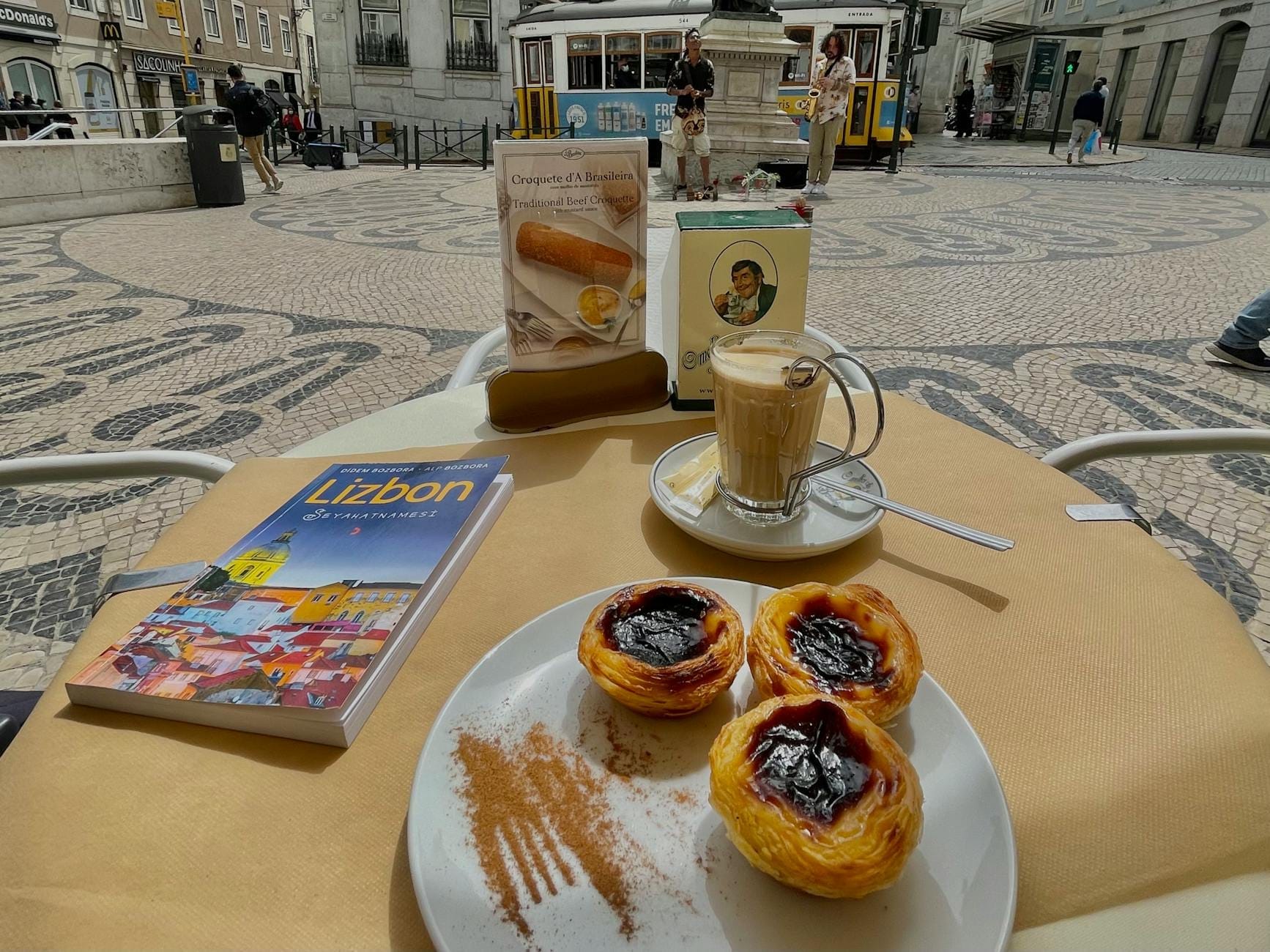
The tarts themselves are small, warm, and crisp-shelled, with a lightly scorched custard filling that jiggles slightly when you tap the rim. They arrive dusted with cinnamon and powdered sugar on the side, for you to apply yourself. They are nothing like the ubiquitous pastel de nata sold at every café counter in Portugal. The shell is flakier, the custard richer, the caramelization more pronounced. And crucially, only tarts made at this location can legally carry the name 'Pastéis de Belém®', a trademark that has been protected since the bakery trademarked the name. Everything else in the country is a pastel de nata, which is a legal copy rather than the original. For context on other pastry and food stops around the city, see our Lisbon food guide.
💡 Local tip
Order at least two tarts per person. One is never enough, and the queue discourages going back for seconds.
The History Behind the Recipe
The story begins at the Jerónimos Monastery, which sits about a three-minute walk east along Rua de Belém. Monks there used egg whites in large quantities to starch their habits. The leftover yolks needed to go somewhere, and over decades, they went into pastry. The custard tart that emerged from that surplus became a monastery staple, sold to locals and travelers as a source of income.
Monastery closures were triggered across Portugal. By 1834, the Jerónimos community had dispersed and the recipe faced extinction. A monk, or possibly a monastery employee depending on the account, brought the recipe to a nearby sugar refinery. The refinery owners used it to open a shop on Rua de Belém in 1837, and that shop has operated continuously ever since, through monarchy, dictatorship, revolution, and the tourism era that followed.
In 2009, The Guardian listed pastéis de Belém among the 50 best things to eat in the world. In 2011, the tart was voted one of Portugal's Seven Wonders of Gastronomy. These endorsements accelerated the international pilgrimage that now defines the bakery's daily rhythm.
Tickets & tours
Live prices and dates from our booking partner. If you book, we may earn a commission at no extra cost to you.
Belem and Modern Lisbon bus hop-on hop-off combined tickets
From 28 €Instant confirmationFree cancellationGuided Day Tour of Sintra, Pena Palace, Belem, Cascais and Lisbon
From 69 €Instant confirmationFree cancellationBelem Discoveries Walking Tour
From 75 €Instant confirmationFree cancellationPrivate half-day tour to Belem and Jeronimos Monastery
From 345 €Instant confirmationFree cancellation
What the Visit Feels Like, Hour by Hour
Arriving at 8 AM on a weekday, the queue outside is already forming but moves quickly. The smell hits before you reach the door: warm pastry, caramelized sugar, and a faint undertone of cinnamon. The air feels different right at the entrance, warmer and slightly humid from the ovens inside. The interior is larger than the narrow facade suggests, with a labyrinth of blue and white azulejo-tiled rooms that can seat several hundred people.
By 10 AM on weekends, the queue snakes down the pavement. By noon, the wait for a table can stretch to 30 minutes or more. If you are only coming for takeaway, the line moves faster through a dedicated counter, and you can be back outside with a bag of warm tarts in under ten minutes. Mid-afternoon is marginally calmer than late morning, but there is no truly quiet window between spring and autumn.
Evenings offer a different experience entirely. The summer closing time of midnight means you can arrive after dinner, when the tour groups have dispersed and the clientele shifts toward locals ending their night in Belém. The tarts are still warm, baked in continuous batches throughout the day. The tiled rooms feel quieter and more intimate after 9 PM, and the pace of service slows pleasantly.
⚠️ What to skip
Weekends between 11 AM and 2 PM are the busiest periods by a significant margin. If you visit then, takeaway is the practical choice unless you are willing to wait for a table.
Inside the Bakery: Layout and Atmosphere
The interior of Pastéis de Belém is worth pausing over before you order. The walls are lined entirely with hand-painted blue and white azulejo tiles depicting historical and pastoral scenes, a detail that rewards those who slow down long enough to look. The rooms connect through arched doorways, and the sound level shifts as you move deeper inside, from the noise of the order counter to the relative calm of the back dining rooms.
Seating is communal in some sections, which means you may share a marble table with strangers. Staff move quickly and do not hover. Coffee orders, typically a bica (espresso) or galão (milky coffee), are taken at the table and arrive promptly. The combination of a hot bica and two fresh tarts is the standard order and takes roughly four minutes to arrive.
The bakery also sells packaged tarts for takeaway in boxes of six or twelve, which travel reasonably well if consumed within a few hours. Belém itself has enough to fill half a day, between the monastery, the Belém Tower, and the Padrão dos Descobrimentos monument along the riverfront.
Getting There and Practical Notes
Belém is served by Tram 15E from Praça da Figueira in central Lisbon, which takes approximately 25 to 30 minutes depending on traffic. The Comboios de Portugal suburban train line also stops at Belém station, and a short walk along Rua de Belém leads directly to the bakery. Taxis and ride-hailing services drop off easily outside.
If you are planning a full day in Belém, the bakery works well as an opening stop before the main monuments open, or as a closing reward after walking the riverfront. See our Belém neighborhood guide for a full itinerary across the area.
The bakery opens at 8 AM year-round. Closing time is 11 PM in winter and midnight in summer. There is no admission fee. Payment is made per item at the counter for takeaway, or settled at the table if you sit down. Cash and cards are both accepted.
ℹ️ Good to know
Photography inside the dining rooms is generally tolerated, but the bakery's 'secret room' where tarts are prepared is not open to visitors or cameras.
An Honest Assessment: Is It Worth the Queue?
For most visitors, yes. The tarts are genuinely better than the average pastel de nata sold around the city, and the difference is not marginal. The freshness, the texture of the pastry, and the intensity of the custard justify the trip to Belém even if the neighborhood weren't already worth visiting for the monuments. For food-focused travelers, this is one of the clearest cases in Lisbon where the reputation is earned rather than manufactured.
That said, visitors who dislike queuing or crowded public spaces may find the experience stressful during peak hours. The bakery is one of the most photographed spots in Lisbon, and the crowd behavior at busy times reflects that, with people stopping in doorways to take photos and slow the flow. If that kind of environment frustrates you, the evening visit is a genuine alternative.
Travelers who prefer to explore Lisbon's less documented food culture may find other options more compelling. Our guide to Lisbon's lesser-known spots covers food destinations that see a fraction of this footfall.
Insider Tips
- Ask for your tarts 'quentes' (hot) if you want them fresh from the most recent batch. Staff will sometimes retrieve a tray that hasn't yet hit the counter display.
- The cinnamon and powdered sugar on the table are not decorative. Apply both generously. This is how they are traditionally eaten and the combination completes the flavor.
- Takeaway boxes of six or twelve tarts are sealed and hold heat for about 45 minutes. If you are heading to the riverfront, time your purchase so you eat them within that window.
- The back dining rooms, reached through the second or third archway from the entrance, are quieter than the front section and feel more like the original café the bakery once was.
- Arriving on a weekday between 8 and 9 AM gives you a relaxed table experience with service that is not rushed. The tarts are freshly baked and the staff have time to engage.
Who Is Pastéis de Belém For?
- First-time visitors to Lisbon who want to understand the city's food identity from a historically grounded starting point
- Food travelers who want to taste the trademarked original rather than a reproduction
- Families with children who can handle a brief queue for a universally appealing reward
- Travelers pairing a morning pastry stop with a full day at Belém's monuments
- Anyone visiting in the evening who wants a late-night treat in a quieter setting
Nearby Attractions
Other things to see while in Belém:
- Ajuda National Palace
The Palácio Nacional da Ajuda is Lisbon's only neoclassical royal palace, preserving the private apartments of Portugal's last monarchs almost exactly as they left them in 1910. Less visited than Belém's waterfront monuments, it rewards those who make the short uphill detour with room after room of gilded excess, personal royal objects, and the newly opened Royal Treasury Museum.
- Belém Tower
Rising from the northern bank of the Tagus River, the Torre de Belém is a 16th-century fortress that once guarded Lisbon's harbor and marked the departure point for Portugal's Age of Discovery voyages. A UNESCO World Heritage Site, it remains the most photographed monument in Portugal, combining Manueline architectural splendor with genuine historical weight.
- National Coach Museum
The Museu Nacional dos Coches in Belém holds one of the world's greatest collections of royal coaches and carriages, spanning four centuries of craftsmanship. With over 70 vehicles displayed across two architecturally striking buildings, it rewards both history enthusiasts and casual visitors who simply want to see something extraordinary.
- Jerónimos Monastery
The Mosteiro dos Jerónimos in Belém is the most ambitious architectural achievement of Portugal's Age of Discovery. Built on royal orders in 1501 and carved from honey-colored limestone, its cloister and church represent the high point of Manueline style, blending Gothic structure with maritime imagery in stone. This is where Vasco da Gama is entombed, and where Portugal chose to bury its poets alongside its explorers.
Planning a trip? Discover personalized activities with the Nomado app.