Sintra is a hill town 30 kilometers northwest of Lisbon, famous for its UNESCO-listed palaces, Moorish fortifications, and forested hillsides. It draws more visitors per square kilometer than almost anywhere else in Portugal, so planning ahead matters. Whether you are doing a quick day trip from Lisbon or taking two days to do it properly, this guide covers everything you need.
Sintra sits in wooded hills northwest of Lisbon and looks, at first glance, like something architects designed specifically for photographs. Colorful palaces cling to forested ridges, cobbled lanes curl past centuries-old estates, and fog rolls in from the Atlantic to give the whole scene an almost theatrical quality. UNESCO recognized it as a Cultural Landscape in 1995, and it has been pulling visitors ever since.
Orientation
Sintra is a municipality of 319 square kilometers in Portugal's Lisbon District, about 30 kilometers northwest of central Lisbon. The area most visitors are interested in divides into three distinct villages: Sintra-Vila (the historic center, where the National Palace stands), Estefania (where the train station is located), and São Pedro de Sintra (a quieter village slightly uphill to the southeast). These three are close together but not identical in character, and knowing which is which saves confusion on arrival.
The train station sits roughly 1.5 kilometers from Sintra-Vila, which is where the majority of cafes, restaurants, and the National Palace are concentrated. From the station, you can walk to the historic center in about 20 minutes on relatively flat ground, or take the bus. The palaces on the hills above, including Pena Palace and the Moorish Castle, require either a bus ride on routes 434 or 435, a taxi, or a serious uphill walk. The hills are steep and the roads narrow, so most visitors rely on the bus loops.
Sintra is also the gateway to the wider Serra de Sintra, which extends westward to Cabo da Roca, the westernmost point of continental Europe, about 18 kilometers from town. The coastal town of Cascais lies to the south, connected by bus. This makes Sintra a natural hub for anyone exploring the wider Estoril Coast.
Character & Atmosphere
Arrive before 9 am and Sintra-Vila has a different quality entirely. The cobblestones are still damp from the previous evening, the pastry shops are just opening, and the only sounds are birdsong and the distant rumble of the first buses warming up. The light in the Serra de Sintra is peculiar: the hills trap moisture from the Atlantic, and mornings here are often misty in a way that makes the palaces look even more theatrical. By 10 am, the tour groups start arriving from Lisbon and the atmosphere shifts.
By midday in summer, the historic center is packed. The main square in front of the National Palace fills with queues, the narrow lanes backing up toward the palaces get congested, and the bus stops at the Pena Palace entrance can involve significant waiting. This is not an exaggeration or a seasonal quirk: Sintra is one of the most visited sites in Portugal, and the infrastructure, particularly the road system, was not designed for the current volume of visitors. If you are visiting on a weekend between June and September, expect crowds at every major attraction.
Late afternoon brings some relief. Day-trippers from Lisbon start heading back after 4 pm, and by early evening the historic center recovers some of its composure. The light drops low over the forested hills, the souvenir shops start closing, and the restaurants fill with people who have stayed longer than planned. If you are staying overnight, this is when Sintra earns its reputation: the gardens of Quinta da Regaleira at dusk, or the view from the Moorish Castle in the last hour of light, are experiences that a rushed day trip rarely captures.
⚠️ What to skip
Sintra is genuinely overwhelming on peak summer weekends. If you have any flexibility, visit on a weekday and arrive before 9 am. Mondays can also be quieter because some attractions are closed, reducing the crowd density at those that remain open.
What to See & Do
The Palácio Nacional de Sintra, the National Palace, anchors the historic center. Its two distinctive white chimneys are the most photographed image of Sintra-Vila and have been part of the skyline since the 14th century, with modifications under King Manuel I in the early 16th century. The interior is one of the best-preserved medieval royal palaces in Portugal, with original Moorish tilework and vaulted ceilings. Because it is located in the town center rather than on the hill, it is often overlooked by visitors rushing toward Pena, which is a mistake.
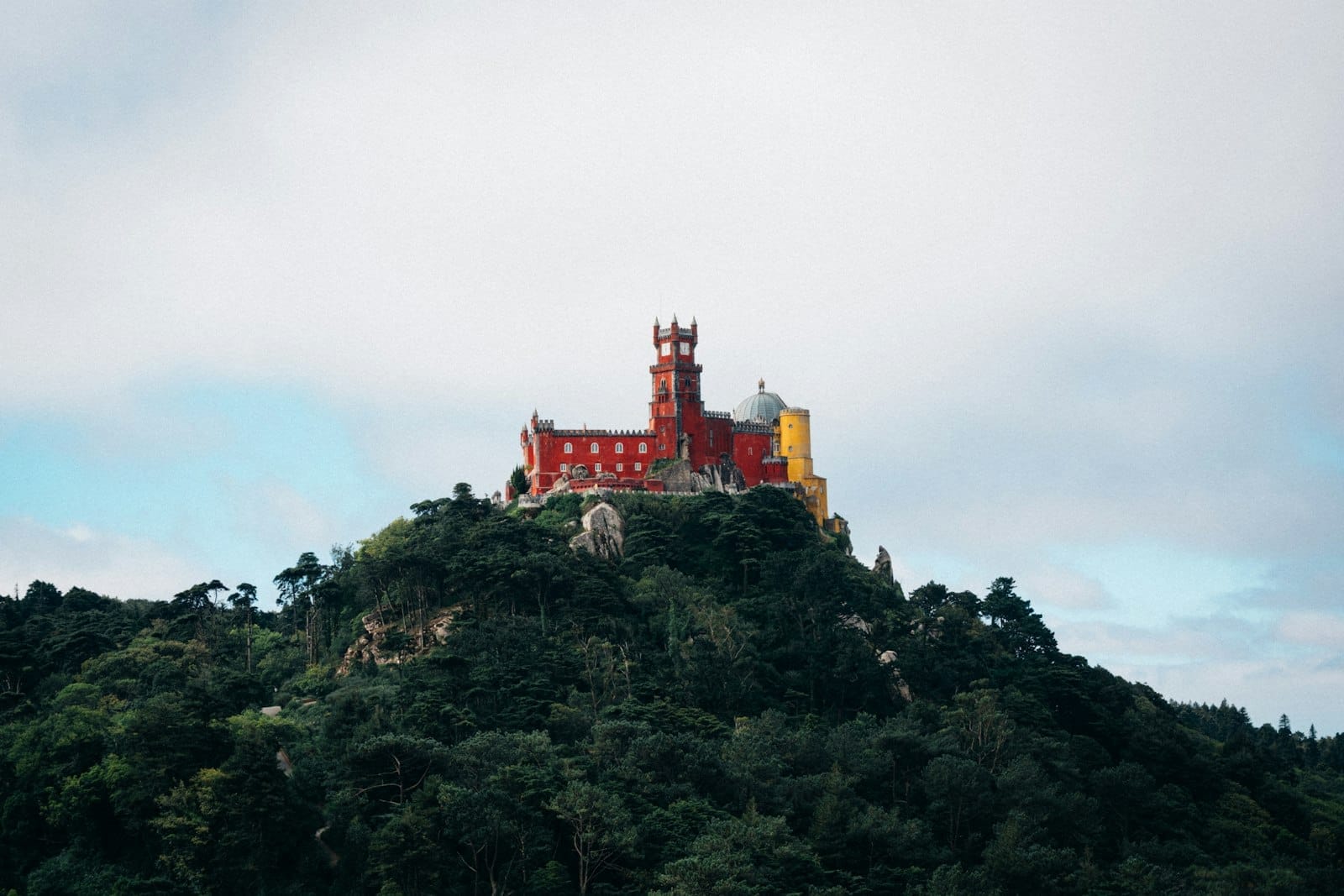
Pena Palace is the centerpiece of most itineraries, and understandably so. Built in the 1840s for King Ferdinand II on the ruins of a medieval monastery, it is a deliberately theatrical mix of Romantic, Moorish, Manueline, and Gothic styles, painted in deep yellow and terracotta. The uphill walk from the Park of Pena entrance takes about 15 minutes on a steep path, or you can take the bus directly. For context on how it fits into Portugal's royal history, see the guide to Ajuda National Palace in Lisbon, which represents a very different architectural era.
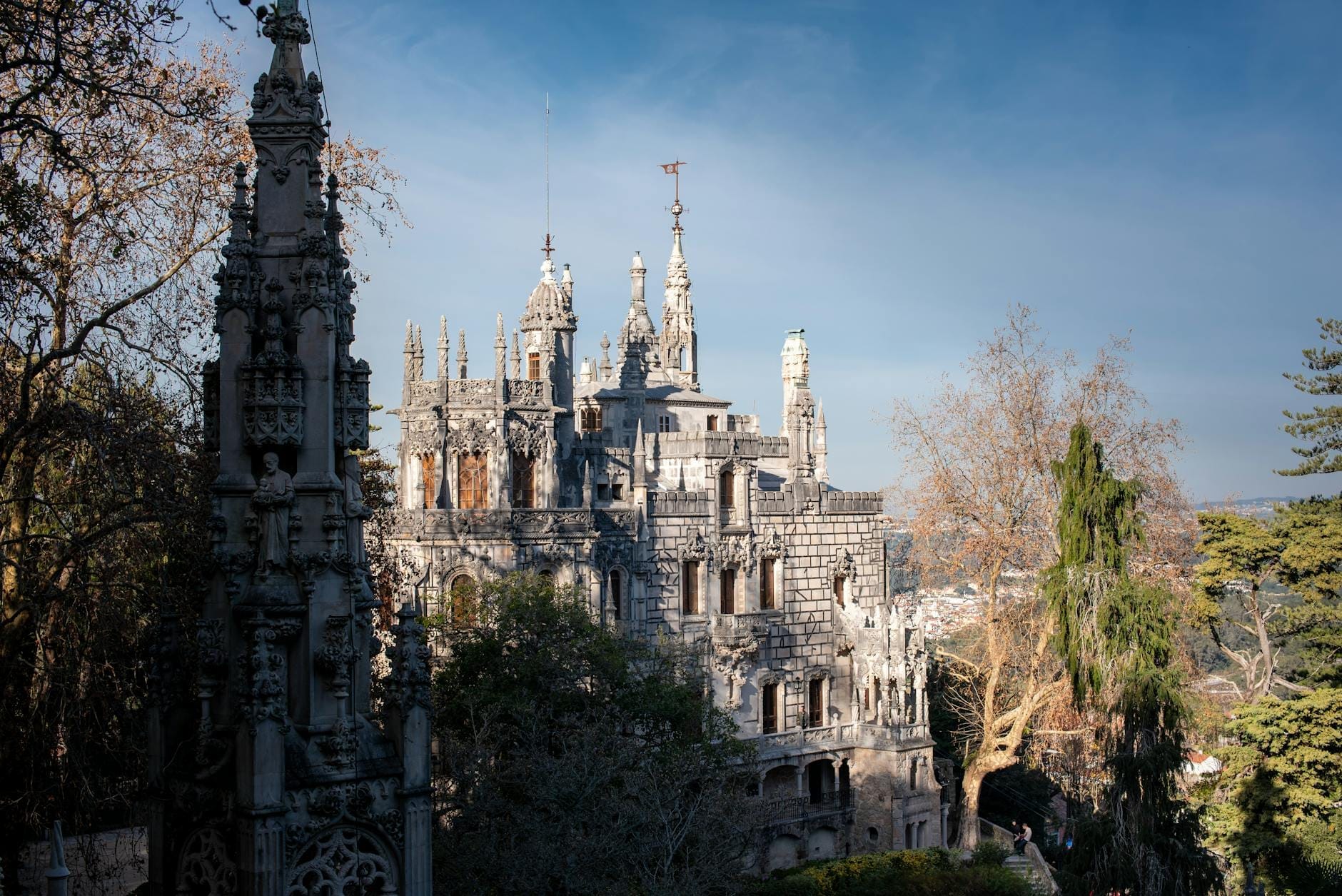
The Moorish Castle, which sits on a ridge between the historic center and Pena Palace, is often treated as a secondary stop but deserves more attention. The walls date from the 8th and 9th centuries and the views from the ramparts over the Serra and toward the coast are the best panoramic views in the area, arguably better than the view from Pena itself. Quinta da Regaleira is the other essential stop: a late 19th-century estate with a neo-Manueline palace and gardens full of symbolic architecture, grottos, wells, and tunnels. The Initiation Well, a spiral staircase descending into the earth, has become one of the most reproduced images of Sintra.
Palácio Nacional de Sintra: in the town center, best for medieval interiors and tilework
Pena Palace: hilltop Romantic palace, the most visited attraction in Sintra
Moorish Castle: 8th-century fortification with the best panoramic views in the area
Quinta da Regaleira: 19th-century estate with symbolic gardens and underground tunnels
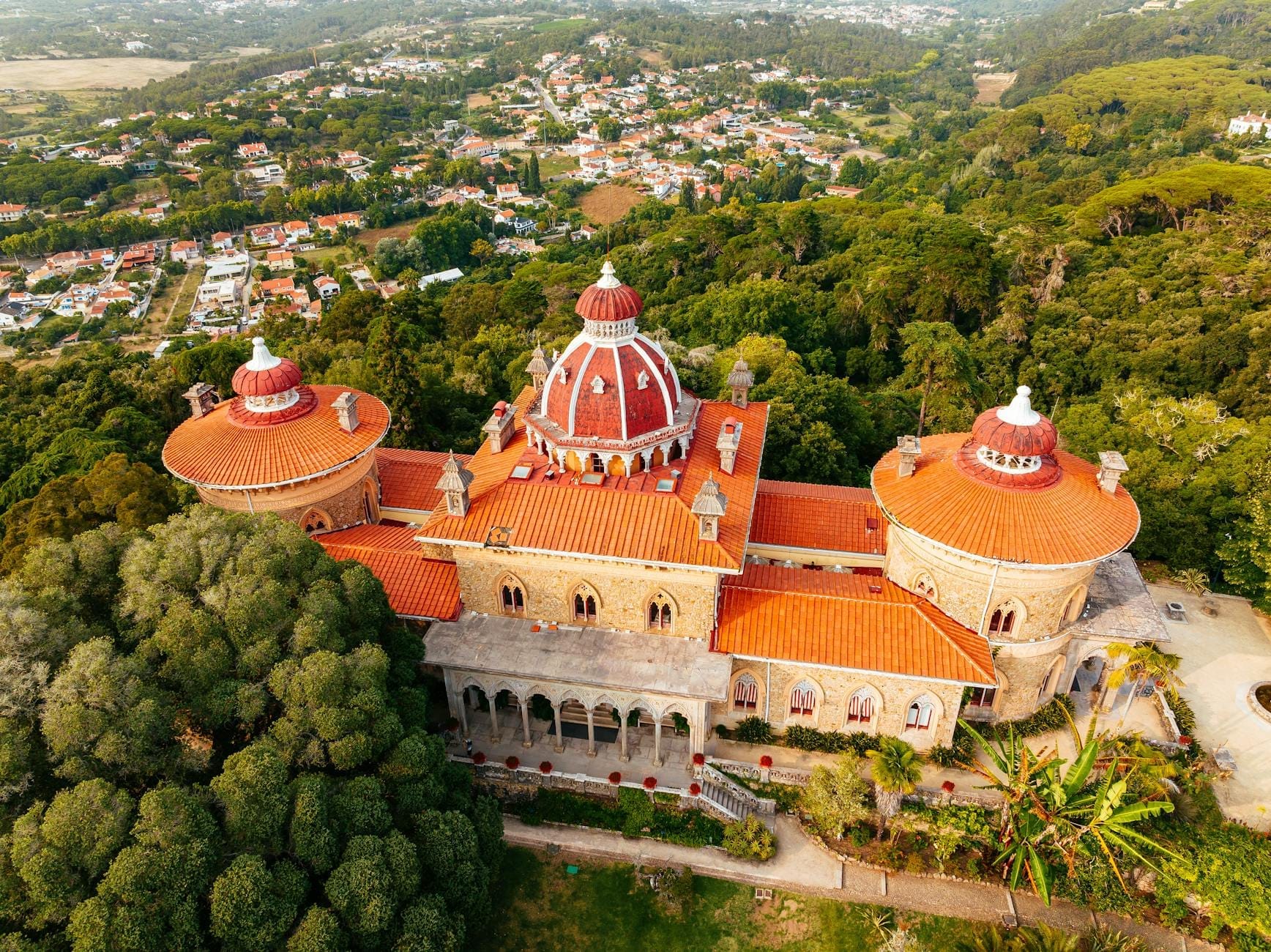
Monserrate Palace: neogothic and Moorish palace about 4 km west, far less crowded
Serra de Sintra hike: trails connect the castle, palaces, and forested hillsides
For those interested in the wider region, Sintra also works as a base for reaching Monserrate Palace, about 4 kilometers west of town. It sees a fraction of the crowds of Pena and is architecturally distinct, combining Moorish and Gothic details with extraordinary botanical gardens. If Pena Palace feels too packaged, Monserrate is the antidote.
💡 Local tip
Buy tickets online in advance for Pena Palace and Quinta da Regaleira. Walk-up queues in summer can mean waiting 45 minutes or more just to purchase entry. Booking the day before at minimum is strongly recommended between June and September.
Eating & Drinking
Sintra-Vila has a well-developed food scene, though the ratio of tourist-facing restaurants to genuinely good ones is skewed by the volume of day visitors. The historic center is full of places selling queijadas de Sintra, the local pastry: small tarts made with fresh cheese, sugar, flour, and cinnamon, baked in fluted metal molds. They have been made here since at least the 13th century and are genuinely worth trying. Travesseiros, cushion-shaped pastries filled with almond and egg cream, are the other Sintra specialty and are just as good.
For lunch, the options in the historic center range from basic cafes to mid-range restaurants serving Portuguese classics. Prices are higher than central Lisbon, particularly within a short radius of the National Palace. If you are watching your budget, pick up pastries and local produce for lunch and save the restaurant meal for dinner, when the day-trip crowd has thinned and tables are easier to find. São Pedro de Sintra, the quieter village slightly uphill, has a local market on the second and fourth Sunday of each month and a handful of restaurants that are less oriented toward tourists.
The main square in Sintra-Vila has outdoor seating that works well for a coffee break between sights. In the evening, the bar scene is modest but pleasant: this is not a nightlife destination, and most visitors who stay overnight do so to capture the early morning quiet rather than for late-night options. A glass of wine at a restaurant terrace as the light fades over the Serra is about as active as the evenings get, which suits the place.
Getting There & Around
The train is the standard way to reach Sintra from Lisbon. Comboios de Portugal (CP) runs direct trains from Rossio station in central Lisbon to Sintra station, with the journey taking around 40 minutes. Trains run frequently throughout the day, typically every 15-20 minutes during peak hours. The fare is inexpensive. You can also board at Sete Rios or Oriente stations if those are more convenient. For full transit context, see the guide to getting around Lisbon.
From Sintra station to the historic center, the walk is about 1.5 kilometers and takes 20 minutes on level ground. Bus 435 covers this route and continues up toward Pena Palace and the Moorish Castle. Bus 434 runs a loop from the historic center to Pena via the Moorish Castle, making it the most useful route for palace-hoppers. Both buses run from approximately 9 am to 5 pm, though schedules shift seasonally. Walking between the palaces is possible but the gradients are significant and the paths can be slippery in wet weather.
Driving to Sintra is possible but has real drawbacks. The roads into the Serra are narrow and one-way in several sections. Parking in Sintra-Vila is limited and fills early. Taxis and rideshares are available but expensive for the hill routes. The train-and-bus combination is genuinely the most efficient approach for most visitors, which is partly why the bus stops at Pena Palace get so congested. If you are going to Monserrate or Cabo da Roca, a car or a specific bus route from the town center makes more sense than the main palace loops.
ℹ️ Good to know
Sintra is well covered as a day trip from Lisbon, but connections from Cascais also work: buses run between Cascais and Sintra in about 60-90 minutes. This opens up an efficient circular route: train from Lisbon to Sintra, explore, then bus to Cascais and train back to Lisbon along the Estoril coast.
Day Trip vs. Staying Overnight
Most visitors treat Sintra as a day trip from Lisbon, and it is certainly feasible. A full day, arriving before 9 am and leaving after 5 pm, is enough to cover Pena Palace, the Moorish Castle, and a walk through Sintra-Vila. What it does not leave time for is Quinta da Regaleira, Monserrate, or any real sense of the Serra beyond the most visited points. This guide on doing a Sintra day trip from Lisbon covers the logistics of a one-day visit in detail.
Staying one or two nights changes the experience significantly. The accommodation options range from guesthouses in Sintra-Vila to larger hotels on the outskirts, and prices are generally lower than central Lisbon. The primary benefit of staying over is time: early morning access to the palaces before the day-trip crowds arrive, and the ability to spend an afternoon at Monserrate or hike a section of the Serra without rushing back for the 6 pm train. The evenings are quiet, which is either a draw or a drawback depending on what kind of traveler you are.
For families, staying in Sintra makes particular sense. The gardens at Pena and Quinta da Regaleira are extensive and children find the tunnels and grottos at Quinta da Regaleira genuinely exciting. The pace outside peak hours is relaxed enough for slow exploration, and having a hotel base means not having to carry everything back to Lisbon at the end of a long day.
Where to Stay
For accommodation planning in the broader Lisbon area, the where to stay in Lisbon guide covers the city's neighborhoods in detail. Within Sintra itself, staying in or near Sintra-Vila puts you closest to the National Palace and the morning quiet before the day-trippers arrive. Estefania, near the train station, is more practical for early departures and has a slightly more local feel with fewer tourist-facing restaurants.
Boutique guesthouses and historic properties converted into accommodation are scattered across the municipality, some within the forested hills themselves. These tend to be quieter than staying in the center but require either a car or reliance on the bus system for getting around. The trade-off between proximity to the sights and access to a genuinely peaceful setting is the main decision to make when booking. The Serra de Sintra is also a hiking area, and properties outside the center attract walkers as well as palace visitors.
Honest Assessment: Is Sintra Worth It?
Yes, with preparation. Sintra is not overrated in terms of what it offers: the palaces are genuinely extraordinary, the landscape is unlike anything else near Lisbon, and the UNESCO designation reflects a coherent historic and natural landscape rather than a single landmark. But it is also one of the most logistically demanding day trips from Lisbon precisely because its popularity has outpaced its infrastructure. For a broader look at whether Lisbon itself meets expectations, see Is Lisbon worth visiting.
The travelers who come away disappointed from Sintra are almost always those who arrived at 11 am on a July Saturday without booked tickets, got stuck in bus queues, and spent half the day waiting rather than exploring. The travelers who love it are those who arrived early, had tickets ready, and gave themselves enough time to move beyond the Pena Palace queue and into the quieter corners of the estate gardens or the Moorish Castle walls.
TL;DR
Sintra is a UNESCO Cultural Landscape with some of the most architecturally distinctive palaces in Europe, about 40 minutes by train from central Lisbon.
Crowds are a genuine issue from June to September, especially on weekends. Arrive before 9 am and book tickets online in advance.
A full day is the minimum for a meaningful visit. Two days allows coverage of Quinta da Regaleira, Monserrate, and the wider Serra de Sintra.
The train from Rossio station is the most efficient and affordable way to reach Sintra. Buses 434 and 435 connect the town to the hill palaces.
Best suited to travelers who enjoy historic architecture, garden landscapes, and walking. Not ideal for those seeking nightlife, beach access, or a quick sightseeing tick-off.
Lisbon punches well above its weight as a museum city, offering everything from world-class art collections to archaeology, decorative arts, and cutting-edge contemporary exhibitions. This guide covers the 12 best museums in Lisbon, organized by neighborhood and theme, with practical tips on pricing, free entry days, and what makes each one worth your time.
Lisbon rewards visitors in every season, but timing your trip well makes a real difference. This guide breaks down what to expect each month — temperatures, crowd levels, prices, and key events — so you can decide when a visit to Lisbon suits you best.
Lisbon is one of Europe's most photogenic cities, and its seven hills mean spectacular views are everywhere. This guide covers the best traditional miradouros, architectural observation decks, and rooftop vantage points across the city.
Lisbon sits at the edge of a region packed with UNESCO palaces, dramatic Atlantic coastline, and historic towns all within an hour or two. These are the best day trips to make from the city, whether you have a car or just a train pass.
Fado is Lisbon's soul — a UNESCO-listed tradition of longing, heartbreak, and beauty. This guide cuts through the tourist-trap venues to show you exactly where to hear the real thing, what it costs, and how to book.
Lisbon rewards the budget-conscious traveler more than almost any other European capital. From hilltop viewpoints and azulejo-tiled churches to free museum Sundays and sprawling flea markets, here are 20 genuinely free experiences across the city.
Lisbon has one of Europe's most layered transport networks, mixing a modern metro with century-old trams and scenic ferries. This guide breaks down every option with real prices, route details, and honest advice on what actually works for visitors.
Lisbon is one of Europe's most photogenic capitals, with terracotta rooftops, hand-painted tile facades, Moorish hilltop castles, and a shimmering river at every turn. This guide covers the 20 most Instagrammable spots in Lisbon, with practical advice on the best times to shoot, what to frame, and how to beat the crowds.
Lisbon is one of Europe's most talked-about city breaks, but does it live up to the hype? This guide cuts through the noise with honest assessments of what the city does brilliantly, where it falls short, what things cost, and how to make the most of your time there.
Two days in Lisbon is enough to cover the essentials without rushing — if you plan smart. This itinerary breaks down exactly where to go, when to go, what to eat, and what to skip, district by district.
Humberto Delgado Airport is Portugal's busiest gateway and your first encounter with Lisbon. This guide covers both terminals, every transport option into the city, lounge access, seasonal crowd patterns, and the practical details that most airport guides skip.
Lisbon has no beaches of its own, but within 30 to 60 minutes you can reach some of the finest Atlantic coastline in Europe. This guide covers the best beaches near Lisbon, from the closest train-accessible options to the dramatic headlands beyond Cascais.
Lisbon has two remarkable bridges crossing the Tagus River, each with a distinct story. This guide covers the history, engineering, best viewpoints, visitor experiences, and practical tips for seeing both the 25 de Abril Bridge and the Vasco da Gama Bridge.
Lisbon's food scene runs deeper than custard tarts and salt cod. This guide covers the essential dishes, where to find the best versions, what to skip, and how to eat well across every budget in Portugal's capital.
Lisbon earns its romantic reputation through layers of atmosphere: tiled facades glowing at golden hour, melancholic Fado drifting from open doorways, and viewpoints that stretch over terracotta rooftops to the Tagus River. This guide covers the best experiences for couples, from classic landmarks to quieter moments that most visitors miss.
Lisbon rewards those who wander beyond the obvious. This guide uncovers the city's overlooked churches, quieter viewpoints, neighborhood markets, and architectural oddities that locals love and most visitors walk straight past.
Lisbon in summer means long sunny days, Atlantic breezes, packed beaches, and a city that truly comes alive after dark. This guide covers the real conditions in July and August: what the heat actually feels like, when to visit which attractions, and how to get the most out of peak season without the headaches.
Lisbon in winter is quieter, cheaper, and surprisingly sunny. This guide covers what to expect from December through February, including weather realities, the best seasonal experiences, and practical tips for getting the most out of a low-season trip.
Four days is enough time to move past the highlights and actually understand Lisbon: its layered history, neighbourhood contrasts, and the rhythm of daily life along the Tagus. This itinerary is built around logical geography, honest crowd realities, and the experiences that genuinely reward the effort.
Lisbon delivers genuine five-star luxury at prices that embarrass Paris, Barcelona, and London. This guide covers the best luxury hotels in Lisbon by neighborhood, honest price breakdowns, fine dining worth the splurge, and the exclusive experiences that set a premium trip apart.
Lisbon nightlife runs deep: fado singers in candlelit Alfama taverns, cocktail bars along the hilly streets of Bairro Alto, and electronic clubs that don't fill up until 2am. This guide breaks down every major scene by neighborhood, with specific venues, honest pricing, and the local knowledge to avoid tourist traps.
Lisbon is one of Western Europe's most affordable capitals, but costs vary significantly depending on how you travel. This guide breaks down exactly what you'll spend on accommodation, food, transport, and attractions, with specific prices and honest advice on where to save and where it's worth paying more.
Lisbon covers just 100.05 km² but packs in dramatically different neighborhoods, from medieval hilltop alleys to modern riverside parks. This guide breaks down the Lisbon map by district, explains how far apart things really are, and tells you the smartest ways to get between them.
A Lisbon river cruise on the Tagus puts the city's most iconic landmarks in front of you from the water. This guide breaks down every major operator, realistic prices, departure logistics, and which tours are actually worth booking in 2026.
Lisbon is one of Western Europe's safest capitals, but it has a handful of well-practiced scams that catch tourists off guard every year. This guide covers exactly what to watch for, where the real risks are, and how to move around the city with confidence.
Lisbon rewards shoppers at every budget level, from Saturday morning flea markets in Alfama to flagship luxury boutiques on Avenida da Liberdade. This guide covers the best markets, shopping streets, and stores in the city, with practical details on schedules, neighborhoods, and what to skip.
The distance from Lisbon to Barcelona is roughly 1,005 km. You have four realistic ways to cover it: a short flight, a multi-leg train journey, an overnight bus, or a self-drive road trip through Spain. This guide breaks down costs, journey times, and trade-offs so you can choose the right option for your trip.
Lagos sits about 300km south of Lisbon, deep in the western Algarve. Getting there is straightforward, but the right option depends on your budget, timeline, and plans once you arrive. This guide breaks down every route with honest comparisons.
The Lisbon to Seville journey is around 450 km across two countries, and the route you choose makes a significant difference. This guide breaks down every transport option with current prices, realistic journey times, and the stops worth making along the way.
Lisbon rewards walkers like few other European capitals. This guide covers the best walking tours across every budget and neighborhood, from tip-based free tours and small-group food walks to self-guided routes through Alfama's maze of cobblestones. Whether you have two hours or a full day, there's a walk that fits.
Lisbon enjoys a Mediterranean climate with over 280 sunny days a year, but the difference between January and July is enormous. This guide breaks down Lisbon weather by month, covers seasonal crowd patterns, and tells you exactly when to go based on what you want to do.
Lisbon is one of Europe's most rewarding cities to explore with children. This guide covers the top family-friendly activities, from world-class aquariums and hands-on science museums to historic tram rides and riverside parks, with honest advice on what's worth your time and what to skip.
Flying from London to Lisbon takes around 2.5 hours and costs as little as £50. But if you want to travel overland, the train journey is an epic 22+ hour adventure through Paris and Madrid. This guide breaks down every realistic option, with honest advice on cost, time, and comfort.
The Santo António Festival is Lisbon's largest and most beloved annual celebration, filling the streets of Alfama, Mouraria, and Bairro Alto every June with grilled sardines, bonfires, folk parades, and mass weddings. This guide covers the full schedule, key traditions, best neighborhoods to visit, and practical tips for navigating the festivities.
Sintra is the most popular day trip from Lisbon, and for good reason: royal palaces, Moorish ruins, and forested hilltops sit just 40 minutes by train from the city centre. This guide covers exactly how to get there, which sites to prioritize, how much to budget, and how to avoid the worst of the crowds.
Lisbon rewards curious travelers with centuries of history, world-class food, and some of Europe's most dramatic viewpoints. This guide covers the best things to do in Lisbon across every budget, neighborhood, and travel style, with honest takes on what's worth your time.
Lisbon's food scene runs deeper than pastéis de nata and bifanas. This guide covers the best restaurants in Lisbon by neighbourhood and budget — from two-Michelin-star dining rooms to the market stalls locals actually queue for.
Choosing where to stay in Lisbon shapes your entire trip. This guide breaks down every major neighborhood by atmosphere, price range, pros and cons, and the type of traveler each suits best — so you can book with confidence.