Most Instagrammable Spots in Lisbon: 20 Places Every Photographer Needs to Visit
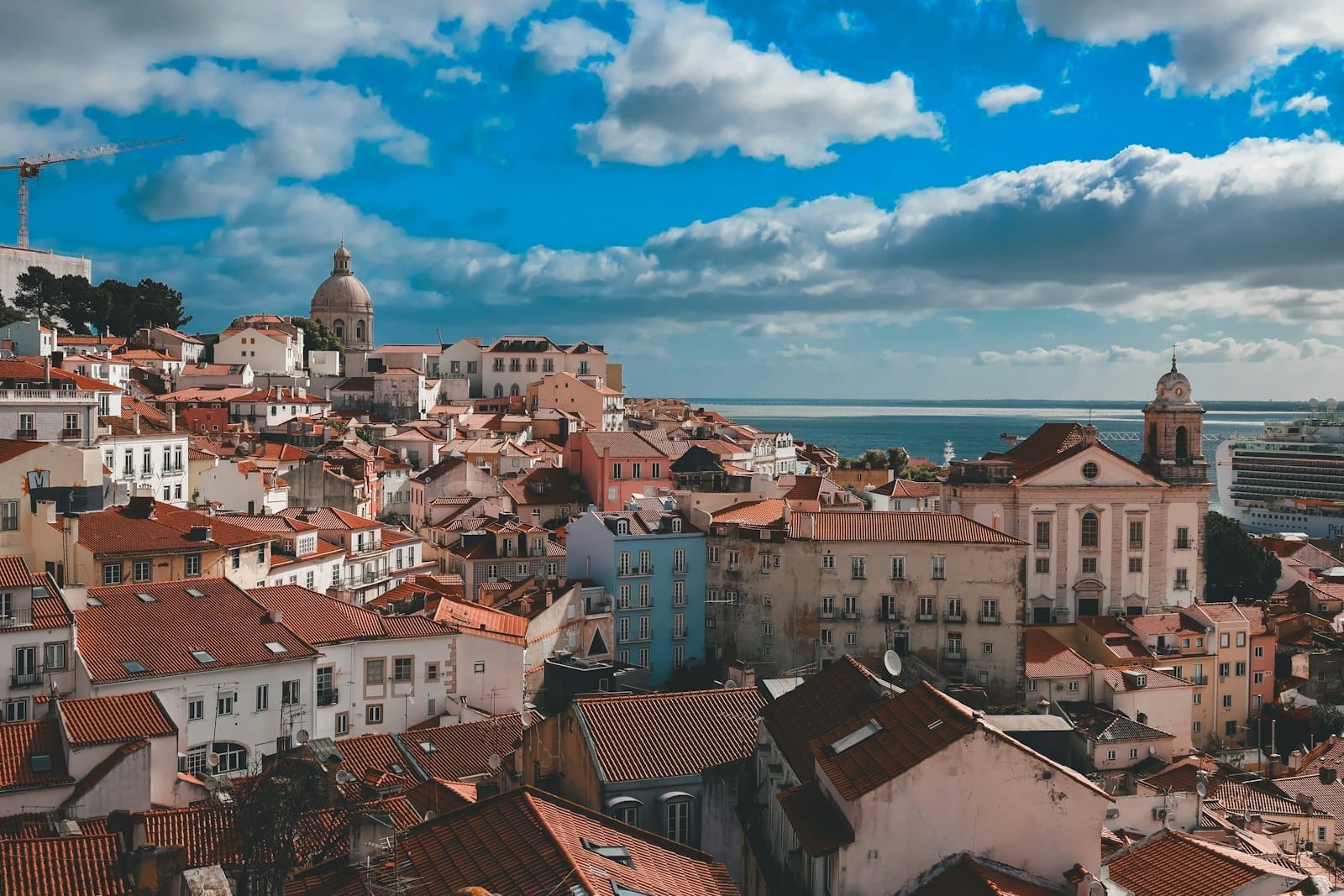
Lisbon is one of Europe's most photogenic capitals, with terracotta rooftops, hand-painted tile facades, Moorish hilltop castles, and a shimmering river at every turn. This guide covers the 20 most Instagrammable spots in Lisbon, with practical advice on the best times to shoot, what to frame, and how to beat the crowds.
Tickets & tours
Live prices and dates from our booking partner. If you book, we may earn a commission at no extra cost to you.
Few cities reward photographers the way Lisbon does. The light here is exceptional — warm, golden, and soft even at midday — and the city's seven hills mean that dramatic viewpoints are never more than a short walk away. Whether you're shooting the iconic Alfama rooftops, the monumental riverfront of Belém, or the tiled terraces of Graça, every neighborhood has its own visual identity. This guide collects Lisbon's most photogenic locations with honest advice on timing, angles, and what makes each place worth the shot. For a broader look at how to organize your time, see our 4-day Lisbon itinerary.
✨ Pro tip
Golden hour in Lisbon hits hard. The best light is roughly 7–8am and 6–7pm (summer). Most viewpoints are crowded by 9am, so arriving at sunrise gives you cleaner shots and a completely different atmosphere.
Viewpoints & Miradouros
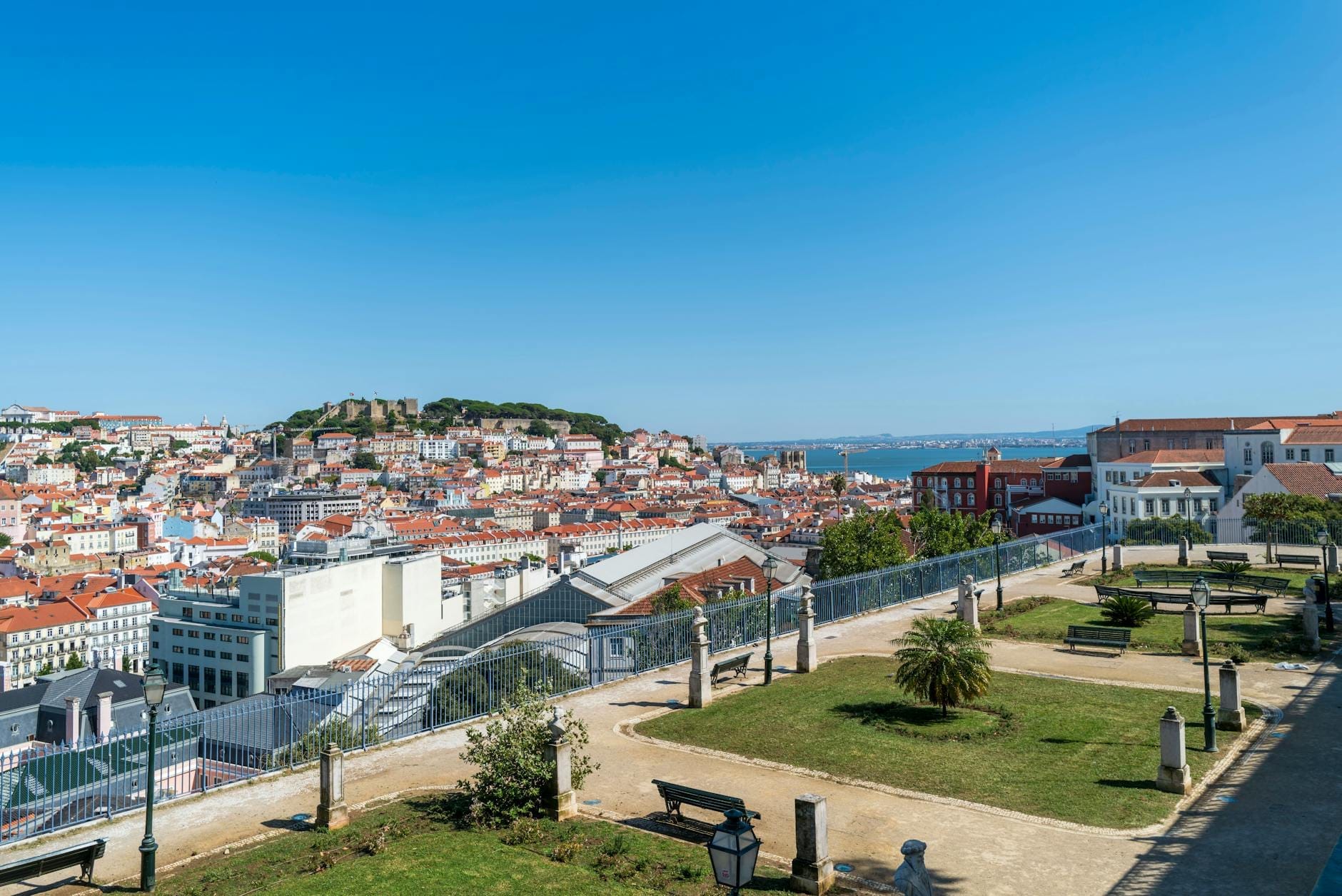
Lisbon's miradouros are the city's natural photo stages. Some face east for sunrise, others catch the long western light at dusk. Our full guide to the best viewpoints in Lisbon covers all of them in depth, but these are the ones that photograph best.
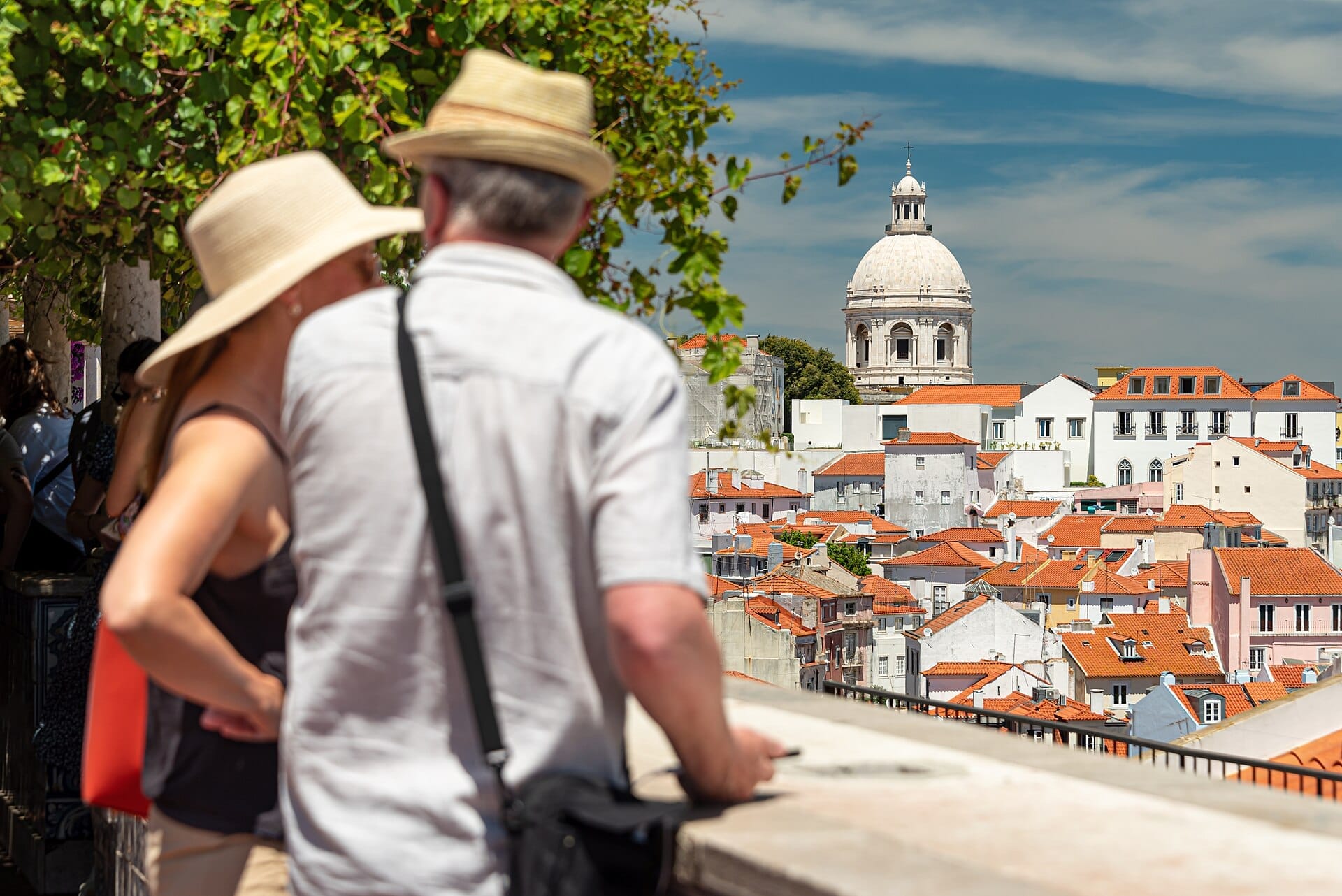
1. Frame Alfama Through Bougainvillea at Miradouro de Santa Luzia
This east-facing terrace is best at sunrise, not sunset. Azulejo panels, curved stone seating, and cascading bougainvillea create natural frames for shots over Alfama's terracotta rooftops. Arrive by 7am to shoot without crowds.
Explore1. Frame Alfama Through Bougainvillea at Miradouro de Santa Luzia
This east-facing terrace is best at sunrise, not sunset. Azulejo panels, curved stone seating, and cascading bougainvillea create natural frames for shots over Alfama's terracotta rooftops. Arrive by 7am to shoot without crowds.
Explore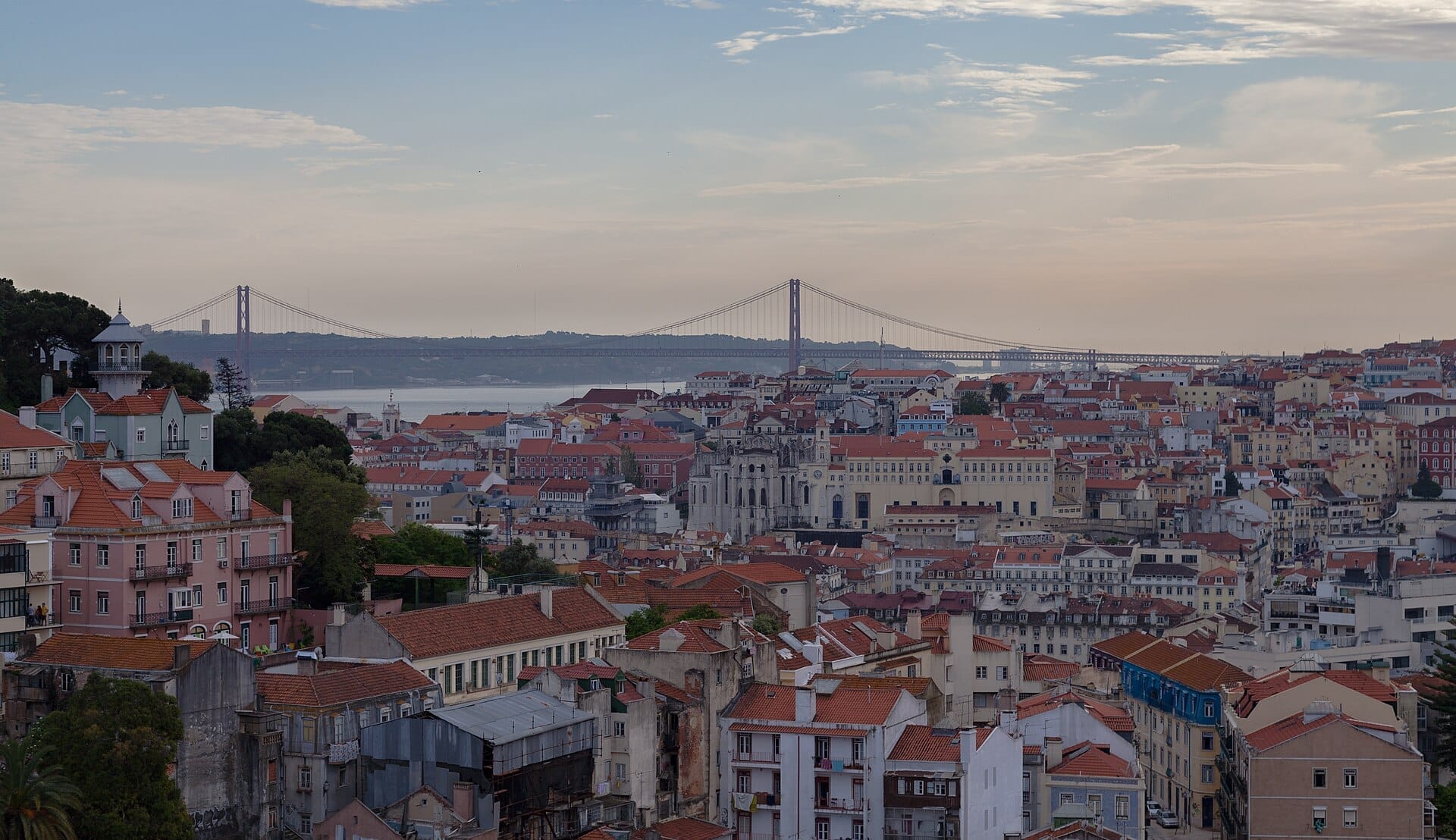
2. Capture the Full Lisbon Panorama at Miradouro da Graça
Many locals call this the finest viewpoint in Lisbon. The unobstructed panorama takes in the castle, the Alfama rooftops, the Tagus, and the 25 de Abril bridge. Sunset here is genuinely spectacular and less touristy than Portas do Sol.
Explore2. Capture the Full Lisbon Panorama at Miradouro da Graça
Many locals call this the finest viewpoint in Lisbon. The unobstructed panorama takes in the castle, the Alfama rooftops, the Tagus, and the 25 de Abril bridge. Sunset here is genuinely spectacular and less touristy than Portas do Sol.
Explore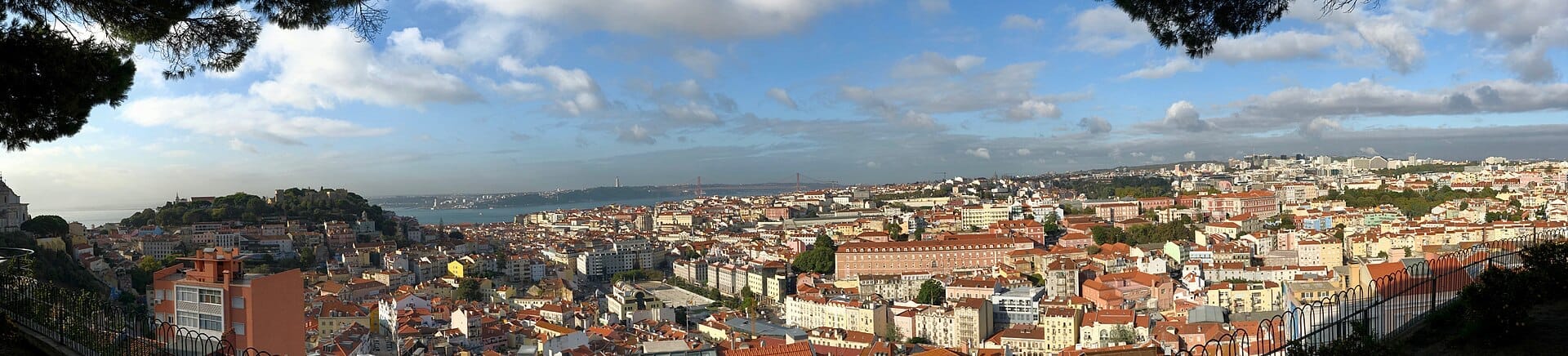
3. Shoot the Widest Panorama in Lisbon from Senhora do Monte
The highest miradouro in the city offers a sweeping 180-degree view that no other viewpoint matches. The small chapel in frame adds architectural interest. Visit late afternoon for the best light direction over the castle and river.
Explore3. Shoot the Widest Panorama in Lisbon from Senhora do Monte
The highest miradouro in the city offers a sweeping 180-degree view that no other viewpoint matches. The small chapel in frame adds architectural interest. Visit late afternoon for the best light direction over the castle and river.
Explore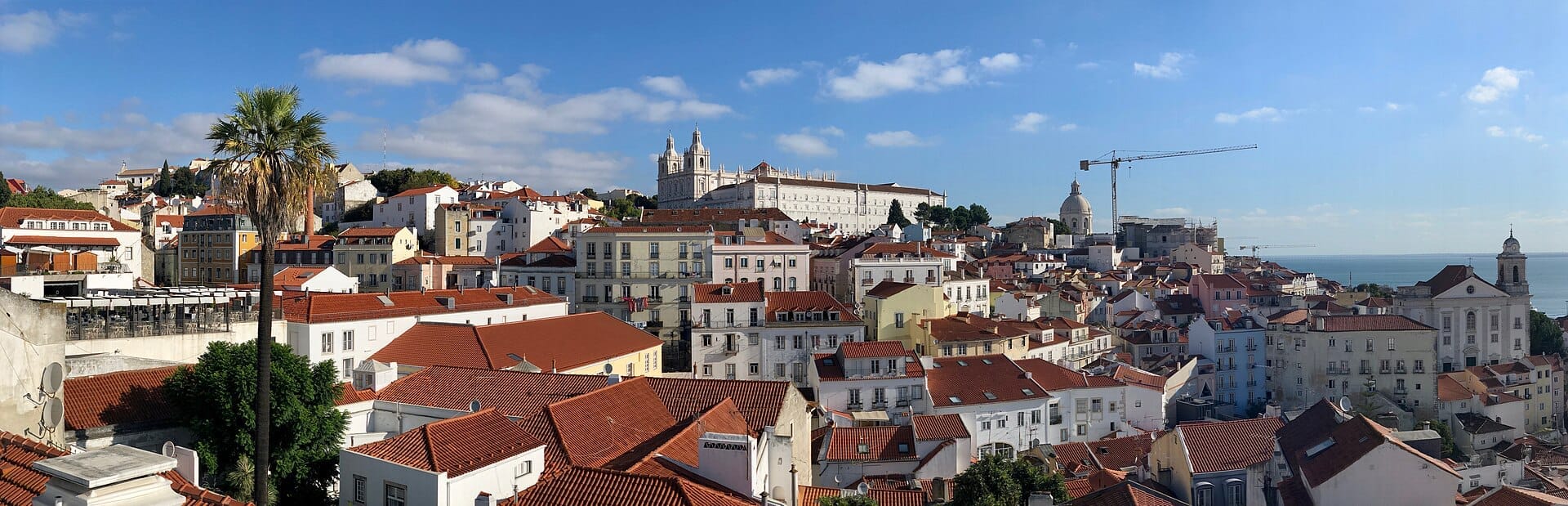
4. Get the Classic Alfama Postcard Shot at Portas do Sol
The terrace beside São Vicente de Fora delivers Lisbon's most recognizable viewpoint shot: white dome, terracotta rooftops, the Tagus in the distance. Midday light works well here since the terrace faces south. More spacious than Santa Luzia.
Explore4. Get the Classic Alfama Postcard Shot at Portas do Sol
The terrace beside São Vicente de Fora delivers Lisbon's most recognizable viewpoint shot: white dome, terracotta rooftops, the Tagus in the distance. Midday light works well here since the terrace faces south. More spacious than Santa Luzia.
Explore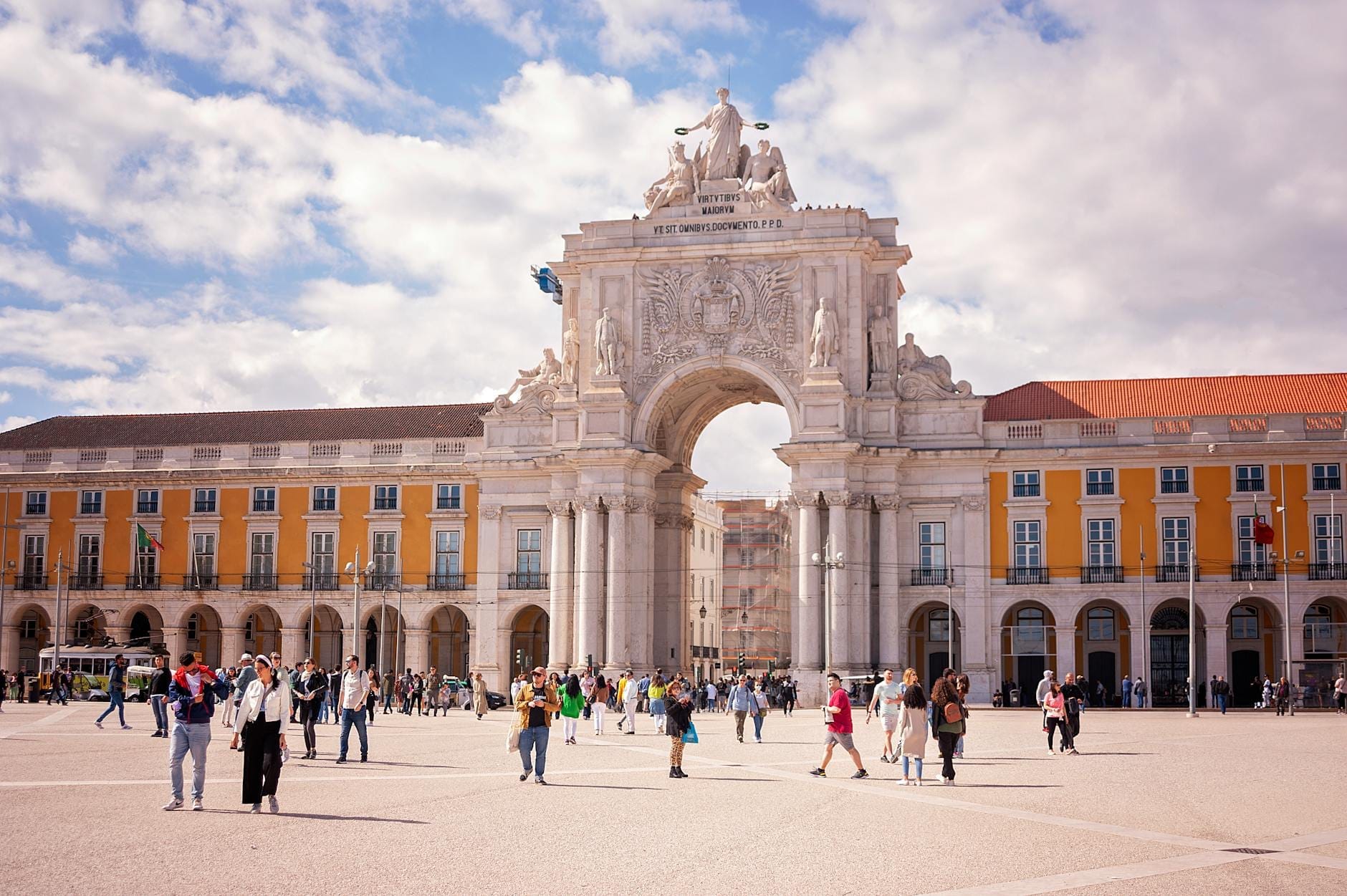
5. Photograph Lisbon from the Top of the Rua Augusta Arch
The rooftop platform of this triumphal arch puts you directly above Praça do Comércio with the Tagus stretching behind it. The arch framing Baixa's grid of streets below makes for a compelling wide shot. Admission required; book ahead online.
Explore5. Photograph Lisbon from the Top of the Rua Augusta Arch
The rooftop platform of this triumphal arch puts you directly above Praça do Comércio with the Tagus stretching behind it. The arch framing Baixa's grid of streets below makes for a compelling wide shot. Admission required; book ahead online.
Explore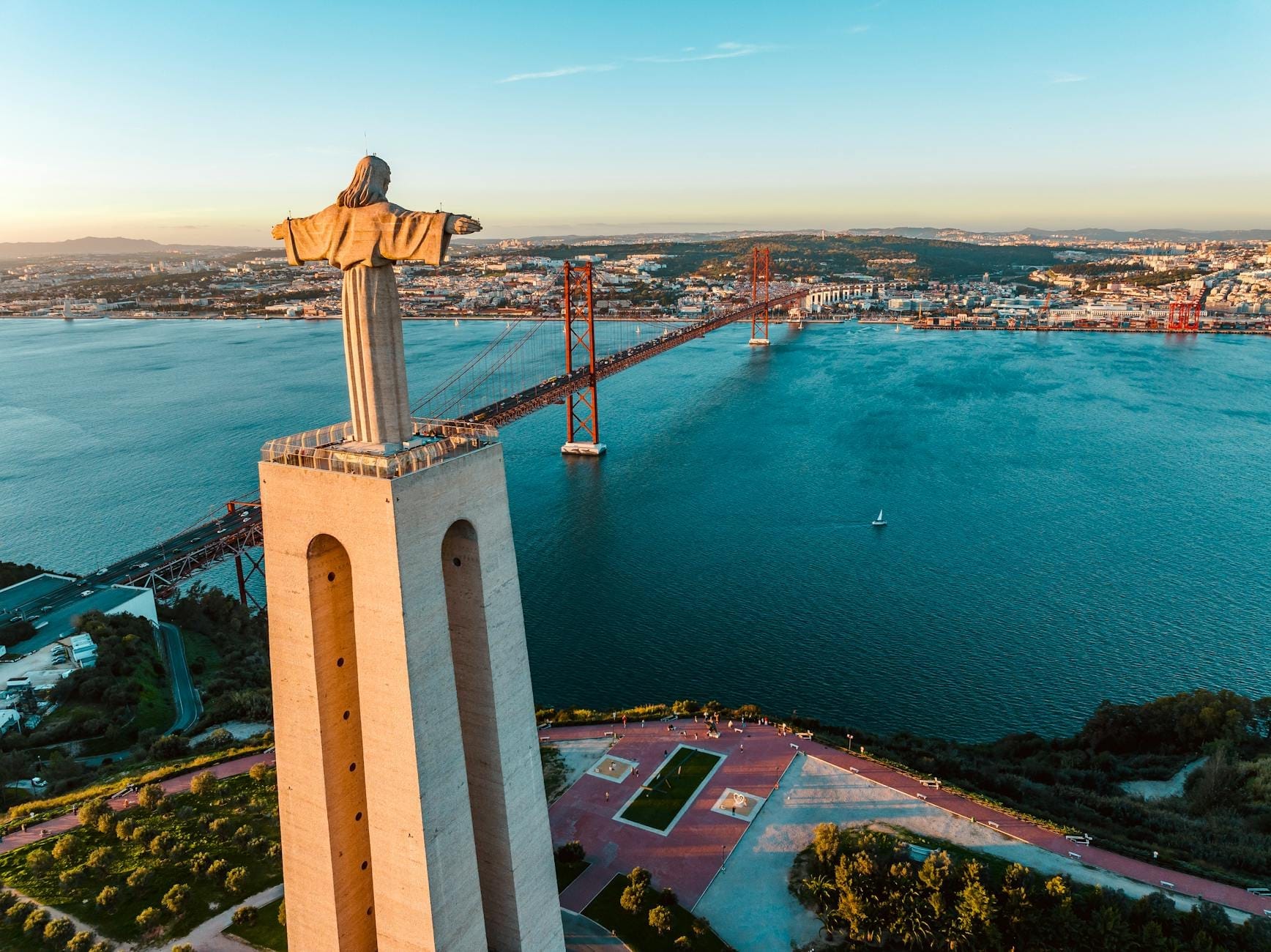
6. Photograph Lisbon's Skyline from the Cristo Rei Monument
From the Almada side of the Tagus, the Cristo Rei observation deck gives you the whole Lisbon waterfront in one shot: the 25 de Abril bridge, the city hills, and the estuary. It's the reverse angle no one shoots from central Lisbon.
Explore6. Photograph Lisbon's Skyline from the Cristo Rei Monument
From the Almada side of the Tagus, the Cristo Rei observation deck gives you the whole Lisbon waterfront in one shot: the 25 de Abril bridge, the city hills, and the estuary. It's the reverse angle no one shoots from central Lisbon.
ExploreIconic Architecture & Monuments
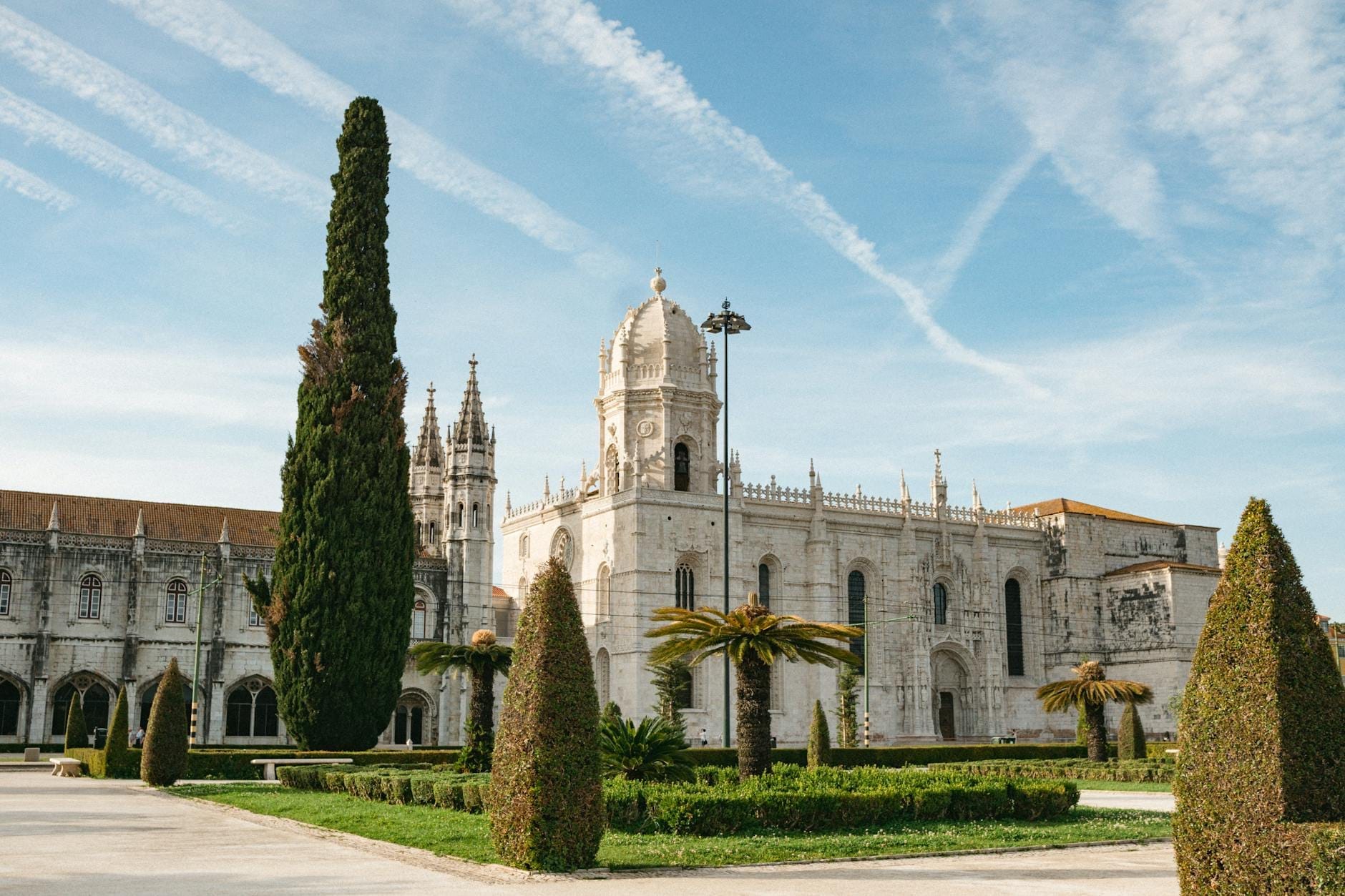
Lisbon's architectural heritage spans Moorish fortresses, Manueline monasteries, and Pombaline city blocks rebuilt after the 1755 earthquake. The Belém waterfront alone contains three of Portugal's most photographed structures, all within walking distance of each other.
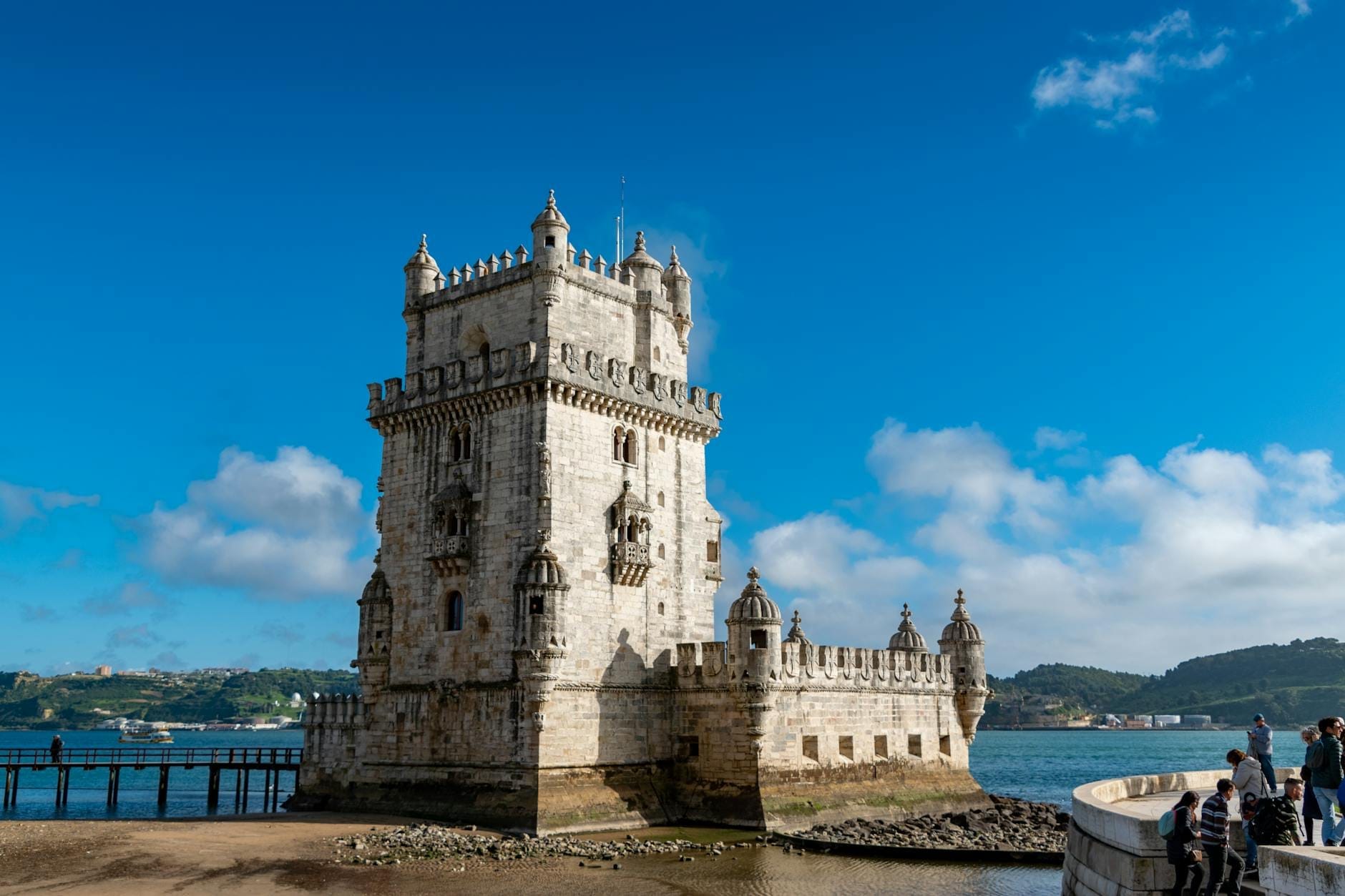
7. Shoot Lisbon's Most Iconic Symbol: Belém Tower at Sunrise
The Manueline stonework of this 16th-century tower is extraordinary up close. Shoot from the wooden bridge at sunrise for warm light on the facade with the Tagus behind. Skip the interior — the exterior is the entire point photographically.
Explore7. Shoot Lisbon's Most Iconic Symbol: Belém Tower at Sunrise
The Manueline stonework of this 16th-century tower is extraordinary up close. Shoot from the wooden bridge at sunrise for warm light on the facade with the Tagus behind. Skip the interior — the exterior is the entire point photographically.
Explore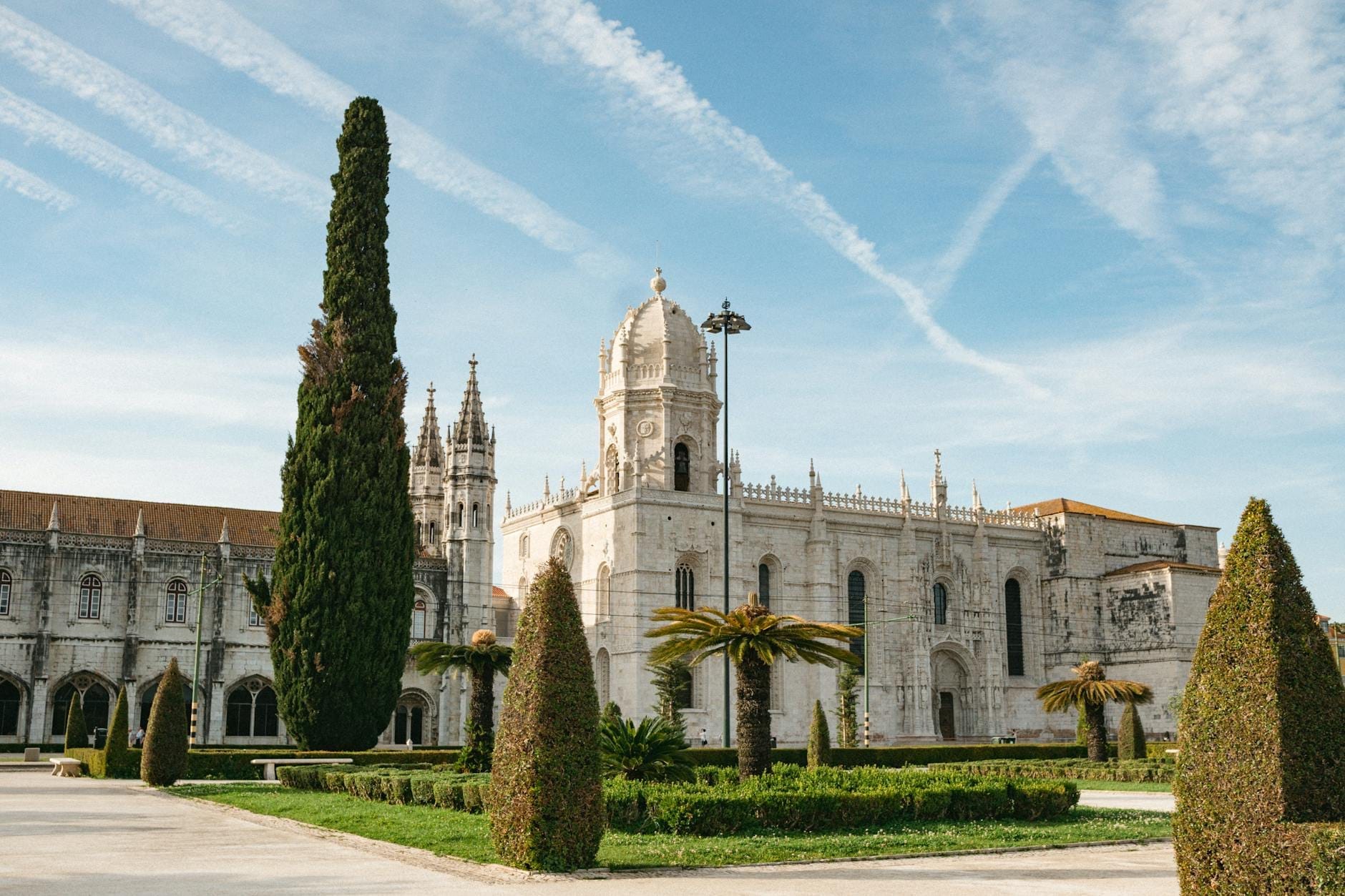
8. Explore the Ornate Cloisters of Jerónimos Monastery
The two-story cloisters are among the most photographed spaces in Portugal. The carved limestone tracery, arcaded walkways, and courtyard garden create natural symmetry. Morning light enters from the east, making early visits ideal for interior shots.
Explore8. Explore the Ornate Cloisters of Jerónimos Monastery
The two-story cloisters are among the most photographed spaces in Portugal. The carved limestone tracery, arcaded walkways, and courtyard garden create natural symmetry. Morning light enters from the east, making early visits ideal for interior shots.
Explore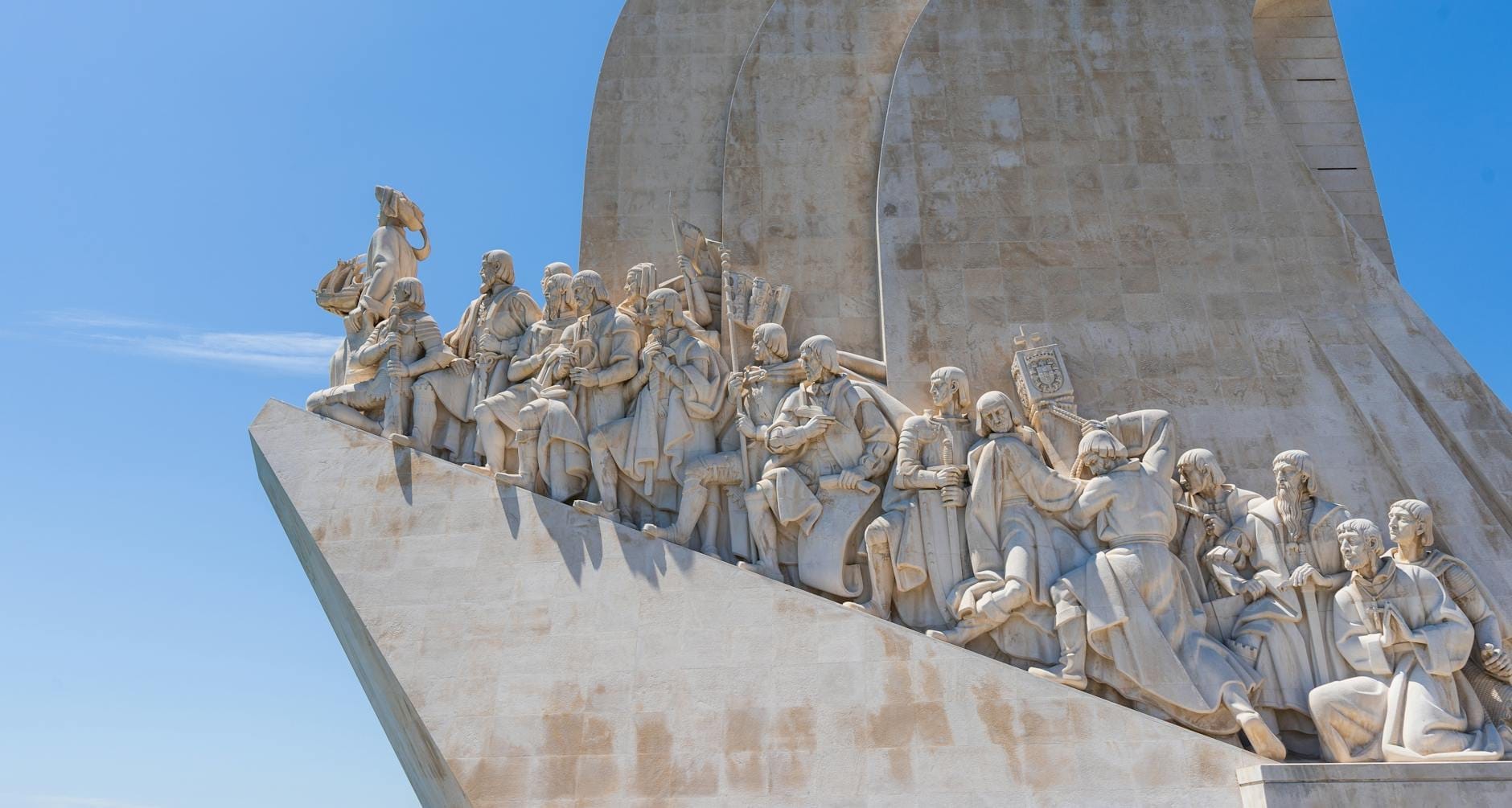
9. Frame the Monument to the Discoveries from the Riverside
The 52-meter caravel-shaped monument photographs best from the compass rose mosaic in front of it, creating a strong foreground-to-monument perspective. The rooftop also gives great views back toward the Jerónimos Monastery and Belém Tower.
Explore9. Frame the Monument to the Discoveries from the Riverside
The 52-meter caravel-shaped monument photographs best from the compass rose mosaic in front of it, creating a strong foreground-to-monument perspective. The rooftop also gives great views back toward the Jerónimos Monastery and Belém Tower.
Explore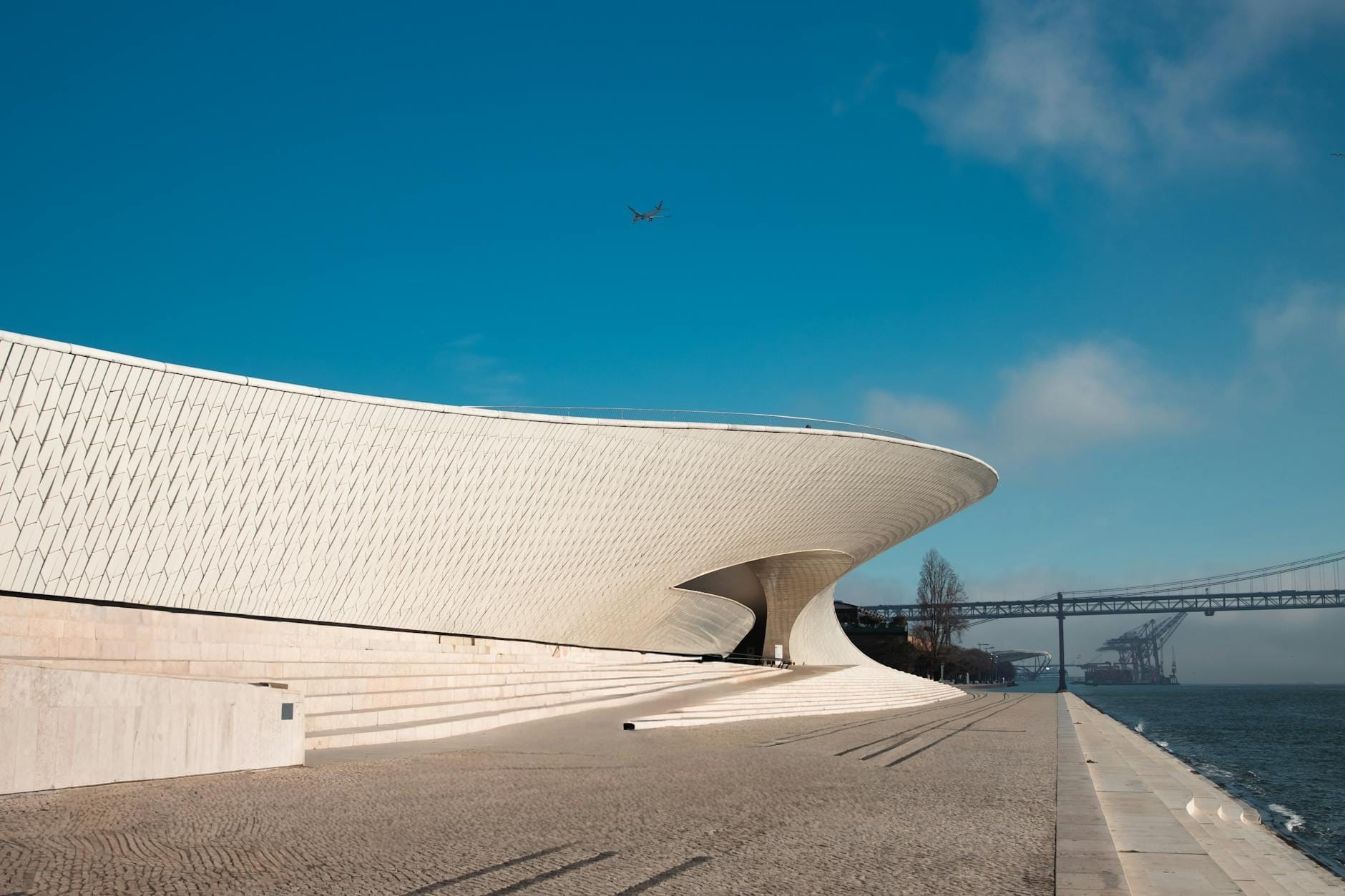
10. Walk Across MAAT's Wave-Like White Tiled Roof
The MAAT museum's undulating white ceramic roof is a sculptural landmark you can walk across freely. It curves down to the river's edge, creating a clean, minimalist composition against the Tagus. No admission needed to access the rooftop.
Explore10. Walk Across MAAT's Wave-Like White Tiled Roof
The MAAT museum's undulating white ceramic roof is a sculptural landmark you can walk across freely. It curves down to the river's edge, creating a clean, minimalist composition against the Tagus. No admission needed to access the rooftop.
Explore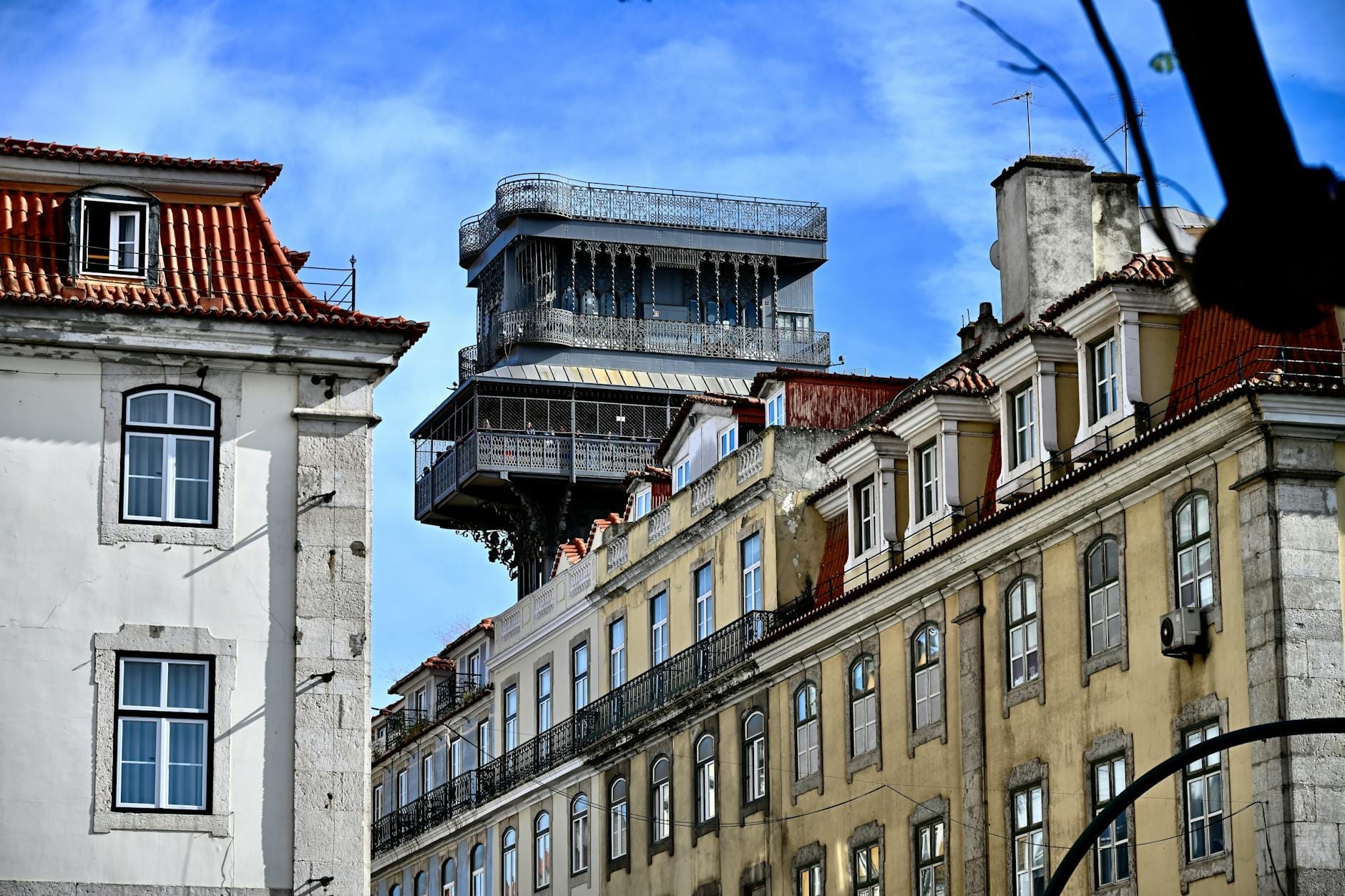
11. Ride the Neo-Gothic Santa Justa Lift for Rooftop Views
This ornate iron lift from 1902 is photogenic from street level and from the top. The upper walkway frames rooftop views over Baixa toward the castle. Tram 28 stops nearby every 15 minutes, pausing long enough for a street-level composition.
Explore11. Ride the Neo-Gothic Santa Justa Lift for Rooftop Views
This ornate iron lift from 1902 is photogenic from street level and from the top. The upper walkway frames rooftop views over Baixa toward the castle. Tram 28 stops nearby every 15 minutes, pausing long enough for a street-level composition.
Explore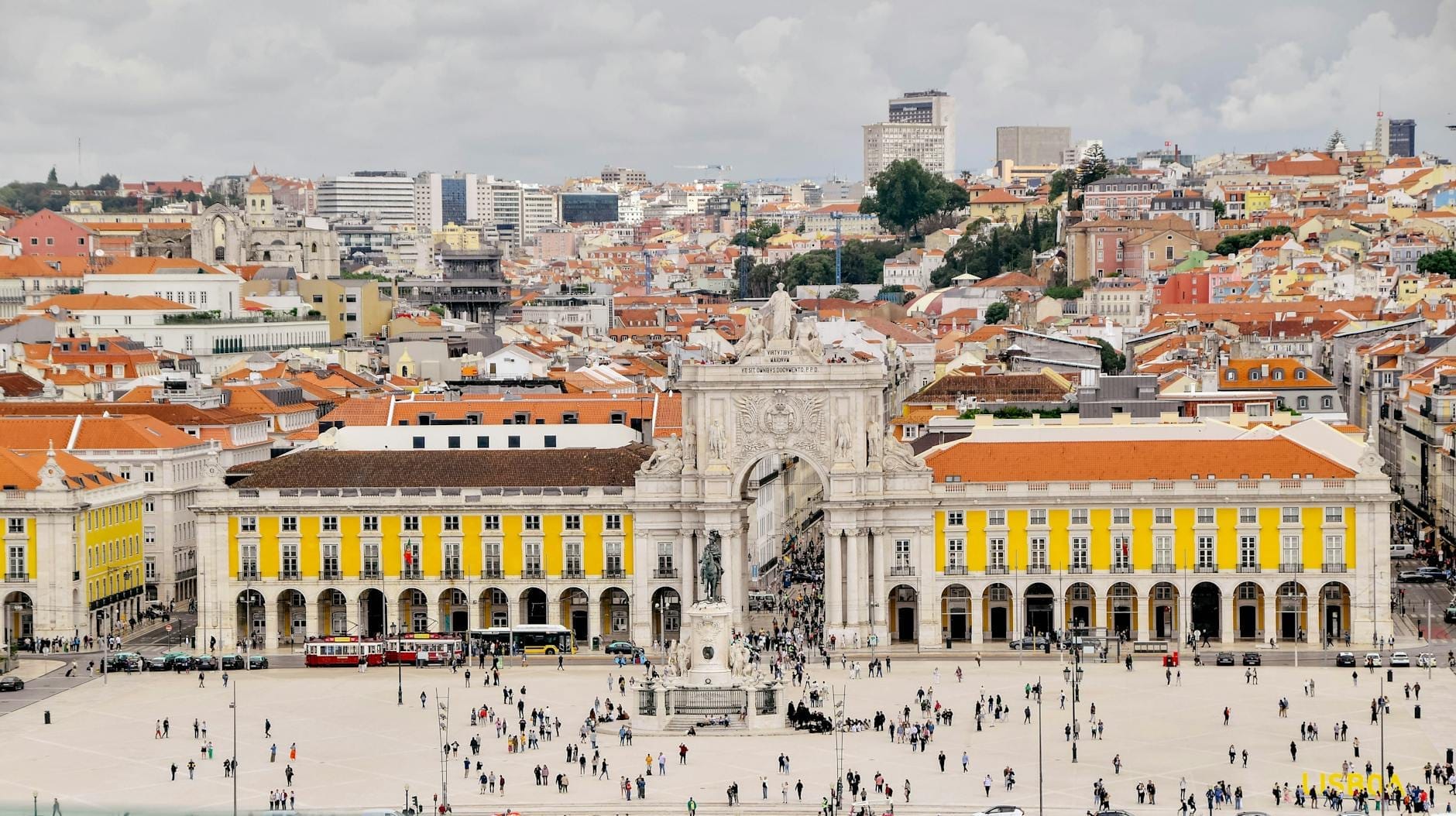
12. Photograph Lisbon's Grand Waterfront Square Before Crowds Hit
The yellow arcaded buildings, bronze equestrian statue, and open Tagus horizon make Praça do Comércio one of Europe's most dramatic squares. Visit between 6–8am for empty foreground and golden light on the facades before tour groups arrive.
Explore12. Photograph Lisbon's Grand Waterfront Square Before Crowds Hit
The yellow arcaded buildings, bronze equestrian statue, and open Tagus horizon make Praça do Comércio one of Europe's most dramatic squares. Visit between 6–8am for empty foreground and golden light on the facades before tour groups arrive.
Explore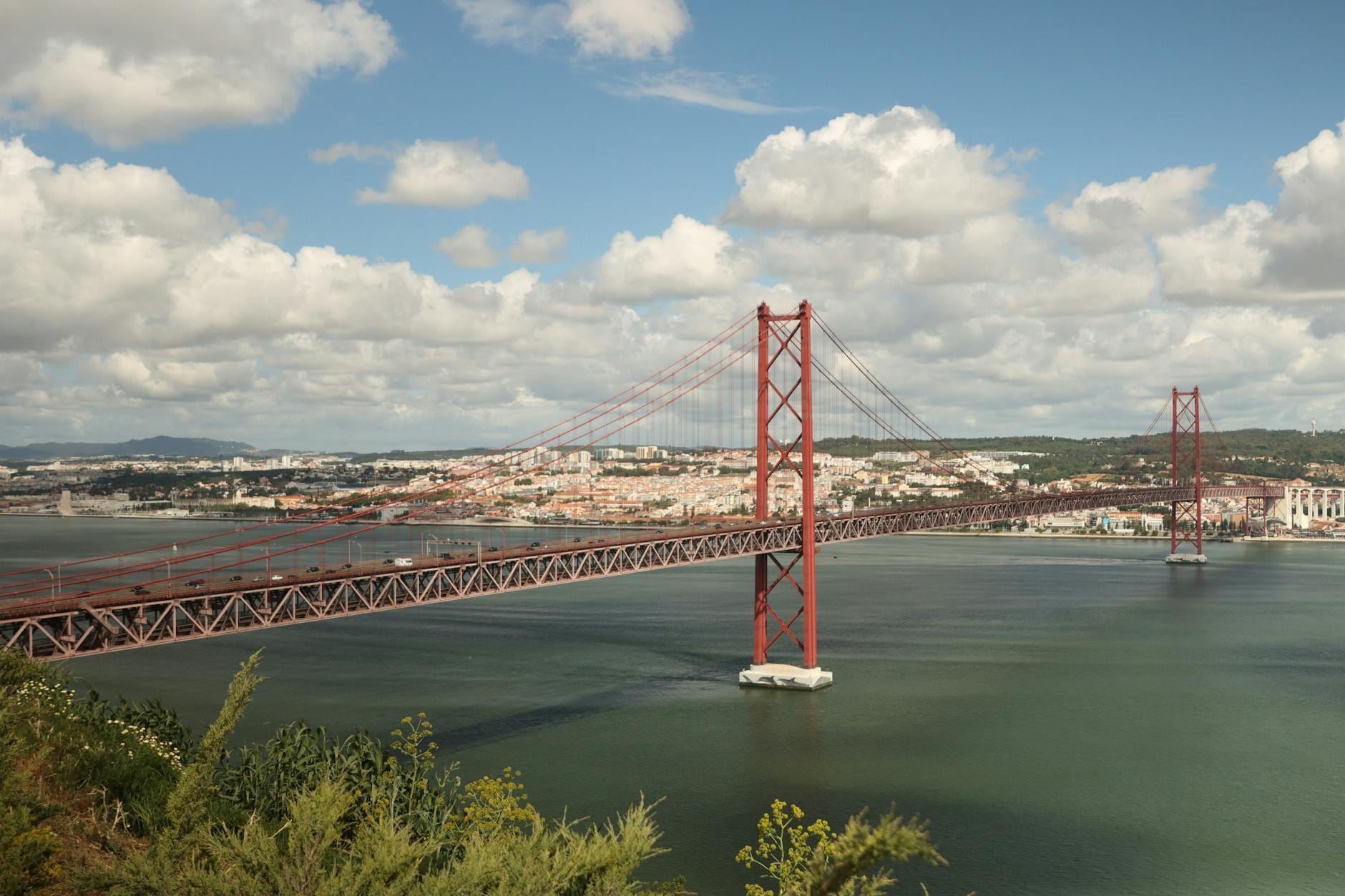
13. Shoot Lisbon's Golden Gate from the Riverbank
The suspension bridge's resemblance to San Francisco's Golden Gate is striking, and the Tagus riverbank between Cais do Sodré and Belém offers multiple compositions. Include the Cristo Rei in background for the full iconic double-landmark frame.
Explore13. Shoot Lisbon's Golden Gate from the Riverbank
The suspension bridge's resemblance to San Francisco's Golden Gate is striking, and the Tagus riverbank between Cais do Sodré and Belém offers multiple compositions. Include the Cristo Rei in background for the full iconic double-landmark frame.
ExploreTiles, Trams & Street Photography
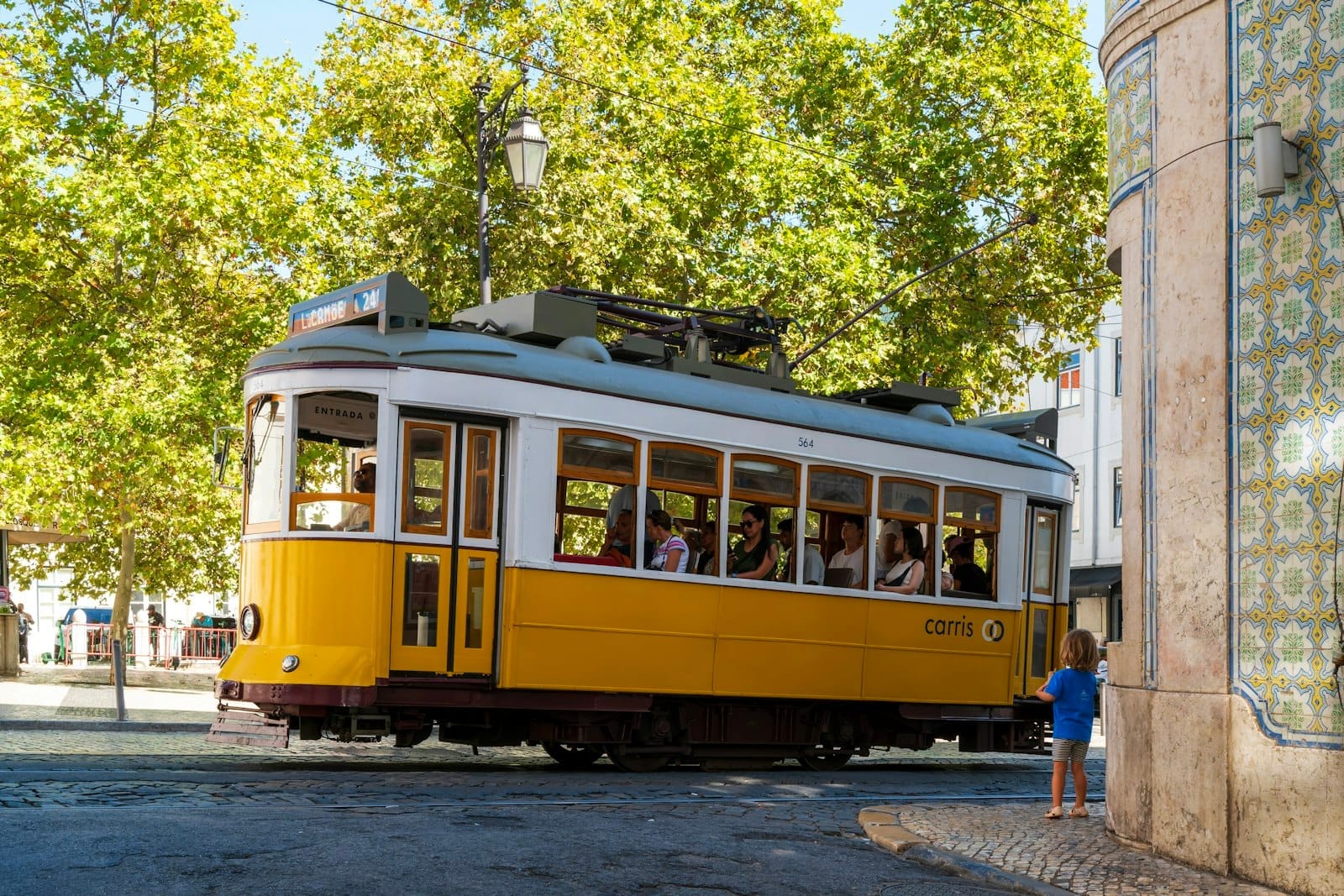
Lisbon's most distinctive visual elements are its azulejos, yellow trams, and pastel-painted facades. These details are best captured in the narrow streets of Alfama and Baixa-Chiado. For context on where these tiles originated, the National Tile Museum tells the full story.
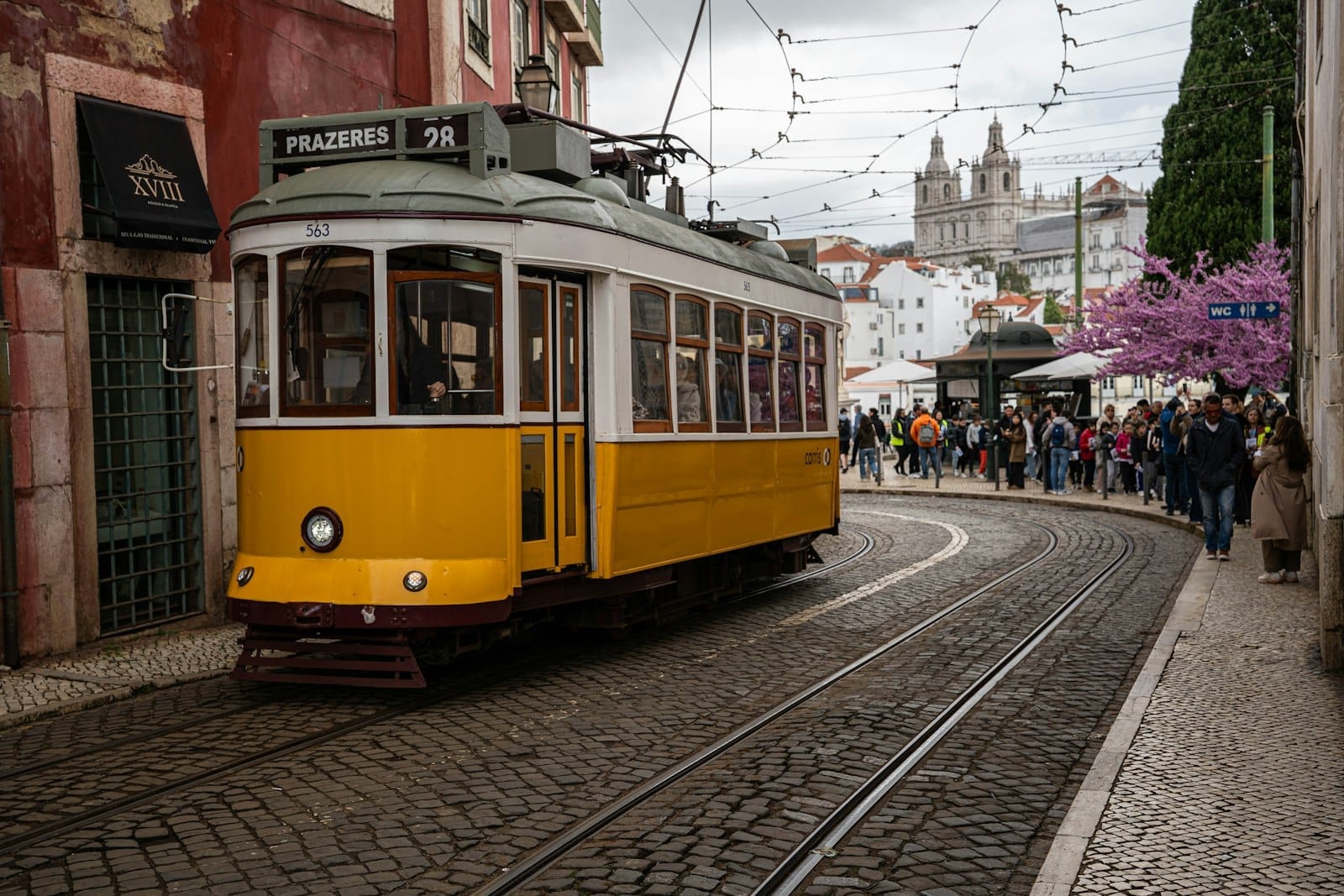
14. Catch Tram 28 on a Steep Alfama Curve for the Perfect Shot
The yellow tram rounding a tight corner in Alfama is one of Lisbon's most reproduced images. Station yourself on Rua da Conceição da Glória or near the Graça stops. Morning runs are less crowded; the tram moves slowly uphill giving you reaction time.
Explore14. Catch Tram 28 on a Steep Alfama Curve for the Perfect Shot
The yellow tram rounding a tight corner in Alfama is one of Lisbon's most reproduced images. Station yourself on Rua da Conceição da Glória or near the Graça stops. Morning runs are less crowded; the tram moves slowly uphill giving you reaction time.
Explore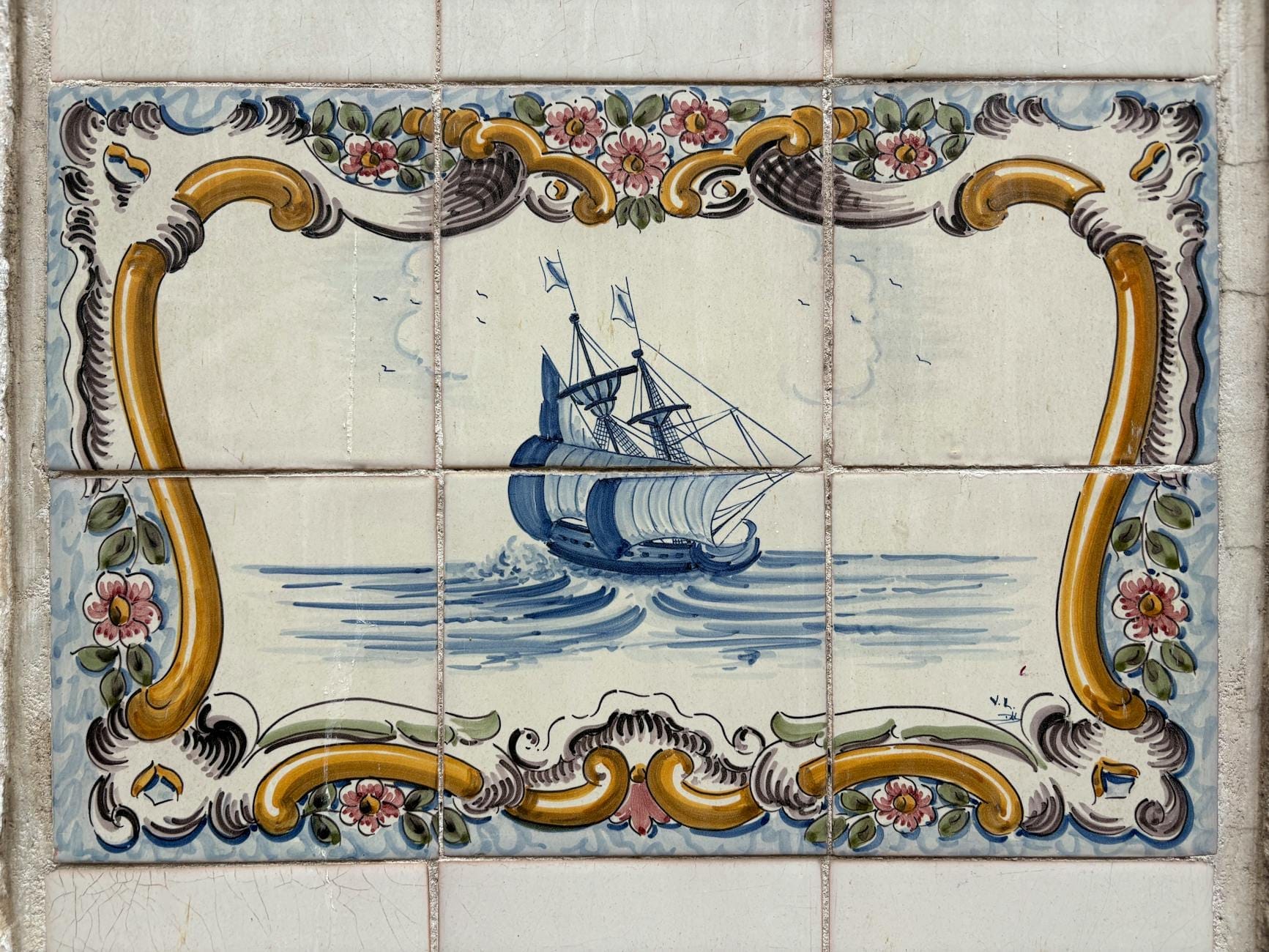
15. Photograph 500 Years of Portuguese Azulejos at the Tile Museum
The museum's convent chapel, tiled corridors, and vast panoramic panel of pre-earthquake Lisbon are extraordinarily photogenic. The blue-and-white panels have excellent natural light in the morning. Allow two hours; the building itself is as impressive as the collection.
Explore15. Photograph 500 Years of Portuguese Azulejos at the Tile Museum
The museum's convent chapel, tiled corridors, and vast panoramic panel of pre-earthquake Lisbon are extraordinarily photogenic. The blue-and-white panels have excellent natural light in the morning. Allow two hours; the building itself is as impressive as the collection.
Explore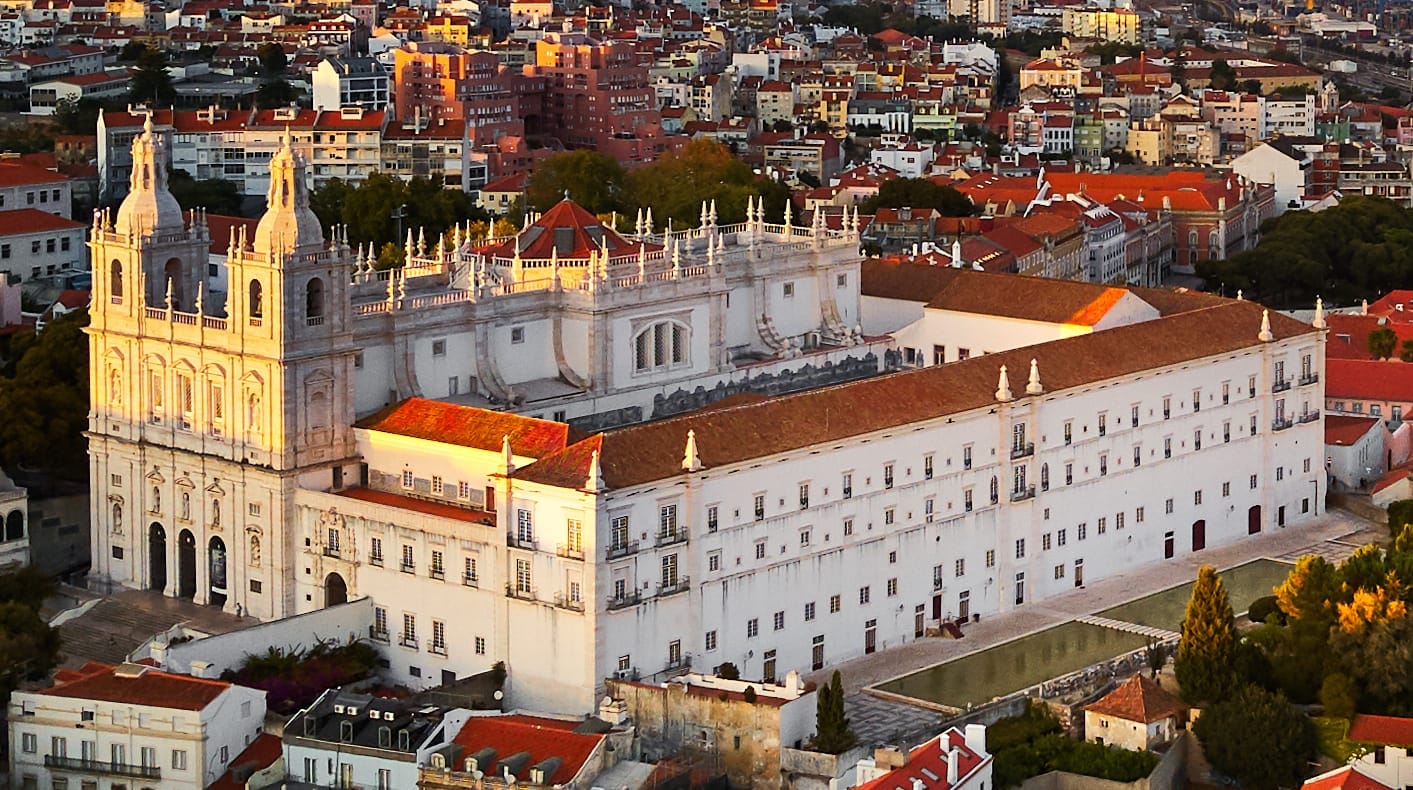
16. Explore the Azulejo-Lined Cloister of São Vicente de Fora
The 18th-century cloister lined with La Fontaine fable scenes in blue-and-white tiles is one of Lisbon's most striking interiors. The rooftop terrace adds a panoramic bonus. Admission is low; visit in morning when light enters the cloister courtyard at the best angle.
Explore16. Explore the Azulejo-Lined Cloister of São Vicente de Fora
The 18th-century cloister lined with La Fontaine fable scenes in blue-and-white tiles is one of Lisbon's most striking interiors. The rooftop terrace adds a panoramic bonus. Admission is low; visit in morning when light enters the cloister courtyard at the best angle.
Explore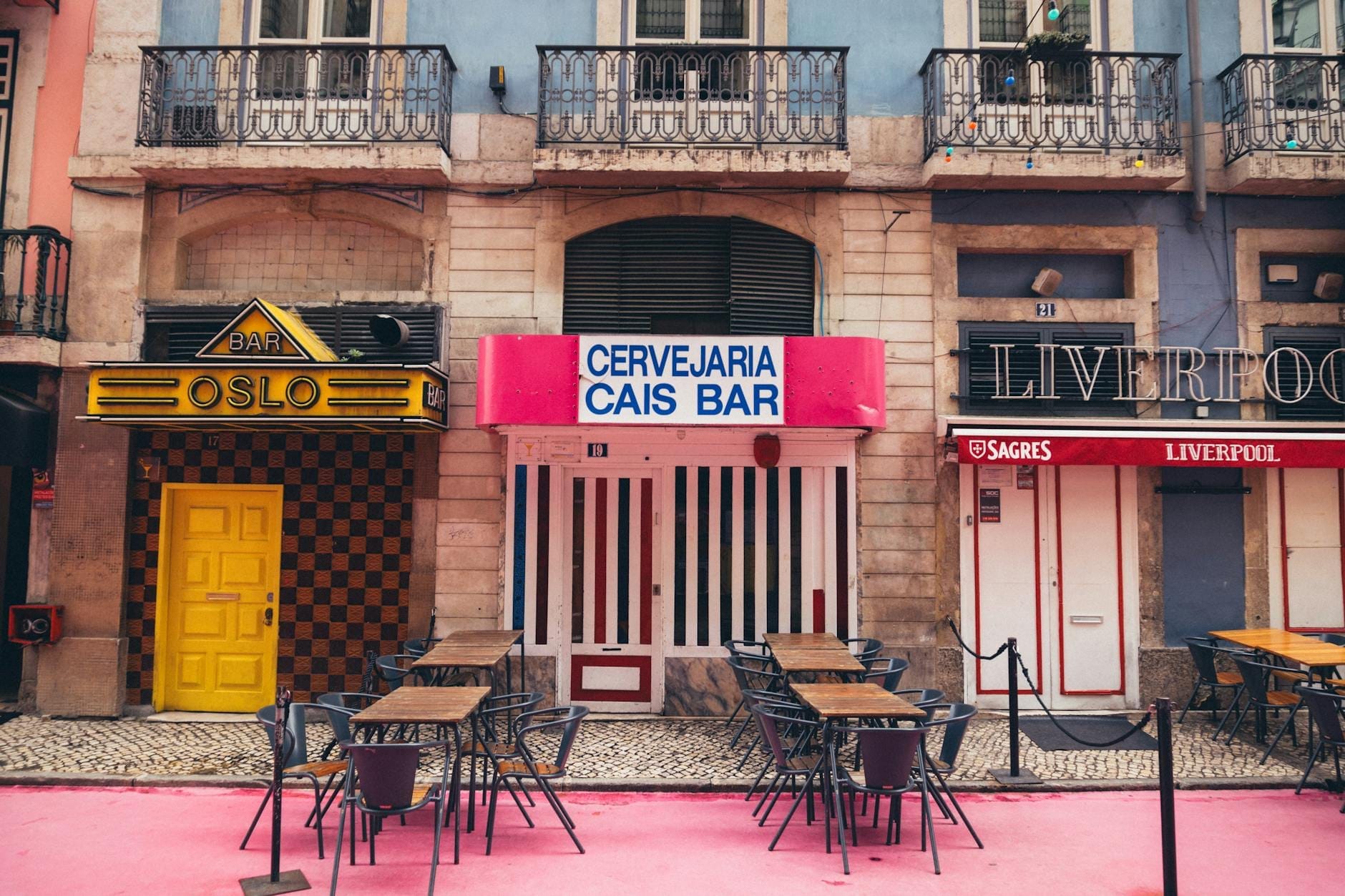
17. Shoot the Bold Pink Pavement of Rua Nova do Carvalho at Night
Pink Street's painted pavement and neon-lit bars create a vivid nighttime palette unlike anywhere else in Lisbon. Visit after 10pm when the street fills with people and bar lights reflect off the pink surface. Works equally well for street and night photography.
Explore17. Shoot the Bold Pink Pavement of Rua Nova do Carvalho at Night
Pink Street's painted pavement and neon-lit bars create a vivid nighttime palette unlike anywhere else in Lisbon. Visit after 10pm when the street fills with people and bar lights reflect off the pink surface. Works equally well for street and night photography.
Explore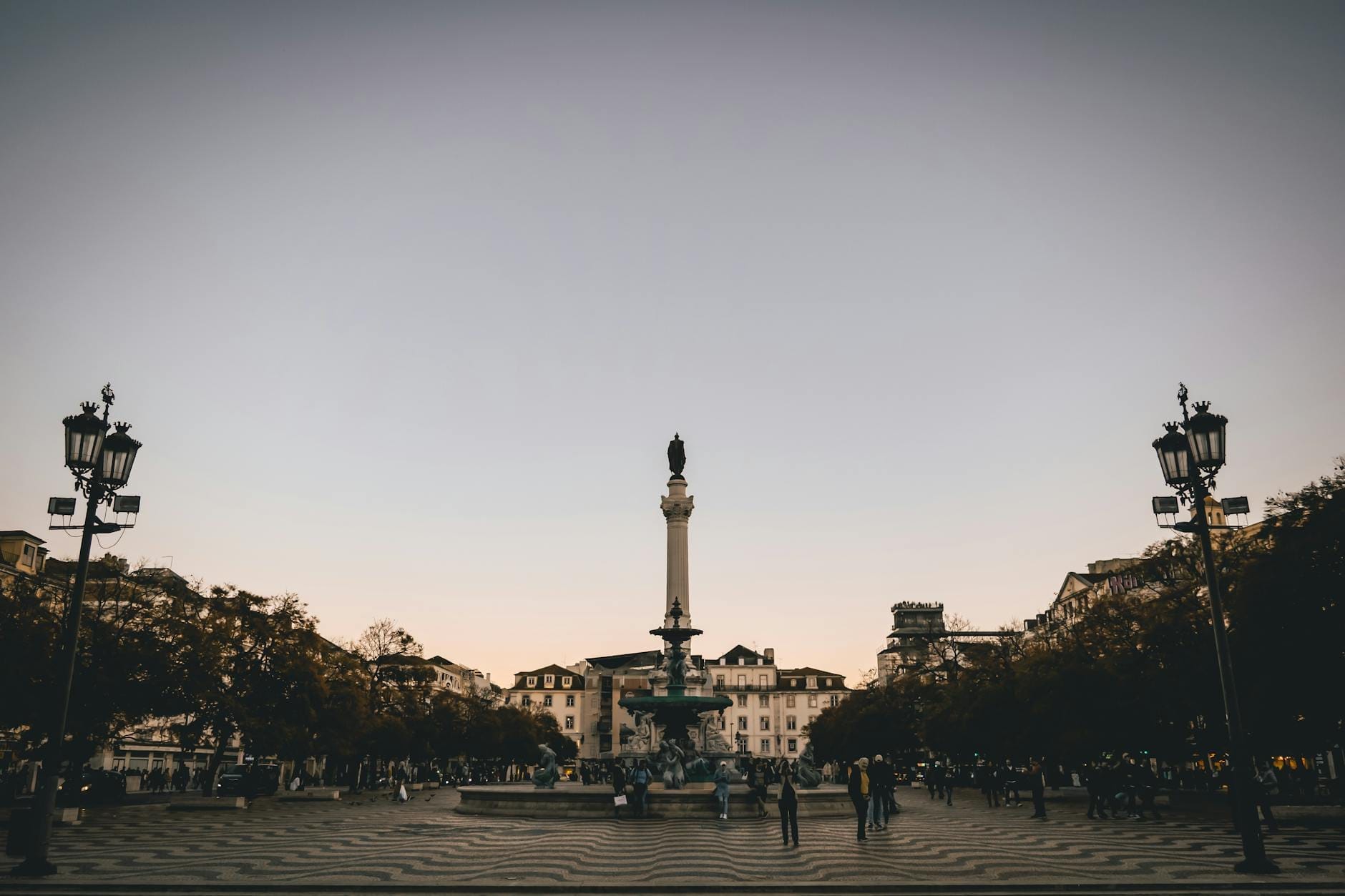
18. Photograph the Wavy Cobblestones of Rossio Square
Lisbon's historic main square is defined by its black-and-white wave-pattern cobblestones, twin baroque fountains, and the neo-Manueline National Theatre facade. Shoot the cobblestone pattern from low angle at dawn for graphic, crowd-free compositions.
Explore18. Photograph the Wavy Cobblestones of Rossio Square
Lisbon's historic main square is defined by its black-and-white wave-pattern cobblestones, twin baroque fountains, and the neo-Manueline National Theatre facade. Shoot the cobblestone pattern from low angle at dawn for graphic, crowd-free compositions.
ExploreCastles, Palaces & Romantic Estates
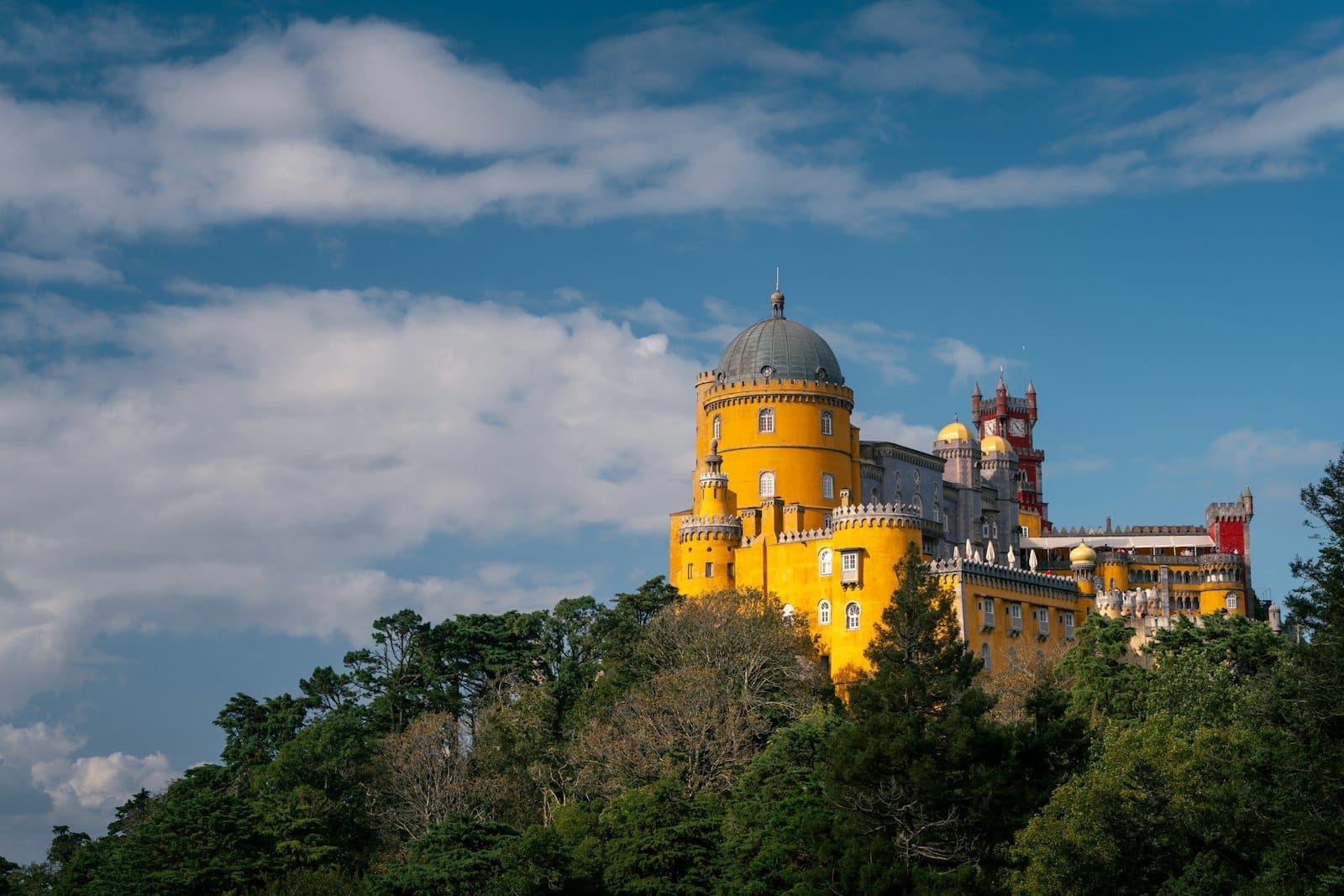
Beyond the city itself, Lisbon's surroundings contain some of the most theatrical architecture in Europe. A day trip to Sintra opens up a completely different level of photographic opportunity, with palaces that look more like film sets than historical monuments.
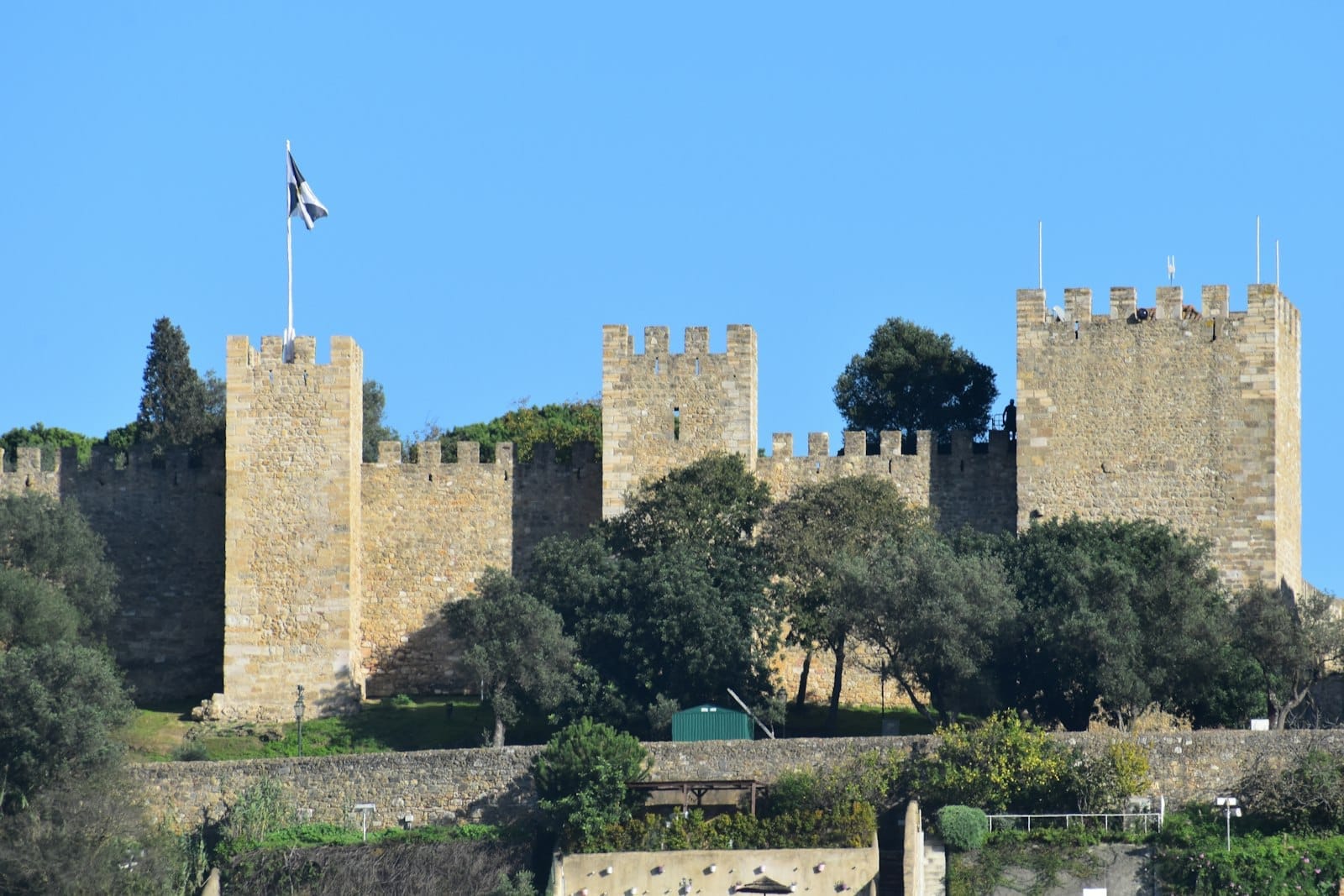
19. Walk the Ramparts of São Jorge Castle for 360-Degree Views
The Moorish castle walls offer 360-degree views over Lisbon's rooftops, the Tagus, and the Alfama below. The peacocks wandering the grounds are a photogenic bonus. Admission is €8.50; visit at opening time (9am) to photograph the ramparts without crowds.
Explore19. Walk the Ramparts of São Jorge Castle for 360-Degree Views
The Moorish castle walls offer 360-degree views over Lisbon's rooftops, the Tagus, and the Alfama below. The peacocks wandering the grounds are a photogenic bonus. Admission is €8.50; visit at opening time (9am) to photograph the ramparts without crowds.
Explore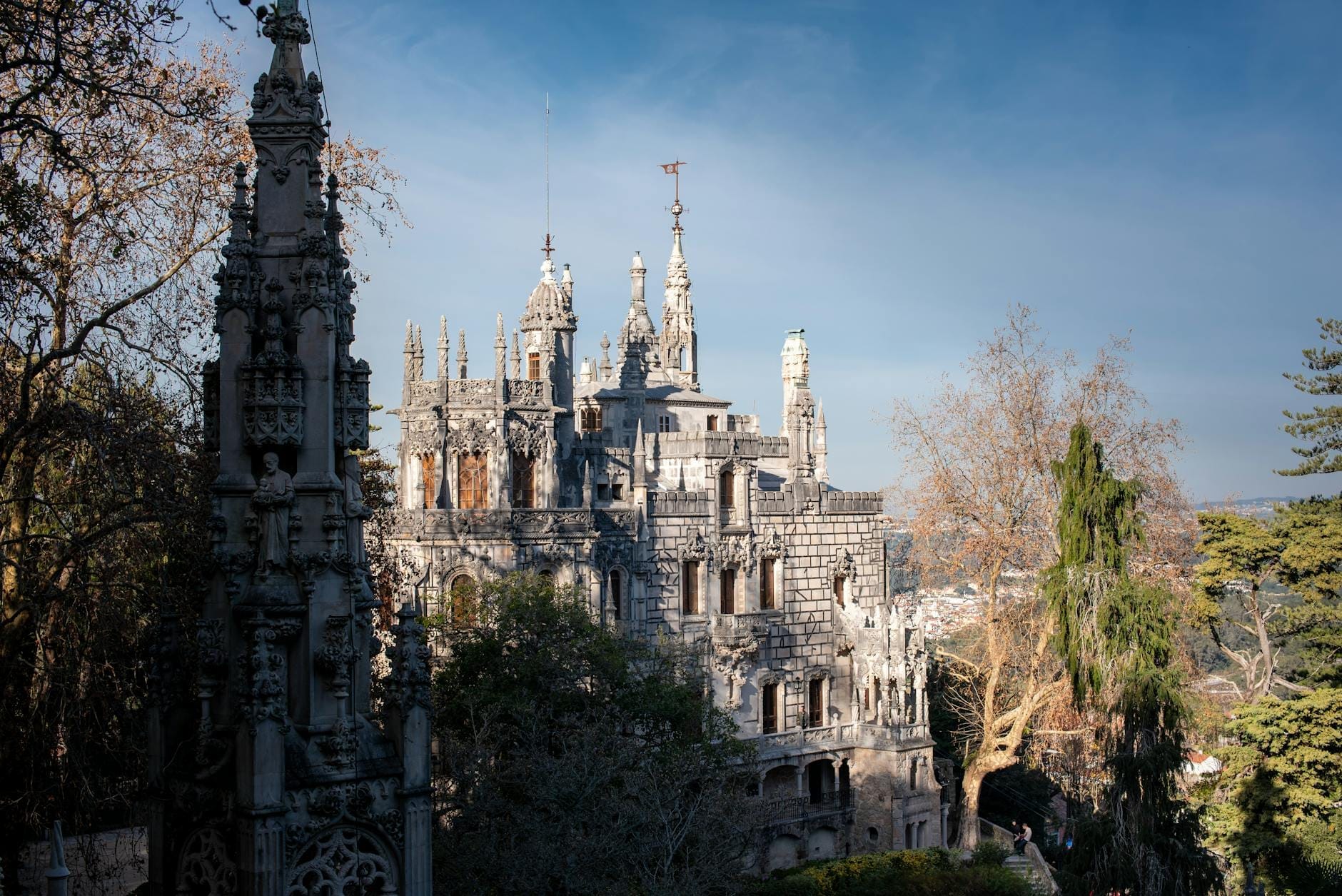
20. Descend the Mysterious Initiation Well at Quinta da Regaleira
The spiral stone staircase of the Initiation Well is the most photographed structure in Sintra. Looking up from the bottom into the circle of light above is the shot everyone comes for. Arrive at opening time — the well queue builds quickly after 10am.
Explore20. Descend the Mysterious Initiation Well at Quinta da Regaleira
The spiral stone staircase of the Initiation Well is the most photographed structure in Sintra. Looking up from the bottom into the circle of light above is the shot everyone comes for. Arrive at opening time — the well queue builds quickly after 10am.
Explore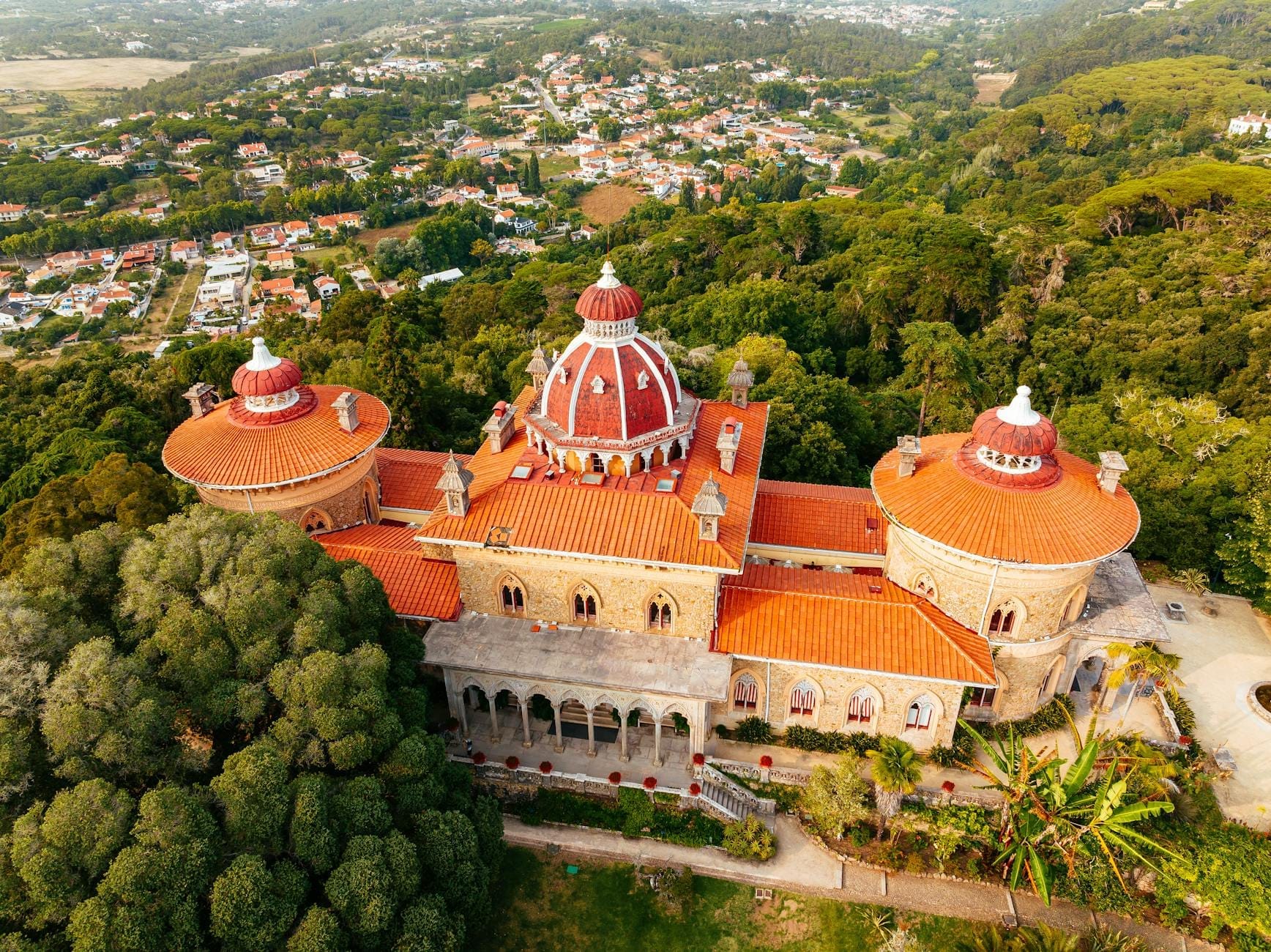
21. Photograph Sintra's Most Exotic Palace at Monserrate
The Indo-Moorish-Gothic facade of Monserrate Palace is extraordinary, and the surrounding botanical gardens add lush green context. Far less crowded than Pena Palace, the location rewards slower, more considered photography. Allow a full half-day here.
Explore21. Photograph Sintra's Most Exotic Palace at Monserrate
The Indo-Moorish-Gothic facade of Monserrate Palace is extraordinary, and the surrounding botanical gardens add lush green context. Far less crowded than Pena Palace, the location rewards slower, more considered photography. Allow a full half-day here.
Explore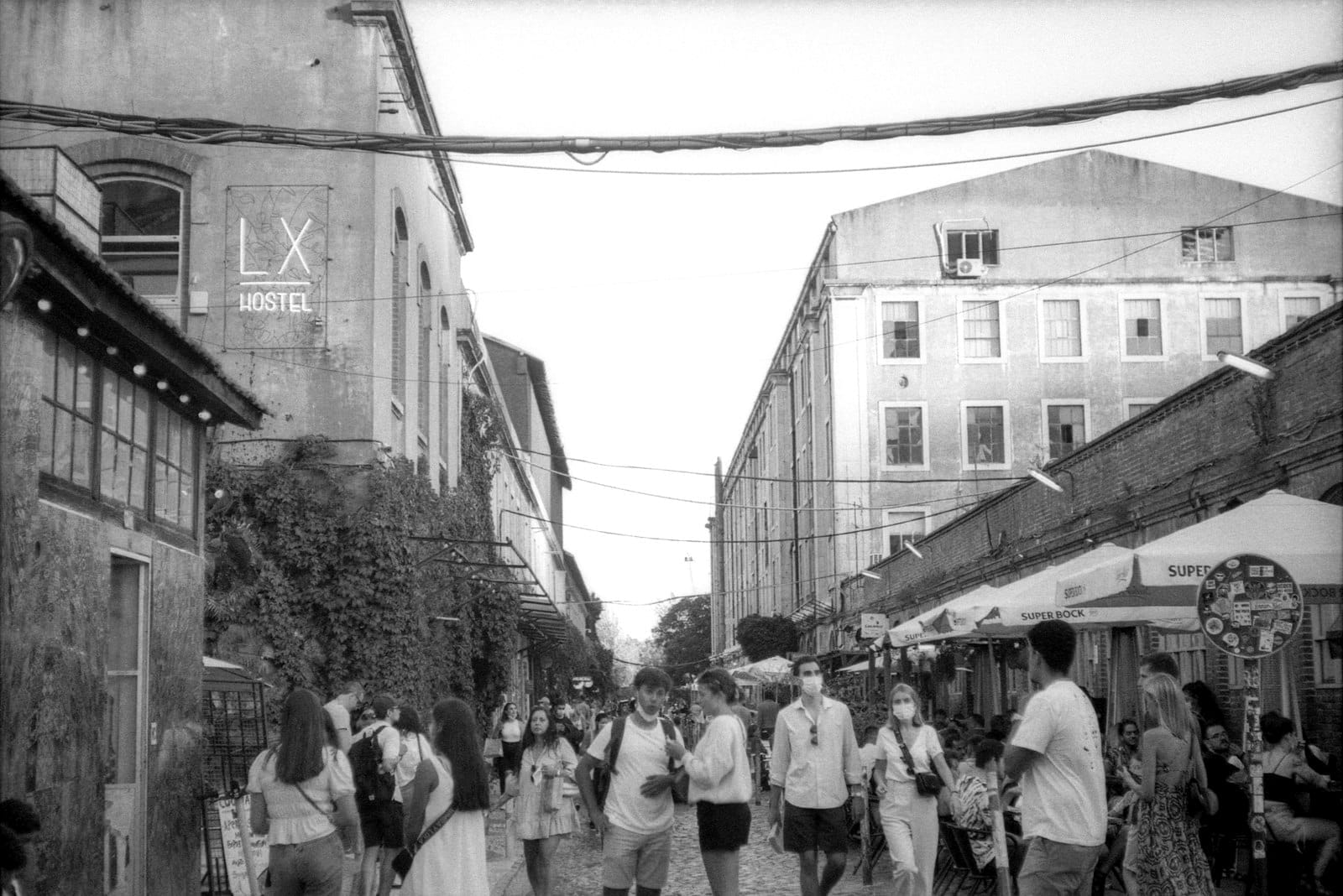
22. Find Street Art and Industrial Textures at LX Factory
The converted industrial complex in Alcântara is a grid of murals, exposed brick, neon signs, and creative storefronts that rewards wandering. Sunday market days add people and atmosphere. Visit on a weekday morning for the best light on the street art walls.
Explore22. Find Street Art and Industrial Textures at LX Factory
The converted industrial complex in Alcântara is a grid of murals, exposed brick, neon signs, and creative storefronts that rewards wandering. Sunday market days add people and atmosphere. Visit on a weekday morning for the best light on the street art walls.
ExploreUnique Details Worth Framing
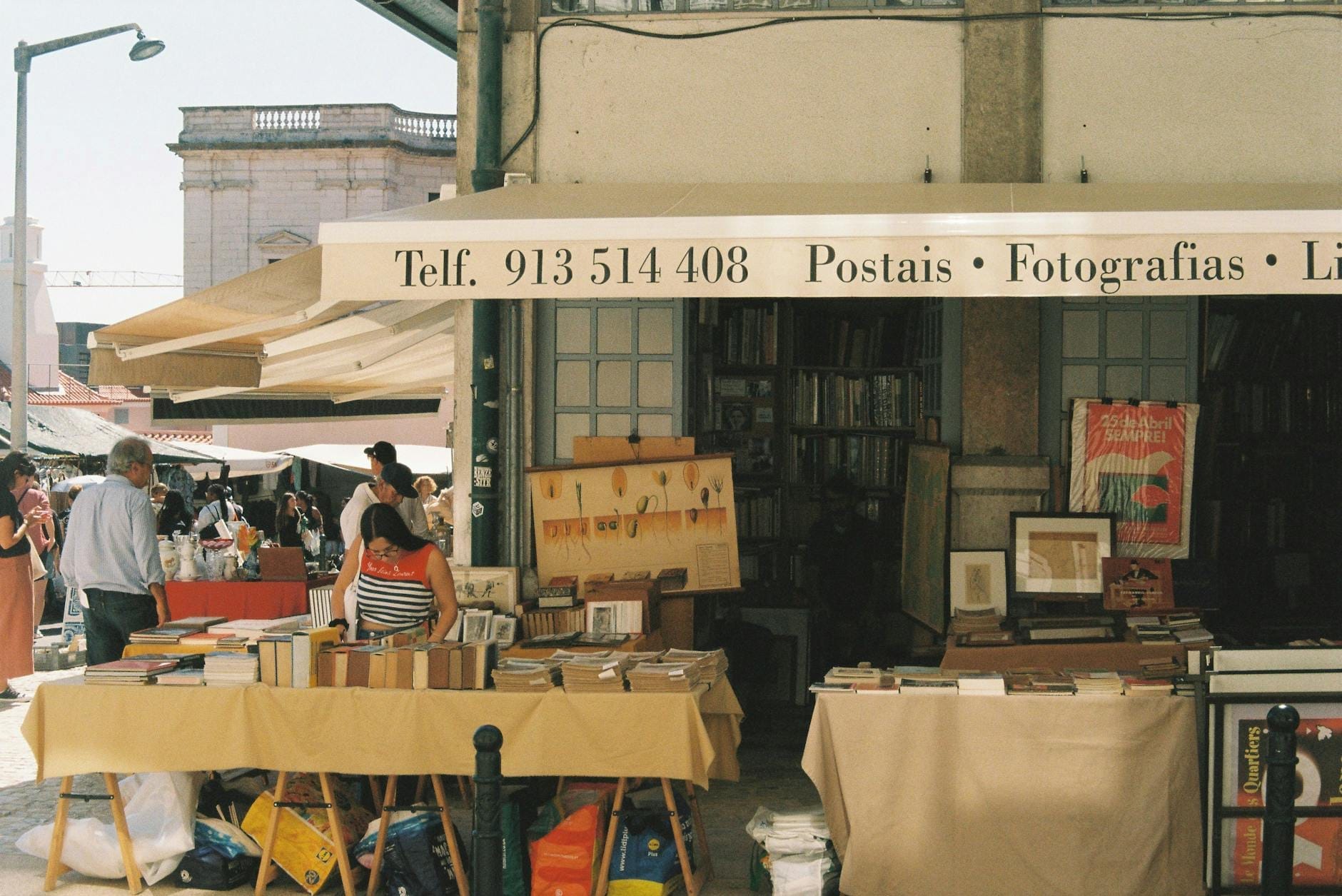
Some of Lisbon's most memorable photos aren't of grand monuments but of specific details — a tiled terrace, a Gothic ruin, a century-old bakery queue. These spots reward photographers who look beyond the headline attractions. Pair them with a walking tour of Lisbon to find the in-between moments that make a photo essay feel complete.
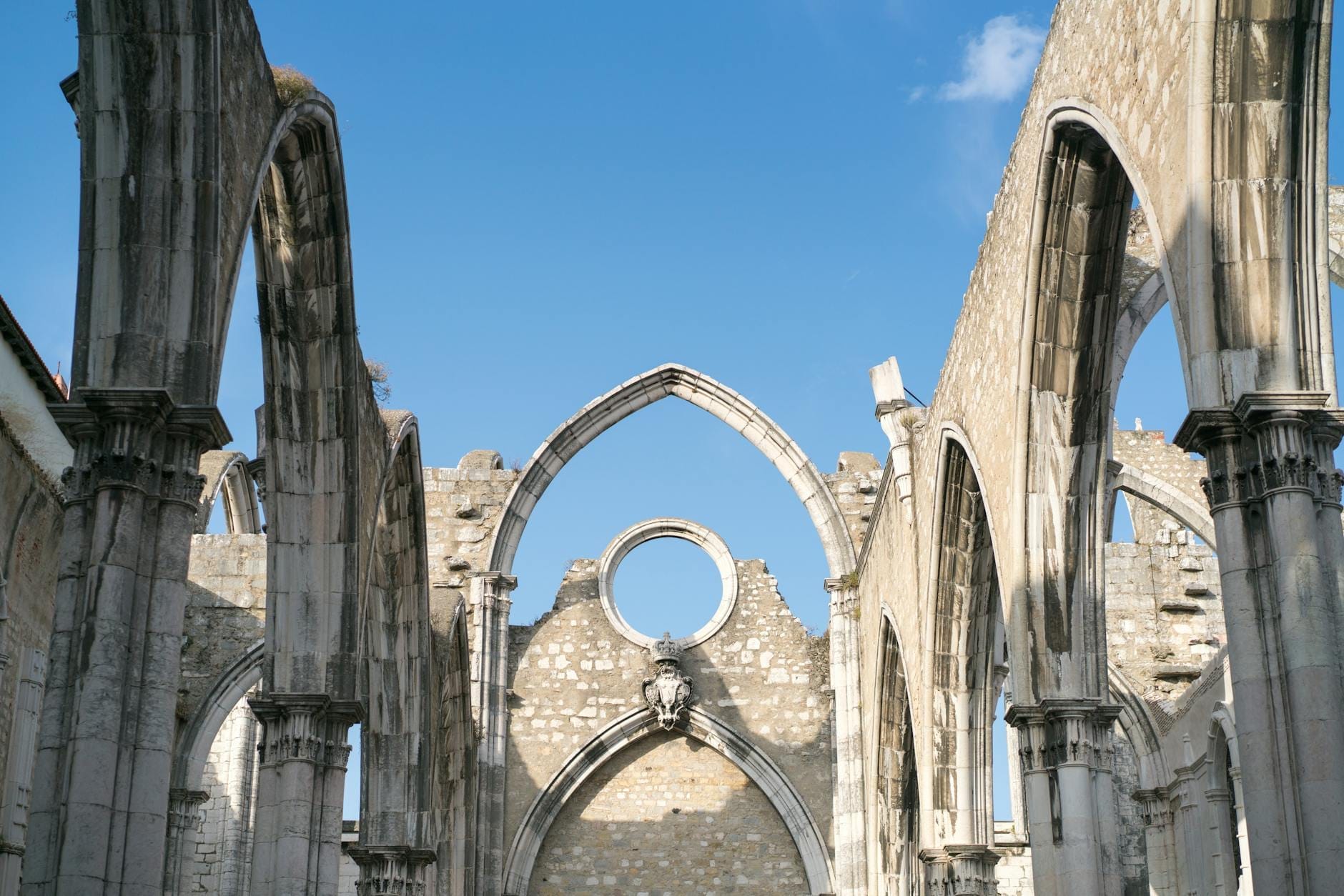
23. Shoot the Hauntingly Roofless Carmo Convent Gothic Arches
Left open to the sky after the 1755 earthquake, the Gothic arches of Carmo Convent frame clouds and blue sky in a way no intact building can. The interplay of surviving stonework and open air is stunning in any light. Best visited mid-morning when sun enters the nave.
Explore23. Shoot the Hauntingly Roofless Carmo Convent Gothic Arches
Left open to the sky after the 1755 earthquake, the Gothic arches of Carmo Convent frame clouds and blue sky in a way no intact building can. The interplay of surviving stonework and open air is stunning in any light. Best visited mid-morning when sun enters the nave.
Explore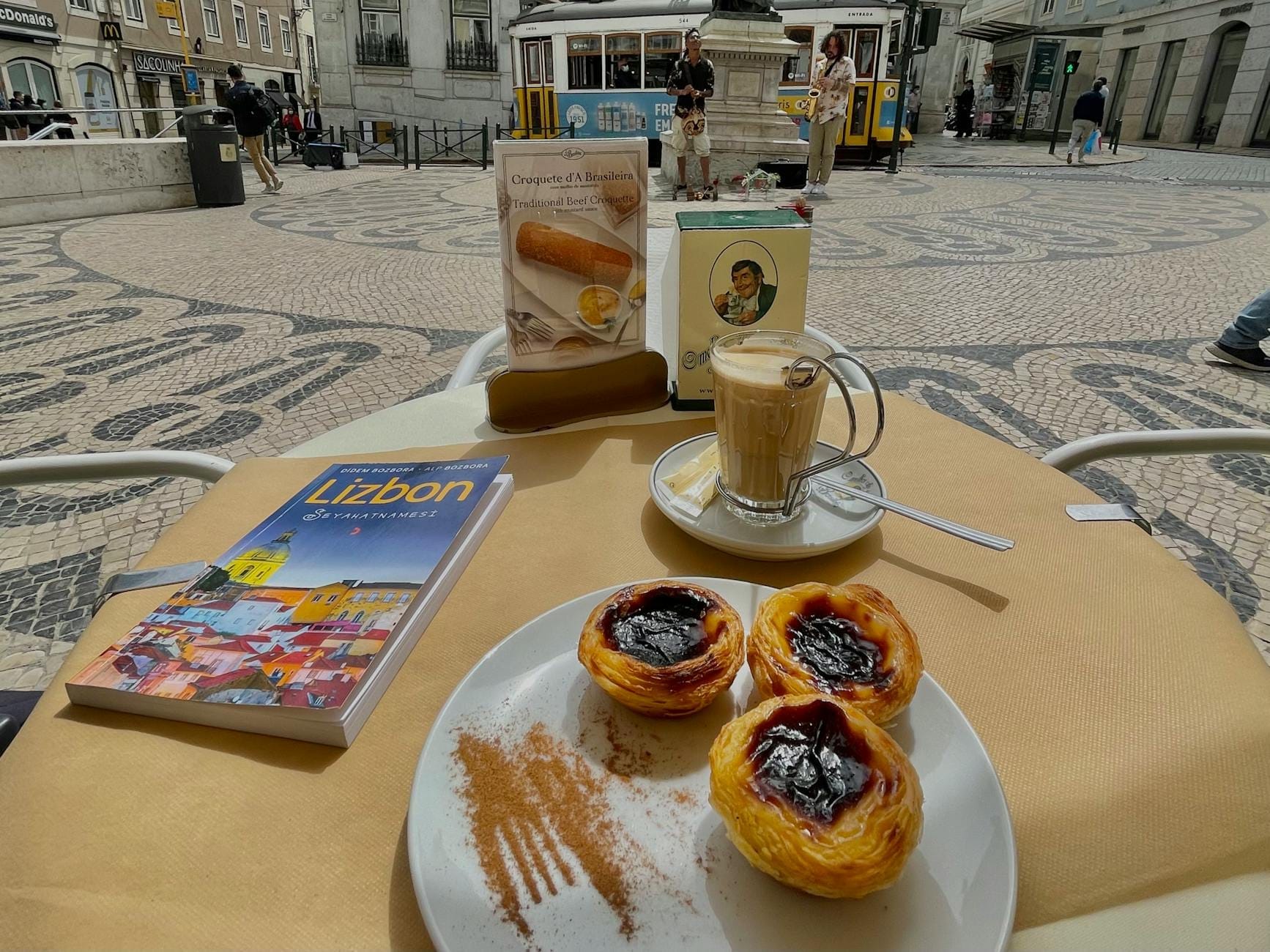
24. Photograph the Original Pastel de Nata at Pastéis de Belém
The blue-and-white azulejo interior of this 1837 bakery is as photogenic as the custard tarts themselves. Shoot the tarts dusted with cinnamon on the tiled counter, or capture the queue outside as a slice of Lisbon street life. Early morning light is best.
Explore24. Photograph the Original Pastel de Nata at Pastéis de Belém
The blue-and-white azulejo interior of this 1837 bakery is as photogenic as the custard tarts themselves. Shoot the tarts dusted with cinnamon on the tiled counter, or capture the queue outside as a slice of Lisbon street life. Early morning light is best.
Explore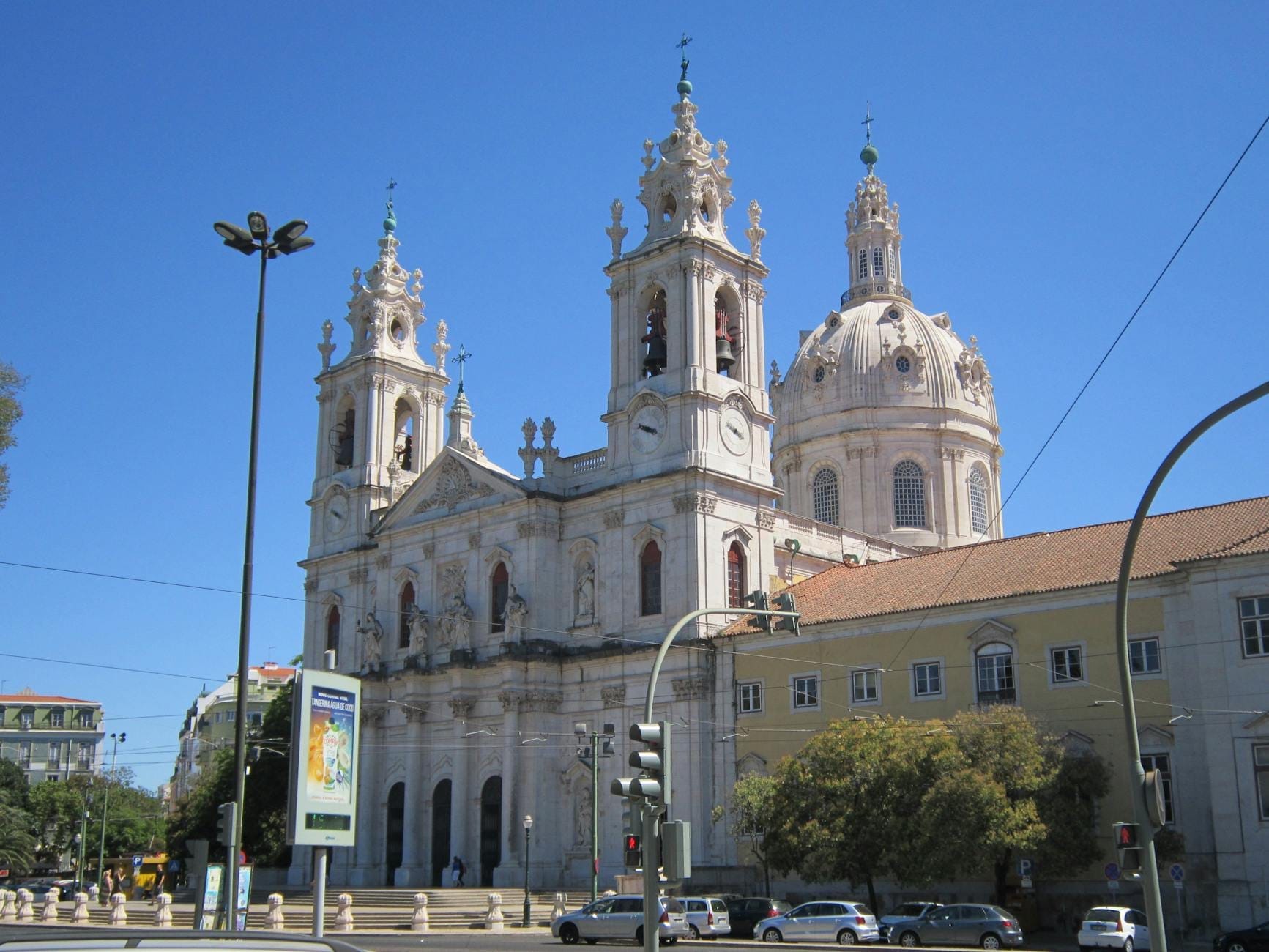
25. Capture the Domed Basilica da Estrela Above the Treetops
The white domed basilica rising above the Estrela garden trees is one of Lisbon's most elegant compositions. Shoot from Jardim da Estrela below for a full dome-over-garden frame, or access the rooftop terrace for views across the western neighborhoods.
Explore25. Capture the Domed Basilica da Estrela Above the Treetops
The white domed basilica rising above the Estrela garden trees is one of Lisbon's most elegant compositions. Shoot from Jardim da Estrela below for a full dome-over-garden frame, or access the rooftop terrace for views across the western neighborhoods.
Explore💡 Local tip
Overcast days are underrated in Lisbon. The soft diffused light eliminates harsh shadows on azulejo tiles and white facades, making it ideal for detail and architecture shots. Don't pack your camera away just because there's cloud cover.
FAQ
What is the most photographed spot in Lisbon?
Belém Tower consistently ranks as Lisbon's most photographed landmark, followed by the Jerónimos Monastery cloisters, Tram 28, and the Miradouro de Santa Luzia. The Initiation Well at Quinta da Regaleira in Sintra is the single most shared image from the wider Lisbon region.
When is the best time to visit Lisbon viewpoints for photos?
Sunrise (around 6:30–7:30am in summer, 7:30–8am in winter) gives you the best light and empty viewpoints. East-facing spots like Santa Luzia are best at sunrise; west-facing miradouros like Graça and Senhora do Monte are best at sunset. Midday works for south-facing locations like Portas do Sol.
Is Pink Street worth visiting for photos?
Yes, but visit early in the morning or at night. The pink pavement and street art are distinctive in both daylight and after dark; early morning (before 9am) offers cleaner shots before crowds arrive, while evening provides vibrant bar lighting and atmosphere. It's one of Lisbon's most unique and colorful night photography locations.
Do I need to pay to access Lisbon's viewpoints?
Most of Lisbon's miradouros are free to access, including Graça, Senhora do Monte, Santa Luzia, and Portas do Sol. The Arco da Rua Augusta rooftop and São Jorge Castle charge admission. The MAAT roof is free to walk without entering the museum.
What time should I visit Praça do Comércio for photos?
Between 6am and 8am is ideal. The square is essentially empty, the light is warm, and the yellow arcaded buildings glow in early sun. By 9–10am, tourist groups arrive and the square becomes crowded. The same advice applies to Rossio Square and Rua Augusta.
Tickets & tours
Live prices and dates from our booking partner. If you book, we may earn a commission at no extra cost to you.
Planning a trip? Discover personalized activities with the Nomado app.