Miradouro da Graça: The Viewpoint Lisbon Locals Actually Use
Officially named Miradouro Sophia de Mello Breyner Andresen, this hilltop terrace in the Graça neighborhood delivers one of Lisbon's most panoramic views across the city rooftops, São Jorge Castle, and the Tagus River. It draws a fraction of the crowds that pile into the more famous viewpoints nearby, making it the preferred spot for locals seeking a quiet coffee or a sunset without the jostling.
Quick Facts
- Location
- Calçada da Graça, São Vicente, Lisbon 1100-265
- Getting There
- Tram 28E to Graça stop; Bus 734
- Time Needed
- 20–45 minutes for the viewpoint; longer if you explore the surrounding Graça streets
- Cost
- Free to the terrace. Open 24/7. Church rooftop access requires a ticket (Adults €5, children 7–12 €3, under 6 free).
- Best for
- Sunset views, local atmosphere, photography without crowds
What Miradouro da Graça Actually Is
The Miradouro da Graça, officially named Miradouro Sophia de Mello Breyner Andresen, sits on the southern slope of the hill above the Graça neighborhood, one of Lisbon's highest points. The viewpoint is a wide public terrace shaded by pine trees, furnished with benches and a small kiosk bar, and bordered by a low stone wall that frames a 180-degree panorama across central Lisbon.
The renaming honors Portuguese poet Sophia de Mello Breyner Andresen, who drew creative inspiration from this exact hilltop. That literary connection is more than decorative. It says something about the kind of place this is: unhurried, thoughtful, more frequented by people reading or talking than by tour groups checking a map.
Unlike the Portas do Sol viewpoint or the more visited miradouros on the Alfama hillside, Graça sees noticeably fewer tourists on any given day. That gap is narrowing as the neighborhood gains attention, but it remains meaningfully quieter, especially on weekday mornings.
💡 Local tip
The kiosk bar at the viewpoint serves coffee, beer, and light snacks. Arrive early on weekdays and you may share the terrace with only a handful of locals. Weekend evenings draw bigger groups, particularly around sunset.
The View: What You Actually See
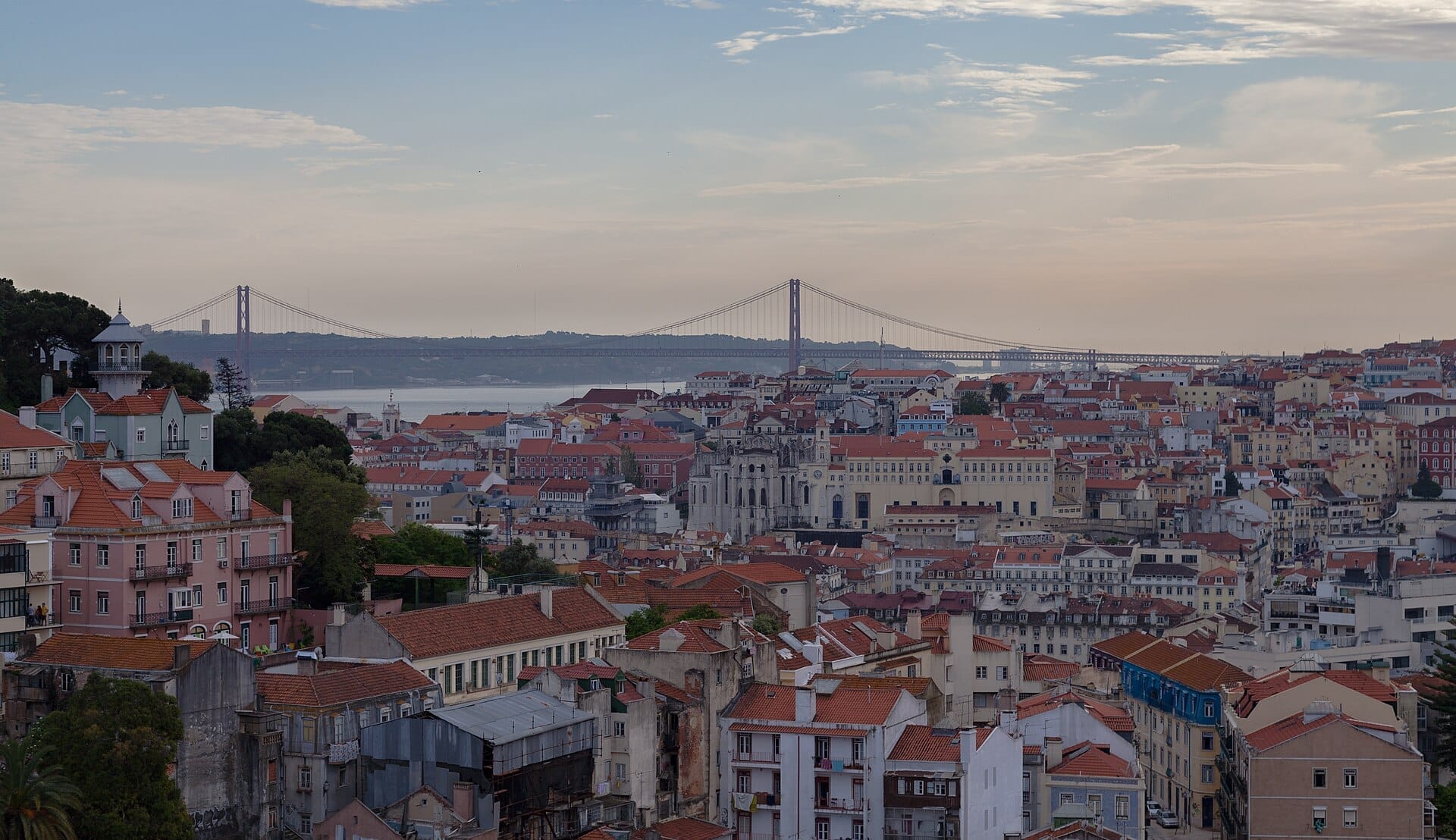
Standing at the wall, the view unfolds in layers. In the foreground, terracotta-tiled rooftops descend steeply down the hillside, television aerials and laundry lines marking lived-in neighborhoods rather than tourist zones. São Jorge Castle sits clearly visible to the left, its crenellated walls close enough to feel reachable. The white dome of the National Pantheon appears to the right, and on clear days the Ponte 25 de Abril suspension bridge hangs in the distance above the Tagus.
The Tagus itself stretches across the lower third of the view, catching the light differently depending on the time of day. Morning haze softens the far bank; midday brings a harder, silvery glare; late afternoon turns the river copper and the city gold. For photographers, the direction of the terrace faces roughly southwest, meaning the best natural light falls on the cityscape in the hours approaching sunset. If you are planning a photography-focused visit to Lisbon's hilltops, read the full guide to Lisbon's best viewpoints to compare what each offers.
Tickets & tours
Live prices and dates from our booking partner. If you book, we may earn a commission at no extra cost to you.
Belem and Modern Lisbon bus hop-on hop-off combined tickets
From 28 €Instant confirmationFree cancellationSt. George Castle E-ticket and Audio Tour
From 28 €Instant confirmationLisbon Story Centre entrance tickets
From 7 €Instant confirmationFree cancellationYellow boat river tour
From 24 €Instant confirmationFree cancellation
How the Experience Changes Through the Day
Early mornings here are almost meditative. The kiosk may not yet be open, the benches are largely empty, and the only sounds are distant trams, pigeons, and the occasional motorbike grinding up the hill. The city below is in motion but the terrace is still. This is when the view feels most intimate.
By mid-morning on weekends, a steady flow of visitors arrives, often in pairs or small groups. The kiosk draws a queue for coffee. Locals sit for long stretches while tourists take their photos and move on within ten minutes. The contrast creates an odd but pleasant atmosphere: part neighborhood square, part observation deck.
Sunset is the most popular window, and understandably so. The sky over the Tagus turns from pale blue to deep orange, the castle walls catch the last warm light, and the kiosk does a brisk trade in cold drinks. Arrive 30 minutes before sunset to secure a spot on the wall rather than standing behind others.
⚠️ What to skip
On warm summer evenings, the terrace can fill up significantly. This is no longer an obscure local haunt. Come before 6:30 PM to get the best position at the wall, or accept that you will be sharing the view with a crowd.
Historical and Cultural Context
The terrace sits adjacent to the Convento da Graça, a convent founded in 1271 (some sources cite 1291 for a specific phase of its construction) by the Order of Saint Augustine. The convent's church, Igreja de Nossa Senhora da Graça, remains an active parish and its facade is visible as you approach the viewpoint from the main square. The scale of the convent complex explains why this part of the hill feels more monumental than the surrounding streets.
The Graça neighborhood itself is one of Lisbon's oldest, a working-class district that has retained more of its residential character than the heavily touristed streets of Alfama directly below. Walking the streets around the viewpoint, you pass small grocery shops, old tascas, and community centers rather than souvenir stalls. The neighborhood was largely spared from the worst of the 1755 earthquake that flattened much of Baixa, which is partly why its street grid feels more medieval and irregular.
The viewpoint was formally opened to the public in its current organized form in 2012, though the terrace and its views had been informally used for far longer. The renaming after Sophia de Mello Breyner Andresen, one of Portugal's most celebrated 20th-century poets, in 2004 reflects Lisbon's habit of honoring its literary figures through geography rather than just statues.
Getting There and Navigating the Hill
The most iconic approach is via Tram 28E, Lisbon's famous yellow electric tram that winds up through Alfama and Graça. Ride it to the Graça stop, then walk a short distance along Calçada da Graça toward the convent. The walk takes about five minutes from the tram stop and involves a gentle incline. Bus 734 also serves the area for those who prefer a less crowded transit option.
On foot from Alfama, the climb is steep and involves uneven cobblestones. Wear shoes with grip rather than sandals. The ascent from the Portas do Sol viewpoint takes roughly 15 to 20 minutes on foot and passes through quiet residential streets. It is a rewarding walk but not suitable for those with limited mobility. Wheelchair access to the terrace itself is limited due to the surrounding terrain.
Taxis and ride-hailing apps (Uber and Bolt both operate in Lisbon) can drop you very close to the viewpoint. If you are coming from the city center, this is the most efficient option for those who want to skip the climb.
ℹ️ Good to know
If you plan to link Miradouro da Graça with other hilltop viewpoints on the same day, a logical route runs from Senhora do Monte (Lisbon's highest viewpoint) downhill through Graça, then continues down to Portas do Sol. This is a comfortable 45-minute walk and covers the eastern hills in sequence.
Photography Tips and Practical Considerations
The terrace faces southwest, which makes it excellent for afternoon and golden-hour photography. Morning light falls from behind you, illuminating the city below clearly but without drama. For long exposures or wider compositions, arrive at first light when the city is warmly lit from the east and the streets below are empty.
São Jorge Castle appears prominently in the left side of the frame, close enough that a standard 35mm or 50mm lens captures it without needing a telephoto. The National Pantheon dome works better with a slight zoom. For a comparative view of how different Lisbon viewpoints frame the same landmarks, check the guide to Lisbon's most photogenic spots.
There are no lighting installations at the viewpoint, so night photography is limited by ambient city glow. The view at night is still atmospheric, with the castle illuminated and the river reflecting lights, but the terrace itself is dark. Take care at the wall edge after dark.
Who Should Skip This Viewpoint
Travelers with limited mobility will find the approach challenging. The Graça neighborhood involves inclines and cobblestones that are difficult for wheelchairs and uncomfortable for anyone with knee or ankle issues. There is no elevator or funicular access equivalent to what serves other Lisbon viewpoints.
Those who specifically want to see the Tagus estuary in close detail, or who prefer the manicured terrace gardens of Parque Eduardo VII, may find the relatively compact and unadorned terrace here underwhelming. The appeal of Miradouro da Graça is atmosphere and panorama, not botanical beauty or visitor facilities.
If your priority is views of Belém's monuments rather than the castle and old city, you will get more from a visit to the waterfront in Belém or from a river cruise along the Tagus.
Insider Tips
- The kiosk bar is cash-friendly but also accepts cards. Order a galão (milky espresso) and take your time. This is the kind of place where no one rushes you.
- The Miradouro da Senhora do Monte, a 10-minute walk uphill from here, sits even higher and offers a wider sweep of the city including the Marquis of Pombal area. Visit both in sequence on the same walk.
- On the morning of the Santo António festival (June 13th), the streets around Graça are some of the liveliest in the city, with sardine smoke and paper decorations still in the air. The viewpoint at this hour gives you both the panorama and the festive noise rising from the alleys below.
- The pine trees on the terrace provide genuine shade in summer, which makes midday visits more comfortable here than at exposed viewpoints like Portas do Sol.
- For a complete eastern-hills route, walk from the Pantheon via São Vicente de Fora uphill to Graça, then continue to Senhora do Monte. Each stop adds context to the one before.
Who Is Miradouro da Graça For?
- Travelers who want city panoramas without tour-group crowds
- Photographers looking for golden-hour compositions of the castle and rooftops
- Visitors exploring the Graça neighborhood on foot who want a natural anchor point
- Sunset seekers who want a kiosk bar and seating rather than just a wall to lean on
- Anyone combining a hilltop walk across Lisbon's eastern ridgeline
Nearby Attractions
Other things to see while in Graça:
- Miradouro da Senhora do Monte
Sitting at the peak of the Graça hill, Miradouro da Senhora do Monte is Lisbon's highest publicly accessible viewpoint. The panorama here takes in more of the city than any rival terrace, from São Jorge Castle directly below to the Tagus estuary and the hills of Sintra on clear days. Entry is free, it is open around the clock, and the crowd levels remain a fraction of what you will find at the more famous spots.
Planning a trip? Discover personalized activities with the Nomado app.