Miradouro das Portas do Sol: Alfama's Eastern Viewpoint, Explained
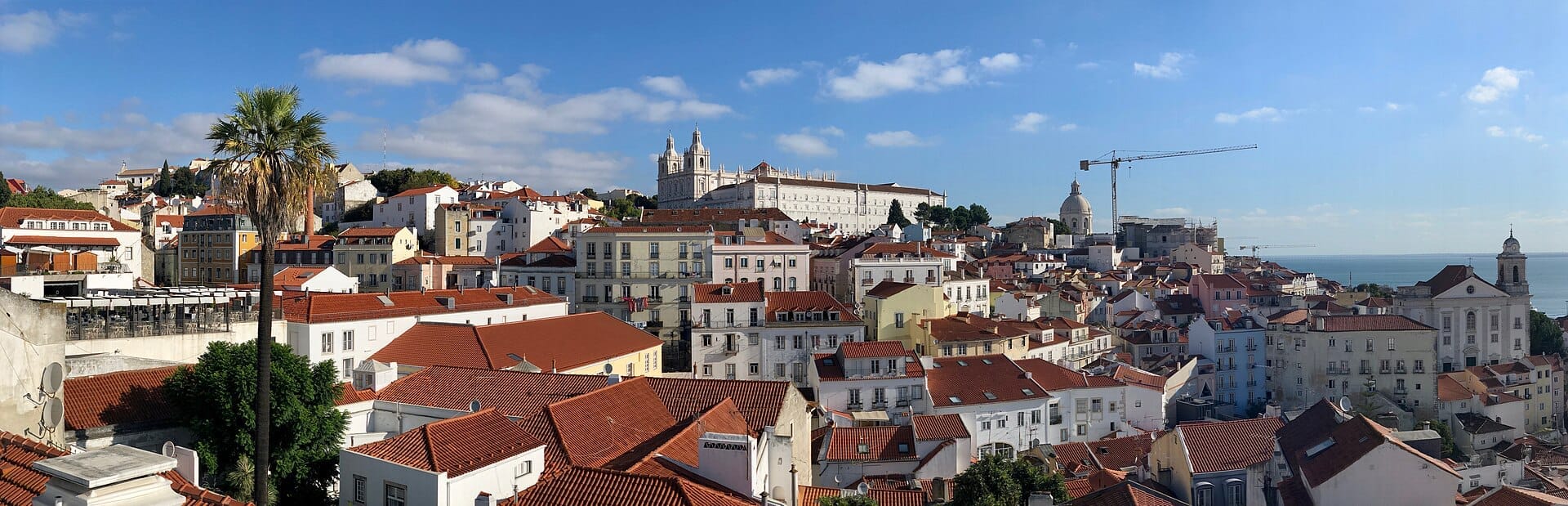
Perched above the rooftops of Alfama, Miradouro das Portas do Sol offers one of Lisbon's most layered views: the Tagus River, the dome of São Vicente de Fora, and the terracotta maze of the city's oldest neighborhood. It's free, open around the clock, and rewards visitors who time their visit right.
Quick Facts
- Location
- Largo das Portas do Sol, Alfama, Lisbon 1100-411
- Getting There
- Tram 28 (stop: Portas do Sol); or 8-min walk from Santa Apolónia station
- Time Needed
- 20–40 minutes at the viewpoint; longer if combining with nearby attractions
- Cost
- Free entry, 24 hours
- Best for
- Sunrise photography, golden hour views, Alfama orientation
What Is Miradouro das Portas do Sol?
Miradouro das Portas do Sol sits at the top of Alfama, occupying the spot where one of Lisbon's ancient eastern city gates once stood. The name translates literally as 'Gates of the Sun,' a reference to the medieval entrance through which the morning light would pour into the city. Today, the gate is long gone, but the terrace that replaced it offers an unobstructed panorama that stretches from the Tagus River to the white dome of São Vicente de Fora, with the irregular orange-tiled roofline of Alfama filling everything in between.
At the center of the terrace stands a bronze statue of São Vicente, Lisbon's patron saint, installed in 1949. He faces the river, flanked by his symbolic ravens, and functions as a quiet focal point in an otherwise informal square. The viewpoint is not fenced or ticketed. You walk straight onto a stone terrace with a café operating out of a small kiosk, plastic chairs arranged toward the view, and a low balustrade separating the platform from the steep drop into the neighborhood below.
💡 Local tip
Arrive before 9am on weekdays for a near-empty terrace. The café kiosk usually opens mid-morning, but the view doesn't require it to be open.
The View Itself: What You're Actually Looking At
The sightline from Portas do Sol is primarily eastward and southward. The Tagus River occupies the lower half of the horizon, wide and silver-grey in the morning, turning copper and bronze as the sun moves west in the late afternoon. The white baroque facade and rounded dome of São Vicente de Fora church anchors the right side of the panorama, close enough that you can see the detail of its towers without a zoom lens.
Below the terrace, the rooftops of Alfama descend in tight, irregular rows. No two buildings are the same height. Satellite dishes, laundry lines, and rooftop terraces appear between the chimney stacks. On clear days, you can follow the curve of the riverbank eastward to the red cranes of the port and, if visibility is good, the long bridge structure in the far distance. This is not a sweeping 360-degree panorama. It is a focused, asymmetric view that rewards looking carefully at a specific slice of the city.
The nearby Miradouro da Graça sits slightly higher and gives a wider angle toward the Baixa and the Castelo. Portas do Sol, by contrast, feels more intimate and more embedded in the neighborhood.
Tickets & tours
Live prices and dates from our booking partner. If you book, we may earn a commission at no extra cost to you.
Belem and Modern Lisbon bus hop-on hop-off combined tickets
From 28 €Instant confirmationFree cancellationSt. George Castle E-ticket and Audio Tour
From 28 €Instant confirmationLisbon Story Centre entrance tickets
From 7 €Instant confirmationFree cancellationYellow boat river tour
From 24 €Instant confirmationFree cancellation
How the Experience Changes by Time of Day
Early morning is the least photographed and most atmospheric version of this viewpoint. Between 7am and 9am, the terrace typically holds a handful of locals cutting through the square, perhaps a runner or two, and the occasional early-rising visitor. The light comes in low from the east and catches the tile facades at a sharp angle, pulling out textures that flatten completely by midday. The sounds at this hour are specific: distant church bells, pigeons, the mechanical clatter of a tram navigating the tight corner on Rua de São Tomé below.
By 11am, the dynamic shifts. Tram 28 delivers groups steadily, tour guides begin their commentary in clusters, and the café chairs fill. This is fine for a drink with a view, but the photography becomes harder as the crowd density increases and the light turns flat and overhead. Midday visits are best kept short.
The late afternoon window, roughly 5pm to 7pm in summer, is genuinely worth planning around. The sun drops toward the western part of the city behind you, and its warm light bounces off the white facades and river surface ahead. The terrace gets busy again in this window, but the quality of the light justifies it. If you want photographs without strangers in the frame, arrive at the very start of this window rather than the middle.
ℹ️ Good to know
In winter (November through February), sunset can happen as early as 5:30pm. Check the specific date's sunset time and arrive 30 minutes before for the best light.
Historical and Cultural Context
The site of Portas do Sol sits within what was once the eastern perimeter of the medieval city wall. Lisbon's fortified settlement, heavily shaped during the Moorish occupation that lasted until 1147, was organized around the Castelo de São Jorge on the hill above and extended down toward the river. The eastern gate here was a functional entrance, the point at which people entering from the Tagus road passed into the protected city. The name 'Gates of the Sun' likely refers to its eastward orientation toward the sunrise, though the precise etymology is not fully documented.
The neighborhood of Alfama surrounding the viewpoint is the oldest continuously inhabited district in Lisbon. Its street plan was not reconstructed after the 1755 earthquake that leveled much of the lower city, so the medieval layout survives largely intact. Walking down from Portas do Sol into Alfama, the streets narrow almost immediately into passages that are sometimes no wider than an arm's length.
The São Vicente statue installed in 1949 is a recurring symbolic presence across Lisbon. The saint, martyred in Valencia in 304 AD, is traditionally depicted with two ravens said to have guarded his body. His relics were brought to Lisbon in 1173, and his association with the city deepened over the medieval period. The statue here is bronze and modest in scale, positioned to face the river as if standing watch over the port.
How to Get There and What to Expect on Arrival
The most direct public transport option is Tram 28E, which passes through Alfama and stops very close to the viewpoint. Be aware that the tram runs on a fixed single-track route through extremely narrow streets and operates on a historic 1930s rolling stock. It is slow by design and frequently crowded with tourists during peak hours. If the queue at the tram stop is long, walking uphill from the Sé Cathedral area is a realistic alternative and takes roughly 10 to 12 minutes at a steady pace.
From Santa Apolónia train station, the walk uphill takes about 8 to 10 minutes. From the Sé Cathedral, you can follow Rua Augusto Rosa uphill, which leads directly into the Largo das Portas do Sol square. The last 100 meters involve a moderate incline on cobblestone. The square itself is flat once you arrive.
Accessibility is limited. The Alfama neighborhood does not have level approaches from most directions. Visitors with mobility considerations should note that the surrounding streets involve steep inclines and uneven cobblestone surfaces. There is no specific wheelchair-accessible infrastructure confirmed at this viewpoint.
⚠️ What to skip
Pickpocketing is reported on Tram 28 between Martim Moniz and Alfama. Keep bags in front and avoid obvious pockets on crowded departures.
Photography Notes
The dominant shot from Portas do Sol frames the São Vicente de Fora dome on the right with the rooftops of Alfama descending into the Tagus on the left. A wide-angle lens in the 24-35mm range on a full-frame sensor captures this composition without distorting the architecture. For a tighter look at the river and rooftop layers, a 50mm or modest telephoto compresses the scene effectively and creates a satisfying sense of depth.
The balustrade in the foreground is low and does not obstruct a camera held at chest height or above. The São Vicente statue creates a useful foreground anchor for compositions that would otherwise feel too empty. Early morning and late afternoon are the two productive lighting windows. Avoid shooting between 11am and 4pm in summer: the light is flat and harsh, and the scene loses most of its texture.
If you are building a full photography itinerary for Alfama's viewpoints, consider also visiting Miradouro de Santa Luzia, a smaller terrace just one minute's walk to the south with azulejo tile panels and a vine-covered pergola that photographs very differently.
Who Should Manage Their Expectations
Portas do Sol is a genuinely good viewpoint, but it is also one of the most visited spots in Alfama, and during peak summer months, the terrace can feel crowded in a way that reduces the experience to standing in a queue for a photograph. If your priority is a quiet, contemplative viewpoint with a better sightline to the full city and bridge, Miradouro da Graça or Miradouro da Senhora do Monte offer more elevation and fewer visitors. If you are short on time and have already seen one Alfama viewpoint, a second visit to Portas do Sol adds marginal value.
For those interested in the broader context of Lisbon's viewpoints, the guide to the best viewpoints in Lisbon compares the key miradouros across the city, including elevation, crowd levels, and what each one frames best.
Insider Tips
- The café kiosk on the terrace charges standard prices and is a decent place to have a coffee before continuing downhill into Alfama. Avoid the tourist menus offered at tables with laminated photos.
- If you walk down from Portas do Sol into Alfama immediately after visiting, take the first left steeply downhill and follow the noise: you will pass through residential streets that see very few tourists even in high season.
- The square also functions as a minor bus terminus and occasional outdoor event space. During the Santo António festival in June, the surrounding area fills with grilled sardine smoke and music that carries up to the terrace.
- For a direct comparison of viewpoints, visit Portas do Sol first in the morning, then walk 10 minutes uphill to Miradouro da Graça for a broader city panorama before the midday crowds arrive.
- The São Vicente statue is lit at night and the terrace remains open after dark. A nighttime visit on a clear evening offers a quieter version of the viewpoint with the river reflecting the city lights below.
Who Is Miradouro das Portas do Sol For?
- First-time visitors to Alfama wanting a quick geographic orientation before exploring on foot
- Photographers prioritizing golden hour light over the eastern roofline and Tagus River
- Travelers combining the Sé Cathedral, Portas do Sol, and São Vicente de Fora in a single uphill walk
- Anyone wanting a free viewpoint accessible directly off Tram 28 with no planning required
- Couples looking for an uncomplicated evening spot with river views and a café terrace
Nearby Attractions
Other things to see while in Alfama:
- Feira da Ladra
Feira da Ladra is Lisbon's oldest and most atmospheric flea market, spreading across Campo de Santa Clara in the Alfama district every Tuesday and Saturday. Free to enter, historically rich, and genuinely unpredictable, it rewards early arrivals and curious browsers willing to dig past the obvious.
- Miradouro de Santa Luzia
Perched above the rooftops of Alfama, Miradouro de Santa Luzia offers a wide terrace shaded by a bougainvillea-draped pergola, extraordinary views across the Tagus estuary, and two landmark azulejo panels that tell the story of Lisbon before its greatest disaster. Entry is free, and the terrace is open 24/7.
- National Pantheon
The National Pantheon, housed inside the 17th-century Igreja de Santa Engrácia in Alfama, is one of Lisbon's most architecturally striking monuments. With free admission, a soaring Baroque dome, and a rooftop terrace at 40 metres, it rewards visitors who make the uphill effort. Inside rest some of Portugal's most celebrated figures, from fado queen Amália Rodrigues to football legend Eusébio.
- São Jorge Castle
Perched on Lisbon's highest hill in the Alfama district, Castelo de São Jorge is a Moorish fortress with roots stretching back over two millennia. It offers some of the city's widest panoramic views, layers of archaeology, and a rare sense of how Lisbon looked before the 1755 earthquake reshaped everything below.
Planning a trip? Discover personalized activities with the Nomado app.