São Jorge Castle: Lisbon's Ancient Hilltop Fortress
Perched on Lisbon's highest hill in the Alfama district, Castelo de São Jorge is a Moorish fortress with roots stretching back over two millennia. It offers some of the city's widest panoramic views, layers of archaeology, and a rare sense of how Lisbon looked before the 1755 earthquake reshaped everything below.
Quick Facts
- Location
- Rua de Santa Cruz do Castelo, Alfama, Lisbon
- Getting There
- Tram 28 (Miradouro das Portas do Sol stop); several city buses serve the hill
- Time Needed
- 1.5 to 2.5 hours
- Cost
- Paid admission (verify current prices at official site)
- Best for
- History, panoramic views, photography, slow explorers
- Official website
- castelodesaojorge.pt/en
What Is São Jorge Castle?
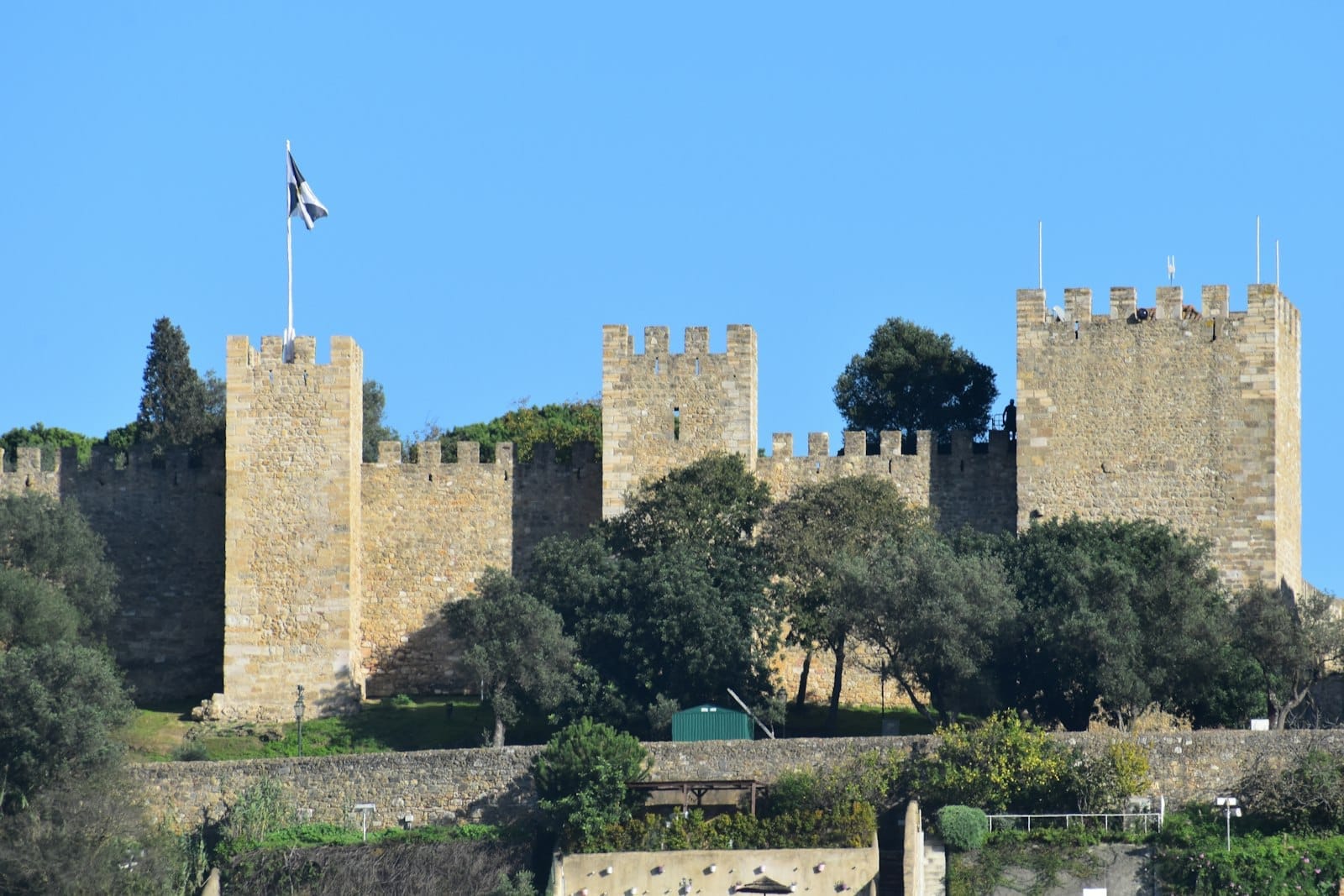
Castelo de São Jorge is a medieval hilltop fortress and National Monument that has stood at the center of Lisbon's identity for nearly a thousand years. Its walls and ten towers crown the São Jorge hill at roughly 111 meters above sea level, making it the highest point in the old city and the first thing you notice on the skyline when arriving from the Tagus River. The site's history is far older than the medieval walls suggest: archaeological evidence places human occupation here as far back as the 2nd century BC, with Phoenician, Carthaginian, Roman, and Visigoth layers all identifiable beneath the current stonework.
The castle as it stands today was substantially built in the 10th and 11th centuries by the Moors, who used it as the administrative and defensive hub of their Lisbon settlement. In 1147, it was taken by the first Portuguese king, Afonso Henriques, with documented help from northern European crusaders passing through on their way to the Holy Land. For the next four centuries, the castle complex served as the royal palace of the Portuguese crown before the court relocated closer to the river in the 16th century. The 1755 earthquake caused significant damage, and much of what visitors walk today reflects careful 20th-century restoration carried out from 1938 onward.
ℹ️ Good to know
The castle was classified as a National Monument in 1910, the same year Portugal became a republic. The date is not coincidental: the site carries strong symbolic weight in Portuguese national identity.
The Approach: Getting Up the Hill
There is no effortless way to reach São Jorge Castle, and that is worth knowing before you set off. The castle sits at the top of the Alfama quarter, one of Lisbon's steepest and oldest neighborhoods. The most atmospheric route is on foot, climbing through the tightly packed lanes of Alfama from the Sé Cathedral area, past tiled house fronts, laundry lines, and small corner shops. The walk is genuine exercise on uneven cobblestones, and it typically takes 15 to 25 minutes from the lower Alfama depending on how often you stop.
The iconic Tram 28E passes close to the castle entrance and is the most scenic public transport option, though it runs at capacity for much of the day and requires patience. Several bus lines also serve the hill directly. Taxis and rideshares can drop you at the gate. If you are arriving from the lower city, allow extra time and wear shoes with grip, as the cobblestones become slick after rain.
💡 Local tip
Morning is the best time to make the uphill walk. Temperatures are cooler, the lanes are quieter, and the light on the castle's stone walls is noticeably warmer before midday.
Tickets & tours
Live prices and dates from our booking partner. If you book, we may earn a commission at no extra cost to you.
Inside the Walls: What to Expect
The entrance fee covers access to the castle grounds, the Ulisses Camera Obscura (a periscope-like optical device that projects a live image of the city onto a concave surface), and the on-site archaeological museum, which displays finds from the layers of occupation stretching back to the Iron Age. Allocate at least 30 minutes for the museum alone if you have any interest in urban archaeology. The Camera Obscura runs on guided sessions and depends on good natural light, so overcast days can limit its effectiveness.
The castle interior is organized into two main areas: the outer perimeter with its walkable ramparts and towers, and the inner citadel (the Alcáçova), which was the royal palace complex. You can climb most of the eleven towers, though the steps inside are steep and narrow in places. The highest tower, at 111.23 meters above sea level, delivers a 360-degree view that takes in the Tagus estuary, the red rooftops of Alfama, the dome of the Panteão Nacional, the Baixa grid, and, on clear days, the hills of Sintra to the northwest.
Peacocks roam freely inside the castle grounds, a long-standing tradition that surprises first-time visitors. They tend to congregate near the shaded trees in the inner courtyard and are unfazed by people. Do not feed them.
Views and Best Vantage Points on Site
The views from the ramparts are the main reason most visitors come, and they justify the admission price. Unlike the city's open miradouros, which frame a specific direction, the castle walls allow you to walk a long arc and watch the panorama change as you move. The western-facing sections look directly toward the Baixa and the Tagus, catching the light in late afternoon. The eastern sections look toward Graça and the hillside churches, with the National Pantheon dome visible just below. Early morning offers the clearest air and the longest sight lines.
If you want to compare the view to Lisbon's other elevated lookouts, the castle's breadth surpasses most. The Miradouro da Graça and Miradouro da Senhora do Monte both sit at similar elevations nearby and offer different angles on the castle itself, which is worth knowing if you plan a half-day circuit of the hilltop.
💡 Local tip
For photography, aim for the first two hours after opening or the last hour before closing. Midday light is flat and the terrace crowds reach their peak between 11:00 and 14:00.
How the Experience Changes by Time of Day
In the early morning, the castle grounds feel almost private. The sound of the city below has not yet built up, and you can hear wind moving through the eucalyptus and pine trees that shade the inner courtyard. Staff are setting up, the café has just opened, and you can walk the full rampart circuit without anyone blocking the view. This is the time to appreciate the stonework itself: the rough-cut limestone walls, the patched sections where earthquake damage was repaired in different centuries, and the way the towers catch the eastern light.
By late morning, tour groups have arrived and the main terrace viewpoints fill quickly. The castle does not feel chaotic, but solitude is harder to find. Midday in summer (June through August) brings heat that reflects hard off the stone; bring water and sunscreen, as shade inside the walls is limited. By late afternoon, groups begin to thin and the quality of light improves substantially for photography. Sunset from the western ramparts is excellent, though the castle closes before full dark in most seasons, so you will not get the nighttime city view that some of the open miradouros offer.
Historical Weight: Why This Place Matters
The 1147 conquest of the castle is the foundational event of Lisbon's history as a Portuguese city. Before that date, the settlement on the hill had been Moorish for more than four centuries, with the Moorish population concentrated in what is now Alfama and Mouraria. The taking of the castle did not happen quickly: Afonso Henriques besieged the city for months before the walls fell, and the account of the siege, written by a crusader named Osbern, is one of the most detailed medieval sources on 12th-century Iberian warfare.
The castle's role as a royal palace ended in the early 16th century when Manuel I moved the court downhill to a new palace near the river, drawn by proximity to the docks that were generating Portugal's Atlantic trade wealth. That shift in royal geography explains why Jerónimos Monastery and Belém Tower became the dominant royal monuments of the period, while the hilltop fortress gradually receded into a secondary role.
The 1755 earthquake, which destroyed most of the lower city, also collapsed significant portions of the castle and its connected Fernandine Walls (built in 1373 to encircle the city). The extensive 20th-century restoration, though it has been criticized by some historians for over-tidying the ruins, did consolidate what remained and made the site accessible. The archaeological museum represents the more rigorous recovery of the site's history, drawing on systematic excavations that began in the 1990s.
Practical Details and Who Should Consider Skipping
The admission fee is mid-range by Lisbon standards. The site is not included in standard Lisbon transit passes, but it does participate in the Lisboa Card, which covers entry. Verify the current pricing at the official website before visiting, as seasonal and concession rates vary.
Accessibility is genuinely limited. The steep approach to the castle, the cobblestone paths throughout the grounds, and the narrow tower staircases make significant portions of the site difficult or impossible for visitors with limited mobility. The main terrace viewpoint and the archaeological museum are more accessible than the towers, but the approach from street level remains the primary obstacle. This is not a site that will be comfortable in standard tourist sandals either; proper walking shoes are important.
Visitors who are primarily interested in city views and do not want to pay an admission fee may find that the free lookout points nearby offer a comparable experience. The Miradouro das Portas do Sol is immediately below the castle walls and costs nothing. However, the castle adds the historical layers, the rampart walk, and the archaeology museum that those open viewpoints cannot provide. If you are short on time and have already seen one or two of Alfama's hilltop miradouros, and history is not your primary interest, the castle may not move the needle much. For anyone with even a moderate curiosity about medieval urban history or Iberian archaeology, it is time well spent.
⚠️ What to skip
In summer, the castle grounds have minimal shade outside the courtyard. Temperatures on the open ramparts can be 5 to 8 degrees higher than in the streets below. Carry water and apply sunscreen before entering.
Insider Tips
- Book tickets online in advance during July and August. The ticket queue on busy days can take 20 to 30 minutes, and buying online typically allows you to use a separate, faster entrance lane.
- The Camera Obscura runs in short guided sessions, not continuously. Ask at the ticket desk for the next scheduled viewing when you arrive, so you can plan your rampart walk around it rather than missing it.
- The inner courtyard with the peacocks and large trees is the coolest part of the grounds on hot days. It is also the least crowded corner of the site and worth pausing in before heading to the busy main terrace.
- If you descend through Alfama on foot after visiting, take the lanes heading downhill toward the Sé Cathedral rather than retracing your steps. The route passes some of the best-preserved sections of old residential Alfama and feels less like a tourist corridor.
- The castle grounds are partially lit at night for special evening events, though standard visiting hours apply for regular entry. Check the official site for seasonal evening programs, which occasionally include concerts or guided night tours inside the walls.
Who Is São Jorge Castle For?
- History and archaeology enthusiasts who want to trace Lisbon's pre-Portuguese origins
- Photographers looking for wide panoramic city views with genuine architectural framing
- First-time visitors to Lisbon who want a single site that compresses the city's entire timeline
- Families with older children who can manage the cobblestones and enjoy the rampart walks
- Slow travelers who want context for the Alfama neighborhood before exploring it on foot
Nearby Attractions
Other things to see while in Alfama:
- Feira da Ladra
Feira da Ladra is Lisbon's oldest and most atmospheric flea market, spreading across Campo de Santa Clara in the Alfama district every Tuesday and Saturday. Free to enter, historically rich, and genuinely unpredictable, it rewards early arrivals and curious browsers willing to dig past the obvious.
- Miradouro das Portas do Sol
Perched above the rooftops of Alfama, Miradouro das Portas do Sol offers one of Lisbon's most layered views: the Tagus River, the dome of São Vicente de Fora, and the terracotta maze of the city's oldest neighborhood. It's free, open around the clock, and rewards visitors who time their visit right.
- Miradouro de Santa Luzia
Perched above the rooftops of Alfama, Miradouro de Santa Luzia offers a wide terrace shaded by a bougainvillea-draped pergola, extraordinary views across the Tagus estuary, and two landmark azulejo panels that tell the story of Lisbon before its greatest disaster. Entry is free, and the terrace is open 24/7.
- National Pantheon
The National Pantheon, housed inside the 17th-century Igreja de Santa Engrácia in Alfama, is one of Lisbon's most architecturally striking monuments. With free admission, a soaring Baroque dome, and a rooftop terrace at 40 metres, it rewards visitors who make the uphill effort. Inside rest some of Portugal's most celebrated figures, from fado queen Amália Rodrigues to football legend Eusébio.
Planning a trip? Discover personalized activities with the Nomado app.