Miradouro da Senhora do Monte: Lisbon's Highest and Least-Crowded Viewpoint
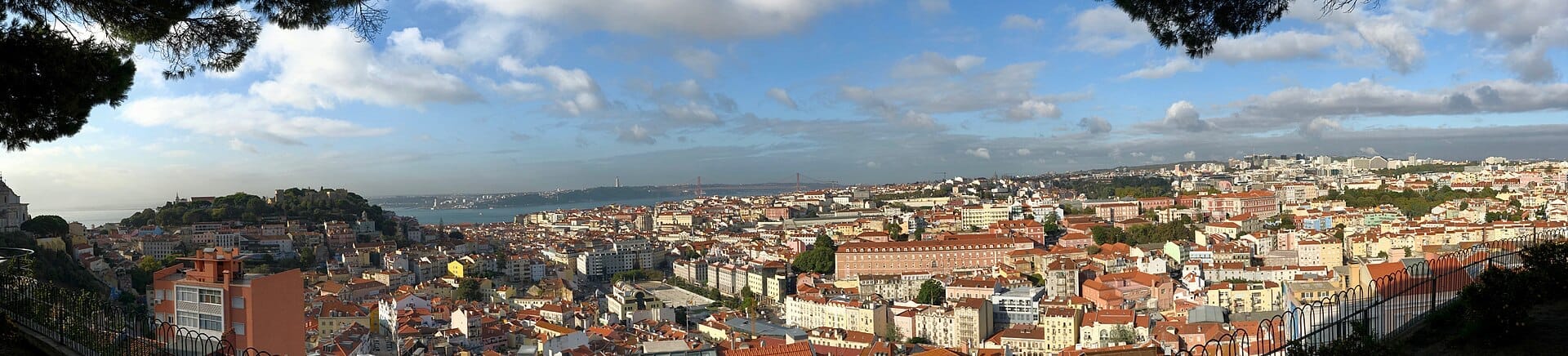
Sitting at the peak of the Graça hill, Miradouro da Senhora do Monte is Lisbon's highest publicly accessible viewpoint. The panorama here takes in more of the city than any rival terrace, from São Jorge Castle directly below to the Tagus estuary and the hills of Sintra on clear days. Entry is free, it is open around the clock, and the crowd levels remain a fraction of what you will find at the more famous spots.
Quick Facts
- Location
- Rua da Senhora do Monte à Graça, Graça district, Lisbon
- Getting There
- 10 min walk from Anjos or Intendente (Green Line metro); E28 tram stops nearby on Rua da Graça
- Time Needed
- 30–60 minutes
- Cost
- Free, open 24/7
- Best for
- Sunset panoramas, photography, escaping the tourist crowds
What Makes This Viewpoint Different
Lisbon has a well-worn circuit of miradouros, and most visitors tick off the same three or four. Miradouro da Senhora do Monte sits above all of them, both literally and figuratively. At the crest of the Graça hill, the highest of Lisbon's seven traditional hills, this terrace delivers a panorama that swings from the castle ridge in the south to the Aqueduct of Águas Livres in the west and the Parque das Nações waterfront in the east. On days with good visibility, the Sintra hills appear as a low silhouette on the far horizon.
What you will not find here is the queue, the selfie-stick density, or the noise of a tourist operation. The terrace is a modest, unfenced esplanade beside a small Baroque chapel. There are a handful of benches, a few stone walls to lean against, and enough open sky to make the city feel genuinely small beneath you. That restraint is the point. This is where Lisbon residents come to think, not where tour buses pull up.
💡 Local tip
The climb is steep no matter which route you choose. If mobility is a concern, or if you simply want to save energy for exploring afterward, take a taxi or rideshare directly to the terrace. The fare from Baixa is rarely more than a few euros.
A Place With Deep Roots: The Chapel and Its History
The viewpoint takes its name from the small chapel beside it, the Capela de Nossa Senhora do Monte, with a chapel and hermitage on the site since 1147. Tradition holds that this hilltop was where Afonso Henriques, the first King of Portugal, assembled his troops before the Reconquista siege that drove the Moors from Lisbon in that same year. That military camp became a place of prayer, and the chapel followed.
The 1755 earthquake that destroyed much of Lisbon did not spare this hill. The original chapel collapsed and was rebuilt in a Baroque style around 1796. The rebuilt structure is compact and austere from the outside, its whitewashed façade and single bell tower blending into the residential streetscape. Inside, the chapel contains a stone chair traditionally associated with Saint Gens, a martyr believed to have been executed near this hill around 284 AD. Pregnant women used to sit in the chair as a folk ritual for safe childbirth, a custom that persisted for centuries.
The history of this area connects directly to the broader story of the Graça district below. For more on the quarter itself, including its market, flea market, and monastery, see the Graça neighborhood guide.
Tickets & tours
Live prices and dates from our booking partner. If you book, we may earn a commission at no extra cost to you.
Belem and Modern Lisbon bus hop-on hop-off combined tickets
From 28 €Instant confirmationFree cancellationSt. George Castle E-ticket and Audio Tour
From 28 €Instant confirmationLisbon Story Centre entrance tickets
From 7 €Instant confirmationFree cancellationYellow boat river tour
From 24 €Instant confirmationFree cancellation
The View: What You Actually See
Stand at the southern edge of the terrace and the layout of the city opens up with unusual clarity. Directly below is the dome and rooftop of São Jorge Castle, which feels surprisingly close. Spreading south from the castle is the jumbled terracotta roofscape of Alfama, the oldest residential district in the city. Follow the sight line further and you reach the flat, gridded streets of Baixa, rebuilt after the earthquake in a Pombaline neoclassical style, then the wide blue mouth of the Tagus estuary.
Swivel west and the skyline includes the dome of the Basilica da Estrela and, on clear days, the white arc of the Aqueduto das Águas Livres cutting across the distant hills. Swing east toward the river and the northern districts of the city. This 360-degree range is the practical reason photographers and serious sightseers make the climb: no other public terrace in Lisbon captures the whole city in a single sweep.
ℹ️ Good to know
For the sharpest distant views, visit on a day following overnight rain, which clears atmospheric haze. Summer afternoons frequently produce heat haze that softens distant detail.
How the Terrace Changes Through the Day
Early morning, roughly from 7am to 9am, the terrace belongs almost entirely to local residents. Dog walkers pause here on their routes. Older men sit with newspapers. The light arrives from the east, hitting the Tagus first, then slowly illuminating the rooftops of Alfama from behind. That quality of light, warm and low-angled, is why photographers who know the city well come early rather than late.
By mid-morning the mix shifts. A trickle of tourists discovers the viewpoint, usually those already exploring the Graça area or arriving on Tram 28E after visiting the nearby miradouros lower on the hill. Numbers stay manageable compared to the Portas do Sol or Santa Luzia terraces, which see far heavier foot traffic through the middle of the day.
Sunset is peak hour. The terrace fills with a relaxed crowd, a mix of younger Lisboetas with cans of Sagres and visitors who have done their research. The sun sets over the Tagus estuary and the western hills, turning the river bronze and the rooftops amber. Arrive at least 20 minutes before the official sunset time to secure a spot at the southern railing. After dark, the lit castle and the illuminated dome of Panteão Nacional glow below you in a way that is genuinely worth staying for.
⚠️ What to skip
Night visits are peaceful but the steep surrounding streets are poorly lit. Stick to the main road down toward Graça rather than cutting through the narrower backstreets if you are unfamiliar with the area.
Getting There: The Practical Reality
The most straightforward public transit approach is the Green Line metro to Anjos or Intendente station, followed by a 10-minute uphill walk. The streets are readable and signposted, but the gradient is real: this is not a gentle stroll, particularly in summer heat. Wear flat, grippy shoes. The cobblestones are uneven in places.
Tram 28E passes through the Graça area below the viewpoint. This historic tram is itself an attraction on the 28E route, but it does not stop at the summit. You will still need to walk the final uphill stretch. The tram is also heavily crowded through most of the day and a known target for pickpockets, so keep bags zipped and against your body.
For those combining the viewpoint with a broader Graça or Alfama itinerary, the logical sequence is to begin at the top, at Senhora do Monte, and then walk downhill through Graça past the flea market and monastery, continuing down into Alfama. Walking downhill on Lisbon's hills is significantly easier and faster, and this direction allows the full panoramic orientation from above before you enter the street-level tangle below.
If you are planning a full day in this eastern part of the city, consider also visiting the Miradouro da Graça just a short walk downhill, which has a café and a slightly different angle toward the castle.
Photography Notes and Practical Considerations
This is one of the few miradouros where a wide-angle lens earns its keep. The full sweep from east to west is around 180 degrees of unobstructed view, and compressing that into a single frame rewards lenses in the 16–24mm range. The southern foreground includes the castle and rooftops at a level below you, which gives a cleaner compositional base than the lower terraces where you are looking across at the castle rather than slightly down onto it.
Tripod users will find the terrace surface relatively stable, and there are no official restrictions on tripods. The iron railings are at a height that accommodates shooting over them without contortion. Drone use is a different matter: Lisbon has significant airspace restrictions around the historic centre, and flying from this location without proper authorization is not legal.
The chapel itself is small and its exterior is not architecturally dramatic. Most photographers use it as a framing element or contextual background rather than a primary subject. The interior is occasionally open, and the stone chair of Saint Gens is visible inside.
💡 Local tip
If you want the castle in soft morning light with no crowds in the foreground of your shot, arrive between 7:30am and 8:30am on a weekday. The terrace will be nearly empty and the low eastern sun catches the castle walls at an angle that afternoon light never replicates.
Who Will Enjoy This, and Who Might Not
Travelers who value views above all else and want to see the city from its actual highest point will not find a better free option in central Lisbon. Anyone spending a full day exploring Alfama, Graça, and the São Jorge Castle area should treat this terrace as the natural starting point for orientation.
Families with young children will find the walk manageable if children are reasonably mobile. There are no barriers at the edge of the terrace, so supervise young children at the railings. The benches make it a comfortable stop rather than a rushed pass-through.
Travelers with mobility difficulties will struggle significantly. The approach is steep regardless of the route chosen, and there is no elevator or accessible alternative path. A taxi directly to the address is the only realistic option for those who cannot manage a sustained climb on uneven cobblestones.
If you are visiting Lisbon for only a day or two and prioritizing famous monuments over panoramic views, this terrace might not make the cut against the castle, Jerónimos Monastery, or Belém. But if you have three days or more, the 40-minute detour here is consistently one of the best uses of an hour in the city.
Insider Tips
- The benches on the western side of the terrace, facing the sunset direction, are taken first in the late afternoon. Arrive 25 minutes before sunset rather than 10 to secure a seat without standing.
- The chapel is sometimes open on weekend mornings. The stone chair of Saint Gens inside is one of Lisbon's more unusual historical curiosities and worth a look if you find the door unlocked.
- Combine this visit with the Miradouro da Graça, a 5-minute walk downhill. The Graça viewpoint has a small café for coffee or a beer and a direct sightline to the castle that complements rather than duplicates what you see from Senhora do Monte.
- If you use a rideshare app to get up here, have the return pickup location ready before you start walking back. The steep streets around the summit can be confusing for drivers to navigate, and having a clear pin set saves frustration.
- Check the weather the evening before if you are planning a sunrise or sunset visit. Lisbon fog in autumn and winter can sit at hill level and obscure the view entirely, while the city below remains clear. The local weather app forecast for 'Graça' is more accurate than a general Lisbon forecast for this elevated location.
Who Is Miradouro da Senhora do Monte For?
- Photographers looking for the widest, highest panorama in central Lisbon
- Travelers on a return visit who have already seen the main miradouros and want something quieter
- Sunset seekers willing to make the climb in exchange for fewer crowds
- History-minded visitors interested in the early Portuguese Reconquista and medieval Lisbon
- Anyone building a full-day walking itinerary through Graça and Alfama who wants a natural starting point
Nearby Attractions
Other things to see while in Graça:
- Miradouro da Graça
Officially named Miradouro Sophia de Mello Breyner Andresen, this hilltop terrace in the Graça neighborhood delivers one of Lisbon's most panoramic views across the city rooftops, São Jorge Castle, and the Tagus River. It draws a fraction of the crowds that pile into the more famous viewpoints nearby, making it the preferred spot for locals seeking a quiet coffee or a sunset without the jostling.
Planning a trip? Discover personalized activities with the Nomado app.