National Pantheon Lisbon: Baroque Grandeur, Free Entry, and Views Over the Tagus
The National Pantheon, housed inside the 17th-century Igreja de Santa Engrácia in Alfama, is one of Lisbon's most architecturally striking monuments. With free admission, a soaring Baroque dome, and a rooftop terrace at 40 metres, it rewards visitors who make the uphill effort. Inside rest some of Portugal's most celebrated figures, from fado queen Amália Rodrigues to football legend Eusébio.
Quick Facts
- Location
- Campo de Santa Clara, Alfama, Lisbon
- Getting There
- Bus 794 or 759 to Campo de Santa Clara; Tram 28E to Voz do Operário
- Time Needed
- 45 minutes to 1.5 hours
- Cost
- Free admission
- Best for
- Architecture lovers, history buffs, panoramic views over the Tagus
- Official website
- www.panteaonacional.gov.pt/pt
What the National Pantheon Actually Is
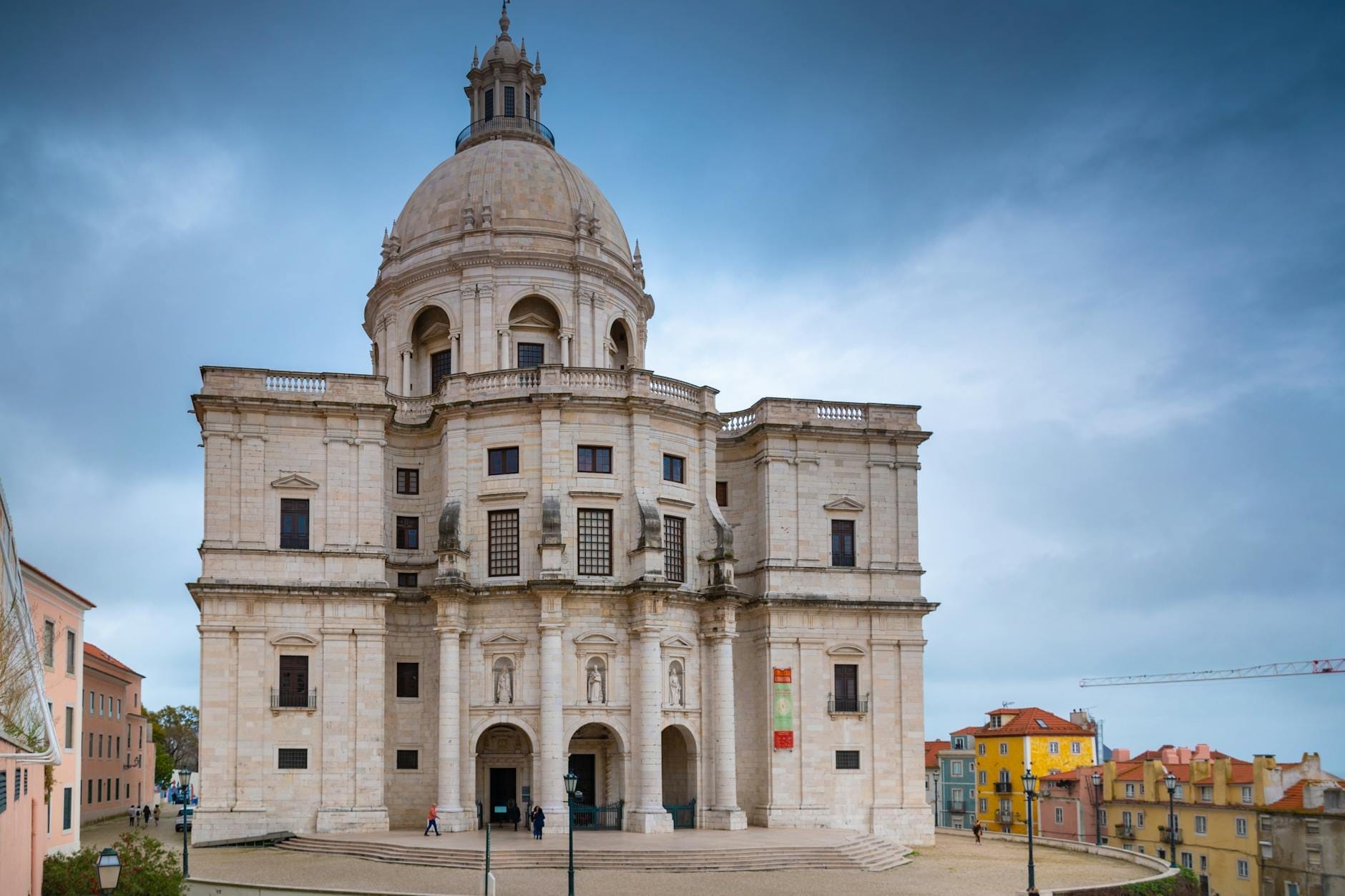
The National Pantheon occupies one of Lisbon's most architecturally ambitious buildings: the Igreja de Santa Engrácia, a Baroque church whose construction famously dragged on for nearly three centuries. Work began in 1681 to a design by architect João Antunes, but the church remained unfinished and roofless for so long that the phrase 'obras de Santa Engrácia' became a Portuguese idiom for any project that never seems to end. The dome was only completed in 1966, giving the building its current silhouette of a white drum capped by a pale green cupola visible from several points across the eastern city.
Classified as a National Monument in 1910 and formally converted to a Pantheon by law in 1916, the building serves a dual function today: it is both a working memorial to Portugal's most honoured citizens and one of the finest examples of Portuguese Baroque architecture. The interior rises to roughly 80 metres at its highest point, and the sheer vertical drama of the space when you step inside catches most visitors off guard. The floor is cold white marble, the light falls in long shafts from high windows, and the nave is largely unencumbered by furniture, which only amplifies the acoustic depth of the space.
ℹ️ Good to know
Admission is free. Check the official website at panteaonacional.gov.pt/pt before visiting to confirm current opening hours, as they are subject to change and were not confirmed in available sources at time of writing.
Who Is Buried Here
The Pantheon holds the tombs of Portuguese presidents and distinguished cultural figures. The two names most visitors recognise are Amália Rodrigues, the fado singer whose voice defined 20th-century Portuguese identity, and Eusébio, the Mozambique-born footballer who became one of the greatest players in the history of the sport and a symbol of the golden generation of Benfica and the Portuguese national team. Their presence turns this from a dry ceremonial monument into something more personal: a place where ordinary Portuguese people still come to pay respects.
The building also contains cenotaphs, symbolic empty tombs, for historical figures whose remains lie elsewhere, including Vasco da Gama (buried at the Jerónimos Monastery in Belém) and writer Almeida Garrett. These cenotaphs are clearly labelled and worth pausing at; they reinforce the Pantheon's role as a space of national memory rather than simply a burial site.
Tickets & tours
Live prices and dates from our booking partner. If you book, we may earn a commission at no extra cost to you.
Belem and Modern Lisbon bus hop-on hop-off combined tickets
From 28 €Instant confirmationFree cancellationSt. George Castle E-ticket and Audio Tour
From 28 €Instant confirmationLisbon Story Centre entrance tickets
From 7 €Instant confirmationFree cancellationYellow boat river tour
From 24 €Instant confirmationFree cancellation
The Architecture Up Close
The floor plan is a Greek cross with rounded arms, a departure from the more common Latin cross layout of Portuguese churches of the period. This centralised design, unusual in Lisbon, gives the interior a sense of balance and calm. The walls are lined with polychrome marble panels in geometric patterns, predominantly rose, grey, and cream, which give warmth to what could otherwise feel like a cold ceremonial hall. Look up at the pendentives supporting the dome and you will find detailed stone relief work that repays close inspection.
The main altar is restrained compared to the gilded excess found in many Lisbon churches, which reflects both the building's long incomplete history and its eventual secular conversion. Natural light enters generously through the drum windows just below the dome, and the quality of that light shifts noticeably with the time of day. Morning visits, when the sun comes from the east, illuminate the marble floors most directly and give the interior its best photographic light.
For architectural comparison, the National Pantheon makes an interesting counterpoint to the Basilica da Estrela on the other side of the city, another Baroque dome that dominates its neighbourhood skyline. The two buildings are roughly contemporary in influence and offer a useful sense of how 18th and 19th-century Lisbon expressed civic ambition through religious architecture.
The Rooftop Terrace and the Views
The terrace at 40 metres is one of the more underrated elevated viewpoints in Lisbon. It wraps around the exterior of the drum just below the dome and gives an almost complete 360-degree panorama. The Tagus estuary spreads to the south and east; the roofscape of Alfama falls away below you in a dense pattern of orange tile and white render. To the west, on clear days, you can make out the industrial bank of Almada and the distant outline of the Arrábida hills.
Unlike the more crowded Miradouro da Senhora do Monte or the always-busy viewpoints on the tram 28E route, the Pantheon terrace rarely has a queue. The viewing platform is narrow in places, and there are steps involved in reaching it, but the effort is modest and the reward is a perspective on the city that few visitors see.
💡 Local tip
Arrive early in the morning or in the last hour before closing. Midday in summer brings tour groups. The terrace is entirely exposed, so bring sunscreen and water in July and August, and a light layer in winter when the wind off the Tagus can be sharp.
How to Get There and When to Go
The Pantheon sits on Campo de Santa Clara in the upper eastern part of Alfama, a few minutes' walk from the Monastery of São Vicente de Fora. Several buses serve the area, including lines 718, 759, and 794. The iconic Tram 28E passes through the lower part of Alfama and you can walk uphill from the Voz do Operário stop in around 10 minutes, though the streets are steep and cobbled. Wear shoes with grip.
If you are visiting on a Tuesday or Saturday morning, Campo de Santa Clara hosts the Feira da Ladra flea market directly in front of the Pantheon. The combination works well: browse the market stalls first, then step inside the Pantheon for contrast. The market brings noise, colour, and crowds to the square from around 7am; by early afternoon, after the stalls pack up, the square returns to its quieter neighbourhood character.
The area around the Pantheon is also worth exploring on foot. The Church of São Vicente de Fora is a 3-minute walk and has an important azulejo cloister worth seeing. The Miradouro das Portas do Sol is reachable in around 10 minutes on foot downhill.
Who This Attracts and Who Might Skip It
The National Pantheon draws a notably mixed crowd. Architecture students and photographers come for the dome and the marble interiors. Portuguese visitors, particularly older generations, come specifically to visit the tombs of Amália and Eusébio. Foreign tourists often arrive as part of an Alfama walking circuit, sometimes without knowing exactly what the building is, and leave more impressed than they expected.
Visitors looking for the kind of richly decorated, gold-heavy church interiors found in Porto or Braga may find the Pantheon too austere. It is a building of geometric precision and ceremonial gravity rather than sensory overload. Children who are not yet interested in architecture or national history may find the visit short on engagement, though the terrace views tend to hold attention across most age groups.
⚠️ What to skip
The building is occasionally closed for state ceremonies or official events. It is worth checking the official website or calling ahead if you are planning a visit around national holidays such as June 10 (Portugal Day), when commemorations may affect access.
Insider Tips
- The Feira da Ladra flea market fills Campo de Santa Clara on Tuesday and Saturday mornings. Combining a market visit with the Pantheon on those days makes the journey uphill worthwhile without needing a separate trip.
- Morning light is best for interior photography. The drum windows below the dome face east and southeast, and the marble floor reflects the light most cleanly in the first two to three hours after opening.
- The terrace is the least-crowded elevated viewpoint in central Lisbon with genuine 360-degree sightlines. Come here if the Graça and Santa Luzia viewpoints are packed.
- Amália Rodrigues' tomb is in the lower chapel level. If you want to pay your respects or simply understand why her death in 1999 prompted three days of national mourning, take a moment here rather than rushing straight to the terrace.
- The building echoes significantly. If you arrive during a quiet period with few other visitors, stand at the centre of the nave and speak at normal volume: the acoustic reverberation is long and striking, a byproduct of the stone surfaces and the dome's geometry.
Who Is National Pantheon For?
- Architecture enthusiasts drawn to Portuguese Baroque and centralised dome design
- Travellers interested in 20th-century Portuguese cultural history, particularly fado and football
- Photographers looking for marble interiors with natural light and a panoramic rooftop perspective
- Budget-conscious visitors: the monument is free and the views rival paid viewpoints
- Anyone combining the visit with the Feira da Ladra market on a Tuesday or Saturday morning
Nearby Attractions
Other things to see while in Alfama:
- Feira da Ladra
Feira da Ladra is Lisbon's oldest and most atmospheric flea market, spreading across Campo de Santa Clara in the Alfama district every Tuesday and Saturday. Free to enter, historically rich, and genuinely unpredictable, it rewards early arrivals and curious browsers willing to dig past the obvious.
- Miradouro das Portas do Sol
Perched above the rooftops of Alfama, Miradouro das Portas do Sol offers one of Lisbon's most layered views: the Tagus River, the dome of São Vicente de Fora, and the terracotta maze of the city's oldest neighborhood. It's free, open around the clock, and rewards visitors who time their visit right.
- Miradouro de Santa Luzia
Perched above the rooftops of Alfama, Miradouro de Santa Luzia offers a wide terrace shaded by a bougainvillea-draped pergola, extraordinary views across the Tagus estuary, and two landmark azulejo panels that tell the story of Lisbon before its greatest disaster. Entry is free, and the terrace is open 24/7.
- São Jorge Castle
Perched on Lisbon's highest hill in the Alfama district, Castelo de São Jorge is a Moorish fortress with roots stretching back over two millennia. It offers some of the city's widest panoramic views, layers of archaeology, and a rare sense of how Lisbon looked before the 1755 earthquake reshaped everything below.
Planning a trip? Discover personalized activities with the Nomado app.