Pink Street (Rua Nova do Carvalho): Lisbon's Most Colorful Night Out
Once a rough sailors' red-light district, Rua Nova do Carvalho is now Lisbon's most photographed street after dark. The bright pink pavement, vintage bar fronts, and the legendary Pensão Amor make it the beating heart of the Cais do Sodré nightlife scene.
Quick Facts
- Location
- Cais do Sodré, Lisbon (near Praça de São Paulo)
- Getting There
- Metro Green Line to Cais do Sodré (2-min walk); Tram 25 to Praça de São Paulo
- Time Needed
- 30 min to browse; 2–4 hours for a proper night out
- Cost
- Free to walk; drinks from around €3–€8 depending on the bar
- Best for
- Night owls, bar-hoppers, photography enthusiasts, and curious day visitors
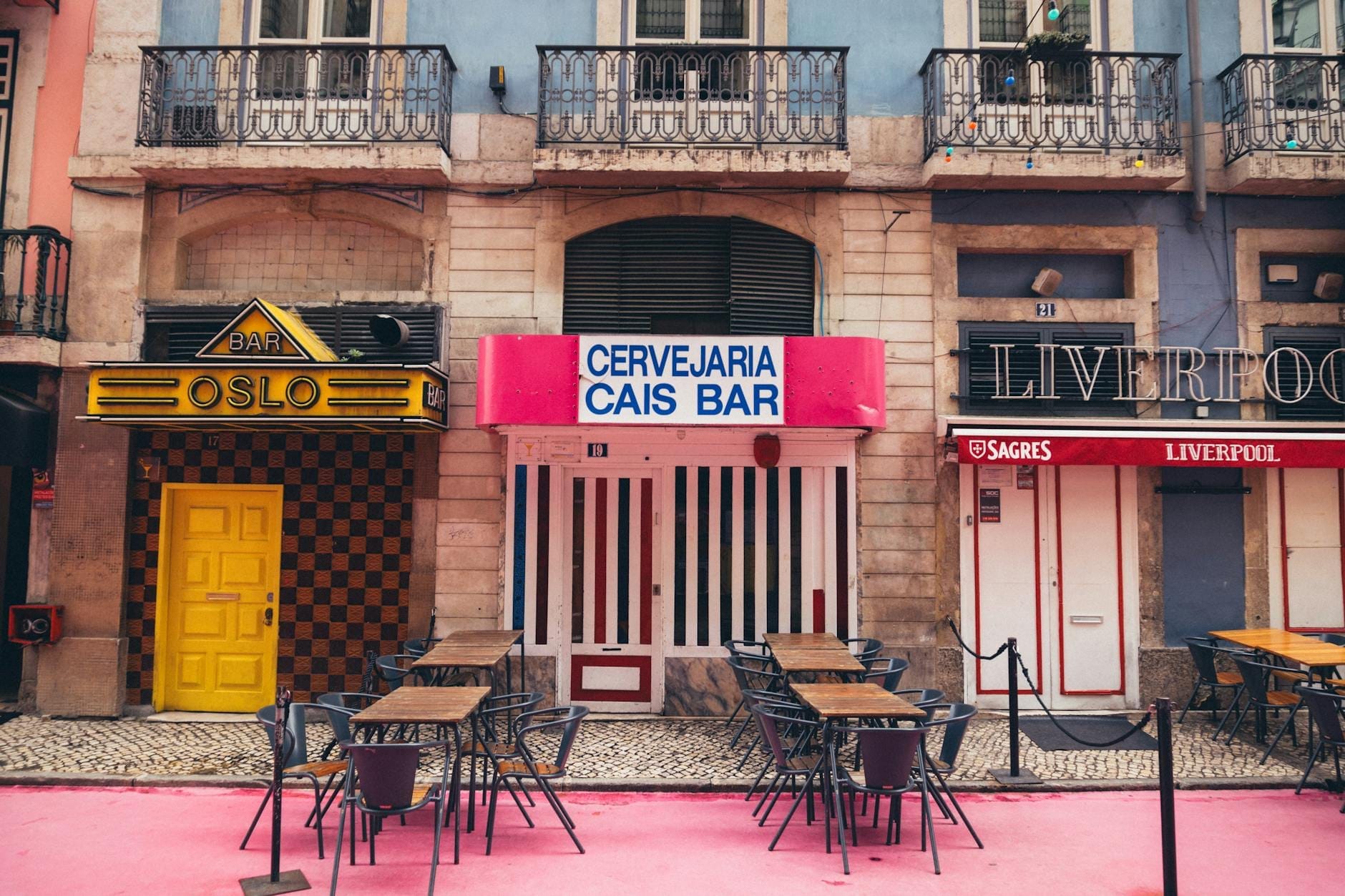
What Is Pink Street?
Rua Nova do Carvalho is a short pedestrian street in the Cais do Sodré district, running parallel to the Tagus River a few blocks west of Praça do Comércio. It earned the nickname "Pink Street" after its pavement was painted a bold shade of rose pink between 2011 and 2013 as part of a deliberate urban revitalization project. The paint job was not accidental branding — it was a signal that this strip was being reinvented.
For most of the 20th century, Rua Nova do Carvalho was not a place you brought guests. It was Lisbon's red-light district, frequented by dock workers and sailors from the nearby port, lined with bars that operated well outside polite society. The transformation since 2011 has been genuinely striking: today the same street hosts cocktail bars, live music venues, and one of Lisbon's most talked-about drinking establishments, all compressed into about 150 meters of candy-colored pavement.
ℹ️ Good to know
Pink Street is a public pedestrian space with no admission fee and no fixed hours. The street itself is accessible around the clock, but the real atmosphere only kicks in after 10pm. Arriving before 9pm gives you the best light for photography with almost no crowds.
The Street at Different Hours
During daylight, Pink Street is almost serene. The pink cobblestones glow softly under the Atlantic sun, and the bar facades — many with Art Deco tiling and wrought-iron details — are easy to appreciate without the sensory overload of a Friday night. A handful of café chairs spill onto the pavement, and you can hear the distant rumble of the Cais do Sodré metro and the faint hiss of the river two blocks away. This is the best time to photograph the street without other visitors walking into frame.
By late afternoon, small groups begin to arrive. Bar staff set out chalkboard menus, the smell of beer and floor cleaning products mingles through open doorways, and the first tourists with cameras appear. The golden hour light hits the painted pavement in a way that makes the pink almost orange, which is worth timing if you care about the shot.
After 10pm on weekends, the character shifts completely. The street fills to capacity, music bleeds from multiple doors simultaneously, and the pavement feels like a shared living room. Conversations happen between complete strangers. Noise levels are significant — this is not a street you come to for quiet cocktails. Groups tend to move between venues fluidly, treating the street itself as a social space rather than just a passage between bars.
⚠️ What to skip
On Friday and Saturday nights after midnight, the street can become quite crowded and loud. If you have sensory sensitivities or are traveling with young children, a daytime or early evening visit makes far more sense.
Tickets & tours
Live prices and dates from our booking partner. If you book, we may earn a commission at no extra cost to you.
Lisbon Pink Street Pub Crawl
From 20 €Instant confirmationFree cancellationBelem and Modern Lisbon bus hop-on hop-off combined tickets
From 28 €Instant confirmationFree cancellationSt. George Castle E-ticket and Audio Tour
From 28 €Instant confirmationLisbon Story Centre entrance tickets
From 7 €Instant confirmationFree cancellation
Pensão Amor: The Street's Defining Bar
No building on Pink Street has been more cleverly repurposed than Pensão Amor. The name translates literally as "Love Guesthouse" and the property was indeed a brothel in its former life. Today it operates as a cocktail bar, event space, and erotic bookshop, preserving many of the original interior details: red velvet, mirrored rooms, faded painted ceilings, and narrow staircases that feel genuinely old rather than deliberately vintage.
The bar hosts live jazz and occasional burlesque performances, and the layered interior means you can move between rooms with very different atmospheres in the same visit. The drinks are priced at a slight premium compared to the street's simpler bars, but the setting justifies it. Expect a queue on weekend evenings. Arriving between 9pm and 10pm usually means you can walk in without waiting.
Getting There and Around
The easiest approach is the Metro Green Line to Cais do Sodré Station. From the main exit, Pink Street is a two-minute walk: cross the main road in front of the station and head left toward the cluster of bar signs. Tram 25 also serves Praça de São Paulo at the end of the street, though this operates primarily during daytime on weekdays and is not reliable for late-night returns.
On foot, the street is about 10 minutes from Praça do Comércio, making it easy to combine with an evening walk along the Tagus waterfront. The route passes the Ribeira market building and the entrance to the Time Out Market, which is a reasonable option for dinner before heading to Pink Street later.
Late at night, Uber and Bolt both operate reliably in this area. The metro runs until around 1am on weekdays and until 2:30am on Friday and Saturday nights, but confirm current schedules before relying on them for your return journey.
💡 Local tip
Walking back along the waterfront toward Baixa or Chiado after a night on Pink Street takes about 15 minutes and passes some of the best-lit views of the Tagus. It is a more pleasant end to the evening than waiting for a crowded metro.
How Pink Street Fits Into the Cais do Sodré Scene
Pink Street does not exist in isolation. The broader Cais do Sodré neighborhood has become Lisbon's most concentrated area for nightlife over the past decade, partly because of the Pink Street revitalization and partly because it sits at the crossroads of several transit lines. The Time Out Market operates in the repurposed Ribeira market building directly nearby, drawing large crowds from early evening onward.
For a broader Lisbon nightlife perspective, it is worth knowing that Bairro Alto historically held the title of the city's main bar district. Pink Street offers a denser, more contained experience — fewer streets to cover, louder music, younger crowds on average, and less emphasis on fado or traditional Portuguese culture. The two neighborhoods are genuinely different in character, not just geography.
If you are interested in the traditional music side of Lisbon's nightlife alongside the bar scene, the fado scene in Lisbon is centered in Alfama and Bairro Alto rather than Cais do Sodré. Pink Street is not a fado destination.
Photography: Making the Most of the Pink
The pink pavement is the visual signature of the street, but photographing it well requires some planning. The color is most vivid under overcast light or in the golden hour before sunset, when the diffused light eliminates harsh shadows from the building facades on either side. Midday summer sun creates a washed-out result with heavy contrast that flattens the color.
At night, the street lighting creates strong warm tones that shift the pink toward red in photographs. Long-exposure shots from the end of the street can capture the bar signage and pavement together without the motion blur of passing crowds. For general street photography tips on Lisbon's most photogenic locations, the guide to Lisbon's most photogenic spots covers additional options nearby.
Arriving on a weekday morning gives you the longest uninterrupted stretch of empty pavement. On weekends, you will rarely find the street clear of people after 11am.
Honest Assessment: Is It Worth Your Time?
Pink Street delivers exactly what it promises if you arrive at the right time with the right expectations. As a nightlife destination, it is compact, well-served by transit, and has a genuine character that has survived its own popularity reasonably intact. Pensão Amor alone is worth a drink for anyone interested in Lisbon's layered history.
As a daytime sightseeing stop, it is a short detour at best. The street is about 150 meters long. You can see everything in ten minutes. It is not a museum, a viewpoint, or a market. If your itinerary is already full and you are choosing between Pink Street and one of Lisbon's major attractions, the street probably loses that comparison.
Travelers who prioritize history, architecture, or culture over nightlife will get more value from nearby options like the city's hilltop viewpoints or the historic neighborhoods to the east. Pink Street is genuinely good at one thing: offering a concentrated, accessible slice of modern Lisbon nightlife in a visually distinctive setting.
Insider Tips
- Arrive between 9pm and 10pm on a weekend to experience the atmosphere before the street reaches full capacity. After midnight, navigating between venues becomes genuinely difficult.
- Pensão Amor has multiple floors and rooms with very different vibes. If the ground floor feels too loud, ask staff about the upper rooms or check whether a performance is scheduled before you commit to a table.
- The Time Out Market is a five-minute walk away and closes around midnight. Using it for a sit-down dinner before moving to Pink Street is a logical way to structure an evening in this part of the city.
- Weekday nights, particularly Thursdays, offer a noticeably calmer experience than weekends while still having enough energy to feel like a real night out rather than an empty street.
- The pink paint on the cobblestones gets slippery when wet. Lisbon gets rain from October through April, and the painted surface has less grip than standard cobblestone. Comfortable shoes with some traction are worth considering if you are visiting in the wetter months.
Who Is Pink Street (Rua Nova do Carvalho) For?
- Night owls and bar-hoppers looking for a concentrated evening without covering a lot of ground
- Photographers interested in urban color and nightlife street scenes
- Travelers curious about Lisbon's urban regeneration story and how neighborhoods change character
- Anyone who wants to experience modern Lisbon nightlife rather than the traditional fado-and-wine circuit
- Couples looking for a lively but walkable evening that connects naturally to the Cais do Sodré waterfront
Nearby Attractions
Other things to see while in Santos & Cais do Sodré:
- Basílica da Estrela
The Basílica da Estrela is one of Lisbon's most graceful landmarks, a late 18th-century royal church commissioned by Queen Maria I and the first church in the world dedicated to the Sacred Heart of Jesus. Beyond its free-entry nave, a rooftop terrace rewards the climb with sweeping views across the city. Inside, the queen herself is buried beneath the ornate floor.
- Jardim da Estrela
Jardim da Estrela is a 19th-century public garden in the Lapa-Estrela quarter, steps from the Basílica da Estrela. Free, open until midnight, and genuinely beloved by locals, it offers a rare pause from sightseeing crowds. Come for the iron bandstand, the duck pond, and the rare pleasure of sitting where tourists rarely bother to stop.
- LX Factory
A former 19th-century textile factory reborn as Lisbon's most distinctive creative complex, LX Factory fills 23,000 square metres of industrial space with independent bookshops, design studios, cafés, restaurants, vintage boutiques, and street art. On Sundays, its courtyard transforms into one of the city's most atmospheric markets.
- Ponte 25 de Abril
Stretching 2.277 kilometers across the Tagus River, Ponte 25 de Abril is one of Europe's longest suspension bridges and an unmistakable part of Lisbon's skyline. Built in 1966 and renamed after the Carnation Revolution that ended 42 years of dictatorship, it connects the city to Almada on the south bank and carries roughly 150,000 vehicles and 157 trains every single day.
Planning a trip? Discover personalized activities with the Nomado app.