Bairro Alto
Bairro Alto is one of Lisbon's oldest planned districts, a tight grid of narrow streets perched above Chiado that transforms completely between noon and midnight. Quiet cafés and small restaurants dominate the daytime hours, while after dark the neighborhood becomes the city's most concentrated bar district, with crowds spilling onto cobblestone streets until the early hours.
Located in Lisbon
Overview
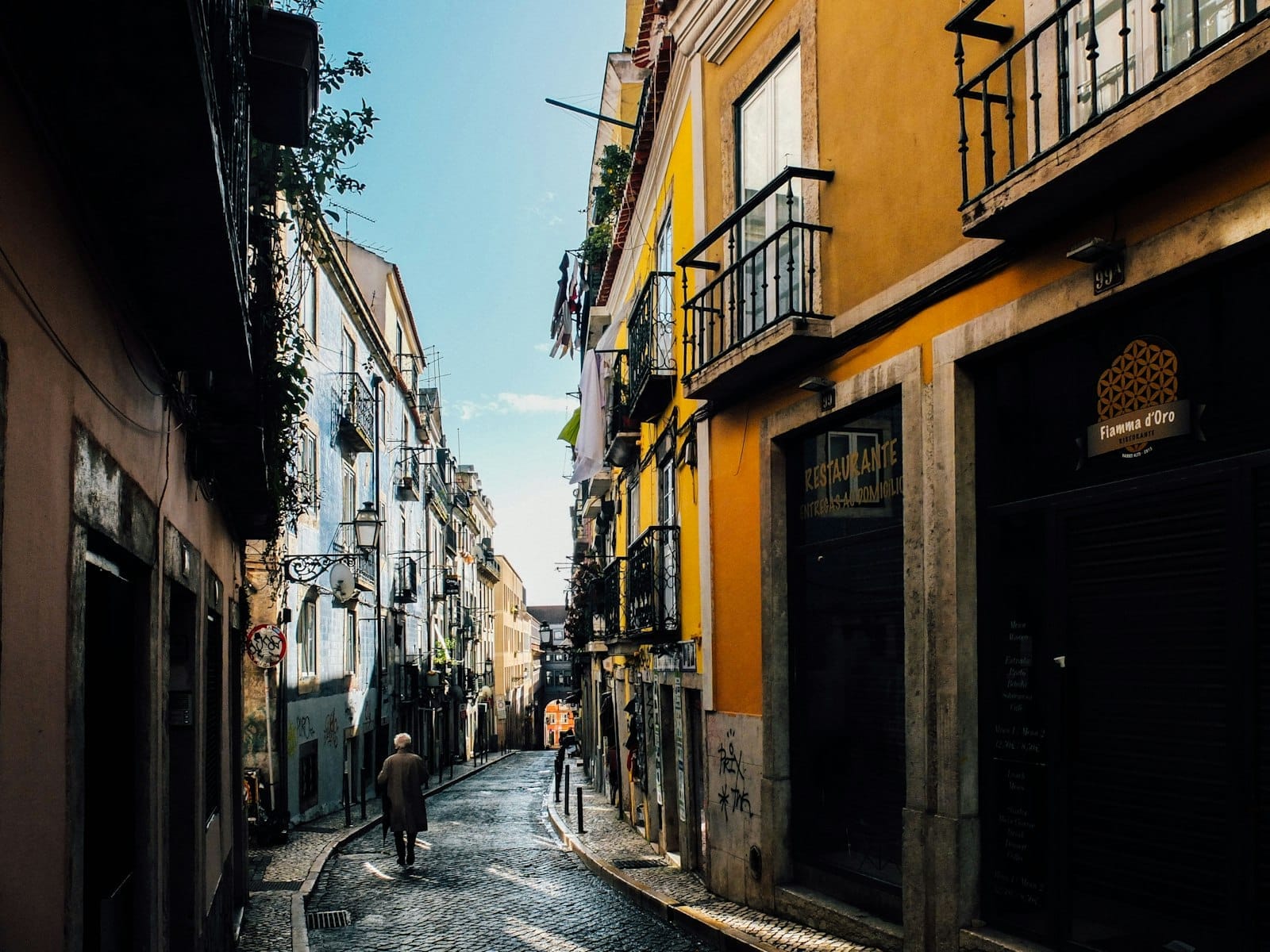
Bairro Alto sits on a hill above Chiado and operates on a split personality: hushed and residential by day, one of Lisbon's loudest and most social neighborhoods by night. Developed in the early 16th century as one of the city's first planned districts outside the medieval walls, its orthogonal grid of narrow lanes has barely changed in five centuries, even if everything that happens inside them has.
Orientation
Bairro Alto occupies a flat-topped hill on Lisbon's western ridge, bounded by Rua do Século to the west, Rua da Misericórdia to the east, Rua de São Pedro de Alcântara to the north, and Rua do Loreto and Calçada do Combro to the south. The neighborhood sits directly above Chiado, which begins at Praça Luís de Camões, the square that marks the clearest dividing line between the two districts.
To the east, the hill drops sharply toward Baixa and Chiado. To the west, the land descends toward Santos and Cais do Sodré, where much of Lisbon's bar and club scene continues after Bairro Alto closes down. Alfama lies across the valley to the northeast. Understanding this geography matters: Bairro Alto is genuinely elevated, which means every approach involves climbing either stairs or a steep slope, whether on foot or by funicular.
The neighborhood's street plan is remarkably simple by Lisbon standards. Because it was laid out in a single act of urban planning in 1513, the streets run in a near-perfect grid, a rarity in a city that mostly evolved organically on difficult terrain. The lanes are narrow enough that two people walking side by side will brush the walls of the buildings on either side, and almost none of them carry significant motor traffic.
Character & Atmosphere
During the morning and early afternoon, Bairro Alto feels like a residential neighborhood that happens to have a lot of shuttered bars in it. The streets are quiet. You hear pigeons, the occasional motorbike working its way up a narrow lane, and the clatter of dishes from a café where the owner is setting up for lunch. The azulejo-tiled facades of the old buildings catch the light differently depending on the hour: pale and cool in the morning, warmer and more saturated by mid-afternoon when the sun swings around to the west.
By late afternoon, things begin to shift. Small restaurants pull tables onto the pavement. A few bars open their shutters. The first groups of visitors begin arriving from Chiado, walking uphill from Praça Luís de Camões. The neighborhood still feels manageable at this point, even pleasant, and it is genuinely the best time to walk its streets without fighting through crowds.
After 10pm on any night from Thursday to Sunday, Bairro Alto becomes a different place entirely. The narrow streets fill with people standing outside bars holding drinks, because inside most of these bars there is no room to stand. Music bleeds from doorways. The cobblestones, already uneven and slippery after rain, become an obstacle course. The noise level is significant. This is not an accident or a recent development: Bairro Alto has been Lisbon's primary nightlife district for decades, and the infrastructure of the neighborhood, its compact grid, its proximity to the city center, its lack of through traffic, suits the role almost perfectly.
⚠️ What to skip
If you are staying in Bairro Alto and value quiet nights, choose accommodations on the outer edges of the neighborhood, particularly along Rua do Século or Calçada do Combro. Streets closer to the center of the grid will be noisy until 3am or later on weekends.
The bohemian reputation of the neighborhood has roots that go back further than its current nightlife identity. Bairro Alto has historically been a district of printers, publishers, and artists. That legacy shows up in the street art on the older buildings, in the number of independent bookshops and small galleries that persist alongside the bars, and in a general tolerance for unconventional behavior that feels built into the character of the place.
What to See & Do
The best single viewpoint in the neighborhood is the Miradouro de São Pedro de Alcântara, a tiered garden terrace on the northern edge of Bairro Alto where the hilltop meets Rua de São Pedro de Alcântara. From here, on a clear day, you can see across the valley to the castle on the opposite hill, down to the river, and over the rooftops of Baixa. It is one of the most informative viewpoints in the city for building a mental map of Lisbon's geography. A tiled panel on the lower terrace helpfully labels the landmarks you are looking at.
The Bica Funicular, which runs along Rua da Bica de Duarte Belo, has operated since 1892 and connects the southern edge of Bairro Alto down to Rua de São Paulo near Cais do Sodré. It is a practical way to descend the hill and also one of Lisbon's most photographed streets, particularly from the bottom looking up. The funicular runs roughly every 15 minutes. For context on Lisbon's full range of elevated viewpoints, the best viewpoints in Lisbon guide covers the city's miradouros in detail.
Praça Luís de Camões, the square at the southern boundary of Bairro Alto, is worth more than a passing glance. The statue at its center depicts the 16th-century poet Luís de Camões, and the square itself has historical weight: it was one of the gathering points during the Carnation Revolution of April 1974, when Portugal's dictatorship fell without significant bloodshed. Today it functions as the social hinge between Chiado's daytime energy and Bairro Alto's nighttime draw. The Igreja de São Roque, just a short walk north on Rua de São Roque, is one of the most unexpectedly spectacular churches in Lisbon: its plain exterior conceals a series of side chapels decorated with an almost overwhelming density of gilded wood, marble, and 18th-century azulejos.
- Miradouro de São Pedro de Alcântara: tiled garden terrace with panoramic views across the city
- Bica Funicular: operating since 1892, descends from Bairro Alto to Cais do Sodré
- Igreja de São Roque: 16th-century Jesuit church with extraordinarily ornate side chapels
- Praça Luís de Camões: boundary square with historical significance and good café terraces
- Street art along the interior lanes: concentrated particularly on quieter residential streets toward Rua do Século
Bairro Alto is also one of the traditional homes of fado, Lisbon's melancholic musical form. Several established fado houses operate in the neighborhood, typically requiring dinner reservations and running late into the evening. For a full orientation to fado venues and etiquette, the fado guide for Lisbon is the right starting point.
Eating & Drinking
The food scene in Bairro Alto operates across two very different registers. During the day and early evening, the neighborhood has a reasonable selection of small Portuguese restaurants serving traditional lunch menus: bacalhau preparations, grilled fish, bifanas, and soup. Prices at these spots are generally modest, particularly at places where a daily menu includes a starter, main course, and drink for around 10 to 13 euros. These restaurants are easy to spot by the handwritten menus in the window and the complete absence of tourist photography on the walls.
After dark, the emphasis shifts decisively toward drinking. Bairro Alto has an extraordinary concentration of small bars in a very compressed area, most of them occupying what were once ground-floor residential spaces. The bars tend to be small, dimly lit, and loud, with an emphasis on cheap beer, house wine, and ginjinha, the cherry liqueur that is one of Lisbon's signature drinks. Many bars do not bother with a food menu beyond olives or chips. The culture is to buy a drink, walk outside, and socialize on the street, which is why the pavements fill so completely on busy nights.
For a better dinner before the bars open, Chiado just downhill offers significantly more variety, including some of Lisbon's better mid-range restaurants. The Lisbon restaurant guide covers neighborhoods across the city. If you want to eat well without going far, look along the calmer streets toward the western and northern edges of Bairro Alto, where small tascas tend to be less tourist-facing.
💡 Local tip
Ginjinha is traditionally served in a small shot glass with or without the cherries (com ou sem elas). It costs around 1.50 to 2 euros and is one of the cheapest and most genuinely local drinks you can order in any Bairro Alto bar.
The neighborhood also has a scattering of wine bars and more considered cocktail spots, particularly along Rua da Atalaia and Rua do Norte, two of the streets that carry the highest concentration of nightlife. These tend to attract a slightly older crowd than the street-drinking culture of the inner lanes, and several serve small plates alongside drinks. If you are planning a longer evening, the proximity to Cais do Sodré, about ten minutes on foot downhill, means you can move seamlessly between the two areas as the night progresses.
Getting There & Around
Bairro Alto is not directly served by Lisbon's metro, which is the single most important logistical fact about the neighborhood. The closest metro stations are Baixa-Chiado (served by the Blue and Green lines) and Rato (Blue line), both of which require a steep uphill walk to reach the heart of the district. From Baixa-Chiado, the walk up through Chiado and Praça Luís de Camões to the center of Bairro Alto takes roughly 10 to 15 minutes depending on pace. For a full overview of how to navigate Lisbon's public transport system, the guide to getting around Lisbon is a useful reference.
The Bica Funicular provides the most characterful connection to the lower city, running from Rua da Bica de Duarte Belo down to Largo do Calhariz near Cais do Sodré. It operates on the Viva Viagem card used across Lisbon's transit network, or you can buy a single ticket at the bottom or top. The funicular does not run late at night, which means that returning uphill after the funicular stops requires either walking or taking a taxi or rideshare app such as Uber or Bolt, both of which operate reliably in Lisbon.
Walking is the primary mode of transport within Bairro Alto itself, which is compact enough that you can cross it end to end in under ten minutes. The cobblestone streets are uneven, and the slopes on the approaches are genuinely steep: comfortable, flat-soled shoes are strongly advisable. Driving into the neighborhood is impractical given the narrow lanes and very limited parking, and unnecessary given the walking distances involved.
ℹ️ Good to know
Uber and Bolt both work well in Lisbon and are often faster and cheaper than traditional taxis for short trips from Bairro Alto to areas like Cais do Sodré or Alfama. Request pickups on wider streets like Rua da Misericórdia or Calçada do Combro rather than in the narrow interior lanes.
Where to Stay
Staying in Bairro Alto makes most sense for travelers whose primary reason for being in Lisbon involves the nightlife, or who want to be within easy walking distance of Chiado's shopping, Baixa's central sights, and the fado houses of the upper city. The neighborhood is central enough that almost everything in central Lisbon is reachable on foot or by short transit ride.
The honest caveat is the noise. Friday and Saturday nights are loud until well past 2am, and Thursday and Sunday nights are not much quieter during peak season. If you are a light sleeper or traveling with children, Bairro Alto is not the right base. Chiado, just downhill, offers much of the same centrality with significantly less nighttime noise, and the broader where to stay in Lisbon guide covers the full range of neighborhood options across the city.
For those who do choose Bairro Alto, the best-positioned accommodations sit on the northern and western edges of the neighborhood, within easy reach of the Miradouro de São Pedro de Alcântara and slightly removed from the densest bar streets. The area around Rua do Século and the streets approaching from Rato metro station tend to be quieter than the interior of the grid. Boutique guesthouses and small hotels suit the neighborhood's character better than large chain properties, several of which are closer to Chiado or Baixa anyway.
Practical Tips & Safety
Bairro Alto is generally safe, including at night, though the usual precautions apply in any crowded late-night environment: keep bags zipped and close, be aware of your surroundings in tightly packed street crowds, and do not leave drinks unattended. The neighborhood attracts large numbers of tourists on weekend nights, and where crowds gather, opportunistic petty theft can occur. For broader safety context across Lisbon, the Lisbon safety tips guide covers the main things to be aware of.
The cobblestone streets are beautiful but genuinely hazardous in poor footwear, particularly on the downhill approaches after dark. This is worth taking seriously: the combination of uneven stones, slight gradients, and late-night crowds produces more twisted ankles than any other single factor in the neighborhood. Rubber-soled shoes with grip are the correct choice.
Finally, note that Bairro Alto rewards exploration during the daytime too, when the lack of crowds makes it possible to actually look at the buildings, the tilework, the street art, and the small independent shops without navigating around groups of people. If your itinerary allows, a walking tour of the upper city that takes in Bairro Alto, Chiado, and the viewpoints makes an excellent half-day.
TL;DR
- Bairro Alto is Lisbon's primary nightlife district: a compact grid of bars and small restaurants that fills with people from Thursday to Sunday nights and quiets down almost completely during the day.
- The neighborhood has genuine historical depth as Lisbon's first planned district (1513) and one of the traditional homes of fado, but its daytime offer is modest compared to nearby Chiado.
- Best for: night owls, bar-hoppers, fado enthusiasts, and travelers who want to be central and do not mind weekend noise.
- Not ideal for: families with young children, light sleepers, or travelers primarily interested in museums and daytime sightseeing.
- Getting there requires a steep uphill walk from the nearest metro stations (Baixa-Chiado or Rato); the Bica Funicular provides a scenic alternative descent toward Cais do Sodré.
Related Travel Guides
- Best Museums in Lisbon: 12 Essential Collections to Visit
Lisbon punches well above its weight as a museum city, offering everything from world-class art collections to archaeology, decorative arts, and cutting-edge contemporary exhibitions. This guide covers the 12 best museums in Lisbon, organized by neighborhood and theme, with practical tips on pricing, free entry days, and what makes each one worth your time.
- Best Time to Visit Lisbon: A Month-by-Month Guide
Lisbon rewards visitors in every season, but timing your trip well makes a real difference. This guide breaks down what to expect each month — temperatures, crowd levels, prices, and key events — so you can decide when a visit to Lisbon suits you best.
- Best Viewpoints in Lisbon: Miradouros & Rooftop Bars
Lisbon is one of Europe's most photogenic cities, and its seven hills mean spectacular views are everywhere. This guide covers the best traditional miradouros, architectural observation decks, and rooftop vantage points across the city.
- Best Day Trips from Lisbon: Palaces, Beaches & Beyond
Lisbon sits at the edge of a region packed with UNESCO palaces, dramatic Atlantic coastline, and historic towns all within an hour or two. These are the best day trips to make from the city, whether you have a car or just a train pass.
- Fado in Lisbon: Where to Hear Authentic Fado Music
Fado is Lisbon's soul — a UNESCO-listed tradition of longing, heartbreak, and beauty. This guide cuts through the tourist-trap venues to show you exactly where to hear the real thing, what it costs, and how to book.
- Free Things to Do in Lisbon: 20 Ways to Explore the City Without Spending a Euro
Lisbon rewards the budget-conscious traveler more than almost any other European capital. From hilltop viewpoints and azulejo-tiled churches to free museum Sundays and sprawling flea markets, here are 20 genuinely free experiences across the city.
- Getting Around Lisbon: Transport, Trams & Airport Transfers
Lisbon has one of Europe's most layered transport networks, mixing a modern metro with century-old trams and scenic ferries. This guide breaks down every option with real prices, route details, and honest advice on what actually works for visitors.
- Most Instagrammable Spots in Lisbon: 20 Places Every Photographer Needs to Visit
Lisbon is one of Europe's most photogenic capitals, with terracotta rooftops, hand-painted tile facades, Moorish hilltop castles, and a shimmering river at every turn. This guide covers the 20 most Instagrammable spots in Lisbon, with practical advice on the best times to shoot, what to frame, and how to beat the crowds.
- Is Lisbon Worth Visiting? An Honest Assessment
Lisbon is one of Europe's most talked-about city breaks, but does it live up to the hype? This guide cuts through the noise with honest assessments of what the city does brilliantly, where it falls short, what things cost, and how to make the most of your time there.
- 2 Days in Lisbon: The Perfect Weekend Itinerary
Two days in Lisbon is enough to cover the essentials without rushing — if you plan smart. This itinerary breaks down exactly where to go, when to go, what to eat, and what to skip, district by district.
- Lisbon Airport (LIS): Everything You Need to Know
Humberto Delgado Airport is Portugal's busiest gateway and your first encounter with Lisbon. This guide covers both terminals, every transport option into the city, lounge access, seasonal crowd patterns, and the practical details that most airport guides skip.
- Best Beaches Near Lisbon: From Surf Breaks to Seaside Towns
Lisbon has no beaches of its own, but within 30 to 60 minutes you can reach some of the finest Atlantic coastline in Europe. This guide covers the best beaches near Lisbon, from the closest train-accessible options to the dramatic headlands beyond Cascais.
- Lisbon's Bridges: The Complete Guide to 25 de Abril and Vasco da Gama
Lisbon has two remarkable bridges crossing the Tagus River, each with a distinct story. This guide covers the history, engineering, best viewpoints, visitor experiences, and practical tips for seeing both the 25 de Abril Bridge and the Vasco da Gama Bridge.
- What to Eat in Lisbon: A Food Lover's Guide
Lisbon's food scene runs deeper than custard tarts and salt cod. This guide covers the essential dishes, where to find the best versions, what to skip, and how to eat well across every budget in Portugal's capital.
- Romantic Lisbon: The Best Things to Do for Couples
Lisbon earns its romantic reputation through layers of atmosphere: tiled facades glowing at golden hour, melancholic Fado drifting from open doorways, and viewpoints that stretch over terracotta rooftops to the Tagus River. This guide covers the best experiences for couples, from classic landmarks to quieter moments that most visitors miss.
- Hidden Gems in Lisbon: Off the Beaten Path
Lisbon rewards those who wander beyond the obvious. This guide uncovers the city's overlooked churches, quieter viewpoints, neighborhood markets, and architectural oddities that locals love and most visitors walk straight past.
- Visiting Lisbon in Summer: What to Expect in July & August
Lisbon in summer means long sunny days, Atlantic breezes, packed beaches, and a city that truly comes alive after dark. This guide covers the real conditions in July and August: what the heat actually feels like, when to visit which attractions, and how to get the most out of peak season without the headaches.
- Visiting Lisbon in Winter: Is It Worth It?
Lisbon in winter is quieter, cheaper, and surprisingly sunny. This guide covers what to expect from December through February, including weather realities, the best seasonal experiences, and practical tips for getting the most out of a low-season trip.
- 4 Days in Lisbon: The Perfect Itinerary
Four days is enough time to move past the highlights and actually understand Lisbon: its layered history, neighbourhood contrasts, and the rhythm of daily life along the Tagus. This itinerary is built around logical geography, honest crowd realities, and the experiences that genuinely reward the effort.
- Luxury Lisbon: Five-Star Hotels, Fine Dining & Exclusive Experiences
Lisbon delivers genuine five-star luxury at prices that embarrass Paris, Barcelona, and London. This guide covers the best luxury hotels in Lisbon by neighborhood, honest price breakdowns, fine dining worth the splurge, and the exclusive experiences that set a premium trip apart.
- Lisbon Nightlife: Best Bars, Clubs & Fado Houses (2026 Guide)
Lisbon nightlife runs deep: fado singers in candlelit Alfama taverns, cocktail bars along the hilly streets of Bairro Alto, and electronic clubs that don't fill up until 2am. This guide breaks down every major scene by neighborhood, with specific venues, honest pricing, and the local knowledge to avoid tourist traps.
- Lisbon on a Budget: How to Visit Without Overspending
Lisbon is one of Western Europe's most affordable capitals, but costs vary significantly depending on how you travel. This guide breaks down exactly what you'll spend on accommodation, food, transport, and attractions, with specific prices and honest advice on where to save and where it's worth paying more.
- Lisbon Map: Neighborhoods, Landmarks & How to Navigate the City
Lisbon covers just 100.05 km² but packs in dramatically different neighborhoods, from medieval hilltop alleys to modern riverside parks. This guide breaks down the Lisbon map by district, explains how far apart things really are, and tells you the smartest ways to get between them.
- Lisbon River Cruises: The Complete Guide to Tagus Boat Tours
A Lisbon river cruise on the Tagus puts the city's most iconic landmarks in front of you from the water. This guide breaks down every major operator, realistic prices, departure logistics, and which tours are actually worth booking in 2026.
- Lisbon Safety Tips: Scams to Avoid & How to Stay Safe
Lisbon is one of Western Europe's safest capitals, but it has a handful of well-practiced scams that catch tourists off guard every year. This guide covers exactly what to watch for, where the real risks are, and how to move around the city with confidence.
- Shopping in Lisbon: Best Markets, Streets & Stores
Lisbon rewards shoppers at every budget level, from Saturday morning flea markets in Alfama to flagship luxury boutiques on Avenida da Liberdade. This guide covers the best markets, shopping streets, and stores in the city, with practical details on schedules, neighborhoods, and what to skip.
- Lisbon to Barcelona: Flights, Trains, Buses & Road Trip Options Compared
The distance from Lisbon to Barcelona is roughly 1,005 km. You have four realistic ways to cover it: a short flight, a multi-leg train journey, an overnight bus, or a self-drive road trip through Spain. This guide breaks down costs, journey times, and trade-offs so you can choose the right option for your trip.
- Lisbon to Lagos: How to Travel to the Algarve
Lagos sits about 300km south of Lisbon, deep in the western Algarve. Getting there is straightforward, but the right option depends on your budget, timeline, and plans once you arrive. This guide breaks down every route with honest comparisons.
- Lisbon to Seville: How to Get There & What to Expect
The Lisbon to Seville journey is around 450 km across two countries, and the route you choose makes a significant difference. This guide breaks down every transport option with current prices, realistic journey times, and the stops worth making along the way.
- Best Walking Tours in Lisbon: Guided, Free & Self-Guided Options
Lisbon rewards walkers like few other European capitals. This guide covers the best walking tours across every budget and neighborhood, from tip-based free tours and small-group food walks to self-guided routes through Alfama's maze of cobblestones. Whether you have two hours or a full day, there's a walk that fits.
- Lisbon Weather: A Complete Month-by-Month Climate Guide
Lisbon enjoys a Mediterranean climate with over 280 sunny days a year, but the difference between January and July is enormous. This guide breaks down Lisbon weather by month, covers seasonal crowd patterns, and tells you exactly when to go based on what you want to do.
- Lisbon with Kids: The Best Family-Friendly Activities
Lisbon is one of Europe's most rewarding cities to explore with children. This guide covers the top family-friendly activities, from world-class aquariums and hands-on science museums to historic tram rides and riverside parks, with honest advice on what's worth your time and what to skip.
- London to Lisbon: Flights, Trains, Buses & How to Choose
Flying from London to Lisbon takes around 2.5 hours and costs as little as £50. But if you want to travel overland, the train journey is an epic 22+ hour adventure through Paris and Madrid. This guide breaks down every realistic option, with honest advice on cost, time, and comfort.
- Santo António Festival Lisbon: Everything You Need to Know
The Santo António Festival is Lisbon's largest and most beloved annual celebration, filling the streets of Alfama, Mouraria, and Bairro Alto every June with grilled sardines, bonfires, folk parades, and mass weddings. This guide covers the full schedule, key traditions, best neighborhoods to visit, and practical tips for navigating the festivities.
- Sintra Day Trip from Lisbon: The Complete Practical Guide
Sintra is the most popular day trip from Lisbon, and for good reason: royal palaces, Moorish ruins, and forested hilltops sit just 40 minutes by train from the city centre. This guide covers exactly how to get there, which sites to prioritize, how much to budget, and how to avoid the worst of the crowds.
- Best Things to Do in Lisbon: The Definitive Guide
Lisbon rewards curious travelers with centuries of history, world-class food, and some of Europe's most dramatic viewpoints. This guide covers the best things to do in Lisbon across every budget, neighborhood, and travel style, with honest takes on what's worth your time.
- Where to Eat in Lisbon: Best Restaurants & Food Areas
Lisbon's food scene runs deeper than pastéis de nata and bifanas. This guide covers the best restaurants in Lisbon by neighbourhood and budget — from two-Michelin-star dining rooms to the market stalls locals actually queue for.
- Where to Stay in Lisbon: Best Neighborhoods & Hotels (2026 Guide)
Choosing where to stay in Lisbon shapes your entire trip. This guide breaks down every major neighborhood by atmosphere, price range, pros and cons, and the type of traveler each suits best — so you can book with confidence.