Lisbon's Bridges: The Complete Guide to 25 de Abril and Vasco da Gama
Lisbon has two remarkable bridges crossing the Tagus River, each with a distinct story. This guide covers the history, engineering, best viewpoints, visitor experiences, and practical tips for seeing both the 25 de Abril Bridge and the Vasco da Gama Bridge.
Tickets & tours
Live prices and dates from our booking partner. If you book, we may earn a commission at no extra cost to you.
TL;DR
- The 25 de Abril Bridge is the longest suspension bridge in Europe at 2,277 meters, built in 1966 and renamed after the 1974 revolution that ended Portugal's dictatorship.
- The Vasco da Gama Bridge stretches 12 kilometers across the Tagus, making it by far the longer of the two structures overall.
- The best way to get up close to the 25 de Abril Bridge is the Pilar 7 Experience, a guided tour that takes you 80 meters up inside the bridge's pylons — check Vasco da Gama Tower for a comparable elevated view over the eastern bridge.
- Neither bridge has pedestrian walkways open to the public on the main deck, so viewing from the riverbank or dedicated lookouts is the standard approach.
- For the sharpest photos of the 25 de Abril Bridge, position yourself along the Belém waterfront at golden hour — the light hits the red towers from the west and the effect is striking.
The 25 de Abril Bridge: History Behind the Iconic Red Towers
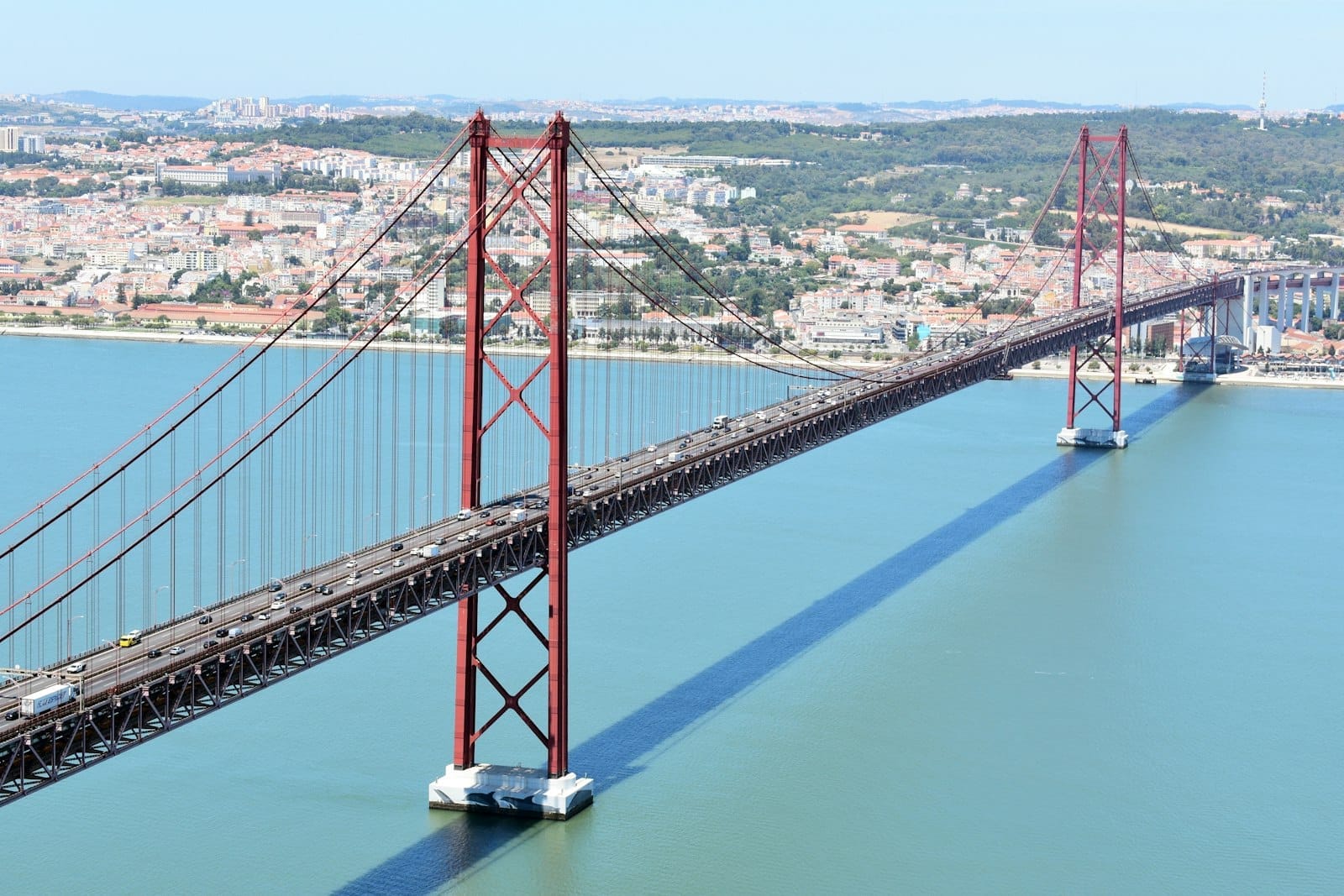
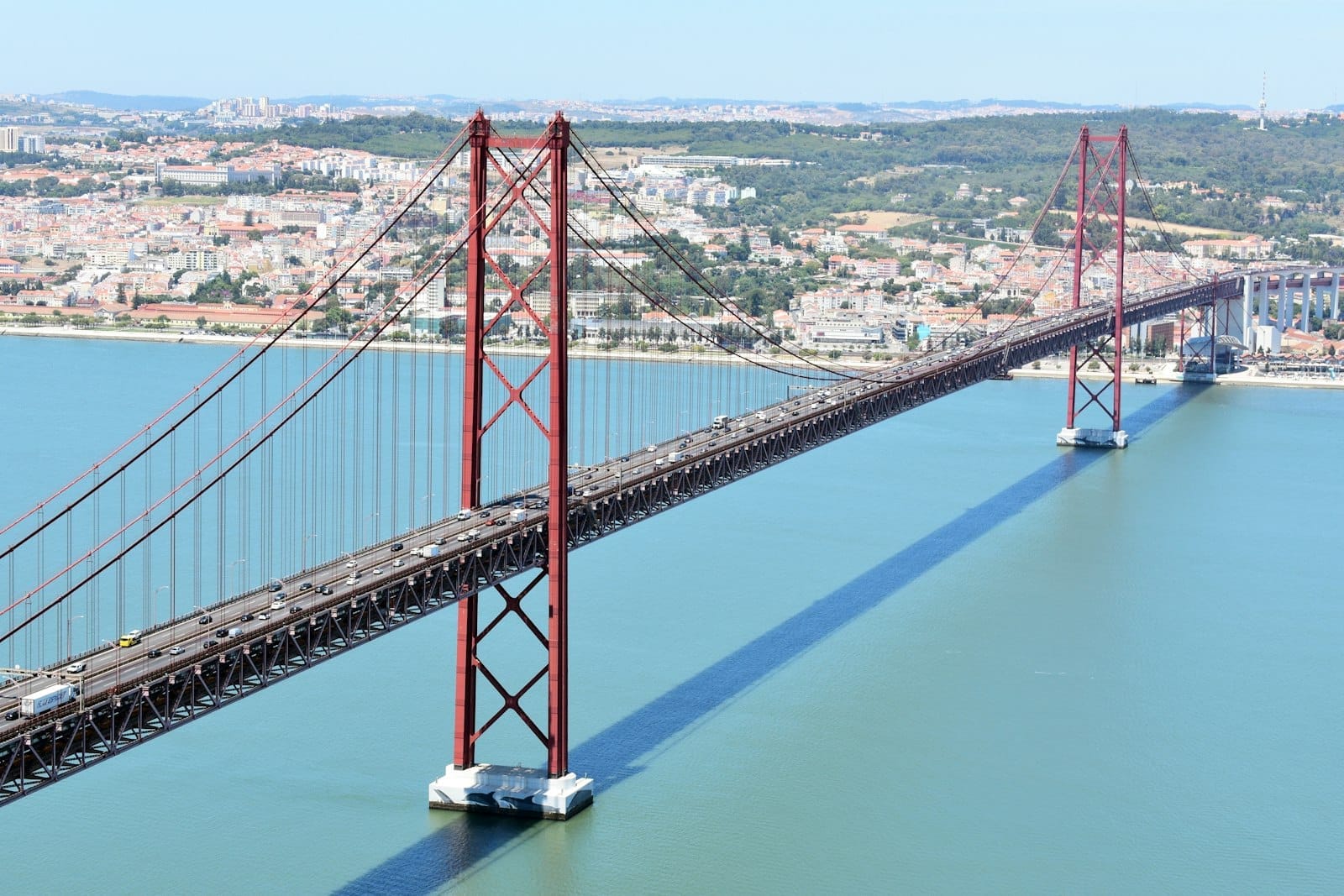
The first thing most visitors notice is how much the 25 de Abril Bridge looks like the Golden Gate in San Francisco. That similarity is not accidental. The 25 de Abril Bridge was designed by the American Bridge Company, which explains the near-identical tower design, deep red color, and suspension cable profile. Construction on the Lisbon bridge began on November 5, 1962, and it opened on August 6, 1966, completing six months ahead of schedule after 45 months of work.
When it opened, the bridge carried the name Salazar Bridge, after António de Oliveira Salazar, the authoritarian Prime Minister who had ruled Portugal since 1932. That name lasted less than a decade. On April 25, 1974, the Carnation Revolution overthrew the dictatorship in a near-bloodless military coup, and the bridge was renamed the same day to mark the date of liberation. Today the name functions as both a geographical marker and a political statement — it is one of the most visible reminders of how recently Portugal transitioned to democracy.
ℹ️ Good to know
The bridge was financed almost entirely through foreign loans, primarily from the United States, though this was never publicly acknowledged during construction. The Cold War context partly explains the secrecy: Portugal under Salazar was strategically important to NATO, and American capital flowing into Portuguese infrastructure was a sensitive topic.
The engineering numbers are substantial. Total length is 2,277 meters (roughly 1.4 miles), with a main span of 1,013 meters. The towers rise 190 meters above the Tagus, and the road deck sits 70 meters above the waterline at its highest point. The bridge originally carried four lanes of road traffic. In 1999, a lower rail deck was added, converting it into a two-tier structure that now carries a double-track railway and six lanes of vehicles on the upper level.
Pilar 7: The Only Way to Get Inside the Bridge
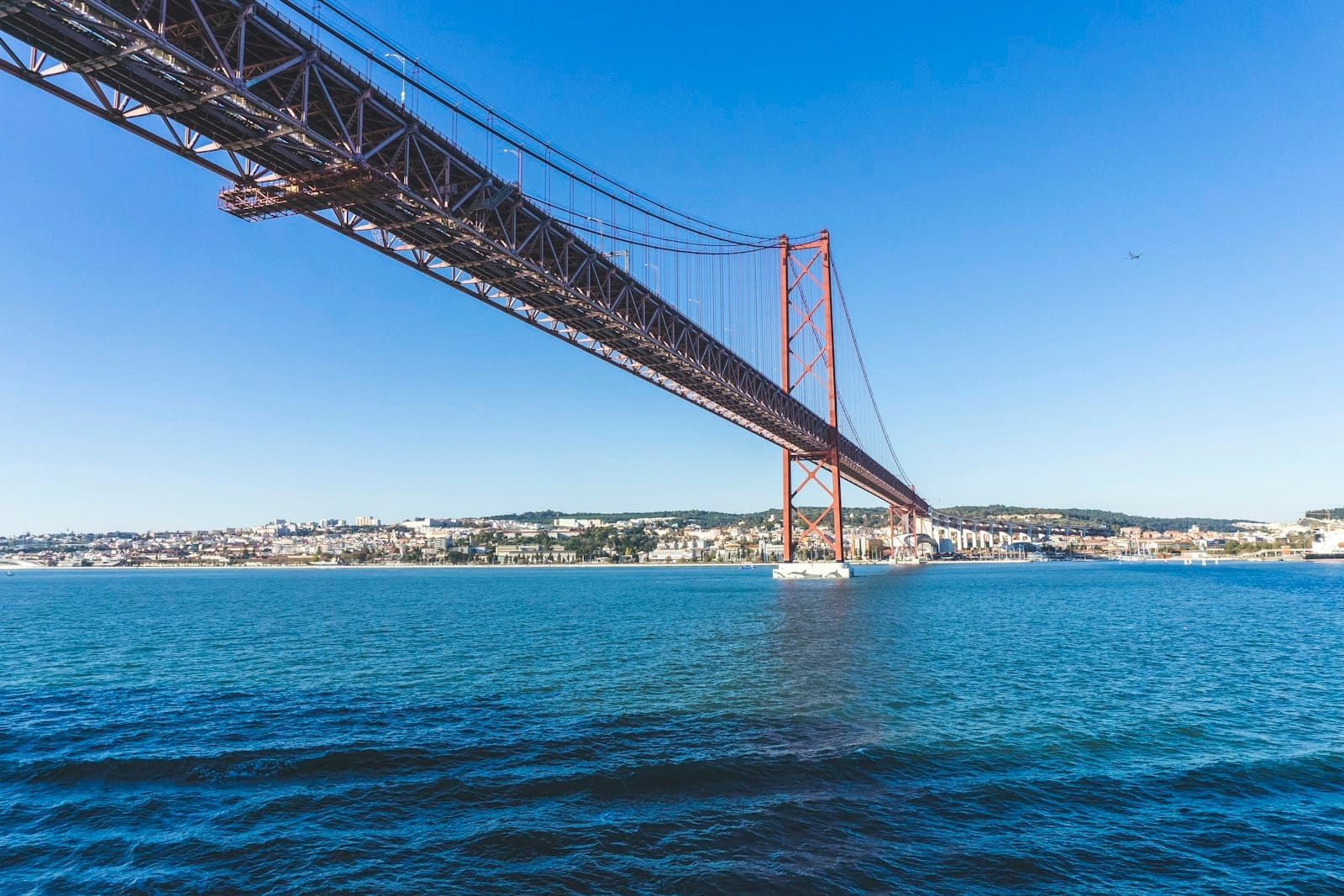
For most visitors, the 25 de Abril Bridge is something you photograph from a distance or drive across without stopping. Pilar 7 changes that. The experience offers guided access into the bridge's south pylon (pilar means pillar in Portuguese), taking visitors up through the interior structure to an open-air platform 80 meters above the Tagus. From that height you are looking directly at the cable anchorage points and across a panorama that includes the Cristo Rei statue on the south bank and the full sweep of the estuary toward the Atlantic.
The exhibition inside covers the bridge's construction history, the engineering principles behind suspension bridges, and the political history surrounding the renaming. It is genuinely educational rather than superficial. Tickets should be booked in advance through official channels, as capacity inside the pylon is limited. For current pricing and schedules, check the official Lisbon tourism website or contact Pilar 7 directly. If you want to pair this with other landmark visits, the Jerónimos Monastery and Belém Tower are both within walking distance along the same riverbank.
💡 Local tip
Arrive at Pilar 7 early in the morning or late afternoon for the best light and thinner crowds. Midday in summer brings strong haze over the river that flattens the view from the platform. The site is accessible from the Belém area by a short riverside walk or via Uber.
The Vasco da Gama Bridge: Scale Over Spectacle
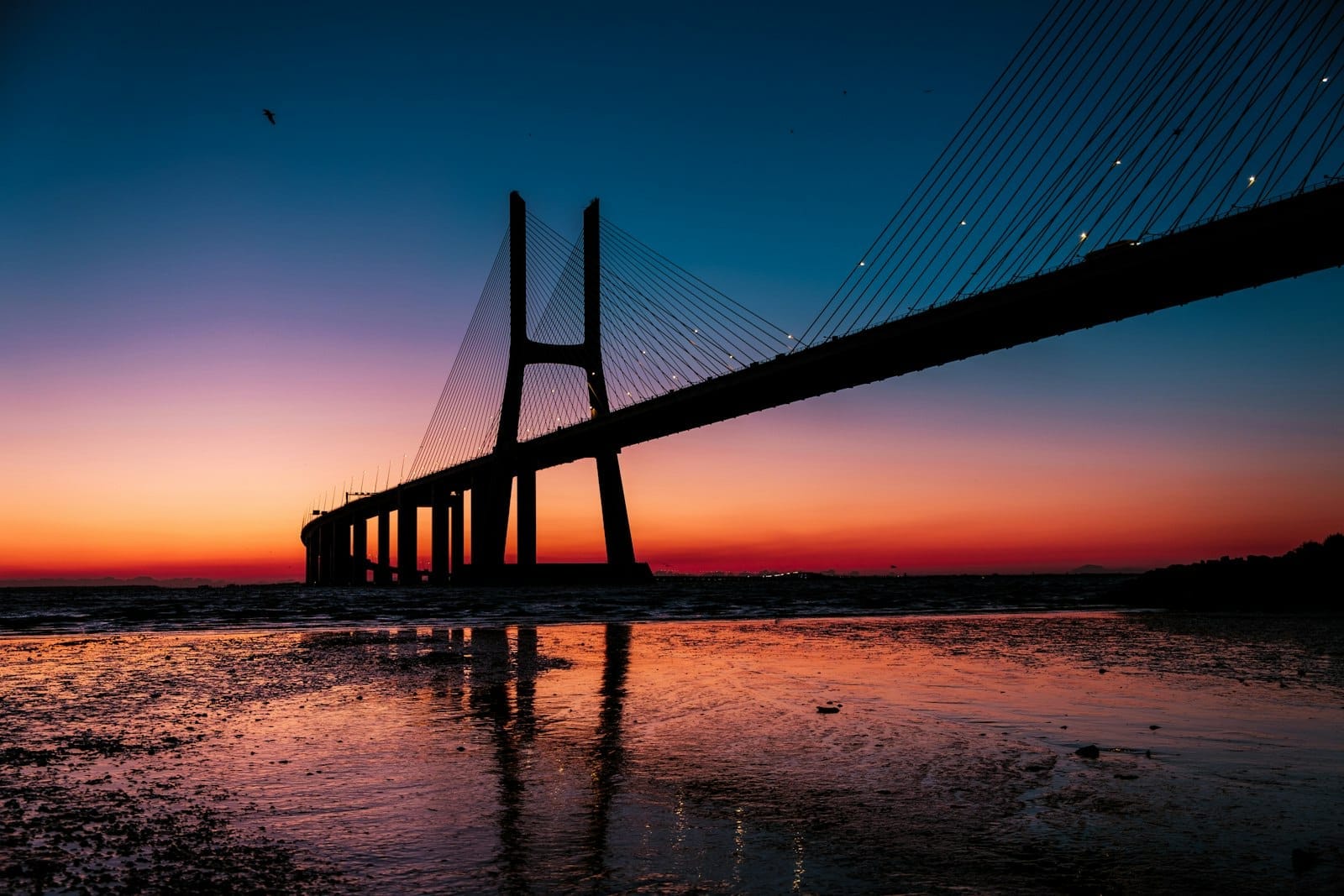
The Vasco da Gama Bridge is a fundamentally different structure from its more famous counterpart. Inaugurated in 1998, just in time for EXPO 98, it is a cable-stayed bridge with viaduct sections spanning approximately 12 kilometers across the widest part of the Tagus estuary. For comparison, the 25 de Abril Bridge is 2.3 kilometers. The Vasco da Gama Bridge held the title of longest bridge in Europe from its opening until 2018, when the Crimean Bridge surpassed it.
Visually, it is less dramatic than the 25 de Abril Bridge from the waterfront. The low profile and vast length make it appear almost like a causeway from shore rather than a soaring suspension structure. Its engineering achievement is in managing water depth, tidal flow, and wind load across that enormous span rather than in any single dramatic tower. The bridge connects the Parque das Nações district on the north bank to the south bank, designed specifically to relieve congestion on the older bridge and to link the EXPO 98 fairgrounds with the national motorway network.
The best elevated view of the Vasco da Gama Bridge is from the Vasco da Gama Tower in Parque das Nações, which was also built for EXPO 98. The observation deck places you roughly level with the cable stays and gives a clean perspective on how far the bridge extends into the estuary. The Parque das Nações district itself is worth a couple of hours — it is the most architecturally modern part of Lisbon, with wide riverfront promenades and the Lisbon Oceanarium nearby.
⚠️ What to skip
A common mistake in travel writing is calling the 25 de Abril Bridge the longest bridge in Europe. It is the longest suspension bridge in Europe — the Vasco da Gama Bridge is more than five times longer in total span. These are genuinely different records, and conflating them is inaccurate.
Best Viewpoints for Photographing Both Bridges
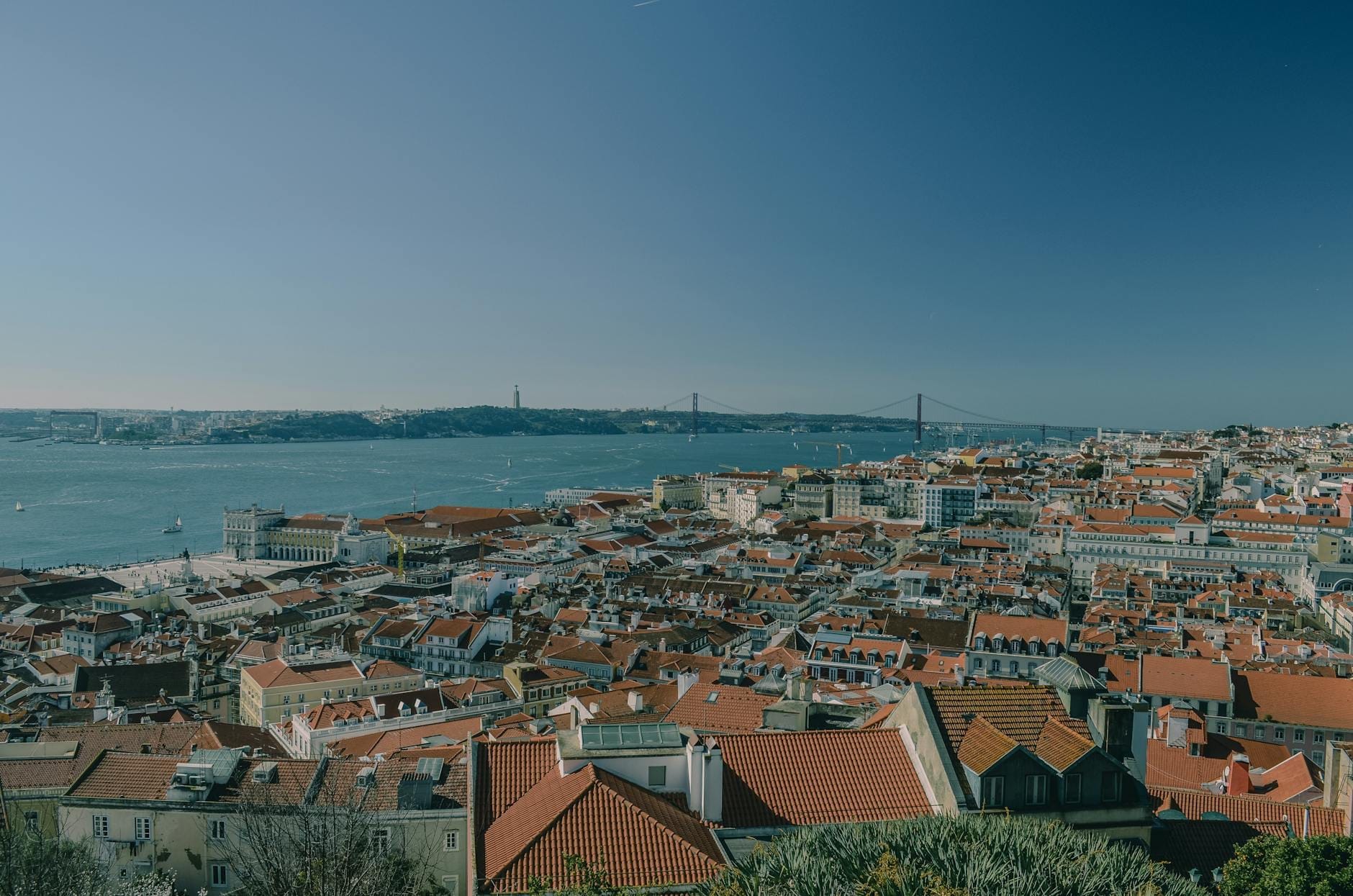
Neither bridge can be appreciated from a single spot. They sit roughly 15 kilometers apart along the Tagus, and each requires a different approach to photograph well. Here are the most reliable viewpoints, ranked by photo quality and accessibility.
- Belém Waterfront (25 de Abril Bridge) The riverside promenade west of the Padrão dos Descobrimentos gives an unobstructed west-facing view of the bridge towers. Golden hour and sunset light hits the structure from behind you if you face west, making this the best time-of-day combination for photography.
- Cristo Rei Viewpoint, South Bank (25 de Abril Bridge) The statue's base platform on the Almada side offers a north-facing view of the bridge from below and slightly to the side — unusual perspective, worth the short ferry and taxi journey from Belém or Cais do Sodré.
- Tagus Ferry Crossing (Both Bridges) The Cacilhas ferry from Cais do Sodré passes under the 25 de Abril Bridge. Sitting on the upper deck at dusk with the towers framed against a fading sky is one of Lisbon's more underrated experiences, and the ferry costs around €1.35 each way.
- Vasco da Gama Tower Observation Deck (Vasco da Gama Bridge) The only elevated view that lets you see the full cable-stayed central section of the eastern bridge clearly. The tower is 145 meters tall and the deck provides a 360-degree panorama over Parque das Nações and the lower estuary.
- Riverside Promenade, Parque das Nações (Vasco da Gama Bridge) Ground-level but directly beneath the bridge's north approach. You can walk along the water's edge and see the cable stays from directly below — good for wide-angle architectural shots.
Getting to Both Bridges: Practical Logistics
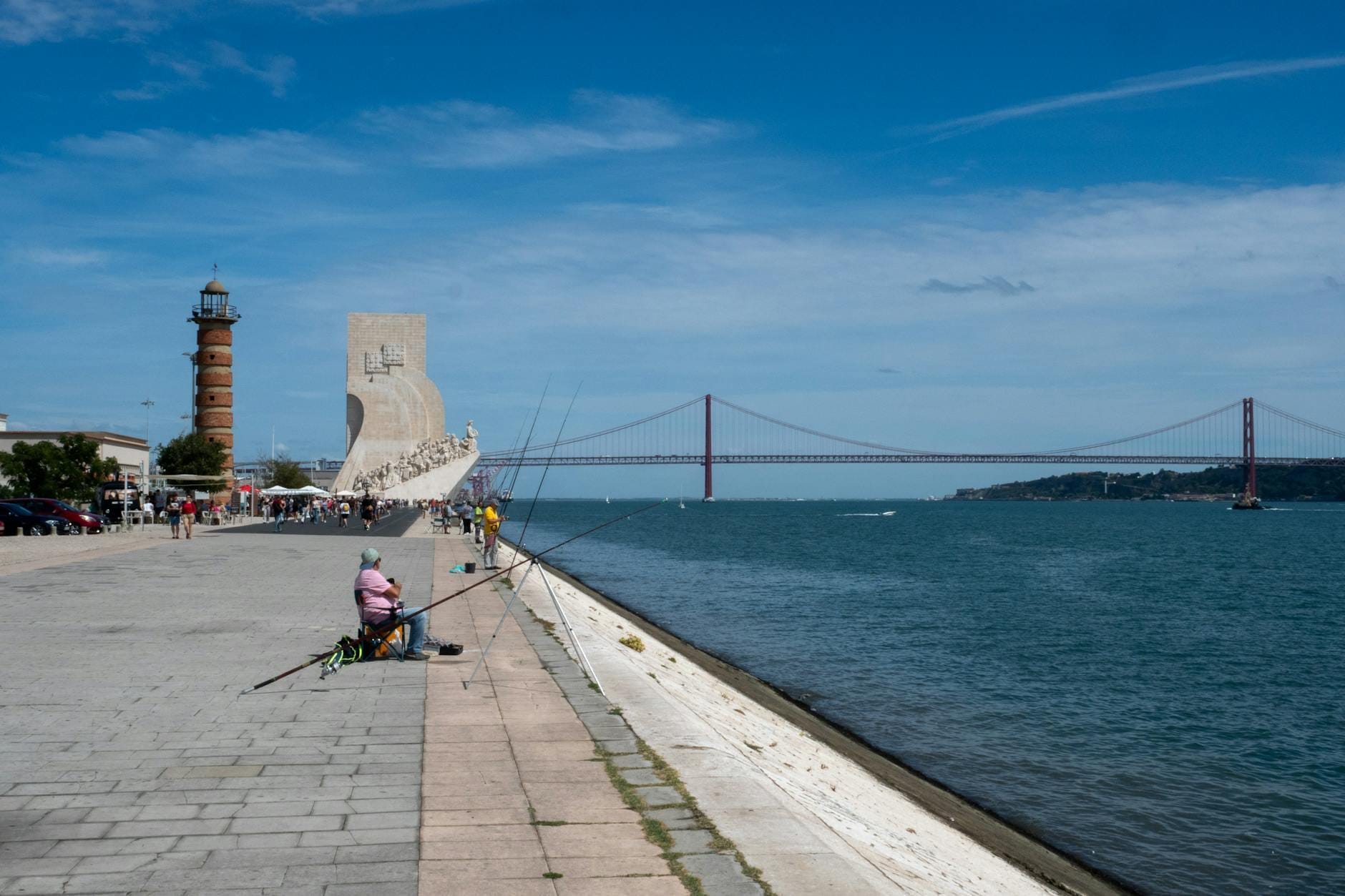
Getting around Lisbon to reach both bridges on the same day is straightforward if you plan the sequence. Start in Belém for the 25 de Abril Bridge in the morning, spend an hour or two at Pilar 7 and the waterfront, then take the Metro (Green Line from Belém area, transfer at Baixa-Chiado) north to Oriente station for Parque das Nações and the Vasco da Gama Bridge in the afternoon. The full circuit takes about four to five hours at a reasonable pace. For broader context on getting around the city, see the complete guide to Lisbon transport.
- 25 de Abril Bridge (Pilar 7 entrance): Located in the Alcântara district, accessible by Uber, the 15E tram from Cais do Sodré, or a 25-minute riverside walk from Belém.
- Vasco da Gama Bridge viewpoints: Oriente Metro station (Red Line) puts you directly in Parque das Nações, a 10-minute walk from the riverside and Vasco da Gama Tower.
- Driving across the 25 de Abril Bridge: The toll is charged electronically (Via Verde system); rental cars may accrue charges automatically depending on your rental agreement. Cash payment is not available.
- Ferry option: The Cacilhas ferry from Cais do Sodré takes you under the 25 de Abril Bridge in about 10 minutes. From Cacilhas, a taxi to the Cristo Rei viewpoint takes around 5 minutes.
- Time budget: Allow 2-3 hours for Pilar 7 and Belém waterfront; 1.5-2 hours for Parque das Nações and the Vasco da Gama Tower.
What's Coming Next: Lisbon's Third Tagus Crossing
As of 2026, Portugal is still prioritizing a third crossing of the Tagus as part of the planned Lisbon-Madrid high-speed rail line. The proposed bridge would serve primarily rail traffic and is targeted for completion around 2034. The location has not been finalized, but preliminary routes suggest a crossing east of the 25 de Abril Bridge, which would significantly change the visual landscape of the central Lisbon waterfront. For now, two bridges remain — one a historical monument, the other an engineering record-holder.
If the bridges are part of a broader Lisbon itinerary, consider building your visit around the four-day Lisbon itinerary which sequences Belém, the riverfront, and Parque das Nações efficiently. For photography-focused travelers, the guide to Lisbon's most photogenic locations covers the best angles for both bridges alongside other landmark shots.
FAQ
Can you walk across the 25 de Abril Bridge?
No. The 25 de Abril Bridge does not have a pedestrian walkway and is not open to foot traffic. The only public access on foot is through the Pilar 7 Experience, which takes you up inside the south pylon to an 80-meter observation platform. You cannot cross the bridge on foot.
Is the 25 de Abril Bridge the same as the Golden Gate Bridge?
They were designed by the same firm (American Bridge Company) and share a visual similarity, but they are separate structures. The 25 de Abril Bridge is in Lisbon, Portugal; the Golden Gate is in San Francisco, USA. The Lisbon bridge has a main span of 1,013 meters and was completed in 1966.
Which is longer: the 25 de Abril Bridge or the Vasco da Gama Bridge?
The Vasco da Gama Bridge is by far the longer structure overall at approximately 12 kilometers. The 25 de Abril Bridge is 2.277 kilometers in total length, but it holds a different record: the longest suspension bridge in Europe. These are different engineering categories.
How do I get to Pilar 7 from central Lisbon?
The easiest options are Uber or the 15E tram from Cais do Sodré to Belém, followed by a short walk east along the riverbank to the Alcântara area. Allow extra time if you are combining Pilar 7 with Belém attractions.
What is the best time of year to photograph the 25 de Abril Bridge?
Late spring (May-June) and early autumn (September-October) offer the clearest air and most balanced light. Summer brings heat haze over the Tagus that can soften distant shots, particularly from the Belém waterfront. Winter mornings after rain often produce the sharpest visibility, but shorter days limit your golden-hour window.
Tickets & tours
Live prices and dates from our booking partner. If you book, we may earn a commission at no extra cost to you.
Planning a trip? Discover personalized activities with the Nomado app.