Parque das Nações is Lisbon's purpose-built modern district, rising from a derelict industrial riverbank to host the 1998 World Exposition. Today it offers wide promenades, landmark architecture, the world-class Oceanário de Lisboa, and a genuinely liveable waterfront that feels completely unlike the rest of the city.
Parque das Nações is Lisbon's great urban reinvention: a former industrial wasteland on the eastern Tagus shore that was transformed into a showcase district for Expo '98 and never looked back. Where the rest of Lisbon layers centuries of history into narrow hills, this neighborhood is flat, wide, and deliberately modern, built around the river rather than turned away from it.
Orientation
Parque das Nações sits at the eastern edge of Lisbon, roughly 7 kilometres from Praça do Comércio and the historic centre. The district covers 5.44 square kilometres and stretches for about 5 kilometres along the northern bank of the Tagus (Tejo) River, from the mouth of the Trancão River in the north to the boundary with Marvila in the south. The railway line forms its western spine; the river its eastern edge.
The neighborhood borders Olivais to the north and west, Marvila to the southwest, and the Lisbon-Loures municipal boundary to the north. Because it was built on flat, reclaimed land, it has none of Lisbon's characteristic hills or winding alleyways. Streets run at logical angles, footpaths are wide, and the whole district is almost entirely walkable once you arrive. This geometry feels foreign in a city defined by slopes and staircases, but it makes Parque das Nações unusually accessible, particularly for visitors with reduced mobility.
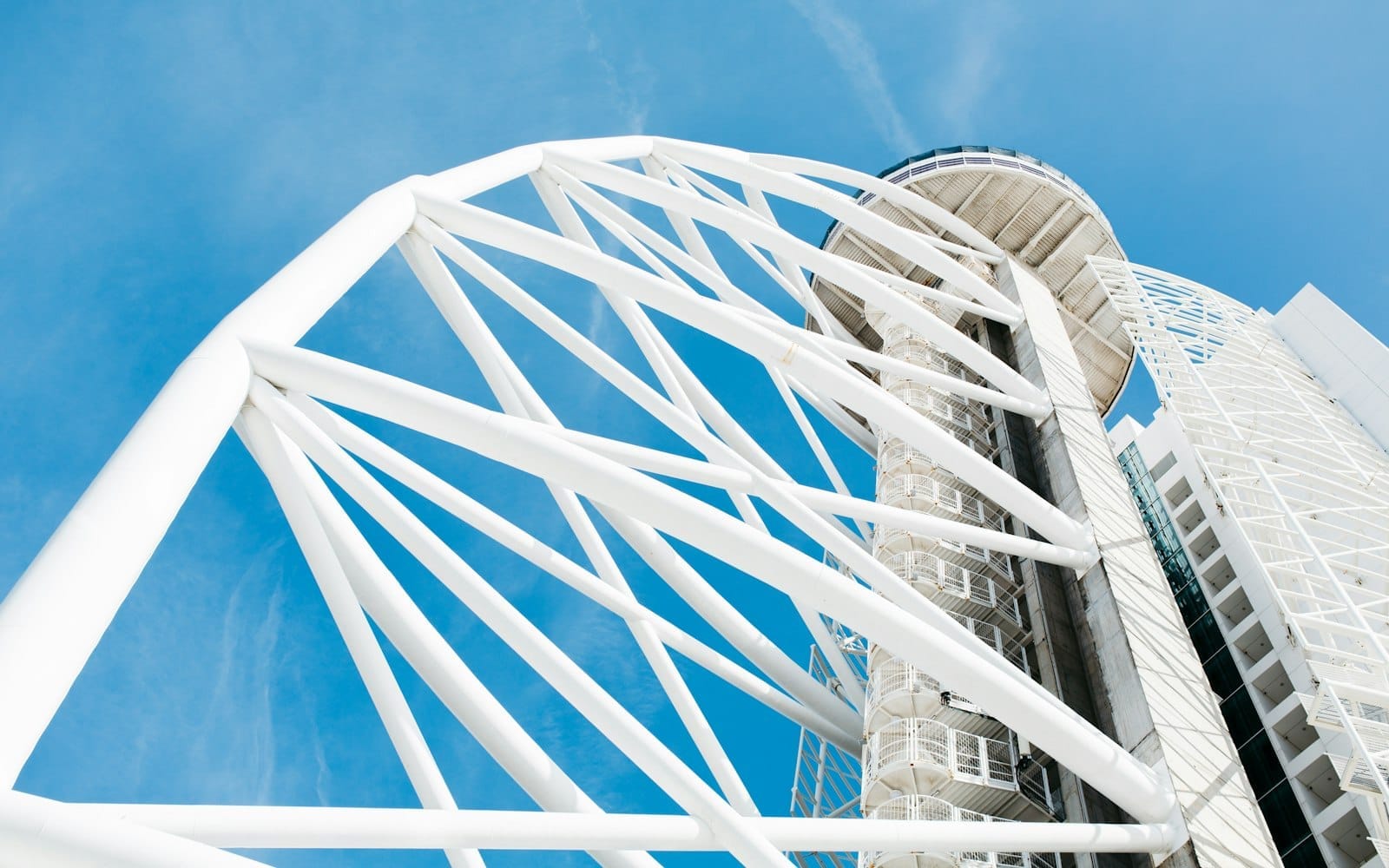
The anchor point for orientation is Gare do Oriente, the main rail and metro hub designed by Spanish architect Santiago Calatrava. From the station, the riverside promenade is a ten-minute walk east, passing through the commercial core. The Vasco da Gama Tower is visible from most of the district and functions as a reliable landmark when navigating on foot.
Character & Atmosphere
The word most visitors reach for when describing Parque das Nações is 'different'. Different from Alfama's tangle of medieval lanes, different from Baixa's earthquake-grid commerce, different from the faded grandeur of Chiado. This is a neighbourhood that was conceived by urban planners rather than accumulated over centuries, and that origin shapes everything about its atmosphere.
Mornings here are quiet and orderly. Residents walk dogs along the Passeio do Tejo promenade, cyclists use the dedicated paths, and the air carries a clean, slightly saline edge from the river. The light at this hour is soft and reflective, bouncing off the broad Tagus and catching the steel-and-glass facades of the exhibition pavilions. Coffee shops in the ground floors of apartment buildings start filling with commuters heading toward Oriente station.
By midday, especially on weekends, the tone shifts. Families arrive at the Oceanário, tour groups congregate near the Pavilhão de Portugal, and the riverside restaurants fill up. In summer, the promenade between the Oceanário and the cable car station can feel genuinely crowded, with children running toward the water and street performers working the open plaza spaces. This is not a neighbourhood that hides its popularity.
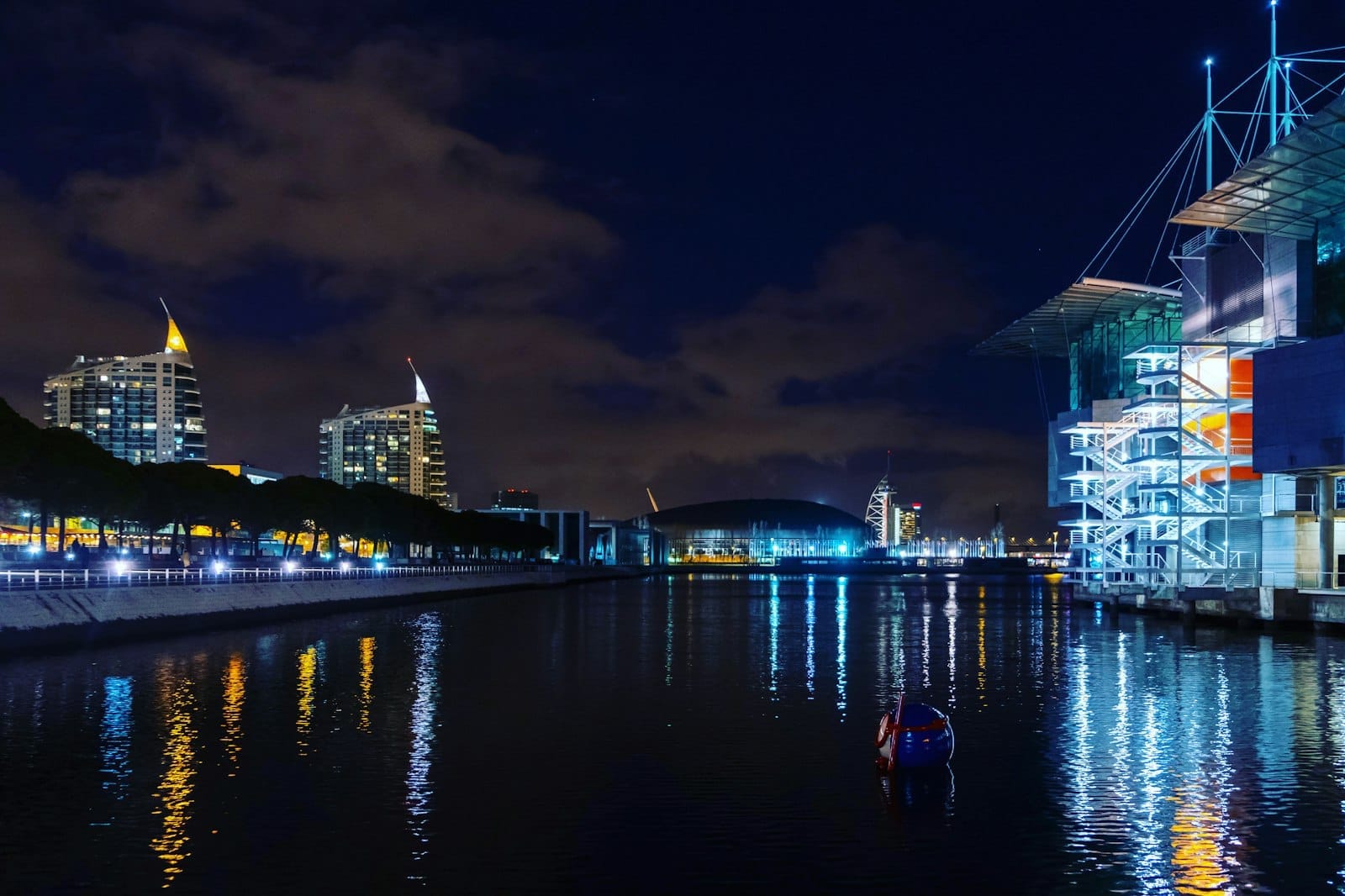
After dark, the district has a calmer, residential quality. The Vasco da Gama shopping centre and its surrounding restaurants draw a local crowd for dinner. The Atlântico Pavilion, one of Europe's major concert venues, occasionally fills the streets with crowds before and after shows. On quiet evenings, the riverside walk is almost contemplative, with the lights of the Vasco da Gama Bridge reflected in the water and the distant southern bank glowing across the estuary. This is not Lisbon's nightlife neighbourhood, but it is one of its most atmospheric places to walk at dusk.
ℹ️ Good to know
Parque das Nações has approximately 22,000 residents and functions as a genuine neighbourhood, not just a tourist zone. On weekday mornings it feels primarily like a commuter district; the visitor-facing side of the area is most active from late morning through early evening.
What to See & Do
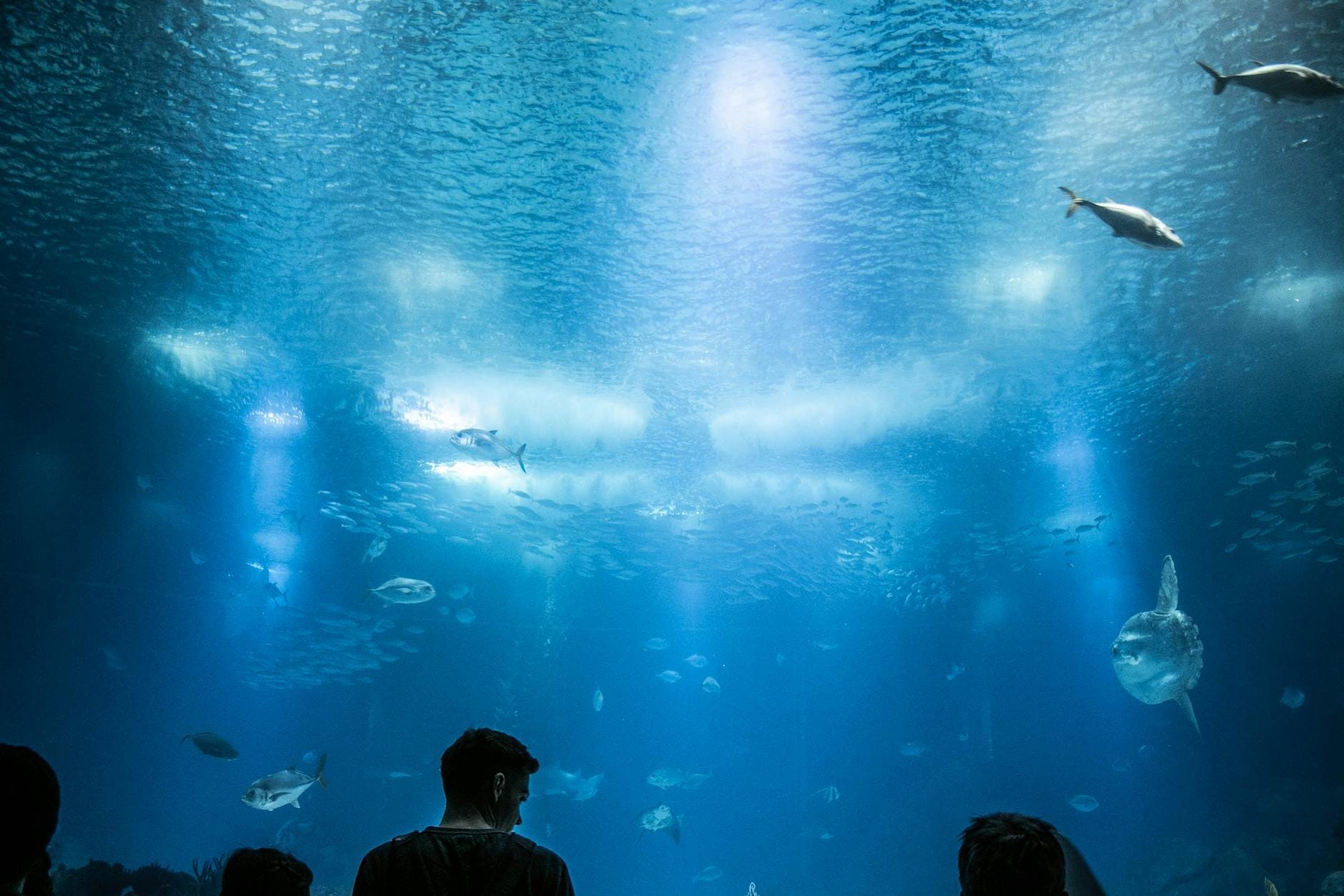
The centrepiece of the neighbourhood is the Lisbon Oceanarium, consistently ranked among the best aquariums in Europe. Opened for Expo '98 and designed by American architect Peter Chermayeff, it holds around 8 million litres of water and more than 500 species. The central tank, which you can view from multiple levels, creates an effect of standing inside the open ocean. Arrive early or book online: queues build quickly by mid-morning, especially during school holidays.
The Pavilhão do Conhecimento, directly facing the Oceanário across the main plaza, is a hands-on science museum aimed at curious visitors of all ages. It rewards more time than most people give it. The exhibitions cover mathematics, physics, and natural phenomena through interactive installations, and the building itself, with its angular concrete forms, is a good example of the architectural ambition that defined the Expo '98 construction programme.
The cable car (Telecabine Lisboa) runs along the waterfront for about 1.3 kilometres between the Oceanário area and the Vasco da Gama Tower, offering elevated views over the Tagus and the district's roofline. It operates seasonally and weather permitting, so check before building a trip around it. The ride is brief but the perspective it offers on the district's layout and the river's width is genuinely clarifying.
The riverside promenade itself deserves an hour. Walking south from the Oceanário toward the Vasco da Gama shopping centre, the path passes sculptural installations, garden areas, and open water views. One-third of the district's total area is green space, which is evident in the generous landscaping between buildings. On a clear day, you can see across the Tagus to the industrial shores of Barreiro and, further west, the faint outline of the bridge that carries the name of the neighbourhood's most famous architectural icon.
Lisbon Oceanarium: book tickets online to skip queues
Pavilhão do Conhecimento: science museum, good for families and rainy days
Telecabine Lisboa: cable car along the riverfront (check seasonal hours)
Gare do Oriente: Calatrava's station is worth exploring as architecture
Passeio do Tejo: the main riverside promenade, best at golden hour
Atlântico Pavilion: major concert and events venue, check programme
Jardins Garcia de Orta: botanical gardens featuring plants from former Portuguese territories
💡 Local tip
The Jardins Garcia de Orta, tucked beside the waterfront near the Oceanário, are named after the 16th-century Portuguese botanist and are planted with species from Portugal's former overseas territories. They are almost always uncrowded and make a good spot to sit quietly between sights.
Eating & Drinking
The food scene in Parque das Nações reflects its dual identity: part residential neighbourhood, part visitor destination. The options are wider than you might expect but the quality is uneven, and some restaurants in the highest-footfall areas near the Oceanário lean on captive-audience pricing. For a broader view of Lisbon's food culture, the Lisbon food guide gives useful context on what to expect across the city.
The Vasco da Gama shopping centre contains a wide range of restaurant chains and a food court on the upper floors, useful for families who need quick, reliable options. The streets surrounding it, particularly along the waterfront, have a concentration of sit-down restaurants serving grilled fish, seafood rice, and the kind of Portuguese comfort food that anchors menus across the country. Prices here are mid-range, typically 15-25 euros per person for a main and a drink.
Cafés are plentiful throughout the residential sections of the neighbourhood, particularly on and around Avenida Dom João II, the main commercial spine running parallel to the waterfront. These are local spots serving pastéis de nata, galão (a milky espresso drink), and simple lunch plates. The price differential between these neighbourhood cafés and the waterfront restaurants is noticeable: a coffee and pastel de nata will typically run under two euros in a residential café, where the same thing near the Oceanário plaza costs closer to four.
For evening drinks, the outdoor terraces along the waterfront come into their own in warmer months, roughly May through September. Sitting with a glass of wine and a view over the Tagus as the sun drops behind the city is one of the neighbourhood's genuine pleasures. The eastern aspect of the promenade means sunsets are not visible from the water's edge, but the quality of the late afternoon light on the river is compensation enough.
Getting There & Around
Parque das Nações is the easiest neighbourhood in Lisbon to reach by metro. Oriente station is served by the Red Line (Linha Vermelha), which runs directly from the airport (Aeroporto station) in approximately 15 minutes. From central Lisbon, take the Red Line from Alameda, São Sebastião, or Oriente's own interchange connections. For full transit options across the city, see the guide to getting around Lisbon.
Gare do Oriente is also a major intercity and regional rail hub, with trains running north to Porto, east to Madrid, and south to the Algarve. Arriving at Oriente by long-distance train deposits you directly inside the neighbourhood, which is a practical advantage if you are staying here. The bus terminal adjacent to the station connects to numerous suburbs and regional destinations.
Within the neighbourhood, walking is the most practical option. The flat terrain, wide footpaths, and clear sightlines make this one of the few parts of Lisbon where a map is almost unnecessary: the river is always to the east, the station to the west, and the major landmarks are visible from a distance. Cycling is also straightforward, and hire bikes are available near the station and along the promenade. The distances between key attractions rarely exceed 15 minutes on foot.
💡 Local tip
If arriving from the airport, the Red Line metro stops at Oriente before continuing into central Lisbon. This makes Parque das Nações a logical first stop for travellers who want to drop luggage and orient themselves before heading into the older parts of the city.
Where to Stay
Parque das Nações makes a practical, if unconventional, base for exploring Lisbon. The metro connection is excellent, airport transfers are fast, and hotel prices here tend to be lower than in the historic centre. For a full comparison of where to stay across the city, the Lisbon accommodation guide breaks down every neighbourhood.
The neighbourhood suits a particular type of traveller well: those visiting with families who need space and amenities, business travellers using the convention facilities near Oriente, and anyone who values easy access to transport over proximity to the historic centre. Hotels concentrate near the Oriente station and along Avenida Dom João II, with several large international properties offering river-view rooms on upper floors.
The trade-off is distance from the neighbourhoods most visitors come to Lisbon to experience. Alfama, Chiado, and Bairro Alto are all 20-25 minutes by metro, which is manageable but adds up over a week. If your primary interest is the older, more characterful parts of Lisbon, staying in Parque das Nações means commuting to the city's soul each day. For travellers combining Lisbon with a conference, a family visit to the Oceanário, or a river cruise departure, the location makes more sense.
How Parque das Nações Fits Into Lisbon
Understanding Parque das Nações requires understanding what it replaced. Before Expo '98, this stretch of riverbank was occupied by petroleum refineries, slaughterhouses, chemical plants, and landfill. The Portuguese government's decision to bid for the World Exposition was partly motivated by the opportunity to decontaminate and redevelop the site, shifting Lisbon's development axis eastward after decades of investment focused on the western riverside zone around Belém.
The 1998 Expo's theme was 'The Oceans: A Heritage for the Future', which explains the Oceanário's centrality and the pervasive water motifs in the public sculpture and landscape design. The exposition ran from May to September 1998 and attracted 11 million visitors. When it closed, rather than abandoning the site as has happened with many World's Fair locations, Lisbon converted the pavilions into permanent cultural and sports venues and built out the residential and commercial infrastructure that makes up the neighbourhood today.
The Vasco da Gama Bridge, inaugurated in 1998 specifically for the Expo, spans 17.2 kilometres across the Tagus and was one of the longest bridges in Europe at the time of its opening. It redirected a significant volume of cross-river traffic away from the older Ponte 25 de Abril in the west and cemented Parque das Nações' role as a transport node rather than a dead end. The bridge is visible from the promenade and provides one of the better photographic backdrops the neighbourhood offers.
Visitors who want to understand Lisbon's full range should treat Parque das Nações as a necessary counterpoint to the historic centre. After days in Alfama's medieval lanes or Baixa-Chiado's 18th-century grid, the rational urbanism of Parque das Nações reads as a deliberate statement about where Portugal wanted to place itself at the turn of the millennium: forward-facing, European, invested in public space and environmental remediation. That ambition, however planned and somewhat sterile it can feel, is worth seeing.
⚠️ What to skip
Parque das Nações is not the place to come looking for historic Lisbon, fado bars, or the kind of streetscape that photographs with a vintage filter. If that is what you are after, the neighbourhood is better visited as a half-day excursion from the centre rather than a base. The metro makes it easy either way.
TL;DR
Parque das Nações is Lisbon's modern waterfront district, built for Expo '98 on a decontaminated industrial site along the eastern Tagus shore.
The Lisbon Oceanarium, Calatrava's Oriente station, and the Vasco da Gama Bridge are the headline draws; the riverside promenade and botanical gardens reward slower exploration.
Red Line metro from the airport takes about 15 minutes to Oriente, making it one of the most transit-accessible neighbourhoods in the city.
Best suited to families, business travellers, and those curious about contemporary urban design; less relevant if your priority is Lisbon's historic character.
Visit as a half-day trip from the centre, or stay here for practical transport advantages at the cost of distance from the older, more atmospheric parts of the city.
Lisbon punches well above its weight as a museum city, offering everything from world-class art collections to archaeology, decorative arts, and cutting-edge contemporary exhibitions. This guide covers the 12 best museums in Lisbon, organized by neighborhood and theme, with practical tips on pricing, free entry days, and what makes each one worth your time.
Lisbon rewards visitors in every season, but timing your trip well makes a real difference. This guide breaks down what to expect each month — temperatures, crowd levels, prices, and key events — so you can decide when a visit to Lisbon suits you best.
Lisbon is one of Europe's most photogenic cities, and its seven hills mean spectacular views are everywhere. This guide covers the best traditional miradouros, architectural observation decks, and rooftop vantage points across the city.
Lisbon sits at the edge of a region packed with UNESCO palaces, dramatic Atlantic coastline, and historic towns all within an hour or two. These are the best day trips to make from the city, whether you have a car or just a train pass.
Fado is Lisbon's soul — a UNESCO-listed tradition of longing, heartbreak, and beauty. This guide cuts through the tourist-trap venues to show you exactly where to hear the real thing, what it costs, and how to book.
Lisbon rewards the budget-conscious traveler more than almost any other European capital. From hilltop viewpoints and azulejo-tiled churches to free museum Sundays and sprawling flea markets, here are 20 genuinely free experiences across the city.
Lisbon has one of Europe's most layered transport networks, mixing a modern metro with century-old trams and scenic ferries. This guide breaks down every option with real prices, route details, and honest advice on what actually works for visitors.
Lisbon is one of Europe's most photogenic capitals, with terracotta rooftops, hand-painted tile facades, Moorish hilltop castles, and a shimmering river at every turn. This guide covers the 20 most Instagrammable spots in Lisbon, with practical advice on the best times to shoot, what to frame, and how to beat the crowds.
Lisbon is one of Europe's most talked-about city breaks, but does it live up to the hype? This guide cuts through the noise with honest assessments of what the city does brilliantly, where it falls short, what things cost, and how to make the most of your time there.
Two days in Lisbon is enough to cover the essentials without rushing — if you plan smart. This itinerary breaks down exactly where to go, when to go, what to eat, and what to skip, district by district.
Humberto Delgado Airport is Portugal's busiest gateway and your first encounter with Lisbon. This guide covers both terminals, every transport option into the city, lounge access, seasonal crowd patterns, and the practical details that most airport guides skip.
Lisbon has no beaches of its own, but within 30 to 60 minutes you can reach some of the finest Atlantic coastline in Europe. This guide covers the best beaches near Lisbon, from the closest train-accessible options to the dramatic headlands beyond Cascais.
Lisbon has two remarkable bridges crossing the Tagus River, each with a distinct story. This guide covers the history, engineering, best viewpoints, visitor experiences, and practical tips for seeing both the 25 de Abril Bridge and the Vasco da Gama Bridge.
Lisbon's food scene runs deeper than custard tarts and salt cod. This guide covers the essential dishes, where to find the best versions, what to skip, and how to eat well across every budget in Portugal's capital.
Lisbon earns its romantic reputation through layers of atmosphere: tiled facades glowing at golden hour, melancholic Fado drifting from open doorways, and viewpoints that stretch over terracotta rooftops to the Tagus River. This guide covers the best experiences for couples, from classic landmarks to quieter moments that most visitors miss.
Lisbon rewards those who wander beyond the obvious. This guide uncovers the city's overlooked churches, quieter viewpoints, neighborhood markets, and architectural oddities that locals love and most visitors walk straight past.
Lisbon in summer means long sunny days, Atlantic breezes, packed beaches, and a city that truly comes alive after dark. This guide covers the real conditions in July and August: what the heat actually feels like, when to visit which attractions, and how to get the most out of peak season without the headaches.
Lisbon in winter is quieter, cheaper, and surprisingly sunny. This guide covers what to expect from December through February, including weather realities, the best seasonal experiences, and practical tips for getting the most out of a low-season trip.
Four days is enough time to move past the highlights and actually understand Lisbon: its layered history, neighbourhood contrasts, and the rhythm of daily life along the Tagus. This itinerary is built around logical geography, honest crowd realities, and the experiences that genuinely reward the effort.
Lisbon delivers genuine five-star luxury at prices that embarrass Paris, Barcelona, and London. This guide covers the best luxury hotels in Lisbon by neighborhood, honest price breakdowns, fine dining worth the splurge, and the exclusive experiences that set a premium trip apart.
Lisbon nightlife runs deep: fado singers in candlelit Alfama taverns, cocktail bars along the hilly streets of Bairro Alto, and electronic clubs that don't fill up until 2am. This guide breaks down every major scene by neighborhood, with specific venues, honest pricing, and the local knowledge to avoid tourist traps.
Lisbon is one of Western Europe's most affordable capitals, but costs vary significantly depending on how you travel. This guide breaks down exactly what you'll spend on accommodation, food, transport, and attractions, with specific prices and honest advice on where to save and where it's worth paying more.
Lisbon covers just 100.05 km² but packs in dramatically different neighborhoods, from medieval hilltop alleys to modern riverside parks. This guide breaks down the Lisbon map by district, explains how far apart things really are, and tells you the smartest ways to get between them.
A Lisbon river cruise on the Tagus puts the city's most iconic landmarks in front of you from the water. This guide breaks down every major operator, realistic prices, departure logistics, and which tours are actually worth booking in 2026.
Lisbon is one of Western Europe's safest capitals, but it has a handful of well-practiced scams that catch tourists off guard every year. This guide covers exactly what to watch for, where the real risks are, and how to move around the city with confidence.
Lisbon rewards shoppers at every budget level, from Saturday morning flea markets in Alfama to flagship luxury boutiques on Avenida da Liberdade. This guide covers the best markets, shopping streets, and stores in the city, with practical details on schedules, neighborhoods, and what to skip.
The distance from Lisbon to Barcelona is roughly 1,005 km. You have four realistic ways to cover it: a short flight, a multi-leg train journey, an overnight bus, or a self-drive road trip through Spain. This guide breaks down costs, journey times, and trade-offs so you can choose the right option for your trip.
Lagos sits about 300km south of Lisbon, deep in the western Algarve. Getting there is straightforward, but the right option depends on your budget, timeline, and plans once you arrive. This guide breaks down every route with honest comparisons.
The Lisbon to Seville journey is around 450 km across two countries, and the route you choose makes a significant difference. This guide breaks down every transport option with current prices, realistic journey times, and the stops worth making along the way.
Lisbon rewards walkers like few other European capitals. This guide covers the best walking tours across every budget and neighborhood, from tip-based free tours and small-group food walks to self-guided routes through Alfama's maze of cobblestones. Whether you have two hours or a full day, there's a walk that fits.
Lisbon enjoys a Mediterranean climate with over 280 sunny days a year, but the difference between January and July is enormous. This guide breaks down Lisbon weather by month, covers seasonal crowd patterns, and tells you exactly when to go based on what you want to do.
Lisbon is one of Europe's most rewarding cities to explore with children. This guide covers the top family-friendly activities, from world-class aquariums and hands-on science museums to historic tram rides and riverside parks, with honest advice on what's worth your time and what to skip.
Flying from London to Lisbon takes around 2.5 hours and costs as little as £50. But if you want to travel overland, the train journey is an epic 22+ hour adventure through Paris and Madrid. This guide breaks down every realistic option, with honest advice on cost, time, and comfort.
The Santo António Festival is Lisbon's largest and most beloved annual celebration, filling the streets of Alfama, Mouraria, and Bairro Alto every June with grilled sardines, bonfires, folk parades, and mass weddings. This guide covers the full schedule, key traditions, best neighborhoods to visit, and practical tips for navigating the festivities.
Sintra is the most popular day trip from Lisbon, and for good reason: royal palaces, Moorish ruins, and forested hilltops sit just 40 minutes by train from the city centre. This guide covers exactly how to get there, which sites to prioritize, how much to budget, and how to avoid the worst of the crowds.
Lisbon rewards curious travelers with centuries of history, world-class food, and some of Europe's most dramatic viewpoints. This guide covers the best things to do in Lisbon across every budget, neighborhood, and travel style, with honest takes on what's worth your time.
Lisbon's food scene runs deeper than pastéis de nata and bifanas. This guide covers the best restaurants in Lisbon by neighbourhood and budget — from two-Michelin-star dining rooms to the market stalls locals actually queue for.
Choosing where to stay in Lisbon shapes your entire trip. This guide breaks down every major neighborhood by atmosphere, price range, pros and cons, and the type of traveler each suits best — so you can book with confidence.