Vasco da Gama Tower: Lisbon's Highest Viewpoint, Explained
Standing 145 metres tall on the Tagus riverbank in Parque das Nações, the Vasco da Gama Tower is Lisbon's tallest tower and its most architecturally striking modern landmark. Built for Expo '98, it doubles as a daytime viewpoint and a rooftop bar after dark, offering genuinely different experiences depending on when you visit.
Quick Facts
- Location
- Cais das Naus, Parque das Nações, Lisbon
- Getting There
- Oriente station (Red Line Metro), 10-min walk
- Time Needed
- 1 to 2 hours
- Cost
- €10 before 6pm (visit only); €15 (visit + €15 bar credit)
- Best for
- Panoramic views, modern architecture, sunset drinks
- Official website
- www.vascodagamatower.com
What the Vasco da Gama Tower Actually Is
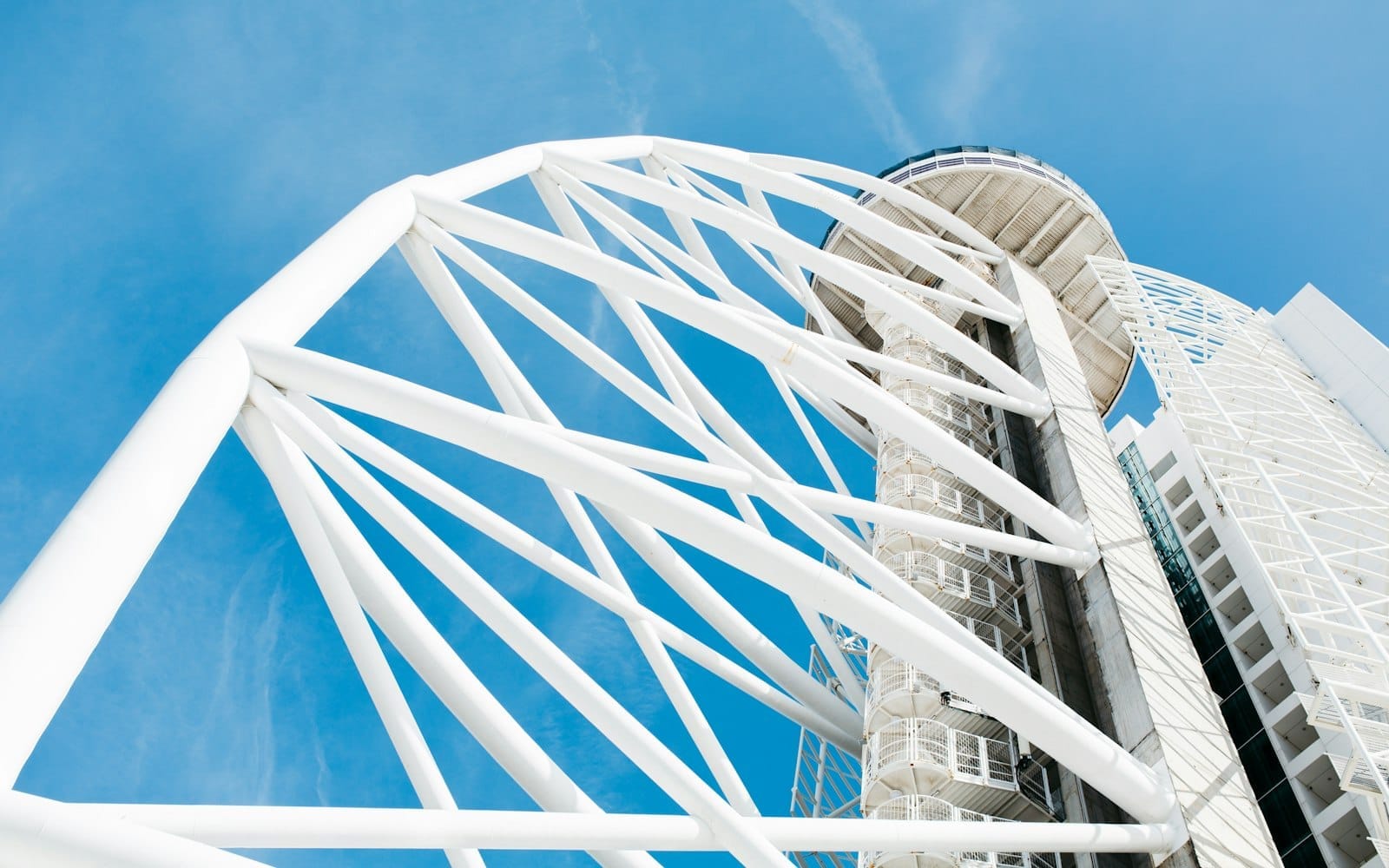
The Torre Vasco da Gama is not a museum, not a monument in the traditional sense, and not a conventional observation deck. It is a 145-metre-tall mixed-use tower on the banks of the Tagus River, designed by architects Leonor Janeiro and Nick Jacobs for the 1998 Lisbon World Exposition. The Expo itself commemorated the 500th anniversary of Vasco da Gama's sea route to India, and the tower's sail-shaped silhouette is no accident: its profile deliberately evokes the billowing canvas of a Portuguese caravel.
Today the building functions as a luxury hotel (Myriad by SANA Hotels occupies the upper floors), a panoramic viewpoint open to day visitors, and the Babylon 360º rooftop bar. Each function draws a different crowd, and knowing which one suits your priorities will determine whether the entrance fee feels justified.
ℹ️ Good to know
Viewpoint: daily 10am until 2am Thu-Sat, until midnight other days. Babylon 360º bar: from 6pm. Admission: €10 before 6pm, €15 from 6pm (the evening fee includes €15 consumable credit at the bar).
The Architecture: Why the Design Matters
From street level, the tower reads as a steel-and-glass column rising from a broad horizontal base, with a curved crown that catches light differently depending on the time of day. At midday in summer, the glass facade reflects white glare across the Tagus waterfront; in the late afternoon, the western face turns amber as the sun moves behind Lisbon's hills. It is one of the few buildings in the city where the exterior is almost as interesting to observe as the view from inside.
Parque das Nações was a derelict industrial zone before Expo '98 transformed it into one of Europe's more coherent examples of waterfront regeneration. The Vasco da Gama Tower anchors the southern end of this development, functioning as a visual terminus for the long riverside promenade. The engineering achievement was significant for its time: at 145 metres, it was Portugal's tallest structure, and its construction on reclaimed land along the Tagus required substantial foundation work.
The surrounding district is worth understanding as context. Parque das Nações is Lisbon's most planned neighborhood: wide boulevards, public art installations, and the nearby Lisbon Oceanarium all date from the same Expo '98 master plan. The tower doesn't feel like old Lisbon because it isn't. Visitors expecting cobblestones and fado will find neither here.
Tickets & tours
Hand-picked options from our booking partner. Prices are indicative; availability and final rates are confirmed when you complete your booking.
Belem and Modern Lisbon bus hop-on hop-off combined tickets
From 28 €Instant confirmationFree cancellationSt. George Castle E-ticket and Audio Tour
From 28 €Instant confirmationLisbon Story Centre entrance tickets
From 7 €Instant confirmationFree cancellationYellow boat river tour
From 24 €Instant confirmationFree cancellation
The Viewpoint: What You See from the Top
The panoramic deck sits near the top of the tower, reached by a glass elevator that offers its own brief view on the way up. On a clear day the sightlines are genuinely exceptional: the full width of the Tagus estuary stretches south toward Almada, the Vasco da Gama Bridge extends east for 17 kilometres toward Montijo, and the skyline of central Lisbon fills the western horizon, with the old city's hills and the grid of Baixa visible in the distance.
What separates this viewpoint from Lisbon's many hilltop miradouros is the elevation and the orientation. The classic viewpoints in Alfama and Graça look inward over the city's rooftops. From the Vasco da Gama Tower, you look outward over water, and the scale of the estuary becomes apparent in a way it never does from street level. On hazy days, however, the view loses much of its depth, and the distant hills fade into grey. Weather matters significantly here.
💡 Local tip
For the clearest views, visit after a night of rain, which scrubs the haze from the horizon. The tower faces all directions, but the late-afternoon light from the west illuminates the old city skyline most dramatically between 4pm and 6pm.
If your primary goal is a rooftop view over Lisbon, compare this option against the Miradouro da Graça and the Miradouro da Senhora do Monte, both of which are free and sit closer to the historic center. The Vasco da Gama Tower offers greater altitude and a different angle on the city, but it is not a substitute for those experiences.
Morning vs. Evening: Two Completely Different Visits
During daytime hours, the tower draws architecture enthusiasts, hotel guests, and visitors who have combined the trip with a visit to the Oceanarium or a walk along the Parque das Nações waterfront. The atmosphere is calm, occasionally quiet midweek, and the light before noon is good for photography toward the bridge and the southern bank of the Tagus.
After 6pm, the character shifts. The Babylon 360º rooftop bar takes over, and the crowd becomes predominantly couples and groups in their thirties and forties seeking a cocktail with altitude. The evening admission fee of €15 converts to bar credit, which softens the cost if you plan to order a drink anyway. The bar serves standard cocktail menu fare and light snacks. The quality is competent without being remarkable.
Sunset from the bar is the most popular draw, and it earns that reputation on clear evenings. The Tagus turns bronze, the distant profile of Almada and the Cristo Rei statue emerges from the haze, and the Vasco da Gama Bridge's cable-stays glow against the dimming sky. Arrive 30 to 45 minutes before sunset to secure a position by the rail. On Thursday through Saturday nights, the bar stays open until 2am and the atmosphere edges toward a more social, nightlife-oriented crowd.
⚠️ What to skip
Sunset times vary significantly by season. In summer, sunset falls after 9pm, well after the 5:30pm close of the daytime viewpoint. Plan accordingly: if you want the sunset view, come for the evening bar session, not the afternoon visit.
Getting There and Practical Logistics
The tower sits in Parque das Nações, roughly 6 kilometres northeast of Lisbon's historic centre. The most straightforward route is the Metro Red Line to Oriente station, one of Lisbon's most architecturally significant transit hubs, designed by Santiago Calatrava and worth a few minutes of your time before continuing to the tower. From Oriente, the walk to the tower along the waterfront takes approximately 10 minutes through the Parque das Nações promenade.
Driving is possible but parking in Parque das Nações involves paid garages. Uber and Bolt operate reliably throughout Lisbon, and a ride from the historic centre typically takes 15 to 20 minutes depending on traffic. For broader transit context, the getting around Lisbon guide covers all transport options in detail.
Accessibility: the tower uses panoramic lifts throughout and is broadly accessible for visitors with mobility limitations, though the waterfront approach from Oriente is flat and paved. Confirm specific accessibility needs with the hotel directly.
Photography and What to Expect with Your Camera
The tower's elevated platform is one of Lisbon's best locations for photographing the Vasco da Gama Bridge in full, since most ground-level vantage points capture only a portion of the structure. A wide-angle lens covers the full span and the water beneath it. The Oriente railway yard below is also an unexpectedly photogenic subject on the eastern side, with its parallel tracks and Calatrava canopy.
Glass reflections are an issue on bright days. Pressing your lens close to the glass on the inner observation ring reduces glare considerably. Evening photography is generally more rewarding than midday, both for light quality and compositional interest.
💡 Local tip
For a different visual perspective on the tower itself, walk north along the riverside promenade toward the Vasco da Gama shopping centre and look back south. The tower's sail shape is most legible from a distance of 300 to 500 metres.
Honest Assessment: Is It Worth the Entry Fee?
The Vasco da Gama Tower is worth the €10 daytime fee if you are already in Parque das Nações for other reasons, specifically the Oceanarium or a walk along the waterfront, and if the weather is clear. On its own as a standalone attraction from the city centre, the round trip plus entry starts to feel expensive relative to the experience.
The evening visit at €15 with bar credit makes more sense for visitors who want a drink and a view together. It is a genuinely pleasant way to watch the sun set over the Tagus, and the credit system means you are effectively paying for a cocktail in an unusual location rather than an entry fee alone.
Visitors who are most likely to leave underwhelmed: those who have already spent time at Lisbon's rooftop bars in the historic centre, those visiting on overcast or hazy days when the view loses most of its depth, and those who expected the architecture-museum quality of the Jerónimos Monastery or similar landmark. This is a modern commercial building with a viewpoint attached, not a heritage site.
If you are building an itinerary around Parque das Nações, the tower pairs naturally with the Lisbon Oceanarium and a meal along the riverfront promenade. The 4-day Lisbon itinerary places Parque das Nações on day three, by which point the contrast with the historic districts makes the neighbourhood's modernity feel refreshing rather than jarring.
Insider Tips
- Book the evening bar visit on a weekday rather than Friday or Saturday if you want space at the railing during sunset. Weekend nights draw larger crowds and the best spots fill 30 minutes before sundown.
- The Calatrava-designed Oriente station is an attraction in its own right. Give yourself 10 extra minutes to walk through the upper platforms before heading to the tower.
- The vertical garden on the tower's lower levels is a striking photographic subject at close range and is visible from the exterior without purchasing a ticket.
- Combine the daytime visit with the Parque das Nações waterfront walk southward: the promenade connects to several good casual restaurants and the views back toward the tower improve as you move away from it.
- If you are visiting in summer, the daytime viewpoint closes at 5:30pm but sunset is after 9pm. The gap between viewpoint closing and bar opening (6pm) is short, so arrive for the bar opening if you want both the late afternoon light and the sunset.
Who Is Vasco da Gama Tower For?
- Visitors combining a full day in Parque das Nações with the Oceanarium
- Couples looking for a sunset cocktail with unobstructed river views
- Architecture and urban planning enthusiasts interested in Expo '98's legacy
- Photographers targeting the full span of the Vasco da Gama Bridge
- Travellers who want a 360-degree orientation of the city on their first or second day
Nearby Attractions
Other things to see while in Parque das Nações:
- Lisbon Oceanarium
The Oceanário de Lisboa is one of Europe's most impressive aquariums, built for Expo '98 on the Tagus waterfront in Parque das Nações. With more than 8,000 animals across 500 species and a central tank holding roughly 5 million litres of seawater, it rewards visitors who go in knowing what to look for.