Jardim da Estrela: The Garden Where Lisbon Actually Relaxes
Jardim da Estrela is a 19th-century public garden in the Lapa-Estrela quarter, steps from the Basílica da Estrela. Free, open until midnight, and genuinely beloved by locals, it offers a rare pause from sightseeing crowds. Come for the iron bandstand, the duck pond, and the rare pleasure of sitting where tourists rarely bother to stop.
Quick Facts
- Location
- Praça da Estrela 12, Lapa, Lisbon — between Santos-Cais do Sodré and the Chiado hills
- Getting There
- Tram 28 stops directly outside on Rua da Estrela; Bus 720, 738, and 773 also serve Praça da Estrela
- Time Needed
- 30 to 60 minutes for a relaxed visit; longer if you have children or a book
- Cost
- Free entry, no booking required
- Best for
- Slow mornings, picnics, families with young children, tram photography
What Is Jardim da Estrela?
Jardim da Estrela is a formal Victorian-style public garden covering roughly 4.6 hectares in the Lapa quarter of Lisbon. Its full official name is Jardim Guerra Junqueiro, though nobody in Lisbon calls it that. The garden sits opposite the Basílica da Estrela on a residential square, and it has served as the neighborhood's living room since it opened to the public on April 3, 1852, after a decade of construction that began in 1842.
What makes it worth your time is not any single monument or spectacle, but the way it functions: as a genuinely local park rather than a showcase for visitors. On a weekday morning, you'll find elderly residents working their way through circuits of the path, parents pushing strollers, and groups of schoolchildren feeding the ducks. On weekend afternoons, the benches fill up, couples bring wine wrapped in paper bags, and teenagers claim the lawn near the bandstand. It is one of the few green spaces in central Lisbon where the majority of people around you will be Lisboetas, not tourists.
💡 Local tip
The park is open daily from 7am to midnight. Arrive before 9am on weekdays for the quietest, most atmospheric experience — the light is soft, the paths are nearly empty, and birds compete with distant tram bells as the only soundtrack.
The Layout: What You'll Actually See
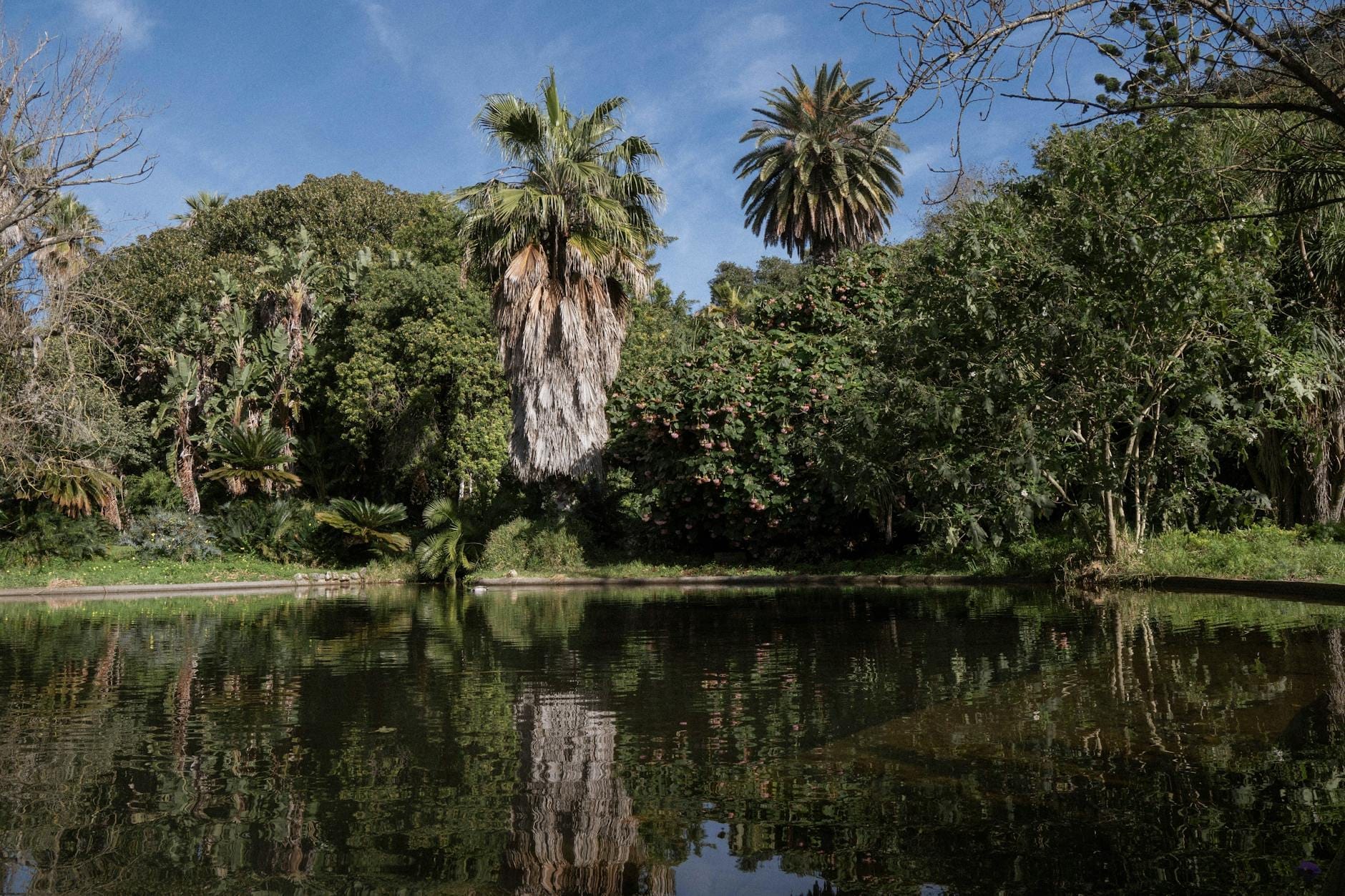
The garden has four main entrances: the principal one from Praça da Estrela (facing the basilica), and secondary access points on Avenida Álvares Cabral, Rua da Estrela, and Rua de São Bernardo. Once inside, the layout follows a 19th-century romantic garden logic: curving paths wind between large subtropical trees, flower beds, and a central ornamental pond with ducks, geese, and the occasional peacock. The planting is dense enough to feel secluded even when the park is busy.
The most photographed element is the wrought-iron bandstand, a filigree structure built in 1884 and relocated here in 1936 from its original position on Avenida da Liberdade. It's a beautiful piece of cast ironwork, painted green, and it still hosts occasional summer concerts. The kiosk café beside it serves coffee, beer, and pastries at reasonable prices — the seating around it is always occupied on good weather days, and for good reason.
There is also a children's playground near the center of the park, a small exotic bird enclosure, and public toilets near the main entrance. The terrain has gentle elevation changes but is not flat everywhere, which gives some parts of the garden a slightly more secluded feel than you'd expect for a city-center park.
Tickets & tours
Live prices and dates from our booking partner. If you book, we may earn a commission at no extra cost to you.
Belem and Modern Lisbon bus hop-on hop-off combined tickets
From 28 €Instant confirmationFree cancellationSt. George Castle E-ticket and Audio Tour
From 28 €Instant confirmationLisbon Story Centre entrance tickets
From 7 €Instant confirmationFree cancellationYellow boat river tour
From 24 €Instant confirmationFree cancellation
How the Park Changes by Time of Day
Early morning, roughly 7am to 9am, is the park at its most atmospheric. The iron bandstand catches low light from the east, the pond is usually still, and you can hear the trams on Rua da Estrela without seeing the crowds that follow them. The smell is of damp grass and the faint diesel of early city traffic, mixed with whatever is in flower along the central beds. This is when the park belongs to dog walkers, commuters cutting through, and a handful of pensioners on benches with newspapers.
Midday and afternoon, especially from around 11am onward, the character shifts. Families arrive with children for the playground. The café kiosk does its best business. Couples occupy the benches facing the pond. It is genuinely pleasant but not quiet. Summer afternoons can be warm here since the tree canopy, while generous, does not cover all the seating areas equally — the benches near the iron bandstand catch direct sun.
Evening is perhaps the most unexpected time to visit. Because the park stays open until midnight, it draws a distinct late crowd: friends sharing food on the lawn, people walking dogs after work, couples on informal dates. The garden is lit at night but not over-lit, and the bandstand takes on a more romantic quality after dark. The adjacent Basílica da Estrela, illuminated at night, is visible above the garden's eastern trees from certain angles.
ℹ️ Good to know
Summer weekends (June through August) bring the most crowds. If you prefer elbow room, visit on a weekday morning or after 9pm on any evening. Winter visits (December through February) offer the park nearly to yourself, but bring a layer — temperatures can drop to around 10°C in the mornings.
Historical and Cultural Context
The garden was created in the mid-19th century as part of a broader ambition to modernize Lisbon's residential quarters with public green space. Its location in Lapa, one of the city's more refined bourgeois neighborhoods, meant it was designed with a degree of formality: curving paths, ornamental planting, and architectural focal points like the bandstand and the entrance gates. This was a garden for the emerging middle class to promenade, not a utilitarian space.
The adjacent English Cemetery, which shares a wall with the garden on its western side, adds a layer of historical depth to the area. It has been the burial site for Lisbon's British Protestant community since 1717 and reportedly contains the grave of Henry Fielding, the English novelist, who died in Lisbon in 1754. The cemetery is a separate, independently managed space and is not part of the garden itself, but it is worth noting for those with an interest in literary or Anglo-Portuguese history.
The garden also sits in relation to one of Lisbon's most significant church buildings. The Basílica da Estrela directly faces the main entrance from Praça da Estrela. The basilica, completed in 1790, is an 18th-century domed church visible from much of Lisbon, and its white facade creates a strong visual counterpoint to the green of the garden. Most visitors to the basilica spend ten minutes in the garden afterward — the combination works naturally as a paired visit.
Getting There and Getting Around
The most enjoyable way to arrive is by Tram 28E, which runs along Rua da Estrela and stops a few meters from the garden's side entrance. The tram route is one of Lisbon's most scenic, passing through Alfama and Chiado before climbing into this quieter quarter. Be aware that Tram 28 is heavily used by tourists and can be crowded during peak hours — validate your Viva Viagem card or use the Lisboa Viva app to buy tickets before boarding.
Multiple bus lines also serve Praça da Estrela, making it straightforward to reach from Cais do Sodré, Rato, or Chiado without the wait for the tram. If you're walking from Chiado, the descent through Rua da Escola Politécnica and along Rua do Século takes about 15 to 20 minutes on foot and passes through some appealing residential streets.
For accessibility, the main paths within the garden are paved, but the terrain is not uniformly flat. Families with strollers generally navigate it without difficulty, though some of the more peripheral paths near the pond have uneven surfaces. Public toilets are available near the main entrance on Praça da Estrela.
Photography, Practical Logistics, and What to Bring
The garden photographs best in the morning and at dusk. The iron bandstand is the primary architectural subject — it works well in soft, directional light with the surrounding trees as a frame. The main pond reflects the sky cleanly when there is no wind, usually in the early hours. For the Basílica da Estrela in the background, position yourself near the main gate on Praça da Estrela and shoot east in the morning for the best light on the facade.
The café kiosk near the bandstand sells coffee, beer, wine, and light snacks. Prices are reasonable by Lisbon standards. If you're combining the visit with lunch or a longer afternoon in the area, Mercado de Campo de Ourique is about a 15-minute walk west and offers one of Lisbon's best neighborhood food market experiences. It tends to be less crowded and more authentically local than the Time Out Market.
There is no official website for the garden. No booking, registration, or ticket is required at any time of day. Bring sunscreen if visiting on a clear summer day, since some of the central areas have limited shade coverage during midday.
⚠️ What to skip
Picnics on the lawn are common and accepted. However, the park is in a residential neighborhood, and noise carries. Evening visitors should expect a relaxed atmosphere, not a party setting — the locals who use this park after dark will make that clear quickly enough.
Honest Assessment: Is It Worth Your Time?
Jardim da Estrela is not a destination in the way that Jerónimos Monastery or the São Jorge Castle are. There are no exhibitions, no entry tickets, no structured experiences. What it offers is something harder to quantify: a reliable, unhurried space where you can sit still in a city without being extracted for cash.
If your Lisbon visit is short and highly scheduled, the garden may not justify the time it takes to reach it from the main tourist corridor. But if you are spending three or more days in the city, it belongs on your map, particularly as a morning stop before or after visiting the Basílica da Estrela. Paired with a coffee at the kiosk and a slow walk back toward Chiado, it represents a genuinely useful reset between more demanding attractions.
Travelers who will not enjoy it: those who want a panoramic viewpoint, a shopping destination, or a structured cultural experience will find nothing here to hold their attention. The garden rewards patience and a willingness to sit still, which is not everyone's priority in a city with as much on offer as Lisbon.
Insider Tips
- The café kiosk near the bandstand does not always open at exactly 7am. If you're visiting at first light, bring your own coffee — the kiosk is reliable from about 8:30am onward on weekdays.
- The duck pond area tends to be busier on weekends because of the children's playground nearby. If you want the quietest bench with the best view of the bandstand, take the path to the left immediately after the Praça da Estrela entrance and follow it to the seating facing the ironwork.
- The garden's night opening until midnight is genuinely underused by visitors. On warm summer evenings, Lisboetas treat it as a free extension of their living space. Showing up at 9pm with a cold drink from a nearby shop puts you exactly in that rhythm.
- From the benches near the main gate, you get an unobstructed view of the Basílica da Estrela facade, lit up after sunset. The combination of the white baroque dome above the dark tree line is one of the more quietly impressive urban views in the city.
- If you're arriving by Tram 28, ride it all the way from Martim Moniz or Alfama for the full route experience. The garden makes a natural endpoint before you walk down toward Santos or back through Chiado.
Who Is Jardim da Estrela For?
- Travelers on 3-plus day visits looking for a genuine local experience away from the tourist trail
- Families with young children who need a free, safe outdoor space with a playground and café
- Photographers interested in Victorian ironwork, park landscapes, and Lisbon street life
- Couples looking for a relaxed evening setting with no entry cost and a good backdrop
- Anyone arriving or departing by Tram 28E who wants a natural stopping point in the route
Nearby Attractions
Other things to see while in Santos & Cais do Sodré:
- Basílica da Estrela
The Basílica da Estrela is one of Lisbon's most graceful landmarks, a late 18th-century royal church commissioned by Queen Maria I and the first church in the world dedicated to the Sacred Heart of Jesus. Beyond its free-entry nave, a rooftop terrace rewards the climb with sweeping views across the city. Inside, the queen herself is buried beneath the ornate floor.
- LX Factory
A former 19th-century textile factory reborn as Lisbon's most distinctive creative complex, LX Factory fills 23,000 square metres of industrial space with independent bookshops, design studios, cafés, restaurants, vintage boutiques, and street art. On Sundays, its courtyard transforms into one of the city's most atmospheric markets.
- Pink Street (Rua Nova do Carvalho)
Once a rough sailors' red-light district, Rua Nova do Carvalho is now Lisbon's most photographed street after dark. The bright pink pavement, vintage bar fronts, and the legendary Pensão Amor make it the beating heart of the Cais do Sodré nightlife scene.
- Ponte 25 de Abril
Stretching 2.277 kilometers across the Tagus River, Ponte 25 de Abril is one of Europe's longest suspension bridges and an unmistakable part of Lisbon's skyline. Built in 1966 and renamed after the Carnation Revolution that ended 42 years of dictatorship, it connects the city to Almada on the south bank and carries roughly 150,000 vehicles and 157 trains every single day.
Planning a trip? Discover personalized activities with the Nomado app.