LX Factory: Lisbon's Industrial Creative Quarter
A former 19th-century textile factory reborn as Lisbon's most distinctive creative complex, LX Factory fills 23,000 square metres of industrial space with independent bookshops, design studios, cafés, restaurants, vintage boutiques, and street art. On Sundays, its courtyard transforms into one of the city's most atmospheric markets.
Quick Facts
- Location
- Rua Rodrigues de Faria 103, Alcântara, Lisbon
- Getting There
- Tram 15E to Calvário or bus 714/727 to Alcântara
- Time Needed
- 2–4 hours (longer on Sundays)
- Cost
- Free to enter; individual venues set own prices
- Best for
- Design lovers, book hunters, Sunday market browsing, architecture photography
- Official website
- lxfactory.com/en/lx-factory
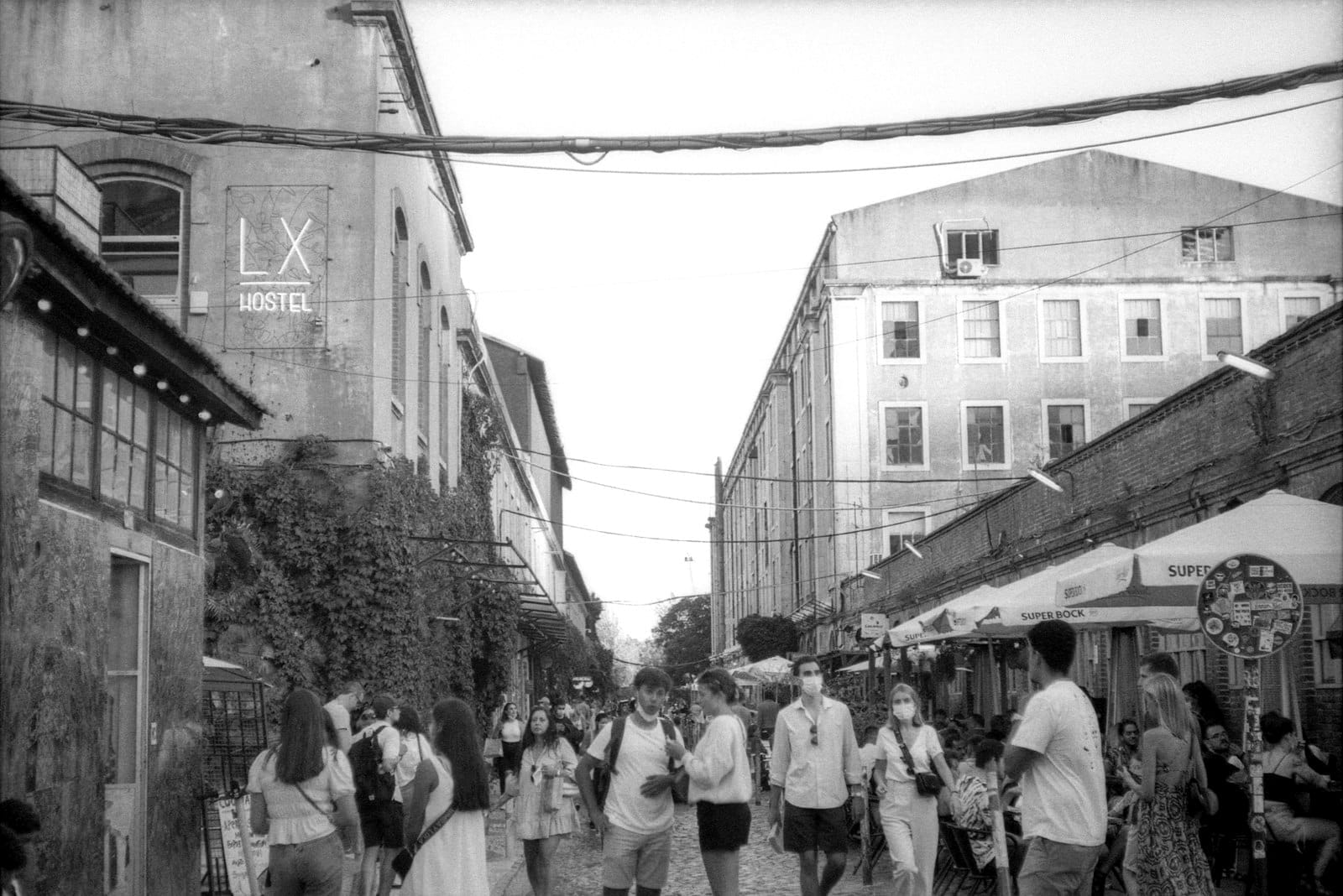
What Is LX Factory?
LX Factory is a 23,000-square-metre creative campus occupying the bones of what was once the Companhia de Fiação e Tecidos Lisbonense, a textile manufacturing company founded in 1846. The complex later housed food processing operations and a major printing works before falling dormant. Redeveloped and relaunched in 2009, it has since become the clearest example in Lisbon of how post-industrial space can be reanimated without being sterilised.
Unlike many repurposed factory projects that end up feeling like upscale shopping malls with exposed brick, LX Factory has retained genuine roughness. Pipes run visibly along corridor ceilings. Paint peels in patches between murals. Pigeons nest in the upper ironwork. The result is an atmosphere that feels earned rather than manufactured, and that contrast is part of what makes the space worth exploring.
The complex sits in the Alcântara district, directly beneath the Ponte 25 de Abril suspension bridge. The bridge's concrete piers loom at one end of the main alley, and you can feel the faint vibration of traffic overhead on busy afternoons. It is an unexpectedly dramatic piece of context for a market or café visit.
The Space Itself: Layout and Atmosphere
The complex is structured around a long central lane flanked by multi-storey industrial buildings, with narrower passages running between them. Ground-floor units house cafés, restaurants, and retail shops. Upper floors contain studios, galleries, coworking spaces, and event venues. The scale surprises first-time visitors: you can spend an hour here and still find corridors you have not walked down.
Street art covers many of the exterior walls, ranging from large-scale commissioned murals by artists like Bordalo II to smaller pieces squeezed into corners and doorways. The quality is uneven, as it is at any genuine street-art site, but several pieces are outstanding and worth photographing. Morning light hits the eastern facades cleanest if you are shooting.
💡 Local tip
The most photographed bookshop in Lisbon is Livraria Ler Devagar, on the upper floor of one of the main buildings. Its floor-to-ceiling shelves, hanging bicycle installations, and mezzanine reading area make it worth a visit in its own right. Stock covers Portuguese and English titles, with a strong design and arts section.
Each business within LX Factory operates on its own schedule. Some cafés open for breakfast from around 9am. Shops and studios typically open mid-morning and stay until evening. Restaurants run through lunch and dinner. There is no single operating hour for the complex as a whole, so arriving early on a weekday can mean finding several units shuttered, particularly in the retail corridors.
Tickets & tours
Live prices and dates from our booking partner. If you book, we may earn a commission at no extra cost to you.
Belem and Modern Lisbon bus hop-on hop-off combined tickets
From 28 €Instant confirmationFree cancellationSt. George Castle E-ticket and Audio Tour
From 28 €Instant confirmationLisbon Story Centre entrance tickets
From 7 €Instant confirmationFree cancellationYellow boat river tour
From 24 €Instant confirmationFree cancellation
The Sunday Market: How It Works
The LX Factory Sunday Market runs approximately from 10am to 7pm and is the event that draws the largest and most diverse crowd. Vendors set up along the main lane selling handmade jewellery, vintage clothing, illustration prints, ceramics, leather goods, and street food from a rotating lineup of producers. The food section is particularly strong, with Portuguese specialities alongside international options.
Arrive before noon if you want to browse at a relaxed pace. By 1pm the central alley becomes genuinely congested, especially in summer. The food stands develop queues by midday that can stretch ten to fifteen people deep. If you are coming primarily for the market, Sunday morning gives you the best combination of full stalls and manageable crowds.
⚠️ What to skip
Sundays significantly change the character of the complex. If you prefer exploring studios and smaller shops, a weekday visit is more productive. Sunday is better for the market atmosphere but worse for accessing the quieter, more specialised parts of the complex.
LX Factory also hosts recurring cultural events throughout the year, including the Lisbon Coffee Festival and various design and music events. Check the official calendar at lxfactory.com before visiting. If you are also planning time at Time Out Market in Cais do Sodré, note that the two are quite different in tone: Time Out Market is polished and permanent; LX Factory is scrappier and more interesting as a result.
How It Changes Through the Day
On weekday mornings, LX Factory is calm enough to hear the bridge traffic clearly. A handful of cafés are open, and studio workers arrive with coffee cups and laptops. This is the version of the complex that most resembles its original working character: functional, unpretentious, and unposed for visitors.
Lunch hours bring a sharper surge, particularly from local office workers in the surrounding Alcântara district. Several of the restaurants have earned genuine reputations among Lisbon residents rather than surviving on tourist footfall alone, which keeps the midday crowd mixed. Evenings shift the tone again, with bars and restaurants operating later and occasional live music events in the courtyard spaces.
Night visits are underrated. The industrial lighting, exposed steelwork, and graffiti-covered walls photograph very differently after dark, and the bar scene has its own character separate from the Sunday market crowd. If you are spending multiple days in Lisbon, coming once during the day and once in the evening gives a much more complete picture of what the complex actually is.
Getting There and Getting Around
LX Factory is located in Alcântara, roughly three kilometres west of Baixa-Chiado. It is not walking distance from the historic centre for most visitors. Tram 15E from Praça da Figueira reaches the Calvário stop, from which the complex is a short walk. Buses 714 and 727 also serve the area. A taxi or Uber from the central neighbourhoods takes roughly ten minutes.
The main entrance is on Rua Rodrigues de Faria 103, with an alternative access point on Rua 1º de Maio 21. The main entrance is better signposted and leads directly into the central lane. Parking is available nearby on Sundays but fills quickly by late morning, making public transport the more reliable option on market days.
ℹ️ Good to know
No general admission fee applies to entering LX Factory. Individual restaurants, shops, and event spaces set their own prices. Free entry makes it a realistic option for a brief visit even if your budget is tight.
For those building a broader itinerary, LX Factory pairs naturally with a walk along the waterfront toward Cais do Sodré, which is about twenty minutes on foot along the river. The area around the Pink Street in Cais do Sodré offers a different atmosphere, particularly in the evening.
Historical Context: Why This Building Matters
The Companhia de Fiação e Tecidos Lisbonense was established in 1846 in Alcântara, making this one of the oldest surviving industrial sites in Lisbon. The factory complex represents the era when Alcântara was the industrial heart of the city, producing textiles, operating printing presses, and processing food at scale. That industrial past is now visible mainly in the architecture: the scale of the loading bays, the height of the ceilings, the weight of the iron columns.
The 2008 redevelopment did not attempt to sanitise the history into something picturesque. Concrete floors remain raw. Sections of original machinery are visible in some corridors. The decision to keep rents accessible to independent operators rather than anchor the space with retail chains is what has allowed LX Factory to accumulate genuine creative character over time, rather than becoming another real-estate project dressed in cultural language.
Architecture enthusiasts will find this a useful counterpoint to Lisbon's more formally preserved sites. If you are spending a day in Belém visiting the Jerónimos Monastery or the Belém Tower, the LX Factory shows a completely different register of the city's built history.
Who Should Consider Skipping It
LX Factory is not for everyone. Visitors looking for a conventional museum or heritage site will find the experience shapeless: there is no narrative arc, no guided sequence, no single thing to see and leave having seen it. The space rewards aimless exploration rather than purposeful sightseeing.
On Sundays the market crowds make the main lane uncomfortable for anyone with mobility limitations or stroller navigation challenges. The uneven surfaces, narrow passages, and absence of formal accessibility information are genuine constraints. Similarly, visitors on a very tight schedule who want a clearly defined experience with a beginning and end may find the open-ended format frustrating rather than freeing.
If you are primarily interested in Lisbon's historic markets, the Feira da Ladra flea market in Graça offers a more traditional format with older stock and less design-market overlap.
Insider Tips
- The bookshop Livraria Ler Devagar charges nothing to browse. Spend at least twenty minutes upstairs — the upper level has the more interesting stock and the best view of the industrial interior.
- If you want to eat at one of the better-regarded restaurants inside the complex, make a reservation for Sunday. Walk-in availability at lunch disappears fast once the market crowd arrives.
- The exterior walls on Rua 1º de Maio, visible from the alternative entrance, have some of the largest and most detailed murals on the site. Most visitors miss them by entering from the main gate.
- Cultural events including music performances, film screenings, and the Lisbon Coffee Festival take place throughout the year. Check the official website before your trip rather than assuming it is purely a market and retail destination.
- Weekday visits between 11am and 1pm offer the best balance: most shops are open, the studios are active, and the crowds are manageable. Avoid arriving on a Monday when some smaller units take their rest day.
Who Is LX Factory For?
- Design and architecture enthusiasts who appreciate repurposed industrial spaces
- Book lovers seeking Portuguese and English titles in an atmospheric setting
- Sunday market browsers wanting handmade goods, vintage finds, and local food producers
- Photographers looking for street art, industrial textures, and bridge-framed compositions
- Travellers wanting to see how Lisbon residents actually spend weekend time, away from the main tourist circuit
Nearby Attractions
Other things to see while in Santos & Cais do Sodré:
- Basílica da Estrela
The Basílica da Estrela is one of Lisbon's most graceful landmarks, a late 18th-century royal church commissioned by Queen Maria I and the first church in the world dedicated to the Sacred Heart of Jesus. Beyond its free-entry nave, a rooftop terrace rewards the climb with sweeping views across the city. Inside, the queen herself is buried beneath the ornate floor.
- Jardim da Estrela
Jardim da Estrela is a 19th-century public garden in the Lapa-Estrela quarter, steps from the Basílica da Estrela. Free, open until midnight, and genuinely beloved by locals, it offers a rare pause from sightseeing crowds. Come for the iron bandstand, the duck pond, and the rare pleasure of sitting where tourists rarely bother to stop.
- Pink Street (Rua Nova do Carvalho)
Once a rough sailors' red-light district, Rua Nova do Carvalho is now Lisbon's most photographed street after dark. The bright pink pavement, vintage bar fronts, and the legendary Pensão Amor make it the beating heart of the Cais do Sodré nightlife scene.
- Ponte 25 de Abril
Stretching 2.277 kilometers across the Tagus River, Ponte 25 de Abril is one of Europe's longest suspension bridges and an unmistakable part of Lisbon's skyline. Built in 1966 and renamed after the Carnation Revolution that ended 42 years of dictatorship, it connects the city to Almada on the south bank and carries roughly 150,000 vehicles and 157 trains every single day.
Planning a trip? Discover personalized activities with the Nomado app.