National Tile Museum (Museu Nacional do Azulejo): The Complete Visitor Guide
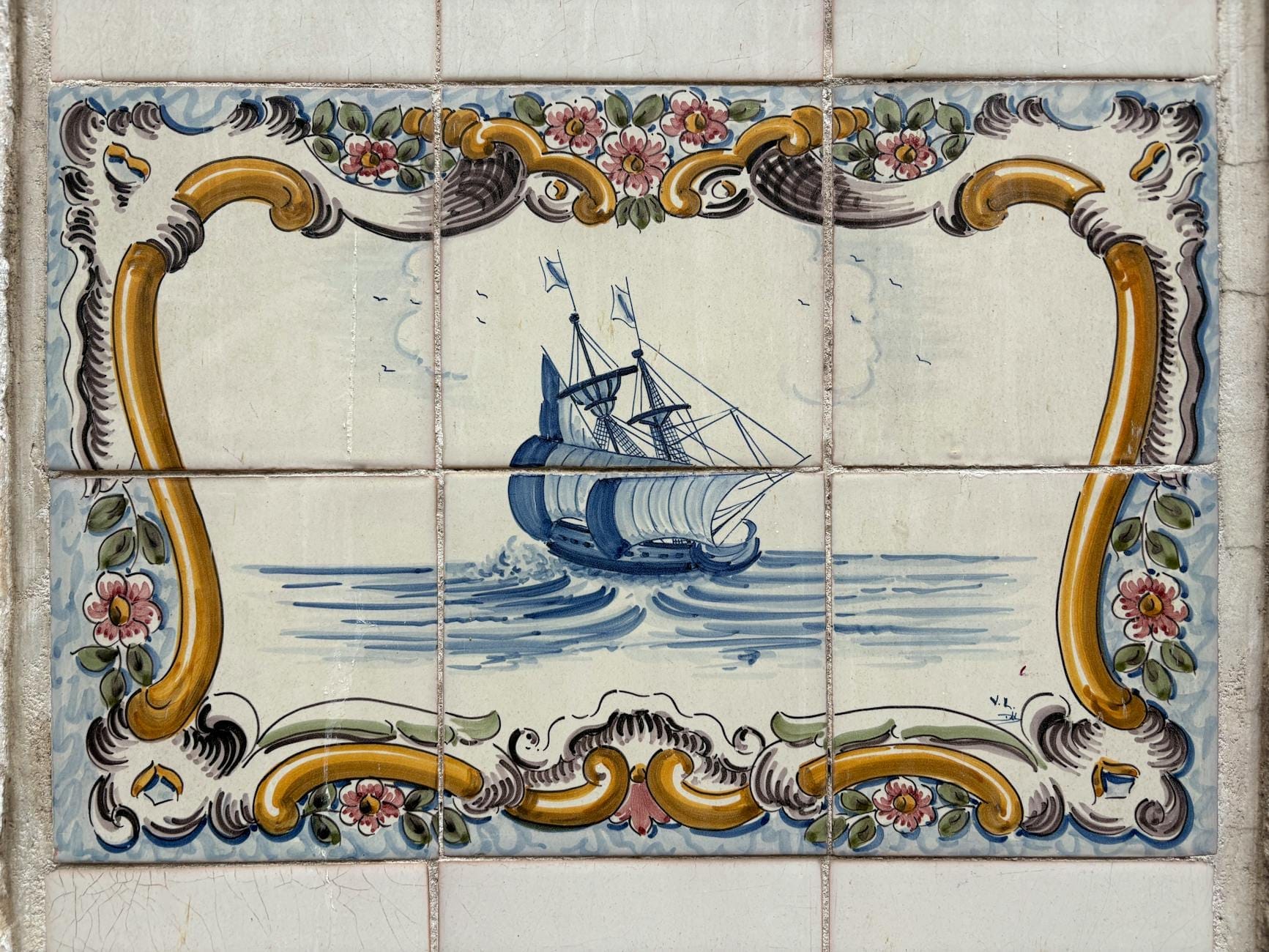
Housed in a former 16th-century convent, the Museu Nacional do Azulejo is Lisbon's definitive collection of Portuguese glazed tile art, spanning five centuries of technique and storytelling. From a 23-metre panoramic tilework of pre-earthquake Lisbon to one of the oldest azulejo altarpieces in existence, this is one of the most concentrated and genuinely rewarding museum experiences in Portugal.
Quick Facts
- Location
- Rua da Madre de Deus, 4, 1900-312 Lisboa
- Getting There
- Bus line 794 stops nearby; no metro station directly serves the museum
- Time Needed
- 2 to 3 hours
- Cost
- Closed for renovation until mid-2026; regular adult admission listed at €10 when open; free with Lisboa Card
- Best for
- History lovers, design enthusiasts, architecture admirers, and anyone curious about Portugal's most distinctive art form
- Official website
- www.museunacionaldoazulejo.pt
What Is the National Tile Museum?
The Museu Nacional do Azulejo — officially the National Tile Museum — is the only museum in the world dedicated exclusively to the history and art of the azulejo, the glazed ceramic tile that has defined Portuguese visual culture for over five centuries. It occupies a former Franciscan convent, the Convento da Madre de Deus, which was founded in 1509 by Queen Leonor of Viseu. The museum itself was established in 1965 and received its national designation in 1980.
The collection covers glazed tiles from the mid-15th century through to contemporary works, making this one of the most comprehensive decorative arts collections in Europe. It is not a niche interest stop: understanding azulejos means understanding how Portugal has recorded its history, expressed its faith, decorated its palaces, and marked its public spaces for half a millennium.
⚠️ What to skip
Important: The National Tile Museum is open Tuesday to Sunday, 10:00–18:00 (closed Mondays and holidays) as of the time of writing. Verify the current status at museunacionaldoazulejo.pt before planning your visit.
The Building Itself: A Convent Worth Seeing
The Convento da Madre de Deus is itself one of the most architecturally significant buildings in Lisbon, and many visitors find the structure as compelling as the collection inside. The church attached to the convent features an interior coated in gilded woodwork, 17th-century Dutch blue-and-white tiles, and Baroque excess that feels genuinely theatrical. This is not a neutral white-cube gallery — the setting is as richly decorated as anything on display.
The cloister, dating to the Manueline period in the early 16th century, has a quality of stillness that stands in sharp contrast to Lisbon's more trafficked sights. The stone tracery and the proportions of the arcaded walkways reflect the transitional moment between Gothic and Renaissance influence, with that distinctly Portuguese organic ornamental style that also appears in the Jerónimos Monastery.
If you are already planning a visit to Lisbon's Manueline architecture, the tile museum pairs well with a trip to the Jerónimos Monastery in Belém, though the two sites are on opposite ends of the city and best visited on separate days.
Tickets & tours
Live prices and dates from our booking partner. If you book, we may earn a commission at no extra cost to you.
The Collection: What You Will Actually See
The permanent collection is arranged roughly chronologically, which gives visitors a coherent sense of how the azulejo evolved. The earliest pieces are small, geometric, and Moorish in character — reflecting the Islamic influence that shaped the Iberian Peninsula long before the Portuguese adapted and eventually transformed the form. Over time, the tiles shift toward figurative scenes: hunting tableaux, religious narratives, pastoral landscapes, and eventually civic subjects.
Two pieces stand out above everything else in the collection. The first is the 23-metre-long panoramic tile panel depicting Lisbon as it appeared around 1700, attributed to the painter Gabriel del Barco and composed of approximately 1,300 tiles. It shows the Ribeira waterfront before the catastrophic 1755 earthquake destroyed much of the city. This is not just a work of decorative art — it is a primary historical document, one of the few visual records of what pre-earthquake Lisbon looked like at street level.
The second major piece is the altarpiece known as "Our Lady of Life" (Nossa Senhora da Vida), dating to around 1580 and comprising 1,498 individual tiles. It is considered one of the oldest large-scale azulejo altarpieces surviving in Portugal. The figurative detail — the drapery, faces, and spatial depth achieved in a flat medium — reflects how seriously the craft was taken at its height.
💡 Local tip
Allow extra time in front of the pre-earthquake Lisbon panorama. Most visitors give it two minutes and move on. If you spend ten minutes studying the individual figures, boats, and buildings, the scale and historical weight of the piece becomes much more apparent.
How the Experience Changes by Time of Day
The museum's location, east of the city centre in a quieter residential district, means it rarely suffers from the overwhelming crowds that hit more central sights. Mornings on weekdays tend to be the quietest, with school groups sometimes arriving mid-morning. The natural light through the convent's high windows is best in the late morning, particularly in the cloister and the church, where it catches the gilded surfaces and tile panels at an angle that flattens out by afternoon.
On weekend afternoons, the museum draws more visitors, though it almost never feels overcrowded by Lisbon standards. The café in the former refectory, which itself features original tilework on its walls, is worth a stop before you leave. The combination of carved stone, tile walls, and the scale of the space makes it one of the better museum cafés in the city, even if the menu is straightforward.
Getting There: Practical Logistics
The National Tile Museum sits outside the main tourist circuit in eastern Lisbon, which is partly why it attracts a more intentional crowd. There is no metro station within convenient walking distance. Bus lines 794 and 759 serve the area, and both connect to the broader Carris network. Taxis and ride-hailing apps like Uber and Bolt are reliable and relatively inexpensive from the city centre — the journey from Praça do Comércio takes roughly 10 to 15 minutes by car depending on traffic.
For visitors using public transport as their primary method of getting around Lisbon, the getting around Lisbon guide covers bus and metro options in detail and helps you plan routes from different parts of the city.
The Lisboa Card covers museum admission and is worth calculating if you are visiting multiple paid attractions in the same period. At €8 general admission, the museum represents good value on its own, but the Lisboa Card can push that further if your itinerary includes other state-run museums.
Who This Museum Is For — and Who Might Skip It
The National Tile Museum rewards curiosity and patience. If you move through museums quickly, looking for headline moments every few minutes, the collection can feel slow in its middle sections. The early geometric tiles and the transitional-period works require some context to appreciate, and not all labels are equally informative. That said, the standalone highlights — the panorama, the altarpiece, the church interior — deliver impact regardless of background knowledge.
Visitors who are primarily chasing Lisbon's outdoor and viewpoint experiences may find this too interior-focused for their style. If that describes you, the best viewpoints in Lisbon guide and a walk through Alfama will likely hold more appeal.
Families with children can do well here if kids are engaged with storytelling through images. The figurative tile panels function somewhat like picture books at large scale, and the convent spaces are open enough that movement is not restricted. Very young children or those with low tolerance for slow-paced interiors will find the visit difficult to sustain beyond 45 minutes.
Design professionals, architects, and anyone with an interest in decorative arts or Iberian history will find this genuinely substantive. It also pairs naturally with a visit to the Sé Cathedral, where azulejo work appears in a functioning liturgical context rather than a museum setting.
Photography Inside the Museum
Photography for personal use is generally permitted in the permanent collection, though policies can change and flash is typically prohibited to protect the glazed surfaces. The church interior and cloister are the most photogenic spaces, with the gilded woodwork and tile panels providing depth and contrast that reproduce well. The panoramic Lisbon panel is too large to capture in a single frame — close-up sections focusing on specific figures or waterfront scenes tend to be more effective images than attempts to document the whole.
💡 Local tip
Bring a wider-angle lens or use your phone's ultra-wide mode in the church nave. The vertical scale of the gilded interior is easy to underestimate, and standard focal lengths cut off the upper sections that complete the composition.
Insider Tips
- The convent church is often overlooked by visitors who move straight into the tile galleries. Enter the church before the collection — the transition from the Baroque interior back into the chronological tile displays gives you a much stronger sense of how this art form was actually used in context.
- The pre-earthquake Lisbon panorama is positioned so that most people view it from across the room. Walk up close and work along the length of it slowly. At close range you can read individual faces, identify boats by their rigging type, and spot details — a market stall, a crane, a crowd gathered at the waterfront — that disappear from a distance.
- The museum café occupies the former refectory, a room with original 18th-century tile panels running along the walls. Even if you do not eat there, step inside and look at the room itself before you leave.
- If the Lisboa Card is already in your plans for other sights, use it here. At €10, the museum is still good value, and the card removes the step of queuing at the ticket desk, which matters during any peak periods after reopening.
- Check the museum's official site for temporary exhibitions before your visit. The permanent collection is the main draw, but temporary shows on specific tile traditions or contemporary azulejo artists can meaningfully add to the experience.
Who Is National Tile Museum For?
- History enthusiasts who want to see what Lisbon looked like before the 1755 earthquake
- Design and architecture lovers interested in decorative arts at a serious curatorial level
- Travellers visiting Lisbon for the second or third time who want depth beyond the headline sights
- Families with older children who engage with narrative, figurative art
- Anyone seeking a quieter, less crowded alternative to central Lisbon museums
Nearby Attractions
Combine your visit with:
- Aqueduto das Águas Livres
Standing 65 metres above the Alcântara Valley on 35 soaring Gothic arches, the Aqueduto das Águas Livres is one of the most extraordinary feats of 18th-century engineering in Europe. Free to admire from street level and easy to combine with other west-Lisbon sights, it rewards visitors who look up from the city's quieter edges.
- Cabo da Roca
Cabo da Roca is the westernmost point of mainland Europe, a wind-scoured cape rising 165 metres above the Atlantic Ocean in the Sintra-Cascais Natural Park. It combines raw coastal scenery, genuine historical weight, and easy access from both Lisbon and Sintra into one of Portugal's most geographically significant stops.
- Cascais
Forty minutes west of Lisbon by train, Cascais trades the capital's urban intensity for whitewashed streets, Atlantic beaches, and a marina ringed by seafood restaurants. Once the summer retreat of Portuguese kings, it remains one of the most complete day trips available from Lisbon.
- Costa da Caparica Beaches
Costa da Caparica stretches 30 kilometres down the Atlantic coast, just 30 minutes from central Lisbon. Free to access year-round, it ranges from family-friendly Blue Flag beaches near the town centre to quieter surf breaks and nudist sections further south, backed by fossil-rich cliffs protected as a nature reserve.
Planning a trip? Discover personalized activities with the Nomado app.