Cascais: Lisbon's Royal Coast Town Worth the Journey
Forty minutes west of Lisbon by train, Cascais trades the capital's urban intensity for whitewashed streets, Atlantic beaches, and a marina ringed by seafood restaurants. Once the summer retreat of Portuguese kings, it remains one of the most complete day trips available from Lisbon.
Quick Facts
- Location
- Estoril Coast, 27 km west of Lisbon, Cascais Municipality
- Getting There
- Train from Cais do Sodré station, 33–40 min to Cascais terminal (end of line)
- Time Needed
- Half day minimum; full day recommended
- Cost
- Free public access to town, beaches, and marina; return train ticket varies
- Best for
- Beach lovers, history seekers, families, and anyone needing a break from city pace
- Official website
- www.cascais.pt
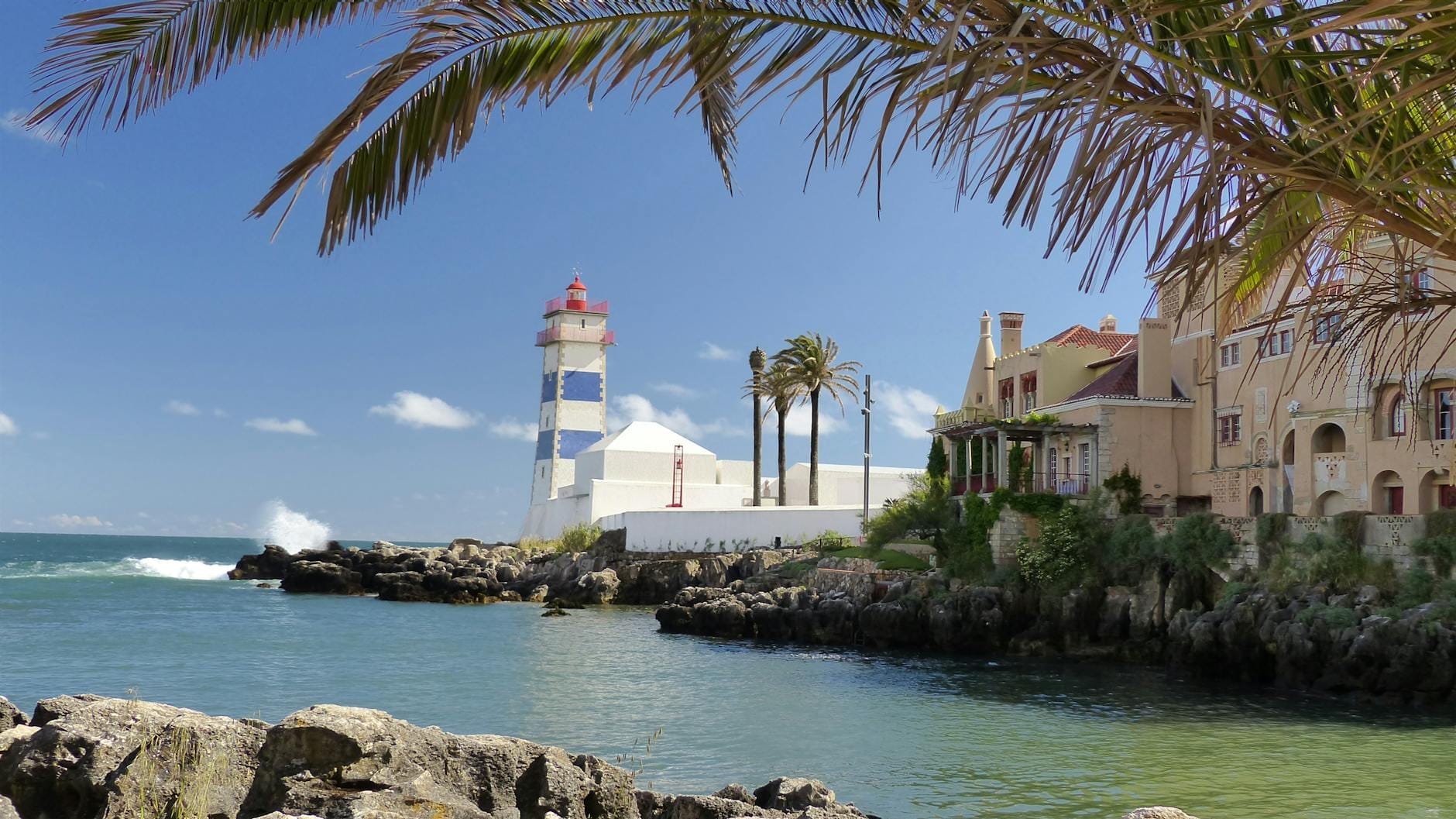
What Cascais Actually Is
Cascais is a coastal municipality on Portugal's Estoril Coast, sitting at the point where the Tagus estuary meets the open Atlantic. It covers roughly 97 square kilometers and contains several distinct beaches, a working fishing harbor, a yacht marina, and a compact historic center that takes about twenty minutes to walk across. The town is not a resort in the purpose-built sense: it has its own civic identity, its own residents, and a daily rhythm that exists independently of tourists.
Human settlement here dates to the Lower Palaeolithic, and Roman fish-salting tanks have been excavated in the area. The town received its first royal charter from King Pedro I in June 1364, and a second charter from King Manuel I in November 1514. Its modern identity, however, was shaped by 1870, when King Luís I chose Cascais as the royal family's summer residence. That decision pulled aristocratic Lisbon society westward along the coast and set the tone for the town's particular blend of grandeur and seaside ease. The railway line that now carries tourists was originally built partly to serve the court. For context on the broader coastal area, see the Lisbon beaches guide.
💡 Local tip
The train from Cais do Sodré is the simplest and most practical way to reach Cascais. It runs frequently throughout the day, terminates at Cascais station (so you cannot overshoot), and costs significantly less than a taxi. The journey follows the coast from Estoril onward, with water views from the right-hand side of the train heading west.
The Town Center: Compact, Navigable, Rewarding
Step out of Cascais train station and you are already close to the action. The pedestrianized Rua Frederico Arouca runs from near the station toward the old town, lined with cafes, ceramic shops, and bakeries. The smell of custard pastries and grilled fish arrives before the visuals do. The streets are paved with traditional Portuguese calçada, the black-and-white wave-pattern stone that also lines Lisbon's sidewalks, and the scale of everything is noticeably more human than the capital.
The central Largo Luís de Camões and the adjacent Praça 5 de Outubro form the social core of the old town. Cafes with outdoor seating fill these squares, and locals mix with day-trippers throughout the morning and midday hours. By early afternoon on summer weekdays, the balance tips toward visitors, but the town does not feel overwhelmed in the way that some Portuguese coastal towns do in peak season. The fishing harbor, still active with small working boats, sits a short walk from here and provides an unposed counterpoint to the marina nearby.
The streets radiating off the main squares reward unhurried exploration. Painted tile facades, wrought-iron balconies, and the occasional royal coat of arms above a doorway mark buildings that date to the 19th century. The Museu dos Condes de Castro Guimarães, housed in a neo-Manueline palace on the seafront promenade, offers the most direct window into the aristocratic period, with collections of Indo-Portuguese furniture, azulejo panels, and objects from the town's royal era.
Tickets & tours
Live prices and dates from our booking partner. If you book, we may earn a commission at no extra cost to you.
Sintra and Cascais small-group tour from Lisbon
From 79 €Instant confirmationFree cancellation72-Hour Lisbon and Cascais Hop-On Hop-Off Bus and Boat Tour
From 51 €Instant confirmationFree cancellationGuided Day Tour of Sintra, Pena Palace, Belem, Cascais and Lisbon
From 69 €Instant confirmationFree cancellation48-Hour Lisbon and Cascais Hop-On Hop-Off Bus and Boat Tour
From 47 €Instant confirmationFree cancellation
The Beaches: Three Very Different Experiences
Cascais has several beaches within walking distance of the center, and choosing between them matters. Praia da Rainha and Praia dos Pescadores are the closest to town, small and sheltered, with calm water and a view directly of the marina. They fill up quickly on warm weekends and their appeal is largely convenience rather than scenery.
Praia de Cascais, sometimes called Praia da Conceição, sits just west and is larger, with more consistent sand and better facilities including beach bars and equipment rentals. This is where most visitors end up, and it earns its popularity. The Atlantic here is cooler than the Mediterranean, typically 16–20°C depending on season, which makes long swims refreshing but occasionally bracing. Water temperature is warmest from July through September.
For something more dramatic, the 30-minute walk or short taxi ride to Boca do Inferno (Hell's Mouth) delivers sea-carved cliffs and wave-battered rock arches with no beach involved at all. This is Cascais at its Atlantic edge: raw, loud, and photogenic. If you want to extend further west along the coast toward Guincho, the dune beach there is wilder and windier, better suited to surfers than sunbathers. The Praia de Carcavelos stop on the same train line offers a long sandy beach for those who prefer to break the journey rather than go all the way to Cascais.
⚠️ What to skip
Atlantic water temperatures at Cascais are noticeably cooler than Mediterranean beaches. Even in peak summer, sea temperatures rarely exceed 20°C. Come prepared for this if you are planning to swim for extended periods.
How the Day Changes: Morning, Afternoon, Evening
The first train from Cais do Sodré leaves early, and arriving in Cascais before 9:30 on a summer morning means near-empty streets and direct access to the best cafe seats. The fish market near the harbor operates in the early hours, and the smell of fresh catch hangs over the waterfront promenade until mid-morning. This is when the town feels most like itself: locals walking dogs along the sea path, fishermen sorting equipment, pastelaria counters doing their main trade.
By noon, the train arrivals accelerate. Restaurants fill and queue at the better-known lunch spots. The beaches reach their fullest between 1pm and 4pm on weekends from June through August. Anyone sensitive to crowds should either arrive before 10am or plan to spend beach time in the early morning and use the afternoon for the town's shaded interior streets, museums, or the Parque Municipal da Gandarinha, a park behind the palace that provides some quiet even in high season.
Cascais in the evening has a different quality altogether. Day-trippers return to Lisbon on afternoon trains, and those who linger find a quieter town with good restaurants operating without the lunchtime rush. The marina lights reflect in the water, the air cools, and the atmosphere shifts toward the genuinely local. If you have the flexibility, timing a late dinner before the last train back makes for a far more complete visit than the compressed midday rush that most day-trippers experience.
The Marina, the Promenade, and Getting Between It All
The Marina de Cascais is one of the best-equipped on the Iberian Peninsula and hosts international sailing events. Even for non-sailors, it offers a pleasant circuit: well-maintained walkways, a concentration of seafood restaurants at the water's edge, and the visual contrast of superyachts against the older fishing harbor just around the headland. The promenade connecting the marina to the beaches is flat, wide, and walkable at any pace.
The most practical way to cover more ground is by bicycle. Cascais operates a free bike-sharing scheme called MobiCascais, with stations near the train station and across the town, making it straightforward to reach the more distant beaches and the coastal path toward Guincho without renting privately. For those doing day trips from Lisbon, Cascais is among the simplest to execute independently without a car.
What to Eat and Where the Value Is
Cascais has a full range of restaurants from tourist-facing marina spots to quiet neighborhood tascas a few streets back from the waterfront. Fish is the obvious choice: grilled sea bass, percebes (barnacles), and fresh sardines in season (June through August especially) all appear on menus throughout the old town. The further you walk from the main pedestrian strip, the more the prices normalize. For context on eating well in the broader region, the Lisbon food guide covers the principles that apply here too. Coffee and pastry culture is strong: a galão (milky espresso) and a pastel de nata at a local cafe costs the same as it would in any Portuguese neighborhood.
Avoid restaurants that display laminated photo menus in multiple languages placed directly in tourist footfall without prices visible. These exist near the marina and around the main squares. The better-value meals are consistently found one or two streets removed from the prime waterfront positions.
Who Should Think Twice
Cascais is not the right choice for travelers seeking dramatic historic architecture at the scale of Lisbon's main monuments. There are no Manueline masterpieces here, no hilltop castle open to the public. The town's appeal is horizontal rather than vertical: it rewards walking, sitting, eating, and swimming rather than monument-checking. Anyone who primarily wants to see great buildings is better served by Lisbon itself or by Sintra, which is reachable on a different train line and offers a completely different register of experience.
Visitors who dislike navigating beach crowds in summer, or who find seaside resort atmospheres unappealing, may find Cascais underwhelming during peak season. In that case, the cooler months from October through April offer quieter streets and mild enough weather for walking, though some beach facilities will be reduced or closed. For a more complete picture of seasonal conditions, the best time to visit Lisbon guide is useful for planning the overall trip.
ℹ️ Good to know
Cascais sits at the end of the train line from Cais do Sodré, making it impossible to accidentally pass your stop. The same line passes through Belém, Estoril, and Carcavelos, so you can combine stops on the same rail journey if your schedule allows.
Insider Tips
- Take the right-hand side of the train when heading west from Lisbon: from Estoril onward, the line runs directly along the coast and the sea views are on the right. It is one of the best train journeys in Portugal and worth a window seat.
- The free MobiCascais bike scheme has stations near the train station and throughout town. Cycling the coastal path to Praia do Guincho takes about 40 minutes each way and is one of the most scenic rides near Lisbon, though the wind can be strong heading west.
- Boca do Inferno is busiest between 11am and 2pm when tour groups and day-trippers peak. Walking there early morning or late afternoon means the cliffs largely to yourself and better light for photographs.
- The Museu dos Condes de Castro Guimarães is one of the least crowded and most atmospheric small museums on the Estoril Coast. Its collection of Indo-Portuguese furniture and 17th-century azulejos is genuinely interesting and often skipped by visitors heading straight to the beach.
- For lunch, head inland from the marina toward Rua das Flores or the quieter streets behind the market. Prices drop noticeably and the clientele shifts toward local. Ask for the prato do dia (dish of the day) rather than ordering from the full menu for the best value.
Who Is Cascais For?
- Lisbon visitors with at least one full day to spare who want coast alongside city
- Families looking for calm, safe swimming beaches close to Lisbon
- Couples who want a slower pace, good seafood, and an evening by the water
- Cyclists wanting a coastal route with easy train access back to the city
- Anyone visiting Lisbon in September or October when beach weather is still good and summer crowds have eased
Nearby Attractions
Combine your visit with:
- Aqueduto das Águas Livres
Standing 65 metres above the Alcântara Valley on 35 soaring Gothic arches, the Aqueduto das Águas Livres is one of the most extraordinary feats of 18th-century engineering in Europe. Free to admire from street level and easy to combine with other west-Lisbon sights, it rewards visitors who look up from the city's quieter edges.
- Cabo da Roca
Cabo da Roca is the westernmost point of mainland Europe, a wind-scoured cape rising 165 metres above the Atlantic Ocean in the Sintra-Cascais Natural Park. It combines raw coastal scenery, genuine historical weight, and easy access from both Lisbon and Sintra into one of Portugal's most geographically significant stops.
- Costa da Caparica Beaches
Costa da Caparica stretches 30 kilometres down the Atlantic coast, just 30 minutes from central Lisbon. Free to access year-round, it ranges from family-friendly Blue Flag beaches near the town centre to quieter surf breaks and nudist sections further south, backed by fossil-rich cliffs protected as a nature reserve.
- Cristo Rei
Standing 110 meters tall on the south bank of the Tagus, Cristo Rei offers some of the most dramatic views of Lisbon available anywhere in the region. The journey there, by ferry and bus, is half the experience. Here is everything you need to plan a visit that goes beyond the postcard.
Planning a trip? Discover personalized activities with the Nomado app.