Cabo da Roca: Standing at the Edge of the Old World
Cabo da Roca is the westernmost point of mainland Europe, a wind-scoured cape rising 165 metres above the Atlantic Ocean in the Sintra-Cascais Natural Park. It combines raw coastal scenery, genuine historical weight, and easy access from both Lisbon and Sintra into one of Portugal's most geographically significant stops.
Quick Facts
- Location
- Estrada Cabo da Roca, Colares, Sintra municipality — 42 km west of Lisbon
- Getting There
- Bus 403 from Sintra station or bus 1 from Cascais station; by car via N247 from Sintra or Cascais
- Time Needed
- 1 to 2 hours for the cape and monument; add 1.5–2 hours if hiking down to Praia da Ursa
- Cost
- Free entry; paid certificate of visit available at the visitor centre
- Best for
- Dramatic Atlantic scenery, geography milestones, sunset photography, and Sintra day trips
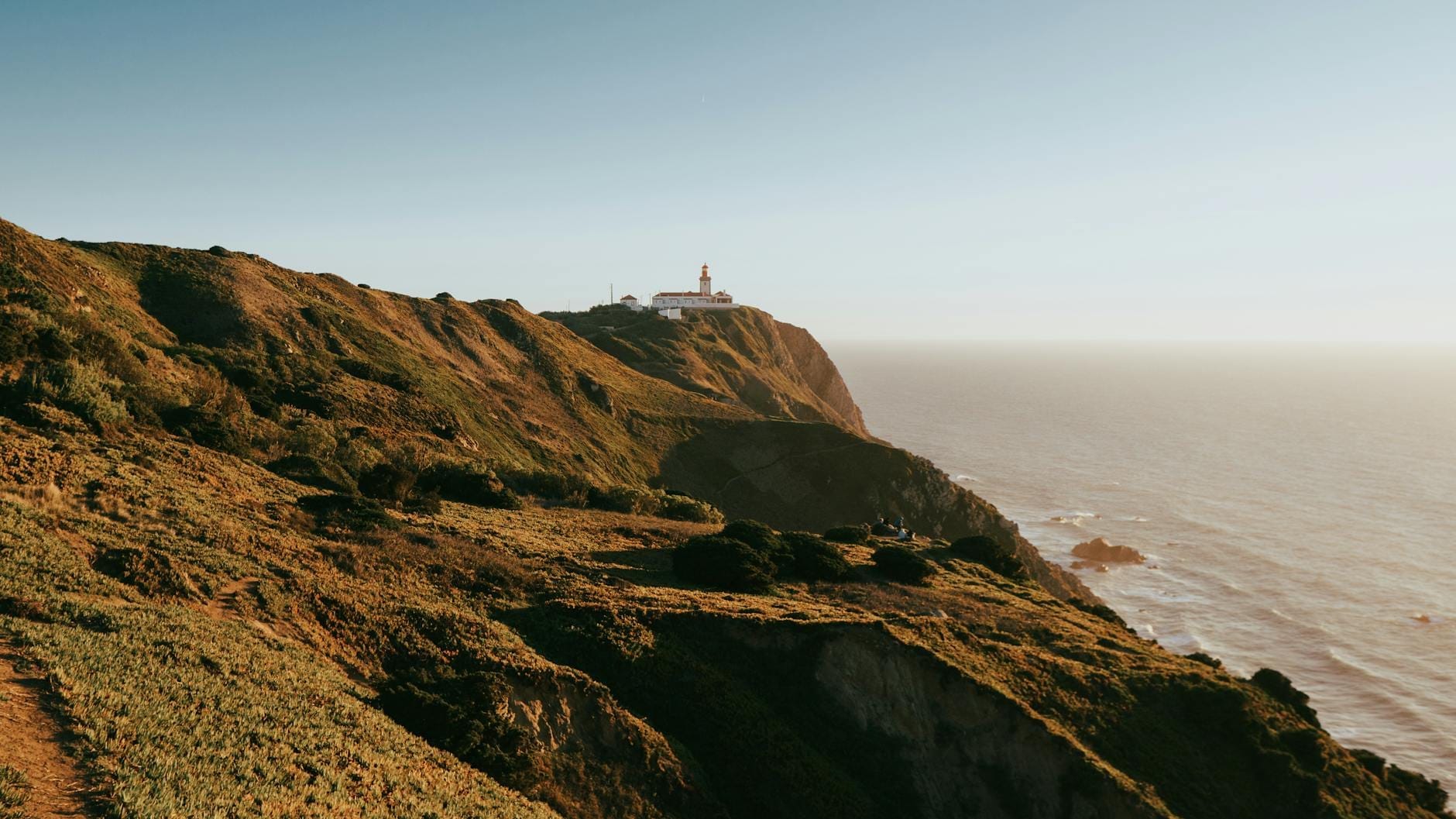
What Cabo da Roca Actually Is
Cabo da Roca is the westernmost point of mainland Portugal, continental Europe, and the entire Eurasian landmass. The cape sits within the Sintra-Cascais Natural Park at coordinates 38°46′51″N 9°30′2″W, where granite cliffs drop 165 metres straight into the Atlantic. Romans called it Promontorium Magnum. Today, a stone cross monument at the cliff edge bears the famous line from the 16th-century poet Luís de Camões: 'Onde a terra se acaba e o mar começa' (Where the land ends and the sea begins).
That inscription earns its place. Standing here on a clear day, you see nothing between the cliff face and North America. The horizon is unbroken. The wind, which rarely stops, hits hard enough to push you sideways if you stand too close to the railings. The sound is dominated by Atlantic swell breaking far below, and on cooler months you can smell the salt from the car park.
ℹ️ Good to know
A visitor centre near the lighthouse sells an official certificate confirming you reached Europe's westernmost point, complete with the date and your name. It is a minor tourist keepsake, but a lot of people buy it.
The Lighthouse and the Monument Up Close
The Cabo da Roca Lighthouse has been operational since 1772, making it the oldest purpose-built lighthouse in Portugal. The current structure, rebuilt to its present form in 1842, is a compact white tower attached to a keeper's house. Its light is visible out to sea. Parques de Sintra manages the site, and the lighthouse exterior is accessible to walk around, though the interior is not open to the public.
The stone cross monument and information plaque stand on a platform at the cliff's edge, roughly a two-minute walk from the car park along a flat path. The monument marks the geographic significance rather than commemorating any historical event. Just south of the main lookout point, there are remnants of a 17th-century fort, though very little remains standing above foundation level. It is worth a glance but will not detain you long.
The paved area around the monument can become crowded between 11:00 and 15:00, particularly when tour buses arrive from Sintra and Cascais simultaneously. Earlier mornings, before 9:30, and late afternoons, after 16:30, give you more space and noticeably better light for photography.
Tickets & tours
Live prices and dates from our booking partner. If you book, we may earn a commission at no extra cost to you.
Sintra, Pena Palace, Cabo da Roca and Praia da Adraga Hike from Lisbon
From 55 €Instant confirmationFree cancellationSintra with Pena Palace, Cabo Da Roca and Cascais Tour from Lisbon
From 76 €Instant confirmationFree cancellationSintra, Pena Palace, Regaleira, Cabo da Roca, Cascais tour from Lisbon
From 35 €Instant confirmationFree cancellation4x4 excursion to Sintra and Cabo da Roca from Lisbon
From 99 €Instant confirmationFree cancellation
How the Experience Changes Through the Day
Early morning at Cabo da Roca is a different place from the midday version. The car park is nearly empty, the light is soft and directional, and the cliffs take on warm ochre tones that disappear once the sun climbs higher. Mist sometimes sits over the water in the first hour after dawn, particularly in spring and autumn, giving the seascape a heavier, more dramatic quality.
Sunset is the most popular window for a reason: the cape faces due west, so the sun drops directly into the ocean on the horizon. In summer, sunset happens well after 20:00, which gives you time to arrive from Sintra after a full afternoon there. The colours on the cliffs during the last thirty minutes of light are genuinely impressive. Bring a layer regardless of summer warmth, because the wind picks up significantly as the temperature drops toward evening.
⚠️ What to skip
Wind at Cabo da Roca is persistent and often strong, reaching gale force in winter and autumn. Stay well back from unfenced cliff edges, which are not barricaded in all sections. This is not a dramatic caution for effect: the drops are real and immediate.
Overcast days, while not ideal for photography, reduce the crowds sharply and give the landscape a brooding, North Atlantic atmosphere that some visitors find more satisfying than postcard sunshine. If you are not chasing a specific photograph, a grey day here can feel more honest to what the cape actually is.
Getting Here: Practical Logistics
Cabo da Roca sits 42 kilometres west of Lisbon, reached via the N247 coastal road. By car from Lisbon, the drive takes around 50 minutes without traffic, more in summer on the approach roads through Sintra. Parking at the cape is free and reasonably sized, but fills quickly on summer weekends between 10:00 and 16:00.
By public transport, bus line 403 runs between Sintra railway station and Cascais, stopping at Cabo da Roca. Journey time from Sintra is around 40 minutes. This makes the cape a natural connector stop on the classic Sintra to Cascais day route, where you can take the train from Lisbon to Sintra, visit the palaces and parks, then catch the bus to Cabo da Roca and continue on to Cascais before heading back to Lisbon by train.
If you are planning the full Sintra day from Lisbon, the Sintra day trip guide explains the rail connections, ticket options, and how to sequence the sites without wasting time backtracking.
The Hike to Praia da Ursa
About one kilometre south of the cape, a trail descends to Praia da Ursa, one of the most striking and least accessible beaches on the Portuguese coast. The walk down takes around 20 minutes and involves steep, loose terrain with no formal path in sections. The beach itself is small, backed by towering rock formations, and has no facilities whatsoever. Rip currents make swimming risky.
The descent is not suitable for anyone with limited mobility, and the return climb back up is tiring. Wear shoes with grip. If you attempt it, do it before visiting the cape proper so you are not doing the climb in late afternoon as the light fades. It is not a casual extension, but if you have the time and fitness, the view from the beach back toward the cliffs is extraordinary.
💡 Local tip
The trail to Praia da Ursa is informal and unmarked in places. Check local conditions before descending and do not attempt it in wet weather or strong wind. The beach has no lifeguard and no mobile signal in most spots.
Honest Assessment: Is It Worth the Trip?
The honest answer is: it depends on what you are after. Cabo da Roca is a geographic superlative, and for people who care about that, standing at the westernmost point of continental Europe carries real weight. The scenery is dramatic, the lighthouse is photogenic, and the Atlantic views are as wide as they come in Europe.
But if you are hoping for a manicured viewpoint with cafés, interpretation panels, and a leisurely stroll, the reality is more austere. The visitor centre is small. The terrain is wind-exposed and can feel uncomfortable in poor weather. The monument itself takes about five minutes to read and photograph. The experience is really about the landscape, not the infrastructure.
Travellers who find Sintra's palaces worth a full day, or who enjoy the kind of coastal wildness you also find further south along Portugal's Atlantic coast, will find Cabo da Roca a logical and rewarding extension. Those on a tight one-day Lisbon itinerary who are mainly interested in the city itself might be better served spending that time in Belém or at one of Lisbon's closer viewpoints.
For those who have already seen Lisbon's major sites and want to push west, the cape pairs well with a morning at Quinta da Regaleira in Sintra before heading out on the 403 bus. If time allows, continuing to Cascais for the afternoon gives you a complete coastal arc, ending with a direct train back to Lisbon's Cais do Sodré station in around 40 minutes.
Insider Tips
- Arrive before 9:30 AM or after 16:30 to avoid the tour bus peak. The light in both windows is also better for photography than the flat midday sun.
- The visitor centre sells an official 'I reached the westernmost point of Europe' certificate. It is unashamedly touristy, but the date-stamped version makes a more personal souvenir than a fridge magnet.
- If you are driving, the N247 coastal road between Cabo da Roca and Cascais is one of the most scenic stretches of road in the Lisbon region. Allow extra time and pull-over opportunities rather than rushing straight to the car park.
- Layers are essential even in summer. The temperature at the cape can be 4 to 6 degrees cooler than in Lisbon or Sintra town, and the westerly wind adds a significant chill factor, especially in the hour before sunset.
- Bus 403 runs between Sintra and Cascais roughly every hour. Check the current Scotturb timetable before you go, as services are less frequent outside of peak season and the last bus can catch visitors off guard.
Who Is Cabo da Roca For?
- Day-trippers combining Sintra's palaces with Atlantic coastal scenery in a single loop
- Photographers chasing golden-hour cliffscape shots with an unobstructed western horizon
- Geography enthusiasts who want to stand at a verifiable continental extreme point
- Hikers willing to descend to remote, facility-free beaches like Praia da Ursa
- Travellers on a Sintra-to-Cascais bus route looking for a dramatic midpoint stop
Nearby Attractions
Combine your visit with:
- Aqueduto das Águas Livres
Standing 65 metres above the Alcântara Valley on 35 soaring Gothic arches, the Aqueduto das Águas Livres is one of the most extraordinary feats of 18th-century engineering in Europe. Free to admire from street level and easy to combine with other west-Lisbon sights, it rewards visitors who look up from the city's quieter edges.
- Cascais
Forty minutes west of Lisbon by train, Cascais trades the capital's urban intensity for whitewashed streets, Atlantic beaches, and a marina ringed by seafood restaurants. Once the summer retreat of Portuguese kings, it remains one of the most complete day trips available from Lisbon.
- Costa da Caparica Beaches
Costa da Caparica stretches 30 kilometres down the Atlantic coast, just 30 minutes from central Lisbon. Free to access year-round, it ranges from family-friendly Blue Flag beaches near the town centre to quieter surf breaks and nudist sections further south, backed by fossil-rich cliffs protected as a nature reserve.
- Cristo Rei
Standing 110 meters tall on the south bank of the Tagus, Cristo Rei offers some of the most dramatic views of Lisbon available anywhere in the region. The journey there, by ferry and bus, is half the experience. Here is everything you need to plan a visit that goes beyond the postcard.
Planning a trip? Discover personalized activities with the Nomado app.