Quinta da Regaleira: Sintra's Most Theatrical Estate
Quinta da Regaleira is a 4-hectare estate in Sintra combining a neo-Gothic palace, subterranean initiation wells, grottoes, and esoteric garden symbolism. Built between 1904 and 1910 for eccentric millionaire António Augusto Carvalho Monteiro, it remains one of Portugal's most visually striking heritage sites.
Quick Facts
- Location
- Rua Barbacena, Sintra Historic Centre, 2780-358 Sintra
- Getting There
- Train from Lisbon Rossio (40 min), then 15-min walk or bus 434 to the gate
- Time Needed
- 2–3 hours minimum; allow half a day to explore without rushing
- Cost
- Paid entry (check regaleira.pt for current prices); audio guide rental €5, includes map
- Best for
- History enthusiasts, architecture lovers, photographers, curious travelers
- Official website
- www.regaleira.pt/en
What Is Quinta da Regaleira?
Quinta da Regaleira is a 4-hectare estate in the historic centre of Sintra, Portugal, combining a neo-Manueline palace, chapel, underground tunnels, and a symbolic garden packed with Masonic and Rosicrucian imagery. It is not a conventional royal palace or a simple botanical garden. It is something stranger and more deliberate: a landscape built to communicate ideas, structured around esoteric philosophy and the imagination of one very wealthy, very eccentric man.
The estate was acquired in 1892 by António Augusto Carvalho Monteiro, a Portuguese millionaire who had made his fortune in Brazil trading coffee and rare books. He commissioned Italian architect and set designer Luigi Manini to transform the property into a theatrical world of symbols. Construction ran from 1904 to 1910. The result is an estate that looks like it was designed for an opera and built to outlast a dynasty.
Sintra itself is a UNESCO World Heritage Cultural Landscape, and Regaleira sits comfortably within that designation. If you are planning a full day in the area, pair it with a visit to the Monserrate Palace for a contrasting but complementary experience of 19th-century romantic architecture.
💡 Local tip
Book tickets online in advance, especially from April through September. Walk-up queues at the gate can add 30–45 minutes to your wait on busy weekends. The official site at regaleira.pt is the most reliable booking channel.
The Initiation Wells: The Reason Most People Come
The estate has many features, but the Initiation Well, known in Portuguese as the Poço Iniciático, is the element that draws visitors back and defines its reputation. It is not a functioning water well. It is a 27-metre-deep spiral stone tower that descends underground, its nine landings connected by stone stairs that wind around the central shaft. Natural light filters in from the circular opening at the top, creating a diffuse glow that shifts with the time of day.
The nine levels are understood to reference the nine circles of Dante's Inferno, as well as numerological symbolism connected to Freemasonry and the Knights Templar. At the base, a compass-and-square motif is inlaid into the stone floor. Manini, who came from a background in theatrical stage design, understood how to construct spaces that produce emotional effects, and the well does exactly that. Standing at the bottom looking upward, the proportions feel both precise and slightly surreal.
A second, smaller well, the Unfinished Well, sits elsewhere on the estate. It is less visited and often overlooked, but worth finding. The connecting tunnel system links the wells to the chapel crypt and several grottoes across the gardens. Carrying a phone torch or small flashlight is genuinely useful in the darker passages, even on a bright day.
⚠️ What to skip
The tunnels and underground passages are narrow, uneven, and low-ceilinged in places. Anyone with claustrophobia should know this before entering. The wells also have no barriers at the edge of the stairwell shaft in some sections, so keep close supervision over young children.
Tickets & tours
Live prices and dates from our booking partner. If you book, we may earn a commission at no extra cost to you.
The Palace and Chapel: Gothic Detail at Ground Level
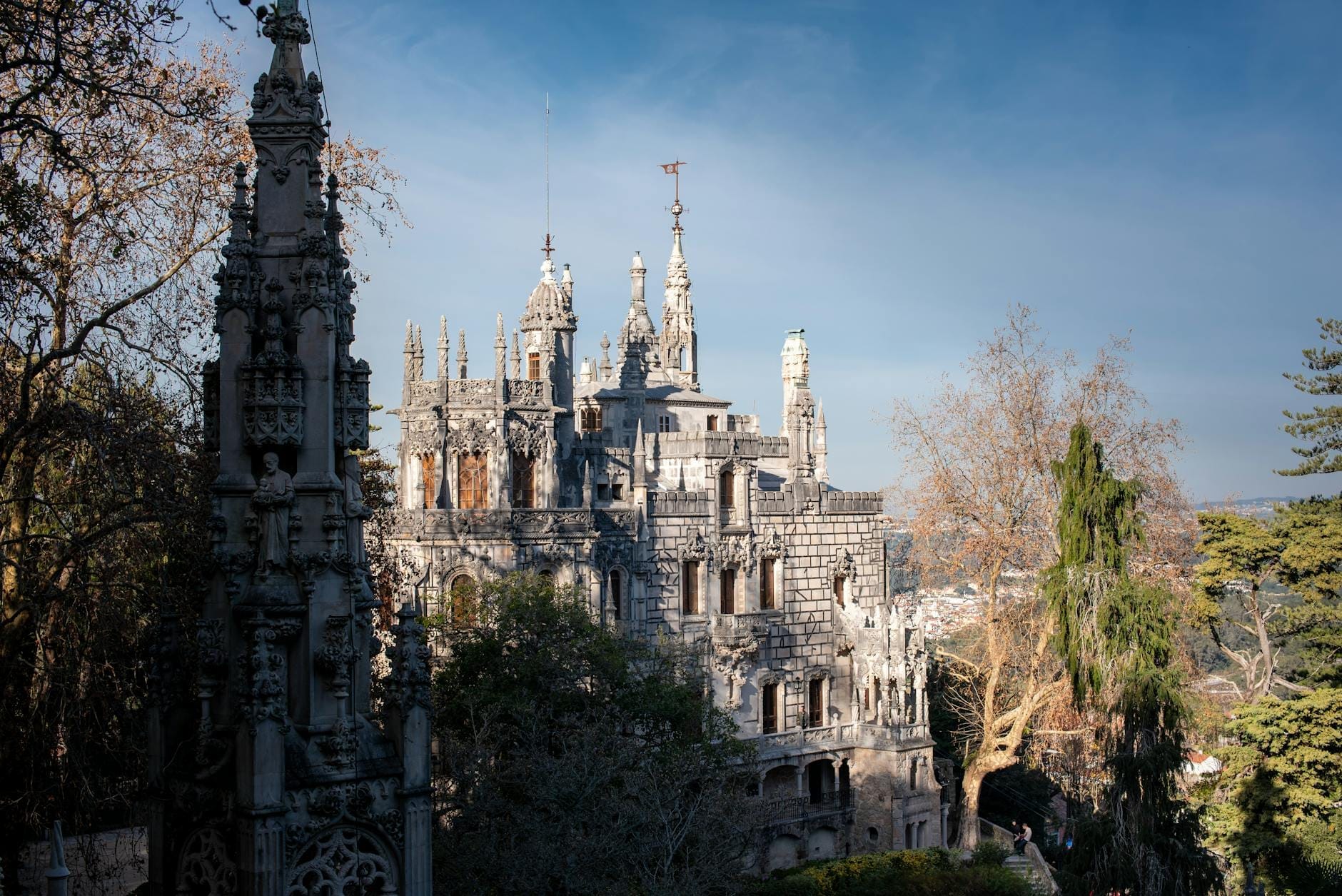
The palace, formally called the Palace of Regaleira, rises above the gardens on the upper part of the estate. Its facade mixes neo-Gothic, neo-Manueline, and Renaissance elements, with carved stone gargoyles, armillary spheres, and heraldic detail along every cornice and window surround. From a distance it reads as a fairy-tale silhouette. Up close, the stonework is dense with symbolic carving that rewards slow attention.
Interior rooms are open to visitors and furnished with period pieces, painted tile panels, and decorative ceilings, though the palace interior is modest compared to the complexity of the grounds. The chapel adjacent to the palace is small but precise in its detailing, with stained glass, elaborate tilework, and a crypt level accessible beneath the altar that connects into the tunnel network.
Mornings are the best time to photograph the palace facade. Before 11:00 AM, the angle of light catches the carved stonework from the east and the crowds are thin enough to compose a clean frame without strangers in the foreground. By midday, particularly in summer, tour groups fill the terrace in front of the main entrance.
The Gardens: Layered, Symbolic, and Easy to Get Lost In
The estate's gardens are formal in parts and deliberately wild in others. Terraced paths wind between fountains, grottoes carved from rock, a lake, a waterfall, and dense woodland. Sintra's microclimate, wetter and cooler than coastal Lisbon due to the Atlantic-facing Serra de Sintra mountain range, keeps the vegetation green and layered even in the dry summer months. Moss covers the stone walls and grottos year-round. The smell of damp earth and eucalyptus is consistent throughout.
The layout is intentionally non-linear. Paths fork and loop back. Several visitors who skip the audio guide or a printed map find themselves retracing the same section twice. The €5 audio guide includes a map and is worth it purely for orientation. Alternatively, download the estate map from the official site before your visit.
One area that receives less foot traffic is the upper woodland path that runs along the northern edge of the estate. It offers elevated views across the canopy toward the Sintra hills and passes several smaller sculptural elements and a covered loggia that most visitors miss in their rush to reach the wells. It also gives you a sense of the estate's full extent, which is easy to underestimate from the main entrance.
ℹ️ Good to know
Wear closed, grippy shoes. The stone paths through the gardens and tunnel entrances can be slippery from moisture even on dry days, and several sections involve steep descents or uneven stone steps with no handrails.
When to Visit and How to Time Your Day
Quinta da Regaleira is open year-round. From April through September, hours extend to 7:30 PM with last entry at 5:30 PM. From October through March and in January, hours run to 6:30 PM with the same last entry time. The estate never feels truly empty, but the least crowded windows are weekday mornings before 11:00 AM, or the final two hours before closing when late-afternoon light filters through the trees at a low angle and most tour groups have moved on.
Summer weekends between late June and August bring the heaviest visitor numbers. The wells and tunnel entrances develop queues, and the terrace in front of the palace becomes congested. If a summer weekend is your only option, arrive at opening time and move straight to the Initiation Well before the first tour group rotation reaches it.
Late September and October offer a quieter experience with cooler air and early autumn color in the gardens. Winter visits, particularly in December and January, have genuine atmosphere on overcast days when the mist from the Serra settles across the estate. For broader context on seasonal trade-offs, the guide on the best time to visit Lisbon covers the Sintra microclimate in relation to the wider region.
Getting There from Lisbon
The most practical route from Lisbon is by train from Rossio station in central Lisbon to Sintra station. Trains run frequently throughout the day, and the journey takes approximately 40 minutes. Single tickets are inexpensive and can be purchased at the station or via the CP (Comboios de Portugal) app.
From Sintra station, Quinta da Regaleira is roughly 1.5 kilometres along the main tourist road into the historic centre. You can walk it in 15 to 20 minutes, passing the town centre and Monserrate Palace signage along the way, or take bus 434 or 435 from outside the station, which also serves Pena Palace and other sites along the route. Taxis and Ubers are available at the station rank but lines can be long in high season.
Driving is possible but parking near the historic centre of Sintra is limited and congested on weekends. If you are combining Regaleira with other Sintra attractions as part of a day trip, the guide on a Sintra day trip from Lisbon lays out the logistics clearly, including how to sequence stops to minimize backtracking.
Who This Is Not For
Quinta da Regaleira is not a relaxing garden stroll. The terrain is hilly, the paths uneven, and the most interesting features require descending underground or navigating low tunnels. Visitors with mobility limitations will find significant parts of the estate inaccessible, including the initiation wells and most of the grotto network. The ticket office has audio guides, but there is no adapted route that covers the estate's main draws without stairs.
Travelers who prefer clear historical narrative over symbolic ambiguity may also find it frustrating. Much of the estate's significance lies in layered esoteric meaning that is not immediately legible without context. If you want a more conventional, information-rich palace experience, the Sintra National Palace in the town centre is a better fit.
Insider Tips
- The Initiation Well is most atmospheric in the first hour after opening. By late morning, the queue to descend can stretch back up the garden path significantly. Go there first, before exploring the palace.
- The second, less-visited Unfinished Well sits on the opposite side of the estate from the main well. Most visitors heading straight for the iconic spiral miss it entirely. It is worth finding for the different quality of light and the quieter atmosphere around it.
- Download or screenshot the estate map from regaleira.pt before arriving. Mobile signal inside the tunnels and in the lower gardens is poor, and the physical map included with the audio guide is small. Having your own copy makes navigation much easier.
- The gardens are layered across multiple elevation levels. If you enter through the main palace gate and descend, keep track of where you are relative to the exit. It is easy to reach the lower lake area and realize you need to climb back up a significant slope to reach the exit gate.
- Late afternoon, roughly an hour before closing, the estate takes on a completely different quality as the light drops and visitor numbers thin. If you have the option of a split visit, spending the morning at another Sintra attraction and returning to Regaleira from 4:00 PM onward is worth considering.
Who Is Quinta da Regaleira For?
- Architecture enthusiasts drawn to neo-Gothic and Manueline stonework
- History and symbolism researchers interested in Masonic and esoteric traditions
- Photographers looking for dramatic light, texture, and surreal compositions
- Travelers who enjoy exploratory, non-linear experiences with elements of discovery
- Anyone doing a full Sintra day trip who wants a complement to Pena Palace's color and scale
Nearby Attractions
Other things to see while in Sintra:
- Monserrate Palace
Palácio de Monserrate is a 19th-century palace of extraordinary architectural ambition, blending Moorish, Gothic, and Indian motifs into a single cohesive vision. Set within a vast romantic garden 4 km from Sintra's historic center, it draws far smaller crowds than the nearby Pena Palace while offering an experience that many visitors find more rewarding.
Planning a trip? Discover personalized activities with the Nomado app.