Monserrate Palace: Sintra's Most Atmospheric Architectural Wonder
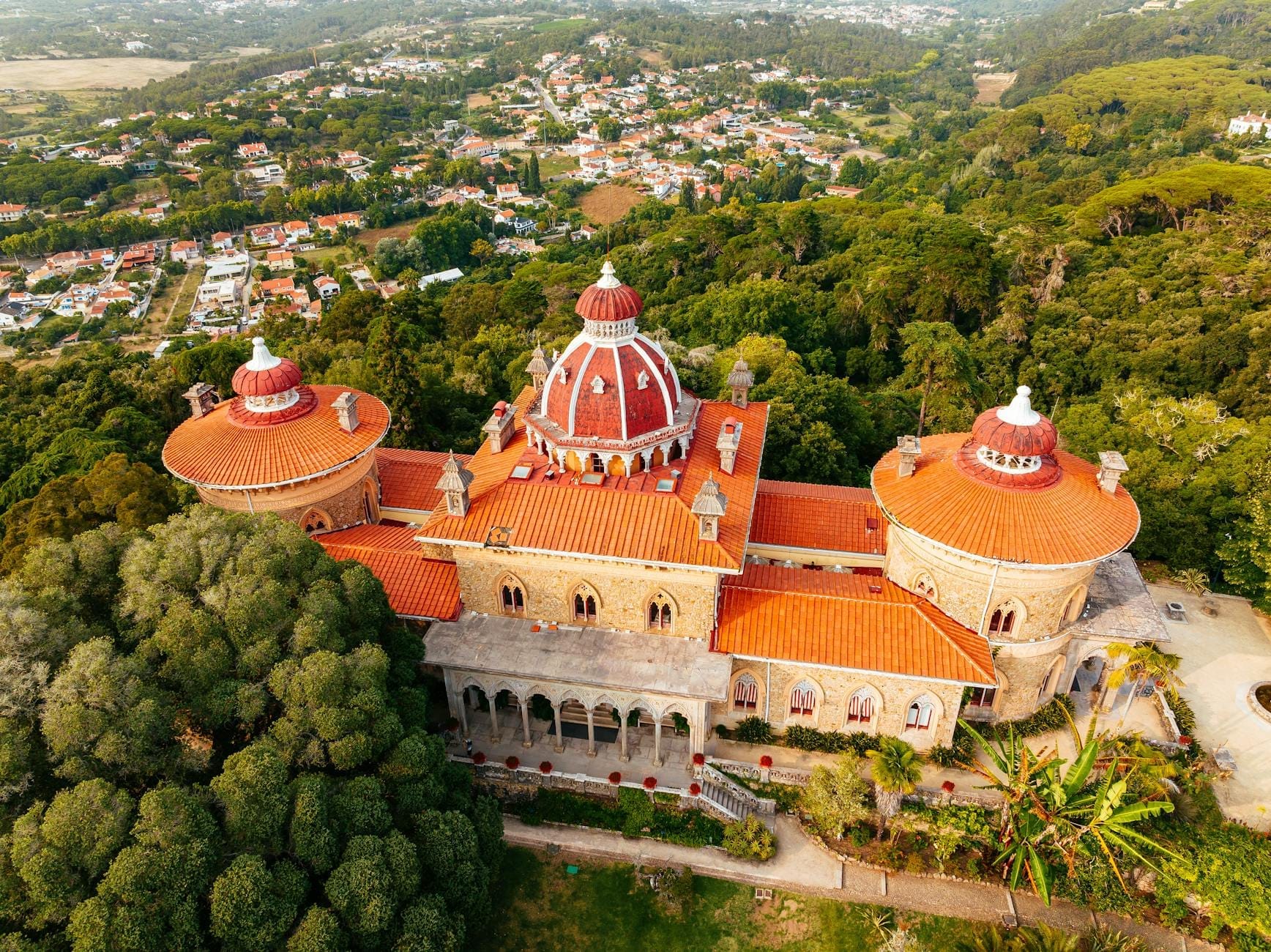
Palácio de Monserrate is a 19th-century palace of extraordinary architectural ambition, blending Moorish, Gothic, and Indian motifs into a single cohesive vision. Set within a vast romantic garden 4 km from Sintra's historic center, it draws far smaller crowds than the nearby Pena Palace while offering an experience that many visitors find more rewarding.
Quick Facts
- Location
- 2710-405 Sintra, Portugal (4 km from Sintra train station)
- Getting There
- Bus 434 or 435 from Sintra train station (Parques de Sintra line); also reachable by taxi or car via EN375
- Time Needed
- 2 to 3 hours for palace and gardens
- Cost
- Paid entry; combined palace and park tickets available. Check current prices at parquesdesintra.pt
- Best for
- Architecture lovers, photographers, garden enthusiasts, and travelers wanting Sintra without the biggest crowds
What Is Monserrate Palace?
Palácio de Monserrate sits on a hillside in the Sintra Cultural Landscape, a UNESCO World Heritage Site since 1995, roughly 4 km west of Sintra's historic center along the EN375 road toward Colares. The palace is one of the most architecturally distinctive buildings in Portugal: a swooping confection of horseshoe arches, lace-like stone carvings, onion domes, and Gothic tracery, all fused into something that defies easy categorization.
Unlike Pena Palace, which sits on a high crag and announces itself from miles away, Monserrate reveals itself gradually. You approach through a garden that was once one of the most celebrated in Europe, past tree ferns, sequoias, and subtropical species that form a canopy dense enough to block the afternoon sun. The building itself only comes into full view from a specific angle on the main lawn, which is part of the drama.
Travelers doing a broader trip to the region often pair this with other Sintra highlights. For context on planning your day, the Sintra day trip guide from Lisbon covers transport logistics and how to sequence the sites efficiently.
💡 Local tip
Monserrate opens at 9:30 AM daily. Arriving within the first hour gives you the gardens largely to yourself and the best light on the palace facade. Tour groups tend to arrive mid-morning.
The History Behind the Building
The site's origins trace back to 1540, when a small chapel was built here. The first proper palace followed in 1790, constructed by Gerard de Visme, a British merchant who recognized the site's natural drama. Just a few years later, in 1793, the English novelist and collector William Beckford rented the estate and began transforming its gardens into a romantic landscape inspired by his travels.
The palace you see today was commissioned in 1858 by Sir Francis Cook, a British textile merchant who had made an enormous fortune and wanted a Portuguese estate worthy of his ambitions. He hired architect James Thomas Knowles to design a building that would reflect Cook's cosmopolitan tastes. Knowles drew from Moorish Spain, the Gothic tradition of northern Europe, and the Mughal architecture of India, weaving all three influences into a structure that somehow reads as coherent rather than chaotic.
Cook also enlisted botanists and horticulturalists to transform the gardens into a living collection of plants from across the world, including species from Australia, Mexico, and South Africa. The garden's global ambition was as deliberate as the palace's architectural eclecticism. The Portuguese state acquired the property in 1949, and it was classified as a Property of Public Interest in 1975 and 1978. Today it is managed by Parques de Sintra.
Tickets & tours
Live prices and dates from our booking partner. If you book, we may earn a commission at no extra cost to you.
The Palace: What You Actually See Inside
The interior of Monserrate is less ornate than the exterior suggests. Many of the rooms are sparsely furnished or empty, which can feel anticlimactic if you arrive expecting the heavily decorated salons of a traditional palace. What the rooms do offer is the architecture itself: intricate plasterwork ceilings with geometric Moorish patterning, arched doorways that frame garden views like paintings, and an interplay of light and shadow that shifts noticeably depending on the time of day.
The central hall beneath the main dome is the visual heart of the building. The dome's interior is carved with interlocking arches that echo the Alhambra in Granada but with a distinctly Victorian confidence in their execution. Climb to the upper floor for views over the garden canopy and, on clear days, a glimpse toward the Atlantic.
Photography inside is generally permitted. The arched windows create natural frames for interior shots, and the contrast between the pale carved stone and the green garden outside makes for striking images. Early morning gives the softest light on the facade; the western-facing windows catch late-afternoon sun well.
ℹ️ Good to know
The palace interior is partially unfurnished. If you are primarily drawn to lavishly decorated royal interiors, Sintra's Pena Palace or the Ajuda National Palace in Lisbon may better meet those expectations.
The Gardens: The Real Reason to Come
For many visitors, the palace gardens are the stronger draw. The planting combines temperate and subtropical species in a way that produces an almost theatrical density of green. In spring, tree ferns unfurl beside camellias and rhododendrons. In summer, the canopy overhead is thick enough that the garden stays noticeably cooler than the surrounding hillsides. In winter, the garden turns quieter and more skeletal, but the structure of the planting remains interesting and the palace itself is far less crowded.
The gardens are laid out informally, without the strict geometry of a French parterre garden. Paths wind between specimen trees, crossing small streams and passing plant labels that identify species from five continents. This is a garden designed to reward slow exploration rather than a brisk circuit.
Wear comfortable walking shoes. Some paths have loose gravel or root-covered surfaces, and the terrain includes gentle but genuine inclines. There is no flat, wheelchair-accessible circuit through the full garden; the palace entrance and immediate surrounds are more accessible, but the deeper garden sections involve uneven ground.
Monserrate's gardens share the same spirit of romantic, eclectic landscape design found across Sintra. The nearby Quinta da Regaleira offers a different but equally compelling take on this tradition, with its initiatory wells and symbolist garden architecture.
How the Experience Changes by Time of Day
At 9:30 AM on a weekday, the car park is nearly empty and the garden paths are quiet enough that you can hear water running in the small stream near the palace. The morning light falls obliquely across the carved stone facade, emphasizing the depth of the Moorish relief work in a way that flat midday light does not. This is the best window for photography and for appreciating the architectural detail without distraction.
By 11:00 AM, organized tour groups begin arriving, typically entering the palace in waves. The interior corridors feel noticeably more crowded between 11:30 AM and 2:00 PM. The gardens, being large, absorb crowds better than the palace itself.
Late afternoon, from around 3:30 PM onward, sees visitor numbers drop again. The western light at this hour is warm and flattering on the building's creamy stone. If you are visiting in summer, the last entry time of 6:00 PM (with the site closing at that hour) means there is no golden-hour window after closing, so plan to arrive by 4:00 PM at the latest to have enough time.
⚠️ What to skip
Opening hours are listed as 9:30 AM to 6:00 PM daily, but seasonal changes are possible. Always verify current hours at parquesdesintra.pt before visiting, particularly in winter.
Getting There: Practical Transport Details
From Lisbon, take a direct train from Rossio station to Sintra (approximately 40 minutes; trains run frequently). From Sintra train station, buses 434 and 435, operated by the Parques de Sintra line, stop at Monserrate. The 435 route runs specifically toward Colares and passes the palace. Taxis from Sintra town center are available and cover the 4 km quickly, which is useful if you are carrying a bag or traveling with children.
If you are driving from Lisbon, the EN375 road from Sintra toward Colares passes directly in front of the entrance. Parking is available at the site. For broader planning, the getting around Lisbon guide covers train options from the city centre in detail.
The Parques de Sintra phone number for general enquiries is (+351) 219 237 300. Combined tickets covering multiple Sintra sites are available through Parques de Sintra and can reduce the overall cost if you plan to visit more than one property.
Who Will Love This Place and Who Might Not
Monserrate rewards travelers who are genuinely interested in architecture and landscape design. The building is specific and strange in the best way: it does not resemble anything you have seen before, and understanding its layered influences makes the experience richer rather than just more confusing.
Travelers who prefer a packed itinerary and want the classic Sintra highlights in quick succession may find Monserrate's 4 km distance from the town center adds logistical friction. If your day is tight and you have not yet seen Pena Palace or the Castle of the Moors, those should take priority. Monserrate is better suited to a second visit to Sintra, or to travelers willing to spend a full half-day here rather than treating it as a brief stop.
Families visiting with younger children who want interactive or playful experiences may find the sparse interiors less engaging for kids. A visit to the Lisbon Oceanarium or a morning in Belém might hold younger attention more easily. That said, the gardens do offer plenty of space for children to explore freely.
Visitors with mobility limitations should note the uneven garden terrain. For a more accessible Sintra-area experience, the historic center around the Sintra village and its National Palace is considerably flatter and more manageable.
Insider Tips
- Buy your ticket online through the Parques de Sintra website before arriving. The site does not draw the same queues as Pena Palace, but online booking guarantees entry on busy summer weekends and saves time at the gate.
- The best single photograph of the palace is taken from the main lawn at roughly 45 degrees to the facade, not head-on. This angle captures both the central dome and the Moorish arcade on the right wing, giving a sense of the building's full complexity.
- If you take bus 435 from Sintra station, note that the same bus continues to Colares village, a quiet agricultural town worth a short detour if you have extra time. From Colares you can also pick up a return bus or taxi.
- The garden contains labeled plant specimens from across the world. Bringing a plant identification app adds a surprising amount of depth to the garden walk, particularly in the fern section near the palace's eastern wing.
- Combined tickets purchased through Parques de Sintra can include Pena Palace, Monserrate, and other managed sites. If you are planning two or more Sintra visits, the combined option typically offers meaningful savings over individual entry prices.
Who Is Monserrate Palace For?
- Architecture enthusiasts who want to understand the breadth of 19th-century Romantic design beyond the Gothic Revival mainstream
- Photographers looking for a visually complex building with strong early-morning light and relatively manageable crowd levels
- Garden lovers and plant enthusiasts, particularly those interested in subtropical and exotic species collections
- Travelers on a return visit to Sintra who have already seen the main hilltop sites and want to explore further
- Couples looking for a quieter, more contemplative Sintra experience away from the highest-traffic viewpoints
Nearby Attractions
Other things to see while in Sintra:
- Quinta da Regaleira
Quinta da Regaleira is a 4-hectare estate in Sintra combining a neo-Gothic palace, subterranean initiation wells, grottoes, and esoteric garden symbolism. Built between 1904 and 1910 for eccentric millionaire António Augusto Carvalho Monteiro, it remains one of Portugal's most visually striking heritage sites.
Planning a trip? Discover personalized activities with the Nomado app.