Praia de Carcavelos: Lisbon's Closest Great Beach
Praia de Carcavelos is the largest beach on the Estoril Coast and the easiest to reach from Lisbon by train, just 20 minutes from the city centre. With 1.25 kilometres of Atlantic sand, dedicated surf zones, and a backdrop of a 16th-century fort, it offers more than a typical day-trip beach. Here is everything you need to know before making the trip.
Quick Facts
- Location
- Av. Marginal 6, Carcavelos 2775-604, Portugal — 12 km west of Lisbon city centre
- Getting There
- Cascais Line train from Cais do Sodré station, approx. 25 min; alight at Carcavelos station, 10-min walk to beach
- Time Needed
- Half day to full day
- Cost
- Free entry; parasol rental approx. €20/day in summer
- Best for
- Surfers, families, day-trippers wanting a real beach without leaving Lisbon's orbit
- Official website
- 360.cascais.pt/en/visit/carcavelos-beach
What Praia de Carcavelos Actually Is
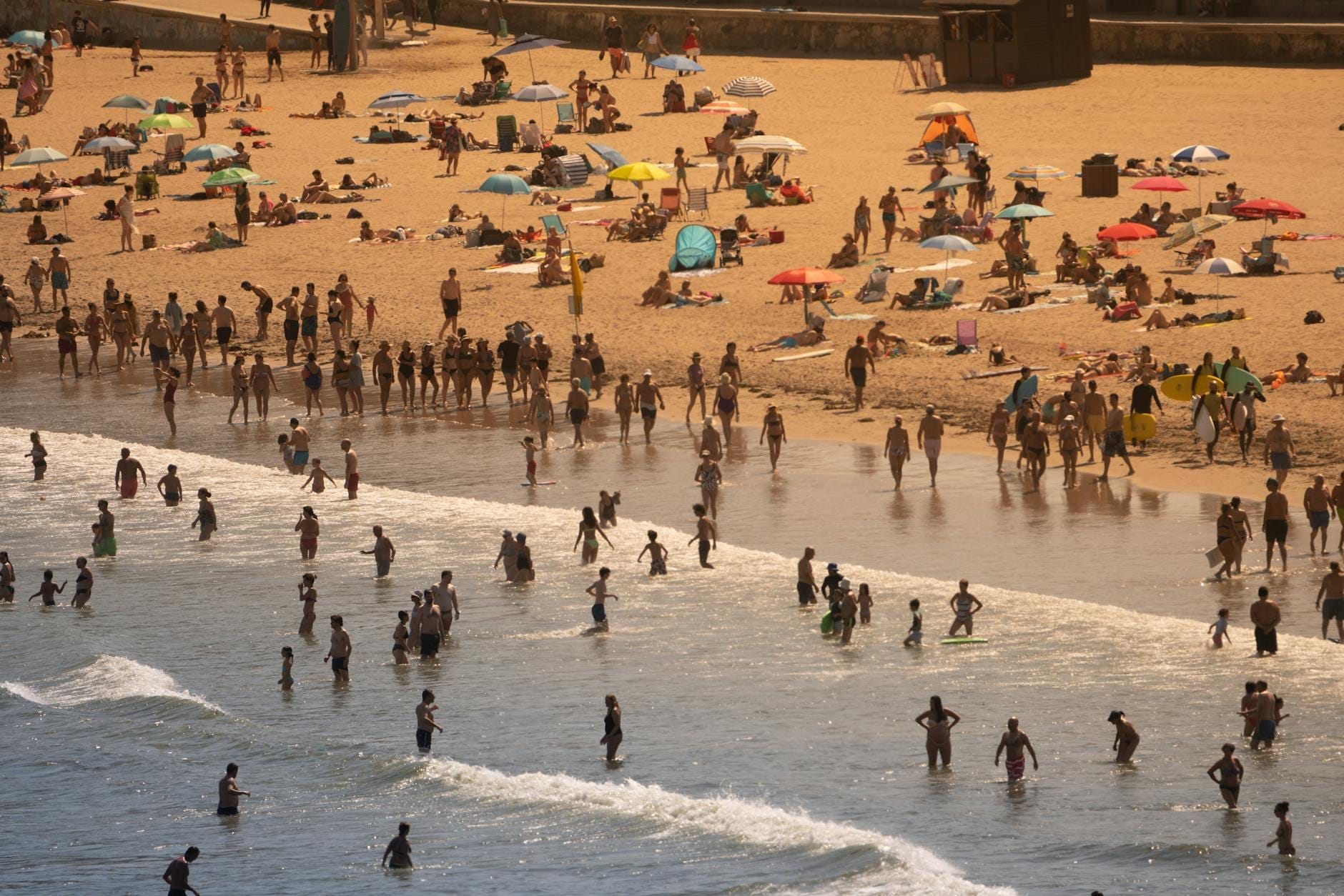
Praia de Carcavelos is a 1.25 to 1.5-kilometre stretch of wide, open Atlantic sand on Portugal's Estoril Coast, making it the largest beach between Lisbon and Cascais. The Portuguese call this stretch the Linha de Cascais, a suburban corridor that has been the escape valve for Lisbon residents since the late 19th century. Carcavelos sits roughly in the middle of that corridor, 12 kilometres west of the city centre and 9 kilometres east of Cascais, close enough to reach on a lunch break, wide enough that it rarely feels overcrowded except on August weekends.
The sand here is coarser and more golden than the fine white of the Algarve, and the Atlantic swell arrives with real energy. That makes Carcavelos one of the most consistent surf beaches near any European capital, with waves that work for both beginners on longboards and more experienced shortboarders depending on the swell direction. In summer, lifeguards separate dedicated swimming zones from the surf area with buoys, which keeps the water safe for families who want nothing more than a paddle.
💡 Local tip
The train is almost always faster than driving. The Cascais Line from Cais do Sodré runs frequently and drops you at Carcavelos station, less than a 10-minute walk from the sand. Parking near the beach fills quickly from 10am onwards on summer weekends.
The Setting: Fort, Horizon, and What You See on Arrival
Walk down from Carcavelos station toward the shore and the first thing you notice is the scale of the horizon. Unlike Lisbon's beaches on the Tagus estuary, this is full Atlantic ocean, and on clear days you can see nothing but water to the west. The view south is interrupted by the silhouette of the Fort of São Julião da Barra, a 16th-century defensive fortification built at the mouth of the Tagus. The fort is still an active Portuguese military installation and is not open to the public, but it anchors the western edge of the beach visually and gives the whole scene a historical weight that you would not expect at a suburban beach.
The beachfront itself is practical rather than picturesque in the resort sense. There is a wide pedestrian esplanade backed by a line of beach bars, restaurants, surf schools, and rental huts. Volleyball and football courts are set up seasonally in the central section. Facilities include public showers, restrooms, a medical post, and accessible beach boardwalks near the main access points. The overall feel is more local sports beach than tourist resort, which is part of its appeal.
Tickets & tours
Live prices and dates from our booking partner. If you book, we may earn a commission at no extra cost to you.
Sintra, Pena Palace, Cabo da Roca and Praia da Adraga Hike from Lisbon
From 55 €Instant confirmationFree cancellationBelem and Modern Lisbon bus hop-on hop-off combined tickets
From 28 €Instant confirmationFree cancellationSt. George Castle E-ticket and Audio Tour
From 28 €Instant confirmationLisbon Story Centre entrance tickets
From 7 €Instant confirmationFree cancellation
Time of Day: How the Beach Changes from Morning to Dusk
Early mornings at Carcavelos, particularly outside July and August, are remarkably quiet. By 7am on a weekday the sand belongs mostly to joggers running along the waterline, a few swimmers doing laps in the calmer sections, and surf coaches setting up for morning lessons. The light is soft, the air has a cool Atlantic edge even in June, and the smell of salt and damp sand is clean and strong. This is genuinely the best window for photography: the fort glows in low morning light and there are no sunshades cluttering the foreground.
By midday in summer the scene transforms completely. Families arrive from Lisbon with coolers and folding chairs, the surf schools are running back-to-back sessions, and the beach bars are serving grilled fish and cold Sagres beer. The noise level rises noticeably, the volleyball courts are in full use, and finding a clear patch of sand near the water requires either arriving early or walking to the less central eastern end of the beach. The water temperature in July and August typically sits around 19 to 21 degrees Celsius — refreshing rather than warm by Mediterranean standards, but entirely swimmable.
Late afternoon, roughly from 5pm onward, is the second quiet window. The families begin packing up, the light turns golden and low, and the surfers who have been waiting all day for the tide come back into their own. If you are not bothered about swimming and just want the atmosphere without the crowds, arriving at 5pm and staying for sunset is a genuinely good strategy. Sunset here faces almost due west over open ocean, which means the colour hits the water directly with nothing blocking it.
Surfing and Water Activities
Carcavelos has a well-established surf culture that predates the current wave of surf tourism by several decades. The beach breaks consistently across much of the year, with the best swells arriving in autumn and winter when Atlantic storms push larger, more powerful waves. Summer swells are smaller and more forgiving, which is exactly why multiple surf schools operate here from June through September, catering primarily to beginners and intermediate surfers.
Several certified surf schools operate directly on the beach and offer lessons in Portuguese, English, and Spanish. Equipment rental, including wetsuits for cooler months, is widely available. The water is cold enough in winter to require a 4/3mm wetsuit, but from June through September a 3/2mm or even a shorty will do. If surfing is the primary reason for your trip, note that Carcavelos can get genuinely crowded in the water on peak summer weekends, particularly around the main break. Arriving early or checking conditions mid-week makes a significant difference.
ℹ️ Good to know
Lifeguards are on duty during the official summer bathing season, typically June through September. Outside this period, swimming is at your own risk, and Atlantic currents can be strong. Always check the flag system before entering the water.
Getting There and Practical Logistics
The Cascais Line train from Cais do Sodré in Lisbon is the standard and most reliable way to reach Carcavelos. Trains run frequently throughout the day, the journey takes approximately 20 minutes, and the fare is covered by a standard Viva Viagem card loaded with the Lisbon transport tariff. The line runs all the way to Cascais, so it is easy to combine Carcavelos with a visit to Cascais itself or to other beaches along the coast.
From Carcavelos station, the walk to the beach takes about 10 minutes downhill on a straightforward route. If you are travelling from Sintra rather than Lisbon, you will need to change trains, typically at Queluz-Belas or at Entrecampos. For planning a wider day on the coast, the Lisbon beaches guide covers how to string together multiple stops on the Cascais Line in a single trip.
Large paid car parks are available near the beach but fill rapidly from mid-morning on summer weekends. If you are driving, arriving before 9am is almost always necessary to secure a space without a long walk. The N6 coastal road runs directly behind the beach, which means road noise is present, though it recedes once you are on the sand itself.
Eating, Drinking, and What to Bring
The esplanade behind Carcavelos beach has a solid range of options, from basic snack bars serving toasted sandwiches and soft drinks to sit-down restaurants offering grilled fish, seafood rice, and cold local wine. Prices are reasonable by Lisbon restaurant standards, though beach bar markups apply for anything served directly on the sand. Bringing your own food and drink is entirely normal and accepted here. There are no restrictions on this, and families routinely arrive with full picnics.
What to bring on a summer visit: reef-safe sunscreen (the Atlantic UV is intense even when it feels cool), a windbreak if you are sensitive to the breeze, cash for beach bars and parking machines (card payment is available at most restaurants but not always at smaller kiosks), and a light layer for the train ride back in the evening when temperatures drop noticeably once the sun is low.
Carcavelos is a practical base for a wider day out. Cascais town, about 15 minutes further west by train, offers good seafood restaurants and a picturesque harbour. The Cascais waterfront is worth an evening visit if you want a meal with more variety than the beach bar options.
Honest Assessment: Who This Beach Suits and Who It Does Not
Praia de Carcavelos is not a postcard beach. The setting is urban-adjacent, the esplanade is functional rather than charming, and the sand does not have the dramatic cliffs or turquoise water that defines Algarve beaches. Anyone arriving with those expectations will be disappointed. What it offers instead is genuine scale, consistent surf, excellent transport links, and a crowd that skews toward Lisbon locals rather than package tourists, which gives it an authenticity that more scenically spectacular beaches sometimes lack.
Travellers whose primary goal is scenic beauty or a quieter, more remote experience should look further afield. Day trips from Lisbon can take you to beaches on the Setúbal Peninsula or in the Alentejo that offer dramatically different settings. But for a beach day that requires minimal planning and zero compromise on access or facilities, Carcavelos is the most reliable option within reach of Lisbon.
⚠️ What to skip
August weekends are the one time Carcavelos genuinely struggles. The beach handles crowds well given its size, but trains back to Lisbon in the late afternoon can be packed and hot. Travel with a Viva Viagem card loaded in advance to avoid queues at the station machine.
Insider Tips
- The eastern end of the beach, furthest from the fort, is consistently less crowded than the central section even in peak summer. Walk 10 minutes from the main access point and the density drops noticeably.
- For the best surf conditions without summer crowds, September and October are the sweet spot: the water is at its warmest (typically 19-20°C) and the autumn swells begin to build without the beach being at capacity.
- The train back to Lisbon at sunset on a clear day offers one of the better views on the Cascais Line, with the Tagus opening up as you approach Cais do Sodré. Sit on the right side (north) of the carriage heading east.
- Several surf schools offer early morning group lessons at reduced rates compared to peak midday sessions. These fill up, so book at least a day in advance in July and August.
- The Fort of São Julião da Barra, visible from the western end of the beach, is a working military base and inaccessible to visitors, but it can be photographed clearly from the sand at the low-tide waterline, particularly in morning light.
Who Is Praia de Carcavelos For?
- Surfers and surf beginners looking for consistent Atlantic waves with good instruction infrastructure
- Lisbon day-trippers wanting a full beach day without renting a car
- Families with children who need supervised swimming zones and solid on-beach facilities
- Travellers combining a beach morning with an afternoon or evening in Cascais town
- Photographers and early risers who want dramatic coastal light without crowds
Nearby Attractions
Combine your visit with:
- Aqueduto das Águas Livres
Standing 65 metres above the Alcântara Valley on 35 soaring Gothic arches, the Aqueduto das Águas Livres is one of the most extraordinary feats of 18th-century engineering in Europe. Free to admire from street level and easy to combine with other west-Lisbon sights, it rewards visitors who look up from the city's quieter edges.
- Cabo da Roca
Cabo da Roca is the westernmost point of mainland Europe, a wind-scoured cape rising 165 metres above the Atlantic Ocean in the Sintra-Cascais Natural Park. It combines raw coastal scenery, genuine historical weight, and easy access from both Lisbon and Sintra into one of Portugal's most geographically significant stops.
- Cascais
Forty minutes west of Lisbon by train, Cascais trades the capital's urban intensity for whitewashed streets, Atlantic beaches, and a marina ringed by seafood restaurants. Once the summer retreat of Portuguese kings, it remains one of the most complete day trips available from Lisbon.
- Costa da Caparica Beaches
Costa da Caparica stretches 30 kilometres down the Atlantic coast, just 30 minutes from central Lisbon. Free to access year-round, it ranges from family-friendly Blue Flag beaches near the town centre to quieter surf breaks and nudist sections further south, backed by fossil-rich cliffs protected as a nature reserve.
Planning a trip? Discover personalized activities with the Nomado app.