Sé Cathedral: Lisbon's Oldest Church and What It Actually Looks Like Inside
The Sé Cathedral has stood at the heart of Alfama since 1147, surviving earthquakes, centuries of renovation, and the entire arc of Portuguese history. Here is what to expect when you visit, how long to stay, and the best time to go.
Quick Facts
- Location
- Largo da Sé, 1, 1100-585 Lisboa, Alfama
- Getting There
- Tram 28E; Bus 37
- Time Needed
- 45 to 90 minutes
- Cost
- Adults €7; children 7–12 €5; under 6 free
- Best for
- History lovers, architecture enthusiasts, Alfama explorers
- Official website
- www.sedelisboa.pt/?lang=en
What the Sé Cathedral Is
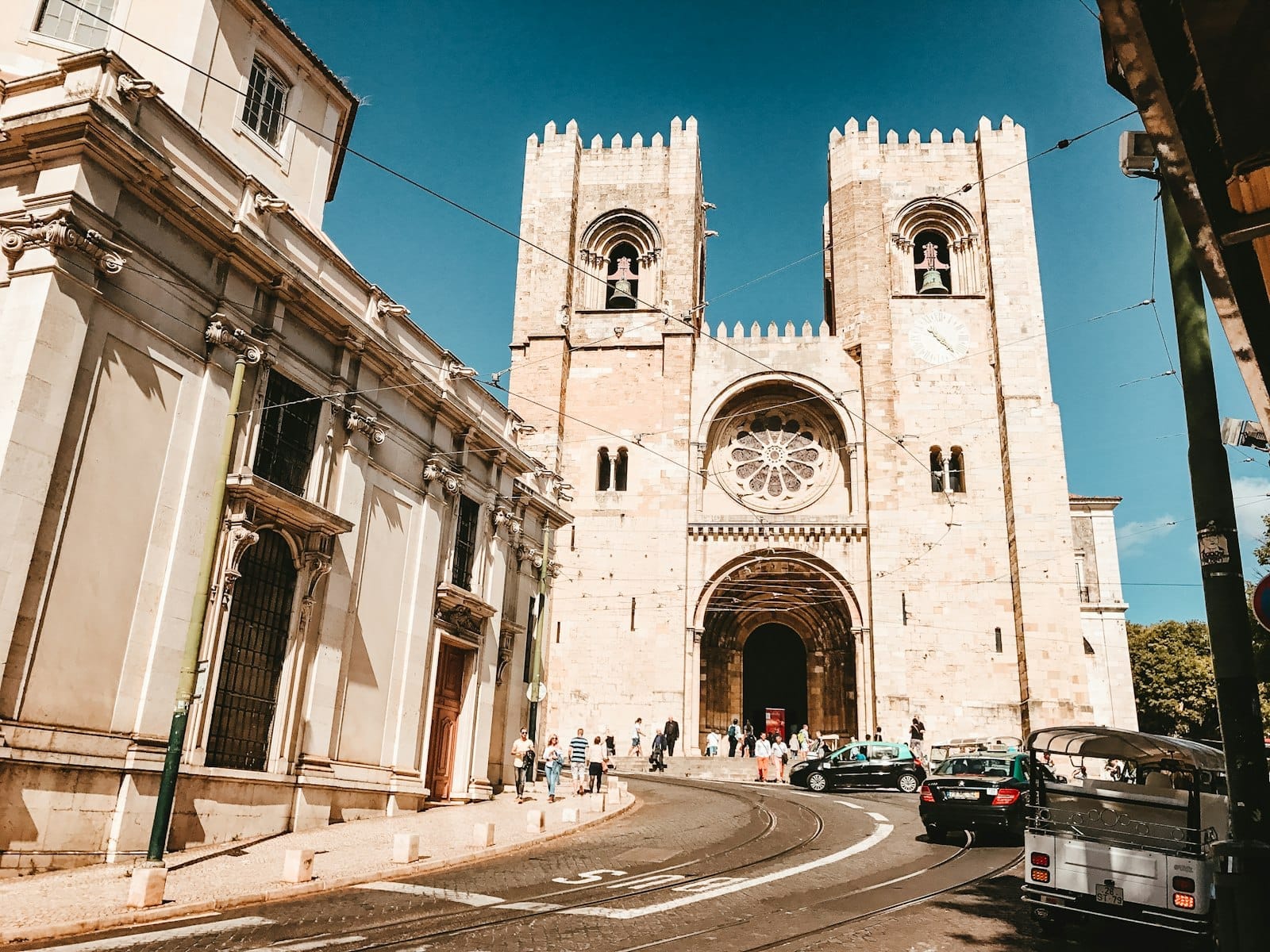
The Sé Cathedral, officially the Sé-Catedral Metropolitana Patriarcal de Santa Maria Maior de Lisboa, is the oldest surviving church in Lisbon and one of the most architecturally layered buildings in Portugal. It was founded in 1147 following the Christian reconquest of the city from the Moors under King Afonso Henriques, and its construction stretched into the early 13th century. The building you see today reflects not one style but several centuries of change: Romanesque towers and nave, a Gothic cloister added in the 14th century, Baroque chapels inserted over later decades, and careful restoration work following the catastrophic 1755 earthquake that damaged significant portions of the structure. It was classified as a National Monument in 1910.
The cathedral sits at the base of Alfama on Largo da Sé, a wide square that gives you enough distance to take in the entire facade. If you are planning a broader walk through the neighbourhood, it pairs naturally with São Jorge Castle uphill and the Miradouro das Portas do Sol a few minutes further east.
💡 Local tip
The cathedral is closed on Sundays and holy days. Arrive before 10:30 on weekdays to avoid the first tour group wave, which typically appears between 10:45 and 11:30.
The Facade and What It Signals
The exterior is deliberately austere. Two square Romanesque towers flank a rose window, and the stone has darkened to a deep amber-grey that absorbs rather than reflects light. This was intentional. Medieval cathedrals in the Reconquista tradition were designed to project permanence and authority in territories recently claimed from Islamic rule, which is why the Sé looks more like a fortress than the ornate Gothic cathedrals you find in France or northern Spain. The crenellations along the roofline reinforce that reading.
In the late afternoon, particularly in summer, the low western light catches the facade at an angle that brings out the texture of the stone in sharp relief. Morning light is flat and better for photography of the full building without harsh shadows. The square in front of the cathedral is a tram stop for the 28E line, which means there is near-constant movement outside during peak hours. If you want a quiet exterior photo, aim for before 9:30 or after 18:00 in the summer months.
The 28E tram itself is one of Lisbon's iconic routes. For context on using it without getting caught in tourist-heavy crowds, see the Tram 28 guide.
Tickets & tours
Live prices and dates from our booking partner. If you book, we may earn a commission at no extra cost to you.
Inside the Cathedral: Nave, Chapels, and Treasury
Entering through the main portal, the interior is notably dark after the brightness of the square outside. The nave is wide and barrel-vaulted, with thick Romanesque columns that create a rhythm of shadow and partial light. There is no stained glass flooding the space with colour the way northern European cathedrals do. Instead, light enters through narrow windows and the rose window above the entrance, and the effect is closer to architectural restraint than gothic drama.
The chapels along the nave contain tombs and religious art from different periods, including the early 14th-century tomb of Lopo Fernandes Pacheco, a nobleman and companion of King Afonso IV. The Chapel of Saint Anthony holds a particular significance for Lisbon residents: according to tradition, Saint Anthony of Padua, born Fernando Martins de Bulhões in Lisbon in 1195, was baptised in this cathedral. Whether or not the exact font has survived intact is debated, but the chapel draws steady streams of Portuguese visitors throughout the year.
The treasury, included in the entry ticket, displays a collection of ecclesiastical silverware, reliquaries, vestments, and medieval objects. The quality of individual pieces varies considerably. Some items are genuinely remarkable examples of 14th and 15th century craftsmanship. Others are later additions of modest artistic interest. Budget 15 minutes for the treasury unless you have a specific interest in religious artefacts, in which case allow more.
The Gothic Cloister and Archaeological Site
The cloister is the architectural highlight of the visit. Built in the 14th century under King Dinis I, it is a Gothic arcade of paired columns with carved capitals surrounding a courtyard garden. The stone here is lighter than the nave, and the proportions feel more human in scale after the heavy Romanesque interior. On clear mornings, the light comes into the cloister at a low angle that illuminates the carved details without washing them out.
Beneath the cloister, archaeological excavations have exposed layers of occupation going back considerably further than the cathedral itself. Roman, Visigothic, and Moorish remains have been uncovered here, and some of these are visible through floor panels and behind glass barriers at ground level. The signage explaining the stratigraphy is available in both Portuguese and English. It adds genuine depth to the visit if you take five minutes to read it, because it makes clear that the cathedral was built directly on top of a sequence of prior civilisations occupying this same elevated ground above the Tagus.
ℹ️ Good to know
The cloister is part of the standard paid admission. You do not need a separate ticket. However, parts of the archaeological area may be closed during ongoing excavation phases. Check the official website before visiting if this is your primary reason for coming.
Opening Hours and Ticket Information
Opening hours change seasonally. From November through April, the cathedral is open Monday to Saturday, 10:00 to 18:00. From May through October, hours extend slightly on most days: Monday, Tuesday, Thursday, and Friday 9:30 to 19:00; Wednesday and Saturday 10:00 to 18:00. The cathedral is closed on Sundays and public holidays throughout the year.
Admission is €7 for adults and €5 for children aged 7 to 12. Children under 6 enter free. There is no separate charge for the nave if you want only a brief look at the interior, but the cloister and treasury require the paid ticket. If you are visiting Lisbon on a budget and have limited time, the cloister still justifies the entry fee. If medieval ecclesiastical art is not your interest, the nave can be seen adequately in 10 minutes without paying.
For a full picture of what Lisbon's historic core offers, including free and low-cost options around the cathedral, the guide to free things to do in Lisbon is worth reading before you plan your day.
How the Experience Changes by Time of Day
The cathedral is quietest between 9:30 and 10:30 on weekday mornings in the summer season. By 11:00, guided tour groups from cruise ships and large coach tours begin arriving, and the nave can feel genuinely crowded by 11:30. If you are visiting in July or August, this window is narrow and worth respecting. In the shoulder months of May and October, the crowds are lighter throughout the morning.
Midday brings the highest foot traffic. The square outside also fills with people waiting for the 28E tram, and the surrounding streets of Alfama are at their most active. This is not necessarily a problem inside the cathedral, where the thick walls keep the temperature noticeably cooler than outside, but it does affect the contemplative quality of the visit. Late afternoon, roughly 16:30 to 18:00 in the winter season, or up to 19:00 in summer, sees crowds thin again and the interior light soften.
Visitors who find religious tourism interesting but not their primary focus should be honest with themselves: 45 to 60 minutes is enough to see the cathedral properly. Those with a strong interest in Romanesque architecture, medieval history, or ecclesiastical art may comfortably spend 90 minutes. The Sé is not a major all-day attraction. It works best as part of a longer walk through Alfama rather than as a standalone destination.
Who This Attraction Is and Is Not For
The Sé Cathedral suits travellers with an active interest in Portuguese history, medieval architecture, or the physical texture of cities shaped by multiple civilisations. It also works well for anyone doing the standard Alfama walking route, where it functions as an anchor point at the western edge of the neighbourhood before heading uphill.
Travellers with young children will find the interior manageable in terms of space, but the experience has limited child-specific appeal. There are no interactive exhibits, the lighting is low, and prams would struggle on the uneven stone floors of the cloister. For families, the nearby square provides outdoor space and the tram stop makes it easy to continue to other destinations without a long walk.
If your interest in religious buildings is already satisfied by visiting one or two other churches in Lisbon, the Sé may feel repetitive. It is a more austere and less decorative church than, for example, the Jerónimos Monastery in Belém, which represents a very different phase of Portuguese ambition and artistry. The two are not in competition; they reflect entirely different historical moments. But if you are pressed for time, the Sé is the deeper historical document and the Jerónimos is the more spectacular visual experience.
For context on that comparison, see the page on Jerónimos Monastery.
Insider Tips
- The cloister catches its best light between 9:30 and 10:30 on clear mornings. The shadows on the carved column capitals are sharp and photogenic at that hour, and the courtyard garden is empty.
- The 28E tram stops directly in front of the cathedral. Boarding here in the direction of Martim Moniz is significantly less crowded than boarding at Alfama's eastern stops or at the Graça terminus.
- If you are interested in the Roman and Moorish archaeological layers under the cloister, ask at the entrance whether any areas are currently closed before paying. Occasionally sections are cordoned off during active excavation phases.
- The thick Romanesque walls keep the interior noticeably cool even in August. If you have been walking in the heat, the nave offers genuine relief. Bring a layer if you are sensitive to temperature contrasts.
- Sunday closures are firm. Several visitors arrive on Sundays expecting to enter and find the doors locked. Plan around this if Alfama is on your Sunday itinerary.
Who Is Sé Cathedral For?
- Travellers with an interest in medieval architecture and Romanesque design
- History-focused visitors tracing Lisbon's layers from Roman times through the Reconquista
- Photographers seeking low-crowd interiors in the early morning window
- Anyone walking the Alfama neighbourhood who wants historical grounding before heading uphill to the castle
- Visitors curious about Saint Anthony of Padua, who has deep roots in this building and in Lisbon's identity
Nearby Attractions
Other things to see while in Alfama:
- Feira da Ladra
Feira da Ladra is Lisbon's oldest and most atmospheric flea market, spreading across Campo de Santa Clara in the Alfama district every Tuesday and Saturday. Free to enter, historically rich, and genuinely unpredictable, it rewards early arrivals and curious browsers willing to dig past the obvious.
- Miradouro das Portas do Sol
Perched above the rooftops of Alfama, Miradouro das Portas do Sol offers one of Lisbon's most layered views: the Tagus River, the dome of São Vicente de Fora, and the terracotta maze of the city's oldest neighborhood. It's free, open around the clock, and rewards visitors who time their visit right.
- Miradouro de Santa Luzia
Perched above the rooftops of Alfama, Miradouro de Santa Luzia offers a wide terrace shaded by a bougainvillea-draped pergola, extraordinary views across the Tagus estuary, and two landmark azulejo panels that tell the story of Lisbon before its greatest disaster. Entry is free, and the terrace is open 24/7.
- National Pantheon
The National Pantheon, housed inside the 17th-century Igreja de Santa Engrácia in Alfama, is one of Lisbon's most architecturally striking monuments. With free admission, a soaring Baroque dome, and a rooftop terrace at 40 metres, it rewards visitors who make the uphill effort. Inside rest some of Portugal's most celebrated figures, from fado queen Amália Rodrigues to football legend Eusébio.
Planning a trip? Discover personalized activities with the Nomado app.