Elevador de Santa Justa: Lisbon's Iron Tower Lift Explained
The Elevador de Santa Justa is a 45-metre Neo-Gothic iron structure that has been hauling passengers between the flat streets of Baixa and the hilltop Largo do Carmo since 1902. It's one of Lisbon's most recognisable landmarks, but knowing when to go and what you're actually paying for makes all the difference between a queue and a genuine experience.
Quick Facts
- Location
- Rua de Santa Justa, 1150, Baixa, Lisboa
- Getting There
- Metro: Baixa-Chiado (Green/Blue lines), 3-minute walk
- Time Needed
- 20–40 minutes (lift ride + rooftop terrace)
- Cost
- €5.30 return; free with Lisboa Card. Top terrace access sold separately
- Best for
- Architecture lovers, first-time visitors, photographers
- Official website
- www.carris.pt/viaje/carreiras/54e-elevador-santa-justa
What the Elevador de Santa Justa Actually Is
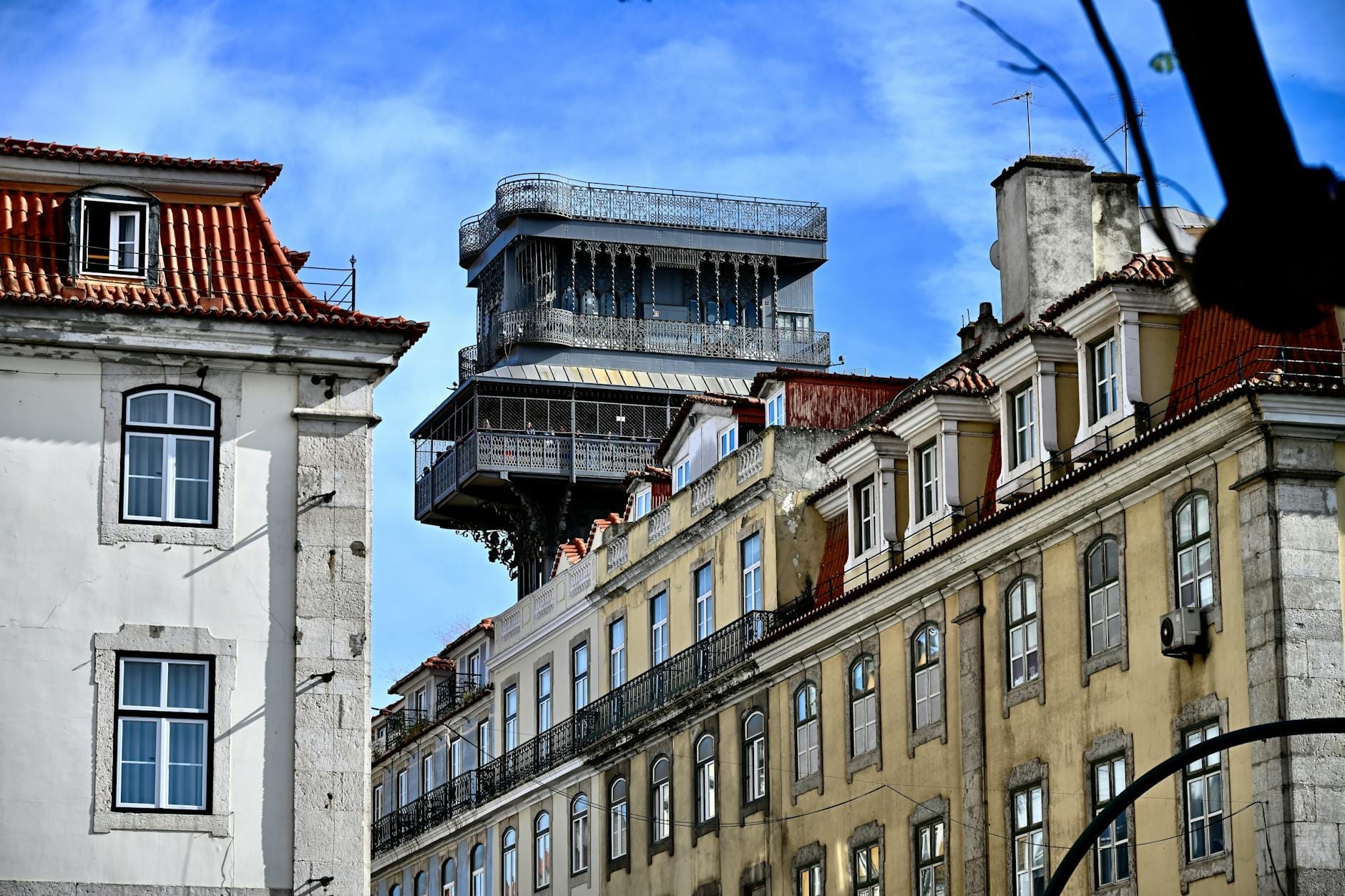
The Elevador de Santa Justa is not a funicular. It is a vertical lift, a wrought-iron tower standing 45 metres above the pavement of Rua do Ouro, built to solve a simple urban problem: the steep escarpment separating the flat commercial grid of Baixa from the hilltop neighbourhoods above. When it opened on 10 July 1902, it was steam-powered and sold 3,000 tickets on its first day. Today, run by public transport operator Carris as route 54E, it carries two polished wood-panelled cabins up and down that same shaft, now electrically driven since 1907.
The structure was designed by Raoul Mesnier de Ponsard, a Portuguese-born engineer who trained under Gustave Eiffel. The Eiffel comparison is inevitable and not entirely wrong: the exposed lattice ironwork, the spiral staircase coiling up the exterior, and the decorative Gothic arches at the summit all carry the fingerprints of that Paris school. But the ornamentation is distinctly Portuguese, with pointed Neo-Gothic details that make it feel at home among Lisbon's ecclesiastical skyline. It was declared a National Monument in 2002 and restored in 2006.
⚠️ What to skip
The lift has been subject to temporary closures for maintenance. Always check the Carris website or the Visit Lisboa portal before building your itinerary around it. A closure does not affect access to the rooftop terrace, which can be reached via a separate spiral staircase inside the tower.
The Ride Up and What You See
Each cabin holds around 25 people and the ascent takes under a minute. The cabins are narrow and the polished wood walls feel genuinely old, the kind of tactile detail that distinguishes a living piece of infrastructure from a replica. Through the small windows, the tiled facades of Baixa slide past and the street noise below fades to a low hum. It is brief, slightly claustrophobic if you are in the middle of a packed cabin, and entirely worth doing once.
At the top, a walkway bridge connects the lift to Largo do Carmo, the square surrounding the roofless ruins of the Carmo Convent. This connection is what gave the lift its original utility: workers and residents could cross from the lower city to the upper districts without climbing stairways. Today that bridge is still functional, though the approach from Largo do Carmo requires paying the lift fare or walking up independently.
The rooftop terrace sits at the very top of the tower, a few floors above the cabin exit level. From up here, the view over Baixa and Chiado is genuinely panoramic: the Pombaline grid stretches south toward the Tagus, the dome of the Basilica da Estrela sits to the west, and on clear days the river itself is fully visible. It is one of the more honest viewpoints in Lisbon because it is elevated without being distant, giving a sense of the city's layers and density rather than just a wide horizon.
Tickets & tours
Live prices and dates from our booking partner. If you book, we may earn a commission at no extra cost to you.
Belem and Modern Lisbon bus hop-on hop-off combined tickets
From 28 €Instant confirmationFree cancellationSt. George Castle E-ticket and Audio Tour
From 28 €Instant confirmationLisbon Story Centre entrance tickets
From 7 €Instant confirmationFree cancellationYellow boat river tour
From 24 €Instant confirmationFree cancellation
How the Experience Changes by Time of Day
Arrive between 9 and 11 AM and the queue at the base typically stretches 15 to 30 minutes. The morning light hits the eastern facades of Baixa at a low angle, which is useful for photography, but the crowds are already present. Midday in summer is the worst window: the iron structure absorbs heat, the terrace has no shade, and the queue can double. Bring water if you visit between June and September.
Late afternoon, roughly 5 to 7 PM, offers a better balance. The queue shortens slightly, the light turns warm and diffuse, and the city below begins its early-evening shift from shopping to dining. If the lift is running until 11 PM in summer, an evening visit offers cooler temperatures and the spectacle of Lisbon's streetlights coming on across the grid below. The terrace at dusk, with the Tagus catching the last light, is a distinctly different experience from the midday version.
💡 Local tip
The Lisboa Card covers the lift fare and is worth considering if you plan to use public transport or visit multiple paid attractions in the same day. Pick it up at the airport, major metro stations, or the tourist office near Praça do Comércio.
Historical and Architectural Context
Lisbon's relationship with vertical transport infrastructure is older and more systematic than most visitors realise. The city built funiculars and elevators throughout the late 19th and early 20th centuries specifically to connect its hilltop bairros to the Pombaline Baixa below, itself rebuilt after the catastrophic 1755 earthquake on a rational grid that stopped abruptly at the base of the surrounding hills. The Santa Justa lift is the only remaining vertical elevator of its type in Lisbon and the only one not built into a hillside.
The tower was inaugurated on 31 August 1901 by King Carlos I, with the lift mechanism opening to the public the following July. Its Neo-Gothic iron lantern at the top, with its open-work arches and observation gallery, bears a close resemblance to the upper section of the Eiffel Tower's first floor, which is not coincidental given Ponsard's training. For a deeper look at the architectural era that produced this structure, the nearby Carmo Convent offers an equally striking encounter with Gothic stonework from a much earlier period, its roofless nave just a few minutes' walk from the lift's upper exit.
Practical Walkthrough: Getting There and Buying Tickets
The base of the lift is on Rua de Santa Justa, a pedestrian street that runs north from Rua do Ouro in the heart of Baixa. From the Baixa-Chiado metro station, take the escalators toward Rua Garrett and then follow signs toward the lift, a walk of about three minutes through a relatively level stretch. The tower is visible from some distance due to its height, so orientation is straightforward.
Tickets are sold at the base. As of available pricing information, a return ticket costs €5.30. The Lisboa Card covers this fare entirely. If you only want to access the rooftop terrace without taking the lift, a separate access fee applies at the base. Queues form at the ticket window and then again at the cabin entrance, so account for both waits, particularly in high season.
If you are planning a broader day in the area, Rua Augusta and Rossio Square are both within a five-minute walk, making the lift a natural stop mid-route rather than a standalone detour.
ℹ️ Good to know
Typical operating hours: 7:00 AM–11:00 PM daily in summer; 7:30 AM–8:38 PM in winter; Sundays from 9:00 AM. The lift runs approximately five departures per hour during core hours, with increased frequency in peak season. Hours are subject to change and temporary closures: verify at carris.pt before visiting.
Photography and Accessibility Notes
The exterior of the tower is among the most photographed objects in Lisbon. The best exterior shot is from Rua do Ouro looking north, with the tower framed against the upper city, ideally in early morning when foot traffic on the street is low. The rooftop terrace allows 360-degree shooting but the railings are close and the platform is small, so composing wide shots requires patience and timing around other visitors.
For accessibility: the lift itself is designed for vertical transport and handles mobility-impaired passengers in principle, though the cabin interiors are narrow and the boarding process during busy periods involves some jostling. The spiral staircase to the upper terrace is not wheelchair-accessible. If you are visiting with limited mobility, the lift ride to the bridge level is achievable, but the additional staircase to the topmost viewpoint is steep and tight.
For a broader understanding of Lisbon's best elevated viewpoints and how Santa Justa compares to them, the guide to Lisbon's best viewpoints covers the full range from miradouros to tower terraces with honest comparisons of crowd levels and view quality.
Is It Worth It? An Honest Assessment
The lift ride itself lasts under a minute. For €5.30, you get that ride, access to the bridge walkway, and the option to climb to the rooftop terrace. The view from the terrace is good, but it is not the best in Lisbon. Several free miradouros offer wider or more dramatically positioned views. What Santa Justa offers that they do not is the structural experience: standing inside a 120-year-old iron tower, looking through its Gothic arches at the city below, is architecturally specific in a way that a hilltop park is not.
For first-time visitors to Lisbon, it is worth doing once. For repeat visitors or those on tight budgets who have already seen the view, the priority drops. The Lisboa Card makes the decision easier because the marginal cost becomes zero.
Who might want to skip it: travellers with claustrophobia will find the cabin uncomfortable when full. Anyone who dislikes queuing in the heat will find high-season visits frustrating. And if the lift is closed for maintenance on your visit day, the terrace-only access is a noticeably less compelling proposition.
Insider Tips
- The upper exit connects directly to Largo do Carmo. If you walk down to Baixa afterward via the Carmo Convent and then down through Chiado, you turn the lift into the start of a proper walking loop rather than a dead-end detour.
- The spiral staircase on the exterior of the tower is partially accessible to visitors. Walking up a few flights gives you a different angle on the ironwork and the street below without the wait for the cabin.
- On overcast days, the rooftop terrace is actually more comfortable than in full sun. The iron gets hot in summer, and a light cloud cover makes the terrace usable for longer without heat fatigue.
- If the queue at the base is longer than 20 people, consider going up to Largo do Carmo via the free pedestrian stairs from Rua do Carmo and accessing the terrace from the top. You skip the cabin queue and still get the view.
- The view from the terrace faces predominantly east and south. Bring a wide-angle lens or use portrait mode on your phone for the tightest architectural framing through the Gothic arches.
Who Is Elevador de Santa Justa For?
- First-time visitors to Lisbon who want a quick architectural highlight in Baixa
- Architecture and engineering enthusiasts interested in late 19th-century iron construction
- Photographers looking for a structured foreground element with city panorama behind
- Lisboa Card holders for whom the entry cost is already covered
- Travellers combining a Baixa walking route with Chiado and Largo do Carmo
Nearby Attractions
Other things to see while in Baixa & Chiado:
- A Ginjinha
Open since 1840 and still run by the same family, A Ginjinha is the counter-sized bar that started Lisbon's love affair with ginjinha. There's no seating, no menu, and no fanfare — just a shot glass, a sour cherry, and nearly two centuries of tradition.
- Arco da Rua Augusta
The Arco da Rua Augusta anchors the northern edge of Praça do Comércio with neoclassical grandeur, commemorating Lisbon's post-earthquake rebirth. Climb to the rooftop terrace for an unbroken view across the Tagus River and the Baixa grid below. Small in scale, big in context.
- Carmo Convent
The Convento da Ordem do Carmo is Lisbon's most visually arresting survivor of the 1755 earthquake. Its roofless Gothic nave, open to the sky for nearly 270 years, now shelters an archaeological museum with Peruvian mummies and pre-historic artifacts. It is equal parts ruin, museum, and meditation on disaster.
- Igreja de São Roque
From the outside, Igreja de São Roque looks like any other Lisbon church. Step inside and you're face to face with one of the most opulent chapels ever built, assembled in Rome from gold, lapis lazuli, and ivory, then shipped across the Atlantic in three vessels. Admission to the church is free, and the attached museum costs less than a coffee.
Planning a trip? Discover personalized activities with the Nomado app.